 Präzisions-Fräser,Schneidwerkzeuge für die CNC-Bearbeitung jedes Materials



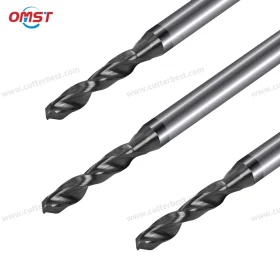
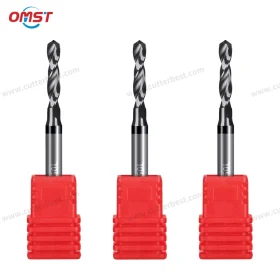

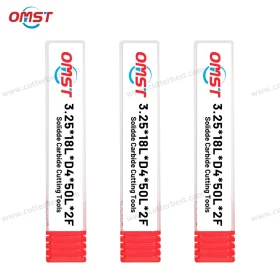
A carbide end mill cutter is a rotary cutting tool made from solid tungsten carbide. Cutting edges on the end and outer diameter allow the tool to perform slotting, Seitenfräsen, Taschenfräsen, Konturierung, Profilierung, Schruppen, und Endbearbeitungsarbeiten.
Vollhartmetall sorgt für hohe Steifigkeit, Verschleißfestigkeit, und Schneidkantenstabilität bei geeigneten Bearbeitungsbedingungen. Infolge, manufacturers often choose these tools when they need dimensional accuracy, consistent performance, zuverlässige Oberflächenqualität, und effiziente Produktion.
Jedoch, Ein Fräserdesign kann nicht für jedes Material oder jeden Betrieb geeignet sein. Das richtige Werkzeug hängt von der Werkstücksorte ab, Härte, Fräserdurchmesser, Flötenzahl, Beschichtung, Werkzeugüberhang, Bearbeitungsmethode, Kühlmittelzustand, Steifigkeit der Maschine, und Schnittparameter.
Wir wählen die Schaftfräsergeometrie und die Hartmetallsorte entsprechend dem Werkstückmaterial aus, Härte, Spanabfuhr, Schnittlast, Bearbeitungsvorgang, und erforderliche Oberflächenbeschaffenheit. daher, Die endgültige Werkzeugstruktur sollte der tatsächlichen Anwendung entsprechen und nicht einem allgemeinen Design für jede Aufgabe folgen.
Hauptvorteile und Werkzeugoptionen
Steifigkeit für stabiles CNC-Schneiden
Vollhartmetall bietet eine höhere Steifigkeit als viele Allzweck-Werkzeugmaterialien. Diese Steifigkeit trägt dazu bei, die Durchbiegung des Werkzeugs zu reduzieren und unterstützt ein stabileres Schneiden während der Präzisions-CNC-Bearbeitung.
Je nach Werkstückmaterial können auch Feinstkorn-Hartmetallsorten ausgewählt werden, Härte, Fräserdurchmesser, und erforderliches Gleichgewicht zwischen Verschleißfestigkeit und Kantenfestigkeit.
Jedoch, cutter performance also depends on the length-to-diameter ratio, Genauigkeit des Halters, Werkzeugunrundheit, Schnitttiefe, Steifigkeit der Maschine, und Schnittbedingungen.
Flute Options for Chip Control and Surface Finish
Flute count affects chip evacuation, Spitzenstärke, Futterfähigkeit, Werkzeugsteifigkeit, und Oberflächenbeschaffenheit.
Two-flute and three-flute tools provide more chip space. daher, they are commonly considered when chip evacuation is important, especially in aluminum, Nichteisenmaterialien, tiefe Taschen, and slotting operations.
Four-flute tools provide more cutting edges and are widely used for many steel applications. In der Zwischenzeit, five-flute, six-flute, and other special designs may support higher rigidity or improved finishing performance when the machining conditions allow.
For a detailed explanation of flute count, Lesen Sie unsere Leitfaden zur Auswahl der Schaftfräsernuten.
Coatings Matched to Materials and Cutting Conditions
A suitable coating can improve heat resistance, Verschleißfestigkeit, lubricity, und modernster Schutz.
Für Aluminium und NE-Werkstoffe, users commonly choose uncoated, polished, or low-friction coating options. In der Zwischenzeit, TiAlN, Altin, TiSiN, or AlCrN may suit steel, Edelstahl, Formstahl, and higher-temperature machining conditions.
We recommend selecting the coating together with the carbide grade, edge geometry, Werkstückhärte, Kühlmittelzustand, und Bearbeitungsvorgang.
Standard and Custom Options
Standard solid carbide end mills can meet many common CNC machining requirements. Jedoch, some projects require a non-standard diameter, special flute length, long overall length, unusual shank diameter, custom corner radius, special helix angle, Beschichtung, or dimensional tolerance.
We can evaluate these requirements based on your drawing, tool sample, Werkstückmaterial, Bearbeitungsmethode, current tool problem, und Bestellmenge.
Common End Profiles
Flache Schaftfräser
Flache Schaftfräser, also called square end mills, have a flat cutting end and sharp outer corners. They are commonly used for flat-bottom slots, Taschen, Schritte, Schultern, Seitenwände, Profilierung, und allgemeines CNC-Fräsen.
For additional product information, Sehen Sie sich unsere an Produktseite für Flachschaftfräser.
Kugelfräser
Ball nose end mills have a rounded cutting end. They are suitable for 3D contouring, gekrümmte Oberflächen, Formhohlräume, stirbt, and complex finishing operations.
For curved surfaces and mold cavity machining, Sehen Sie sich unsere an ball nose end mill product page.
Bull Nose and Corner Radius End Mills
Bull nose end mills combine a flat cutting end with rounded outer corners. The corner radius provides more edge strength than a sharp square corner and can improve stability during profiling, Halbfertigbearbeitung, und Formenbearbeitung.
Sehen Sie sich unsere an bull nose end mill product page.
Schruppfräser
Roughing end mills use serrated or chipbreaker cutting edges to divide chips into smaller sections. This design can reduce cutting resistance and support efficient material removal when the tool, Maschine, and machining conditions are suitable.
For a broader comparison of cutter shapes and applications, lesen end mill cutter types and uses.
Quick Selection by Material and Operation
The following information provides general selection directions. Final tool selection should be confirmed according to the material grade, Werkstückhärte, Fräsergröße, Bearbeitungsvorgang, Werkzeugeinsatz, Überhang, und Maschinenbedingungen.
Aluminium und Nichteisenmaterialien
Aluminum machining often requires sharp cutting edges, ausreichend Spanraum, and smooth chip evacuation. daher, two-flute or three-flute carbide end mills are commonly considered.
Polished flutes, sharp geometry, and uncoated or low-friction coating options can help reduce material buildup. Jedoch, the final choice still depends on whether the operation involves slotting, Taschenbildung, Seitenfräsen, Schruppen, oder beenden.
Kohlenstoffstahl und legierter Stahl
Four-flute carbide end mills are widely used for many carbon steel and alloy steel applications. Other flute counts may also suit slotting, Schruppen, high-efficiency machining, Seitenfräsen, oder beenden.
TiAlN, Altin, TiSiN, or another suitable heat-resistant coating may help protect the cutting edge. Zusätzlich, die Hartmetallsorte, Kantenvorbereitung, and corner strength should match the cutting load and workpiece hardness.
Edelstahl
Stainless steel can generate heat and may work-harden during machining. daher, the tool requires suitable edge strength, Spanabfuhr, Beschichtung, coolant application, und Schnittparameter.
Four-flute or higher-flute tools may be considered depending on whether the operation involves slotting, Seitenfräsen, Halbfertigbearbeitung, oder beenden. Jedoch, a higher flute count also reduces chip space, so the actual tool engagement and machining strategy must be considered.
Gusseisen
Gusseisen kann abrasiv sein. A wear-resistant carbide grade, suitable edge preparation, and application-specific coating can help improve tool stability and service life.
The best geometry depends on the cast iron grade, Schnittzustand, Bearbeitungszugabe, and whether the operation involves roughing or finishing.
Mold Steel and Tool Steel
Manufacturers commonly use flat, Kugelnase, and bull nose carbide end mills for roughing, Halbfertigbearbeitung, Hohlraumbearbeitung, Profilierung, und Abschluss.
The cutter series should match the actual workpiece hardness. You can select different tool series for machining materials up to HRC45, HRC55, HRC60, or HRC65.
These values refer to the intended workpiece hardness range, not the hardness of the carbide tool itself.
Titanlegierung
Titanium alloy machining requires careful control of heat, Spanabfuhr, Werkzeugeinsatz, Spitzenstärke, and coolant.
daher, the geometry, Beschichtung, Flötenzahl, Werkzeugüberhang, and cutting parameters should be confirmed according to the actual alloy and machining operation.
For more detailed material-based guidance, lesen So wählen Sie einen Hartmetall-Schaftfräser aus.
CNC-Fräsanwendungen
CNC manufacturers use solid carbide end mills for slotting, side and shoulder milling, Taschenbildung, Konturierung, Profilierung, Schruppen, Halbfertigbearbeitung, Abschluss, Formhohlraumbearbeitung, und 3D-Oberflächenbearbeitung.
Typical users include CNC machining companies, Formenhersteller, automotive and aerospace suppliers, electronics manufacturers, cutting tool distributors, and other precision metalworking businesses.
Spezifikationsoptionen
Werkzeugmaterial: Vollhartmetall; Micro-Grain Carbide Grades Available According to Application
Typischer Fräserdurchmesser: Common Standard Sizes from Approximately D2 to D20 mm
Custom Diameter: Micro-Diameter, Large-Diameter, and Other Non-Standard Sizes Can Be Evaluated
Flötenzählung: 2, 3, Und 4 Flutes Are Common; 5, 6, and Special Flute Counts Can Be Evaluated
Flötenlänge: Standard, Extended, and Drawing-Defined Flute Lengths
Gesamtlänge: Standard, Long-Reach, and Custom Overall Lengths
Schaftdurchmesser: Standard and Non-Standard Shank Diameters
Schafttyp: Gerader Schaft; Special Requirements Can Be Evaluated
Endprofil: Wohnung, Kugelnase, Bullennase, Eckenradius, Schruppen, or Custom Geometry
Helixwinkel: Common 30°, 35°, and 45° Options; Other Helix Angles Can Be Evaluated
Beschichtung: Unbeschichtet, Zinn, TiAlN, Altin, TiSiN, AlCrN, DLC, or Custom Coating
Werkstückmaterialien: Aluminium, Kohlenstoffstahl, Legierter Stahl, Edelstahl, Gusseisen, Formstahl, Tool Steel, and Titanium Alloy
Werkstückhärte: Tool Series for Materials up to HRC45, HRC55, HRC60, or HRC65
Center Cutting: Center-Cutting and Non-Center-Cutting Designs According to Application
Toleranz: Confirmed According to the Cutter Size, Zeichnung, und Anwendung
Markierung: Standard Marking, Customer Label, or Laser Marking
Verpackung: Standard, Neutral, OEM, or Customer-Specified Packaging
MOQ and Lead Time: Confirmed After Reviewing the Tool Specification and Quantity
The options above describe common supply directions rather than a fixed specification for every cutter. Endgültige Abmessungen, Geometrie, Beschichtung, Toleranz, and production requirements will be confirmed before manufacturing.
Center-Cutting and Non-Center-Cutting Designs
Center-cutting end mills have cutting edges that extend across or close to the tool center. They can support certain plunging, Rampen, or pocket-entry operations when the geometry and machining conditions are suitable.
Non-center-cutting tools are mainly used for side milling, Profilierung, Schulterfräsen, and other operations that do not require direct vertical entry.
An end mill should not automatically be treated as a drill. Plunging capability depends on the center geometry, Eingabemethode, Fräserdurchmesser, Werkstückmaterial, und Bearbeitungsstrategie.
Carbide End Mill vs HSS End Mill
Carbide and HSS end mills both have suitable applications.
Solid carbide normally provides higher rigidity, bessere Verschleißfestigkeit, greater heat resistance, and higher cutting-speed potential under suitable conditions. daher, it is commonly selected for CNC machining, harder materials, longer production runs, and precision applications.
HSS offers greater toughness and may be more tolerant of vibration, unstable machines, Schnitt unterbrochen, or some lower-speed operations.
The better option depends on the machine, aufstellen, Werkstückmaterial, Schneidvorgang, production quantity, und Kostenziel.
For a wider product range that includes different tool materials, Sehen Sie sich unsere an Produktseite für Schaftfräser.
Custom Carbide End Mill Cutter Service
Custom carbide end mills can be evaluated according to your drawing, Probe, erforderliche Abmessungen, Werkstückmaterial, oder Bearbeitungsanwendung.
Available custom options may include non-standard sizes, Flöte zählt, Abschlussprofile, Helixwinkel, Beschichtungen, Toleranzen, Lasermarkierung, und Verpackung. Endgültige Spezifikationen, Mindestbestellmenge, Preis, and production time will be confirmed according to the actual requirement.
Für ein Angebot erforderliche Informationen
Bitte senden Sie Ihre Zeichnung, Werkzeugmodell, erforderliche Abmessungen, Produktbild, oder Bearbeitungsanforderungen. When available, information about the workpiece material, Anwendung, Menge, and current machining problem can help us review the request more accurately.
When some details are unavailable, Senden Sie die Informationen, die Sie bereits haben. We will confirm any additional specifications during the quotation process.
Quality and Specification Confirmation
Vor der Produktion, the main tool specifications, Beschichtung, Toleranz, Markierung, Verpackung, Menge, and delivery requirements will be confirmed according to the order.
When material reports, inspection documents, or other quality documents are required, please let us know before ordering so that we can confirm their availability for the specific tool and project.
Warum sollten Sie sich für uns entscheiden?
Mit 16 Jahrelange Erfahrung in der Herstellung von Schneidwerkzeugen, we support standard and custom solid carbide end mills for machining companies, industrial distributors, OEM buyers, and precision manufacturers.
Our service includes:
- One-to-one specification review
- Standard and non-standard tool options
- Drawing and sample evaluation
- Material and application-based tool selection
- Custom geometry and coating
- Neutral packaging and OEM support
- Trial-order and bulk-order discussion
- Specification confirmation before production
Instead of recommending one general cutter for every material, we review the workpiece, Betrieb, Werkzeuggröße, accuracy requirement, Menge, and machining conditions before confirming the tool design.
Häufig gestellte Fragen
What is a carbide end mill cutter used for?
A carbide end mill cutter is used for CNC slotting, Seitenfräsen, Taschenbildung, Konturierung, Profilierung, Schruppen, Abschluss, und Formenbearbeitung. Depending on its geometry and coating, it can machine aluminum, Stahl, Edelstahl, Gusseisen, Formstahl, Werkzeugstahl, Titanlegierung, und andere Materialien.
How many flutes should a carbide end mill have?
The flute count depends on the material and operation. Two or three flutes are commonly considered when chip evacuation is important. Four or more flutes may be selected when greater rigidity, more cutting edges, or improved finishing performance is required.
Zum direkten Vergleich, lesen 2 Flöte vs 4 Flöte vs 6 Nutfräser.
Which coating is suitable for steel and stainless steel?
TiAlN, Altin, TiSiN, or AlCrN may be considered for steel and stainless steel. Jedoch, the final coating should match the material grade, Härte, Schnitttemperatur, Kühlmittel, Hartmetallsorte, and tool geometry.
Which carbide end mill is suitable for aluminum?
Aluminum normally requires sharp cutting edges and sufficient chip space. Two-flute or three-flute tools with polished flutes, uncoated surfaces, DLC, or another suitable low-friction coating may be considered.
Can you manufacture custom carbide end mills?
Ja. Custom diameters, Flötenlängen, Gesamtlängen, Schaftgrößen, Flöte zählt, Helixwinkel, Abschlussprofile, Beschichtungen, Toleranzen, Markierung, and packaging can be evaluated according to drawings, Proben, oder Bearbeitungsanforderungen.
Can carbide end mills be center cutting?
Both center-cutting and non-center-cutting designs are available. The correct design depends on whether the operation requires plunging, Rampen, pocket entry, Seitenfräsen, or profiling.
What is the MOQ and production time?
There is no single MOQ or lead time for every tool. These details depend on the dimensions, Flötenzahl, Geometrie, Beschichtung, Toleranz, Menge, and whether the product is standard or custom.
Welche Informationen soll ich für ein Angebot senden??
You may send a drawing, model number, erforderliche Abmessungen, Produktbild, Probe, oder Bearbeitungsanforderung. Werkstückmaterial, Anwendung, Menge, and information about the current machining problem can also help with tool evaluation.
Send Your Carbide End Mill Requirement
Send us your carbide end mill cutter drawing, Werkzeugmodell, erforderliche Abmessungen, Produktbild, Probe, oder Bearbeitungsanforderungen. We will review the information and provide a suitable solid carbide end mill recommendation or quotation.