 Fresas de precisión,Herramientas de corte para el mecanizado CNC de todos los materiales

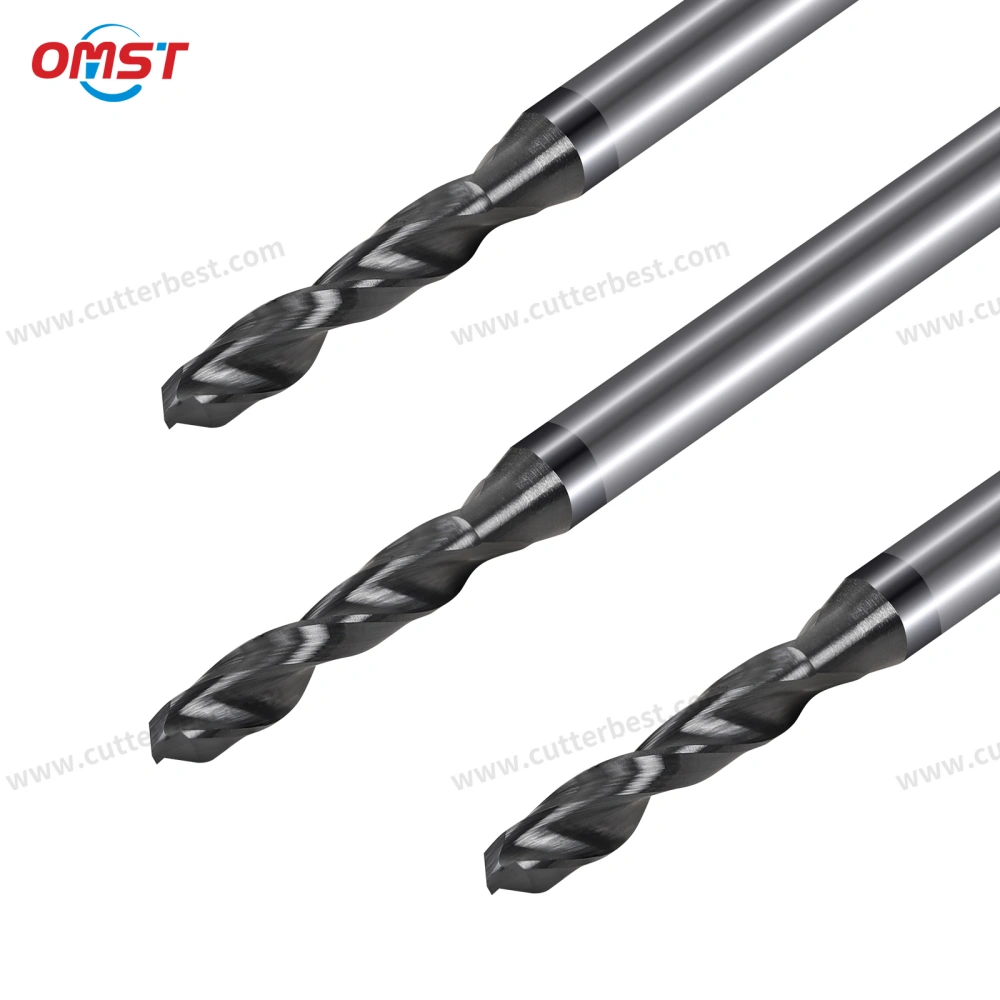
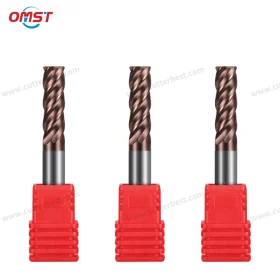
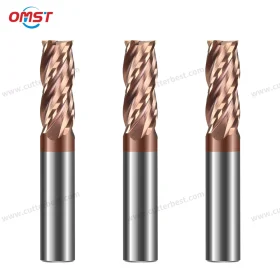
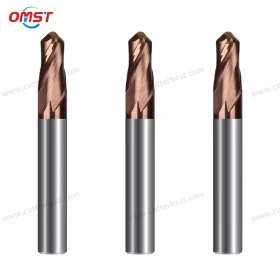
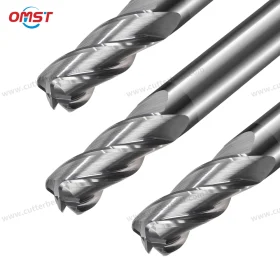
Finishing End Mill Solutions
A finishing end mill is selected for the finishing stage, but it is not limited to one fixed cutting profile or flute count. Depending on the final surface, the suitable tool may be a flat end mill, fresa de punta esférica, fresa de punta de toro, or custom-profile cutter.
Además, the workpiece material affects the carbide grade, cutting-edge design, flute configuration, and coating choice. Customers can send an existing tool model for matching or provide a drawing, información material, dimensiones requeridas, and machining conditions for tool selection.
Quick Finishing End Mill Selection
Use these directions as a practical starting point:
- Choose a flat end mill for flat bottoms, paredes laterales rectas, pasos, tragamonedas, y hombros cuadrados.
- Choose a ball nose end mill for curved surfaces, 3contornos D, complex profiles, and mold cavities.
- Choose a bull nose end mill when the part requires a defined radius between the bottom and side wall.
- For abrasive graphite, consider a diamond-coated carbide tool when cutting-edge wear affects dimensional consistency.
- Para aluminio, prioritize a sharp cutting edge, smooth flute surfaces, sufficient chip space, and effective chip removal.
- For steel finishing, prioritize tool rigidity, fuerza del borde, and wear resistance.
- Para acero inoxidable, avoid worn or weak cutting edges because work hardening can increase the cutting load.
- For titanium, keep the cutting setup stable and the tool overhang as short as possible to help control heat and deflection.
- For deep cavities or restricted areas, use the shortest neck and overall length that can reach the required surface.
These directions help narrow the product range. Sin embargo, the final dimensions, recuento de flauta, grado de carburo, and coating should match the drawing and actual machining conditions.
Finishing End Mill Types We Supply
Flat End Mills
Flat end mills have a flat cutting end and sharp outer corners. They suit flat-bottom features, pocket bottoms, paredes rectas, pasos, tragamonedas, y hombros cuadrados.
Choose a flat profile when the part requires a level bottom or a clear wall-to-bottom transition. Revisa nuestro flat end mills for flat-surface finishing.
Fresas de punta esférica
Ball nose end mills have a fully rounded cutting end. They suit curved surfaces, 3contornos D, cavidades del molde, and continuous surface transitions.
Choose the ball diameter according to the curvature and feature size of the part. Mientras tanto, use only the neck and overall length required to reach the cutting area. Revisa nuestro ball nose end mills for curved-surface finishing.
Bull Nose End Mills
Bull nose end mills, also called corner radius end mills, combine a flat cutting area with rounded outer corners. They suit bottom-to-wall transitions, perfiles de molde, and parts that require a defined corner radius.
Match the tool radius to the part drawing. An unsuitable radius may cause interference, overcutting, or remaining material in the corner. Revisa nuestro bull nose end mills for corner transitions.
Custom Profile End Mills
Standard tools do not fit every component. Special features may require a non-standard diameter, longitud de la flauta, radio de esquina, radio de la bola, neck design, recuento de flauta, o perfil de corte.
Customers can submit an existing tool model, dibujo, tool photo, or physical sample for review. Explora nuestro custom end mills based on drawings or samples.
Finishing End Mills for Different Materials
Graphite Finishing End Mills
El grafito es abrasivo.. Por lo tanto, cutting-edge wear can affect detail accuracy and dimensional consistency. Thin walls, sharp electrode edges, and deep features may also require careful selection of the end profile and neck design.
Use a flat profile for level electrode surfaces, a ball nose profile for curved contours, and a bull nose profile for defined corner transitions. When abrasive wear is the main concern, a diamond-coated finishing end mill may be a suitable option.
Revisa nuestro diamond coated end mills for graphite finishing.
For further application information, leer what diamond coated end mills are used for.
Aluminum Finishing End Mills
Aluminum and other non-ferrous materials may create built-up edges, material adhesion, chip re-cutting, and fine scratches. Como resultado, aluminum finishing tools usually emphasize sharp cutting edges, smooth flute surfaces, and sufficient chip space.
Start with a lower flute count when chip evacuation is difficult. Sin embargo, specially designed higher-flute tools may suit stable side-finishing operations with controlled chip flow.
Uncoated tools can provide a sharp cutting edge, while DLC or other application-specific coatings may help when material adhesion and tool wear are recurring problems. Además, suitable coolant or air blast helps remove chips before they damage the finished surface.
Finishing End Mills for Steel
Steel finishing usually requires a balance of tool rigidity, fuerza del borde, resistencia al desgaste, and stable engagement. Por lo tanto, select the flute count and coating according to the steel grade, dureza, diámetro del cortador, and machining setup.
For long-reach applications, avoid unnecessary overall length because excessive tool overhang can increase deflection and visible tool marks.
Finishing End Mills for Stainless Steel
Stainless steel can generate cutting heat and work hardening. Por lo tanto, maintain a stable cutting setup and avoid using worn or damaged cutting edges for the final pass.
The tool should provide enough edge strength while maintaining suitable chip control. Capa, recuento de flauta, diámetro del cortador, and tool overhang should match the exact stainless steel grade and machining operation.
Titanium Finishing End Mills
Titanium concentrates heat near the cutting edge and can reduce tool life if the setup lacks stability. Use a rigid toolholding system, keep the tool overhang short, and select a coating suitable for the application.
The final tool design should also consider the engagement method, part rigidity, feature depth, and chip-removal conditions.
Finishing End Mills for Mold and Hardened Materials
Mold and hardened-material finishing may include curved cavities, narrow areas, deep features, and small details. Depending on the surface, suitable options may include flat, nariz de bola, nariz de toro, reduced-neck, or long-neck end mills.
Use the shortest tool that can reach the machining area. Before confirming the product, provide the material grade, dureza, profundidad de la cavidad, required profile, and part drawing.
Common Signs That the Finishing Tool Needs Review
The finishing tool or setup may need adjustment when the part shows:
- Visible tool marks or chatter lines
- Rapid cutting-edge wear
- Graphite edge chipping
- Aluminum adhesion or fine scratches
- Unstable dimensions during continuous machining
- Remaining material in corners or transitions
- Insufficient reach or excessive tool deflection
These problems may relate to the end profile, recuento de flauta, cutting-edge condition, revestimiento, saliente de la herramienta, sin, evacuación de viruta, or workholding stability.
Primero, check the tool condition, titular, sin, overhang, and chip-removal conditions. If the problem continues, send the current tool information, part drawing, material, and machining setup for a more focused review.
Opciones de especificación
| Especificación | Opciones disponibles | Selection Direction |
|---|---|---|
| Material de la herramienta | Carburo sólido | Match the material, wear conditions, and required rigidity |
| Perfil final | Departamento, Nariz de bola, Bull Nose or Custom | Match the final surface geometry |
| Diámetro de corte | Estándar o personalizado | Match the feature size and available machining space |
| Longitud de la flauta | Estándar o personalizado | Use only the flute length required for the cutting area |
| Longitud total | Estándar, Extended or Custom | Use the shortest suitable overall length |
| Diámetro del vástago | Standard or Drawing-Based | Match the toolholder and rigidity requirements |
| Conteo de flauta | Multiple Options | Balance chip space, rigidez, and cutting-edge engagement |
| Radio de esquina | Estándar o personalizado | Match the part radius and check for interference |
| Ball Radius | Based on Diameter or Drawing | Match the curved surface and feature size |
| Diseño de cuello | Estándar, Reduced Neck or Long Neck | Use a long neck only when the feature requires additional reach |
| Capa | Diamond, contenido descargable, TiAlN, Altin, TiSiN, Nano Coating, Uncoated or Other Options | Match abrasion, adhesion, cutting heat, y tipo de material |
| Custom Production | Dibujo, Existing Model or Sample | Use for non-standard dimensions and profiles |
Exact dimensions, coating combinations, and production feasibility depend on the tool structure, material, y aplicación.
How to Choose a Finishing End Mill
Choose by Surface Geometry
Primero, identify the final surface that the cutter must produce.
Choose a flat end mill for flat bottoms, paredes rectas, pasos, y hombros cuadrados. For curved surfaces, cavidades del molde, y perfiles 3D, a ball nose end mill is usually more suitable. When the part requires a defined radius between the bottom and side wall, consider a bull nose end mill.
Elija por material de pieza de trabajo
Próximo, confirm the material grade and hardness.
Graphite requires wear-resistant tool selection. Aluminum requires sharp edges and effective chip removal. Steel requires a balance of rigidity and wear resistance. Stainless steel needs stable cutting and control of work hardening. Titanium requires heat control, revestimiento adecuado, and limited tool overhang.
Mold steel and hardened materials require separate evaluation based on hardness, profile complexity, profundidad de la cavidad, y estabilidad de la máquina.
Choose the Flute Count
Flute count affects chip space, rigidez de la herramienta, and the number of cutting edges in contact with the workpiece.
Use fewer flutes when the operation needs more chip space. En contraste, consider more flutes when the machining process is stable and additional cutting edges support the finishing operation.
Sin embargo, do not choose the flute count alone. Diámetro de herramienta, material, cutting engagement, evacuación de viruta, and machine stability also affect the result.
For common four-flute products, revisa nuestro 4 flute end mill options.
Higher-flute configurations are available through our 6 flute end mill options.
A detailed comparison is available in our 2 flauta vs. 4 flauta vs. 6 guía de fresado de flauta.
Confirm Dimensions and Machining Conditions
Before requesting a quotation, confirm the main tool dimensions, material de la pieza de trabajo, configuración de la máquina, y cantidad requerida. If available, also provide the current tool model and machining problem. We will request any additional information needed for final tool selection.
A short and rigid tool usually provides a stable starting point. Sin embargo, deep cavities and restricted areas may require reduced-neck, long-neck, or extended-length designs.
Roughing and Finishing Tool Selection
Separate roughing and finishing tools are generally more suitable when the part has demanding surface requirements, contornos complejos, difficult materials, uneven remaining stock, or noticeable wear on the roughing tool.
In simpler and stable operations, one cutter may perform more than one machining stage after the cutting conditions change. Sin embargo, the cutting edges must remain suitable for the final surface.
For dedicated material-removal products, revisa nuestro roughing end mills for CNC machining.
Standard and Custom Finishing End Mills
Standard Tool Matching
Customers can send an existing tool model, specification sheet, product photo, or supplier reference. We will compare the end profile, dimensiones, recuento de flauta, revestimiento, and intended material before preparing a quotation.
Custom Tool Options
Custom dimensions, radios, flauta cuenta, neck designs, revestimientos, and special profiles can be reviewed according to drawings, existing tool models, or samples.
Information Required for a Quotation
To request a quotation, please send your tool model, dibujo, or main specifications together with the workpiece material and required quantity. We will ask for additional machining information if needed.
Instead of using one fixed cutter for every finishing application, we match the product to the material, surface geometry, dibujo, y condiciones de mecanizado.
Why Choose Finishing End Mills
Con 16 years of cutting tool manufacturing experience, OMIST supplies standard and custom solid carbide end mills for different materials and CNC finishing applications. Instead of using one fixed cutter for every finishing operation, we match the product to the material, surface geometry, dibujo, y condiciones de mecanizado.
Finishing End Mill FAQ
Is a finishing end mill one fixed type of cutter?
No. Finishing describes the machining stage rather than one fixed cutter shape. Departamento, nariz de bola, nariz de toro, and custom-profile end mills can all perform finishing operations.
Which end mill should I use for a flat surface?
Choose a flat end mill for flat bottoms, paredes rectas, pasos, y hombros cuadrados. If the bottom and wall require a defined corner radius, consider a bull nose end mill instead.
Which end mill should I use for a curved surface?
Choose a ball nose end mill for curved surfaces, cavidades del molde, y contornos 3D. Match the ball diameter and tool length to the curvature and depth of the feature.
How many flutes should a finishing end mill have?
Use fewer flutes when the operation needs more chip space. Consider more flutes when the process is stable and additional cutting edges support the finishing operation. Material, diámetro, engagement, and machine conditions still affect the final choice.
Can the same end mill perform roughing and finishing?
It may work in simple and stable operations with moderate surface requirements. Sin embargo, separate tools are usually more suitable when roughing causes significant cutting-edge wear or the final surface has strict requirements.
Can you manufacture custom finishing end mills?
Sí. We can review custom diameters, longitudes, shanks, radios, flauta cuenta, neck designs, revestimientos, and special profiles according to drawings, existing models, or samples.
What information do you need for a quotation?
Please provide the tool model or drawing, material de la pieza de trabajo, dureza, dimensiones requeridas, perfil final, revestimiento, machine conditions, current problem, y cantidad.
Send Your Finishing End Mill Requirements
Send your existing tool model, tool photo, part drawing, main specifications, material de la pieza de trabajo, and order quantity to sales@cutterbest.com. We will review the suitable end profile, flute configuration, dimensiones, grado de carburo, and coating direction for your CNC finishing application, and request any additional machining information if needed.