 Frese di precisione,Utensili da taglio per la lavorazione CNC di ogni materiale

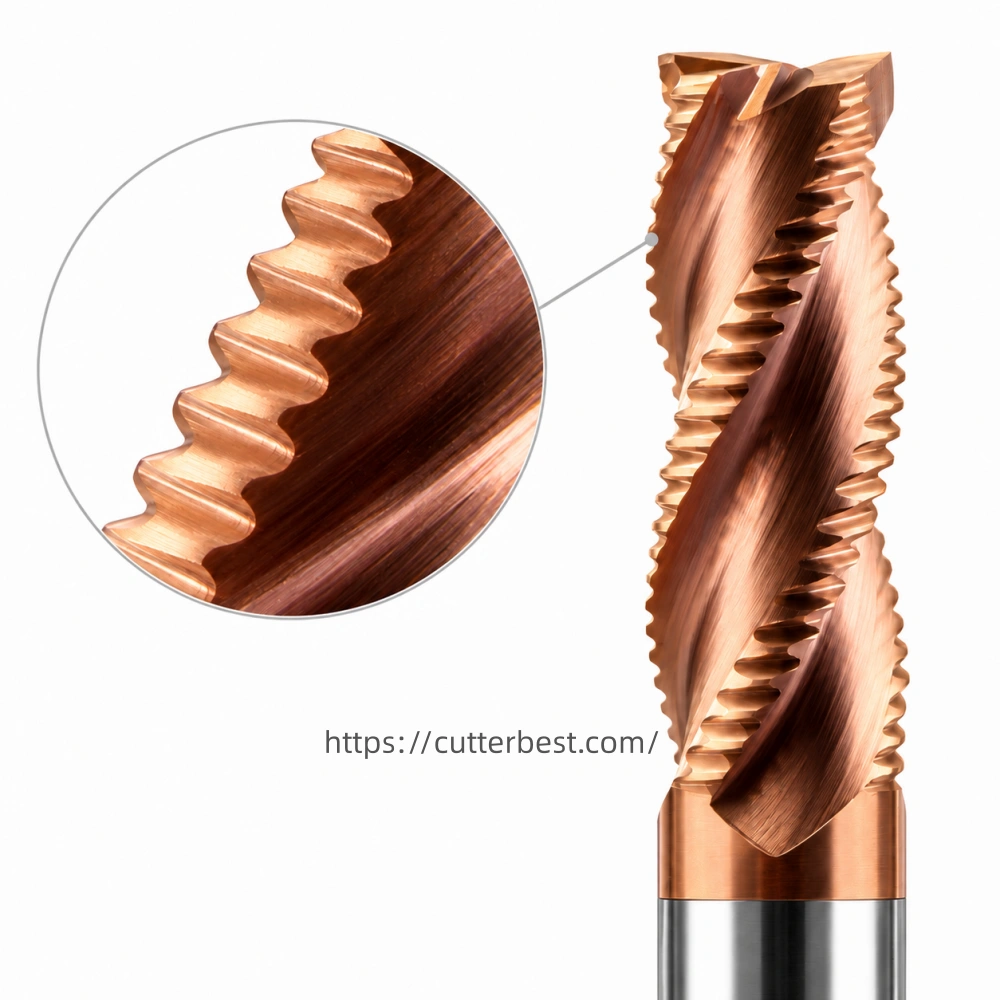
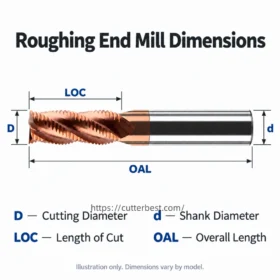
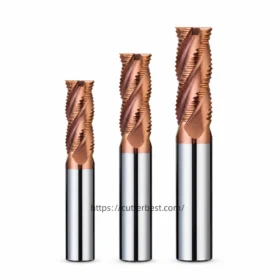
The serrated cutting edges on this roughing end mill divide chips into smaller segments during steel roughing. Chip control and cutting performance depend on the geometry, taglio dell'impegno, pezzo, e configurazione della macchina.
Buyers also use names such as corncob rougher and hog mill for similar serrated tools. Match the actual tool structure by model or drawing, since supplier names can vary.
Roughing End Mill Specifications
Use an existing tool model or drawing where available. The following information helps us match a standard cutter or review a custom requirement.
| Specificazione | Information to Confirm | Considerazione sulla selezione |
|---|---|---|
| Diametro di taglio | Existing model or required cutter diameter | Match feature width, accesso, and machining allowance |
| Lunghezza del taglio | Required cutting length and machining depth | Select enough usable cutting length while maintaining tool rigidity |
| Diametro del gambo | Shank size and holder type | Match the tool to the holder and clamping arrangement |
| Overall Length and Reach | Lunghezza, working depth, and required tool projection | Check holder clearance and avoid unnecessary overhang |
| Conte di flauto | Existing flute count or machining application | Consider chip space, core geometry, and cutting engagement together |
| Serration Profile / Serration Pitch | Existing tooth profile or tool model | Identify the wave profile and spacing along each cutting edge separately from flute count |
| End Geometry and Entry Method | Bottom profile, corner requirements, and intended entry method | Review the specific end geometry for plunging, rampante, o ingresso elicoidale |
| Rivestimento e preparazione dei bordi | Existing tool details, se noto, or workpiece information | Match the coating and cutting edge to the steel grade and application |
We review these requirements together to confirm a suitable standard model or assess a custom drawing.
Applicazioni & Selezione
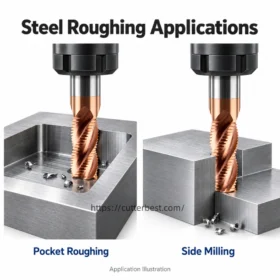
Typical tasks include pocket and cavity roughing, fresatura laterale, and removing machining allowance from steel components. Start with the steel grade, durezza del pezzo, and required tool dimensions, then consider the operation and setup.
- Slot machining: Distinguish full-width slotting from cuts with partial radial engagement. Review cutting depth and chip clearance for the selected model.
- Pocket and deep-cavity machining: Check working depth, portata richiesta, sporgenza dell'utensile, and holder clearance. Provide space and a suitable method for chip removal.
- Tool entry: Confirm a suitable center-cutting end before axial plunging. Review ramping and helical-entry conditions separately for the specific model.
- Trochoidal and adaptive toolpaths: Match the cutter geometry and cutting engagement to the programmed operation.
Serration pitch describes the spacing along the serrated cutting edge. It does not determine flute-gullet capacity on its own. Consider flute shape, core geometry, diametro, and flute count when reviewing chip space.
For a broader explanation of applications and working principles, leggi il nostro roughing end mill uses guide.
Caratteristiche principali
Serrated Cutting Edges
The wave-shaped edge helps divide chips during roughing. Effective evacuation still depends on the tool geometry and machining conditions.
Costruzione in carburo solido
The solid carbide body provides rigidity for steel milling. Tool projection, condizione del titolare, and workholding also affect cutting stability.
Stock Removal Before Finishing
Use this series to remove machining allowance. Plan any subsequent finishing operation around the drawing’s surface and dimensional requirements.
Produzione personalizzata
For standard tool matching, send the existing model or key dimensions. For a custom requirement, share a drawing and describe the steel grade, machining task, e quantità. We review the complete geometry and application before confirming the manufacturing specification.
FAQ About Roughing End Mills
What is a roughing end mill used for?
A roughing end mill removes machining allowance from pockets, cavità, and side faces. This product family focuses on solid carbide serrated cutters for steel roughing.
What does the HRC55 series mean?
HRC55 is the workpiece hardness series designation for this product family. Match the cutter to the steel grade, heat treatment, e condizioni di lavorazione.
Can this steel roughing series be used for aluminum?
We supply separate steel and aluminum roughing series. Per la lavorazione dell'alluminio, send your alloy grade, tool model or required dimensions, and quantity so we can match the aluminum series.
Can a roughing end mill replace a finishing end mill?
A serrated roughing cutter can leave visible tool marks. If the part needs a smoother surface or closer dimensional control, plan an appropriate finishing pass and review our soluzioni di frese di finitura.
Quali informazioni devo inviare per un preventivo?
Send a tool model, disegno, or main dimensions, plus the workpiece material and quantity. Include the hardness if known. If further selection is needed, we may ask about the operation, profondità di lavorazione, sporgenza dell'utensile, titolare, and cooling conditions.
Send Your Roughing End Mill Inquiry
Send your roughing end mill inquiry by E-mail, oppure contattaci su Contatti.