 精密フライスカッター,あらゆる材料を加工するCNC用の切削工具

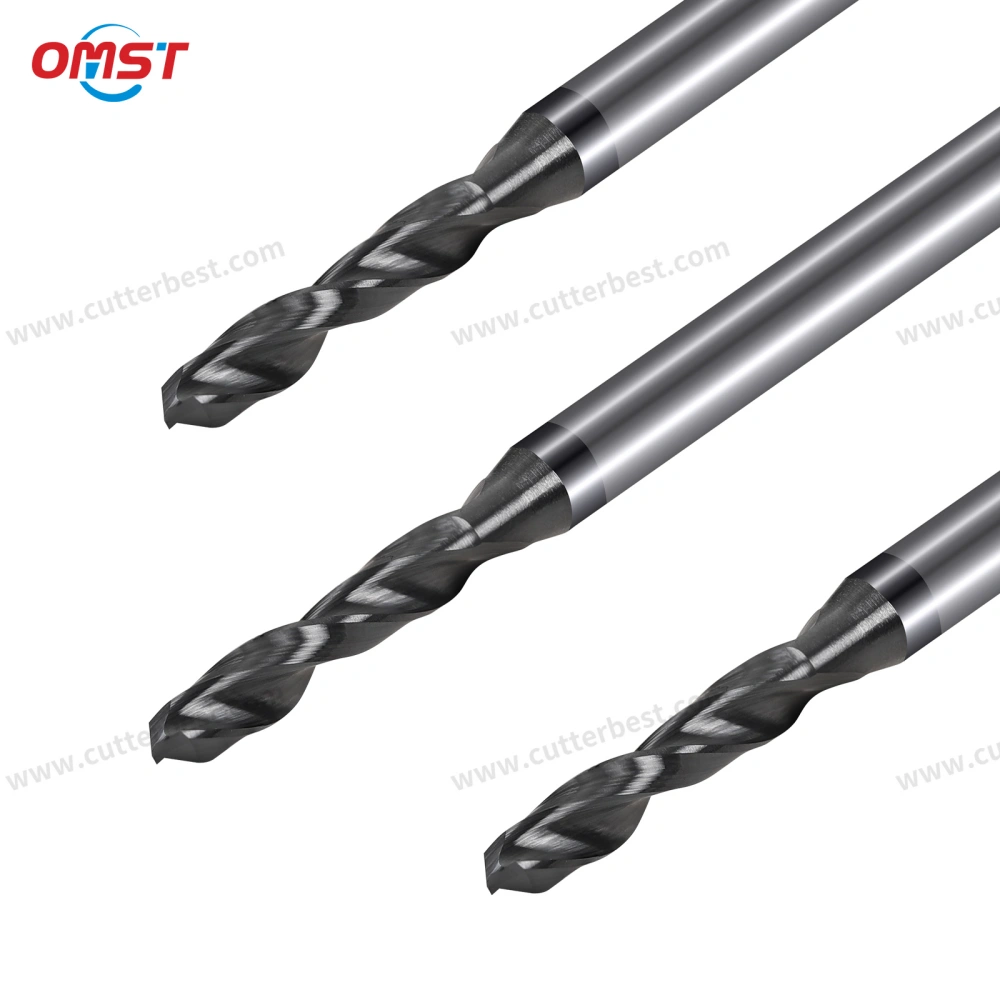
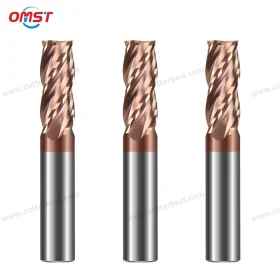
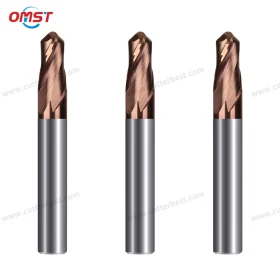
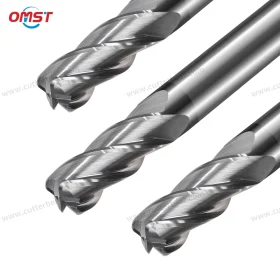
Finishing End Mill Solutions
A finishing end mill is selected for the finishing stage, but it is not limited to one fixed cutting profile or flute count. Depending on the final surface, the suitable tool may be a flat end mill, ボールエンドミル, ブルノーズエンドミル, or custom-profile cutter.
加えて, the workpiece material affects the carbide grade, cutting-edge design, フルートの構成, and coating choice. Customers can send an existing tool model for matching or provide a drawing, マテリアル情報, 必要な寸法, and machining conditions for tool selection.
Quick Finishing End Mill Selection
Use these directions as a practical starting point:
- Choose a flat end mill for flat bottoms, まっすぐな側壁, ステップ, スロット, そして四角い肩.
- Choose a ball nose end mill for curved surfaces, 3D輪郭, complex profiles, および金型キャビティ.
- Choose a bull nose end mill when the part requires a defined radius between the bottom and side wall.
- For abrasive graphite, consider a diamond-coated carbide tool when cutting-edge wear affects dimensional consistency.
- アルミ用, prioritize a sharp cutting edge, smooth flute surfaces, 十分なチップスペース, and effective chip removal.
- For steel finishing, prioritize tool rigidity, エッジ強度, そして耐摩耗性.
- ステンレス鋼用, avoid worn or weak cutting edges because work hardening can increase the cutting load.
- For titanium, keep the cutting setup stable and the tool overhang as short as possible to help control heat and deflection.
- For deep cavities or restricted areas, use the shortest neck and overall length that can reach the required surface.
These directions help narrow the product range. しかし, 最終的な寸法, フルート数, 超硬グレード, and coating should match the drawing and actual machining conditions.
Finishing End Mill Types We Supply
フラットエンドミル
Flat end mills have a flat cutting end and sharp outer corners. They suit flat-bottom features, pocket bottoms, まっすぐな壁, ステップ, スロット, そして四角い肩.
Choose a flat profile when the part requires a level bottom or a clear wall-to-bottom transition. レビューしてください flat end mills for flat-surface finishing.
ボールノーズエンドミル
Ball nose end mills have a fully rounded cutting end. They suit curved surfaces, 3D輪郭, 金型キャビティ, and continuous surface transitions.
Choose the ball diameter according to the curvature and feature size of the part. その間, use only the neck and overall length required to reach the cutting area. レビューしてください ball nose end mills for curved-surface finishing.
ブルノーズエンドミル
Bull nose end mills, コーナーラジアスエンドミルとも呼ばれます, combine a flat cutting area with rounded outer corners. They suit bottom-to-wall transitions, 金型プロファイル, and parts that require a defined corner radius.
Match the tool radius to the part drawing. An unsuitable radius may cause interference, overcutting, or remaining material in the corner. レビューしてください bull nose end mills for corner transitions.
Custom Profile End Mills
Standard tools do not fit every component. Special features may require a non-standard diameter, 刃の長さ, コーナー半径, ボールの半径, neck design, フルート数, または切断プロファイル.
Customers can submit an existing tool model, 描画, tool photo, or physical sample for review. 私たちの custom end mills based on drawings or samples.
Finishing End Mills for Different Materials
Graphite Finishing End Mills
グラファイトは研磨性がある. したがって, cutting-edge wear can affect detail accuracy and dimensional consistency. Thin walls, sharp electrode edges, and deep features may also require careful selection of the end profile and neck design.
Use a flat profile for level electrode surfaces, a ball nose profile for curved contours, and a bull nose profile for defined corner transitions. When abrasive wear is the main concern, a diamond-coated finishing end mill may be a suitable option.
レビューしてください diamond coated end mills for graphite finishing.
For further application information, 読む what diamond coated end mills are used for.
Aluminum Finishing End Mills
Aluminum and other non-ferrous materials may create built-up edges, 材料の接着, チップ再切断, and fine scratches. 結果として, aluminum finishing tools usually emphasize sharp cutting edges, smooth flute surfaces, and sufficient chip space.
Start with a lower flute count when chip evacuation is difficult. しかし, specially designed higher-flute tools may suit stable side-finishing operations with controlled chip flow.
Uncoated tools can provide a sharp cutting edge, while DLC or other application-specific coatings may help when material adhesion and tool wear are recurring problems. 加えて, suitable coolant or air blast helps remove chips before they damage the finished surface.
Finishing End Mills for Steel
Steel finishing usually requires a balance of tool rigidity, エッジ強度, 耐摩耗性, and stable engagement. したがって, select the flute count and coating according to the steel grade, 硬度, カッター径, and machining setup.
For long-reach applications, avoid unnecessary overall length because excessive tool overhang can increase deflection and visible tool marks.
Finishing End Mills for Stainless Steel
Stainless steel can generate cutting heat and work hardening. したがって, maintain a stable cutting setup and avoid using worn or damaged cutting edges for the final pass.
The tool should provide enough edge strength while maintaining suitable chip control. コーティング, フルート数, カッター径, and tool overhang should match the exact stainless steel grade and machining operation.
Titanium Finishing End Mills
Titanium concentrates heat near the cutting edge and can reduce tool life if the setup lacks stability. Use a rigid toolholding system, keep the tool overhang short, and select a coating suitable for the application.
The final tool design should also consider the engagement method, part rigidity, feature depth, and chip-removal conditions.
Finishing End Mills for Mold and Hardened Materials
Mold and hardened-material finishing may include curved cavities, narrow areas, deep features, and small details. Depending on the surface, suitable options may include flat, ボールノーズ, 雄牛の鼻, reduced-neck, or long-neck end mills.
Use the shortest tool that can reach the machining area. Before confirming the product, provide the material grade, 硬度, キャビティの深さ, 必要なプロファイル, and part drawing.
Common Signs That the Finishing Tool Needs Review
The finishing tool or setup may need adjustment when the part shows:
- Visible tool marks or chatter lines
- Rapid cutting-edge wear
- Graphite edge chipping
- Aluminum adhesion or fine scratches
- Unstable dimensions during continuous machining
- Remaining material in corners or transitions
- Insufficient reach or excessive tool deflection
These problems may relate to the end profile, フルート数, 最先端の状態, コーティング, 工具オーバーハング, なくなる, 切りくずの排出, or workholding stability.
初め, check the tool condition, ホルダー, なくなる, オーバーハング, and chip-removal conditions. If the problem continues, send the current tool information, 部品図, 材料, and machining setup for a more focused review.
仕様オプション
| 仕様 | 利用可能なオプション | 選択方向 |
|---|---|---|
| 工具材質 | 超硬ソリッド | Match the material, wear conditions, and required rigidity |
| エンドプロファイル | フラット, ボールノーズ, Bull Nose or Custom | Match the final surface geometry |
| 切断径 | 標準またはカスタム | Match the feature size and available machining space |
| フルートの長さ | 標準またはカスタム | Use only the flute length required for the cutting area |
| 全長 | 標準, Extended or Custom | Use the shortest suitable overall length |
| シャンク径 | Standard or Drawing-Based | Match the toolholder and rigidity requirements |
| フルートカウント | Multiple Options | Balance chip space, 剛性, and cutting-edge engagement |
| コーナー半径 | 標準またはカスタム | Match the part radius and check for interference |
| ボール半径 | Based on Diameter or Drawing | Match the curved surface and feature size |
| ネックデザイン | 標準, Reduced Neck or Long Neck | Use a long neck only when the feature requires additional reach |
| コーティング | Diamond, DLC, TiAlNの, アルティン, TiSiNの, Nano Coating, Uncoated or Other Options | Match abrasion, adhesion, 熱を切る, と素材の種類 |
| Custom Production | ドローイング, Existing Model or Sample | Use for non-standard dimensions and profiles |
正確な寸法, coating combinations, and production feasibility depend on the tool structure, 材料, そしてアプリケーション.
How to Choose a Finishing End Mill
Choose by Surface Geometry
初め, identify the final surface that the cutter must produce.
Choose a flat end mill for flat bottoms, まっすぐな壁, ステップ, そして四角い肩. 曲面用, 金型キャビティ, および 3D プロファイル, a ball nose end mill is usually more suitable. When the part requires a defined radius between the bottom and side wall, consider a bull nose end mill.
ワーク材質から選ぶ
次に, confirm the material grade and hardness.
Graphite requires wear-resistant tool selection. Aluminum requires sharp edges and effective chip removal. Steel requires a balance of rigidity and wear resistance. Stainless steel needs stable cutting and control of work hardening. Titanium requires heat control, 適切なコーティング, and limited tool overhang.
Mold steel and hardened materials require separate evaluation based on hardness, profile complexity, キャビティの深さ, とマシンの安定性.
フルート数を選択してください
Flute count affects chip space, 工具剛性, and the number of cutting edges in contact with the workpiece.
Use fewer flutes when the operation needs more chip space. 対照的に, consider more flutes when the machining process is stable and additional cutting edges support the finishing operation.
しかし, do not choose the flute count alone. 工具径, 材料, 切断係合, 切りくずの排出, and machine stability also affect the result.
For common four-flute products, 私たちのことを見直してください 4 フルートエンドミルのオプション.
Higher-flute configurations are available through our 6 フルートエンドミルのオプション.
A detailed comparison is available in our 2 フルート対 4 フルート対 6 フルートエンドミルガイド.
Confirm Dimensions and Machining Conditions
Before requesting a quotation, confirm the main tool dimensions, ワーク材質, マシンのセットアップ, そして必要な量. 利用可能な場合, also provide the current tool model and machining problem. We will request any additional information needed for final tool selection.
A short and rigid tool usually provides a stable starting point. しかし, deep cavities and restricted areas may require reduced-neck, long-neck, or extended-length designs.
Roughing and Finishing Tool Selection
Separate roughing and finishing tools are generally more suitable when the part has demanding surface requirements, complex contours, difficult materials, uneven remaining stock, or noticeable wear on the roughing tool.
In simpler and stable operations, one cutter may perform more than one machining stage after the cutting conditions change. しかし, the cutting edges must remain suitable for the final surface.
For dedicated material-removal products, 私たちのことを見直してください roughing end mills for CNC machining.
Standard and Custom Finishing End Mills
Standard Tool Matching
Customers can send an existing tool model, specification sheet, product photo, or supplier reference. We will compare the end profile, 寸法, フルート数, コーティング, and intended material before preparing a quotation.
Custom Tool Options
カスタムディメンション, 半径, フルートのカウント, neck designs, コーティング, and special profiles can be reviewed according to drawings, existing tool models, or samples.
Information Required for a Quotation
To request a quotation, please send your tool model, 描画, or main specifications together with the workpiece material and required quantity. We will ask for additional machining information if needed.
Instead of using one fixed cutter for every finishing application, we match the product to the material, 表面形状, 描画, および加工条件.
Why Choose Finishing End Mills
と 16 長年の切削工具製造経験, OMIST supplies standard and custom solid carbide end mills for different materials and CNC finishing applications. Instead of using one fixed cutter for every finishing operation, we match the product to the material, 表面形状, 描画, および加工条件.
Finishing End Mill FAQ
Is a finishing end mill one fixed type of cutter?
いいえ. Finishing describes the machining stage rather than one fixed cutter shape. フラット, ボールノーズ, 雄牛の鼻, and custom-profile end mills can all perform finishing operations.
Which end mill should I use for a flat surface?
Choose a flat end mill for flat bottoms, まっすぐな壁, ステップ, そして四角い肩. If the bottom and wall require a defined corner radius, consider a bull nose end mill instead.
Which end mill should I use for a curved surface?
Choose a ball nose end mill for curved surfaces, 金型キャビティ, と 3D 輪郭. Match the ball diameter and tool length to the curvature and depth of the feature.
How many flutes should a finishing end mill have?
Use fewer flutes when the operation needs more chip space. Consider more flutes when the process is stable and additional cutting edges support the finishing operation. 材料, 直径, 婚約, and machine conditions still affect the final choice.
Can the same end mill perform roughing and finishing?
It may work in simple and stable operations with moderate surface requirements. しかし, separate tools are usually more suitable when roughing causes significant cutting-edge wear or the final surface has strict requirements.
Can you manufacture custom finishing end mills?
はい. We can review custom diameters, 長さ, シャンク, 半径, フルートのカウント, neck designs, コーティング, and special profiles according to drawings, existing models, or samples.
What information do you need for a quotation?
Please provide the tool model or drawing, ワーク材質, 硬度, 必要な寸法, エンドプロファイル, コーティング, 機械の状態, current problem, そして量.
Send Your Finishing End Mill Requirements
Send your existing tool model, tool photo, 部品図, main specifications, ワーク材質, そして注文数量を sales@cutterbest.com. We will review the suitable end profile, フルートの構成, 寸法, 超硬グレード, and coating direction for your CNC finishing application, and request any additional machining information if needed.