 Precision Milling Cutters,Cutting Tools for CNC Machining Every Material

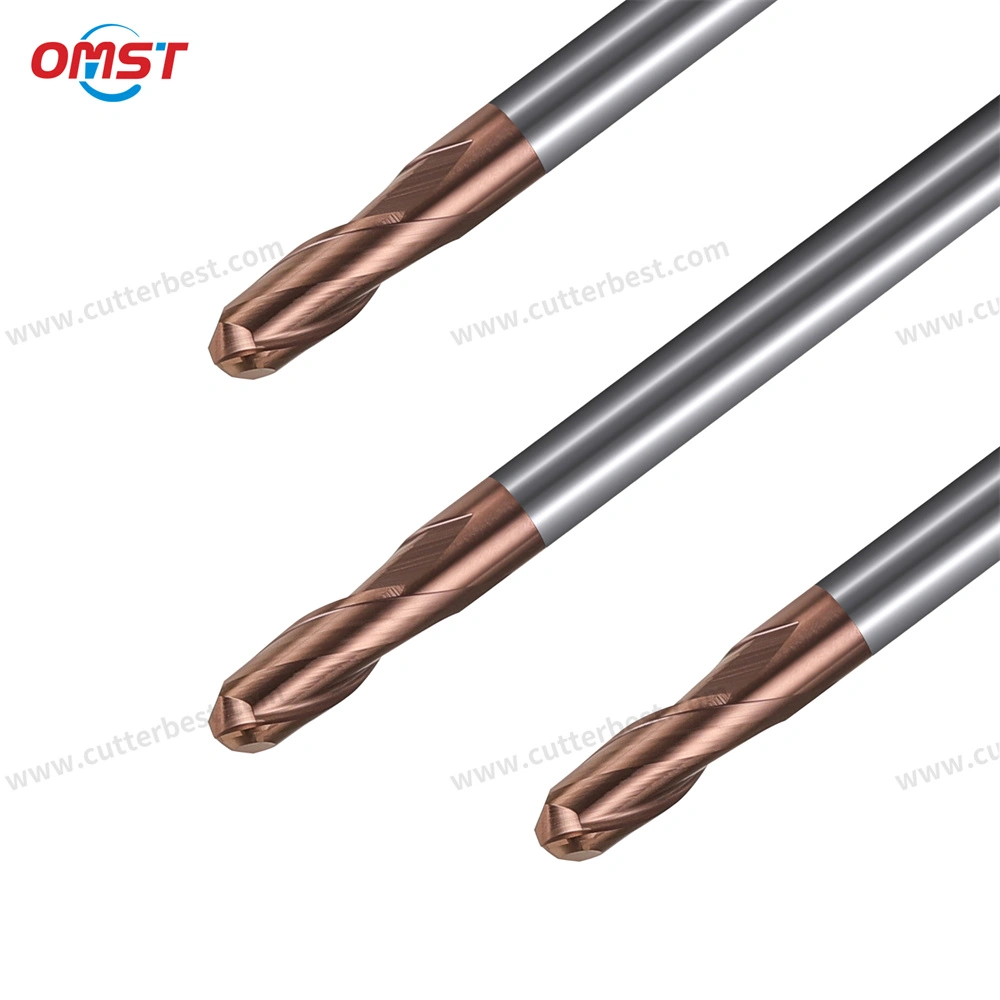
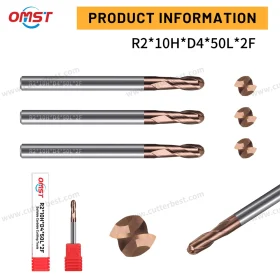

A solid carbide 2 flute end mill uses two cutting edges and wide flute grooves to provide more space for chip evacuation. This design makes it suitable for CNC operations that generate a high chip volume, especially slotting, pocket milling, side milling, and light roughing in aluminum and other non-ferrous materials.
The cutter can also machine copper, brass, selected plastics, and other materials when the cutting geometry matches the application. Sharp cutting edges and suitable flute surfaces help reduce chip packing, re-cutting, and built-up edge under stable machining conditions.
OMIST supplies both standard and custom two-flute cutters for machine shops, distributors, tool brands, equipment manufacturers, and industrial buyers. Available options include different diameters, flute lengths, overall lengths, shank sizes, helix angles, coatings, center-cutting designs, tolerances, markings, and packaging.
Key Features
Efficient Chip Evacuation
The two-flute design provides wider flute grooves than many higher-flute-count tools. Therefore, chips can leave the cutting area more easily during slotting and pocket milling.
Efficient chip evacuation helps reduce:
- Chip packing
- Chip re-cutting
- Heat accumulation
- Built-up edge
- Cutting-edge damage
- Unstable slot machining
This advantage is especially important when cutting aluminum and other materials that produce large or continuous chips.
For a detailed explanation of flute space, core diameter, helix angle, and flute length, read our end mill flute design and selection guide.
Solid Carbide and Sharp Cutting Geometry
Solid carbide provides rigidity, wear resistance, and dimensional stability for CNC milling. Meanwhile, sharp cutting edges support clean chip formation in aluminum, copper, brass, and selected plastics.
Depending on the application, the cutter can be supplied with:
- Standard ground flutes
- Smooth or polished flute surfaces
- Sharp edge preparation
- Application-specific helix angles
- Uncoated or low-friction coating options
- Custom end geometry
Tool performance also depends on cutter diameter, flute length, tool overhang, holder accuracy, machine rigidity, coolant delivery, and cutting parameters.
Center-Cutting and Custom Geometry Options
Center-cutting and non-center-cutting options are available according to the machining operation.
A center-cutting design may be required for:
- Controlled plunge entry
- Ramping
- Helical entry
- Pocket starting
- Other axial-entry operations
However, flute count alone does not confirm plunge capability. The end geometry and programmed entry method must suit the cutter.
For more information, read can a 2 flute end mill plunge.
Custom geometry is also available for application-specific requirements, including special end profiles, edge preparation, helix angles, tool reach, and dimensional tolerances.
OEM and Private-Label Support
OMIST supports OEM orders for distributors, cutting tool brands, machining companies, and industrial buyers.
Available services include:
- Customer logo marking
- Customer model numbers
- Neutral marking
- Neutral packaging
- Private-label packaging
- Individual protective packaging
- Specification records for repeat orders
Marking and packaging requirements are confirmed before production.
2 Flute End Mill Materials and CNC Applications
Aluminum and Non-Ferrous Materials
A 2 flute end mill is commonly used for aluminum because the wide flute space helps remove large chips from slots and pockets.
For aluminum machining, available tool options include:
- Sharp cutting edges
- Smooth or polished flute surfaces
- Uncoated geometry
- DLC coating
- Other suitable low-friction coating options
- Application-specific helix angles
The final choice should match the aluminum grade, cutter diameter, cutting depth, coolant method, and required surface finish.
Copper and Brass
Copper and brass require sharp cutting geometry and stable chip formation. Suitable flute finish and edge preparation can help improve burr control, chip evacuation, and surface quality.
Because pure copper and different brass alloys machine differently, customers should provide the exact material grade when available.
Plastics and Selected Composite Materials
Plastic machining requires geometry that limits rubbing, melting, and chip clogging.
The correct cutter depends on:
- Plastic type
- Filled or unfilled material
- Required edge quality
- Cutting temperature
- Chip form
- Part rigidity
Selected composite materials can also be supplied with application-specific geometry. However, one general two-flute design does not suit every composite material.
Slotting, Pocketing, and Side Milling
Slotting and pocket milling create demanding chip-removal conditions. Therefore, flute space, tool overhang, flute length, and coolant or air delivery are important.
The cutter should match:
- Slot or pocket depth
- Radial and axial engagement
- Entry method
- Machine rigidity
- Required bottom and wall finish
During side milling and profiling, radial engagement and surface-finish requirements become more important. Some applications suit a two-flute cutter, while others may require a higher flute count or stronger core.
For related guidance, read 2 flute end mill vs 4 flute for a direct comparison, review 2, 4, and 6 flute end mills for broader flute-count selection, or explore more 2 flute end mill applications by material and machining operation.
2 Flute End Mill Specification Options
Product Name: 2 Flute End Mill
Tool Type: Solid Carbide End Mill / CNC Milling Cutter
Tool Material: Solid Carbide; Carbide Grade Selected by Application
Flute Count: 2 Flutes
Cutter Diameter: Standard Metric, Inch, or Custom Diameter
Flute Length: Standard, Short, Long, or Drawing-Specified Flute Length
Overall Length: Standard or Custom Overall Length
Shank Diameter: Standard, Reinforced, Reduced, or Custom Shank Diameter
Helix Angle: 30°, 35°, 45°, or Application-Specific Design
End Profile: Flat / Square End or Custom End Geometry
Center Cutting: Center-Cutting or Non-Center-Cutting Design
Coating: Uncoated, DLC, Nano Blue, or Application-Specific Coating
Workpiece Materials: Aluminum, Copper, Brass, Selected Plastics, and Other Confirmed Materials
CNC Applications: Slotting, Pocketing, Side Milling, Profiling, Light Roughing, Ramping, or Application-Specific Milling
Tolerance: Standard Production Tolerance or Drawing-Specified Tolerance After Confirmation
Edge Preparation: Sharp, Honed, or Application-Specific Edge Preparation
Custom Service: Drawing, Sample, Model, or Application-Based Production
Marking: Standard Marking, Customer Logo, Model Number, or Neutral Marking
Packaging: Individual Protective Packaging, Export Carton, Neutral Packaging, or Private-Label Packaging
Special specifications are confirmed according to the cutter diameter, length, geometry, coating, tolerance, quantity, and machining application.
Custom 2 Flute End Mill and OEM Service
Standard cutters meet many regular CNC machining requirements. Custom production is available when a project requires non-standard dimensions, special geometry, unusual tool reach, custom coating, or drawing-specified tolerance.
Customizable items include:
- Cutter and shank dimensions
- Flute and overall length
- Helix angle and end geometry
- Center-cutting design
- Coating and edge preparation
- Dimensional tolerance
- Laser marking
- Neutral or private-label packaging
Customers may send a technical drawing, size list, tool sample, reference model, product image, or machining requirement. You do not need to provide every parameter before contacting us. OMIST will review the available information and confirm any necessary specifications before quotation.
Selecting a 2 Flute End Mill for Your Application
Before selecting a cutter, confirm the workpiece material, machining operation, required dimensions, coating requirement, center-cutting requirement, and quantity.
Workpiece Material
The exact material grade affects flute geometry, edge preparation, coating, and chip evacuation. For example, aluminum, copper, brass, engineering plastics, and composite materials have different cutting characteristics.
Machining Operation
The tool design may change according to whether the operation involves:
- Full-width slotting
- Pocket milling
- Side milling
- Profiling
- Light roughing
- Ramping
- Helical entry
- Controlled plunging
Slotting usually requires more flute space, while side milling and finishing may place greater emphasis on rigidity and surface quality.
Tool Dimensions and Reach
Cutter diameter, flute length, overall length, and shank diameter should match the feature and machine setup.
Use the shortest practical flute length and tool overhang. Excessive reach can increase deflection, vibration, and dimensional error.
Coating and Center-Cutting Requirement
Available coating options include uncoated, DLC, Nano Blue, and application-specific coatings. The final coating should match the material, cutting temperature, coolant method, and machining operation.
When the process requires axial entry, also confirm whether the cutter needs center-cutting geometry.
Why Choose US
16 Years of Cutting Tool Manufacturing Experience
OMIST has 16 years of experience in cutting tool manufacturing. We supply standard and custom CNC milling tools for industrial machining, distribution, and OEM projects.
Standard and Custom Production
Customers can source regular two-flute cutters and drawing-based custom tools from one supplier.
Before quotation, we review the available material, operation, dimensions, coating, center-cutting requirement, tolerance, and quantity.
OEM and Specification Confirmation
We support customer model numbers, laser marking, neutral packaging, and private-label packaging.
Before production, the main dimensions, geometry, coating, tolerance, marking, packaging, quantity, and delivery requirements are confirmed according to the order.
Repeat-Order Support
Confirmed specifications can be recorded for repeat manufacturing. This helps customers reorder approved models more efficiently and reduces specification errors.
When a repeat order includes any design or packaging changes, please indicate the revised requirement before production.
FAQ
What Information Is Required for a Quotation?
Please send the available information, such as:
- Cutter size or drawing
- Workpiece material
- Machining operation
- Coating requirement
- Center-cutting requirement
- Quantity
A tool sample, product image, current model number, or description of the machining problem can also help with evaluation.
Can You Manufacture From a Drawing or Tool Sample?
Yes. OMIST supports production according to technical drawings, size lists, tool samples, reference models, and confirmed machining requirements.
The main dimensions, geometry, coating, tolerance, marking, and packaging will be confirmed before production.
Are Center-Cutting 2 Flute End Mills Available?
Yes. Center-cutting designs are available for ramping, helical entry, pocket starting, and certain controlled plunge operations.
The end geometry and entry method must be confirmed for the specific cutter and application.
Which Coatings Are Available for Aluminum Machining?
Available coating options include uncoated tools, DLC, Nano Blue, and other application-specific coatings.
The final coating should match the aluminum grade, cutter geometry, cutting temperature, coolant condition, and machining operation.
Do You Provide Inspection or Material Documents?
Material reports, dimensional inspection records, or other quality documents may be available according to the specific tool and order.
Please confirm the required documents before ordering so that their availability can be checked for the project.
Do You Support OEM Marking and Private-Label Packaging?
Yes. We support customer logos, model numbers, neutral marking, individual protective packaging, neutral packaging, and private-label packaging.
Please provide the required marking and packaging details before production.
What Are Your MOQ and Lead Time?
There is no single MOQ or lead time for every cutter.
MOQ and lead time depend on:
- Standard or custom design
- Tool dimensions
- Geometry
- Coating
- Tolerance
- Quantity
- Current production schedule
These details will be confirmed in the quotation.
Send Your 2 Flute End Mill Requirement
Looking for a solid carbide 2 flute end mill for standard production, OEM supply, or a custom CNC machining project?
Send us your drawing, size list, reference model, tool sample, product image, workpiece material, machining application, and required quantity when available. OMIST will review the information, confirm the required specifications, and provide a quotation.
Email: sales@cutterbest.com