 Precision Milling Cutters,Cutting Tools for CNC Machining Every Material



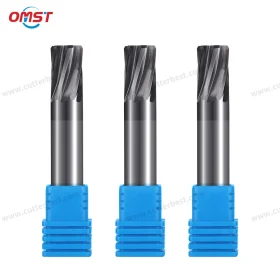
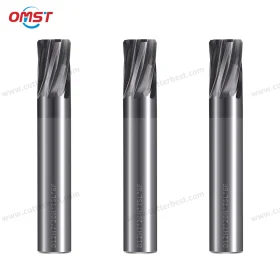
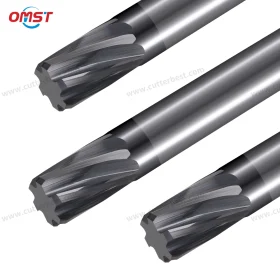

When Should You Choose a 6 Flute End Mill?
A 6 flute end mill is a practical choice when you need stable side-wall machining, good tool rigidity, or a controlled finishing pass.
Its six cutting edges provide more cutting contacts during each spindle revolution. This structure works well for side milling, profile milling, contour machining, semi-finishing, and finishing.
The trade-off is reduced chip space. For this reason, a standard six-flute tool is usually not the best option for deep full-width slotting, heavy roughing, or operations that produce a large volume of chips.
Read our application and material selection guide to check the main uses, suitable materials, and cutting limitations.
Recommended Operations for a 6 Flute End Mill
Side, Profile, and Contour Milling
Six cutting edges provide stable engagement during controlled side cutting. Therefore, the tool can machine straight walls, shoulders, mold contours, component profiles, and other precision features.
Tool runout, holder condition, machine rigidity, radial engagement, speed, and feed still affect the final result.
Semi-Finishing and Finishing
A six-flute tool is suitable when the machining goal is to remove a controlled amount of material while maintaining wall quality and dimensional consistency.
More cutting edges can leave finer cutting marks during a finishing pass. However, the final surface quality also depends on the holder, machine, toolpath, workpiece material, and cutting parameters.
Shallow Slotting
Shallow slotting is possible when chips can leave the cutting area effectively.
For deeper slots or full-width cutting, a lower-flute tool may provide more chip space and more reliable chip evacuation.
High-Speed Machining
Six-flute tools can support high-speed machining when the carbide grade, coating, cutting geometry, holder, and parameters match the application.
High spindle speed alone is not enough. The complete machining strategy must also control heat, runout, vibration, and chip evacuation.
Operations Not Normally Recommended
Avoid a standard six-flute design for:
- Deep full-width slotting
- Heavy roughing
- Aggressive chip removal
- Unstable machine setups
- Operations that produce large chips
- Cutting conditions with poor chip evacuation
In these situations, fewer flutes usually provide more chip space.
Read our four-flute and six-flute comparison when deciding whether chip evacuation or finishing stability matters more.
For a broader comparison, read our flute-count selection guide.
Choose a 6 Flute End Mill by Workpiece Material
Different workpiece materials require different carbide grades, coatings, flute geometries, and edge preparations.
The material name alone is not enough to select the tool. Also consider the material hardness, cutting depth, coolant condition, machine rigidity, and machining operation.
Carbon Steel and Alloy Steel
AlTiN and TiAlN coatings are common options for carbon steel and alloy steel.
Machinists mainly use six-flute tools for side milling, profile milling, semi-finishing, and finishing in these materials.
Stainless Steel
A 6 flute end mill can machine 304, 316, and other stainless steel grades when the cutting geometry, coating, coolant method, speed, and feed match the application.
AlTiN and TiSiN coatings are available. The final selection depends on the stainless steel grade, hardness, cutting depth, and machining operation.
Tool Steel and Pre-Hardened Steel
Tool steel and pre-hardened steel require suitable edge strength and stable cutting conditions.
The carbide grade, coating, core design, and edge preparation should match the workpiece hardness and the amount of material being removed.
Hardened Steel up to HRC65
Different hardness ranges require different tool series. HRC45, HRC55, HRC60, and HRC65 do not describe one identical tool that can machine every hardness level.
HRC45–50: TiAlN or AlTiN coating
HRC50–55: TiAlN or AlTiN coating
HRC55–60: TiSiN coating
HRC60–65: TiSiN coating
Please send the exact material grade and hardness so that we can match the carbide grade, coating, core design, and edge preparation.
Cast Iron
Six-flute tools can be produced for cast iron side milling, profile machining, and finishing.
The cutting-edge preparation should match the type of cast iron and the required surface condition.
Titanium Alloy
Titanium machining requires careful control of cutting heat and tool load.
Six-flute tools for titanium can use TiSiN or AlTiN coatings with application-specific flute geometry, edge preparation, and coolant design.
Please provide the titanium grade, cutting operation, cutting depth, tool overhang, and coolant condition before confirming the tool design.
Aluminum, Copper, and Non-Ferrous Metals
Six-flute tools can machine aluminum, copper, and other non-ferrous materials when they use a dedicated flute shape, sharp cutting edge, suitable chip-control design, and the correct coating.
DLC and uncoated options are available. However, six flutes are not normally the first choice for deep aluminum slots or heavy chip removal.
High-Temperature and Nickel-Based Alloys
High-temperature and nickel-based alloys require a specially designed tool.
Please provide the alloy grade, material hardness, machining operation, coolant method, and current cutting conditions for evaluation.
Available End and Shank Designs
Flat and Square End
Flat and square end designs are suitable for straight walls, flat-bottom features, shoulders, side milling, and finishing passes.
View our flat end mill range for more flat-bottom cutting tool options.
Corner Radius End
A corner radius strengthens the transition between the end cutting edge and the tool side. It can reduce stress at the sharp cutting corner during suitable machining operations.
Standard and custom corner radii are available.
View our bull nose end mill options for more corner radius designs.
Ball Nose End
Six-flute ball nose designs are available for suitable contour machining and finishing applications.
The tool geometry should match the workpiece profile, toolpath, cutting depth, and required surface quality.
Straight and Weldon Shanks
Straight shanks are available as a standard option. Weldon flat shanks can also be supplied when the holder requires a side-locking surface.
The standard shank tolerance is h6. Custom shank diameters and tolerances are also available.
Center Cutting and Coolant Options
Center-cutting designs are available according to the end style, diameter, and machining requirement.
External coolant and internal coolant configurations can both be produced. Internal coolant availability depends on the tool diameter, flute geometry, and coolant-hole arrangement.
Specification Options
| Item | Available Specification |
|---|---|
| Tool Material | Solid Carbide / Tungsten Carbide |
| Flute Count | 6 Flutes |
| End Styles | Flat, Square, Corner Radius, or Ball Nose |
| Shank Styles | Straight Shank or Weldon Flat Shank |
| Standard Helix Angle | 35° |
| Custom Geometry | Custom Helix, Variable Helix, Variable Pitch, Unequal Flute Spacing, or Anti-Vibration Design |
| Standard Cutting Diameter | 0.5–25 mm |
| Custom Cutting Diameter | Up to Approximately 30 mm |
| Overall Length | 38–200 mm or Custom |
| Flute Length | Selected According to Diameter, Rigidity, and Cutting Requirement |
| Metric and Inch Sizes | Available |
| Cutting Diameter Tolerance | 0 / -0.03 mm Standard |
| Shank Tolerance | h6 Standard |
| Flute Length and OAL Tolerance | ±1 mm Standard |
| Corner Radius Tolerance | ±0.02 mm Standard |
| Precision Tolerance | ±0.01 mm, ±0.005 mm, or According to Drawing |
| Coating Options | AlTiN, TiAlN, TiSiN, TiN, Nano Blue, DLC, or Uncoated |
| Coolant Options | External Coolant or Custom Internal Coolant |
| Custom Services | Dimensions, Geometry, Coating, Marking, and Packaging |
Long flute lengths, small diameters, tight tolerances, and internal coolant designs require technical review before production.
Custom Cutting Geometry
The standard helix angle is 35°. We can also adjust the helix angle, pitch, core design, edge preparation, and flute geometry according to the workpiece material, machining operation, and cutting conditions.
Please send us your material, application, tool size, drawing, or current tool model. We will review the requirements and recommend a suitable cutting geometry.
Custom 6 Flute End Mills for HEM
HEM applications require a dedicated tool design rather than a standard six-flute cutter. We can adjust the helix, pitch, core, cutting edges, coating, and coolant design according to the workpiece material, tool size, cutting parameters, and machine conditions.
OEM, Marking, and Packaging
We support OEM and ODM orders, including laser logo marking, neutral packaging, private-label packaging, custom labels, and repeat production according to approved specifications. All tool details and packaging requirements will be confirmed before production.
Frequently Asked Questions
Does “6 Flute” Mean a 6 mm Cutting Diameter?
No. “6 flute” means that the tool has six cutting edges.
The cutting diameter is a separate specification. Standard diameters range from 0.5 mm to 25 mm, while larger sizes can be customized.
Is a 6 Flute End Mill Suitable for Stainless Steel?
Yes. It can be used for stainless steel side milling, profile milling, semi-finishing, and finishing when the coating, geometry, coolant, speed, and feed match the material.
AlTiN and TiSiN coatings are available for stainless steel applications.
Can a 6 Flute End Mill Cut Aluminum?
Yes, with a sharp, material-specific cutting geometry. For deep slots or heavy chip removal, a tool with fewer flutes is usually a better choice.
Can It Be Used for Deep Slotting?
A standard six-flute cutter is not recommended for deep full-width slotting because the smaller flute space can restrict chip evacuation.
Choose a lower-flute tool when deep slots or heavy chip removal are the main requirements.
Is It Suitable for Hardened Steel?
Yes. Different tool series are available for HRC45, HRC55, HRC60, and HRC65 materials.
Each series uses a suitable carbide grade, coating, core design, and edge preparation.
Can You Manufacture According to a Drawing or Sample?
Yes. Production can be based on a drawing, existing tool sample, original model, hand-drawn sketch, or specification list.
Why Choose OMIST?
OMIST has 16 years of cutting tool manufacturing experience and supports standard tools, samples, small batches, custom designs, and repeat production.
Tools are manufactured according to the confirmed workpiece material, machining operation, dimensions, coating, tolerance, marking, and packaging requirements.
Request a Quote for a 6 Flute End Mill
Send us any available drawing, tool sample, model number, or dimensions, together with the workpiece material, hardness, machining operation, coating requirement, and quantity. We will review your application and recommend a suitable standard or custom tool.
You do not need to prepare a complete technical document. Contact sales@cutterbest.com for pricing, technical review, and production availability.
For more solid carbide milling tool designs, view our end mill cutter options.