 Precision Milling Cutters,Cutting Tools for CNC Machining Every Material

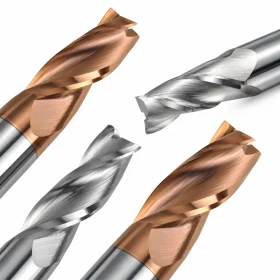
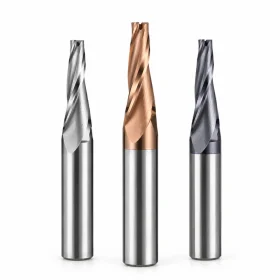
Tapered Square End Mill Specifications
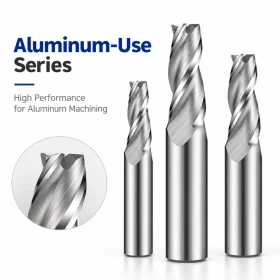
The tapered square end mill uses a small-end cutting diameter, taper angle, flute length, shank diameter, and overall length to define the tool geometry. These dimensions work together, so one tip diameter does not always use every taper angle or length. This flat-end geometry is also commonly described as a tapered flat end mill.
Our standard reference range covers tip diameters from approximately Ø0.3 to Ø10 mm, shank diameters from Ø4 to Ø16 mm, and overall lengths from 45 to 75 mm. For non-standard dimensions, we confirm the required geometry from the customer drawing or machining requirement.
Representative standard combinations include:
| Tip Diameter | Angle Per Side | Flute Length | Shank Diameter | Overall Length |
|---|---|---|---|---|
| Ø0.3 mm | 10° | 10.5 mm | Ø4 mm | 45 mm |
| Ø0.4 mm | 15° | 6.7 mm | Ø4 mm | 45 mm |
| Ø0.5 mm | 20° | 4.8 mm | Ø4 mm | 45 mm |
| Ø0.8 mm | 10° | 9 mm | Ø4 mm | 45 mm |
| Ø1.0 mm | 0.5° | 4 mm | Ø4 mm | 45 mm |
| Ø1.5 mm | 10° | 7 mm | Ø4 mm | 45 mm |
| Ø2.0 mm | 5° | 6 mm | Ø4 mm | 45 mm |
| Ø3.0 mm | 10° | 10 mm | Ø8 mm | 50 mm |
| Ø4.0 mm | 8° | 14.2 mm | Ø8 mm | 50 mm |
| Ø6.0 mm | 5° | 20 mm | Ø10 mm | 60 mm |
| Ø8.0 mm | 3° | 25 mm | Ø12 mm | 60 mm |
| Ø10.0 mm | 5° | 34.3 mm | Ø16 mm | 75 mm |
These values show representative standard combinations rather than every available size. Therefore, for a non-standard tool, confirm the complete geometry instead of selecting only one dimension.
For other tapered end geometries in the same product family, see our tapered end mills.
Tapered Square End Mill Tip Diameter and Angle Per Side Options
The small-end diameter and taper angle are two key dimensions when selecting this tool. Changing the taper angle also changes the cutting geometry over the specified flute length. For this reason, buyers should confirm the diameter and angle together.
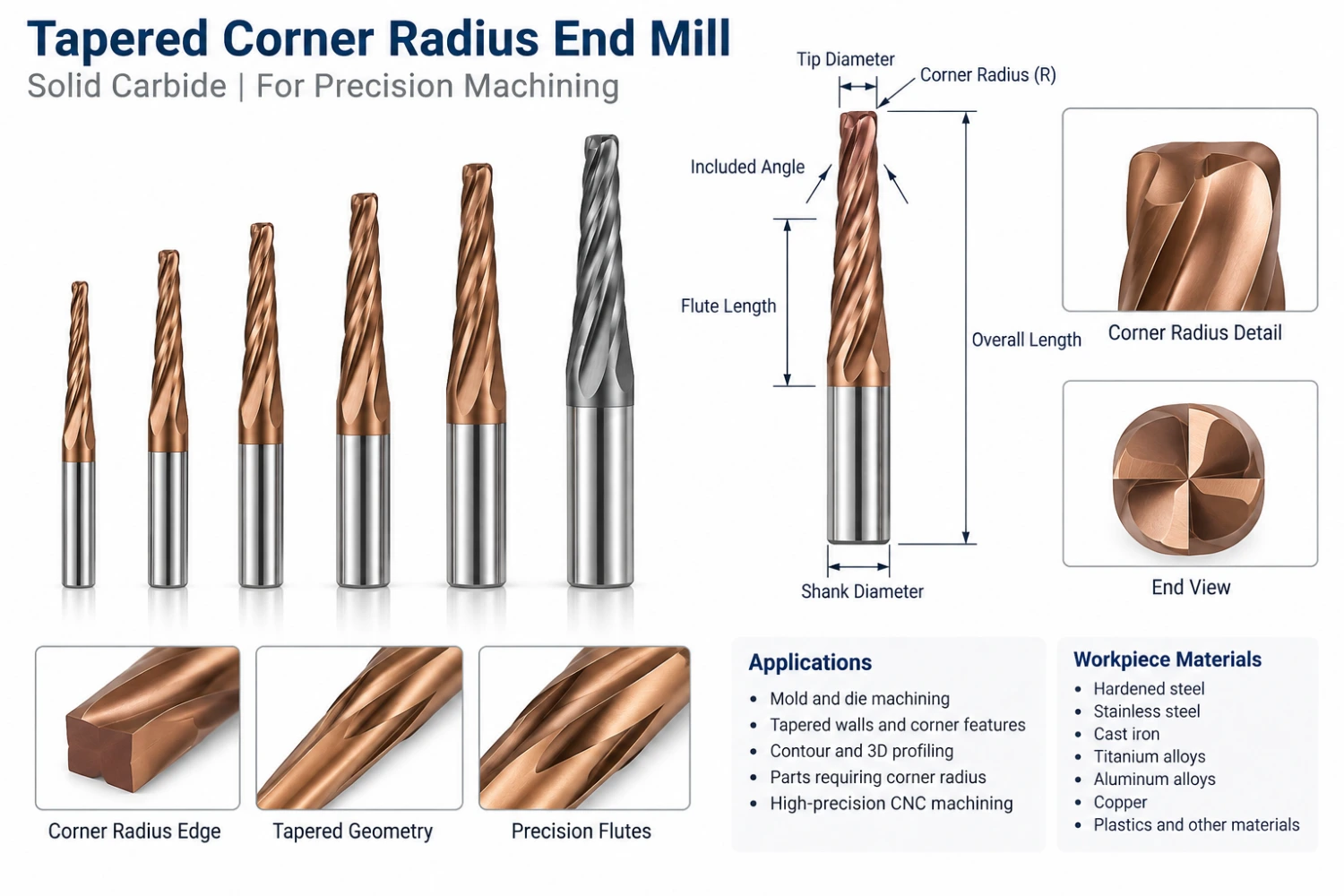
Tip Diameter Options
The standard reference range is approximately Ø0.3–10 mm.
Different tip diameters use different combinations of flute length, shank diameter, overall length, and taper angle. Therefore, select the tool from the complete dimensional combination rather than from the tip diameter alone.
For sizes outside the standard range, send the required dimensions or drawing for review.
Angle Per Side Options
Reference angle-per-side options include:
0.5°, 1°, 1.5°, 2°, 3°, 5°, 8°, 10°, 15°, 20°, and 30°.
On this page, all standard taper angles use the Angle Per Side convention rather than the total included angle.
For a symmetrical taper:
Included Angle = 2 × Angle Per Side
For example, a 5° angle per side gives a 10° included angle.
However, customer drawings may use either convention. Therefore, please state clearly whether the drawing shows an angle per side or a total included angle before quotation and production.
Steel-Use and Aluminum-Use Series
Steel-use and aluminum-use tools share the same basic square / flat-end tapered geometry. However, the final configuration should match the workpiece material and machining requirement.
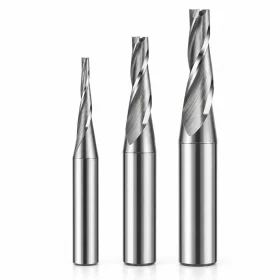
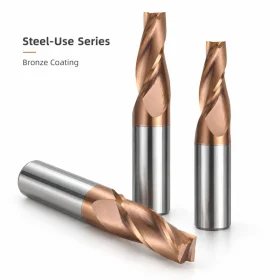
Steel-Use Series
We configure the steel-use series for materials including carbon steel, alloy steel, mold steel, pre-hardened steel, hardened steel, stainless steel, and cast iron.
With a suitable tool configuration, the machining hardness can reach approximately HRC65.
In addition, tool geometry and coating should match the workpiece material, hardness, cutting condition, and required feature. A tool diameter alone does not determine the final configuration.
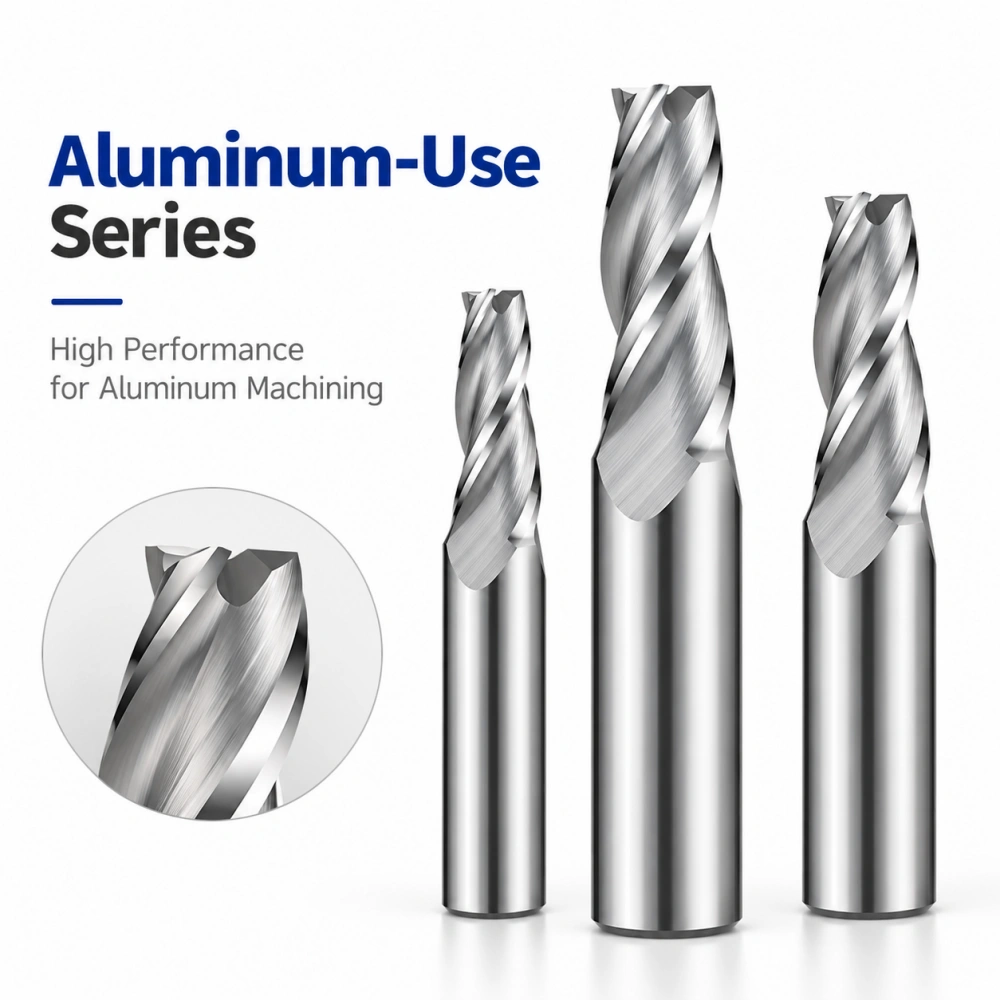
Aluminum-Use Series
The aluminum-use series mainly targets aluminum alloys.
Depending on the tool configuration and application, we can also review the same product family for copper, brass, graphite, plastics, and other suitable non-ferrous or non-metallic materials.
For these applications, flute geometry and coating or surface configuration should match the workpiece and chip-removal requirement.
Flute and Tool Configuration Options
Three flutes form the standard configuration for this tapered square end mill series.
For special applications, we can manufacture other flute counts according to the drawing or machining requirement. This gives customers more flexibility when a different cutting-edge arrangement is required.
No single fixed helix angle applies to every tapered square end mill. Instead, we select the helix geometry according to the tool design, workpiece material, edge-strength requirement, and chip evacuation conditions.
Similarly, coating requirements depend on the application. We confirm the specific coating during quotation rather than treating one coating as a fixed specification for every tool.
Applications
The flat cutting end and tapered cutting section suit machining features that require a flat-end geometry together with a tapered wall.
Typical applications include:
- Mold draft surfaces
- Tapered sidewalls
- Draft-angle wall machining
- Deep tapered grooves
- Draft-angle forming
- Engraving features
- Mold machining with flat-end tapered geometry
The square / flat-end geometry differs from a tapered ball nose end mill, which uses a rounded tip. It also differs from a tapered corner radius end mill, which adds an R corner between the end and side cutting edges.
For broader information about tapered tool applications and selection, see tapered end mill applications and selection.
Custom Tapered Square End Mill Manufacturing
We manufacture non-standard tapered square end mills according to customer drawings or dimensional requirements.
Customization can cover tip diameter, angle per side, flute length, shank diameter, overall length, flute count, coating, and other non-standard dimensions.
The standard version uses a square / flat end without a corner radius. If the drawing requires an R corner, we review that geometry as a separate custom configuration instead of treating it as a standard square-end specification.
For custom projects, we use the drawing as the primary reference when confirming both the taper-angle convention and the dimensional relationship.
FAQ About Tapered Square End Mills
Are taper angles specified per side or as an included angle?
On this page, we specify standard taper angles per side. For a symmetrical taper, the included angle equals twice the angle per side.
For custom tools, please state clearly whether the drawing shows a per-side angle or a total included angle.
What tip diameter range is available?
The standard reference range is approximately Ø0.3–10 mm.
For other diameters, send the required taper angle, flute length, shank diameter, overall length, and application for review.
Can you manufacture other flute counts besides 3 flutes?
Yes. Three flutes are standard. We can also customize other flute counts according to the drawing or machining requirement.
Can you produce custom tapered square end mills from a drawing?
Yes. We can review non-standard dimensions and configurations from customer drawings.
Custom items can include tip diameter, taper angle, flute length, shank diameter, overall length, flute count, coating, and other specified dimensions.
Send Your Tapered Square End Mill Inquiry
Need a standard or custom tapered square end mill?
Send your drawing or required dimensions to sales@cutterbest.com, or contact us through WhatsApp for specification review and quotation.