 Cortadores de fresagem de precisão,Ferramentas de corte para usinagem CNC de todos os materiais



Bull Nose End Mill Specification Options
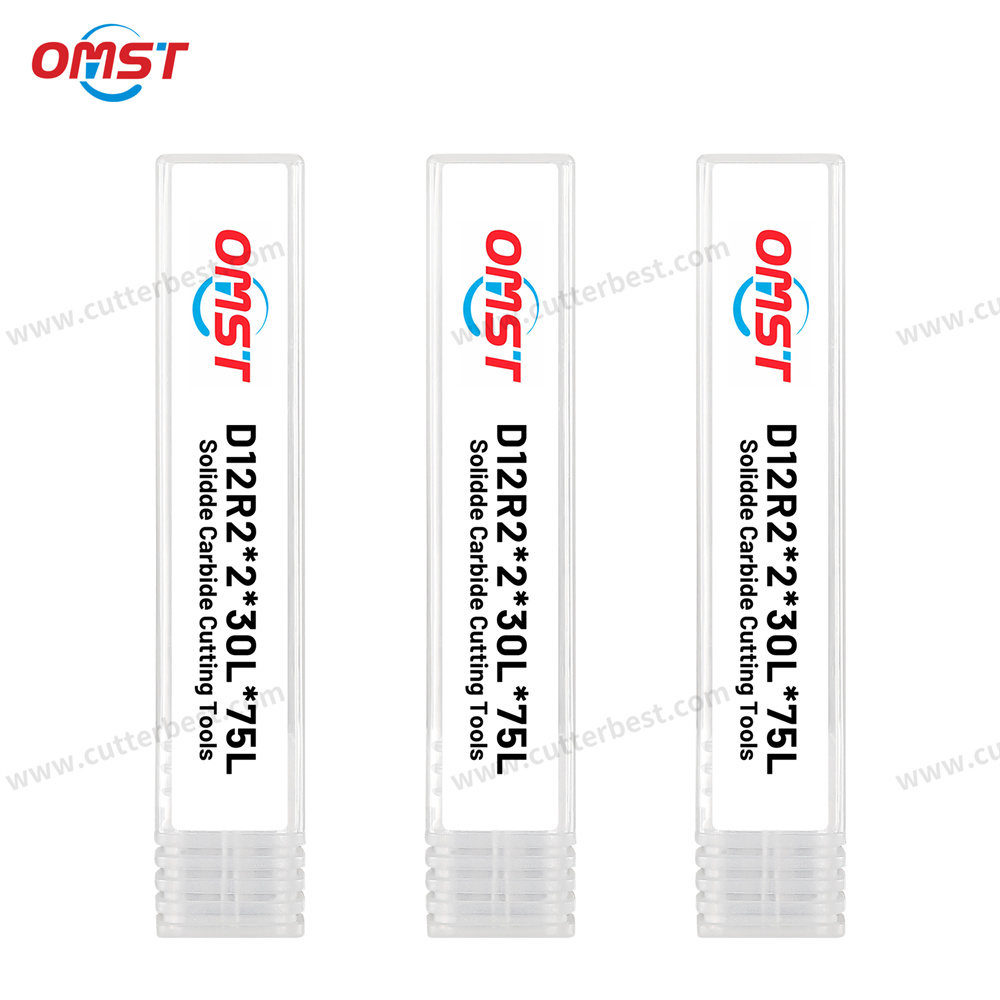
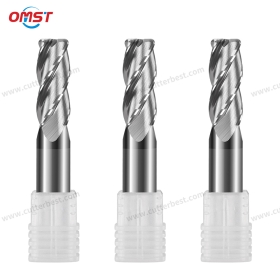
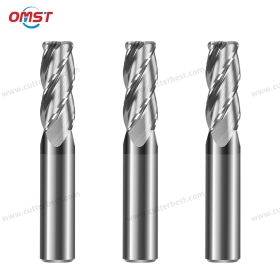
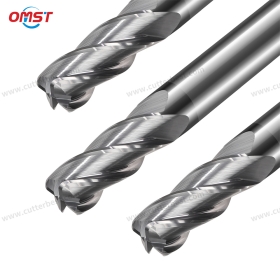
A bull nose end mill has a flat cutting bottom with a defined corner radius at the outside cutting edge. Tooling catalogs also commonly list this geometry as a fresa de topo com raio de canto.
General Dimensions
Use the following dimensions to specify the tool:
| Symbol | Dimensão |
|---|---|
| D | Diâmetro do cortador |
| R | Raio de canto |
| LOC | Comprimento do corte |
| d | Diâmetro da haste |
| OAL | Comprimento total |
| Z | Número de Flautas |
Check these dimensions together when selecting a standard tool or confirming a non-standard design.
Para ferramentas fora do padrão, send a drawing when available.

3-Flute Aluminum Series
OMIST offers a standard 3-flute series for aluminum and aluminum-alloy machining.
The confirmed series covers cutter diameters of approximately Ø1–Ø20 mm, with corner radii from R0.2 to R4 across the series. LOC, diâmetro da haste, and OAL vary by cutter diameter and tool design.
No entanto, not every diameter is available with every radius or length combination. OMIST confirms flute finish, surface treatment, and cutting geometry according to the actual machining requirement.
4-Flute Standard Series
The confirmed 4-flute series covers cutter diameters of approximately Ø1–Ø20 mm.
Corner radii represented across the series include:
R0.2 / R0.3 / R0,5 / R1 / R2
Not every radius is available with every cutter diameter. The table below shows representative confirmed configurations rather than a complete model list.
| D (em milímetro) | R (em milímetro) | LOC (em milímetro) | Shank d (em milímetro) | OAL (em milímetro) | Flautas |
|---|---|---|---|---|---|
| 1 | 0.2 | 3 | 4 | 50 | 4F |
| 4 | 0.5 | 10 | 4 | 50 | 4F |
| 6 | 1 | 18 | 6 | 75 | 4F |
| 8 | 1 | 24 | 8 | 75 | 4F |
| 10 | 1 | 30 | 10 | 100 | 4F |
| 12 | 1 | 36 | 12 | 100 | 4F |
| 14 | 2 | 35 | 14 | 100 | 4F |
| 16 | 1 | 40 | 16 | 100 | 4F |
| 20 | 1 | 40 | 20 | 100 | 4F |
Other D, R, LOC, haste, and OAL combinations depend on the required tool geometry and machining application.
Standard and Custom Options
OMIST offers standard 3F and 4F series.
For applications outside the standard range, we can manufacture non-standard sizes and geometries. 2F, 5F, 6F, extended-length tools, and other flute configurations are available for custom requirements.
Custom options may include diameter, raio do canto, LOC, OAL, tamanho da haste, contagem de flauta, helix, coating or surface treatment, geometria de corte, center-cutting design, e requisitos de tolerância.
Além disso, selecionado 150 mm OAL configurations are available according to cutter diameter, alcançar, e geometria.
We confirm final manufacturability after reviewing the required dimensions and application.
Candidaturas e Seleção
The 3-flute standard series is mainly intended for aluminum and aluminum-alloy machining.
The 4-flute series provides the main standard range for other machining requirements. Para aço, aço inoxidável, molde de aço, or hardened-steel applications, OMIST reviews material hardness, dimensões da ferramenta, operação de usinagem, alcançar, and cutting conditions before confirming the final configuration.
We also select coating or surface treatment according to the actual application rather than using one fixed specification for the whole product family.
As aplicações típicas incluem:
- Contour milling
- Fresamento de perfil
- Semiacabamento
- Acabamento
- Mold and die machining
- Cavity machining
- Pocket machining where a corner radius is acceptable
For applications that require a sharp cutting corner, ver Nariz de touro vs fresa de topo plano.
For the difference between a flat-bottom radiused cutter and a fully rounded cutting end, ver Bull Nose vs Ball Nose End Mill.
Corner rounding form cutters are a different tool type used to produce an external workpiece radius. See Raio de canto vs fresa de topo para arredondamento de canto.
Principais características
- Flat Bottom with Corner Radius: Combines a flat cutting end with a defined corner radius.
- Standard 3F and 4F Series: Covers multiple metric diameter, raio, and length combinations.
- Application-Matched Configuration: Tool geometry and surface treatment depend on the workpiece and machining conditions.
- Fabricação Personalizada: Dimensões fora do padrão, configurações de flauta, and cutting geometry can be produced from customer requirements or drawings.
Custom Bull Nose End Mill Manufacturing
OMIST supports standard and custom solid carbide bull nose end mills for machining companies, distribuidores, e requisitos de OEM.
Para ferramentas fora do padrão, we review the required dimensions, geometria, exigência de corte central, and dimensional or radius tolerance against the drawing and machining application.
If a standard size does not fit the part, send the required dimensions, desenho, amostra, or reference image for manufacturability review.
For quotation, please provide the main tool dimensions, material da peça, operação de usinagem, e quantidade. A drawing is preferred for non-standard requirements, but we can also make an initial review from the available dimensions and machining information.
We confirm MOQ, achievable tolerance, and lead time after reviewing the specification and quantity.
Perguntas frequentes
Uma fresa de topo com ponta boleada é igual a uma fresa de topo com raio de canto??
For the flat-bottom, radiused-corner geometry covered on this page, “bull nose end mill” is a common market name, while tooling catalogs often use “corner radius end mill.” Confirm the exact tool by its dimensions and geometry.
What flute counts are available?
The standard ranges include a 3-flute aluminum series e um 4-flute series. OMIST can also produce 2F, 5F, 6F, and other flute configurations for custom requirements.
What standard sizes and corner radii are available?
The 3-flute aluminum series covers approximately Ø1–Ø20 mm, com R0.2–R4 across the series.
The confirmed 4-flute range also covers approximately Ø1–Ø20 mm, com R0.2, R0.3, R0,5, R1, and R2 represented across the series.
Actual diameter, raio, and length combinations vary by tool size and design.
Can custom bull nose end mills be manufactured from a drawing?
Sim. OMIST can review non-standard dimensions and geometry from a drawing, dimensões necessárias, amostra, or machining information.
How should I request a quotation?
Send the main tool dimensions, material da peça, operação de usinagem, e quantidade. For a non-standard tool, include a drawing or reference image when available.
Solicite um orçamento
Looking for a standard or custom bull nose end mill?
Send your drawing or required dimensions by e-mail or contact us on WhatsApp for specification confirmation and quotation.