 Cortadores de fresagem de precisão,Ferramentas de corte para usinagem CNC de todos os materiais

Long Neck Square End Mill Specifications
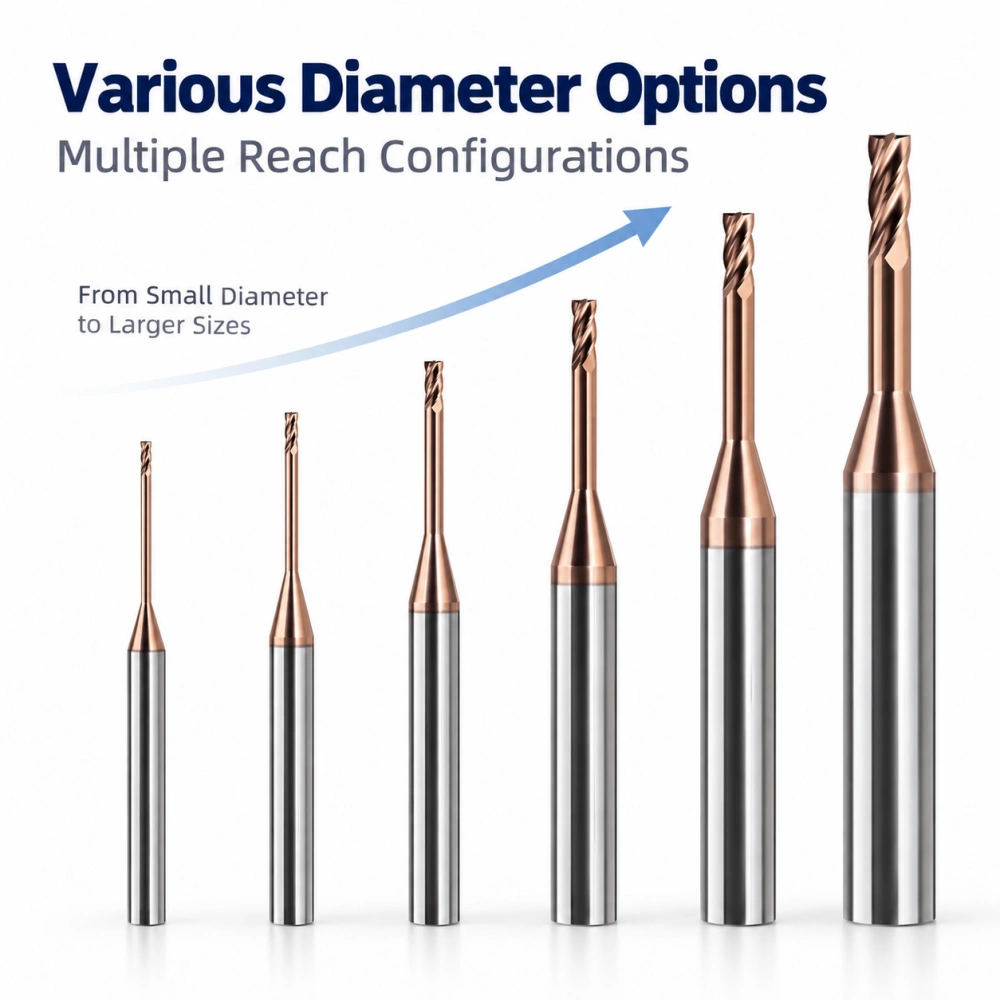
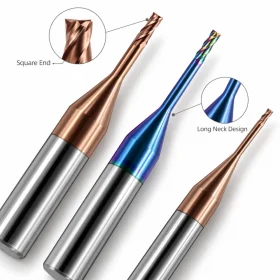
A long neck square end mill combines square-end cutting geometry with an extended neck section for features that require additional reach or clearance.
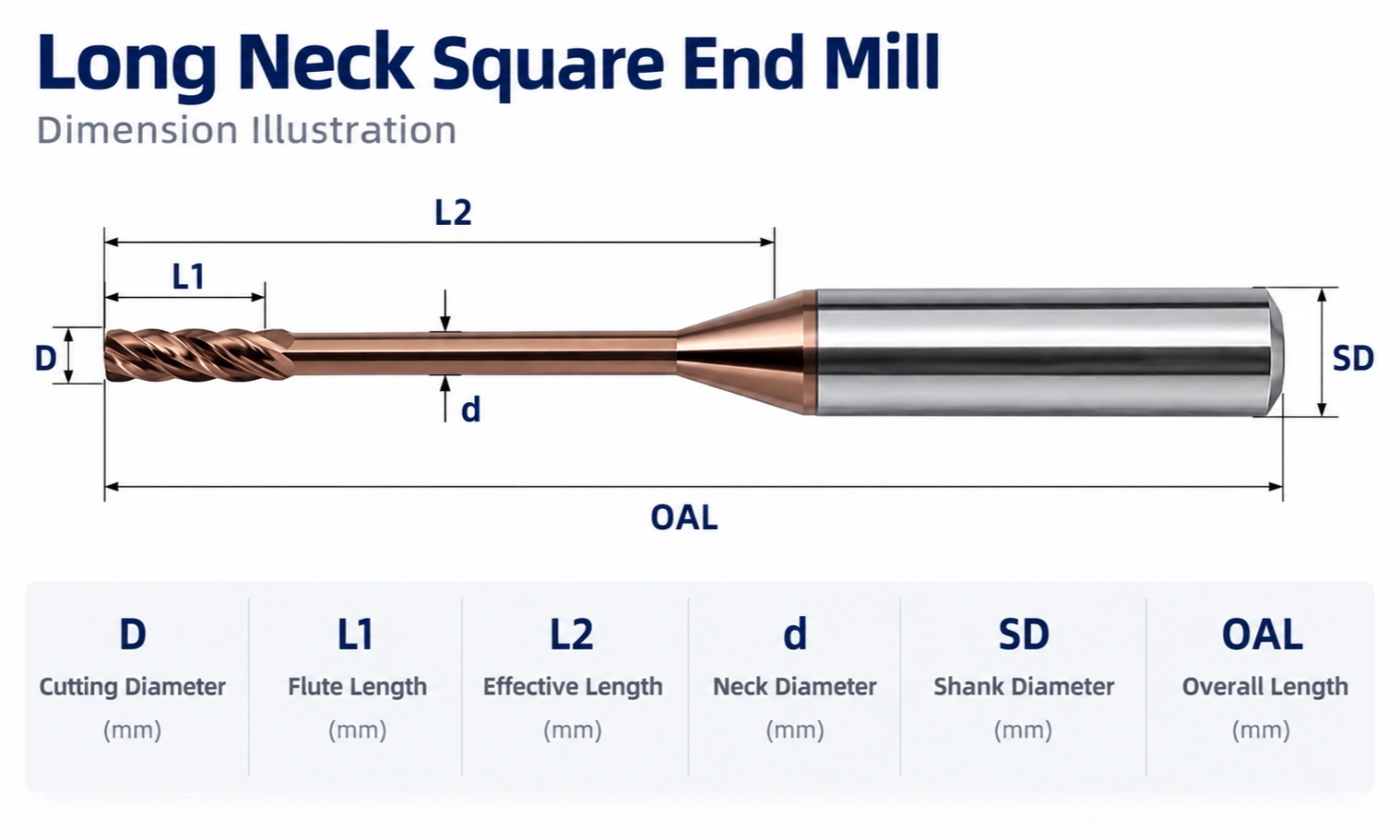
The catalog covers multiple combinations of cutting diameter, comprimento da flauta, effective length and neck diameter. Portanto, use the ranges below for initial selection rather than treating every dimension as freely interchangeable.
| Especificação | Catalog Range |
|---|---|
| Diâmetro de corte | Ø0,2–4,0 mm |
| Comprimento da Flauta (L1) | 0.3–3,8 mm |
| Comprimento Efetivo (L2) | 1–30mm |
| Diâmetro do pescoço | Ø0,16–3,9 mm |
| Diâmetro da haste | Ø4 / Ø6mm |
| Comprimento total | 50 / 60 / 75 em milímetro |
Standard catalog cutting diameters include Ø0.2, 0.3, 0.4, 0.5, 0.6, 0.7, 0.8, 1.0, 1.5, 2.0, 2.5, 3.0 e 4.0 em milímetro. No entanto, the available L1, L2 and neck-diameter combinations depend on the selected catalog series and size.
For other long-reach end geometries, ver Long Reach End Mills.
Long Neck Clearance and Square-End Geometry
Quadrado / Flat Cutting Geometry
The square cutting end provides a flat cutting profile for features that require flat bottoms or straight-wall geometry.
In this product group, square and flat describe the same flat-ended geometry rather than two separate long-neck product families.
For general square or flat milling where additional neck clearance is not required, ver Fresa de topo plano.
Long Neck and Reduced-Neck Clearance
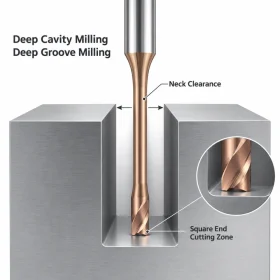
The long neck provides additional access between the cutting section and the larger shank area. This structure helps the tool avoid interference from surrounding walls, shoulders or recessed features.
Where a catalog model has a neck diameter smaller than its cutting diameter, the reduced section provides additional clearance around the tool.
Long neck, long reach and reduced neck describe related but not identical characteristics. Portanto, use the actual cutting diameter, effective length and neck diameter to confirm the model instead of relying on the product name alone.
Cutting Diameter and Effective Length Selection
Cutting Diameter and Flute Length
Start with the cutting diameter according to the groove, pocket or feature that the cutter must enter. Choose a diameter that fits the required machining area and part geometry.
Comprimento da Flauta (L1) represents the cutting-edge length. Use L1 to confirm the required cutting-edge engagement instead of assuming that a longer effective reach also means a longer cutting edge.
For a broader explanation of common end mill geometries, ver Tipos de fresas de topo.
Effective Length and Neck Diameter
Comprimento Efetivo (L2) becomes important when the cutting area sits deeper inside a groove, cavidade, pocket or other recessed feature.
A longer L2 provides additional access. Enquanto isso, the neck diameter determines the clearance available around the tool between the cutting section and surrounding workpiece geometry.
Because L2 and neck-diameter combinations vary by catalog size, confirm these dimensions together with the cutting diameter and flute length.
If the required combination does not match a standard catalog size, envie um desenho ou esboço para revisão antes da cotação.
Applications for Long Neck Square End Mills
Deep Grooves, Cavities and Pockets
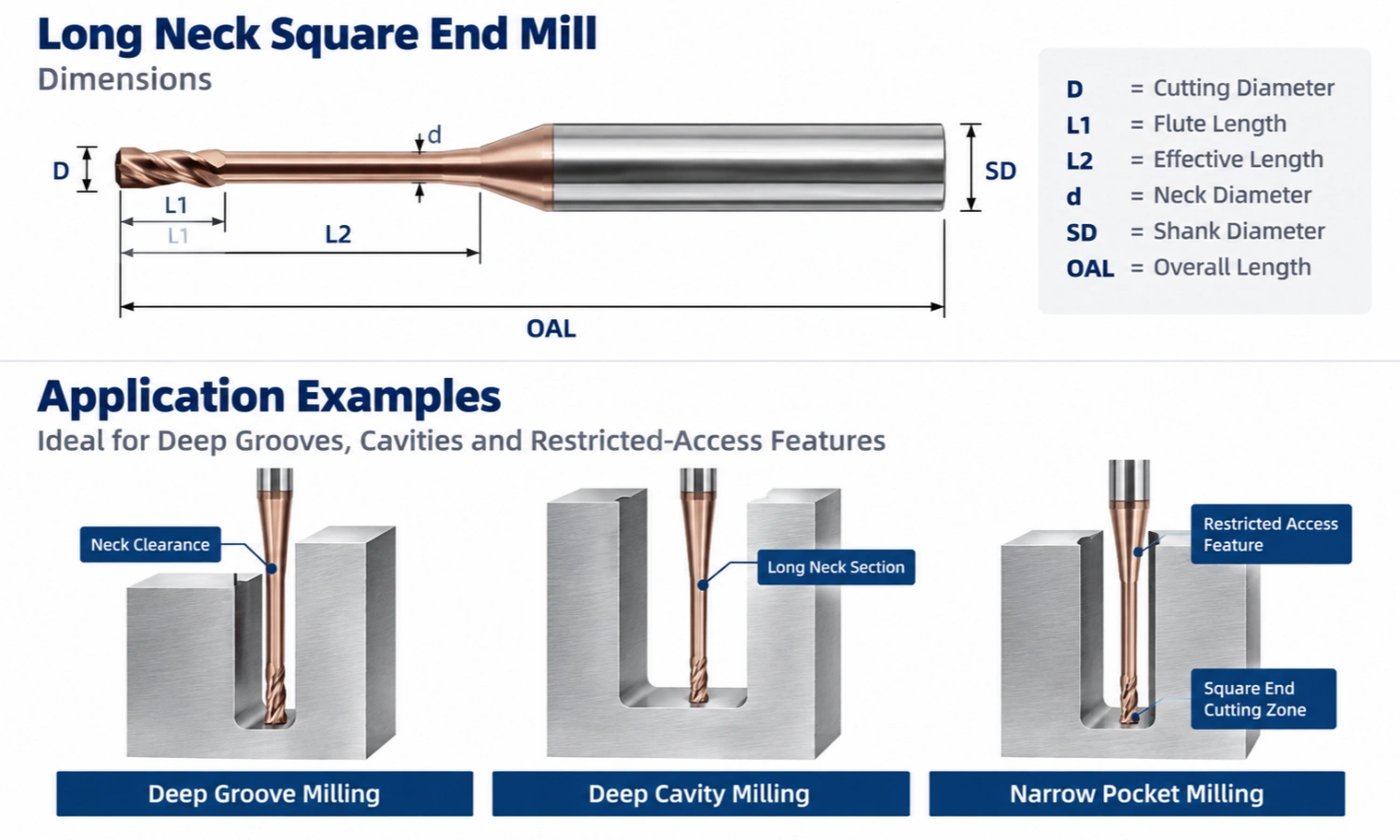
Use long neck square end mills for deep or restricted features where a standard tool body may not provide enough clearance.
Typical applications can include deep groove milling, fresamento de cavidade profunda, fresamento de bolsões profundos, narrow pockets and other restricted-access features where additional reach is required.
The long-neck section helps keep the larger tool body away from surrounding geometry while the square cutting end reaches the required machining area.
Tool selection should still follow the actual part geometry and required access rather than assuming that every deep feature requires the longest available configuration.
Flat Bottoms and Straight-Wall Features
Choose square-end geometry when the machined feature requires a flat bottom or straight-wall form.
When those features sit deeper inside the workpiece, the long-neck structure provides the access needed to reach them while maintaining square / flat cutting geometry.
This combination distinguishes the product from a standard flat end mill used in areas where normal tool reach is already sufficient.
Long Neck Square vs Standard Flat End Mill
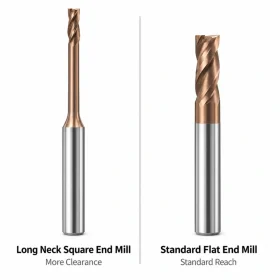
Both tools use square / flat cutting geometry. The main difference is the access and clearance required around the tool.
| Ponto de seleção | Long Neck Square End Mill | Standard Flat End Mill |
|---|---|---|
| Alcançar | Extended access | Standard access |
| Neck Clearance | Additional clearance for restricted features | Suitable where normal body clearance is sufficient |
| Recurso típico | Deep or recessed grooves, bolsos e cavidades | Normally accessible flat-bottom or straight-wall features |
| Geometria final | Quadrado / Plano | Quadrado / Plano |
Choose a standard flat end mill when the tool body can reach the feature without interference. Em contraste, choose a long neck square end mill when surrounding geometry requires additional reach or neck clearance.
Custom Long Neck Square End Mills
Os tamanhos de catálogo padrão cobrem múltiplas combinações de diâmetro de corte, comprimento da flauta, comprimento efetivo, diâmetro do pescoço, diâmetro da haste e comprimento total.
Para requisitos fora do padrão, send a drawing or sketch showing the required dimensions. We can review the requested configuration before quotation and assess manufacturing feasibility.
Tamanhos e configurações personalizados estão sujeitos a revisão de desenho e viabilidade de fabricação.
Perguntas frequentes
Are long neck and long reach square end mills the same?
The terms often overlap, but they do not always describe exactly the same structure. Long neck emphasizes the extended neck section, enquanto o longo alcance descreve o requisito de acesso. Check the actual dimensions when selecting a specific tool.
What is the difference between a long neck square end mill and a standard flat end mill?
Both use square / flat cutting geometry. A long neck version provides additional reach and neck clearance for deeper or more restricted features, while a standard flat end mill suits areas where normal tool access is sufficient.
How do I choose the effective length and neck diameter?
Primeiro, determine the depth and access required by the workpiece feature. Then check Effective Length (L2) against the required reach and Neck Diameter against the available side clearance. The final combination must match an available catalog size or undergo drawing review for a custom configuration.
Can you supply micro-diameter long neck square end mills?
Sim. The current catalog starts from Ø0.2 mm cutting diameter. Available flute length, effective length and neck-diameter combinations depend on the selected catalog size.
For the broader small-diameter product range, ver Microfresas.
Can you manufacture custom long neck square end mills from a drawing?
We can review non-standard cutting diameter, comprimento da flauta, comprimento efetivo, diâmetro do pescoço, shank diameter and overall length requirements based on your drawing or sketch.
Send Your Long Neck Square End Mill Inquiry
Send your long neck square end mill inquiry by email at sales@cutterbest.com, or contact us directly on WhatsApp.