 หัวกัดที่มีความแม่นยํา,เครื่องมือตัดสําหรับเครื่องจักรกลซีเอ็นซีทุกวัสดุ

การแนะนำ
คัตเตอร์ดอกเอ็นมิลล์ทำงานอย่างไรในการกัดซีเอ็นซี? โดยจะขจัดวัสดุด้วยคมตัดแบบหมุนได้ในขณะที่การเคลื่อนที่ของฟีดจะเคลื่อนเครื่องมือผ่านชิ้นงาน. ขลุ่ยจะนำเศษออกจากบริเวณตัด, ดังนั้นการตัดเสถียรภาพ, การตกแต่งพื้นผิว, และอายุการใช้งานของเครื่องมือขึ้นอยู่กับความเร็วในการหมุน, อัตราการป้อน, เรขาคณิตของเครื่องตัด, และการอพยพของเศษ.
คู่มือนี้จะอธิบายวิธีการทำงานของกระบวนการกัดดอกเอ็น, วิธีที่เครื่องตัดเอาวัสดุออก, เศษจะออกจากบริเวณการตัดได้อย่างไร, และสิ่งที่ส่งผลต่อความมั่นคงในการตัด, การตกแต่งพื้นผิว, และอายุการใช้งานของเครื่องมือ.
หากคุณยังใหม่กับเครื่องมือนี้, คุณสามารถอ่านของเราก่อน คู่มือเครื่องมือกัดขั้นพื้นฐาน.
เครื่องตัดดอกเอ็นมิลล์ในการกัดซีเอ็นซีคืออะไร?
คัตเตอร์ดอกเอ็นมิลล์เป็นเครื่องมือตัดแบบหมุนที่ใช้กับเครื่องจักร CNC และเครื่องกัด. ต่างจากดอกสว่านมาตรฐาน, สามารถตัดแนวตั้งและด้านข้างได้. ดังนั้น, มันสามารถสร้างช่องได้, กระเป๋า, รูปทรง, ผนังด้านข้าง, และพื้นผิวสำเร็จรูป.
เครื่องมือส่วนใหญ่จะมีคมตัดที่ส่วนท้ายและด้านข้าง. ส่งผลให้, พวกเขาสามารถเอาวัสดุออกในทิศทางที่แตกต่างกันขึ้นอยู่กับเส้นทางเครื่องมือและการทำงานของเครื่องจักร.
แผนผังเครื่องตัดดอกเอ็นมิลล์และชิ้นส่วนหลัก
| ส่วนหนึ่ง | การทำงาน | ทำไมมันถึงสำคัญ |
| ก้าน | จับเครื่องตัดไว้ในแกนหมุนหรือที่จับเครื่องมือ | ส่งผลต่อความมั่นคงในการจับยึดและการควบคุมการเบี่ยงเบนหนีศูนย์ |
| ฟัน | นำเศษออกจากบริเวณการตัด | ส่งผลต่อการคายเศษ, การควบคุมความร้อน, และความเสถียรในการตัด |
| ขอบตัด | เฉือนวัสดุจากชิ้นงาน | ส่งผลต่อประสิทธิภาพการตัด, การตกแต่งพื้นผิว, และอายุการใช้งานของเครื่องมือ |
| คมตัดปลาย | ตัดจากปลายเครื่องมือ | ช่วยเรื่องร่อง, รายการกระเป๋า, และการตัดด้านล่าง |
| คมตัดด้านข้าง | ตัดตามด้านข้างของเครื่องมือ | ช่วยในการโปรไฟล์, การกัดข้าง, และการตัดเฉือนบ่า |
| มุมเกลียว | ควบคุมมุมเกลียวของฟลุต | ส่งผลต่อการไหลของเศษ, ความเรียบในการตัด, และการสั่นสะเทือน |
| การเคลือบ | ปกป้องคมตัด | ปรับปรุงความต้านทานการสึกหรอและทนความร้อน |
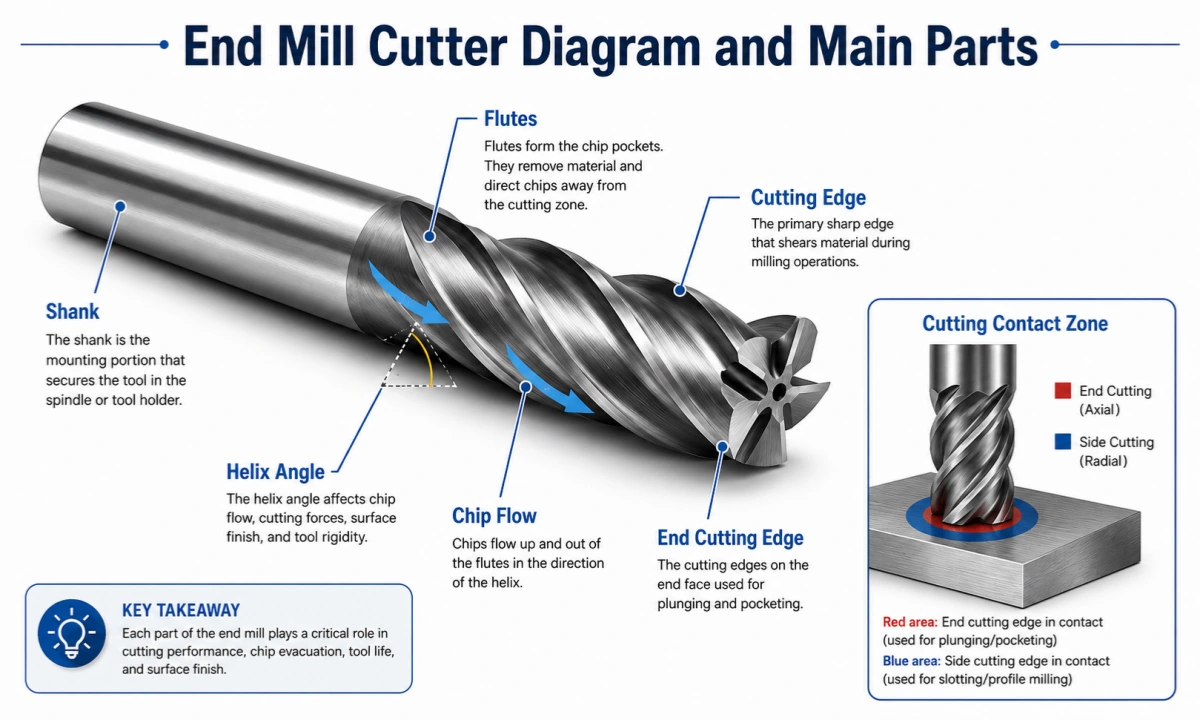
ฟัน
ร่องคือร่องตามตัวเครื่องตัด. ช่วยขจัดเศษออกในระหว่างการตัดและส่งผลโดยตรงต่อการคายเศษ, ความแข็งแกร่ง, และประสิทธิภาพการตัด.
ขอบตัด
คมตัดเฉือนวัสดุออกจากชิ้นงาน. ความคมและรูปทรงส่งผลต่อประสิทธิภาพการตัด, การตกแต่งพื้นผิว, และอายุการใช้งานของเครื่องมือ.
ก้าน
ก้านคือส่วนที่ยึดเข้ากับสปินเดิลหรือที่จับ. การตั้งค่าด้ามที่มั่นคงเป็นสิ่งสำคัญสำหรับความแม่นยำในการตัดเฉือนและการควบคุมการสั่นสะเทือน.
มุมเกลียว
มุมเกลียวส่งผลต่อการไหลของเศษและความเรียบในการตัด. ในหลายกรณี, แต่ยังส่งผลต่อการควบคุมความร้อนและความเสถียรของเครื่องจักรด้วย.
เรขาคณิตปลายเครื่องมือ
รูปร่างปลายที่แตกต่างกันรองรับงานตัดเฉือนที่แตกต่างกัน. ดอกเอ็นมิลล์แบบแบนทำงานได้ดีสำหรับการกัดร่องและการกัดข้าง, ในขณะที่เครื่องมือปลายมนเหมาะสำหรับการคอนทัวร์และพื้นผิว 3 มิติ.
หากคุณต้องการเปรียบเทียบรูปทรงเครื่องมือต่างๆ, อ่านของเรา คู่มือการเปรียบเทียบประเภทเครื่องมือ.
เครื่องตัดดอกเอ็นมิลล์ทำงานอย่างไรในการกัดซีเอ็นซี?
1. การหมุนสร้างการดำเนินการตัด
อันดับแรก, คัตเตอร์หมุนด้วยความเร็วสูงในแกนหมุน. การหมุนนี้จะทำให้คมตัดสัมผัสกับชิ้นงานและสร้างการตัด.
2. การเคลื่อนที่ของฟีดจะเคลื่อนเครื่องมือผ่านวัสดุ
ในเวลาเดียวกัน, เครื่องมือหรือชิ้นงานเคลื่อนที่ไปในทิศทางที่มีการควบคุม. การเคลื่อนไหวนี้เรียกว่าการเคลื่อนที่ของฟีด. โดยจะกำหนดวิธีที่เครื่องตัดเคลื่อนที่ผ่านวัสดุ และปริมาณวัสดุที่จะถูกขจัดออกในแต่ละรอบ.
3. ขอบตัด ตัดวัสดุออก
เมื่อเครื่องตัดแบบหมุนเข้าสู่วัสดุ, ขอบตัดจะตัดส่วนเล็กๆ ของชิ้นงานออก. ส่วนที่ถอดออกเหล่านี้จะกลายเป็นชิป.
4. ขลุ่ยนำชิปออกไป
ต่อไป, ร่องช่วยนำเศษออกจากบริเวณตัด. การคายเศษที่ดีเป็นสิ่งสำคัญ เนื่องจากเศษที่ติดอยู่สามารถเพิ่มความร้อนได้, ทำให้เครื่องตัดเสียหาย, และลดคุณภาพพื้นผิว.
5. การจ่ายบอลซ้ำๆ จะสร้างรูปร่างสุดท้าย
ในที่สุด, เครื่อง CNC จะสร้างรูปร่างสุดท้ายโดยการควบคุมเส้นทางเครื่องมือ, ความลึกของการตัด, อัตราการป้อน, และความเร็วของแกนหมุน. ด้วยการผ่านซ้ำ, เครื่องตัดสามารถสร้างช่องได้, กระเป๋า, รูปทรง, ผนังด้านข้าง, และพื้นผิวสำเร็จรูป.
สำหรับผู้อ่านที่ถามว่า “คัตเตอร์ดอกเอ็นมิลล์ทำงานอย่างไร,” ตารางด้านล่างจะอธิบายขั้นตอนการตัดขั้นพื้นฐานในการกัด CNC แบบง่ายๆ.
ตารางกระบวนการกัดปลาย
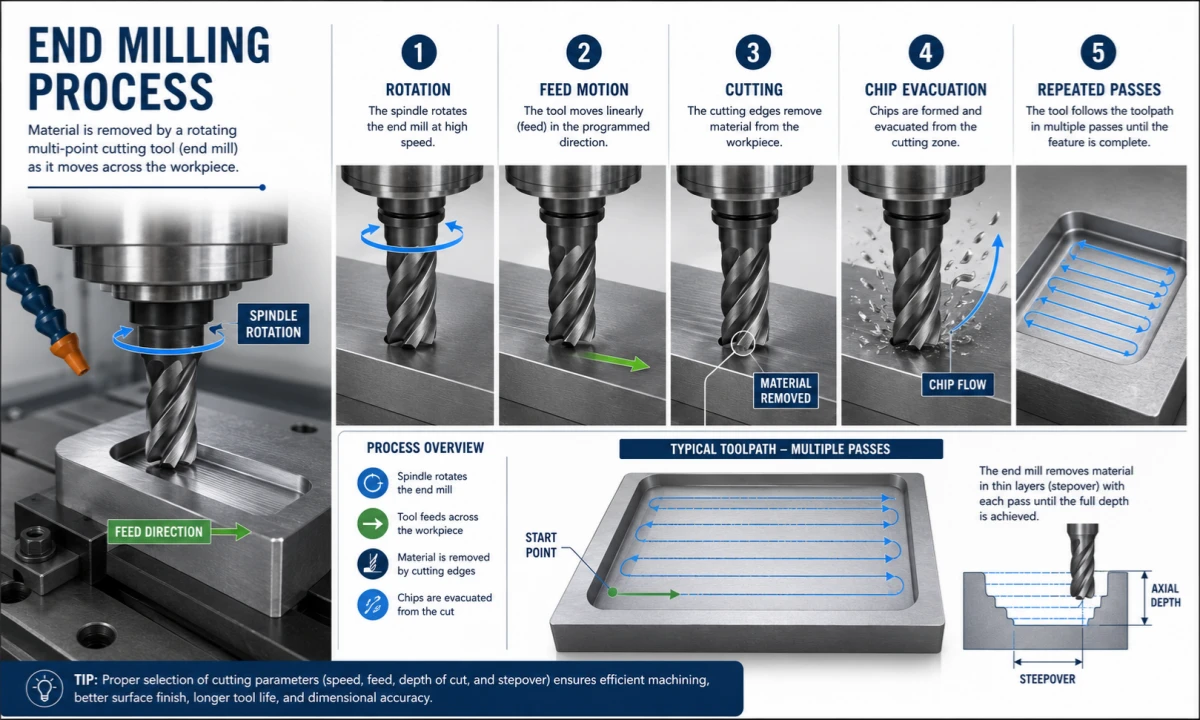
| ขั้นตอนกระบวนการ | เกิดอะไรขึ้น | ทำไมมันถึงสำคัญ |
|---|---|---|
| การหมุน | เครื่องตัดหมุนด้วยความเร็วสูง | สร้างการดำเนินการตัด |
| ฟีดเคลื่อนไหว | เครื่องมือหรือชิ้นงานเคลื่อนที่ในเส้นทางที่มีการควบคุม | กำหนดการกำจัดวัสดุ |
| การตัด | ขอบเฉือนวัสดุเป็นเศษ | สร้างคุณลักษณะของเครื่องจักร |
| การอพยพชิป | ร่องนำชิปออกไป | ลดความร้อนและเพิ่มเสถียรภาพ |
| ผ่านซ้ำ | เครื่องจักรจะเดินตามเส้นทางเครื่องมือที่ตั้งโปรแกรมไว้ | ทำให้เกิดรูปร่างขั้นสุดท้าย |
ตารางนี้จะอธิบายตรรกะพื้นฐานเบื้องหลังกระบวนการกัดดอกเอ็นมิลด้วยวิธีง่ายๆ.
การตัดปลายและการตัดด้านข้าง
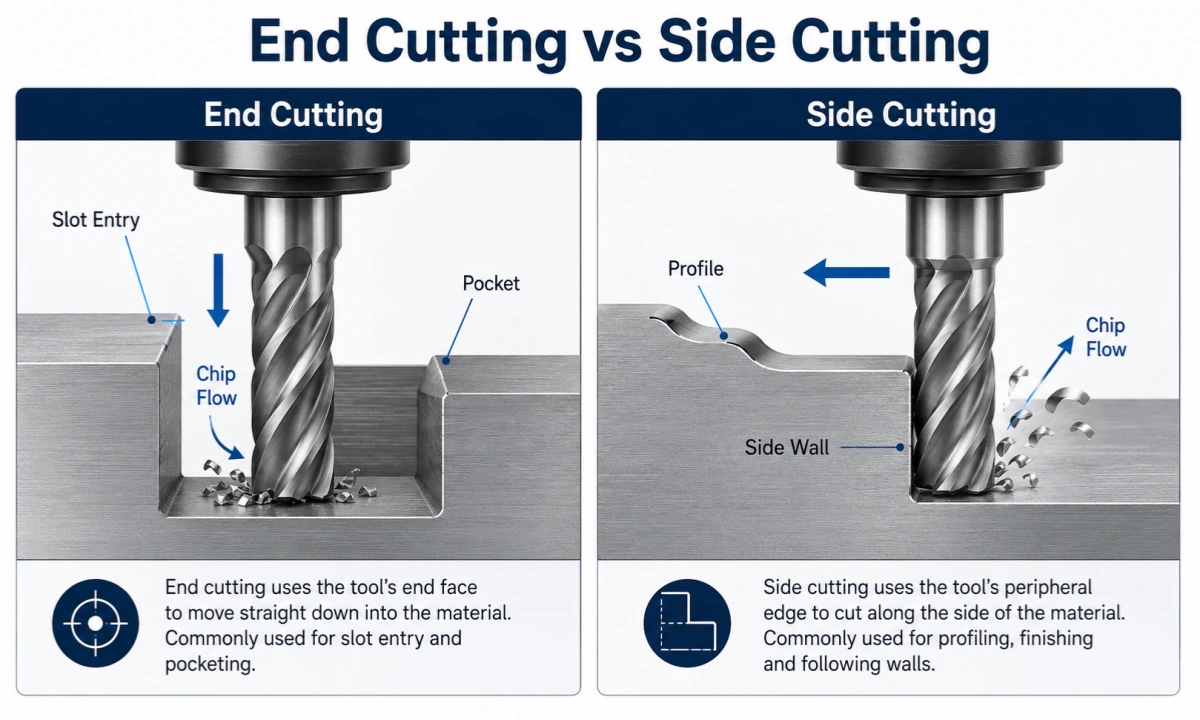
คัตเตอร์ดอกเอ็นมิลล์สามารถดึงวัสดุออกจากปลายและด้านข้างของเครื่องมือได้. นี่เป็นเหตุผลหนึ่งที่ทำให้มันมีความยืดหยุ่นมากกว่าดอกสว่านมาตรฐาน.
ตัดปลาย
การตัดส่วนปลายเกิดขึ้นเมื่อปลายเครื่องมือดึงวัสดุออกจากด้านล่างของช่อง, กระเป๋า, หรือบริเวณทางเข้าตื้น. ดอกเอ็นมิลล์แบบตัดตรงกลางสามารถรองรับการทำงานแบบพุ่งพรวดหรือเข้ากระเป๋าได้, แต่ก็ยังแตกต่างจากดอกสว่าน.
การตัดด้านข้าง
การตัดด้านข้างเกิดขึ้นเมื่อคมตัดด้านข้างดึงวัสดุออกจากผนังหรือโปรไฟล์ของชิ้นงาน. การตัดแบบนี้เป็นเรื่องปกติในการกัดข้าง, การกัดไหล่, การทําโปรไฟล์, และการกัดคอนทัวร์.
ด้วยเหตุนี้, เรขาคณิตของเครื่องมือ, การนับขลุ่ย, อัตราการป้อน, และความเสถียรในการจับยึดล้วนส่งผลต่อประสิทธิภาพของหัวกัดในการทำงานต่างๆ.
การดำเนินการกัดดอกเอ็นทั่วไป
สล็อต
เครื่องตัดจะดึงวัสดุออกในแนวตรงเพื่อสร้างร่องหรือช่องแคบ.
การกัดข้าง
คมตัดด้านข้างสามารถตัดเฉือนผนังแนวตั้งหรือพื้นผิวด้านข้างได้.
การกัดกระเป๋า
หัวกัดจะดึงวัสดุออกจากพื้นที่ภายในแบบปิดภายในชิ้นงาน.
คอนทัวร์
เครื่องมือนี้จะติดตามเส้นทางโค้งหรือรูปทรงเพื่อสร้างโปรไฟล์และพื้นผิวที่ซับซ้อน.
การตกแต่งพื้นผิว
การผ่านการเก็บผิวละเอียดช่วยปรับปรุงคุณภาพพื้นผิวและความแม่นยำของมิติ.
การดำเนินการเหล่านี้อธิบายว่าทำไมร้านขายเครื่องจักรจึงใช้เครื่องมือเหล่านี้ในการทำแม่พิมพ์, ชิ้นส่วนเครื่องจักร, ส่วนประกอบยานยนต์, ชิ้นส่วนการบินและอวกาศ, และงานโลหะทั่วไป.
สิ่งที่ส่งผลต่อประสิทธิภาพของเครื่องตัดดอกเอ็นมิลล์?
วัสดุเครื่องมือ
เครื่องมือโซลิดคาร์ไบด์มักจะให้ความแข็งแกร่งที่ดีกว่า, ความต้านทานการสึกหรอ, และประสิทธิภาพการตัดที่มั่นคงยิ่งขึ้นในการตัดเฉือน CNC.
สำหรับเครื่องมือคาร์ไบด์เฉพาะด้าน, คุณยังสามารถเยี่ยมชมของเรา เครื่องมือกัดโซลิดคาร์ไบด์ หน้าหนังสือ.
จํานวนขลุ่ย
จำนวนร่องฟันส่งผลต่อการคายเศษและความแข็งแกร่ง. ในหลายกรณี, ช่างเครื่องจะเลือกใช้ร่องฟันน้อยลงสำหรับอะลูมิเนียม และร่องฟันมากขึ้นสำหรับเหล็กหรือวัสดุที่แข็งกว่า.
เพื่อการเปรียบเทียบที่ลึกซึ้งยิ่งขึ้น, อ่านของเรา คู่มือการเปรียบเทียบการนับขลุ่ย.
การเคลือบ
การเคลือบที่เหมาะสมสามารถปรับปรุงความต้านทานการสึกหรอได้, ทนความร้อน, และอายุการใช้งานของเครื่องมือ, โดยเฉพาะอย่างยิ่งในสภาวะการตัดเฉือนที่มีความต้องการสูง.
อัตราการป้อนและความเร็ว
อัตราป้อนและความเร็วของสปินเดิลต้องตรงกับวัสดุชิ้นงานและการออกแบบเครื่องมือ. มิฉะนั้น, เครื่องตัดอาจมีความร้อนมากเกินไป, สวมใส่เร็วเกินไป, หรือทิ้งพื้นผิวที่ไม่ดีไว้.
วัสดุชิ้นงาน
อลูมิเนียม, เหล็ก, และสแตนเลสจะมีพฤติกรรมแตกต่างออกไปในระหว่างการตัดเฉือน. ดังนั้น, ช่างเครื่องควรปรับรูปทรงของเครื่องตัด, การเคลือบ, อัตราการป้อน, และความเร็วแกนหมุนตามวัสดุ.
วิธีใช้คัตเตอร์ดอกเอ็นมิลล์อย่างมีประสิทธิภาพยิ่งขึ้น
จับคู่เครื่องมือกับวัสดุ
เลือกรูปทรงของเครื่องมือ, การนับขลุ่ย, และการเคลือบตามวัสดุชิ้นงาน.
ใช้การหนีบที่มั่นคง
ตัวจับยึดที่มั่นคงและการตั้งค่าที่เหมาะสมช่วยลดการสั่นสะเทือนและปรับปรุงความแม่นยำในการตัด.
รักษาการอพยพชิปให้ชัดเจน
การคายเศษที่ดีช่วยป้องกันการสะสมความร้อนและการตัดที่ไม่มั่นคง.
ใช้พารามิเตอร์การตัดที่เหมาะสม
ความเร็ว, ให้อาหาร, ความลึกของแกน, และหน้าสัมผัสในแนวรัศมีควรตรงกับหัวกัดและงานตัดเฉือน.
ตรวจสอบการสึกหรอของเครื่องมือ
หัวกัดที่สึกหรออาจทำให้ความแม่นยำลดลง, คุณภาพพื้นผิว, และประสิทธิภาพการตัดเฉือน. ดังนั้น, การตรวจสอบเครื่องมือเป็นประจำเป็นสิ่งสำคัญ.
หากคุณต้องการโซลูชันเครื่องมือมาตรฐานหรือ OEM, คุณยังสามารถเยี่ยมชมของเรา หน้าผลิตภัณฑ์สำหรับเครื่องมือกัด CNC.
แผนภาพการทำงานของการกัดเอ็นด์และการไหลของเศษ
แผนผังการดำเนินการกัดเอ็นด์ที่ชัดเจนควรแสดงการหมุนสปินเดิล, ทิศทางการป้อน, คมตัด, การไหลของชิป, และพื้นที่สัมผัสชิ้นงาน. ประเด็นเหล่านี้ช่วยให้ผู้อ่านเข้าใจว่าหัวกัดขจัดวัสดุได้อย่างไร และเหตุใดเสถียรภาพในการตัดจึงขึ้นอยู่กับการเคลื่อนที่ของเครื่องมือและการคายเศษ.
ในการดำเนินการตามปกติ, แกนหมุนหมุนเครื่องมือ, การเคลื่อนที่ของฟีดจะเคลื่อนเครื่องตัดผ่านวัสดุ, และร่องจะพาเศษออกจากบริเวณตัด. หากเศษอยู่ใกล้คมตัด, ความร้อนและการสั่นสะเทือนอาจเพิ่มขึ้น, ซึ่งสามารถลดคุณภาพพื้นผิวและอายุการใช้งานของเครื่องมือได้.
คำอธิบายด้วยภาพนี้มีประโยชน์สำหรับผู้อ่านที่ค้นหาไดอะแกรมหัวกัดดอกเอ็นมิล, แผนภาพการทำงานของดอกเอ็นมิล, หรือตัวอย่างกระบวนการกัดขั้นสุดท้าย.
ข้อผิดพลาดทั่วไปเมื่อใช้เครื่องตัดดอกเอ็นมิลล์
การใช้การนับขลุ่ยผิด
การเลือกร่องฟันที่ไม่ดีอาจส่งผลให้การคายเศษหรือความเสถียรในการตัดลดลง.
ละเว้นการตั้งค่าฟีดและความเร็ว
พารามิเตอร์การตัดที่ไม่ถูกต้องอาจทำให้มีความร้อนสูงเกินไป, ขอบเสียหาย, และอายุการใช้งานเครื่องมือสั้น.
การเลือกประเภทเครื่องมือที่ไม่ถูกต้อง
ดอกเอ็นมิลล์แบบแบน, ดอกเอ็นมิลล์บอลโนส, และงานกัดหยาบสำหรับงานต่างๆ, ดังนั้นเครื่องมือหนึ่งชิ้นจึงไม่ควรเปลี่ยนคัตเตอร์ทุกประเภท.
การอพยพเศษไม่ดี
เมื่อเศษอยู่ในบริเวณการตัด, ผิวสำเร็จและอายุการใช้งานของเครื่องมืออาจลดลงทั้งคู่.
ใช้การตั้งค่าเดียวสำหรับทุกๆ วัสดุ
สภาพการตัดแบบเดียวกันนั้นใช้ได้ผลไม่ดีเท่ากันกับอะลูมิเนียม, เหล็ก, และสแตนเลส.
คำถามที่ถามบ่อย
เครื่องตัดดอกเอ็นมิลล์ทำงานอย่างไร?
คัตเตอร์ดอกเอ็นมิลล์ทำงานโดยรวมการหมุนสปินเดิลและการเคลื่อนที่ของฟีดเข้าด้วยกัน. คมตัดเฉือนวัสดุออกจากชิ้นงาน, และร่องจะขจัดเศษออกจากบริเวณการตัด.
ดอกเอ็นมิลคืออะไร?
การกัดดอกเอ็นเป็นกระบวนการตัดเฉือนที่คัตเตอร์ดอกเอ็นมิลล์แบบหมุนจะขจัดวัสดุเพื่อสร้างช่อง, กระเป๋า, ผนังด้านข้าง, รูปทรง, และพื้นผิวสำเร็จรูป.
ความแตกต่างระหว่างดอกเอ็นมิลล์และดอกสว่านคืออะไร?
สว่านส่วนใหญ่จะทำการเจาะรู, ในขณะที่ดอกเอ็นมิลล์สามารถตัดได้ทั้งแนวตั้งและด้านข้างเพื่อการกัดที่หลากหลายยิ่งขึ้น.
ดอกเอ็นมิลล์ใช้ทำอะไร?
ดอกเอ็นมิลล์ใช้สำหรับการเซาะร่อง, การกัดข้าง, การทําโปรไฟล์, การกัดกระเป๋า, รูปร่าง, และการตกแต่งพื้นผิว.
คัตเตอร์ดอกเอ็นมิลล์ตัวเดียวสามารถใช้ได้กับทั้งอะลูมิเนียมและเหล็กกล้า?
ไม่เสมอไป. รูปทรงของเครื่องมือ, การนับขลุ่ย, การเคลือบ, และพารามิเตอร์การตัดมักจะต้องเปลี่ยนแปลงโดยขึ้นอยู่กับวัสดุ.
เหตุใดการคายเศษจึงมีความสำคัญในการกัดดอกเอ็น?
การคายเศษช่วยควบคุมความร้อน, ลดความเสียหายของเครื่องมือ, และปรับปรุงความเสถียรในการตัดและคุณภาพพื้นผิว.
บทสรุป
การทำความเข้าใจวิธีการทำงานของหัวกัดดอกเอ็นมิลล์ช่วยปรับปรุงประสิทธิภาพการตัดเฉือนและประสิทธิภาพของเครื่องมือ. กระบวนการกัดปลายขึ้นอยู่กับการหมุนของสปินเดิล, การเคลื่อนไหวของฟีด, รูปทรงของคมตัด, และการอพยพของเศษ.
เมื่อช่างเครื่องตรงกับประเภทเครื่องตัด, การนับขลุ่ย, การเคลือบ, และตัดพารามิเตอร์ได้อย่างถูกต้อง, การกัดปลายสามารถผลิตชิ้นส่วนที่แม่นยำได้, พื้นผิวที่ดีขึ้น, และผลลัพธ์การตัดเฉือนที่เสถียรยิ่งขึ้น. ด้วยเหตุนี้การเลือกเครื่องมือและการตั้งค่าการตัดเฉือนที่เหมาะสมจึงมีความสำคัญ.
ซีทีเอ
กำลังมองหาเครื่องมือมาตรฐานหรือสั่งทำพิเศษสำหรับอะลูมิเนียม, เหล็ก, หรืองานสแตนเลส?
เยี่ยมชมของเรา หน้าผลิตภัณฑ์สำหรับเครื่องมือกัด CNC หรือส่งรูปวาดของคุณมาให้เรา, รายการขนาด, วัสดุ, และข้อกำหนดการเคลือบ. OMIST สามารถแนะนำเครื่องมือที่เหมาะสมสำหรับงานกัด CNC ได้.