 หัวกัดที่มีความแม่นยํา,เครื่องมือตัดสําหรับเครื่องจักรกลซีเอ็นซีทุกวัสดุ

คัตเตอร์ดอกเอ็นมิลล์เป็นเครื่องมือตัดแบบหมุนที่ใช้ในการกัดซีเอ็นซีเพื่อขจัดวัสดุออกจากปลายและด้านข้างของชิ้นงาน. มันสามารถสล็อตแมชชีนได้, กระเป๋า, โปรไฟล์, ผนังด้านข้าง, พื้นผิวโค้ง, และคุณสมบัติการตกแต่งในวัสดุเช่นอลูมิเนียม, เหล็ก, สแตนเลส, ทองแดง, และพลาสติก.
ในคู่มือนี้, คุณจะได้เรียนรู้ว่าคัตเตอร์ดอกเอ็นมิลล์คืออะไร, มันแตกต่างจากสว่านอย่างไร, มันทำอะไรในการกัด CNC, ประเภทเครื่องตัดทั่วไป, ข้อกำหนดพื้นฐาน, และวิธีการเลือกเครื่องมือที่เหมาะสมสำหรับงานตัดเฉือนต่างๆ.
เครื่องตัดดอกเอ็นมิลล์คืออะไร?
คัตเตอร์ดอกเอ็นมิลล์เป็นเครื่องมือตัดแบบหมุนที่ใช้กับเครื่องจักร CNC และเครื่องกัด. โดยจะหมุนด้วยความเร็วสูงในขณะที่เครื่องมือหรือชิ้นงานเคลื่อนที่ไปตามเส้นทางที่มีการควบคุมเพื่อเอาวัสดุออก.
ความแตกต่างที่สำคัญระหว่างหัวกัดดอกเอ็นมิลล์กับเครื่องมืออื่นๆ ก็คือรูปทรงการตัด. ดอกเอ็นมิลล์ส่วนใหญ่จะมีคมตัดที่ส่วนท้ายและด้านข้าง. ดังนั้น, สามารถตัดได้ทั้งแนวตั้งและด้านข้าง. ทำให้เหมาะสำหรับการเซาะร่อง, การกัดข้าง, การทําโปรไฟล์, การกัดกระเป๋า, รูปร่าง, และการตกแต่ง.
ผู้ผลิตมักสร้างหัวกัดดอกเอ็นมิลล์จากเหล็กกล้าความเร็วสูงหรือโซลิดคาร์ไบด์. อย่างไรก็ตาม, ร้านเครื่องจักร CNC หลายแห่งเลือกเครื่องมือโซลิดคาร์ไบด์เนื่องจากมีความแข็งแกร่งที่ดีกว่า, ความต้านทานการสึกหรอสูงขึ้น, และประสิทธิภาพการตัดที่มั่นคงยิ่งขึ้น.
หากคุณต้องการเครื่องมือมาตรฐานหรือแบบกำหนดเองสำหรับการตัดเฉือนการผลิต, คุณยังสามารถเยี่ยมชมของเรา หน้าผลิตภัณฑ์เครื่องตัดดอกเอ็นมิลล์.
ชิ้นส่วนหลักของเครื่องตัดดอกเอ็นมิลล์
แม้ว่าหัวกัดดอกเอ็นมิลล์จะมีรูปทรงและดีไซน์ต่างกันก็ตาม, เครื่องมือส่วนใหญ่ประกอบด้วยส่วนพื้นฐานหลายส่วน. การทำความเข้าใจชิ้นส่วนเหล่านี้ช่วยให้ผู้ซื้อเลือกเครื่องตัดที่เหมาะกับวัสดุของตนได้, เครื่องจักร, และเป้าหมายการตัดเฉือน.
| ส่วนหนึ่ง | การทำงาน | ทำไมมันถึงสำคัญ |
| ขอบตัด | นำวัสดุออกจากชิ้นงาน | ส่งผลต่อประสิทธิภาพการตัดและผิวสำเร็จ |
| ฟัน | ช่วยอพยพเศษระหว่างการตัดเฉือน | มีอิทธิพลต่อการกำจัดชิป, ความแข็งแกร่ง, และความเสถียรในการตัด |
| เคล็ดลับเครื่องมือ | กำหนดรูปทรงส่วนปลายของหัวกัด | ส่งผลต่อการเซาะร่อง, รูปร่าง, ตกแต่ง, และความแข็งแกร่งของมุม |
| ก้าน | จับโดยที่จับเครื่องมือหรือแกนหมุน | ต้องตรงกับที่ยึดเพื่อให้จับยึดได้อย่างมั่นคง |
| การเคลือบ | ปกป้องคมตัดระหว่างการตัดเฉือน | ปรับปรุงความต้านทานการสึกหรอ, ทนความร้อน, และอายุการใช้งานของเครื่องมือ |
ขอบตัด
คมตัดเป็นส่วนการทำงานของเครื่องมือ. โดยจะดึงวัสดุออกในระหว่างการกัดและส่งผลโดยตรงต่อประสิทธิภาพการตัด, ความแม่นยำ, และการตกแต่งพื้นผิว.
ฟัน
ร่องคือร่องตามตัวเครื่องตัด. ช่วยขจัดเศษออกจากบริเวณการตัด. นอกจากนี้, การออกแบบร่องฟันส่งผลต่อความแข็งแกร่ง, การควบคุมความร้อน, และความเสถียรในการตัด.
เคล็ดลับเครื่องมือ
การออกแบบปลายเครื่องมือขึ้นอยู่กับประเภทของหัวกัด. ดอกเอ็นมิลล์บางชนิดมีปลายแบน, ในขณะที่คนอื่นจมูกกลม, รัศมีมุม, หรือเรขาคณิตแบบเรียว. ส่งผลให้, การออกแบบปลายที่แตกต่างกันจะใช้สำหรับงานตัดเฉือนที่แตกต่างกัน.
ก้าน
ด้ามคือส่วนที่ยึดโดยที่จับเครื่องมือหรือสปินเดิล. เส้นผ่านศูนย์กลางต้องตรงกับที่ยึดอย่างถูกต้อง. มิฉะนั้น, การสั่นสะเทือน, ความแม่นยำไม่ดี, หรือการหมดแรงของเครื่องมืออาจเกิดขึ้นได้.
การเคลือบ
หัวกัดดอกเอ็นมิลล์จำนวนมากใช้การเคลือบ เช่น TiAlN, อัลทิน, TiSiN, ดีบุก, เนื้อหาดาวน์โหลด, หรือเคลือบนาโนบลู. การเคลือบที่เหมาะสมสามารถปรับปรุงความต้านทานความร้อนได้, ลดการสึกหรอ, และยืดอายุการใช้งานของเครื่องมือ.
เครื่องตัดดอกเอ็นมิลล์เทียบกับดอกสว่าน
ผู้เริ่มต้นหลายคนสับสนระหว่างคัตเตอร์ดอกเอ็นมิลล์กับสว่าน. อย่างไรก็ตาม, ได้รับการออกแบบมาเพื่อวัตถุประสงค์ในการตัดเฉือนที่แตกต่างกัน.
ดอกสว่านจะตัดในทิศทางตามแนวแกนเป็นหลักเพื่อสร้างรูกลม. ในทางตรงกันข้าม, หัวกัดดอกเอ็นมิลล์สามารถตัดได้ทั้งแนวแกนและแนวขวาง. ดังนั้น, มันสามารถสล็อตแมชชีนได้, กระเป๋า, รูปทรง, โปรไฟล์, ผนังด้านข้าง, และพื้นผิวสำเร็จรูป.
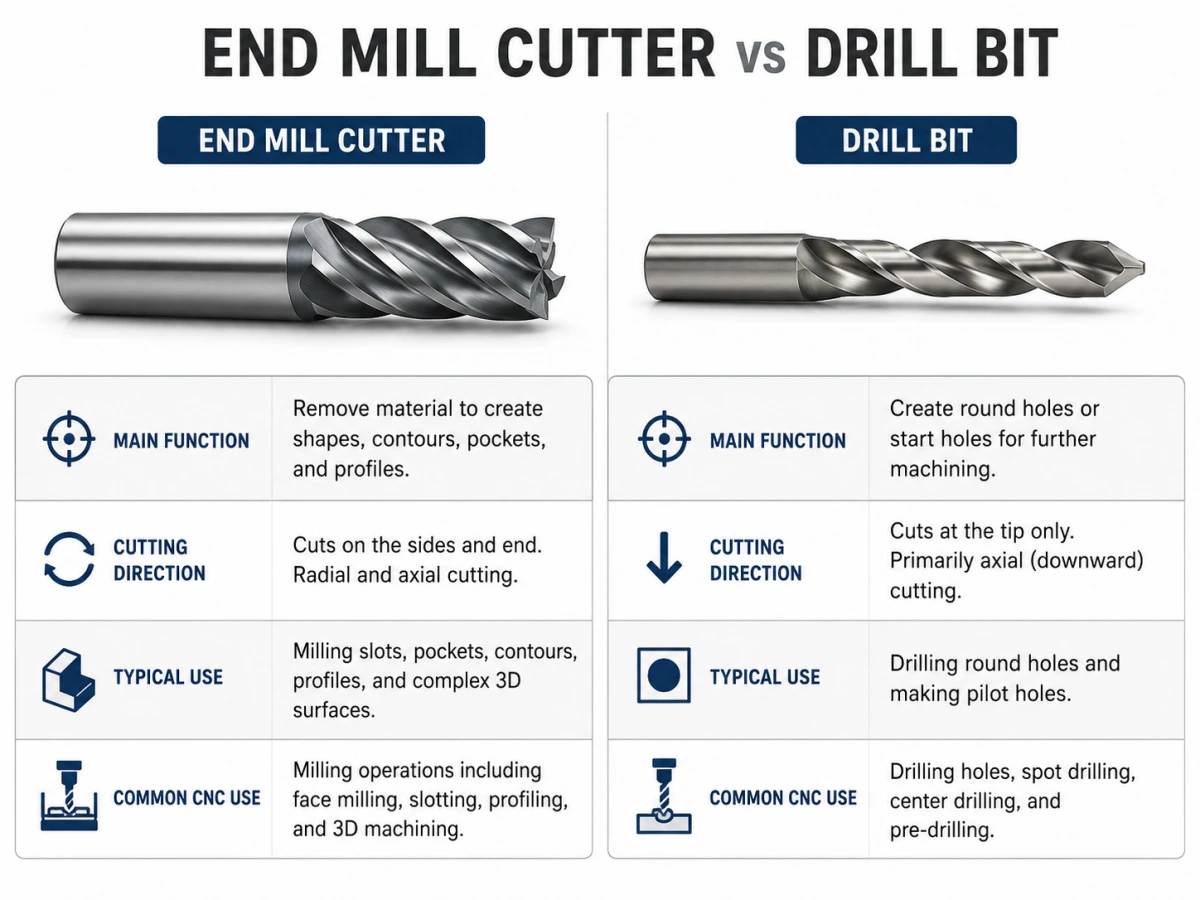
| คุณสมบัติ | เครื่องตัดดอกเอ็นมิลล์ | ดอกสว่าน |
| ฟังก์ชั่นหลัก | มิลลิ่ง, ช่อง, การทําโปรไฟล์, ตัดด้านข้าง | เจาะรู |
| ทิศทางการตัด | ตามแนวแกนและด้านข้าง | ตามแนวแกนเป็นหลัก |
| การใช้งานทั่วไป | สล็อต, กระเป๋า, รูปทรง, ผนังด้านข้าง | รูกลม |
| ความยืดหยุ่นของเครื่องมือ | สูงกว่า | ต่ำกว่า |
| การใช้งาน CNC ทั่วไป | การดำเนินการกัดทั่วไป | การดำเนินการเจาะรู |
ในระยะสั้น, เครื่องมือทั้งสองลบวัสดุ, แต่ไม่สามารถใช้แทนกันได้ในสถานการณ์การตัดเฉือนส่วนใหญ่. ดอกเอ็นมิลล์แบบตัดตรงกลางอาจสะดุดในการใช้งานบางอย่างได้, แต่ก็ยังไม่เหมือนกับสว่านมาตรฐาน.
ประเภททั่วไปของคัตเตอร์ดอกเอ็นมิลล์
หัวกัดดอกเอ็นมิลล์มีหลายประเภท, และแต่ละการออกแบบก็มีวัตถุประสงค์เฉพาะ. การเลือกประเภทที่เหมาะสมจะช่วยปรับปรุงประสิทธิภาพการตัด, คุณภาพพื้นผิว, และอายุการใช้งานของเครื่องมือ.
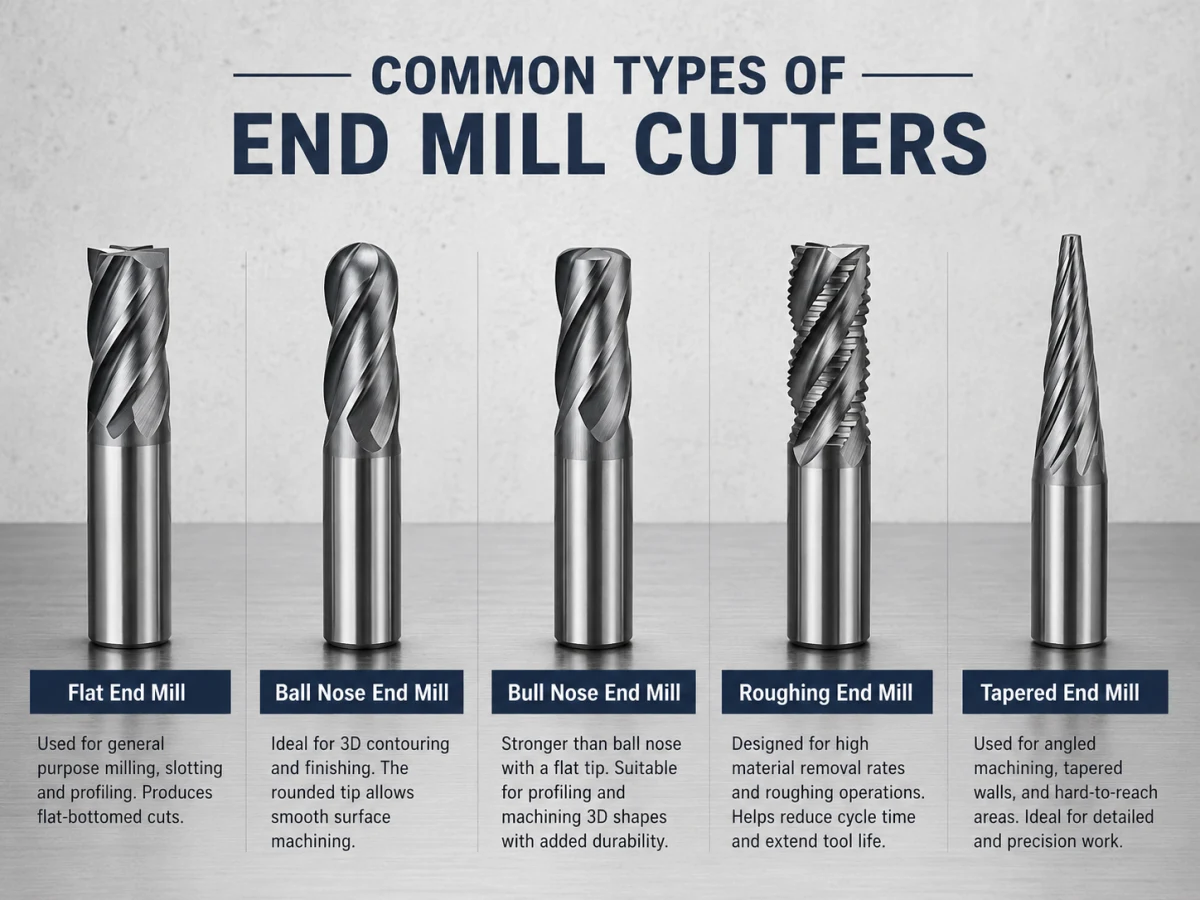
ดอกเอ็นมิลล์แบบแบน
ดอกเอ็นมิลล์แบบแบนจะมีปลายตัดแบบแบน. มันถูกใช้กันอย่างแพร่หลายสำหรับการ slotting, การกัดข้าง, การกัดไหล่, และเครื่องจักรอเนกประสงค์.
ดอกเอ็นมิลล์บอลโนส
ดอกเอ็นมิลล์บอลโนสมีปลายตัดโค้งมน. มักใช้สำหรับการคอนทัวร์สามมิติ, เครื่องจักรกลแม่พิมพ์, พื้นผิวโค้ง, และการดำเนินการขั้นสุดท้าย.
สำหรับการตัดแต่งขึ้นรูปด้วยเครื่องจักร พื้นผิว โค้งและงานแม่พิมพ์, คุณยังสามารถดูของเรา ดอกเอ็นมิลจมูกบอล.
ดอกเอ็นมิลล์บูลโนส
ดอกเอ็นมิลล์จมูกวัว, เรียกอีกอย่างว่าดอกเอ็นมิลล์รัศมีมุม, รวมก้นแบนกับมุมโค้งมน. ช่วยเพิ่มความแข็งแกร่งของขอบและช่วยสร้างการเปลี่ยนภาพที่ราบรื่นยิ่งขึ้น.
เพื่อรูปทรงมุมที่แข็งแรงยิ่งขึ้น, ดูของเรา ดอกเอ็นมิลล์บูลโนส.
ดอกกัดหยาบ
ดอกเอ็นมิลล์กัดหยาบได้รับการออกแบบสำหรับการกำจัดวัสดุที่รุนแรง. มักใช้ก่อนการตกแต่งเพื่อขจัดสต็อกจำนวนมากอย่างรวดเร็ว.
สำหรับการกำจัดสิ่งตกค้างจำนวนมาก, คุณสามารถตรวจสอบของเรา ดอกกัดหยาบ.
ดอกเอ็นมิลล์เรียว
ดอกเอ็นมิลล์เทเปอร์จะมีเส้นผ่านศูนย์กลางที่ค่อยๆ เปลี่ยนแปลง. ใช้สำหรับผนังที่เป็นมุม, ฟันผุลึก, เครื่องจักรกลแม่พิมพ์, และโปรไฟล์พิเศษ.
สำหรับโพรงแม่พิมพ์และการ การตัดแต่งขึ้นรูปด้วยเครื่องจักร ทำมุม, เยี่ยมชมของเรา เครื่องตัดเรียว.
สำหรับการเปรียบเทียบรูปทรงเครื่องมือโดยละเอียดยิ่งขึ้น, อ่านของเรา คู่มือประเภทคัตเตอร์ดอกเอ็นมิลล์.
เครื่องตัดดอกเอ็นมิลล์ใช้ทำอะไร?
หัวกัดดอกเอ็นมิลล์ใช้ในการกัด CNC หลายประเภท. เพราะสามารถตัดได้ทั้งปลายและด้านข้าง, เหมาะสำหรับงานตัดเฉือนทั้งแบบเรียบง่ายและซับซ้อน.
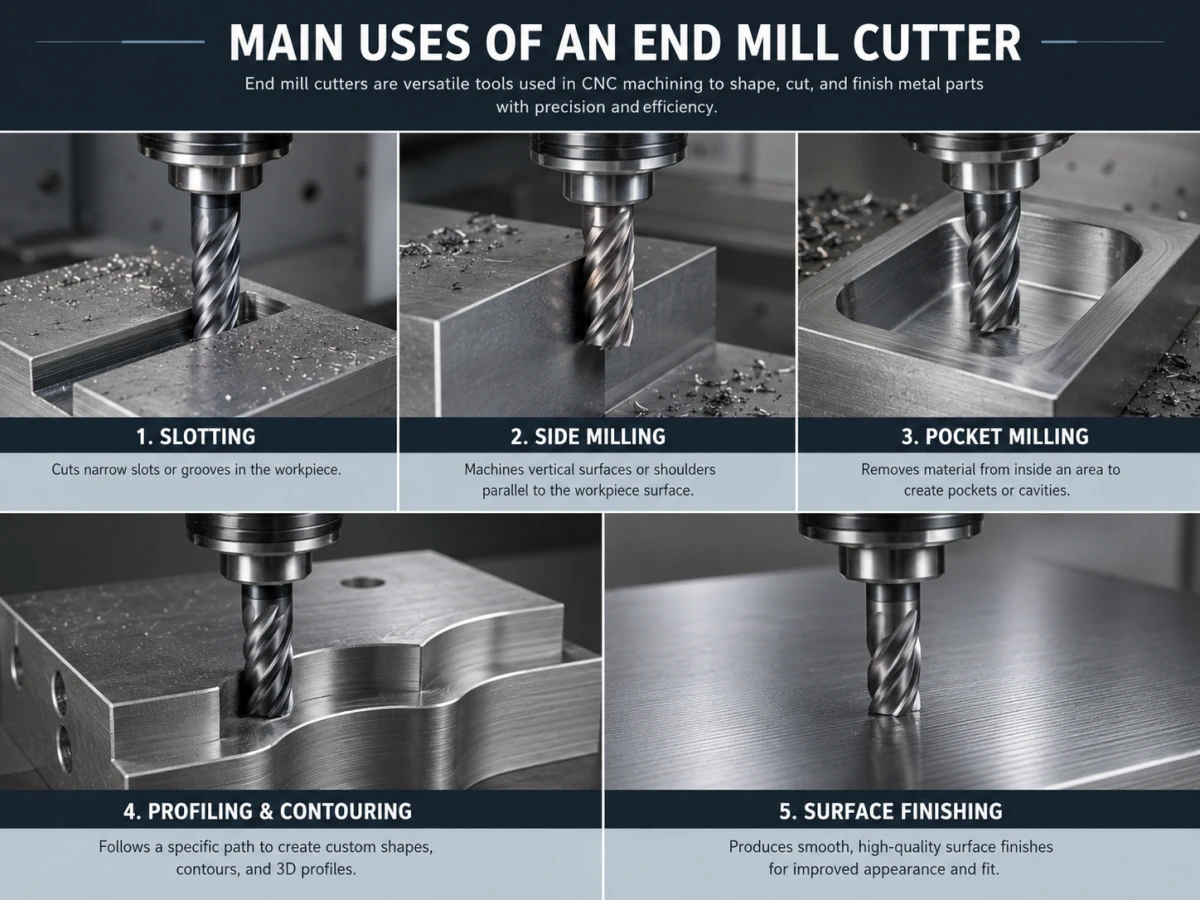
สล็อต
Slotting เป็นหนึ่งในแอปพลิเคชั่นที่พบบ่อยที่สุด. หัวกัดดอกเอ็นมิลล์สามารถตัดช่องตรงหรือโค้งเป็นชิ้นงานได้อย่างแม่นยำ. ช่องเหล่านี้สามารถสร้างรูกุญแจได้, ร่อง, รางนำทาง, และคุณสมบัติการประกอบ.
สำหรับวัสดุที่นุ่มกว่า เช่น อะลูมิเนียม, การคายเศษเป็นสิ่งสำคัญ. ดังนั้น, ช่างเครื่องมักจะเลือก 2 เครื่องมือร่องเมื่อชิ้นงานต้องการการขจัดเศษที่ดีขึ้น.
การกัดข้าง
การกัดข้างใช้คมตัดด้านข้างของเครื่องมือเพื่อขจัดวัสดุออกจากพื้นผิวแนวตั้งของชิ้นงาน. การดำเนินการนี้มีประโยชน์สำหรับการตัดเฉือนบ่างาน, ขั้นตอน, และผนังด้านข้าง.
ร้านขายเครื่องจักรมักใช้การกัดข้างสำหรับชิ้นส่วนที่มีความเที่ยงตรงสูง, ส่วนประกอบของแม่พิมพ์, ชิ้นส่วนเครื่องมือ, และการผลิต CNC ทั่วไป.
การทำโปรไฟล์และการคอนทัวร์
ช่างเครื่องยังใช้หัวกัดดอกเอ็นมิลล์สำหรับการกลึงขึ้นรูปและการตัดขอบด้วย. การดำเนินการเหล่านี้สร้างรูปร่างที่ซับซ้อน, เส้นทางโค้ง, และโปรไฟล์ภายนอกหรือภายใน.
ช่างเครื่องมักจะเลือกเครื่องมือปลายมนและรัศมีมุมสำหรับงานประเภทนี้ เนื่องจากเครื่องมือเหล่านี้สามารถปรับปรุงการเปลี่ยนพื้นผิวและคุณภาพการเก็บผิวสำเร็จ.
การกัดกระเป๋า
การกัดกระเป๋าจะนำวัสดุออกจากพื้นที่ปิดหรือปิดภาคเรียนภายในชิ้นงาน. การดำเนินการนี้เป็นเรื่องปกติในชิ้นส่วนที่ต้องมีโพรงภายใน, การลดน้ำหนัก, หรือการกำจัดวัสดุที่แม่นยำภายในพื้นที่จำกัด.
ควบคุมเศษได้ดี, เส้นทางเครื่องมือที่มั่นคง, และรูปทรงของหัวกัดที่ถูกต้องเป็นสิ่งสำคัญสำหรับกระบวนการนี้.
การตกแต่งพื้นผิว
หลังจากการกลึงหยาบ, สามารถใช้คัตเตอร์ดอกเอ็นมิลล์สำหรับการเก็บผิวละเอียดได้. เป้าหมายคือการปรับปรุงความแม่นยำของมิติและความเรียบของพื้นผิว.
เครื่องมือตกแต่งจะถูกเลือกตามพิกัดความเผื่อ, วัสดุชิ้นงาน, ความเสถียรของเครื่องจักร, และคุณภาพพื้นผิวที่ต้องการ.
การกัดขั้นบันไดและการตัดเฉือนบ่า
หัวกัดดอกเอ็นมิลล์สามารถตัดเฉือนพื้นผิวขั้นบันไดได้, ไหล่, และคุณสมบัติหลายระดับ. คุณลักษณะเหล่านี้มักต้องมีการเปลี่ยนแปลงที่คมชัด, การตัดที่มั่นคง, และมิติที่แม่นยำ.
ส่งผลให้, ความแข็งแกร่งของเครื่องมือ, การออกแบบขลุ่ย, และการเลือกใช้สารเคลือบก็เป็นสิ่งสำคัญ.
เครื่องตัดดอกเอ็นมิลล์ใช้สำหรับอะลูมิเนียม, เหล็กกล้า, และสแตนเลส
วัสดุชิ้นงานที่แตกต่างกันต้องมีการออกแบบหัวกัดที่แตกต่างกัน. ดังนั้น, ผู้ซื้อควรจับคู่เครื่องตัดดอกเอ็นมิลล์กับวัสดุและสภาพการตัดเฉือน.
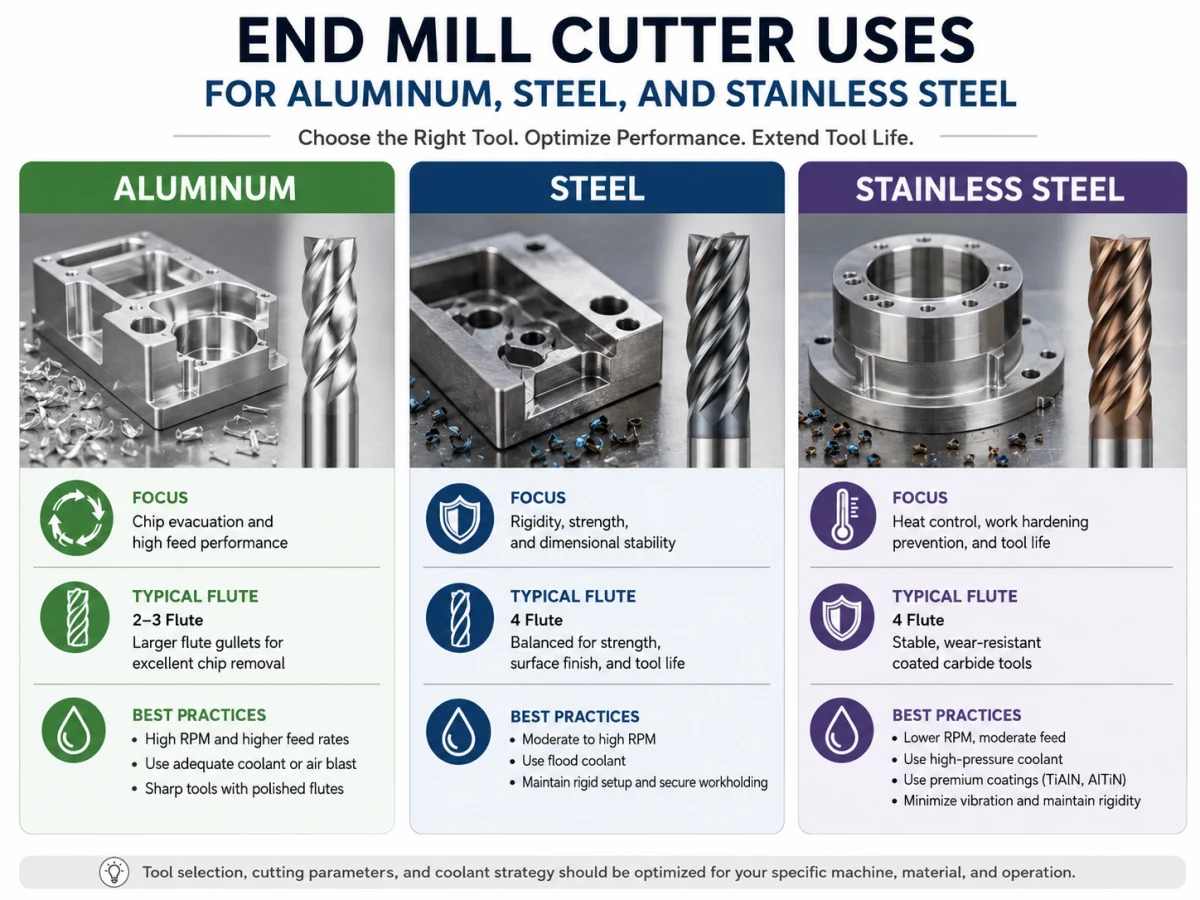
| วัสดุชิ้นงาน | ตัวเลือกเครื่องตัดทั่วไป | เหตุผลหลัก |
| อลูมิเนียม | 2 ขลุ่ยหรือ 3 ดอกเอ็นมิลล์คาร์ไบด์ขลุ่ย | การคายเศษที่ดีขึ้นและการตัดที่ราบรื่น |
| เหล็กกล้า | 4 ดอกเอ็นมิลล์คาร์ไบด์ร่องพร้อมการเคลือบที่เหมาะสม | ความแข็งแกร่งและความทนทานต่อการสึกหรอดีขึ้น |
| สแตนเลส | ดอกเอ็นมิลล์คาร์ไบด์เคลือบด้วยรูปทรงที่มั่นคง | ควบคุมความร้อนได้ดีขึ้นและป้องกันขอบ |
| ทองแดงและทองเหลือง | ดอกเอ็นมิลล์คาร์ไบด์ขอบคม | การตัดที่สะอาดและลดครีบ |
| พลาสติก | คม, เครื่องตัดขลุ่ยขัดเงา | การกำจัดเศษเรียบและลดความเสี่ยงในการหลอมละลาย |
เครื่องตัดดอกเอ็นมิลล์สำหรับอะลูมิเนียม
เมื่อทำการกลึงอะลูมิเนียม, คัตเตอร์ดอกเอ็นมิลล์ใช้สำหรับการเซาะร่อง, การกัดกระเป๋า, การกัดข้าง, และการตกแต่ง. อะลูมิเนียมจะผลิตเศษที่ใหญ่ขึ้น, ดังนั้นจึงมักเลือกใช้เครื่องมือที่มีร่องฟันน้อยกว่าและการคายเศษที่ดี.
ดอกเอ็นมิลล์คาร์ไบด์เกลียวสูงก็เป็นเรื่องปกติสำหรับอะลูมิเนียมเช่นกัน เนื่องจากช่วยปรับปรุงความเรียบในการตัดและลดการสะสมของเศษ.
สำหรับอะลูมิเนียมและวัสดุที่ไม่ใช่เหล็ก, คุณสามารถเปรียบเทียบตัวเลือกขลุ่ยกับเราได้ 2 ดอกเอ็นมิลล์ขลุ่ย และ 3 ดอกเอ็นมิลล์ขลุ่ย หน้า.
คัตเตอร์ดอกเอ็นมิลล์สำหรับเหล็กกล้า
สำหรับเหล็กกล้าคาร์บอนและโลหะผสม, หัวกัดดอกเอ็นมิลล์มักใช้สำหรับการกัดข้าง, รูปร่าง, การตัดเฉือนไหล่, และงานกึ่งสำเร็จ. เหล็กมักจะต้องการความแข็งแกร่งที่ดีกว่าและความต้านทานการสึกหรอที่แข็งแกร่ง.
ในหลายกรณี, 4 ดอกเอ็นมิลล์คาร์ไบด์ร่องถูกเลือกสำหรับการตัดเฉือนเหล็กกล้าและโลหะทั่วไป.
สำหรับการกลึงเหล็กกล้า, คุณสามารถดูของเรา 4 ดอกเอ็นมิลล์ขลุ่ย.
คัตเตอร์ดอกเอ็นมิลล์สำหรับสแตนเลส
สแตนเลสตัดเฉือนได้ยากกว่าเนื่องจากทำให้เกิดความร้อนและมีแนวโน้มที่จะทำให้เครื่องมือสึกหรอ. ในการใช้งานสแตนเลส, หัวกัดดอกเอ็นมิลล์มักใช้สำหรับการกลึงโปรไฟล์, ตกแต่ง, และการควบคุมการกัดข้าง.
การเคลือบที่เหมาะสม, เรขาคณิตของขลุ่ย, และพารามิเตอร์การตัดช่วยรักษาความมั่นคงในการตัดและลดการสึกหรอของคมตัด.
วิธีการเลือกคัตเตอร์ดอกเอ็นมิลล์พื้นฐาน
การเลือกหัวกัดดอกเอ็นมิลล์ไม่จำเป็นต้องยุ่งยาก. อย่างไรก็ตาม, ผู้ซื้อควรตรวจสอบปัจจัยหลายประการก่อนสั่งซื้อ.
วัสดุชิ้นงาน
วัสดุชิ้นงานถือเป็นปัจจัยที่สำคัญที่สุดประการหนึ่ง. อลูมิเนียม, เหล็ก, สแตนเลส, ทองแดง, ทองเหลือง, พลาสติก, และเหล็กหล่ออาจต้องใช้การออกแบบขลุ่ยที่แตกต่างกัน, การเคลือบ, และกลยุทธ์การตัด.
จํานวนขลุ่ย
จำนวนร่องฟันส่งผลต่อการคายเศษ, ความแข็งแกร่ง, และประสิทธิภาพในการตัด. ตัวอย่างเช่น, ช่างเครื่องมักใช้ 2 เครื่องมือขลุ่ยสำหรับอลูมิเนียม, ในขณะที่พวกเขามักจะเลือก 4 เครื่องมือร่องสำหรับเหล็กกล้าและงานตัดเฉือนทั่วไป.
เพื่อการเปรียบเทียบที่ลึกซึ้งยิ่งขึ้น, อ่านของเรา 2 ขลุ่ยกับ 4 คู่มือดอกเอ็นมิลล์.
วัสดุเครื่องมือ
ร้านเครื่องจักร CNC หลายแห่งเลือกหัวกัดโซลิดคาร์ไบด์เนื่องจากมีความแข็งแกร่งสูงกว่า, ทนต่อการสึกหรอได้ดีขึ้น, และประสิทธิภาพที่มั่นคง. โรงงานบางแห่งยังคงใช้เครื่องมือ HSS สำหรับงานที่ใช้ความเร็วต่ำหรืองานตัดเฉือนทั่วไป.
การเคลือบ
การเคลือบผิวควรตรงกับวัสดุและสภาพการตัดเฉือน. ตัวอย่างเช่น, ช่างเครื่องมักเลือกการเคลือบ TiAlN และ AlTiN สำหรับเหล็ก, ในขณะที่การเคลือบ DLC อาจเหมาะกับวัสดุอะลูมิเนียมและอโลหะ.
จำเป็น เสร็จสิ้น
สำหรับงานกัดหยาบ, เป้าหมายหลักคือการกำจัดวัสดุที่สูงขึ้น. อย่างไรก็ตาม, สำหรับงานตกแต่ง, คุณภาพพื้นผิวและความแม่นยำของมิติมีความสำคัญมากขึ้น.
ข้อมูลจำเพาะพื้นฐานที่ต้องตรวจสอบก่อนซื้อ
ก่อนทำการสั่งซื้อ, ผู้ซื้อควรยืนยันข้อกำหนดสำคัญหลายประการ. ซึ่งจะช่วยหลีกเลี่ยงความไม่ตรงกันของเครื่องมือและปรับปรุงความเสถียรของการตัดเฉือน.
เส้นผ่านศูนย์กลางคัตเตอร์
เส้นผ่านศูนย์กลางของคัตเตอร์ส่งผลต่อความกว้างของการตัด, ความแข็งแกร่ง, และขนาดของคุณสมบัติการกลึง.
ความยาวขลุ่ย
ความยาวร่องฟันจะกำหนดความลึกของเครื่องตัด. อย่างไรก็ตาม, ขลุ่ยที่ยาวขึ้นอาจลดความแข็งแกร่ง, ดังนั้นจึงควรตรงกับความลึกของการตัดจริง.
ความยาวโดยรวม
ความยาวโดยรวมส่งผลต่อระยะเอื้อมของเครื่องมือและการควบคุมการสั่นสะเทือน. อาจจำเป็นต้องใช้เครื่องมือที่ยาวกว่านี้สำหรับโพรงลึก, แต่ควรใช้อย่างระมัดระวังเพื่อลดการพูดคุย.
เส้นผ่านศูนย์กลางก้าน
เส้นผ่านศูนย์กลางของก้านต้องตรงกับตัวจับยึดอย่างถูกต้อง. การจับยึดที่มั่นคงช่วยเพิ่มความแม่นยำและอายุการใช้งานของเครื่องมือ.
เรขาคณิตมุม
แบน, บอลจมูก, รัศมีมุม, และรูปทรงเทเปอร์ใช้สำหรับเป้าหมายการตัดเฉือนที่แตกต่างกัน. ดังนั้น, รูปทรงของมุมควรตรงกับรูปร่างของชิ้นส่วนและการตกแต่งที่ต้องการ.
ประเภทการเคลือบ
ควรเลือกการเคลือบตามวัสดุชิ้นงาน, ความเร็วในการตัด, สภาพน้ำหล่อเย็น, และความต้องการอายุการใช้งานเครื่องมือ.
เหตุใดหัวกัดโซลิดคาร์ไบด์จึงเป็นเรื่องธรรมดาในการกัด CNC
หัวกัดโซลิดคาร์ไบด์ได้รับความนิยมเนื่องจากมีความแข็งแกร่งสูง, ความแข็งสูง, และทนต่อการสึกหรอได้ดี. สามารถรองรับความเร็วตัดที่สูงขึ้นและให้ประสิทธิภาพที่มั่นคงมากกว่าวัสดุเครื่องมือมาตรฐานหลายๆ ชนิด.
ในเครื่องจักรการผลิต, ร้านค้าหลายแห่งใช้เครื่องมือคาร์ไบด์สำหรับเหล็ก, สแตนเลส, เหล็กหล่อ, อลูมิเนียม, และวัสดุที่ต้องการอื่นๆ. นอกจากนี้, รูปทรงและการเคลือบผิวที่เหมาะสมสามารถปรับปรุงความสม่ำเสมอของการตัดเฉือนได้.
ผู้ซื้อภาคอุตสาหกรรม, ผู้จัดจำหน่าย, และร้านขายเครื่องจักรมักชอบเครื่องมือคาร์ไบด์เนื่องจากช่วยลดการเปลี่ยนเครื่องมือและช่วยให้การผลิตมีเสถียรภาพมากขึ้น.
สำหรับเครื่องมือคาร์ไบด์มาตรฐานและแบบกำหนดเอง, คุณสามารถเยี่ยมชมของเรา กระดาษตัดดอกเอ็นมิลล์คาร์ไบด์.
เมื่อใดที่คุณต้องการเครื่องตัดดอกเอ็นมิลล์แบบกำหนดเอง?
คัตเตอร์มาตรฐานสามารถแก้ปัญหางานตัดเฉือนทั่วไปได้หลายอย่าง.
อย่างไรก็ตาม, คุณอาจต้องใช้เครื่องมือแบบกำหนดเองเมื่อชิ้นส่วนมีโปรไฟล์พิเศษ, ช่องลึก, วัสดุที่ผิดปกติ, ความอดทนอย่างเข้มงวด, หรือข้อกำหนดขนาดที่ไม่ได้มาตรฐาน.
ผู้ผลิตสามารถออกแบบหัวกัดดอกเอ็นมิลล์แบบกำหนดเองที่มีเส้นผ่านศูนย์กลางพิเศษได้, ความยาวขลุ่ย, ความยาวโดยรวม, รัศมีมุม, การเคลือบ, ขนาดก้าน, และเรขาคณิตของเครื่องมือ.
สำหรับเครื่องมือแบบวาดหรือแบบ OEM, เยี่ยมชมของเรา กระดาษเอ็นมิลล์แบบกำหนดเอง.
คำถามที่ถามบ่อย
คัตเตอร์ดอกเอ็นมิลล์คืออะไร?
คัตเตอร์ดอกเอ็นมิลล์คือเครื่องมือตัดแบบหมุนที่ใช้สำหรับการกัด CNC เช่น การกัดร่อง, การกัดข้าง, การทําโปรไฟล์, รูปร่าง, การกัดกระเป๋า, และการตกแต่ง.
คัตเตอร์ดอกเอ็นมิลล์ใช้ทำอะไร?
ใช้สำหรับขจัดวัสดุออกจากปลายและด้านข้างของชิ้นงาน. การใช้งานทั่วไปได้แก่สล็อต, กระเป๋า, ผนังด้านข้าง, โปรไฟล์, ไหล่, พื้นผิวโค้ง, และพื้นผิวสำเร็จรูป.
อะไรคือความแตกต่างระหว่างคัตเตอร์ดอกเอ็นมิลล์และดอกสว่าน?
ดอกสว่านจะเจาะรูตามทิศทางตามแนวแกนเป็นหลัก. คัตเตอร์ดอกเอ็นมิลล์สามารถตัดตามแนวแกนและด้านข้างได้, จึงสามารถทำการกัดได้มากขึ้น เช่น การกัดร่อง, การทําโปรไฟล์, และการกัดข้าง.
หัวกัดดอกเอ็นมิลล์ประเภททั่วไปมีอะไรบ้าง?
ประเภททั่วไป ได้แก่ ดอกเอ็นมิลล์แบบแบน, ดอกเอ็นมิลจมูกบอล, ดอกเอ็นมิลล์บูลโนส, ดอกกัดหยาบ, ดอกเอ็นมิลล์เรียว, 2 ดอกเอ็นมิลล์ขลุ่ย, 3 ดอกเอ็นมิลล์ขลุ่ย, 4 ดอกเอ็นมิลล์ขลุ่ย, และ 6 ดอกเอ็นมิลล์ขลุ่ย.
ฉันจะเลือกคัตเตอร์ดอกเอ็นมิลล์พื้นฐานได้อย่างไร?
คุณควรตรวจสอบวัสดุชิ้นงาน, การนับขลุ่ย, เส้นผ่านศูนย์กลางของเครื่องตัด, ความยาวขลุ่ย, ความยาวโดยรวม, เส้นผ่านศูนย์กลางก้าน, วัสดุเครื่องมือ, การเคลือบ, และพื้นผิวที่ต้องการ.
หัวกัดดอกเอ็นมิลล์คาร์ไบด์ดีกว่าดอกเอ็นมิลล์ HSS หรือไม่?
หัวกัดดอกเอ็นมิลล์คาร์ไบด์มักจะให้ความแข็งแกร่งที่ดีกว่า, ความต้านทานการสึกหรอ, และความเสถียรในการตัด. อย่างไรก็ตาม, ทางเลือกที่ดีที่สุดขึ้นอยู่กับเครื่อง, วัสดุชิ้นงาน, ความเร็วในการตัด, และงบประมาณ.
บทสรุป
หัวกัดดอกเอ็นมิลล์เป็นเครื่องมือกัด CNC อเนกประสงค์ที่ใช้สำหรับการกัดร่อง, การกัดข้าง, การกัดกระเป๋า, การทําโปรไฟล์, รูปร่าง, การตัดเฉือนไหล่, และการตกแต่ง. เพราะสามารถตัดได้ทั้งปลายและด้านข้าง, มันมีความยืดหยุ่นมากกว่าเครื่องมือตัดพื้นฐานหลายตัว.
เพื่อเลือกเครื่องตัดที่เหมาะสม, ผู้ซื้อควรเข้าใจโครงสร้างของเครื่องมือ, ประเภทเครื่องตัด, การนับขลุ่ย, วัสดุ, การเคลือบ, เส้นผ่านศูนย์กลาง, ความยาวขลุ่ย, และการประยุกต์ใช้เครื่องจักร. เมื่อปัจจัยเหล่านี้จับคู่กันอย่างถูกต้องแล้ว, เครื่องตัดสามารถให้ประสิทธิภาพการตัดที่ดีขึ้น, อายุการใช้งานของเครื่องมือยาวนานขึ้น, และผลลัพธ์การตัดเฉือนที่เสถียรยิ่งขึ้น.
กำลังมองหาผู้ผลิตหัวกัดดอกเอ็นมิลล์ที่เชื่อถือได้สำหรับอะลูมิเนียม, เหล็ก, สแตนเลส, หรือเครื่องจักร CNC แบบกำหนดเอง?
สำรวจของเรา หน้าผลิตภัณฑ์เครื่องตัดดอกเอ็นมิลล์ สำหรับโซลูชันมาตรฐานและ OEM, หรือติดต่อเราเพื่อแจ้งความต้องการด้านรูปวาดและการสมัครของคุณ.