 قواطع الطحن الدقيقة,أدوات القطع لتصنيع كل مادة باستخدام الحاسب الآلي

مقدمة
تؤثر أنواع قطع المطحنة النهائية على إخلاء الرقاقة, استقرار القطع, الانتهاء من السطح, إزالة المواد, وعمر الأداة في التصنيع باستخدام الحاسب الآلي. اختيار النوع المناسب لا يتعلق فقط بالحجم أو الطلاء.
تعمل الأدوات المختلفة بشكل أفضل لمهام المعالجة المختلفة. غالبًا ما تستخدم المطاحن ذات النهاية المسطحة في عملية الشق والطحن الجانبي. أدوات الأنف الكروية مناسبة لتحديد الخطوط ثلاثية الأبعاد والأسطح المنحنية. شعاع الزاوية, التخشين, وتساعد الأدوات المدببة عندما يتطلب الجزء حوافًا أقوى, إزالة المخزون بشكل أسرع, أو وصول خاص.
في هذا الدليل, نقوم بمقارنة أنواع قطع المطحنة النهائية الأكثر شيوعًا, استخداماتهم, عوامل الحجم الأساسية, هندسة الحافة, ونصائح لاختيار الألومنيوم, فُولاَذ, ستانلس ستيل, وتطبيقات التصنيع باستخدام الحاسب الآلي المخصصة.
إذا كنت جديدًا على هذه الأداة, يمكنك قراءة أولا لدينا دليل أداة الطحن الأساسية.
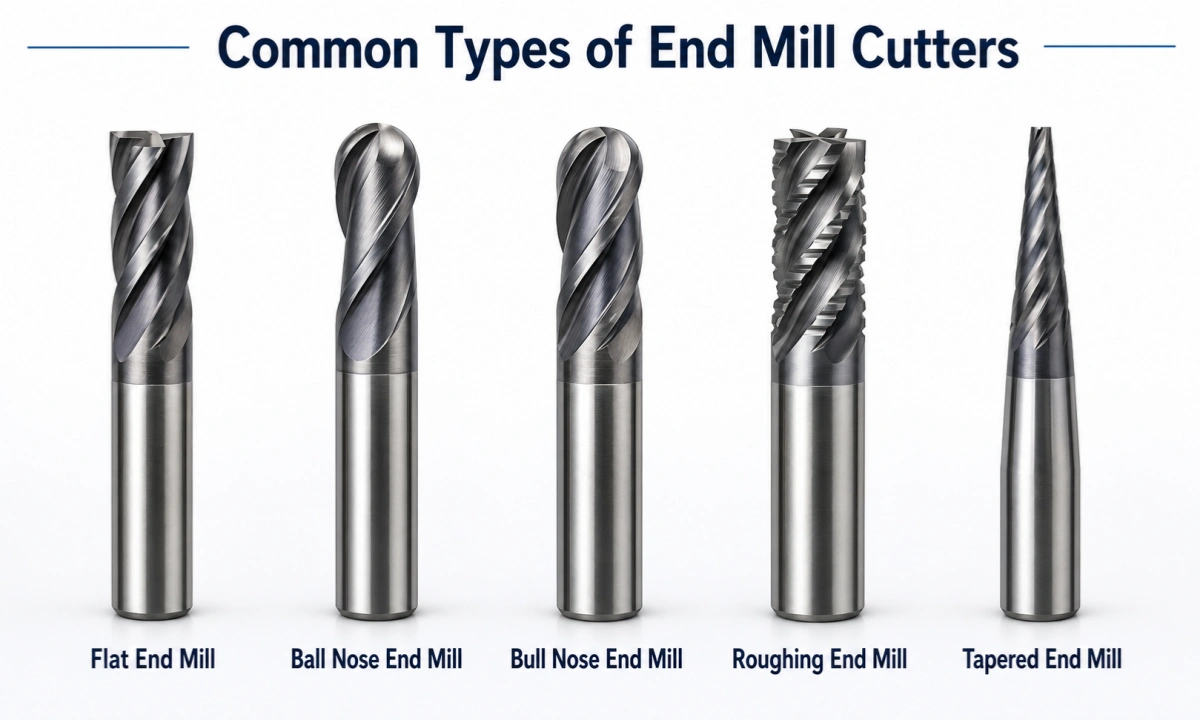
ما هي أنواع قطع مطحنة النهاية?
عادةً ما تصنف ورش الآلات أنواع قطع المطاحن النهائية حسب هندسة الطرف, غرض القطع, وتطبيق الآلات. على الرغم من أن السوق يقدم العديد من قواطع الطحن, تستخدم الآلات CNC عادة المطاحن ذات النهاية المسطحة, مطاحن نهاية الأنف الكروية, مطاحن نهاية نصف قطرها الزاوية, مطاحن النهاية الخشنة, ومطاحن نهاية مدبب.
كل نوع له مزاياه الخاصة. على سبيل المثال, تُستخدم مطحنة النهاية المسطحة بشكل شائع في الطحن العام, في حين أن مطحنة نهاية الأنف الكروية أكثر ملاءمة لتحديد الخطوط ثلاثية الأبعاد والأسطح المنحنية.
ولهذا السبب يعد فهم نوع القاطع جزءًا مهمًا من اختيار الأداة قبل الطلب أو التصنيع.
أنواع قطع مطحنة نهاية الأكثر شيوعا
1. مطحنة النهاية المسطحة
تعد المطحنة ذات النهاية المسطحة أحد أكثر أنواع الأدوات شيوعًا في التصنيع باستخدام الحاسب الآلي. لديها طرف القطع المسطح, لذلك غالبًا ما يختاره الميكانيكيون للتقطيع, طحن الجانب, طحن الكتف, وتصنيع الآلات للأغراض العامة.
لأنه يمكن أن يخلق سطحًا مسطحًا, تعمل هذه الأداة بشكل جيد مع الأجزاء التي تتطلب فتحات مستقيمة, جيوب, أو ملامح حادة.
تشمل الاستخدامات النموذجية:
- الشق
- طحن الجانب
- طحن الجيب
- أعمال الآلات العامة
تستخدم محلات الآلات المطاحن المسطحة للألمنيوم, فُولاَذ, والعديد من مواد التصنيع القياسية.
2. مطحنة نهاية الكرة الأنف
تحتوي المطحنة ذات الأنف الكروي على طرف قطع مستدير. هذا التصميم يجعلها مناسبة بشكل خاص لتحديد الخطوط, التنميط, وتصنيع الأسطح المنحنية أو ثلاثية الأبعاد.
عادة ما يستخدم الميكانيكيون هذه الأداة من أجل:
- عمل القالب والموت
- 3التصنيع باستخدام الحاسب الآلي د
- أسطح الأجزاء المنحنية
- عمليات التشطيب
بسبب طرفها المستدير, يمكن لطاحونة نهاية الأنف الكروية أن تنتج انتقالات أكثر سلاسة على الأشكال المنحنية. لكن, لا يعمل عادةً كخيار أول للفتحات ذات القاع الحاد.
للاستخدامات والتعاريف الأساسية, يمكنك أيضًا قراءة موقعنا دليل أداة الطحن الأساسية.
3. مطحنة نهاية نصف القطر الزاوية
تجمع المطحنة الطرفية ذات نصف قطر الزاوية بين قاع مسطح وحواف زاوية مستديرة. يساعد هذا التصميم على تحسين قوة الحافة وتقليل تقطيع الزوايا أثناء التشغيل الآلي.
بالمقارنة مع مطحنة نهاية مسطحة القياسية, غالبًا ما تقدم مطحنة نهاية نصف قطرها الزاوية:
- قوة حافة أفضل
- انتقالات زاوية أكثر سلاسة
- تحسين الاستقرار في بعض التطبيقات
تستخدم محلات الآلات عادة هذا النوع من أجل:
- تصنيع الصلب
- تصنيع الفولاذ المقاوم للصدأ
- نصف تشطيب
- الانتهاء من العمل الذي يتطلب زوايا أقوى
غالبًا ما يختار المستخدمون هذا التصميم عندما يحتاجون إلى إجراء قطع مسطح وتحسين عمر الأداة.
4. مطحنة النهاية الخشنة
تعمل طاحونة النهاية الخشنة على إزالة المواد بقوة. عادةً ما تحتوي على هندسة قطع مسننة أو متخصصة تساعد على تقسيم الرقائق إلى قطع أصغر وتقليل حمل القطع.
تستخدم محلات الآلات عادة هذا النوع من أجل:
- إزالة المخزون الثقيل
- الآلات الخام قبل الانتهاء
- تحسين كفاءة إزالة المواد
- تصنيع المواد الأكثر صرامة في ظل ظروف القطع المستقرة
بعد التخشين, غالبًا ما يستخدم الميكانيكيون أدوات التشطيب عندما يتطلب الجزء تشطيبًا أفضل للسطح.
5. مطحنة نهاية مدبب
طاحونة نهاية مدببة لها جسم مدبب تدريجيًا. يستخدم الميكانيكيون هذه الأداة عندما لا تكون قواطع الجدران المستقيمة هي الخيار الأفضل.
تشمل الاستخدامات النموذجية:
- الجدران الزاوية
- تجاويف عميقة
- عمل العفن
- الآلات الهندسية الخاصة
بسبب الشكل المدبب, يمكن أن يوفر هذا القاطع وصولاً أفضل إلى مناطق المعالجة الضيقة أو العميقة.
جدول المقارنة السريعة لأنواع قاطعات المطحنة النهائية
| نهاية مطحنة نوع القاطع | أفضل ل | نتيجة السطح | المواد النموذجية |
|---|---|---|---|
| مطحنة النهاية المسطحة | الشق, طحن الجانب, جيوب | سطح مسطح القاع | ألمنيوم, فُولاَذ, الآلات للأغراض العامة |
| مطحنة نهاية الكرة الأنف | 3د الكنتوري, الأسطح المنحنية | لمسة نهائية منحنية ناعمة | الصلب العفن, ألمنيوم, 3أجزاء د |
| مطحنة نهاية نصف القطر الزاوية | حافة أقوى, انتقالات أكثر سلاسة | قاع مسطح بزوايا مستديرة | فولاذ, ستانلس ستيل |
| مطحنة النهاية الخشنة | إزالة المخزون بسرعة | سطح أكثر خشونة | فولاذ, الحديد الزهر, الآلات الثقيلة |
| مطحنة نهاية مدبب | الجدران الزاوية, تجاويف عميقة | التحكم في الوصول والهندسة | عمل العفن, أجزاء خاصة |
يمكن أن يساعد جدول المقارنة هذا المشترين على فهم النوع الأكثر ملاءمة لمهمة تصنيع محددة بسرعة.
مخطط حجم قاطعة المطحنة النهائية والمواصفات الأساسية
بالإضافة إلى نوع القاطع, يجب على المشترين أيضًا التحقق من مواصفات الحجم الرئيسية قبل الطلب. قد تعمل هندسة الأداة نفسها بشكل مختلف عندما يكون القطر, طول الناي, الطول الكلي, أو يتغير حجم الساق.
| مواصفات | ماذا يعني | لماذا يهم؟ |
| قطر القاطع | عرض القطع للأداة | يؤثر على عرض الفتحة, قوة القطع, وحجم ميزة الجزء |
| طول الفلوت | طول القطع للأداة | يحدد عمق القطع وصلابة الأداة |
| الطول الكلي | الطول الكامل للقاطع | يؤثر على الوصول, اهتزاز, واستقرار الآلات |
| قطر عرقوب | قطر المشبك | يجب أن يتطابق مع حامل الأداة بشكل صحيح |
| عدد الفلوت | عدد مزامير القطع | يؤثر على إخلاء الشريحة, صلابة, والانتهاء من السطح |
| شعاع الزاوية | حجم الزاوية المستديرة على طرف الأداة | يحسن قوة الحافة وانتقال السطح |
| طلاء | المعالجة السطحية على حافة القطع | يساعد على تحسين مقاومة التآكل وعمر الأداة |
الأحجام القياسية يمكن أن تلبي العديد من احتياجات الآلات العامة. لكن, قد تكون هناك حاجة إلى أدوات مخصصة للتجاويف العميقة, ملفات تعريف خاصة, تصنيع الآلات طويلة المدى, مواد غير قياسية, أو متطلبات التسامح الصارمة.
لتوريد الأدوات القياسية والمخصصة, يمكنك أيضًا زيارة موقعنا صفحة المنتج لأدوات الطحن باستخدام الحاسب الآلي.
أنواع قطع مطحنة النهاية واستخداماتها في التصنيع باستخدام الحاسب الآلي
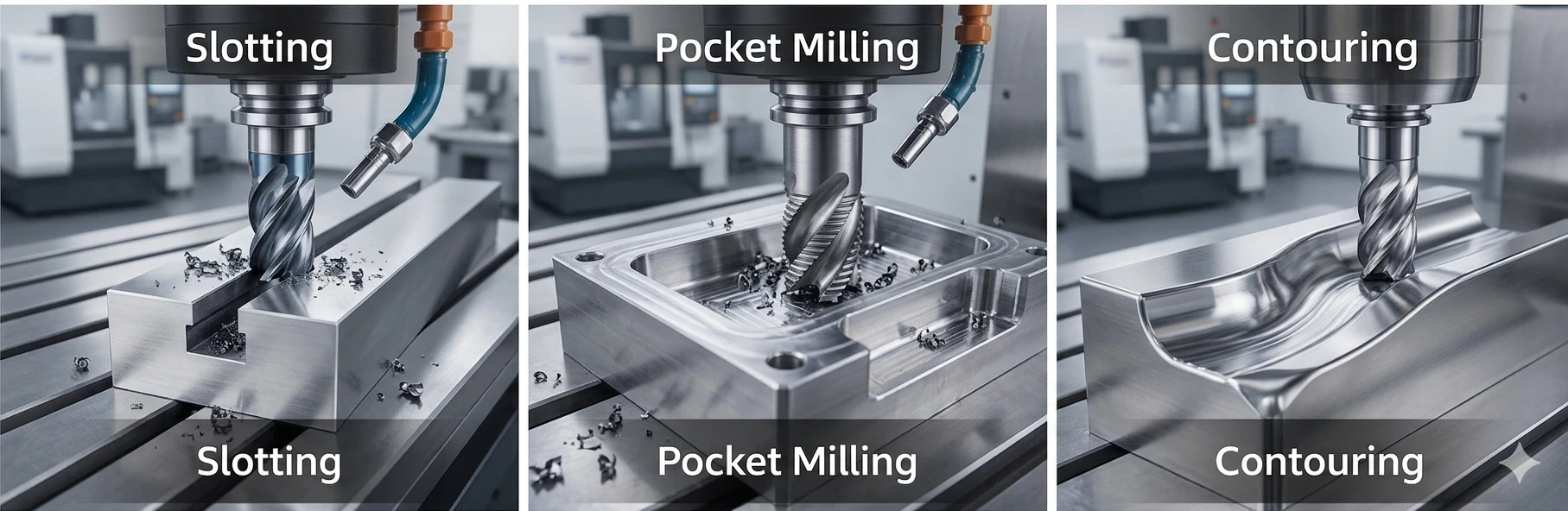
للشق والطحن الجيب
عادةً ما يستخدم الميكانيكيون المطاحن المسطحة للتقطيع والطحن الجيبي لأن هذه الأدوات يمكنها إنشاء ميزات ذات قاع مسطح وجدران جانبية نظيفة.
للكنتوري والأسطح ثلاثية الأبعاد
عادةً ما تعمل المطاحن ذات الأنف الكروي بشكل أفضل في تحديد الخطوط والتصنيع ثلاثي الأبعاد لأنها يمكنها متابعة الأسطح المنحنية بسلاسة أكبر.
من أجل زوايا أقوى وعمر أفضل للأدوات
غالبًا ما تختار محلات الآلات المطاحن الطرفية ذات نصف قطر الزاوية عندما يتطلب الجزء حافة قطع أقوى وأداء أكثر استقرارًا.
لإزالة المواد بسرعة
تساعد المطاحن النهائية على إزالة كمية كبيرة من المواد قبل الانتهاء.
للميزات العميقة أو الزاوية
تعمل المطاحن الطرفية المدببة بشكل جيد في التجاويف العميقة, الجدران الزاوية, ومهام التصنيع المتعلقة بالقالب.
إذا كنت تريد أن تفهم كيف يحدث القطع فعليًا أثناء التشغيل الآلي, يمكنك أيضًا قراءة موقعنا دليل عمل الطحن باستخدام الحاسب الآلي.
ما هو نوع قاطع المطحنة النهائي الأفضل للمواد المختلفة؟?
أنواع المطاحن النهائية للألمنيوم
لتصنيع الألمنيوم, إخلاء الشريحة مهم بشكل خاص. لذلك, غالبًا ما يختار المشترون المطاحن المسطحة أو أدوات الأنف الكروية بتصميمات الفلوت المناسبة.
في كثير من الحالات, يولي المشترون أيضًا اهتمامًا وثيقًا بعدد الفلوت. لمقارنة أعمق, اقرأ لدينا دليل مقارنة العد الناي.
أنواع المطاحن النهائية للصلب
لتصنيع الصلب, عادة ما تكون الصلابة ومقاومة التآكل أكثر أهمية. غالبًا ما تختار محلات الآلات المطاحن ذات النهاية المسطحة, مطاحن نهاية نصف قطرها الزاوية, وأدوات التخشين حسب متطلبات التخشين أو التشطيب.
أنواع المطاحن النهائية للفولاذ المقاوم للصدأ
للفولاذ المقاوم للصدأ, قطع الحرارة والاستقرار أمر بالغ الأهمية. يختار العديد من المستخدمين أدوات نصف قطر الزاوية وأدوات كربيد مناسبة لأن الحواف الأقوى ومقاومة التآكل الأفضل يمكن أن تحسن الأداء.
لأدوات كربيد مخصصة, يمكنك أيضًا زيارة موقعنا أدوات طحن كربيد الصلبة صفحة.
كيفية اختيار نوع قاطع المطحنة المناسب
1. التحقق من تشغيل الآلات
السؤال الأول هو ما يجب على القاطع القيام به. الشق, تحديد الخطوط, التخشين, التشطيب, وغالبًا ما تتطلب الطحن الجيبي أنواعًا مختلفة من الأدوات.
2. التحقق من مادة الشغل
ألمنيوم, فُولاَذ, والفولاذ المقاوم للصدأ لها خصائص تصنيع مختلفة. لذلك, يجب على المشترين مطابقة نوع القاطع مع المادة.
3. تحقق من متطلبات تشطيب السطح
إذا كانت جودة السطح مهمة بشكل خاص, قد تعمل أدوات الأنف الكروي أو نصف القطر الزاوية بشكل أفضل في بعض التطبيقات.
4. التحقق من قوة الأداة وصلابة
لظروف القطع الثقيلة, قد توفر أدوات التخشين أو الأدوات ذات الحافة الأقوى أداءً أفضل.
5. تحقق من المتطلبات القياسية أو المخصصة
يحتاج بعض المستخدمين إلى أدوات قياسية, بينما يحتاج البعض الآخر إلى هندسة مخصصة, طلاء, أو الأبعاد بناءً على الرسومات أو العينات.
إذا كنت تبحث عن حلول قياسية أو حلول OEM, يمكنك أيضًا زيارة موقعنا صفحة المنتج لأدوات الطحن باستخدام الحاسب الآلي.
هندسة قاطعة المطحنة النهائية والأجزاء الرئيسية
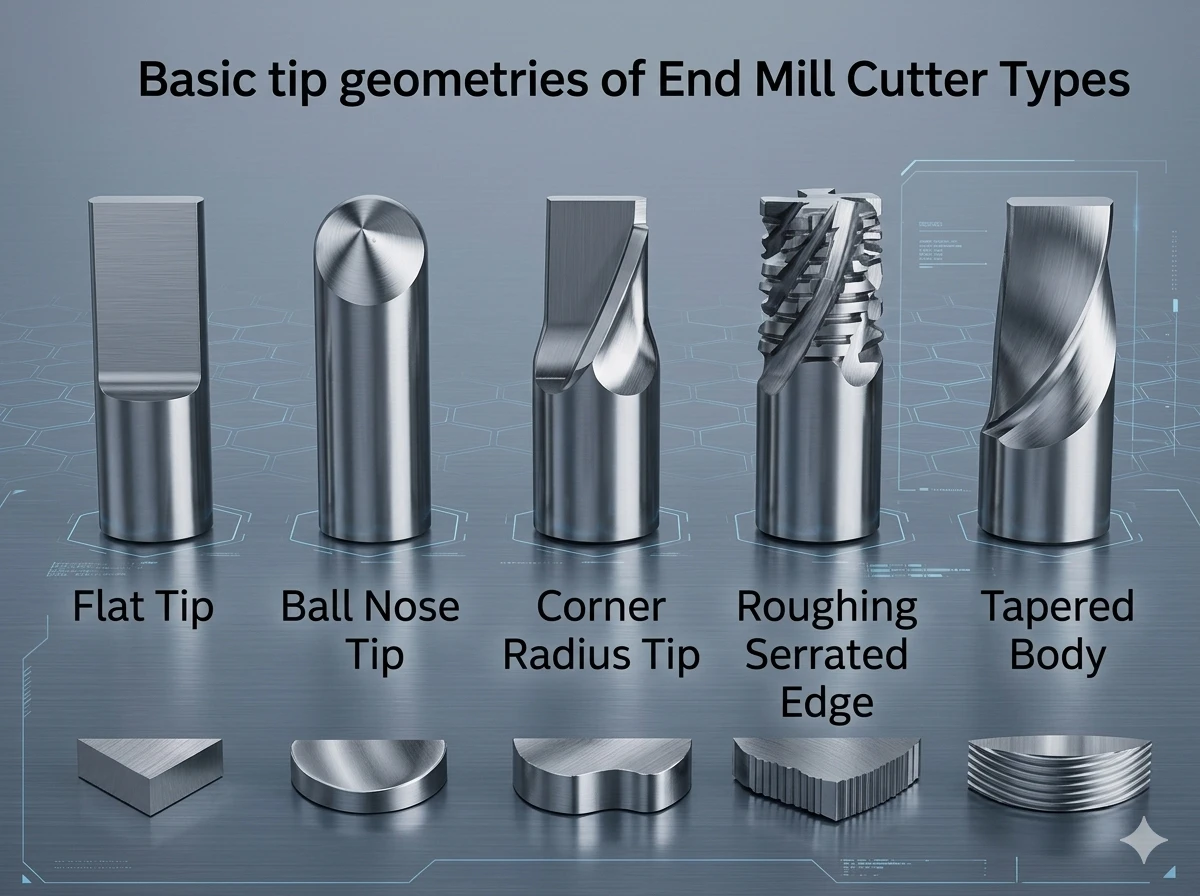
على الرغم من أن الأدوات المختلفة قد تبدو متشابهة للوهلة الأولى, يمكن للمشترين التعرف على معظم أنواع القطع من خلال هندسة الطرف, تصميم الفلوت, والغرض بالقطع.
على سبيل المثال:
- تحتوي المطحنة ذات النهاية المسطحة على طرف قطع مسطح للفتحات, جيوب, وميزات مسطحة القاع.
- تحتوي المطحنة ذات الأنف الكروي على طرف مستدير للأسطح ثلاثية الأبعاد والمقاطع المنحنية.
- تجمع مطحنة نهاية نصف قطر الزاوية بين القاع المسطح والزوايا الدائرية للحصول على أداء أقوى للحافة.
- تستخدم مطحنة النهاية الخشنة هندسة قطع مسننة أو خاصة لإزالة المخزون بشكل أسرع.
- تحتوي المطحنة الطرفية المدببة على جسم زاوية للتجاويف العميقة, عمل العفن, والوصول خاص.
يساعد فهم هذه الاختلافات الهندسية المشترين على اختيار الأداة المناسبة قبل الطلب. كما أنه يساعد على تجنب استخدام نوع قاطع واحد لكل مادة أو عملية تصنيع.
الأخطاء الشائعة عند اختيار أنواع قطع مطحنة النهاية
الاختيار حسب المظهر فقط
يختار بعض المشترين أداة القطع حسب الشكل فقط ولكنهم يتجاهلون المادة, عملية, والانتهاء من المتطلبات.
استخدام نوع واحد لكل مادة
قد لا يكون أفضل نوع من المطاحن النهائية للألمنيوم هو الخيار الأفضل للفولاذ أو الفولاذ المقاوم للصدأ.
تجاهل متطلبات التشطيب
قد لا توفر الأداة المناسبة للتخشين جودة السطح المطلوبة للتشطيب.
التركيز فقط على نوع القاطع وتجاهل عدد الفلوت
نوع القاطع مهم, ولكن العد الناي, طلاء, وينبغي أيضًا النظر في مادة الأداة معًا.
الأسئلة المتداولة
ما هي الأنواع الرئيسية لقواطع مطحنة النهاية?
الأنواع الأكثر شيوعًا هي المطاحن ذات النهاية المسطحة, مطاحن نهاية الأنف الكروية, مطاحن نهاية نصف قطرها الزاوية, مطاحن النهاية الخشنة, ومطاحن نهاية مدبب.
ما هو الفرق بين مطحنة النهاية المسطحة وطاحونة النهاية الكروية?
يتم استخدام مطحنة النهاية المسطحة بشكل أساسي في الفتحات ذات القاع المسطح والتصنيع العام, في حين أن المطحنة ذات الأنف الكروي أكثر ملاءمة لتحديد الأسطح والأسطح المنحنية.
أي نوع من المطحنة النهائية هو الأفضل للألمنيوم?
في كثير من الحالات, تستخدم المطاحن ذات النهاية المسطحة بشكل شائع للألمنيوم, خاصة عندما تكون هناك حاجة إلى إخلاء جيد للرقائق وتصنيع الآلات للأغراض العامة.
ما هو نوع المطحنة الطرفية المستخدمة في تحديد الخطوط ثلاثية الأبعاد؟?
تُستخدم المطاحن الطرفية ذات الأنف الكروي بشكل شائع في تحديد الخطوط ثلاثية الأبعاد نظرًا لأن طرفها المستدير مناسب للأسطح المنحنية.
هل المطاحن النهائية الخشنة ومطاحن النهاية النهائية هي نفسها?
لا. تم تصميم المطاحن النهائية لإزالة المواد بسرعة, بينما يتم اختيار أدوات التشطيب لتحقيق جودة أفضل للسطح ودقة نهائية.
كيف أختار نوع قاطع المطحنة المناسب?
يجب أن تفكر في عملية التصنيع, مادة الشغل, متطلبات الانتهاء من السطح, قوة الأداة, وما إذا كانت هناك حاجة إلى أدوات قياسية أو مخصصة.
خاتمة
تلعب أنواع قطع المطحنة النهائية دورًا مهمًا في أداء التصنيع باستخدام الحاسب الآلي. تم تصميم أنواع القطع المختلفة لمهام مختلفة, واختيار الخيار المناسب يمكن أن يحسن كفاءة المعالجة, استقرار, الانتهاء من السطح, وحياة الأداة.
تستخدم المطاحن المسطحة على نطاق واسع في الآلات العامة. المطاحن الطرفية ذات الأنف الكروي مناسبة للأسطح المنحنية وتحديد الخطوط. تساعد المطاحن النهائية لنصف قطر الزاوية على تحسين قوة الحافة, في حين أن المطاحن النهائية أفضل لإزالة المخزون الثقيل. تعتبر المطاحن الطرفية المدببة مفيدة للميزات ذات الزوايا أو العميقة.
عند اختيار نوع قطع مطحنة نهاية, فمن الأفضل دائمًا التفكير في تشغيل الآلات, مادة الشغل, متطلبات الانتهاء, وقوة الأداة معًا بدلاً من التركيز على عامل واحد فقط.
الحث على اتخاذ إجراء
هل تبحث عن أدوات قياسية أو مخصصة للتصنيع باستخدام الحاسب الآلي?
قم بزيارة موقعنا صفحة المنتج لأدوات الطحن باستخدام الحاسب الآلي أو أرسل لنا الرسم الخاص بك, قائمة الحجم, مادة, ومتطلبات الطلاء. يمكن لشركة OMIST أن توصي بالأدوات المناسبة للألمنيوم, فُولاَذ, ستانلس ستيل, وتطبيقات التصنيع المخصصة.