 قواطع الطحن الدقيقة,أدوات القطع لتصنيع كل مادة باستخدام الحاسب الآلي

قاطعة المطحنة النهائية عبارة عن أداة قطع دوارة تستخدم في الطحن باستخدام الحاسب الآلي لإزالة المواد من نهاية وجانب قطعة العمل. يمكنها تشغيل فتحات الآلة, جيوب, الملفات الشخصية, الجدران الجانبية, الأسطح المنحنية, وميزات التشطيب في مواد مثل الألومنيوم, فُولاَذ, ستانلس ستيل, نحاس, والبلاستيك.
في هذا الدليل, سوف تتعلم ما هو قاطع المطحنة النهائية, كيف يختلف عن مثقاب, ماذا يفعل في الطحن باستخدام الحاسب الآلي, أنواع القاطع الشائعة, المواصفات الأساسية, وكيفية اختيار الأداة المناسبة لتطبيقات التصنيع المختلفة.
ما هو قاطع مطحنة النهاية?
قاطعة المطحنة النهائية هي أداة قطع دوارة تستخدم في آلات CNC وآلات الطحن. يدور بسرعة عالية بينما تتحرك الأداة أو قطعة العمل على طول مسار متحكم فيه لإزالة المواد.
الفرق الرئيسي بين قاطع المطحنة النهائية والعديد من الأدوات الأخرى هو هندسة القطع الخاصة بها. تحتوي معظم المطاحن النهائية على حواف قطع في النهاية وعلى طول الجوانب. لذلك, يمكنهم القطع عموديًا وأفقيًا. هذا يجعلها مناسبة للتقطيع, طحن الجانب, التنميط, طحن الجيب, تحديد الخطوط, and finishing.
عادةً ما يصنع المصنعون قواطع المطاحن النهائية من الفولاذ عالي السرعة أو الكربيد الصلب. لكن, تختار العديد من محلات ماكينات CNC أدوات الكربيد الصلبة لأنها توفر صلابة أفضل, مقاومة التآكل أعلى, وأداء القطع أكثر استقرارا.
إذا كنت بحاجة إلى أدوات قياسية أو مخصصة لتصنيع الآلات, يمكنك أيضًا زيارة موقعنا صفحة المنتج قطع مطحنة نهاية.
الأجزاء الرئيسية لقاطع مطحنة النهاية
على الرغم من أن قواطع المطاحن النهائية تأتي بأشكال وتصميمات مختلفة, تشتمل معظم الأدوات على عدة أجزاء أساسية. يساعد فهم هذه الأجزاء المشترين على اختيار أداة القطع المناسبة لموادهم, آلة, والهدف بالقطع.
| جزء | دالة | لماذا يهم؟ |
| حواف القطع | إزالة المواد من الشغل | تؤثر على كفاءة القطع والانتهاء من السطح |
| المزامير | المساعدة في إخلاء الرقائق أثناء المعالجة | التأثير على إزالة الشريحة, صلابة, وقطع الاستقرار |
| تلميح الأداة | يحدد الشكل الهندسي النهائي للقاطع | يؤثر على الشق, تحديد الخطوط, التشطيب, وقوة الزاوية |
| ساق | يقام بواسطة حامل الأداة أو المغزل | يجب أن يتطابق مع الحامل من أجل تثبيت ثابت |
| طلاء | يحمي حافة القطع أثناء المعالجة | يحسن مقاومة التآكل, مقاومة الحرارة, وحياة الأداة |
حواف القطع
حواف القطع هي الجزء العامل من الأداة. إنها تقوم بإزالة المواد أثناء الطحن وتؤثر بشكل مباشر على أداء القطع, دقة, والانتهاء من السطح.
المزامير
المزامير هي الأخاديد الموجودة على طول جسم القاطع. أنها تساعد على إزالة الرقائق من منطقة القطع. فضلاً عن ذلك, يؤثر تصميم الفلوت على الصلابة, التحكم في الحرارة, وقطع الاستقرار.
تلميح الأداة
يعتمد تصميم طرف الأداة على نوع القاطع. بعض المطاحن النهائية لها نهايات مسطحة, بينما البعض الآخر لديه أنف كروي, نصف قطر الزاوية, أو هندسة مدببة. نتيجة ل, يتم استخدام تصميمات أطراف مختلفة لمهام المعالجة المختلفة.
ساق
الساق هي الجزء الذي يحمله حامل الأداة أو المغزل. يجب أن يتطابق قطرها مع الحامل بشكل صحيح. خلاف ذلك, اهتزاز, دقة سيئة, أو قد يحدث نفاد الأداة.
طلاء
تستخدم العديد من قواطع المطاحن النهائية طلاءات مثل TiAlN, ألتين, تيسين, قصدير, المحتوى القابل للتنزيل, أو طلاء نانو الأزرق. الطلاء الصحيح يمكن أن يحسن مقاومة الحرارة, reduce wear, وإطالة عمر الأداة.
نهاية مطحنة القاطع مقابل مثقاب
يخلط العديد من المبتدئين بين قاطعة المطحنة النهائية ومثقاب الحفر. لكن, وهي مصممة لأغراض تصنيع مختلفة.
تقوم لقمة الحفر بشكل أساسي بقطع الاتجاه المحوري لإنشاء ثقوب مستديرة. على النقيض من ذلك, يمكن لقاطع المطحنة النهائي أن يقطع محوريًا وأفقيًا. لذلك, يمكنها تشغيل فتحات الآلة, جيوب, ملامح, الملفات الشخصية, الجدران الجانبية, والأسطح النهائية.
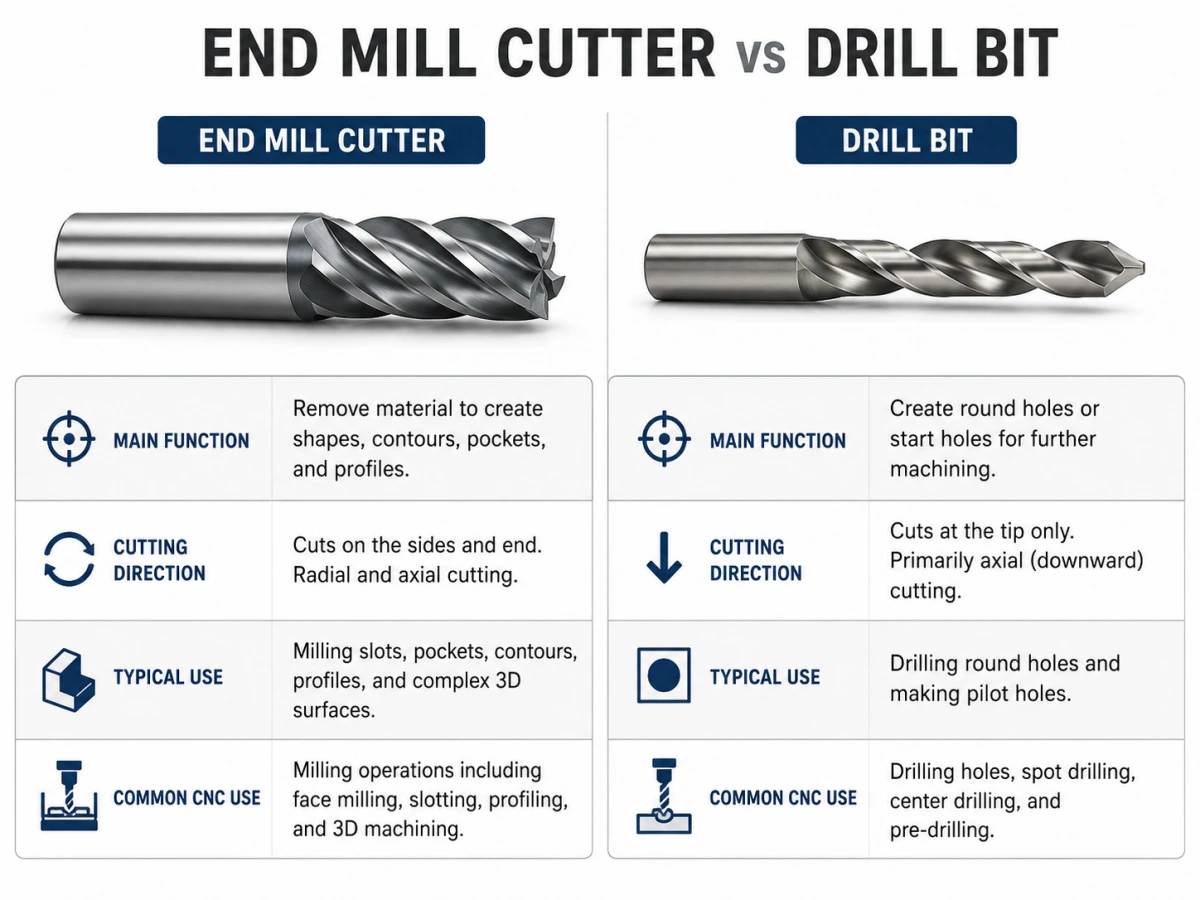
| ميزة | نهاية مطحنة القاطع | مثقاب |
| الوظيفة الرئيسية | طحن, الشق, التنميط, قطع الجانب | حفر ثقوب |
| اتجاه القطع | محوري وجانبي | محوري بشكل رئيسي |
| الاستخدام النموذجي | فتحات, جيوب, ملامح, الجدران الجانبية | فتحات مستديرة |
| مرونة الأداة | أعلى | أدنى |
| الاستخدام الشائع لـ CNC | عمليات الطحن العامة | عمليات صنع الثقب |
باختصار, كلتا الأداتين تزيلان المواد, لكنها غير قابلة للتبديل في معظم حالات المعالجة. يمكن للطاحونة النهائية ذات القطع المركزي أن تغرق في بعض التطبيقات, لكنها لا تزال مختلفة عن مثقاب الحفر القياسي.
الأنواع الشائعة لقواطع مطحنة النهاية
هناك أنواع عديدة من قواطع المطاحن النهائية, وكل تصميم له غرض محدد. يساعد اختيار النوع المناسب على تحسين كفاءة القطع, جودة السطح, وحياة الأداة.
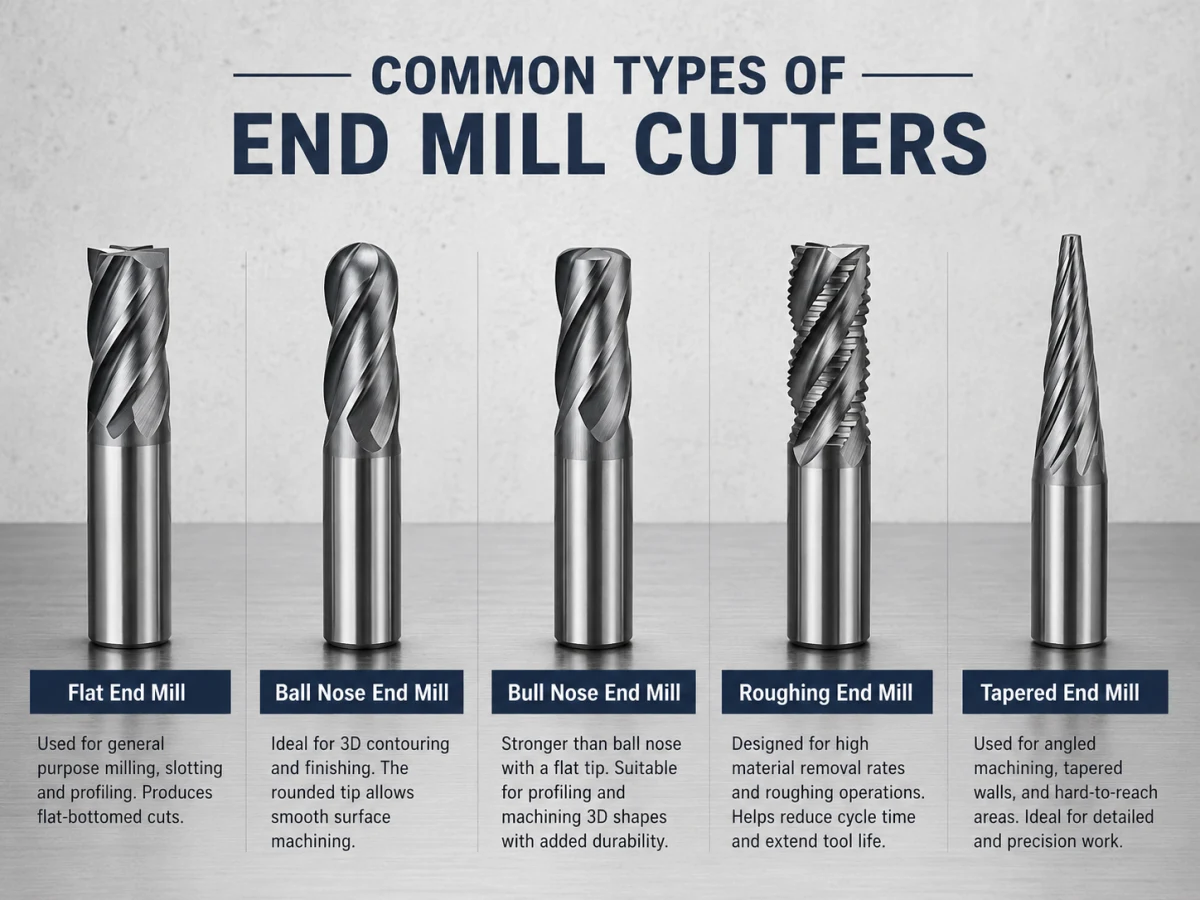
مطحنة النهاية المسطحة
طاحونة النهاية المسطحة لها نهاية قطع مسطحة. يتم استخدامه على نطاق واسع للتقطيع, طحن الجانب, طحن الكتف, وتصنيع الآلات للأغراض العامة.
مطحنة نهاية الكرة الأنف
مطحنة نهاية الأنف الكروية لها نهاية قطع مستديرة. يتم استخدامه عادة لتحديد الخطوط ثلاثية الأبعاد, تصنيع القالب, الأسطح المنحنية, وعمليات التشطيب.
لتصنيع الأسطح المنحنية وعمل القوالب, يمكنك أيضًا مشاهدة موقعنا مطاحن نهاية الأنف الكروية.
مطحنة نهاية أنف الثور
مطحنة نهاية أنف الثور, وتسمى أيضًا مطحنة نهاية نصف قطر الزاوية, يجمع بين قاع مسطح وزوايا مستديرة. إنه يحسن قوة الحافة ويساعد على إنشاء انتقالات أكثر سلاسة.
للحصول على هندسة زاوية أقوى, انظر لدينا مطحنة نهاية الأنف الثور.
مطحنة النهاية الخشنة
تم تصميم مطحنة النهاية الخشنة لإزالة المواد العدوانية. غالبًا ما يتم استخدامه قبل الانتهاء لإزالة كميات كبيرة من المخزون بسرعة.
لإزالة المخزون الثقيل, يمكنك التحقق لدينا مطاحن النهاية الخشنة.
مطحنة نهاية مدبب
طاحونة نهاية مدببة لها قطر يتغير تدريجياً. يتم استخدامه للجدران الزاوية, تجاويف عميقة, تصنيع القالب, وملفات تعريف خاصة.
لتجويف القالب والآلات الزاوية, قم بزيارة موقعنا قاطع مدبب.
للحصول على مقارنة أكثر تفصيلاً لهندسة الأداة, اقرأ لدينا دليل أنواع قطع مطحنة نهاية.
ما هو استخدام قاطعة المطحنة النهائية؟?
تُستخدم قواطع المطاحن النهائية في العديد من عمليات الطحن باستخدام الحاسب الآلي. لأنها يمكن أن تقطع من النهاية والجانب, إنها مناسبة لمهام التصنيع البسيطة والمعقدة.
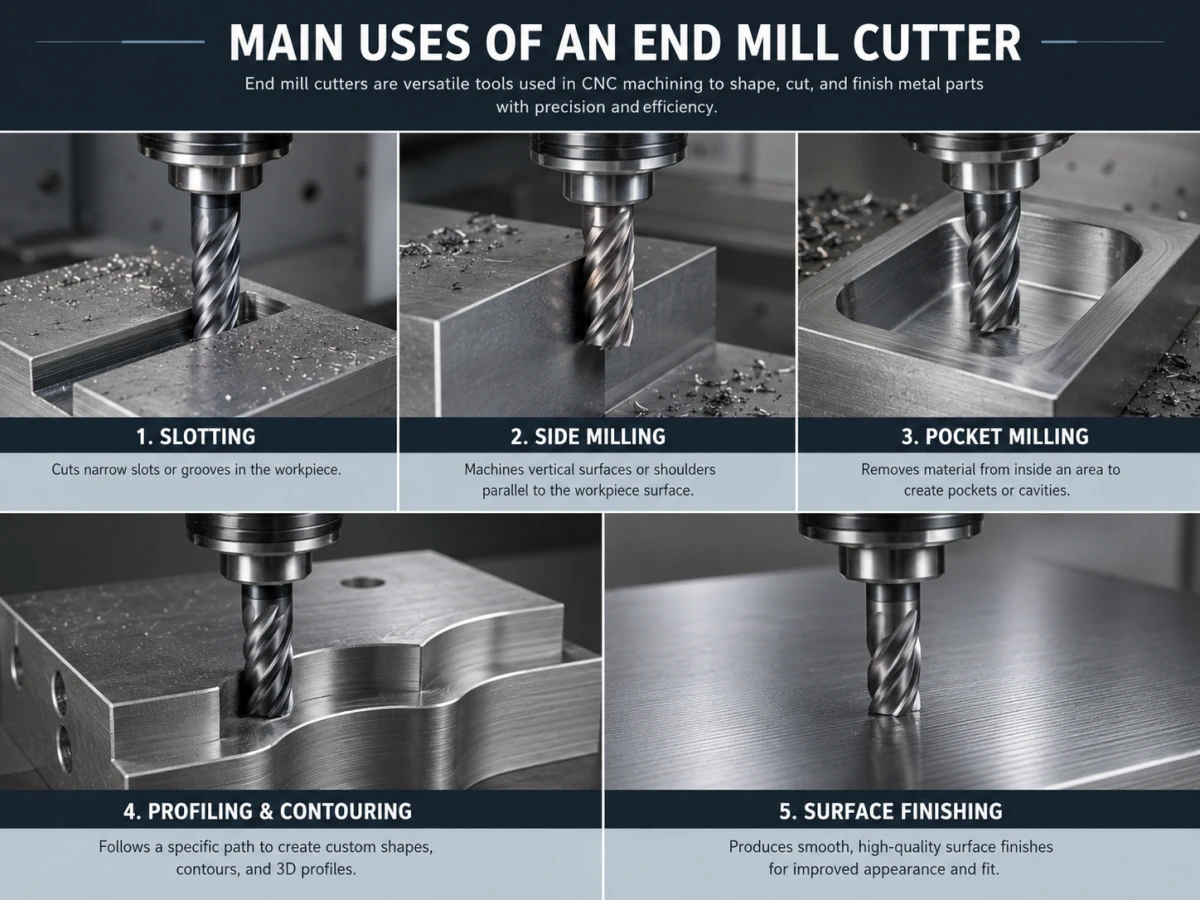
الشق
يعد الشق أحد التطبيقات الأكثر شيوعًا. يمكن لقاطع المطحنة النهائي قطع الفتحات المستقيمة أو المنحنية إلى قطعة العمل بدقة جيدة. يمكن لهذه الفتحات إنشاء طرق مفاتيح, الأخاديد, guide tracks, وميزات التجميع.
للمواد اللينة مثل الألومنيوم, إخلاء الشريحة مهم. لذلك, غالبًا ما يختار الميكانيكيون 2 أدوات الفلوت عندما تحتاج قطعة العمل إلى إزالة أفضل للرقاقة.
الطحن الجانبي
تستخدم الطحن الجانبي حواف القطع الجانبية للأداة لإزالة المواد من السطح الرأسي لقطعة الشغل. هذه العملية مفيدة لتصنيع الكتفين, خطوات, والجدران الجانبية.
تستخدم ورش الآلات عادة الطحن الجانبي للأجزاء الدقيقة, مكونات القالب, أجزاء الأدوات, والإنتاج CNC العام.
التنميط والكنتوري
يستخدم الميكانيكيون أيضًا قواطع المطاحن النهائية لتحديد الجوانب وتحديد الخطوط. هذه العمليات تخلق أشكالًا معقدة, مسارات منحنية, وملفات تعريف خارجية أو داخلية.
غالبًا ما يختار الميكانيكيون أدوات الأنف الكروي ونصف القطر الزاوية لهذا النوع من العمل لأن هذه الأدوات يمكنها تحسين التحولات السطحية وجودة التشطيب.
طحن الجيب
تعمل عملية الطحن الجيبية على إزالة المواد من المنطقة المغلقة أو الغائرة داخل قطعة العمل. هذه العملية شائعة في الأجزاء التي تحتاج إلى تجاويف داخلية, تخفيض الوزن, أو إزالة المواد بدقة داخل منطقة محدودة.
تحكم جيد في الرقائق, مسارات أداة مستقرة, وهندسة القطع الصحيحة مهمة لهذه العملية.
التشطيب السطحي
بعد الآلات الخام, يمكن أيضًا استخدام قاطعة المطحنة النهائية للتشطيب. الهدف هو تحسين دقة الأبعاد ونعومة السطح.
يتم اختيار أدوات التشطيب وفقًا للتسامح, مادة الشغل, استقرار الآلة, ونوعية السطح المطلوبة.
خطوة الطحن وتصنيع الكتف
يمكن لقواطع المطاحن النهائية تشكيل الأسطح المتدرجة, أكتاف, وميزات متعددة المستويات. غالبًا ما تتطلب هذه الميزات تحولات حادة, قطع مستقر, وأبعاد دقيقة.
نتيجة ل, صلابة الأداة, تصميم الفلوت, واختيار الطلاء مهم.
استخدامات مطحنة النهاية للألمنيوم, فولاذ, والفولاذ المقاوم للصدأ
تتطلب مواد الشغل المختلفة تصميمات قطع مختلفة. لذلك, يجب على المشترين مطابقة قاطعة المطحنة النهائية مع حالة المواد والتصنيع.
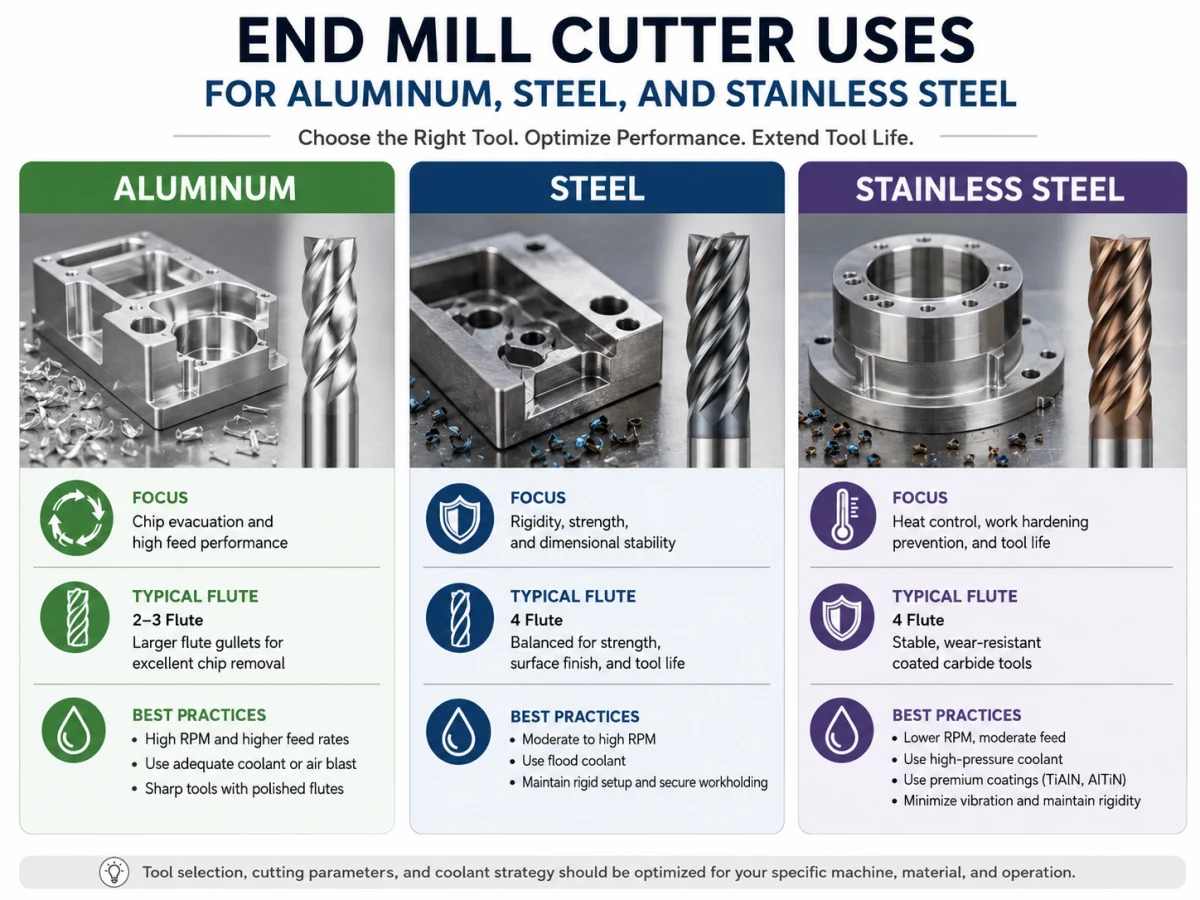
| مادة الشغل | اختيار القاطع المشترك | السبب الرئيسي |
| ألمنيوم | 2 الناي أو 3 مطحنة نهاية كربيد الفلوت | إخلاء أفضل للرقاقة والقطع السلس |
| فولاذ | 4 مطحنة نهاية كربيد الفلوت مع طلاء مناسب | صلابة أفضل ومقاومة التآكل |
| الفولاذ المقاوم للصدأ | مطحنة نهاية كربيد مغلفة بهندسة مستقرة | تحكم أفضل في الحرارة وحماية الحواف |
| النحاس والنحاس | مطحنة نهاية كربيد الحافة الحادة | قطع نظيف ونتوءات منخفضة |
| البلاستيك | حاد, قطع الفلوت المصقول | إزالة سلسة للرقاقة وتقليل خطر الذوبان |
نهاية مطحنة القاطع للألمنيوم
عند تصنيع الألومنيوم, يتم استخدام قواطع المطاحن النهائية في الشق, طحن الجيب, طحن الجانب, and finishing. الألومنيوم ينتج رقائق أكبر, لذلك غالبًا ما يتم تفضيل الأدوات التي تحتوي على عدد أقل من المزامير وإخلاء الرقائق بشكل جيد.
تعد المطاحن الطرفية من الكربيد الحلزوني العالي شائعة أيضًا بالنسبة للألمنيوم لأنها تساعد على تحسين سلاسة القطع وتقليل تراكم الرقائق.
للألمنيوم والمواد غير الحديدية, يمكنك مقارنة خيارات الفلوت على موقعنا 2 مطحنة نهاية الفلوت و 3 مطحنة نهاية الفلوت الصفحات.
نهاية مطحنة القاطع للصلب
للصلب الكربوني وسبائك الصلب, غالبًا ما تستخدم قواطع المطاحن النهائية للطحن الجانبي, تحديد الخطوط, shoulder machining, ونصف تشطيب. يتطلب الفولاذ عادةً صلابة أفضل ومقاومة تآكل أقوى.
في كثير من الحالات, 4 يتم اختيار مطاحن نهاية كربيد الفلوت لتصنيع الفولاذ والمعادن ذات الأغراض العامة.
لتصنيع الصلب, يمكنك عرض لدينا 4 مطحنة نهاية الفلوت.
قاطع مطحنة النهاية للفولاذ المقاوم للصدأ
يصعب تصنيع الفولاذ المقاوم للصدأ لأنه يولد الحرارة ويميل إلى التسبب في تآكل الأدوات. في تطبيقات الفولاذ المقاوم للصدأ, تُستخدم قواطع المطاحن النهائية بشكل شائع للتوصيف, التشطيب, والطحن الجانبي المتحكم فيه.
الطلاء الصحيح, هندسة الناي, وتساعد معلمات القطع في الحفاظ على ثبات القطع وتقليل تآكل الحواف.
كيفية اختيار قاطع مطحنة النهاية الأساسية
اختيار قاطعة المطحنة النهائية لا يحتاج إلى أن يكون معقدًا. لكن, يجب على المشترين التحقق من عدة عوامل قبل الطلب.
مادة الشغل
تعتبر مادة الشغل واحدة من أهم العوامل. ألمنيوم, فُولاَذ, ستانلس ستيل, نحاس, النحاس, البلاستيك, وقد يتطلب الحديد الزهر تصميمات مختلفة للفلوت, الطلاءات, واستراتيجيات القطع.
عدد الفلوت
يؤثر عدد الفلوت على إخلاء الرقاقة, صلابة, وكفاءة القطع. على سبيل المثال, غالبا ما يستخدم الميكانيكيون 2 أدوات الناي للألمنيوم, while they commonly choose 4 flute tools for steel and general-purpose machining.
لمقارنة أعمق, اقرأ لدينا 2 الناي مقابل 4 flute end mill guide.
مادة الأداة
Many CNC machine shops choose solid carbide end mill cutters because they provide higher rigidity, better wear resistance, and stable performance. Some workshops still use HSS tools for lower-speed or general machining applications.
طلاء
The coating should match the material and machining condition. على سبيل المثال, machinists often choose TiAlN and AlTiN coatings for steel, while DLC coating may suit aluminum and non-ferrous materials.
Required Finish
For roughing operations, the main goal is higher material removal. لكن, for finishing work, surface quality and dimensional accuracy become more important.
Basic Specifications to Check Before Buying
قبل تقديم الطلب, buyers should confirm several key specifications. This helps avoid tool mismatch and improves machining stability.
قطر القاطع
يؤثر قطر القاطع على عرض القطع, صلابة, وحجم الميزة تشكيله.
طول الفلوت
يحدد طول الناي مدى عمق آلة القطع. لكن, الناي الأطول قد يقلل من الصلابة, لذلك يجب أن يتطابق مع عمق القطع الفعلي.
الطول الكلي
يؤثر الطول الإجمالي على مدى وصول الأداة والتحكم في الاهتزاز. قد تكون هناك حاجة إلى أداة أطول للتجاويف العميقة, ولكن يجب استخدامه بعناية لتقليل الثرثرة.
قطر عرقوب
يجب أن يتطابق قطر الساق مع الحامل بشكل صحيح. يساعد التثبيت المستقر على تحسين الدقة وعمر الأداة.
هندسة الزاوية
مستوي, الأنف الكروي, نصف قطر الزاوية, وتستخدم الأشكال الهندسية المدببة لأهداف تصنيع مختلفة. لذلك, يجب أن تتطابق هندسة الزاوية مع شكل الجزء والتشطيب المطلوب.
نوع الطلاء
يجب اختيار الطلاء وفقًا لمادة الشغل, سرعة القطع, حالة المبرد, ومتطلبات حياة الأداة.
لماذا تعتبر قواطع مطحنة نهاية الكربيد الصلبة شائعة في الطحن باستخدام الحاسب الآلي
تحظى قواطع المطاحن النهائية من الكربيد الصلب بشعبية كبيرة لأنها توفر صلابة قوية, صلابة عالية, ومقاومة التآكل جيدة. يمكنها دعم سرعات قطع أعلى وتوفير أداء أكثر استقرارًا من العديد من مواد الأدوات القياسية.
في تصنيع الآلات, تستخدم العديد من المتاجر أدوات كربيد للصلب, ستانلس ستيل, الحديد الزهر, ألمنيوم, وغيرها من المواد الصعبة. فضلاً عن ذلك, يمكن للهندسة والطلاء المناسبين تحسين اتساق المعالجة.
المشترين الصناعيين, الموزعين, وغالبًا ما تفضل محلات الآلات أدوات الكربيد لأنها تساعد في تقليل تغييرات الأدوات ودعم الإنتاج الأكثر استقرارًا.
لأدوات كربيد القياسية والمخصصة, يمكنك زيارة موقعنا كربيد نهاية مطحنة قطع الورق.
متى تحتاج إلى قاطع مطحنة نهائي مخصص?
يمكن للقاطع القياسي أن يحل العديد من مهام المعالجة الشائعة.
لكن, قد تحتاج إلى أدوات مخصصة عندما يكون للجزء ملف تعريف خاص, تجويف عميق, مادة غير عادية, التسامح الصارم, أو متطلبات الحجم غير القياسية.
يمكن للمصنعين تصميم قواطع مطحنة نهاية مخصصة بقطر خاص, طول الناي, الطول الكلي, نصف قطر الزاوية, طلاء, حجم عرقوب, وهندسة الأداة.
للأدوات المستندة إلى الرسم أو OEM, قم بزيارة موقعنا ورق مطاحن نهاية مخصص.
الأسئلة المتداولة
ما هو قطع مطحنة النهاية?
قاطعة المطحنة النهائية هي أداة قطع دوارة تستخدم في عمليات الطحن باستخدام الحاسب الآلي مثل الشق, طحن الجانب, التنميط, تحديد الخطوط, طحن الجيب, and finishing.
ما هو قطع مطحنة النهاية المستخدمة ل?
يتم استخدامه لإزالة المواد من نهاية وجانب قطعة الشغل. تشمل التطبيقات الشائعة فتحات, جيوب, الجدران الجانبية, الملفات الشخصية, أكتاف, الأسطح المنحنية, والأسطح النهائية.
ما هو الفرق بين قاطعة المطحنة النهائية ومثقاب الحفر?
تقوم لقمة الحفر بشكل أساسي بقطع الثقوب في الاتجاه المحوري. يمكن لقاطع المطحنة النهائي أن يقطع بشكل محوري وأفقي, حتى تتمكن من إجراء المزيد من عمليات الطحن مثل الشق, التنميط, والطحن الجانبي.
ما هي الأنواع الشائعة من قواطع المطاحن النهائية?
وتشمل الأنواع الشائعة المطاحن ذات النهاية المسطحة, مطاحن نهاية الأنف الكروية, مطاحن نهاية الأنف الثور, مطاحن النهاية الخشنة, مطاحن نهاية مدبب, 2 مطاحن نهاية الفلوت, 3 مطاحن نهاية الفلوت, 4 مطاحن نهاية الفلوت, و 6 مطاحن نهاية الفلوت.
How do I choose a basic end mill cutter?
You should check the workpiece material, عدد الناي, قطر القاطع, طول الناي, الطول الكلي, قطر عرقوب, مادة الأداة, طلاء, والانتهاء من السطح المطلوب.
Are carbide end mill cutters better than HSS end mills?
Carbide end mill cutters usually provide better rigidity, مقاومة التآكل, وقطع الاستقرار. لكن, the best choice depends on the machine, مادة الشغل, سرعة القطع, and budget.
خاتمة
An end mill cutter is a versatile CNC milling tool used for slotting, طحن الجانب, طحن الجيب, التنميط, تحديد الخطوط, shoulder machining, and finishing. Because it can cut from both the end and the side, it is more flexible than many basic cutting tools.
لاختيار القاطع المناسب, buyers should understand the tool structure, cutter type, عدد الناي, مادة, طلاء, القطر, طول الناي, وتطبيق الآلات. Once these factors are matched correctly, the cutter can provide better cutting efficiency, عمر أطول للأداة, ونتائج تصنيع أكثر استقرارًا.
هل تبحث عن شركة موثوقة لتصنيع قطع مطحنة النهاية للألمنيوم, فُولاَذ, ستانلس ستيل, or custom CNC machining?
استكشف موقعنا صفحة المنتج قطع مطحنة نهاية for standard and OEM solutions, or contact us with your drawing and application requirements.