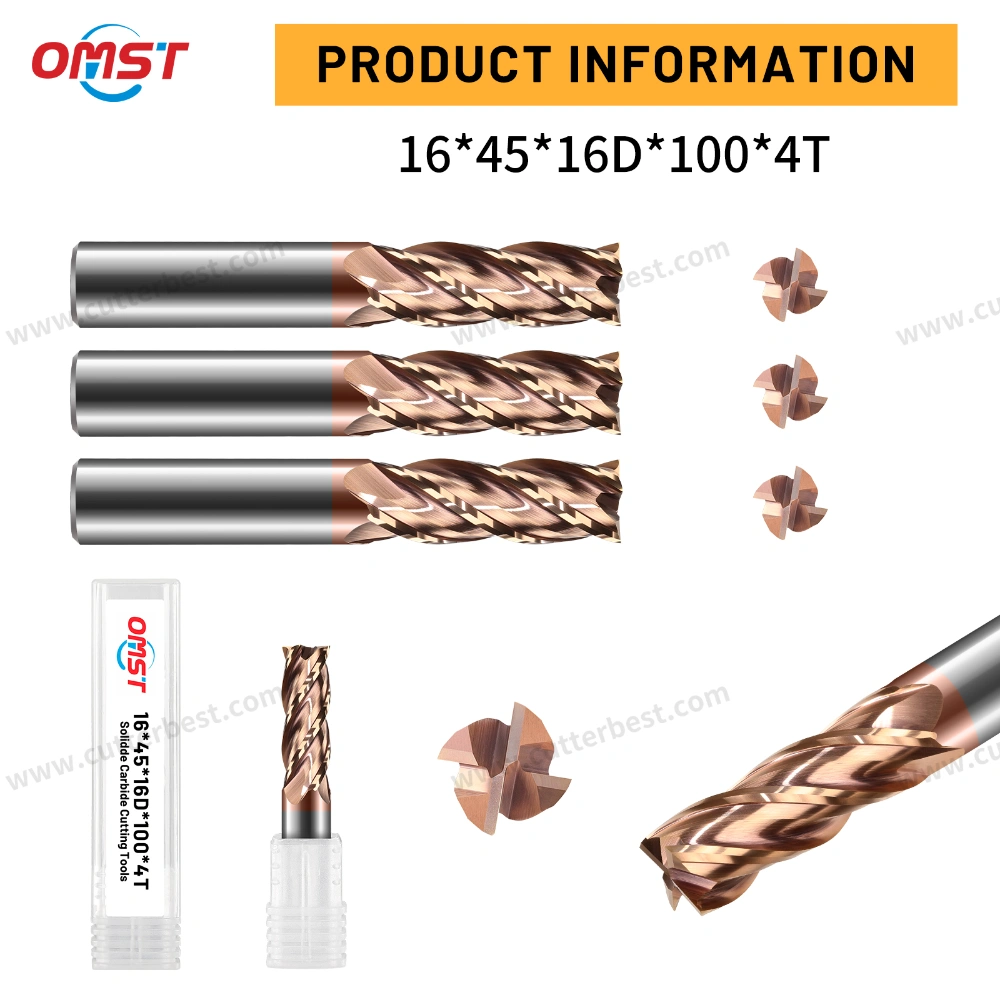
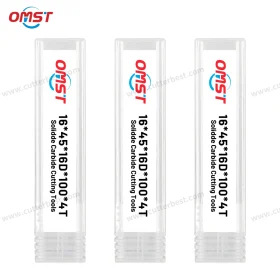
As an ISO 9001-certified cutting tool specialist since 2009, we supply precision HSS end mills to 30+ countries worldwide.
HSS End Mills (High-Speed Steel Milling Cutters)
Engineered for CNC machining centers and manual mills, our high-speed steel end mills deliver optimal performance on ferrous and non-ferrous metals. Compared to carbide end mills, HSS tools provide better cost-efficiency for medium-volume production.
Technische Spezifikationen:
Material Grades:
- M2/M35 (DIN/ANSII certified)
- HSS-Co8 (8% cobalt content)
- HSS-E (Vanneadium enhanced)
Größenbereich:
- Durchmesser: 0.5-25mm (Sondergrößen verfügbar)
- Flötenlänge: 2xD to 10xD
Beschichtungen:
- Zinn (gold): 600°C rating
- TiAlN (purple): 800°C rating
- TiCN (gray): Best for stainless steel
Core Performance Advantages:
1 Längere Werkzeuglebensdauer
Cobalt-alloyed HSS demonstrates 50% longer lifespan than standard high speed steel in our ASTM G65 abrasion tests.
2 Multi-Flute Configurations
Wählen Sie aus:
- 2-Flöte: Best for aluminum milling
- 4-Flöte: Ideal for steel finishing
- 6-Flöte: Mirror finishes on alloys
3 Thermal-Resistant Coatings
Our proprietary coating technology reduces cutting temperature by 15-20% compared to standard coatings.
Branchenanwendungen:
- Automobil: Engine block machining (Fallstudie: Reduced cycle time by 22% for BMW supplier)
- Luft- und Raumfahrt: Titanium aircraft components
- Schimmel & Sterben: P20 steel cavity milling
- Elektronik: 5G heat sink fabrication
Auswahlhilfe:
For Aluminum:
- Recommended: 3-Flöte, 45° Helix
- Vermeiden: TiN-Beschichtung (causes built-up edge)
Für Edelstahl:
- Must use: TiCN/TiAlN coated
- Optimal: 4-Flötendesign
FAQ Section:
Q: HSS vs carbide end mills?
A: HSS offers better toughness for interrupted cuts, while carbide provides longer wear resistance.
Q: How to identify worn end mills?
A: Look for:
- Burr formation
- Surface finish degradation
- Unusual noise during cutting
Maintenance Tips:
- Use coolant for stainless steel
- Reduce feed rate when machining hardened materials
- Store in original packaging to prevent edge damage
Get your custom quote within 24 hours. Contact our tooling experts at sales@cutterbest.com
Unser Unternehmen ist auf die Herstellung und kundenspezifische Anpassung einer breiten Palette von Schneidwerkzeugen spezialisiert, Unser Ziel ist es, die Produktionseffizienz unserer Kunden zu steigern und die Herstellungskosten zu senken. Wir bieten umfassende Werkzeuglösungen maßgeschneidert für verschiedene Schneidstoffe, umfassend Kohlenstoffstahl (ca. Härte HB225), legierter Stahl (Härte HB225~325), vorgehärteter Stahl (bis zu einer Härte von HRC45), vergüteter Stahl (HRC40~61 Härte), und Gusseisen. Diese Lösungen decken unterschiedliche Schneidanforderungen ab, einschließlich gerader Schnitte, geschwungene Schnitte, L-förmige Schnitte, Nutschnitte, Innenlichtbogenschnitte, Außenlichtbogenschnitte, T-förmige Schnitte, Bohren, und Einfädeln.
Unsere Hartmetall-Schneidwerkzeuge eignen sich hervorragend für die Bearbeitung der oben genannten Stahlsorten, liefert außergewöhnliche Leistung mit einer Präzisionstoleranz von nur ±0,02 mm. Dies stellt sicher, dass unsere Kunden mühelos eine professionelle Schnittqualität erzielen können, Damit sind wir Ihr idealer Partner für Fräswerkzeuglösungen.
Wir können maßgeschneiderte OEM-Produktionsdienstleistungen anbieten. Wenn unsere Standard-Hartmetallfräser Ihren Anforderungen nicht genügen, Sie können den Durchmesser im Bereich von 0,2 mm bis 25 mm anpassen, die Gesamtlänge von 50 mm bis 200 mm, und wählen Sie Flöten von 4F, 5F, 6F, oder 8F. Sie können auch Ihr eigenes Logo hinzufügen. Bitte zögern Sie nicht, uns bei Bedarf zu kontaktieren.
| Spezifikation | Schaft
Durchmesser(D) | Flöte
Länge(Lc) | Voll
Länge (L) | Durchmesser
(D) | Flöten
(F) |
| 1/2"1"3"1/2"4F | 1/2" | 1" | 3" | 1/2" | 4F |
| 1/4"3/4"2-1/2"1/4"4F | 1/4" | 1/4" | 2-1/2" | 1/4" | 4F |
| 1/8"3/8"1-1/2"1/8"2F | 1/8" | 3/8" | 1-1/2" | 1/8" | 2F |
| 1/16"3/16"1-1/2"1/8"2F | 1/16" | 3/16" | 1-1/2" | 1/8" | 2F |
| 3/8"1"2-1/2"3/8"4F | 3/8" | 1" | 2-1/2" | 3/8" | 4F |
| 3/16"5/8"2"3/16"2F | 3/16" | 3/16" | 3/16" | 3/16" | 2F |
| 3/32"9/32"1-1/2"1/8"2F | 3/32" | 9/32" | 9/32" | 1/8" | 2F |
| 5/8"1-1/4"3-1/2"5/8"4F | 5/8" | 1-1/4" | 3-1/2" | 5/8" | 4F |
| 5/16"13/16"2-1/2"5/16"4F | 5/16" | 13/16" | 2-1/2" | 5/16" | 4F |
| 5/64"3/16"1-1/2"1/8"2F | 5/64" | 3/16" | 1-1/2" | 1/8" | 2F |
| 7/64"3/8"1-1/2"1/8"2F | 7/64" | 3/8" | 1-1/2" | 1/8" | 2F |
Q1: Sind Sie ein Handelsunternehmen oder ein Hersteller??
A: Wir sind ein Hersteller, ist seit über 20 Jahren auf diesen Bereich der Schneidwerkzeuge spezialisiert 15 Jahre.
Q2: Welche Arten von Produkten bieten Sie an??
A: Wir stellen Hartmetall-Schaftfräser her, Bohrer zum Bohren, Reibahlen, Fräser, Formbohrer, Drehwerkzeuge, Gewindemühlen, Einsätze, Darüber hinaus decken wir auch verschiedene nicht standardmäßige Schneidwerkzeuge ab.
Q3: Bieten Sie OEM- oder ODM-Dienstleistungen an??
A: Ja, In der Tat. Wir bieten sowohl OEM- als auch ODM-Dienstleistungen an, um auf die spezifischen Bedürfnisse unserer Kunden einzugehen.
Q4: Haben Sie kostenlose Muster oder Rabatte??
A: Kostenlose Muster können zur Verfügung gestellt werden, wenn der Kunde sich bereit erklärt, die Versandkosten zu übernehmen. Für die erste Bestellung, Neukunden erhalten einen 50-USD-Gutschein für Bestellungen über 500 USD, und genieße ein 5% Rabatt für Bestellungen über 5000 USD.
F5: Wie stellen Sie die Qualität Ihrer Schneidwerkzeuge sicher??
A:Wir garantieren Materialien & Verarbeitung, Verwenden Sie Hartmetall höchster Qualität, und führen strenge ISO-konforme Inspektionen vom Rohmaterial bis zum Endprodukt durch, mit 100% Wichtige Maßkontrollen vor dem Versand.
F6: Kann ich meinen eigenen Spediteur angeben??
Natürlich, Wir können die Ware an den vom Kunden benannten Spediteur liefern.
Nur 4 Schritte zur Bearbeitung Ihrer Bestellung:
1.Zeichnung:Sie können bestehende reguläre Produktbilder oder 3D-Zeichnungen des Produkts an unseren Vertriebsleiter senden.
2.Zitat:Basierend auf den Produktspezifikationen, Anforderungen, und Verarbeitungstechnik, Wir erstellen Ihnen ein Angebot. Bitte bestätigen Sie die endgültigen Anforderungen mit unserem Vertriebsleiter.
3.Produzieren:Nach Bestätigung des Vertrags und des Lieferplans ohne Probleme, Wir veranlassen die Produktion nach Zahlungseingang, um eine pünktliche Lieferung sicherzustellen.
4.Lieferung:Sobald die Ware die Qualitätsprüfung bestanden hat, Der Versand erfolgt gemäß den im Vertrag vereinbarten Zeitplänen und Logistikvereinbarungen
Zahlung:
Für die Grundsätze der Transaktionssicherheit und der langfristigen Zusammenarbeit, Als Zahlungsmethoden verwenden wir im Allgemeinen Banküberweisungen und Western Union, oder wir verhandeln weiter auf Basis der konkreten Bestellung.
Lieferung:
Unter Berücksichtigung des Gewichts des Produkts, Volumen, Transportzeitleiste, und Frachtkosten, Wir bieten mehrere Versandlösungen, um Ihre Transportanforderungen zu erfüllen.
Expressversand:
EMS und DHL International Express werden häufig verwendet, und Lieferungen kommen normalerweise innerhalb von 24 Stunden an 3 Zu 10 Tage,Wenn Ihr Ort abgelegen ist , Ich muss mehr für einen abgelegenen Ort bezahlen , oder auf Versand per EMS umstellen
Luftfracht:
Luftfracht ist sicher und schnell, Geeignet für dringende Sendungen und große Artikel über 100 kg. Im Allgemeinen dauert es 3-10 Werktage, mit unterschiedlichen Laufzeiten für verschiedene Länder.
Seefracht:
Aufgrund der geringen Kosten eignet sich die Seefracht für Großaufträge, allerdings mit langsameren Lieferzeiten, typischerweise im Bereich von 30 Zu 50 Tage
 Präzisions-Fräser,Schneidwerkzeuge für die CNC-Bearbeitung jedes Materials