 Fraise de précision,Outils de coupe pour l’usinage CNC de chaque matériau

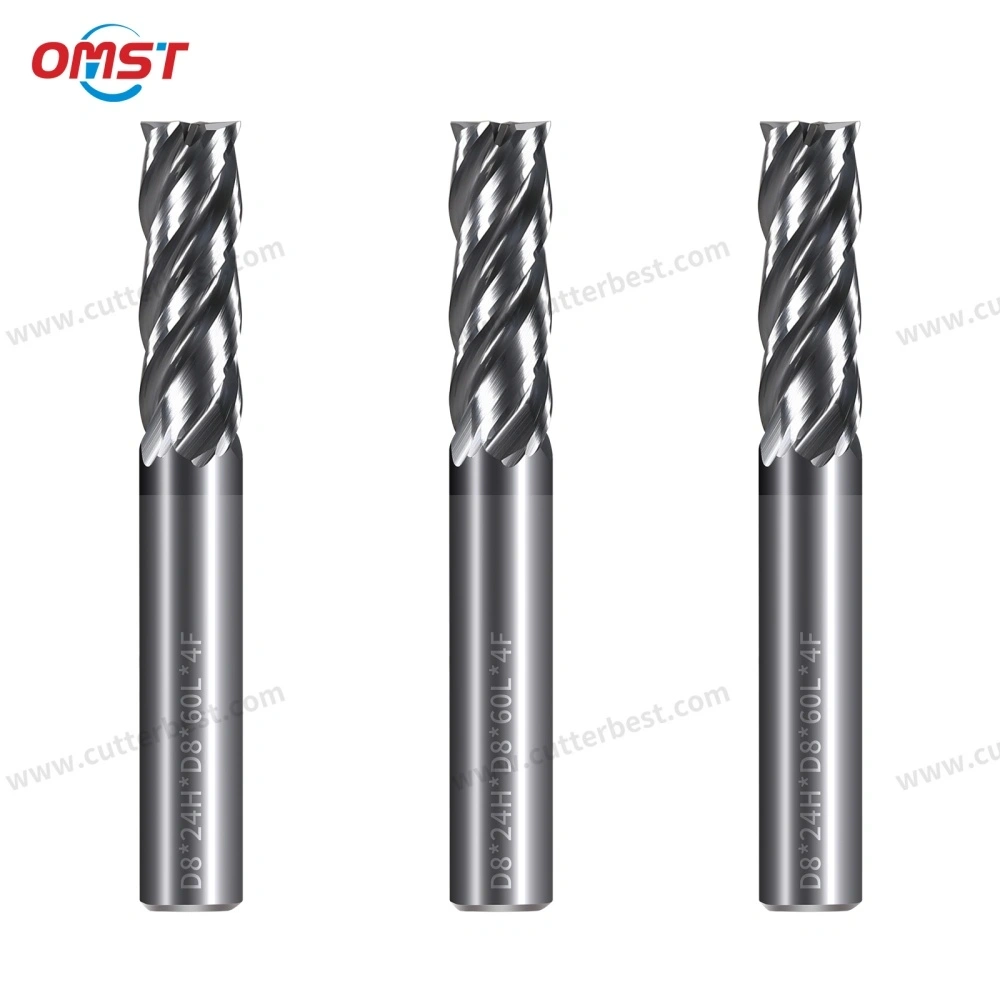
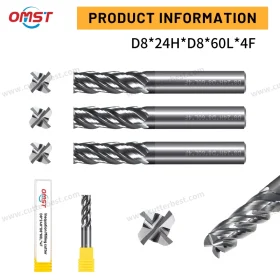
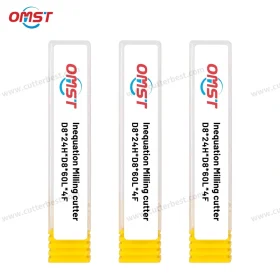
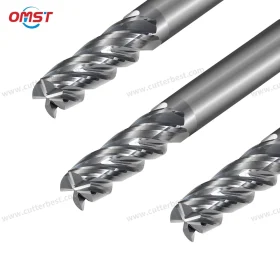
Fraise plate en carbure monobloc pour l'usinage CNC
Une fraise à bout plat a une extrémité de coupe plate et des coins extérieurs pointus. Il produit des caractéristiques à fond plat, parois latérales droites, machines à sous, poches, mesures, et épaules carrées. De nombreux acheteurs utilisent également le terme fraise à bout carré pour le même profil d'extrémité général..
En savoir plus sur le profil de l'outil, arêtes de coupe, et principes de travail dans notre guide pour géométrie de la fraise à bout plat et action de coupe.En savoir plus sur géométrie de la fraise à bout plat et action de coupe.
Nous fournissons des fraises plates en carbure monobloc dans des tailles métriques et en pouces standard.. En outre, nous pouvons évaluer des diamètres de coupe personnalisés, longueurs de flûte, longueurs hors tout, tailles de tige, la flûte compte, nuances de carbure, revêtements, et tolérances selon vos exigences de dessin et d'usinage.
Principales fonctionnalités
Fond plat et coins coupants pointus
Le profil d'extrémité plat crée une surface inférieure plane et une transition claire entre le fond et la paroi latérale. Donc, il convient aux composants nécessitant des emplacements à fond plat, poches carrées, murs droits, mesures, ou des épaules à près de 90 degrés.
Les coins pointus subissent plus de contraintes de coupe que les coins arrondis. Pour cette raison, la nuance carbure, préparation des bords, revêtement, porte-à-faux de l'outil, et les paramètres de coupe doivent correspondre au matériau de la pièce et aux conditions d'usinage.
Construction en carbure monobloc
Le carbure monobloc offre une bonne rigidité, résistance à l'usure, et stabilité dimensionnelle. Il prend également en charge une géométrie de flûte précise et des arêtes de coupe tranchantes.
Par conséquent, l'outil peut maintenir la précision pendant le rainurage, empocher, fraisage latéral, fraisage d'épaulements, et finition. Cependant, une configuration rigide de la machine et un porte-à-faux court de l'outil aident à réduire les vibrations et les dommages dans les coins.
Plusieurs options de flûte
Différents nombres de flûtes fournissent différents équilibres entre l'espace des copeaux, rigidité de l'outil, efficacité de coupe, et finition de surface.
Deux- et les conceptions à trois cannelures offrent plus d'espace pour les puces. Donc, ils conviennent souvent à l'aluminium, cuivre, plastiques, matériaux souples, fentes profondes, et applications qui créent un grand volume de puces.
Les conceptions à quatre cannelures offrent plus d'arêtes de coupe et une plus grande rigidité. Ils conviennent à de nombreux aciers, acier inoxydable, et applications générales d'usinage CNC.
Les conceptions à six cannelures peuvent améliorer la stabilité de coupe et la qualité de surface lors du fraisage latéral et de la finition.. Cependant, ils offrent moins d'espace pour les puces et ne constituent généralement pas le premier choix pour les emplacements lourds sur toute la largeur.
Options enduites et non enduites
Les bords de coupe non revêtus ou polis conviennent souvent à l'aluminium, cuivre, et autres matériaux non ferreux. Ces options peuvent contribuer à réduire l'adhérence du matériau et les bords rapportés..
Les outils revêtus peuvent améliorer la résistance à la chaleur et à l'usure lors de l'usinage de l'acier., acier inoxydable, fonte, acier allié, et des matériaux plus durs. Le revêtement final doit correspondre au matériau de la pièce à usiner, dureté, état du liquide de refroidissement, et opération d'usinage.
Guide de candidature
| Application | Caractéristique typique de l'outil | Remarque sur la sélection |
|---|---|---|
| Fraisage de rainures | 2 ou 3 flûtes avec un plus grand espace pour les copeaux | Aide à éliminer les copeaux lors de coupes profondes ou pleine largeur |
| Fraisage de poche | Géométrie de coupe centrale | L'entrée en rampe ou hélicoïdale permet généralement une coupe plus douce. |
| Fraisage de côtés et de profils | Longueur de coupe courte et rigide | Aide à contrôler la déflexion et à améliorer la précision du mur |
| Fraisage d'épaulements carrés | Coins extérieurs pointus | Crée une transition claire entre le fond et la paroi latérale |
| Finition à fond plat | Géométrie stable et engagement contrôlé | Aide à réduire les marques d'outils inégales |
Voir le principal applications de fraises à bout plat dans l'usinage CNC, y compris le rainurage, empocher, fraisage latéral, fraisage d'épaulements, et méthodes de saisie.
Pour l'aluminium, matériaux souples, et des fentes profondes, moins de cannelures permettent généralement une meilleure évacuation des copeaux. Consultez notre 2 fraise à cannelure pour ces applications.
Pour un guide détaillé sur le slotting, empocher, fraisage latéral, fraisage d'épaulements, plongeant, et méthodes de saisie, lire à propos applications de fraises à bout plat dans l'usinage CNC.
Pour l'acier, acier inoxydable, et fraisage CNC général, une conception à quatre cannelures offre souvent un équilibre pratique entre rigidité, force de pointe, et contrôle des copeaux. Consultez notre 4 fraise à cannelure.
Pour le fraisage latéral, semi-finition, et finition, une conception à six cannelures peut améliorer la stabilité et la qualité de la surface. Cependant, il offre moins d'espace pour les puces et n'est généralement pas le premier choix pour les emplacements lourds. Voir notre 6 fraise à cannelure.
Choix par matériau de pièce
| Matériau de la pièce | Sélection typique | Considération principale |
|---|---|---|
| Aluminium et cuivre | 2 ou 3 flûtes aux bords tranchants ou polis | Évacuation des copeaux et adhérence réduite du matériau |
| Acier général | 4 flûtes avec un revêtement approprié résistant à l'usure | Rigidité, contrôle des copeaux, et durée de vie de l'outil |
| Acier inoxydable | Tranchant stable et revêtement résistant à la chaleur | Contrôle de la chaleur, frottement, et écrouissage |
| Fonte | Nuance et revêtement en carbure résistant à l'usure | Usure abrasive et durabilité des bords |
| Acier allié ou trempé | Préparation des bords solide et configuration rigide | Résistance à la chaleur, contrôle des vibrations, et durée de vie de l'outil |
La recommandation finale dépend de la qualité du matériau, dureté, largeur de coupe, profondeur de coupe, état du liquide de refroidissement, rigidité de la machine, et finition de surface requise. Donc, veuillez fournir le matériau exact de la pièce et sa dureté lors de la demande d'un devis.
Méthodes de coupe centrale et d'entrée
La capacité d'entrée dépend de la géométrie exacte de la coupe en bout et de la conception de l'outil. Certaines fraises à bout plat permettent une plongée contrôlée, rampe, ou interpolation hélicoïdale, tandis que d'autres modèles nécessitent une entrée latérale ou un trou existant.
La rampe ou l'entrée hélicoïdale réduit généralement les chocs de coupe et améliore l'évacuation des copeaux.. Donc, merci de nous indiquer si l'outil entrera par plongée verticale, rampe, entrée latérale, ou un trou existant.
Taille et options personnalisées
Les options disponibles peuvent inclure:
- Diamètre de coupe métrique ou en pouces
- Standard, court, long, ou longueur de flûte personnalisée
- Longueur totale standard ou personnalisée
- Diamètre de tige standard ou personnalisé
- Diamètre et longueur du col
- 2, 3, 4, 6, ou nombre de flûtes personnalisé
- Géométrie de coupe centrale
- Angle d'hélice standard ou personnalisé
- Tranchant tranchant ou préparé
- Non couché, brillant, ou revêtement spécifique à l'application
- Tolérance dimensionnelle selon le dessin
Pour diamètres non standards, longueurs spéciales, cous personnalisés, ou géométrie spécifique à l'application, passez en revue notre fraises en bout personnalisées service.
Fraise à bout plat vs autres profils d'extrémité
Bull Nose vs fraise à bout plat
Une fraise à bout plat a des angles vifs pour les épaulements carrés et les caractéristiques à fond plat. En revanche, une fraise à nez arrondi conserve une section centrale plate mais ajoute des rayons de coin.
Les rayons renforcent les coins coupants et créent une transition plus douce entre le fond et la paroi latérale. Cependant, ils ne peuvent pas produire le même coin interne pointu qu'un profil à extrémité plate.
Lire l'intégralité fraise à nez arrondi ou fraise à bout plat comparaison avant de sélectionner le profil final.
Pour les pièces nécessitant des coins plus forts ou un rayon de coin spécifié, passez en revue notre fraise à nez arrondi.
Fraise à nez sphérique ou fraise à bout plat
Une fraise à bout sphérique a une extrémité de coupe entièrement arrondie pour les moules, meurt, surfaces courbes, et contours tridimensionnels.
En comparaison, un profil à extrémité plate est mieux adapté aux fentes, poches, murs droits, surfaces planes, et épaules carrées. Pour l'usinage courbe et tridimensionnel, passez en revue notre fraises à bout sphérique.
Pour une comparaison détaillée de la géométrie de coupe, résultats de surface, et applications d'ébauche et de finition, lisez notre fraise à bout sphérique vs guide de fraise à bout plat.
Si l'étape d'usinage finale peut nécessiter un profil d'extrémité différent, nombre de flûtes, ou outil spécifique au matériau, passez en revue notre solutions de fraises de finition pour l'usinage CNC.
Foire aux questions
Une fraise à bout plat est-elle la même chose qu'une fraise à bout carré?
Dans de nombreux catalogues d'outils de coupe, la fraise à bout plat et la fraise à bout carré décrivent le même profil d'extrémité général: une extrémité coupante plate avec des coins extérieurs pointus. Cependant, la dénomination peut varier selon les fabricants et les marchés.
Une fraise à bout plat peut-elle plonger dans un matériau solide?
Une fraise plate à coupe centrale peut effectuer une plongée contrôlée, rampe, ou entrée hélicoïdale. Un outil de coupe non centré ne peut pas plonger verticalement dans un matériau solide.
Quel nombre de flûtes dois-je choisir?
Deux ou trois cannelures offrent plus d'espace pour les copeaux d'aluminium, matériaux souples, et des fentes profondes. Quatre cannelures adaptées à de nombreuses applications d'usinage de l'acier et d'usinage général, tandis que six cannelures fonctionnent bien pour un fraisage latéral et une finition stables.
Pouvez-vous fabriquer des fraises plates sur mesure?
Oui. Nous pouvons évaluer des diamètres personnalisés, longueurs de flûte, longueurs hors tout, tailles de tige, la flûte compte, revêtements, et tolérances selon vos exigences de dessin et d'usinage.
Envoyez votre demande de fraise à bout plat
Veuillez nous envoyer votre taille requise, nombre de flûtes, matériau de la pièce à usiner, et la quantité. Si tu as un dessin, n'hésitez pas à le joindre.
E-mail: sales@cutterbest.com
Options de spécification
| Spécification | Options disponibles |
|---|---|
| Type de produit | Fraise à bout plat / Fraise carrée |
| Structure des outils | Fraise en carbure monobloc |
| Fin du profil | Fond plat avec coins pointus |
| Nombre de flûtes | 2, 3, 4, 6, ou personnalisé |
| Capacité d'entrée | Confirmé selon la conception de l'outil |
| Diamètre de coupe | Métrique, Pouce, ou personnalisé |
| Longueur de la flûte | Standard, Court, Long, ou personnalisé |
| Longueur totale | Standard ou personnalisé |
| Diamètre de la tige | Standard ou personnalisé |
| Conception du cou | Options standard ou longue portée |
| Angle d'hélice | Standard ou personnalisé selon l'application |
| Avant-gardiste | Pointu, Affûté, ou spécifique à l'application |
| Nuance de carbure | Sélectionné en fonction de la pièce à usiner et de l'application |
| Revêtement | Revêtement non couché ou spécifique à une application |
| Matériau de la pièce | Aluminium, Cuivre, Acier, Acier inoxydable, Fonte, et alliages |
| Applications | Rainurage, Poche, Fraisage latéral, Fraisage de profil, et épaules carrées |
| Service personnalisé | Taille, Flûtes, Géométrie, Revêtement, et tolérance |
| Type de commande | Échantillon, Petit lot, ou commande groupée |
| Conditionnement | Standard, Neutre, ou emballage personnalisé |