 Frese di precisione,Utensili da taglio per la lavorazione CNC di ogni materiale

Introduzione
A carbide end mill cutter is one of the most widely used tools in modern CNC machining. It is valued for its rigidity, resistenza all'usura, and stable cutting performance in demanding applications.
Compared with many general-purpose cutting tools, carbide end mills are often selected when higher cutting efficiency, better dimensional accuracy, and more consistent tool life are required. Di conseguenza, they are widely used in aluminum machining, lavorazione dell'acciaio, lavorazione dell'acciaio inossidabile, realizzazione di stampi, and many other precision manufacturing applications.
In questa guida, we explain what carbide end mills are used for, which materials they can machine, how they compare with HSS tools, and how to choose the right cutter for different CNC milling applications.
Se sei nuovo a questo strumento, you can first read cos'è una fresa a candela.
What Is a Carbide End Mill Cutter?
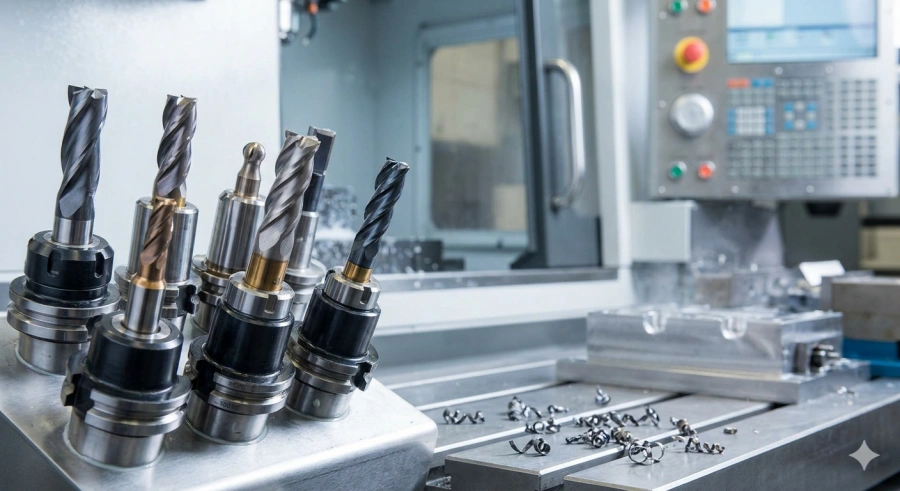
A carbide end mill cutter is a rotary cutting tool made mainly from carbide material, usually tungsten carbide. It is designed for CNC milling operations such as slotting, fresatura laterale, fresatura di tasche, contornatura, e finitura superficiale.
Unlike simpler cutting tools, a carbide end mill cutter usually has cutting edges on the tip and along the sides. This allows it to remove material in different directions and handle a wide range of machining tasks.
Because carbide offers higher rigidity and better wear resistance than many traditional tool materials, carbide end mills are often preferred for higher-speed machining and more demanding cutting conditions.
For more practical applications, puoi anche leggere what is an end mill cutter used for.
Why Choose a Carbide End Mill Cutter?
Better Rigidity
Carbide tools are generally more rigid than HSS tools. Ciò aiuta a migliorare la stabilità del taglio, especially in applications that require accuracy and repeatability.
Better Wear Resistance
Carbide end mills usually offer better wear resistance in demanding cutting conditions. Perciò, they are often selected for longer production runs and harder materials.
Higher Cutting Efficiency
In molte applicazioni, carbide tools support higher cutting speeds and more stable machining performance, which can improve production efficiency.
Better Performance on Harder Materials
Carbide end mills are commonly used for steel, acciaio inossidabile, ghisa, and other materials that place higher demands on the tool.
More Stable Surface Quality
Because of their rigidity and cutting consistency, carbide tools are often better suited for applications where dimensional accuracy and surface finish are important.
Fresa in metallo duro e fresa in HSS
| Caratteristica | Fresa in metallo duro | HSS End Mill |
|---|---|---|
| Rigidità | Più alto | Lower |
| Resistenza all'usura | Better | More limited |
| Velocità di taglio | Usually higher | Usually lower |
| Resistenza al calore | Better in demanding conditions | More limited |
| Uso tipico | CNC machining, acciaio, acciaio inossidabile, higher-speed work | General-purpose and lighter-duty machining |
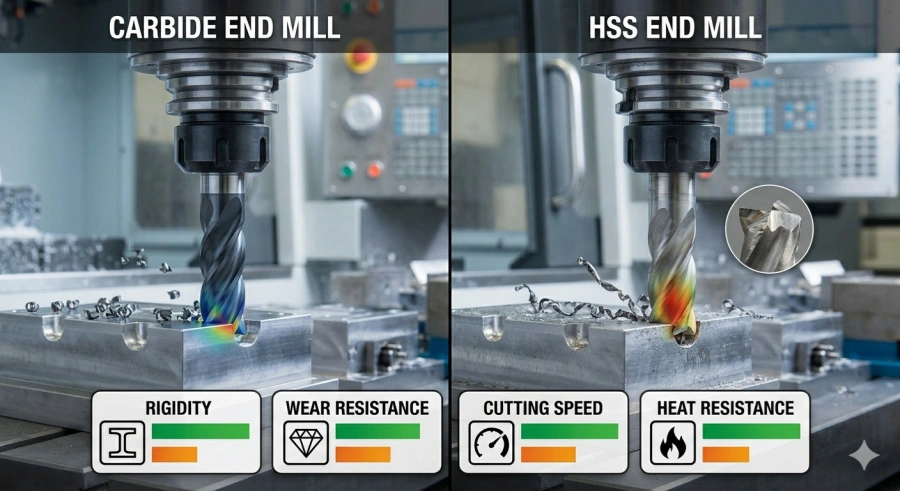
This comparison does not mean carbide is always the only option. Tuttavia, in many CNC machining applications, carbide is preferred when users need higher performance and more stable cutting results.
Common Applications of Carbide End Mill Cutters
Lavorazione dell'alluminio
Carbide end mill cutters are widely used in aluminum machining because they can provide efficient cutting and clean chip evacuation when the correct geometry is selected.
Steel Machining
For carbon steel and alloy steel, carbide end mills are often preferred because they offer better rigidity and wear resistance under stable cutting conditions.
Stainless Steel Machining
Stainless steel is more demanding because of heat generation and work hardening. Perciò, carbide tools are often selected for more stable and reliable cutting performance.
Mold and Die Work
Carbide end mills are commonly used in mold making and die production for contouring, lavorazione della cavità, e operazioni di finitura.
Precision CNC Parts
They are also used in automotive components, parti aerospaziali, electronics housings, and other precision machining applications where accuracy is important.
If you want to understand how cutting actually happens during machining, puoi anche leggere how does an end mill cutter work.
Which Materials Can Carbide End Mill Cutters Machine?
| Materiale del pezzo | Why Carbide Is Commonly Used |
|---|---|
| Alluminio | Good cutting efficiency and clean chip evacuation with the right geometry |
| Acciaio al carbonio | Migliore rigidità e resistenza all'usura |
| Acciaio inossidabile | More stable cutting performance and better heat resistance |
| Ghisa | Good wear resistance in abrasive cutting conditions |
| Alloy Materials | Suitable for demanding machining tasks with the correct geometry and coating |
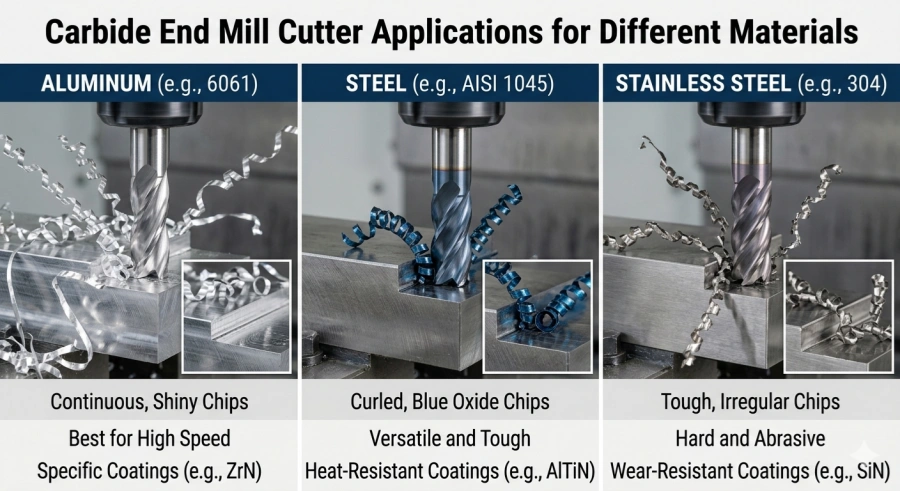
Although carbide tools are highly versatile, the best results still depend on matching flute count, geometria, rivestimento, and cutting parameters to the actual material.
How to Choose the Right Carbide End Mill Cutter
1. Check the Workpiece Material
The first step is to confirm whether you are machining aluminum, acciaio, acciaio inossidabile, ghisa, or another material. Different materials require different cutter geometries and coatings.
2. Check the Machining Operation
Scanalatura, fresatura laterale, fresatura di tasche, contornatura, sgrossatura, and finishing often require different tool designs.
3. Check Flute Count
Il numero delle scanalature influisce sull'evacuazione del truciolo e sulla rigidità. In molti casi, fewer flutes are preferred for aluminum, while more flutes are often used for steel and harder materials.
If you want a deeper comparison, Leggere 2 flauto contro 4 fresa a candela a flauto.
4. Check Coating and Geometry
The right coating and tip geometry can improve wear resistance, controllo del calore, and machining quality.
5. Check Standard or Custom Requirements
Some projects can use standard carbide end mills, while others require custom diameter, lunghezza del flauto, lunghezza complessiva, rivestimento, or special geometry.
If you want to compare different geometries, puoi anche leggere types of end mill cutters.
For a detailed material-based selection guide, leggi il nostro how to choose a carbide end mill cutter guide.
Practical Buying Considerations for Carbide End Mill Cutters
Prima di effettuare un ordine, it is helpful to confirm these points:
- materiale del pezzo
- diametro della fresa
- conteggio dei flauti
- lunghezza del flauto
- lunghezza complessiva
- coating type
- tolerance requirement
- roughing or finishing purpose
- OEM or custom tooling requirement
These details help ensure the selected carbide end mill cutter is suitable for the actual machining task.
If you need standard or OEM carbide tooling solutions, puoi anche visitare il nostro custom carbide end mill cutter product page.
Common Mistakes When Choosing a Carbide End Mill Cutter
Choosing by Material Name Only
Some buyers only check whether the tool is “carbide,” but ignore flute count, geometria, rivestimento, and actual application.
Using One Tool for Every Material
A carbide end mill suitable for aluminum may not be the best option for stainless steel or harder materials.
Ignoring Cutting Parameters
Even a high-quality carbide tool may not perform well if speed, foraggio, and cutting depth are not matched correctly.
Focusing Only on Tool Life
Tool life is important, but machining quality, stabilità, and application fit are equally important.
Overlooking Custom Requirements
In some machining projects, a standard tool is enough. In others, custom tooling is the better choice.
Domande frequenti
What is a carbide end mill cutter?
A carbide end mill cutter is a rotary cutting tool made mainly from carbide material. It is used for CNC milling operations such as slotting, fresatura laterale, contornatura, fresatura di tasche, e finitura superficiale.
A cosa servono le frese in metallo duro?
Carbide end mills are used for machining aluminum, acciaio, acciaio inossidabile, ghisa, and other materials in CNC milling applications that require stability, accuracy, e resistenza all'usura.
What is the difference between carbide and HSS end mills?
Generalmente, carbide end mills offer higher rigidity, migliore resistenza all'usura, and higher cutting speed potential, while HSS tools are more commonly used for lighter-duty or general-purpose work.
Which materials can carbide end mill cutters machine?
They are commonly used for aluminum, carbon steel, acciaio legato, acciaio inossidabile, ghisa, and other demanding machining materials.
Come scelgo la fresa a candela in metallo duro giusta?
You should consider the workpiece material, operazione di lavorazione, conteggio dei flauti, rivestimento, geometria della fresa, and whether standard or custom tooling is needed.
Conclusione
A carbide end mill cutter is one of the most important tools in modern CNC machining because it combines rigidity, resistenza all'usura, e prestazioni di taglio stabili. It is widely used in aluminum machining, lavorazione dell'acciaio, lavorazione dell'acciaio inossidabile, realizzazione di stampi, and many other precision applications.
To choose the right carbide end mill cutter, buyers should look beyond the material name alone. Cutter geometry, conteggio dei flauti, rivestimento, operazione di lavorazione, and actual workpiece material all need to be considered together.
When the right tool is selected for the right application, carbide end mills can help improve machining stability, qualità della superficie, and overall production efficiency.
CTA
Looking for a reliable fresa a candela in metallo duro manufacturer for aluminum, acciaio, o lavorazione dell'acciaio inossidabile? Explore our carbide end mill cutter product page for standard sizes, disegni personalizzati, OEM tooling support, and bulk production.