 Precision Milling Cutters,Cutting Tools for CNC Machining Every Material

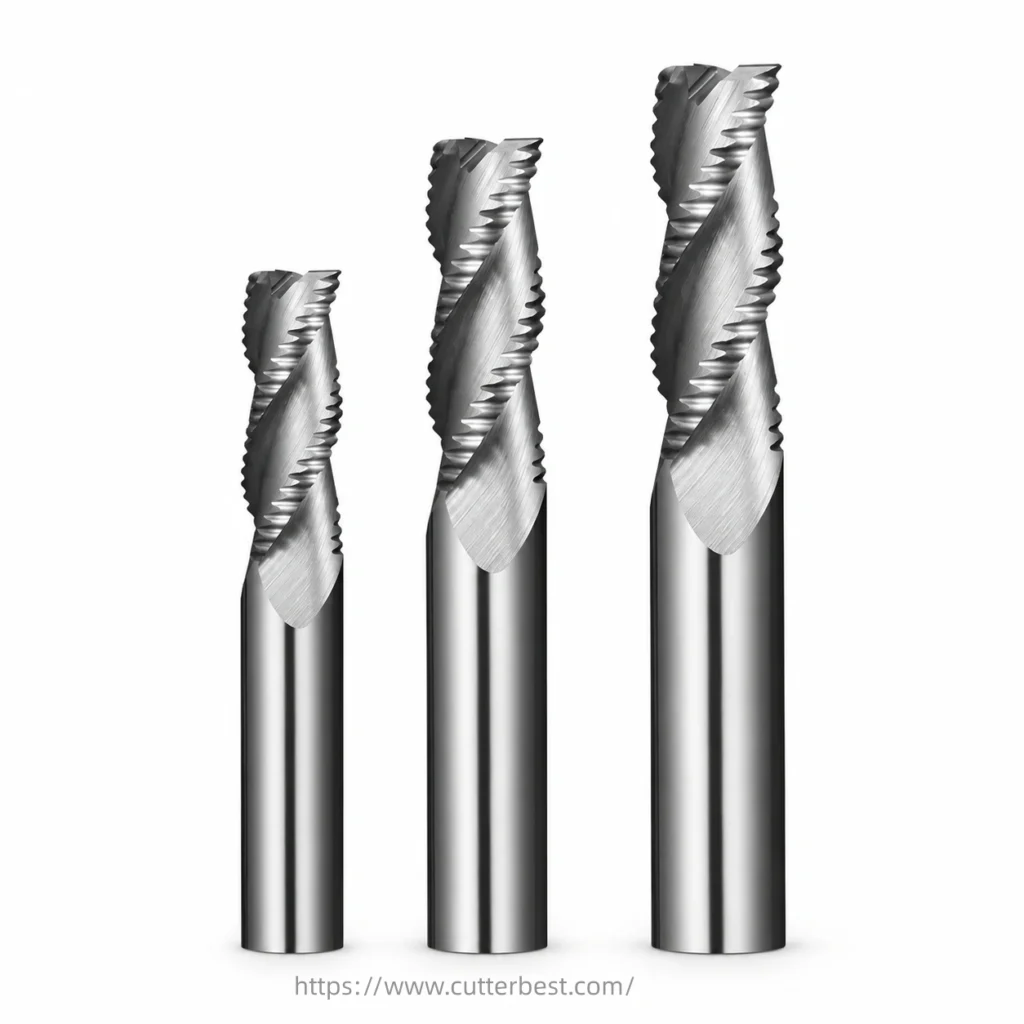
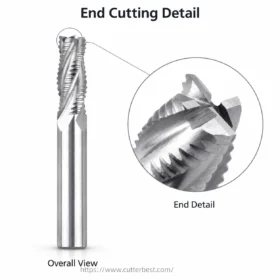
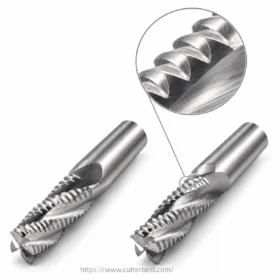
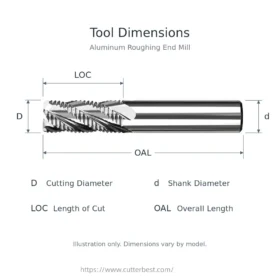
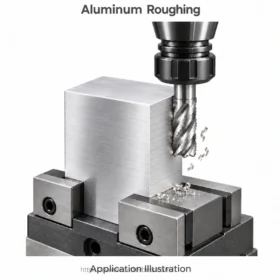
Our aluminum roughing end mill range uses serrated cutting edges for machining allowance removal. The waves along each edge divide the chip into smaller sections, helping manage chips under suitable roughing conditions.
These cutters are also described as serrated roughers or wave-edge roughing end mills. Buyers may use names such as corncob rougher or hog mill, although the exact edge profile can vary. When matching a replacement, check the actual geometry as well as the product name.
A smooth-edge aluminum end mill can also perform roughing. The distinction here is the cutting-edge structure and its effect on chip formation and the machined surface.
For more background, see our roughing end mill uses guide.
Aluminum Roughing End Mill Specification Options
Select the tool series first, then match its dimensions and geometry. HSS and solid carbide specifications are reviewed separately.
The following examples show representative dimensions from the three-flute M2-AL HSS series. They apply to that series only.
All dimensions are in millimeters.
| Cutting Diameter | Shank Diameter | Cutting Length | Overall Length |
|---|---|---|---|
| 6 | 6 | 20 | 60 |
| 12 | 12 | 35 | 85 |
| 20 | 20 | 45 | 110 |
For other requirements, provide the main dimensions or an existing tool model. Where relevant, include the required reach, end or corner shape, serration profile, and entry method.
Dimensions, flute count, surface treatment, and geometry are matched as a complete configuration. The available series do not imply that every combination is supplied.
Applications & Selection
Aluminum Workpieces & Roughing Operations
Start with the aluminum grade, feature shape, machining allowance, and cutting engagement. Pocket, cavity, and side roughing can place different demands on the cutter and chip evacuation.
Distinguish full-width slotting from partial radial engagement. A cutter suitable for side roughing should not automatically be selected for a deep full-width slot.
HSS or Solid Carbide
Material selection should account for the available spindle speed, setup stability, cutting engagement, and production requirements. For replacement tools, the existing material, dimensions, and machining results provide a useful starting point.
An HSS roughing end mill for aluminum and a solid carbide version require separate parameter selection. Confirm the material grade and any coating for the chosen series rather than transferring assumptions between them.
Three or Four Flutes
Choose flute count together with the flute geometry, cutter diameter, engagement, and coolant access. Three flutes or four flutes alone do not establish suitability for a particular operation.
Flute count is the number of cutting flutes around the tool. Serration pitch is the spacing of the waves along an edge. Chip space also depends on the flute cross-section and core geometry; it cannot be determined from serration pitch alone.
Reach, Entry & Surface Requirements
For deep features, check tool reach, overhang, holder clearance, and chip removal. Cutting length and overall length do not by themselves establish usable machining depth.
Vertical plunging, ramping, helical entry, and adaptive toolpaths require a suitable model and cutting conditions. Peripheral serrations do not establish entry capability.
Wave-edge roughing can leave visible machining marks. Decide whether to leave finishing allowance according to the final surface and dimensional requirements. For a separate aluminum milling option, see our 3 flute carbide end mill.
For steel workpieces, refer to our roughing end mill for steel.
Key Features
Serrated Roughing Geometry
Wave-shaped cutting edges divide the chip during stock removal.
Separate Material Series
HSS and solid carbide options allow tool matching by material, model, and application.
Model-Based Configuration
Three-flute and four-flute series are matched with the required dimensions and cutting geometry.
Standard Tool Matching & Custom Review
For standard tool matching, send the existing model, tool markings, or main dimensions. A clear tool photo can also help identify the serration profile and end geometry.
For non-standard requirements, send a drawing for review. We assess the complete configuration before confirming specifications and supply.
Frequently Asked Questions
What is an aluminum roughing end mill used for?
It removes machining allowance from aluminum workpieces during roughing. The selected model and cutting strategy must suit the feature, engagement, and machine setup.
How does a serrated rougher differ from a smooth-edge aluminum end mill?
A serrated rougher has waves along its cutting edges that divide the chip. A smooth-edge cutter has a continuous edge. Both can perform roughing, but their cutting behavior and resulting surface differ.
Should I choose HSS or solid carbide?
Consider the machine, operating speed, setup stability, and job requirements. Share your current tool details and application if you need help identifying a suitable series.
Should I choose three or four flutes?
Match the flute count with the complete cutter geometry and cutting conditions. There is no single flute count that is best for every aluminum roughing operation.
What information should I send for a quotation?
Send a tool model, drawing, or main specifications, together with the workpiece material and quantity. Provide what you already have; we will clarify any missing details as needed.
Send Your Aluminum Roughing End Mill Inquiry
Send your aluminum roughing end mill inquiry by email, or contact us on WhatsApp. Include a model, drawing, or main specifications, plus the workpiece material and quantity.
Email: sales@cutterbest.com
WhatsApp: Contact us on WhatsApp