 Precision Milling Cutters,Cutting Tools for CNC Machining Every Material

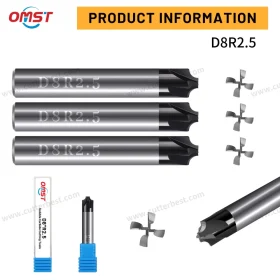
Corner Rounding End Mill for Precision Edge Radiusing
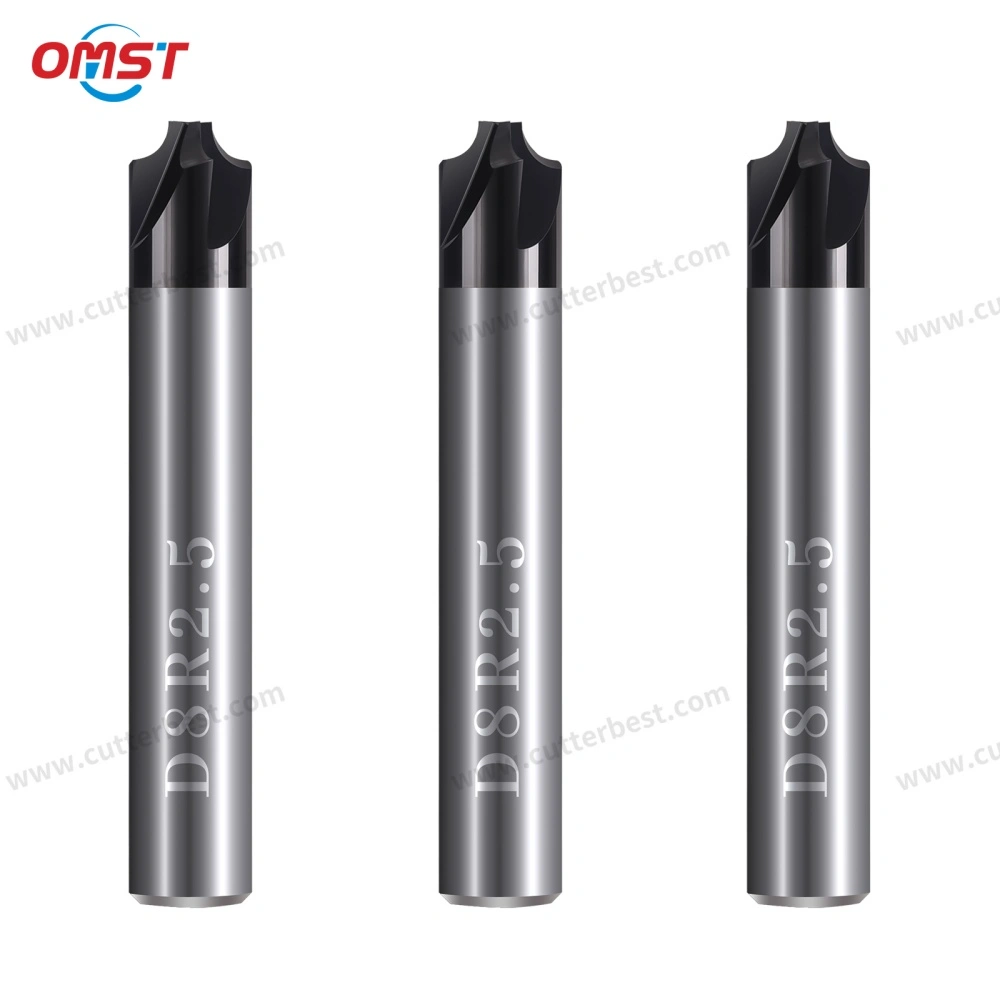
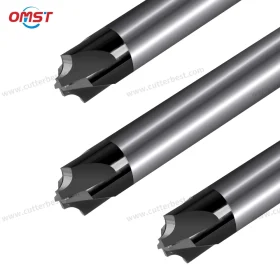
A corner rounding end mill is a form milling cutter designed to machine a rounded profile along the external edge of a workpiece. Its concave cutting edge removes the sharp corner and produces a convex radius that matches the required part drawing.
Unlike a standard end mill, this tool forms the complete radius profile with its cutting geometry. As a result, it can improve radius consistency and reduce the need for repeated contouring passes.
The product images show a D8 R2.5 carbide radius cutter as a reference design. However, the final tool dimensions and geometry depend on the required radius, machining position, workpiece material, tool clearance, and machine conditions.
What Is a Corner Rounding End Mill Used For?
Machining Rounded External Edges
The primary application is to convert sharp external edges into smooth rounded edges. Manufacturers often specify these radii to improve part safety, appearance, assembly performance, or resistance to edge damage.
The cutter can machine straight edges, plate edges, step edges, and accessible part profiles. However, tool access and workpiece clearance must be checked before selecting the cutter dimensions.
Creating a Consistent Radius Profile
The cutting edge contains the required concave radius. Therefore, the tool can create a repeatable convex radius when the machine position, runout, and cutting parameters remain stable.
A formed cutter can also simplify programming because the operator does not need to generate the complete radius with many small contouring passes.
Edge Finishing and Burr Reduction
A corner rounding cutter can remove sharp corners and reduce burrs while producing the required radius profile. However, it is not only a deburring tool. The selected radius must match the part drawing and functional requirements.
For straight bevels rather than rounded edges, a chamfer cutter is usually the more suitable choice.
Key Features of Our Radius Form Cutters
Concave Radius Cutting Profile
The concave cutting geometry forms a rounded profile on the workpiece edge. Different radius sizes can be supplied according to the part design, available machining space, and required edge shape.
The D8 R2.5 product shown in the images represents one possible configuration. Other dimensions can be produced after reviewing the customer’s drawing or specification.
Solid Carbide Construction
Solid carbide provides good rigidity, wear resistance, and dimensional stability for CNC machining. It is suitable for producing small and medium-sized radius cutters where accuracy and cutting stability are important.
The carbide grade should match the workpiece material and machining conditions. Therefore, we select the tool substrate according to the application rather than using one carbide grade for every material.
Flute Geometry for Different Applications
Corner rounding end mills may use two, three, four, or multiple flutes. The suitable flute number depends on the cutter size, workpiece material, chip space, required surface finish, and machining stability.
For example, fewer flutes generally provide more chip space. In contrast, additional cutting edges may support smoother cutting and a better surface finish under suitable conditions.
Application-Specific Coating Options
The coating should match the workpiece material, cutting speed, coolant condition, and required tool life. Coated and uncoated options are available for different machining applications.
Tools for steel, stainless steel, aluminum, copper, cast iron, and mold materials may require different cutting geometries and surface treatments. Therefore, please provide the workpiece material when requesting a quotation.
Standard and Custom Dimensions
We can manufacture corner rounding cutters with different radius sizes, cutter diameters, shank diameters, cutting lengths, overall lengths, flute counts, and coatings.
For special machining positions, we can also evaluate extended-reach designs, reduced-neck structures, and other customized geometries based on the drawing.
Specification Options
Corner rounding end mill model numbers and dimension sequences vary among manufacturers. Therefore, customers should confirm the actual dimensions instead of relying only on the model name.
| Specification | Available Options |
|---|---|
| Product Type | Corner Rounding End Mill / Concave Radius Cutter |
| Tool Material | Solid Carbide; Other Structures Available Upon Review |
| Radius | Standard and Custom Radius Sizes |
| Cutter or Head Diameter | Selected According to Radius and Tool Design |
| Pilot Diameter | Available Where Required by the Tool Structure |
| Shank Diameter | Metric, Inch, and Custom Sizes |
| Cutting Length | Standard or Customized |
| Overall Length | Standard, Long-Reach, or Customized |
| Flute Count | 2, 3, 4, or Multiple Flutes |
| Coating | Selected According to Workpiece Material |
| Workpiece Material | Steel, Stainless Steel, Aluminum, Copper, Cast Iron, Mold Materials, and Others |
| Custom Service | Radius, Diameter, Shank, Length, Flute, Geometry, and Coating |
| Order Type | Sample, Small-Batch, and Bulk Production |
Understanding Tool Dimensions
Radius
The radius is the most important specification. It refers to the radius of the concave cutting profile and usually corresponds to the convex radius produced on the workpiece edge.
For example, an R2.5 cutter is intended to produce an approximately 2.5 mm rounded profile when the cutter geometry and machine position match the application.
Cutter or Head Diameter
The cutter or head diameter refers to the maximum diameter of the cutting section. It affects tool clearance, cutting strength, and access to the workpiece edge.
Because manufacturers may use different model formats, a dimension such as D8 should be confirmed before ordering. It may refer to the cutter diameter, shank diameter, or another tool dimension.
Shank Diameter
The shank diameter must match the collet, hydraulic chuck, shrink-fit holder, or other tool-holding system. A suitable shank also helps control runout and cutting vibration.
Overall Length and Cutting Length
The overall length determines the tool reach, while the cutting or head length affects the available cutting area. Longer tools provide more access, but they may also require reduced cutting parameters to control deflection.
Flute Count
The flute number influences chip evacuation, cutting stability, feed capability, and surface finish. Therefore, it should be selected together with the workpiece material and cutter diameter.
How to Select the Right Radius Cutter
Select the Required Radius
First, check the radius marked on the part drawing. The cutter radius should match the required finished edge profile.
Do not choose the cutter only by its outside diameter. The radius, head geometry, and machining position must work together.
Check Tool Clearance
Next, check whether the cutter can reach the required edge without hitting a nearby wall, shoulder, fixture, or part feature.
For confined positions, please provide a 2D or 3D drawing. We can then evaluate the cutter diameter, neck clearance, and required tool length.
Confirm the Workpiece Material
The workpiece material affects the carbide grade, flute geometry, coating, cutting speed, feed rate, and coolant strategy.
Please tell us whether you are machining carbon steel, alloy steel, stainless steel, aluminum, copper, cast iron, hardened mold material, or another material.
Select the Flute and Coating Combination
A cutter with fewer flutes may provide more chip space, while a multi-flute design may improve cutting continuity and surface finish. However, the final selection also depends on machine rigidity and cutting conditions.
Similarly, one coating does not suit every material. We recommend the coating after reviewing the workpiece material and machining requirements.
Provide a Drawing for Custom Tools
For non-standard radii, restricted machining spaces, or special profiles, please provide the following information:
- Required radius
- Cutter or head diameter
- Shank diameter
- Overall length
- Cutting length
- Flute count
- Workpiece material
- Workpiece hardness, if known
- Machine type
- Quantity
- 2D or 3D drawing
Typical Applications
Corner rounding end mills are commonly used for edge profiling and radius machining on:
- Mold and die components
- Precision machine parts
- Automotive components
- Aerospace components
- Fixtures and tooling
- Mechanical housings
- Plates and structural parts
- General CNC-machined components
The final tool design should match the part profile and machining position. Therefore, an application review is especially important for deep steps, narrow areas, and interrupted cutting.
Workpiece Material Options
We can recommend cutter geometry and coating options for:
- Carbon steel
- Alloy steel
- Stainless steel
- Aluminum alloys
- Copper and copper alloys
- Cast iron
- Mold steel
- Other machinable materials
The suitable hardness range depends on the carbide grade, cutting geometry, coating, machine rigidity, and cutting conditions. For this reason, we confirm the application before recommending a tool for hardened materials.
Corner Rounding End Mill vs Corner Radius End Mill
A corner rounding end mill has a concave cutting profile. It machines a rounded convex edge on the workpiece and functions as a radius form cutter.
In contrast, a corner radius end mill remains a flat-bottom end mill with a small radius at the tool tip. It performs slotting, side milling, pocket milling, and roughing while the corner radius strengthens the cutting edge.
For flat-bottom milling with a reinforced tool corner, view our Bull Nose End Mill.
The two tools may both include the word “radius,” but their geometry and machining purposes are different.
Radius Form Cutter vs Tapered End Mill
A corner rounding cutter forms a curved radius on an edge. A tapered end mill has a gradually changing cutting diameter and is mainly used for angled walls, draft surfaces, deep cavities, and mold machining.
For draft angles or tapered sidewalls, view our Tapered Cutter.
Therefore, a cutter should not be classified as a tapered end mill only because part of its head appears narrower than the shank.
Custom Radius Cutter Manufacturing
Standard cutters may not fit every radius, part profile, or machining position. Therefore, we provide custom tool evaluation based on the customer’s drawing and actual machining requirements.
Custom options may include:
- Special radius sizes
- Metric or inch dimensions
- Modified cutter diameter
- Custom shank diameter
- Short or extended tool length
- Reduced neck or special clearance
- Different flute configurations
- Application-specific carbide grades
- Coated or uncoated cutting edges
- Neutral or customized packaging
We can also evaluate related carbide milling solutions for customers who need several cutter types for one machining project. View our Carbide Milling Cutter options for additional tool categories.
Send Your Radius Cutter Requirement
Please send the required radius, cutter diameter, shank diameter, overall length, flute number, workpiece material, quantity, and part drawing.
We will review the machining position and recommend a suitable standard or custom corner rounding cutter.