 หัวกัดที่มีความแม่นยํา,เครื่องมือตัดสําหรับเครื่องจักรกลซีเอ็นซีทุกวัสดุ

ดอกเอ็นมิลล์ที่ดีที่สุดสำหรับกราไฟท์ไม่ใช่เครื่องมือชิ้นเดียวเสมอไป. การกัดหยาบด้วยกราไฟท์, การตกแต่งกราไฟท์, การตัดเฉือนอิเล็กโทรด EDM, การกัดโพรงแม่พิมพ์และการตัดอย่างละเอียดล้วนต้องใช้ลำดับความสำคัญของเครื่องมือที่แตกต่างกัน.
กราไฟท์มีความอ่อนเมื่อเทียบกับเหล็ก, แต่มีฤทธิ์กัดกร่อนและมีฝุ่นมาก. ดอกเอ็นมิลล์คาร์ไบด์สำหรับงานทั่วไปอาจตัดกราไฟท์ได้ในตอนแรก, แต่คมตัดสามารถสึกหรอได้อย่างรวดเร็ว. เมื่อขอบเริ่มทื่อ, เครื่องมืออาจสูญเสียความสม่ำเสมอของเส้นผ่านศูนย์กลางที่มีประสิทธิภาพ, ทำให้คุณสมบัติเล็กๆ น้อยๆ เสียหาย, ลดคุณภาพพื้นผิวหรือเพิ่มการเปลี่ยนเครื่องมือ.
ด้วยเหตุนี้, โดยทั่วไปแล้ว เครื่องมือคาร์ไบด์เคลือบเพชรจะถูกพิจารณาสำหรับการใช้งานกราไฟท์ ซึ่งมีความสำคัญต่อความต้านทานการสึกหรอและความสามารถในการทำซ้ำ. อย่างไรก็ตาม, การเคลือบเพียงอย่างเดียวไม่ได้ตัดสินผลลัพธ์. รูปทรงของเครื่องมือ, ประเภทสิ้นสุด, การเข้าถึงเครื่องมือ, ความเสถียรในการจับยึดและการควบคุมฝุ่นก็มีความสำคัญเช่นกัน.
ในคู่มือนี้, “การตัดเฉือนแม่พิมพ์กราไฟท์” หมายถึงการกัดส่วนประกอบกราไฟท์ที่ใช้สำหรับการใช้งานที่เกี่ยวข้องกับแม่พิมพ์, รวมถึงฟันผุด้วย, รูปทรงและคุณสมบัติกราไฟท์ที่แม่นยำ.
สำหรับตัวเลือกมาตรฐานและแบบกำหนดเอง, สำรวจของเรา ดอกเอ็นมิลล์เคลือบเพชรสำหรับกราไฟท์.
เหตุใดกราไฟท์จึงต้องการดอกเอ็นมิลล์อื่น
กราไฟท์สร้างปัญหาการตัดที่แตกต่างจากเหล็ก, สแตนเลสหรืออลูมิเนียม. ไม่ใช่ปัญหาการทนความร้อนเป็นหลัก. แทน, การตัดเฉือนกราไฟท์มักเกิดจากการสึกหรอ, ปัญหาฝุ่นและความเสถียร.
กราไฟท์มีความอ่อนแต่มีฤทธิ์กัดกร่อน
กราไฟท์อาจรู้สึกว่าตัดง่าย, แต่โครงสร้างที่มีฤทธิ์กัดกร่อนสามารถสึกหรอคมตัดได้อย่างรวดเร็ว. เมื่อขอบกลายเป็นมน, เครื่องมืออาจยังคงเอาวัสดุออก, แต่ความแม่นยำและคุณภาพพื้นผิวสามารถลดลงได้.
ด้วยเหตุนี้ ดอกเอ็นมิลล์สำหรับการตัดเฉือนกราไฟท์จึงควรเน้นที่ความต้านทานการสึกหรอ, ความสม่ำเสมอของเส้นผ่านศูนย์กลางที่มีประสิทธิภาพและประสิทธิภาพการตัดที่มั่นคง.
การสึกหรอของขอบส่งผลต่อความแม่นยำของอิเล็กโทรด
อิเล็กโทรดกราไฟท์มักมีซี่โครง, ผนังบาง, ฟันผุขนาดเล็ก, มุมที่คมชัดและรายละเอียดปลีกย่อย. หากการสึกหรอของเครื่องมือเปลี่ยนเส้นผ่านศูนย์กลางการตัดที่มีประสิทธิภาพ, รูปร่างของอิเล็กโทรดอาจไม่ตรงกับโปรไฟล์ที่ต้องการอีกต่อไป.
ในการตัดเฉือนอิเล็กโทรด EDM, สิ่งนี้อาจส่งผลต่อผลลัพธ์ของแม่พิมพ์ขั้นสุดท้าย. ดังนั้น, ความสามารถในการทำซ้ำมีความสำคัญพอๆ กับความสามารถในการตัด.
ฝุ่นกราไฟท์อาจส่งผลต่อความเสถียรของการตัดเฉือน
การตัดเฉือนด้วยกราไฟท์ทำให้เกิดฝุ่นละเอียด. หากไม่สามารถกำจัดฝุ่นได้อย่างมีประสิทธิภาพ, อาจส่งผลต่อการมองเห็นได้, การทำงาน, ความสะอาดของเครื่องจักรและความเสถียรในการตัด.
เพราะฝุ่นกราไฟท์สามารถเป็นสื่อกระแสไฟฟ้าได้, ควรวางแผนการดูดฝุ่นและการป้องกันเครื่องจักรตามคำแนะนำของผู้ผลิตอุปกรณ์และขั้นตอนความปลอดภัยของสถานที่.
คู่มือฉบับย่อ: ดอกเอ็นมิลล์ที่ดีที่สุดสำหรับการใช้งานกราไฟท์
ใช้ตารางนี้เป็นจุดเริ่มต้นก่อนที่จะเลือกดอกเอ็นมิลล์กราไฟท์ที่ต้องการ. มันไม่ได้แทนที่การทดสอบการตัด, แต่ช่วยให้ทิศทางของเครื่องมือแคบลง.
| การประยุกต์ใช้กราไฟท์ | โฟกัสเครื่องมือที่แนะนำ | ทำไมมันถึงสำคัญ |
|---|---|---|
| การกัดหยาบด้วยกราไฟท์ | ตัวเครื่องมือมีความแข็งแกร่งและระยะหลบรอบบริเวณการตัด | ช่วยรองรับการตัดและกำจัดฝุ่นอย่างมั่นคง |
| การตกแต่งด้วยกราไฟท์ | สภาพเครื่องมือสม่ำเสมอและเส้นผ่านศูนย์กลางการตัดที่มีประสิทธิภาพ | รองรับการตกแต่งพื้นผิวและความแม่นยำของมิติ |
| การกัดอิเล็กโทรดกราไฟท์ | ความต้านทานการสึกหรอและการทำซ้ำ | ช่วยปกป้องกระดูกซี่โครง, มุมและรายละเอียดอิเล็กโทรด EDM |
| การตัดเฉือนแม่พิมพ์กราไฟท์ | ตัวเลือกบอลโนสหรือรัศมีมุม | รองรับรูปร่างสามมิติและโพรงที่ซับซ้อน |
| การเซาะกราไฟท์ | ปลายเหลี่ยมหรือเครื่องมือแบบกำหนดเองที่เหมาะสม | ช่วยรักษาความกว้างของช่องและคุณภาพของผนังด้านข้าง |
| ฟันผุลึก | ระยะเอื้อมที่สั้นที่สุดและการออกแบบส่วนคอที่เหมาะสม | ช่วยลดการสั่นสะเทือนและการโก่งตัวของเครื่องมือ |
| ชิ้นส่วนกราไฟท์ที่มีรายละเอียดประณีต | สภาพขอบที่มั่นคงและระยะยื่นที่ควบคุมได้ | ช่วยปกป้องคุณสมบัติเล็กๆ และความสม่ำเสมอของพื้นผิว |
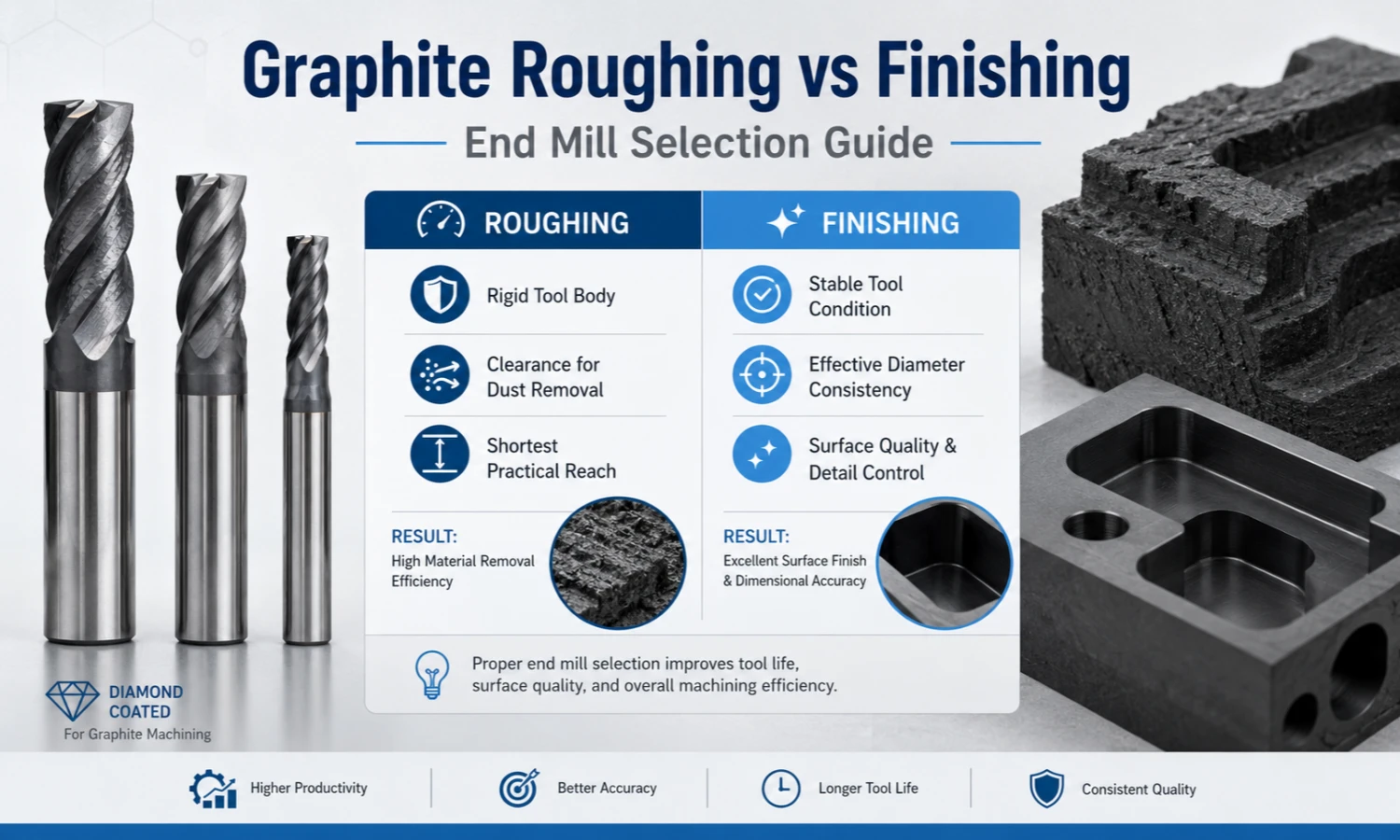
ดอกเอ็นมิลล์ที่ดีที่สุดสำหรับการกัดหยาบด้วยกราไฟท์
การกัดหยาบด้วยกราไฟท์มุ่งเน้นไปที่การกำจัดวัสดุ. หัวกัดควรขจัดเศษวัสดุออกอย่างมีประสิทธิภาพ ขณะเดียวกันก็รักษาลักษณะการตัดให้คงที่.
ความแข็งแกร่งและการกำจัดฝุ่นมีความสำคัญ
เครื่องมือกัดหยาบด้วยกราไฟท์ควรมีความแข็งแกร่งและระยะห่างเพียงพอรอบๆ บริเวณการตัด เพื่อช่วยรักษาการตัดและกำจัดฝุ่นได้อย่างมั่นคง.
หากมีฝุ่นสะสมบริเวณบริเวณการตัด, มันสามารถลดการมองเห็นและรบกวนการตัดเฉือนที่มั่นคง. เป้าหมายไม่ใช่แค่การกำจัดอย่างรวดเร็วเท่านั้น. เป้าหมายคือการถอดออกอย่างมั่นคงโดยไม่มีการสั่นสะเทือนมากเกินไป, การสึกหรอของคมตัดตั้งแต่เนิ่นๆ หรือการเปลี่ยนเครื่องมือโดยไม่จำเป็น.
ปลายสี่เหลี่ยมหรือรัศมีมุมสำหรับการกัดหยาบ
เครื่องมือปลายเหลี่ยมมีประโยชน์สำหรับช่อง, กระเป๋า, พื้นผิวเรียบและผนังด้านข้าง. ทำงานได้ดีเมื่อชิ้นส่วนต้องการลักษณะพื้นเรียบหรือผนังตรง.
เครื่องมือรัศมีมุมอาจมีประโยชน์เมื่อคมตัดต้องการความแข็งแกร่งมากขึ้น. รัศมีเล็กๆ สามารถช่วยปรับปรุงความเสถียรของคมตัดได้ เมื่อเทียบกับมุมที่คม, โดยเฉพาะในงานกัดหยาบหรืองานกึ่งสำเร็จ.
ใช้ระยะการเข้าถึงที่สั้นที่สุด
ในการตัดเฉือนกราไฟท์, การเข้าถึงที่ไม่จำเป็นสามารถลดความแข็งแกร่งและทำให้คุณสมบัติที่ดียากต่อการควบคุม. เลือกความยาวของเครื่องมือและการออกแบบคอที่ช่วยให้ชิ้นงานเคลียร์ได้อย่างปลอดภัย ขณะเดียวกันก็รักษาระยะยื่นให้สั้นที่สุดเท่าที่ทำได้จริง.
สำหรับขนาดโดยละเอียด, การกำหนดค่าขลุ่ยและการเลือกรูปทรงที่กำหนดเอง, ดูของเรา คู่มือการเลือกดอกเอ็นมิลล์เคลือบเพชร.
ดอกเอ็นมิลล์ที่ดีที่สุดสำหรับการขัดผิวด้วยกราไฟท์
การเก็บผิวละเอียดด้วยกราไฟท์มีเป้าหมายที่แตกต่างจากการกัดหยาบ. โฟกัสเปลี่ยนจากการกำจัดวัสดุไปสู่คุณภาพพื้นผิว, ความแม่นยำของมิติและการควบคุมรายละเอียด.
สภาพเครื่องมือสม่ำเสมอและเส้นผ่านศูนย์กลางที่มีประสิทธิภาพ
สำหรับการตกแต่ง, สภาพเครื่องมือและเส้นผ่านศูนย์กลางการตัดที่มีประสิทธิภาพควรมีความสม่ำเสมอเพียงพอที่จะปกป้องความแม่นยำของขนาดและลักษณะที่ละเอียด.
คมตัดที่ได้รับการดูแลอย่างเหมาะสมสามารถช่วยสนับสนุนพื้นผิวที่สะอาดขึ้นและการสร้างรายละเอียดที่สม่ำเสมอยิ่งขึ้น. นี่เป็นสิ่งสำคัญอย่างยิ่งสำหรับอิเล็กโทรดกราไฟท์, ฟันผุเล็กและซี่โครงละเอียด.
บอลโนสสำหรับคอนทัวร์สามมิติ
เอ็นด์มิลล์แบบบอลโนสมักถูกเลือกใช้สำหรับการกัดคอนทัวร์แบบ 3 มิติ, พื้นผิวโค้ง, แม่พิมพ์กราไฟท์และโปรไฟล์อิเล็กโทรด. ปลายโค้งมนช่วยสร้างเส้นทางเครื่องมือที่นุ่มนวลขึ้นบนรูปทรงที่ซับซ้อน.
หากส่วนกราไฟท์มีโพรงโค้ง, พื้นผิวแม่พิมพ์หรือรายละเอียด 3 มิติ, ดอกเอ็นมิลล์กราไฟท์บอลโนสอาจเหมาะสมกว่าเครื่องมือปลายเหลี่ยม.
รัศมีมุมเพื่อการรองรับขอบที่ดีขึ้น
เครื่องมือรัศมีมุมจะมีประโยชน์เมื่อการใช้งานต้องการทั้งคุณภาพพื้นผิวและการรองรับขอบ. อาจช่วยลดความเสียหายที่มุมและช่วยให้การตัดมีเสถียรภาพมากขึ้น.
สำหรับการเก็บผิวละเอียดด้วยกราไฟท์และการเก็บผิวกึ่งละเอียดบางอย่าง, เครื่องมือรัศมีมุมสามารถให้ความสมดุลในทางปฏิบัติระหว่างการควบคุมรายละเอียดและความทนทาน.
ดอกเอ็นมิลล์ที่ดีที่สุดสำหรับอิเล็กโทรดกราไฟท์และการตัดเฉือนแม่พิมพ์
อิเล็กโทรดกราไฟท์และส่วนประกอบที่เกี่ยวข้องกับแม่พิมพ์กราไฟท์มักต้องการความสามารถในการทำซ้ำได้สูงกว่าบล็อกกราไฟท์ทั่วไป. การสึกหรอของเครื่องมือเล็กน้อยอาจส่งผลต่อรูปทรงขั้นสุดท้ายได้.
อิเล็กโทรด EDM ต้องการความสามารถในการทำซ้ำ
อิเล็กโทรด EDM อาจมีซี่โครงบาง, ช่องแคบ, มุมแหลมคมและโพรงที่ซับซ้อน. ในระหว่างรอบการตัดที่ยาวนาน, เครื่องมือจะต้องรักษาประสิทธิภาพการตัดให้คงที่.
ด้วยเหตุนี้, เครื่องมือกัดอิเล็กโทรดกราไฟท์ควรเน้นที่ความต้านทานการสึกหรอ, ความสม่ำเสมอของเส้นผ่านศูนย์กลางที่มีประสิทธิภาพและการเบี่ยงเบนหนีศูนย์ต่ำ.
ซี่โครงเนื้อดี, ฟันผุและมุมแหลมคมต้องการเครื่องมือที่มั่นคง
คุณสมบัติกราไฟท์ละเอียดจะสร้างความเสียหายได้ง่ายกว่าเมื่อเครื่องมือสึกหรอ, ไม่มั่นคงหรือยาวเกินไป. ขอบทื่อสามารถดึงอนุภาคออกจากพื้นผิวกราไฟท์และลดคุณภาพของขอบได้.
เมื่อตัดเฉือนซี่โครง, โพรงลึกหรือรายละเอียดมุมเล็กๆ, ควรตรวจสอบระยะเอื้อมและความแข็งแกร่งของเครื่องมืออย่างระมัดระวัง. ในหลายกรณี, ความยาวคอที่กำหนดเองหรือรูปทรงเครื่องมือพิเศษอาจใช้งานได้จริงมากกว่าเครื่องมือมาตรฐาน.
สำหรับฟันผุลึก, โปรไฟล์พิเศษหรือเครื่องมือที่ใช้การวาด, ตรวจสอบของเรา โรงงานปลายกราไฟท์แบบกำหนดเอง.
การตัดเฉือนแม่พิมพ์กราไฟท์: มุ่งเน้นไปที่พื้นผิว 3 มิติและการเข้าถึงช่อง
การตัดเฉือนแม่พิมพ์กราไฟท์มักเกี่ยวข้องกับรูปทรง 3 มิติ, ฟันผุโค้ง, พื้นผิวขั้นบันไดและพื้นที่ที่มีการเข้าถึงเครื่องมืออย่างจำกัด.
อาจพิจารณาใช้เครื่องมือบอลโนสและรัศมีมุมเมื่อรูปทรงของชิ้นส่วนต้องการการคอนทัวร์ที่นุ่มนวลขึ้นหรือมีการรองรับขอบที่แข็งแรงขึ้น. เครื่องมือที่เหมาะสมที่สุดขึ้นอยู่กับคุณสมบัติที่เล็กที่สุด, ความลึกของโพรง, สภาพพื้นผิวที่ต้องการและระยะห่างรอบๆ ที่จับเครื่องมือ.
สแควร์เอนด์, บอลโนสหรือรัศมีมุมสำหรับกราไฟท์?
ปลายประเภทต่างๆ กันช่วยแก้ปัญหาการตัดเฉือนกราไฟท์ที่แตกต่างกัน. ตารางด้านล่างให้คำแนะนำการเลือกอย่างง่าย.
| ประเภทสิ้นสุด | ดีที่สุดสำหรับ | หมายเหตุการเลือก |
| สแควร์เอนด์ | สล็อต, พื้นผิวเรียบ, ผนังด้านข้างและไหล่ | เหมาะสำหรับคุณสมบัติกราไฟท์ก้นแบนและการกัดมาตรฐาน |
| บอลโนส | 3D การคอนทัวร์, พื้นผิวโค้งและโปรไฟล์แม่พิมพ์ | มีประโยชน์สำหรับแม่พิมพ์กราไฟท์, อิเล็กโทรดและพื้นผิวที่ซับซ้อน |
| รัศมีมุม | การรองรับขอบที่แข็งแกร่งยิ่งขึ้นและการตัดที่มั่นคง | มีประโยชน์เมื่อความแข็งแรงของคมตัดและคุณภาพพื้นผิวมีความสำคัญทั้งคู่ |
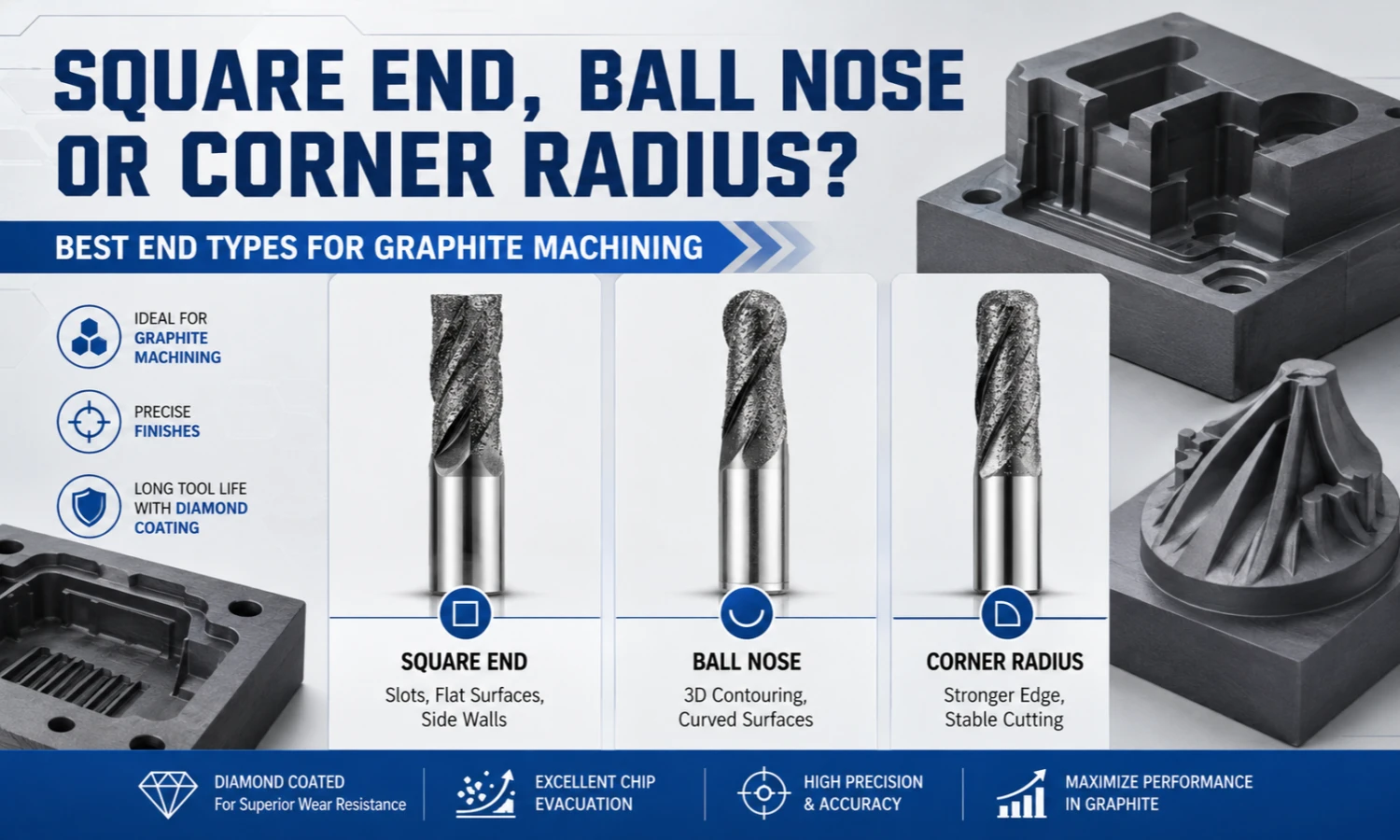
เลือกเครื่องมือปลายเหลี่ยมสำหรับลักษณะพื้นเรียบและผนังด้านข้าง. สำหรับการปรับรูปร่างสามมิติและพื้นผิวกราไฟท์แบบโค้ง, เครื่องมือบอลจมูกมักจะเหมาะสมกว่า. เมื่อการรองรับขอบและคุณภาพพื้นผิวมีความสำคัญทั้งคู่, เครื่องมือรัศมีมุมอาจเป็นตัวเลือกที่ดีกว่า.
เหตุใดความต้านทานการสึกหรอจึงมีความสำคัญในการตัดเฉือนกราไฟท์
กราไฟท์มีฤทธิ์กัดกร่อน, ดังนั้นการสึกหรอของคมตัดอาจส่งผลต่อเส้นผ่านศูนย์กลางของเครื่องมือได้, ความสม่ำเสมอของพื้นผิวและความแม่นยำของคุณสมบัติที่ละเอียดเมื่อเวลาผ่านไป.
โดยทั่วไปแล้ว เครื่องมือคาร์ไบด์เคลือบเพชรจะได้รับการพิจารณาสำหรับการใช้งานกราไฟท์ซึ่งมีความสำคัญต่อความต้านทานการสึกหรอและความสามารถในการทำซ้ำ. สามารถช่วยปรับปรุงความสม่ำเสมอในการตัดในการตัดเฉือนกราไฟท์ที่มีฤทธิ์กัดกร่อนได้, แต่ผลลัพธ์สุดท้ายยังคงขึ้นอยู่กับเกรดกราไฟท์, เรขาคณิตของเครื่องมือ, ความแข็งแกร่งของเครื่องจักร, การหนีบและสภาวะกระบวนการ.
สำหรับคำอธิบายที่กว้างขึ้นเกี่ยวกับการใช้งานเครื่องมือเคลือบเพชร, ดูคำแนะนำของเราใน ดอกเอ็นมิลล์เคลือบเพชรใช้ทำอะไร.
การตัดเฉือนแบบแห้ง, ข้อควรพิจารณาในการควบคุมฝุ่นและสารหล่อเย็น
การตัดเฉือนกราไฟท์มักมีการจัดการที่แตกต่างจากการตัดเฉือนโลหะ. การควบคุมฝุ่นเป็นส่วนสำคัญของกระบวนการ.
เหตุใดกราไฟท์จึงมักถูกกลึงให้แห้ง
การใช้งานตัดเฉือนกราไฟท์จำนวนมากใช้การตัดแบบแห้งพร้อมการสกัดฝุ่นที่มีประสิทธิภาพ. วิธีการนี้ช่วยกำจัดฝุ่นกราไฟท์ออกจากบริเวณการตัด และลดความเสี่ยงที่ฝุ่นจะปะปนกับของเหลว.
การตัดเฉือนแบบแห้งยังช่วยให้ฝุ่นกราไฟต์สะสมได้ง่ายขึ้นเมื่อมีการเตรียมเครื่องจักรและระบบสกัดอย่างเหมาะสม.
เหตุใดการดูดฝุ่นจึงมีความสำคัญ
ฝุ่นกราไฟท์สามารถแพร่กระจายไปทั่วตัวเครื่องและพื้นที่ทำงาน. การดูดฝุ่นที่ดีช่วยให้เครื่องจักรมีความมั่นคง, ความสะอาดของชิ้นส่วนและสภาพอุปกรณ์.
สำหรับการตัดเฉือนอิเล็กโทรดกราไฟท์ที่มีความแม่นยำ, การควบคุมฝุ่นยังช่วยรักษาทัศนวิสัยและลดโอกาสที่ฝุ่นจะสะสมรอบๆ คุณสมบัติที่ดี.
ควรประเมินน้ำหล่อเย็นอย่างระมัดระวัง
การตัดเฉือนแบบแห้งพร้อมการดูดฝุ่นที่มีประสิทธิภาพเป็นเรื่องปกติสำหรับกราไฟท์, แต่แนวทางการจัดการน้ำหล่อเย็นและฝุ่นขั้นสุดท้ายควรเป็นไปตามคำแนะนำของผู้ผลิตเครื่องจักร, ขั้นตอนความปลอดภัยของสถานที่และข้อกำหนดของวัสดุและกระบวนการกราไฟท์.
หากฝุ่นกราไฟท์ผสมกับของเหลว, มันอาจสร้างสารละลายที่มีฤทธิ์กัดกร่อน. ด้วยเหตุนี้, การใช้น้ำหล่อเย็นควรได้รับการประเมินอย่างรอบคอบตามการตั้งค่าเครื่องจักร, เกรดกราไฟท์และระบบควบคุมฝุ่น.
วิธีลดการสึกหรอของเครื่องมือ, การบิ่นขอบและการดริฟท์ของมิติ
ปัญหาในการตัดเฉือนกราไฟท์มักเกิดจากการสึกหรอของเครื่องมือ, การตั้งค่าที่อ่อนแอหรือกลยุทธ์การตัดที่ไม่เหมาะสม. เครื่องตัดเป็นสิ่งสำคัญ, แต่กระบวนการทั้งหมดจะต้องมีเสถียรภาพ.
รักษาคมตัดให้อยู่ในสภาพดี
ขอบสึกหรออาจลดคุณภาพผิวงานและเพิ่มการบิ่นของขอบได้. ในการตกแต่งกราไฟท์, นอกจากนี้ยังอาจส่งผลต่อรายละเอียดเล็กๆ น้อยๆ และความแม่นยำของอิเล็กโทรดอีกด้วย.
ตรวจสอบสภาพเครื่องมืออย่างสม่ำเสมอ, โดยเฉพาะอย่างยิ่งในระหว่างดำเนินการผลิตที่ยาวนานหรือเมื่อตัดเฉือนคุณสมบัติที่ละเอียด.
ใช้การหนีบที่มั่นคงและการเบี่ยงเบนหนีศูนย์ต่ำ
การเบี่ยงเบนหนีศูนย์ของเครื่องมืออาจทำให้เกิดการสึกหรอที่คมตัดไม่สม่ำเสมอ. นอกจากนี้ยังอาจลดคุณภาพพื้นผิวและทำให้อายุการใช้งานของเครื่องมือสั้นลงอีกด้วย.
ใช้ที่ยึดที่มั่นคง, ลดระยะยื่นที่ไม่จำเป็นและยึดชิ้นงานให้แน่น. รายละเอียดเหล่านี้มีความสำคัญมากกว่าเมื่อตัดเฉือนสันบาง, โพรงลึกและอิเล็กโทรดกราไฟท์ที่แม่นยำ.
แยกการหยาบและการเก็บผิวละเอียดเมื่อความแม่นยำเป็นสิ่งสำคัญ
การกัดหยาบและการเก็บผิวละเอียดมักต้องใช้ลำดับความสำคัญของเครื่องมือต่างกัน. การกัดหยาบจำเป็นต้องมีความแข็งแกร่งและการกำจัดวัสดุที่มั่นคง. การตกแต่งขั้นสุดท้ายต้องมีสภาพขอบ, ความสม่ำเสมอของเส้นผ่านศูนย์กลางที่มีประสิทธิภาพและการทำซ้ำ.
การใช้เครื่องมือเดียวสำหรับการทำงานทั้งสองอย่างอาจสะดวก, แต่สามารถลดความแม่นยำลงได้เมื่อชิ้นส่วนต้องการรายละเอียดที่แน่นหนาหรือพื้นผิวที่สะอาด.
ข้อผิดพลาดทั่วไปในการตัดเฉือนกราไฟท์ที่ส่งผลต่อประสิทธิภาพของเครื่องมือ
การใช้เครื่องมือเดียวกันสำหรับการกัดหยาบและการเก็บผิวละเอียด
เครื่องมือกัดหยาบและเครื่องมือตกแต่งผิวสำเร็จไม่จำเป็นต้องมีรูปแบบหรือสภาพเครื่องมือเดียวกันเสมอไป. หากพื้นผิวการตกแต่งมีความสำคัญ, การใช้เครื่องมือกัดหยาบที่สึกหรอในการเก็บผิวละเอียดอาจทำให้ความแม่นยำหรือคุณภาพพื้นผิวต่ำ.
เมื่อความแม่นยำของอิเล็กโทรดหรือรายละเอียดเล็กๆ น้อยๆ มีความสำคัญ, เครื่องมือกัดหยาบและการเก็บผิวละเอียดที่แยกจากกันมักจะใช้งานได้จริงมากกว่า.
การเลือกความยาวของเครื่องมือมากเกินไป
การเข้าถึงระยะไกลอาจจำเป็นสำหรับโพรงลึก, แต่ความยาวที่ไม่จำเป็นสามารถเพิ่มการสั่นสะเทือนได้. ในการตัดเฉือนกราไฟท์, การสั่นสะเทือนอาจส่งผลต่อคุณภาพของขอบ, อายุการใช้งานของเครื่องมือและความเสถียรของมิติ.
ก่อนจะเลือกเครื่องมือแบบยาว, ยืนยันความลึกของการตัดจริง, การกวาดล้างของผู้ถือและการเข้าถึงที่จำเป็น.
ละเว้นการควบคุมฝุ่นกราไฟท์
การควบคุมฝุ่นไม่ได้เป็นเพียงปัญหาความสะอาดของโรงงานเท่านั้น. นอกจากนี้ยังอาจส่งผลต่อความเสถียรของการตัดเฉือนอีกด้วย, ประสิทธิภาพของเครื่องมือและสภาพอุปกรณ์.
วางแผนการดูดฝุ่น, การปกป้องเครื่องจักรและการทำความสะอาดพื้นที่ทำงานก่อนการผลิตเป็นชุด.
คำถามที่ถามบ่อย
ดอกเอ็นมิลล์ที่ดีที่สุดสำหรับกราไฟท์คืออะไร?
ดอกเอ็นมิลล์ที่ดีที่สุดสำหรับกราไฟท์นั้นขึ้นอยู่กับการทำงาน. การกัดหยาบจำเป็นต้องมีความแข็งแกร่งและการกำจัดฝุ่นที่มั่นคง. การเก็บผิวละเอียดต้องมีสภาพเครื่องมือสม่ำเสมอ, เส้นผ่านศูนย์กลางการตัดที่มีประสิทธิภาพและคุณภาพพื้นผิวที่ดี. สำหรับอิเล็กโทรดกราไฟท์และชิ้นส่วนที่เกี่ยวข้องกับแม่พิมพ์, เครื่องมือคาร์ไบด์เคลือบเพชรมักได้รับการพิจารณาเนื่องจากกราไฟท์มีฤทธิ์กัดกร่อน.
ดอกเอ็นมิลล์ชนิดใดดีที่สุดสำหรับการกัดหยาบด้วยกราไฟท์?
สำหรับการกัดหยาบกราไฟท์, เลือกเครื่องมือที่แข็งแรงซึ่งมีระยะห่างที่เหมาะสมรอบๆ บริเวณการตัดและการจับยึดที่มั่นคง. หลีกเลี่ยงความยาวร่องฟันหรือระยะยื่นที่ยาวโดยไม่จำเป็น เนื่องจากระยะยื่นมากเกินไปอาจเพิ่มการสั่นสะท้านและลดอายุการใช้งานของเครื่องมือได้.
ดอกเอ็นมิลล์ชนิดใดดีที่สุดสำหรับการเก็บผิวละเอียดด้วยกราไฟท์?
สำหรับการเก็บผิวละเอียดด้วยกราไฟท์, เลือกเครื่องมือที่สามารถรักษาคุณภาพพื้นผิวได้, ความสม่ำเสมอของเส้นผ่านศูนย์กลางที่มีประสิทธิภาพและความแม่นยำของรายละเอียด. เครื่องมือบอลโนสมีประโยชน์สำหรับการคอนทัวร์แบบ 3 มิติ, ในขณะที่เครื่องมือรัศมีมุมอาจช่วยได้เมื่อทั้งการรองรับขอบและคุณภาพพื้นผิวมีความสำคัญ.
ดอกเอ็นมิลล์เคลือบเพชรเหมาะสำหรับกราไฟท์หรือไม่?
ใช่. ดอกเอ็นมิลล์เคลือบเพชรเหมาะสำหรับการใช้งานกราไฟท์หลายประเภท เนื่องจากช่วยเพิ่มความต้านทานการสึกหรอในการตัดเฉือนที่มีฤทธิ์กัดกร่อน. ตัวเลือกเครื่องมือขั้นสุดท้ายยังคงขึ้นอยู่กับเกรดกราไฟท์, เรขาคณิตของเครื่องมือ, ความแข็งแกร่งของเครื่องจักร, การหนีบและการตัดเฉือน.
ควรกลึงกราไฟท์ให้แห้ง?
ในงานตัดเฉือนกราไฟท์หลายประเภท, การใช้เครื่องจักรแบบแห้งพร้อมการดูดฝุ่นที่มีประสิทธิภาพเป็นเรื่องปกติ. ซึ่งจะช่วยขจัดฝุ่นกราไฟท์และลดความเสี่ยงที่ฝุ่นจะปะปนกับของเหลว. การตั้งค่าขั้นสุดท้ายควรเป็นไปตามคำแนะนำของเครื่อง, ขั้นตอนด้านความปลอดภัยในสถานที่ทำงานและข้อกำหนดของกระบวนการ.
ฉันสามารถใช้น้ำหล่อเย็นเมื่อตัดเฉือนกราไฟท์ได้หรือไม่?
ควรประเมินสารหล่อเย็นอย่างระมัดระวัง. ฝุ่นกราไฟท์อาจผสมกับของเหลวและสร้างสารละลายที่มีฤทธิ์กัดกร่อน. การตัดเฉือนด้วยกราไฟท์หลายๆ แบบใช้การตัดแบบแห้งและการสกัดฝุ่นแทน, แต่ตัวเลือกที่ดีที่สุดขึ้นอยู่กับการตั้งค่าเครื่อง, ข้อกำหนดของวัสดุกราไฟท์และกระบวนการ.
ฉันจะลดฝุ่นกราไฟท์ในระหว่างการกัด CNC ได้อย่างไร?
ใช้ระบบสกัดที่มีประสิทธิภาพซึ่งออกแบบมาสำหรับเครื่องจักรและกระบวนการ, รักษาพื้นที่ทำงานให้สะอาด, และปฏิบัติตามคำแนะนำของผู้ผลิตเครื่องจักรและความปลอดภัยในสถานที่ทำงาน. ควรพิจารณาการควบคุมฝุ่นร่วมกับระยะเอื้อมของเครื่องมือ, การทำงานและการเข้าถึงรอบๆ โซนการตัด.
ดอกเอ็นมิลล์หนึ่งตัวสามารถใช้สำหรับการกัดหยาบและการเก็บผิวละเอียดด้วยกราไฟท์ได้หรือไม่?
อาจเป็นไปได้สำหรับงานง่ายๆ, แต่เครื่องมือในการกัดหยาบและการเก็บผิวละเอียดที่แยกจากกันมักถูกพิจารณาเมื่อมีความแม่นยำของคุณสมบัติ, ความสม่ำเสมอของพื้นผิวหรือรายละเอียดของอิเล็กโทรดที่ละเอียดเป็นสิ่งสำคัญ. ซึ่งช่วยให้แต่ละการดำเนินการจัดลำดับความสำคัญของสภาพเครื่องมือและรูปทรงที่เหมาะสมที่สุดได้.
ฉันสามารถใช้ดอกเอ็นมิลล์คาร์ไบด์ทั่วไปกับกราไฟท์ได้หรือไม่?
ดอกเอ็นมิลล์คาร์ไบด์ทั่วไปอาจใช้สำหรับการทดลองง่ายๆ หรืองานที่ไม่สำคัญ. อย่างไรก็ตาม, กราไฟท์มีฤทธิ์กัดกร่อน, ดังนั้นการสึกหรอของเครื่องมืออาจเป็นปัญหาได้. สำหรับอิเล็กโทรดกราไฟท์ที่มีความแม่นยำ, ส่วนประกอบที่เกี่ยวข้องกับแม่พิมพ์และการผลิตเป็นชุด, เครื่องมือเคลือบเพชรมักจะใช้งานได้จริงมากกว่า.
บทสรุป
ดอกเอ็นมิลล์ที่ดีที่สุดสำหรับกราไฟท์นั้นขึ้นอยู่กับการทำงานของเครื่องจักร, เกรดกราไฟท์, เรขาคณิตของชิ้นส่วน, ระยะเข้าถึงเครื่องมือและข้อกำหนดพื้นผิว. การกัดหยาบจำเป็นต้องมีความแข็งแกร่งและการกำจัดฝุ่นที่มั่นคง, ในขณะที่การเก็บผิวละเอียดจำเป็นต้องมีสภาพเครื่องมือสม่ำเสมอ, การควบคุมเส้นผ่านศูนย์กลางและการทำซ้ำที่มีประสิทธิภาพ.
สำหรับอิเล็กโทรดกราไฟท์และส่วนประกอบกราไฟท์ที่เกี่ยวข้องกับแม่พิมพ์, การสึกหรอของเครื่องมืออาจส่งผลต่อรายละเอียดเล็กๆ น้อยๆ, ซี่โครง, ฟันผุและคุณภาพพื้นผิว. ดังนั้น, ลูกค้าหลายรายประเมินเครื่องมือคาร์ไบด์เคลือบเพชรสำหรับกราไฟท์ เนื่องจากสามารถต้านทานการสึกหรอได้ดีกว่าเครื่องมือทั่วไปในการตัดเฉือนแบบเสียดสี.
สำหรับคำแนะนำเครื่องมือกราไฟท์, กรุณาส่งเกรดกราไฟท์ของคุณ, การทำงานของเครื่องจักร, ขนาดคุณลักษณะที่สำคัญ, การเข้าถึงที่จำเป็น, ภาพวาดหรือภาพตัวอย่าง, และปริมาณที่คาดหวัง. ข้อมูลนี้ช่วยให้เรายืนยันได้ว่าการออกแบบเครื่องมือมาตรฐานหรือแบบกำหนดเองมีความเหมาะสมมากกว่ากัน.
ทีมงานของเราสามารถตรวจสอบการกัดหยาบด้วยกราไฟท์ของคุณได้, ตกแต่ง, ข้อกำหนดในการกัดอิเล็กโทรดหรือการตัดเฉือนแม่พิมพ์และแนะนำสิ่งที่เหมาะสม ดอกเอ็นมิลล์เคลือบเพชรสำหรับกราไฟท์.
ติดต่อเราเพื่อเลือกเครื่องมือและใบเสนอราคา.