 정밀 밀링 커터,모든 재료를 가공하는 CNC용 절삭 공구

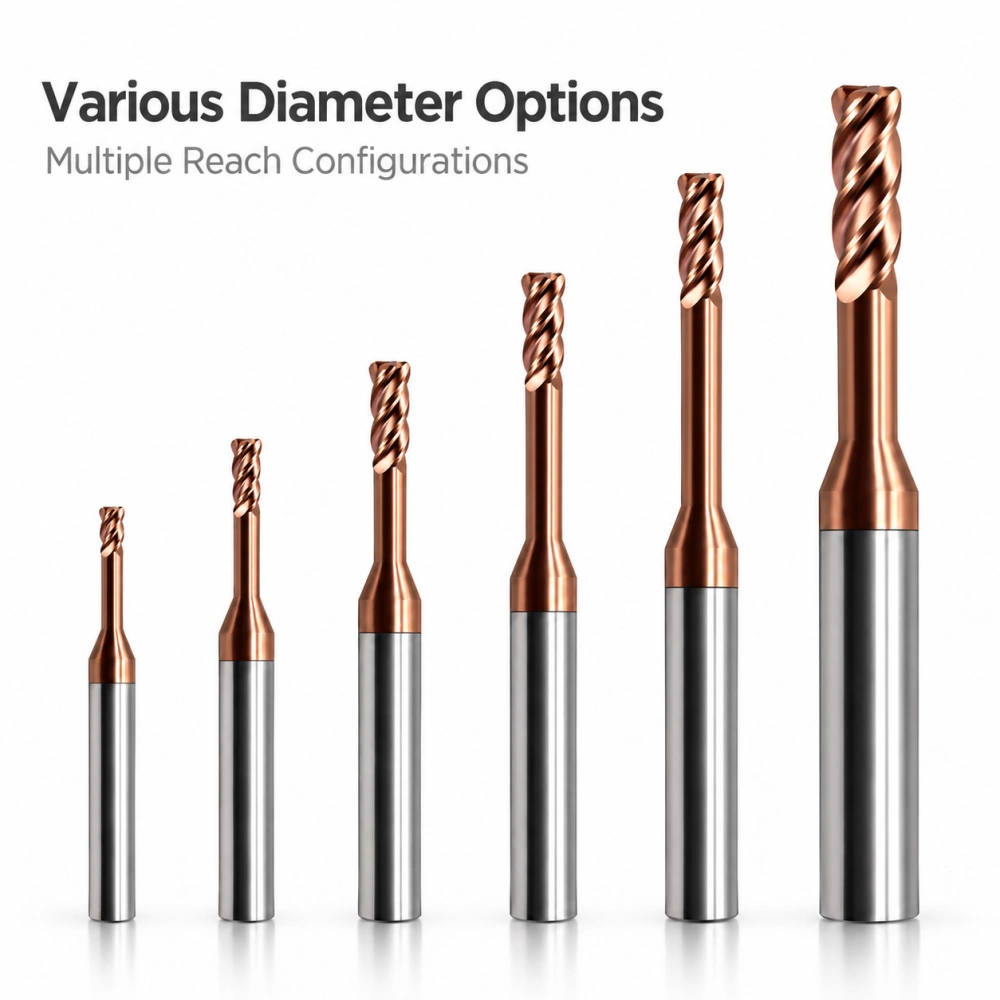
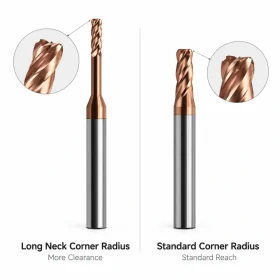
Long Neck Corner Radius End Mill Specifications
A long neck corner radius end mill combines a defined corner radius with an extended neck section for machining features that require additional reach and clearance.
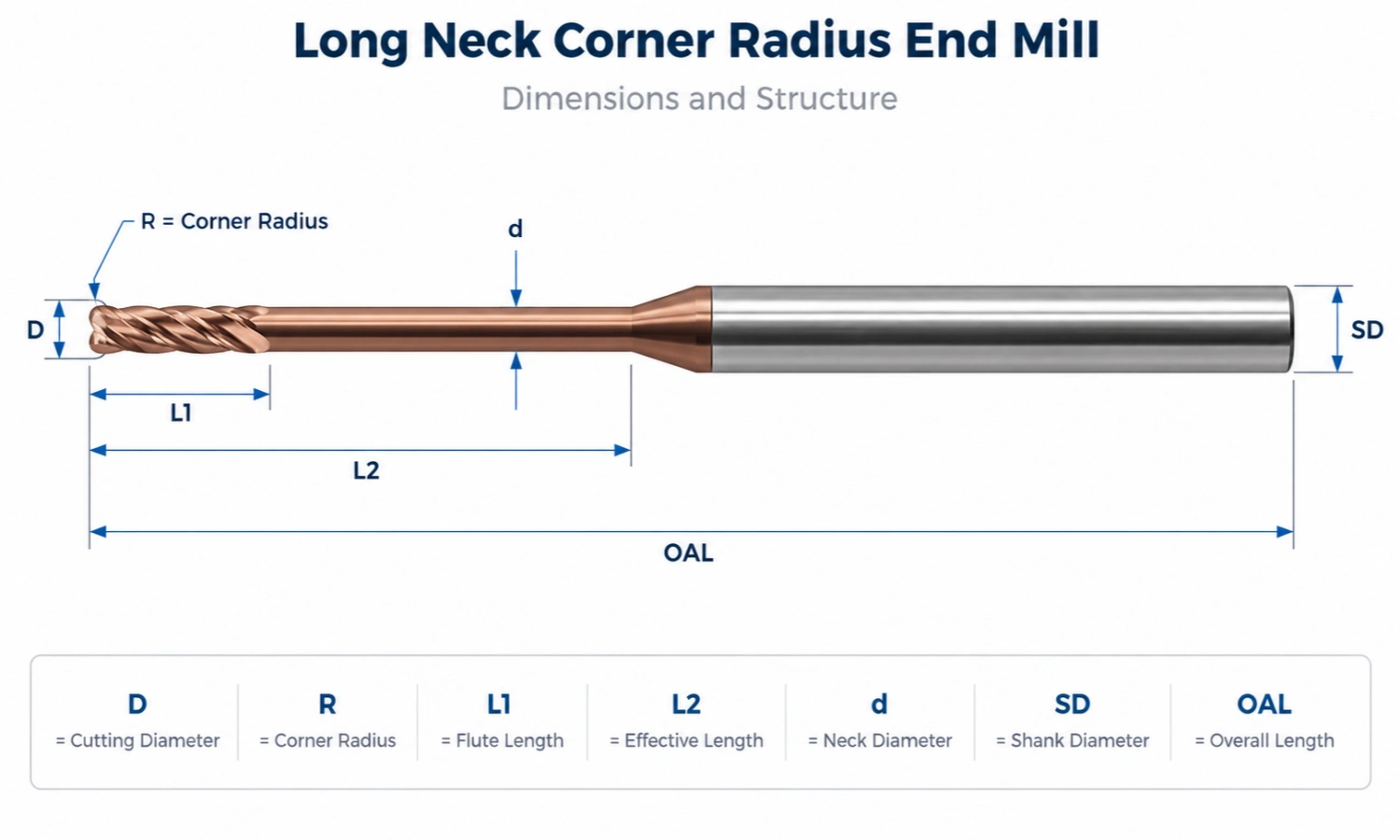
The catalog includes multiple combinations of cutting diameter, 코너 반경, 플루트 길이, effective length and neck diameter. Use the ranges below for initial selection rather than treating every dimension as freely interchangeable.
| 사양 | Catalog Range |
|---|---|
| 절단 직경 | Ø1.0–4.0 mm |
| 코너 반경 | R0.1 / R0.2 / R0.5 mm |
| 플루트 길이 (L1) | 1.5–6.0 mm |
| Effective Length (L2) | 4-30mm |
| 목 직경 | Ø0.95–3.9 mm |
| 생크 직경 | Ø4 / Ø6mm |
| 전체 길이 | 50 / 60 / 75 mm |
R0.1, R0.2 and R0.5 mm are discrete catalog radius options. Available cutting diameter, 반지름, L1, L2 and neck-diameter combinations depend on the selected catalog series and tool size.
For other extended-reach end geometries, 보다 Long Reach End Mills
For the broader small-diameter product range, 보다 마이크로 엔드밀.
Long Neck Clearance and Corner Radius Geometry
코너 반경 / Bull Nose Cutting Geometry
Corner-radius geometry keeps a flat-ended cutting profile while adding a defined radius between the end and side cutting edges.
In this product group, bull nose is a related name for the same general corner-radius geometry. The actual radius and tool dimensions should still be checked when selecting a specific model.
The confirmed standard radius options for this series are:
R0.1 / R0.2 / R0.5 mm
For general corner-radius or bull-nose milling where additional neck clearance is not required, 보다 불 노즈 엔드밀.
Long Neck Clearance for Restricted Features
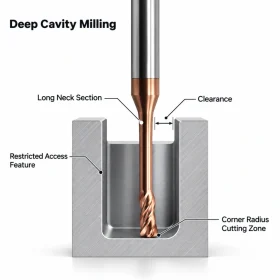
The extended neck creates additional clearance between the cutting section and the larger shank area. This helps the tool reach recessed features where surrounding walls, shoulders or other workpiece geometry could interfere with a standard-reach tool.
Long neck and long reach are closely related market terms, but the product name alone should not determine tool selection. Check the cutting diameter, effective length and neck diameter against the actual feature geometry.
Where a selected catalog model has a neck diameter smaller than its cutting diameter, the smaller neck section provides additional clearance. This relationship should be confirmed for the selected size rather than assumed across the entire series.
절단 직경, Corner Radius and Effective Length Selection
Cutting Diameter and Corner Radius Options
Start with the cutting diameter according to the groove, pocket or feature the cutter must enter. Choose a diameter that fits the required machining area and part geometry.
Then select the corner radius according to the required radiused transition. This catalog series provides three confirmed options:
R0.1 mm / R0.2 mm / R0.5 mm
These are discrete catalog options, not a continuous R0.1–0.5 mm range.
Confirm the cutting diameter and corner radius together because not every diameter and radius combination is available with every L1, L2 or neck diameter.
If the feature requires square / flat geometry without a corner radius, 보다 Long Neck Square End Mill.
If the feature requires ball-end geometry instead, 보다 Long Reach Ball Nose End Mill.
Effective Length and Neck Diameter
Effective Length (L2) becomes important when the cutting area sits deeper inside a groove, 공동, pocket or other recessed feature.
A longer L2 provides additional access, while the neck diameter determines the available clearance around the tool between the cutting section and surrounding workpiece geometry.
플루트 길이 (L1) represents the cutting-edge length and should be checked separately from L2. A longer effective length does not automatically mean a longer cutting edge.
Because cutting diameter, L1, L2 and neck-diameter combinations vary by catalog size, confirm these dimensions together when selecting a tool.
If the required combination does not match a standard catalog size, send a drawing or sketch for review before quotation.
Applications for Long Neck Corner Radius End Mills
Deep Grooves, Cavities and Pockets
Long neck corner radius end mills suit deep or restricted features that require both additional access and corner-radius cutting geometry.
Typical applications can include deep groove milling, deep cavity milling, deep pocket milling, narrow pockets and other restricted-access features where a standard tool body does not provide enough clearance.
The long-neck section allows the cutting end to reach the required machining area while keeping the larger tool body away from surrounding geometry.
Tool selection should follow the actual feature depth, available clearance, cutting diameter and required corner radius rather than simply choosing the longest available configuration.
Flat Bottoms and Radiused Internal Corners
This geometry is useful when the machined feature requires a flat-bottom area together with a radiused transition between the bottom and side wall.
The corner radius distinguishes it from a sharp square-end tool, while the long-neck structure provides additional access for deeper features.
For internal corner-radius machining, confirm both the required radius and available tool clearance against the workpiece geometry before selecting the catalog size.
Long Neck Corner Radius End Mill vs Standard-Reach Bull Nose End Mill
Both tools use corner-radius / bull-nose cutting geometry. The main difference is the reach and clearance available around the tool.
| 선택 포인트 | Difference |
|---|---|
| 끝 형상 | Both use Corner Radius / Bull Nose geometry |
| 도달하다 | Long-neck versions provide extended access; standard-reach tools suit normally accessible features |
| Neck Clearance | Long-neck configurations provide additional clearance around recessed features |
| 일반적인 사용 | Long-neck tools suit deeper or restricted features; standard-reach tools suit features with normal access |
Choose a standard-reach bull nose end mill when the tool body can reach the feature without interference.
Choose a long neck corner radius end mill when the same corner-radius geometry is required deeper inside the workpiece or when additional neck clearance is necessary.
Custom Long Neck Corner Radius End Mills
Standard catalog sizes cover multiple combinations of cutting diameter, 코너 반경, 플루트 길이, effective length, 목 직경, 생크 직경 및 전체 길이.
For non-standard long-neck or long-reach corner-radius requirements, send a drawing or sketch showing the required dimensions. We can review the requested configuration before quotation and assess manufacturing feasibility.
Custom sizes and configurations are subject to drawing review and manufacturing feasibility.
FAQ
Are long neck and long reach corner radius end mills the same?
The terms often describe similar extended-access tool concepts, but naming can vary. Check the cutting diameter, effective length, neck diameter and other dimensions when selecting a specific tool instead of relying only on the product name.
Is a corner radius end mill also called a bull nose end mill?
Bull nose is commonly used for corner-radius end mill geometry. 하지만, naming can vary between suppliers, so confirm the actual end geometry and corner radius when selecting a tool.
How do I choose the cutting diameter, corner radius and effective length?
Start with the feature size to determine the cutting diameter. Then select the required corner radius and check Effective Length (L2) against the required reach.
Also confirm the neck diameter against the available side clearance.
When should I choose a long neck corner radius end mill instead of a standard-reach bull nose end mill?
Choose the long-neck version when the feature requires additional reach or neck clearance. If the machining area is normally accessible, a standard-reach bull nose end mill may be sufficient.
Can you manufacture a custom long neck corner radius end mill from a drawing?
We can review non-standard cutting diameter, 코너 반경, 플루트 길이, effective length, 목 직경, shank diameter and overall length requirements based on your drawing or sketch.
Send Your Long Neck Corner Radius End Mill Inquiry
Send your long neck corner radius end mill inquiry by email, or contact us on 왓츠앱.