 หัวกัดที่มีความแม่นยํา,เครื่องมือตัดสําหรับเครื่องจักรกลซีเอ็นซีทุกวัสดุ

เม็ดมีด APMT และ APKT เป็นทั้งกลุ่มเม็ดมีดกัดแบบเปลี่ยนเม็ดมีดได้ ซึ่งใช้กับตัวหัวกัด CNC ที่ใช้งานร่วมกันได้. อาจสนับสนุนการดำเนินการที่คล้ายกัน, รวมถึงการกัดปาดหน้า, การกัดไหล่, การกัดแบบขั้นตอน, และการกำจัดโลหะทั่วไป. อย่างไรก็ตาม, เรขาคณิตของพวกเขา, ใส่ที่นั่ง, การออกแบบที่ล้ำสมัย, คำต่อท้ายโมเดล, และหัวกัดที่เข้ากันได้อาจแตกต่างกัน.
ดังนั้น, เม็ดมีด APMT ไม่ควรแทนที่เม็ดมีด APKT โดยอัตโนมัติ, แม้ว่าผลิตภัณฑ์ทั้งสองจะมีรหัสขนาดเดียวกันก็ตาม, เช่น 1135 หรือ 1604. ผู้ซื้อควรยืนยันเครื่องหมายเม็ดมีดที่สมบูรณ์เสมอ, รุ่นตัวถังเครื่องตัด, ใส่กระเป๋า, ตำแหน่งสกรู, และรัศมีมุมที่ต้องการก่อนสั่งเปลี่ยน.
คู่มือนี้จะอธิบายความแตกต่างที่สำคัญระหว่างเม็ดมีดกัด APMT และ APKT. นอกจากนี้ยังแสดงวิธีการเลือกตัวเลือกที่ถูกต้องสำหรับตัวหัวกัดและการใช้งานตัดเฉือนของคุณ.
โดยรวม, ควรเปรียบเทียบเม็ดมีด APMT กับ APKT ในรุ่นที่สมบูรณ์, ความเข้ากันได้ของตัวเครื่องตัด, และข้อกำหนดด้านการตัดเฉือนมากกว่ารูปลักษณ์ภายนอกเพียงอย่างเดียว.
ส่วนแทรก APMT คืออะไร?
เม็ดมีด APMT คือเม็ดมีดกัดคาร์ไบด์แบบเปลี่ยนเม็ดมีดได้ ซึ่งออกแบบมาสำหรับตัวหัวกัดสไตล์ APMT ที่เข้ากันได้. ขึ้นอยู่กับรุ่นและผู้ผลิตที่สมบูรณ์, อาจใช้กับดอกเอ็นมิลล์แบบจัดทำดัชนีได้, หัวกัดบ่าฉาก, โรงสีหน้า, และเครื่องมือกัด CNC อื่นๆ.
เม็ดมีด APMT ทั่วไปจะมีรูตรงกลาง, คมตัด, พื้นผิวที่ขึ้นรูปเป็นชิป, พื้นผิวการกวาดล้าง, และเรขาคณิตมุม. อย่างไรก็ตาม, โครงสร้างที่แน่นอนอาจแตกต่างกันไปตามขนาดของเม็ดมีด, ร่องคายเศษ, การเคลือบ, ระดับ, และคำต่อท้ายโมเดล.
ส่งผลให้, ผู้ซื้อไม่ควรระบุเม็ดมีดด้วยชื่อตระกูล APMT ทั่วไปเท่านั้น.
สำหรับครอบครัวเต็มรูปแบบ, ดูของเรา เม็ดมีด APMT.
การใช้งานเม็ดมีด APMT ทั่วไป
ผู้ปฏิบัติงาน CNC มักเลือกใช้เม็ดมีด APMT:
- การกัดปาดหน้า
- การกัดบ่า
- การกัดแบบขั้นบันได
- การตัดเฉือนผนังด้านข้าง
- การกัดโปรไฟล์
- การกัดหยาบทั่วไป
- กึ่งสำเร็จ
ผลลัพธ์ในการตัดเฉือนขั้นสุดท้ายจะขึ้นอยู่กับตระกูลเม็ดมีดมากกว่า. การออกแบบตัวเครื่องตัด, ความแข็งแกร่งของเครื่องจักร, ใส่เกรด, วัสดุชิ้นงาน, ความเร็วในการตัด, อัตราการป้อน, และสภาวะของน้ำหล่อเย็นก็ส่งผลต่อประสิทธิภาพเช่นกัน.
ขนาดเม็ดมีด APMT ทั่วไป
APMT1135 และ APMT1604 เป็นกลุ่มขนาดที่มีการค้นหาทั่วไปสองกลุ่ม. อย่างไรก็ตาม, ตัวเลขไม่ได้ให้ข้อมูลเพียงพอที่จะเลือกเม็ดมีดทดแทน.
ตัวอย่างเช่น, ผลิตภัณฑ์ APMT1135 สองรายการอาจใช้รัศมีมุมที่แตกต่างกัน, ร่องคายเศษ, การเคลือบ, หรือการเตรียมขอบ. ดังนั้น, ควรตรวจสอบการกำหนดรุ่นให้ครบถ้วน.
สำหรับตัวเลือก APMT ที่เล็กกว่า, ดูของเรา เม็ดมีดกัดคาร์ไบด์ APMT1135.
สำหรับรุ่นที่ใหญ่กว่า, ดูของเรา เม็ดมีดกัดคาร์ไบด์ APMT1604.
ส่วนแทรก APKT คืออะไร?
เม็ดมีด APKT ยังเป็นเม็ดมีดคาร์ไบด์แบบถอดเปลี่ยนได้ที่ใช้สำหรับการกัด CNC. ติดตั้งในตัวหัวกัดที่ออกแบบมาสำหรับกลุ่มเม็ดมีด APKT.
เช่นเดียวกับผลิตภัณฑ์ APMT, เม็ดมีด APKT มีจำหน่ายในขนาดต่างๆ, การเคลือบ, เกรดคาร์ไบด์, ร่องคายเศษ, และการกำหนดค่ามุม. ดังนั้น, เม็ดมีด APKT หนึ่งอันอาจทำงานแตกต่างจากผลิตภัณฑ์อื่นที่มีรหัสขนาดพื้นฐานใกล้เคียงกัน.
การมาร์กที่สมบูรณ์ยังคงมีความสำคัญเนื่องจากส่วนต่อท้ายอาจระบุการออกแบบขอบหรือการใช้งานที่เฉพาะเจาะจง.
สำหรับครอบครัวเต็มรูปแบบ, ดูของเรา ส่วนแทรก APKT.
แอปพลิเคชันแทรก APKT ทั่วไป
ขึ้นอยู่กับตัวหัวกัดและการออกแบบเม็ดมีด, ส่วนแทรก APKT อาจรองรับ:
- การกัดปาดหน้า
- การกัดบ่า
- ขั้นตอนการตัดเฉือน
- การกัดข้าง
- การตัดเฉือนโปรไฟล์
- การกำจัดโลหะทั่วไป
- การกัดหยาบและการเก็บผิวกึ่งละเอียด
แม้ว่าแอปพลิเคชันเหล่านี้จะทับซ้อนกับผลิตภัณฑ์ APMT, ตระกูลเม็ดมีดทั้งสองตระกูลไม่ควรถือว่าใช้แทนกันได้โดยอัตโนมัติ.
ขนาดเม็ดมีด APKT ทั่วไป
APKT1135 และ APKT1604 เป็นกลุ่มผลิตภัณฑ์ทั่วไป. อย่างไรก็ตาม, หัวกัดจะต้องตรงกับขนาดเม็ดมีดและรูปทรงที่เลือก.
สำหรับตัวเลือกที่เล็กกว่า,ดูของเรา APKT1135 เม็ดมีดกัดคาร์ไบด์.
สำหรับตัวเลือกที่ใหญ่กว่า, ดูของเรา APKT1604 เม็ดมีดกัดคาร์ไบด์.
เม็ดมีด APMT กับ APKT: ความแตกต่างหลัก
ตารางด้านล่างนี้เป็นการเปรียบเทียบเชิงปฏิบัติ. เนื่องจากข้อกำหนดแตกต่างกันไปตามผู้ผลิต, ผู้ซื้อควรถือเป็นแนวทางในการเลือกมากกว่ามาตรฐานทางเทคนิคสากล.
เมื่อเปรียบเทียบเม็ดมีด APMT กับ APKT, ความเข้ากันได้ของตัวหัวกัดมักจะมีความสำคัญมากกว่าความคล้ายคลึงกันของรหัสขนาด.
| จุดเปรียบเทียบ | เม็ดมีด APMT | ส่วนแทรก APKT |
| ใส่ครอบครัว | ซีรีส์โมเดล APMT | ซีรีส์โมเดล APKT |
| การใช้งานทั่วไป | การใช้งานกัดแบบถอดเปลี่ยนเม็ดมีดได้ทั่วไป | การใช้งานกัดแบบถอดเปลี่ยนเม็ดมีดได้ทั่วไป |
| การดำเนินงานทั่วไป | ใบหน้า, ไหล่, ขั้นตอน, และการกัดโปรไฟล์ | ใบหน้า, ไหล่, ขั้นตอน, และการกัดโปรไฟล์ |
| ตัวเครื่องตัด | ต้องมีช่องใส่เม็ดมีดที่รองรับ APMT | ต้องมีช่องใส่เม็ดมีดที่รองรับ APKT |
| กลุ่มขนาดทั่วไป | 1135 และ 1604 | 1135 และ 1604 |
| รูปทรงการตัด | ขึ้นอยู่กับรุ่นและผู้ผลิตที่สมบูรณ์ | ขึ้นอยู่กับรุ่นและผู้ผลิตที่สมบูรณ์ |
| คำต่อท้ายโมเดล | อาจบ่งบอกถึงร่องคายเศษ, ขอบ, ระดับ, หรือการออกแบบซัพพลายเออร์ | อาจบ่งบอกถึงร่องคายเศษ, ขอบ, ระดับ, หรือการออกแบบซัพพลายเออร์ |
| วิธีการทดแทน | ยืนยันการมาร์กและตัวเครื่องตัดแบบเต็ม | ยืนยันการมาร์กและตัวเครื่องตัดแบบเต็ม |
| ความสามารถในการเปลี่ยนกันได้ | ไม่สามารถแลกเปลี่ยนกับ APKT ได้โดยอัตโนมัติ | ไม่สามารถแลกเปลี่ยนกับ APMT ได้โดยอัตโนมัติ |
ความแตกต่างที่สำคัญที่สุดคือความเข้ากันได้. แม้ว่าส่วนแทรกทั้งสองจะดูคล้ายกันก็ตาม, ความแตกต่างเล็กน้อยในช่องใส่ของ, รูตรงกลาง, พื้นผิวการกวาดล้าง, และตำแหน่งการจับยึดอาจขัดขวางการติดตั้งที่ถูกต้อง.
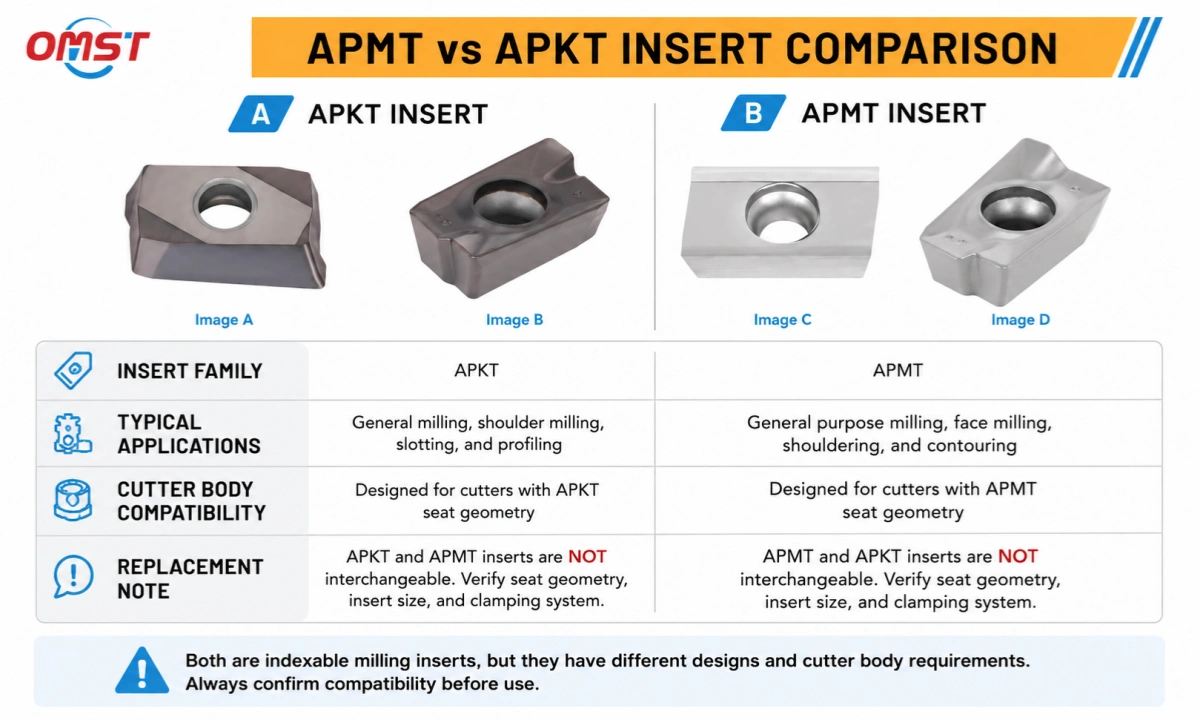
รูปทรงเม็ดมีดและการออกแบบที่ล้ำสมัย
รูปทรงเม็ดมีดส่งผลต่อแรงต้านทานการตัด, การไหลของชิป, ความแข็งแรงของขอบ, คุณภาพพื้นผิว, และอายุการใช้งานของเครื่องมือ. ดังนั้น, ควรจับคู่กับตัวเครื่องตัดและสภาพการตัดเฉือน.
รูปทรงเม็ดมีด APMT
เม็ดมีด APMT อาจรวมถึง:
- คมตัดที่ใช้งานได้ตั้งแต่หนึ่งอันขึ้นไป
- พื้นผิวที่ขึ้นรูปเป็นเศษ
- มีรูตรงกลางสำหรับหนีบ
- พื้นผิวการกวาดล้าง
- เรขาคณิตมุมที่กำหนด
- พื้นผิวการตัดแบบเคลือบหรือไม่เคลือบ
อย่างไรก็ตาม, ไม่สามารถยืนยันรูปทรงที่สมบูรณ์ได้จากชื่อ APMT เพียงอย่างเดียว. ต้องตรวจสอบรหัสขนาดและส่วนต่อท้ายด้วย.
APKT แทรกเรขาคณิต
เม็ดมีด APKT ใช้รูปทรงในตระกูลของตัวเอง และได้รับการออกแบบเพื่อให้เข้าคู่กับช่องใส่หัวกัด APKT. ร่องคายเศษของพวกเขา, การเตรียมขอบ, มุมกวาดล้าง, และรูปทรงมุมอาจแตกต่างกันไปตามรุ่น.
ดังนั้น, ผู้ซื้อควรเปรียบเทียบเม็ดมีดที่มีอยู่กับข้อกำหนดการเปลี่ยนแทนโดยตรง แทนที่จะอาศัยเพียงรูปถ่ายผลิตภัณฑ์.
ทำไมเรื่องต่อท้ายรูปแบบ
คำต่อท้ายหลัง APMT หรือ APKT อาจระบุความแตกต่างได้:
- การออกแบบร่องคายเศษ
- การเตรียมการที่ล้ำสมัย
- วัสดุชิ้นงานที่ต้องการ
- เกรดเคลือบหรือคาร์ไบด์
- ทิศทางการตัด
- รูปทรงเฉพาะของผู้ผลิต
ตัวอย่างเช่น, PDFR, พีดีอาร์, ปริญญาโท, และไม่ควรถือว่า M2L มีความหมายเหมือนกันในซัพพลายเออร์ทุกราย. นอกจากนี้, ส่วนต่อท้ายที่ใช้โดยผู้ผลิตรายหนึ่งอาจไม่ตรงกับระบบการตั้งชื่อของผู้ผลิตรายอื่น.
ด้วยเหตุนี้, ควรบันทึกเครื่องหมายเม็ดมีดที่สมบูรณ์ก่อนที่จะสั่งเปลี่ยน.
ความเข้ากันได้ของตัวเครื่องตัดและช่องใส่เม็ดมีด
ตัวหัวกัดจะกำหนดตระกูลเม็ดมีดใด, ขนาด, และสามารถใช้โครงสร้างหนีบได้. ดังนั้น, โดยปกติแล้วจะเป็นจุดเริ่มต้นที่ดีที่สุดสำหรับการเลือกเม็ดมีด.
ก่อนที่จะเลือกระหว่าง APMT และ APKT, ตรวจสอบ:
- รุ่นตัวคัตเตอร์
- ใส่รูปทรงกระเป๋า
- ตำแหน่งสกรูตัวกลาง
- การทำเครื่องหมายเม็ดมีดที่มีอยู่
- ใส่ความยาวและความกว้าง
- ใส่ความหนา
- รัศมีมุม
- การวาดภาพของผู้ผลิต
ส่วนแทรกที่มีขนาดใหญ่เกินไป, เล็กเกินไป, หรือนั่งไม่ถูกต้องอาจยึดไม่แน่น. นอกจากนี้, การสัมผัสที่ไม่ดีระหว่างเม็ดมีดและช่องกระเป๋าอาจส่งผลต่อการเบี่ยงเบนหนีศูนย์, การสั่นสะเทือน, การตกแต่งพื้นผิว, และชีวิตที่ล้ำสมัย.
ควรทำความสะอาดช่องใส่เม็ดมีดก่อนการติดตั้ง. ควรตรวจสอบสกรูและช่องกระเป๋าว่ามีความเสียหายหรือไม่.
เม็ดมีด APMT และ APKT สามารถสับเปลี่ยนกันได้?
ในทางปฏิบัติ, เม็ดมีด APMT กับ APKT ไม่สามารถใช้แทนกันได้โดยอัตโนมัติ เว้นแต่จะได้รับการยืนยันจากผู้ผลิตตัวหัวกัด, การวาดภาพทางเทคนิค, หรือการตรวจร่างกาย.
อย่าเลือกเม็ดมีดทดแทนเพียงเพราะว่า:
- สินค้ามีลักษณะคล้ายกัน
- ทั้งสองรุ่นประกอบด้วย 1135
- ทั้งสองรุ่นประกอบด้วย 1604
- ความยาวโดยรวมก็ดูใกล้เคียงกัน
- รูตรงกลางมีลักษณะเหมือนกัน
ความแตกต่างด้านมิติหรือเรขาคณิตเล็กน้อยอาจทำให้ไม่สามารถจัดที่นั่งได้อย่างถูกต้อง. นอกจากนี้, คมตัดอาจไม่ถึงตำแหน่งที่ต้องการหลังการติดตั้ง.
ดังนั้น, ผู้ซื้อควรจัดเตรียมรุ่นตัวหัวกัดและเครื่องหมายเม็ดมีดที่มีอยู่ให้ครบถ้วนทุกครั้งที่เป็นไปได้.
APMT1135 กับ APKT1135
APMT1135 และ APKT1135 ทั้งคู่มี 1135 รหัสขนาด. อย่างไรก็ตาม, พวกเขาอยู่ในตระกูลเม็ดมีดที่แตกต่างกัน.
ความแตกต่างอาจรวมถึง:
- ใส่การออกแบบที่นั่ง
- พื้นผิวกวาดล้าง
- รูปทรงเรขาคณิตที่ล้ำสมัย
- โครงสร้างรูตรงกลาง
- ร่องคายเศษ
- รัศมีมุม
- ตัวเครื่องตัดที่เข้ากันได้
ที่แบ่งปัน 1135 รหัสไม่ยืนยันการใช้แทนกันได้. ดังนั้น, ควรตรวจสอบช่องคัตเตอร์และส่วนต่อท้ายที่สมบูรณ์.
APMT1604 กับ APKT1604
APMT1604 และ APKT1604 เป็นกลุ่มเม็ดมีดที่มีขนาดใหญ่กว่าตามลำดับ 1135 รุ่นต่างๆ. แต่ถึงอย่างไร, พวกเขายังคงเป็นของครอบครัวรุ่นที่แตกต่างกัน.
ผู้ซื้อควรเปรียบเทียบ:
- ขนาดโดยรวม
- ใส่ความหนา
- รูตรงกลาง
- ตำแหน่งสกรู
- รุ่นตัวคัตเตอร์
- เรขาคณิตของขอบ
- รัศมีมุมที่ต้องการ
- ส่วนต่อท้ายโมเดลที่มีอยู่
แม้ว่าทั้งสองรุ่นจะประกอบไปด้วย 1604, อาจพอดีกับตัวหัวกัดที่แตกต่างกันและรองรับการออกแบบช่องเม็ดมีดที่แตกต่างกัน.
APMT1135 กับ APMT1604
APMT1135 และ APMT1604 อยู่ในกลุ่มเม็ดมีดทั่วไปกลุ่มเดียวกัน, แต่ใช้ขนาดต่างกัน.
โดยทั่วไปตัวเลือกที่ถูกต้องจะขึ้นอยู่กับตัวหัวกัดที่ใช้งานอยู่. อาจติดตั้งเม็ดมีดที่มีขนาดใหญ่กว่าในตัวหัวกัดซึ่งออกแบบมาเพื่อรับแรงตัดที่สูงขึ้นหรือมีเส้นผ่านศูนย์กลางหัวกัดที่แตกต่างกัน. อย่างไรก็ตาม, สิ่งนี้ไม่ควรถือเป็นกฎสากล.
รุ่นของตัวหัวกัดยังคงมีความสำคัญมากกว่าขนาดเม็ดมีดเพียงอย่างเดียว.
APKT1135 กับ APKT1604
หลักการเดียวกันนี้ใช้กับ APKT1135 และ APKT1604.
ผู้ซื้อควรคำนึงถึง:
- เส้นผ่านศูนย์กลางคัตเตอร์
- ใส่ขนาดกระเป๋าได้
- พื้นที่การตัดเฉือนที่มีอยู่
- กำลังตัด
- วัสดุชิ้นงาน
- คุณภาพพื้นผิวที่ต้องการ
- ตัวเครื่องตัดที่มีอยู่
ไม่สามารถติดตั้งเม็ดมีด APKT1604 ในกระเป๋า APKT1135 ได้เพียงเพราะผลิตภัณฑ์ทั้งสองอยู่ในตระกูล APKT.
เม็ดมีดใดดีกว่าสำหรับการกัดปาดหน้า?
กลุ่มเม็ดมีดทั้งสองตระกูลจะไม่เหมาะกับการกัดปาดหน้าทุกรูปแบบโดยอัตโนมัติ.
ตัวเลือกที่เหมาะสมกว่านั้นขึ้นอยู่กับ:
- การออกแบบตัวเครื่องตัด
- วัสดุชิ้นงาน
- เกรดคาร์ไบด์
- การเคลือบ
- จำนวนฟันตัด
- ความเร็วในการตัด
- ฟีดต่อฟัน
- ความแข็งแกร่งของเครื่องจักร
- ข้อกำหนดการตกแต่งพื้นผิว
ตัวอย่างเช่น, ตัวหัวกัดที่มั่นคงพร้อมช่องใส่เม็ดมีดที่ถูกต้องอาจให้ผลลัพธ์ที่ดีกว่าเม็ดมีดที่เข้าคู่กันอย่างไม่ถูกต้องและมีการเคลือบขั้นสูงกว่า.
ดังนั้น, ผู้ซื้อควรยืนยันตัวหัวกัดก่อน จากนั้นเลือกเกรดเม็ดมีดและรูปทรง.
เม็ดมีดใดดีกว่าสำหรับการกัดบ่า?
ทั้งเม็ดมีด APMT และ APKT สามารถใช้สำหรับการกัดบ่าฉากได้ เมื่อติดตั้งเข้ากับหัวกัดที่เข้ากันได้.
อย่างไรก็ตาม, ความแม่นยำของบ่าขึ้นอยู่กับการประกอบเครื่องมือที่สมบูรณ์. ก็อาจได้รับผลกระทบจาก:
- รูปทรงของตัวคัตเตอร์
- ใส่ตำแหน่ง
- การหมดของเครื่องตัด
- ใส่สภาพเบาะนั่ง
- ความแข็งแกร่งของเครื่องจักร
- กำลังตัด
- การออกแบบขอบ
นอกจากนี้, ไม่ใช่ว่าตัวเครื่องตัดทุกตัวจะสร้างไหล่ 90 องศาที่แม่นยำ. มุมผนังและโปรไฟล์ด้านล่างจริงควรได้รับการยืนยันจากข้อกำหนดเฉพาะของเครื่องตัด.
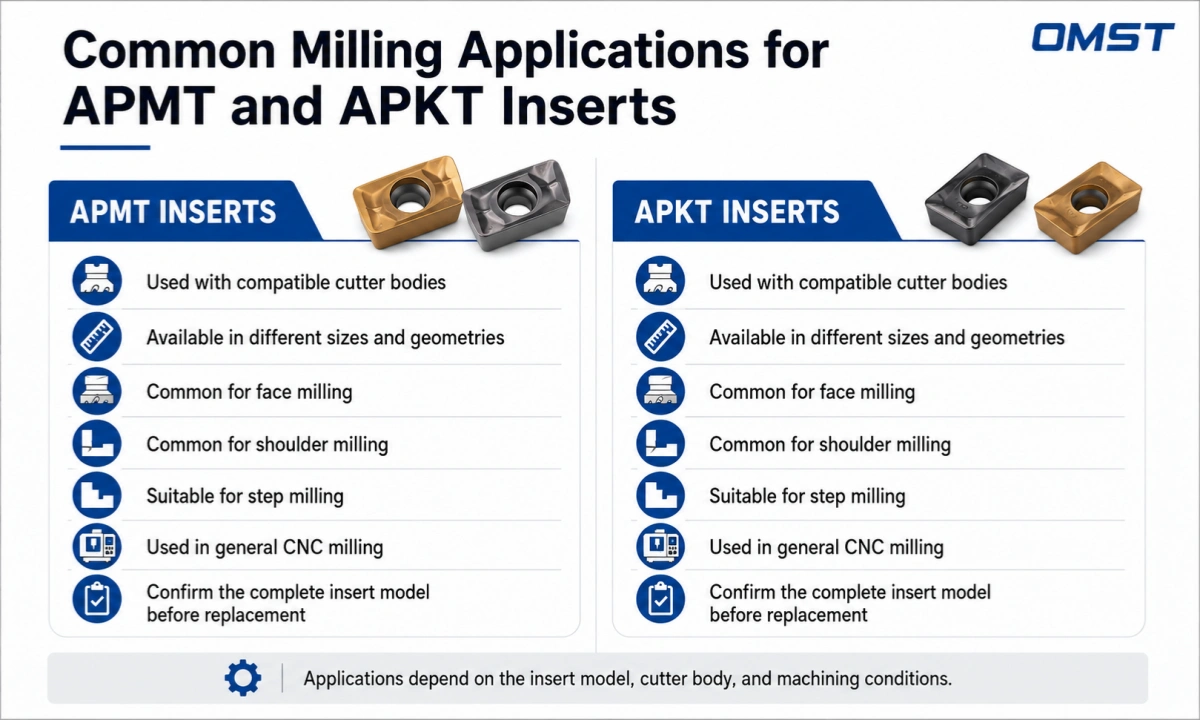
เม็ดมีด APMT กับ APKT: วิธีการเลือกประเภทที่เหมาะสม
กระบวนการคัดเลือกในทางปฏิบัติสามารถลดความเสี่ยงในการสั่งซื้อผลิตภัณฑ์ที่ไม่ถูกต้องได้.
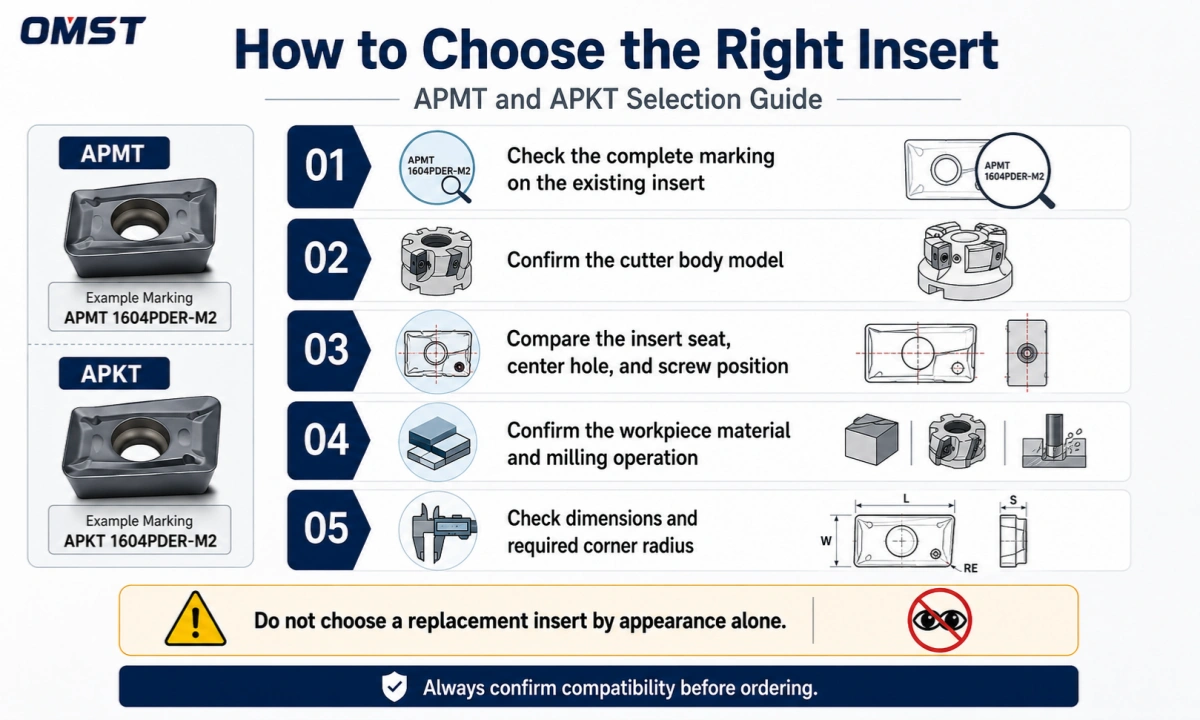
ตรวจสอบเครื่องหมายเม็ดมีดที่สมบูรณ์
บันทึกตัวอักษรและตัวเลขทั้งหมดที่ปรากฏในส่วนแทรกที่มีอยู่.
อย่าบันทึกเท่านั้น:
- APMT1135
- APMT1604
- APKT1135
- APKT1604
อาจจำเป็นต้องใช้คำต่อท้ายเพื่อระบุร่องหักเศษที่ถูกต้อง, การออกแบบขอบ, หรือใบสมัคร.
ยืนยันรุ่นตัวเครื่องตัด
ตรวจสอบการแกะสลักบนตัวเครื่องตัด, ที่ใส่เครื่องมือ, หัวตัด, หรือบรรจุภัณฑ์เดิม.
รุ่นตัวหัวกัดมักจะให้ข้อมูลความเข้ากันได้ที่ดีกว่ารูปภาพเม็ดมีด.
ตรวจสอบช่องใส่เม็ดมีดและตำแหน่งสกรู
เปรียบเทียบรูปทรงช่องใส่เม็ดมีด, รูตรงกลาง, สกรูยึด, และพื้นผิวที่นั่ง.
ถ้าเป็นไปได้, ให้รูปถ่ายที่ชัดเจนของ:
- ส่วนแทรกที่มีอยู่
- กระเป๋าใส่ที่ว่างเปล่า
- การทำเครื่องหมายตัวเครื่องตัด
- สกรูยึด
ยืนยันวัสดุชิ้นงาน
วัสดุที่แตกต่างกันมีความต้องการด้านคมตัดที่แตกต่างกัน.
กลุ่มชิ้นงานทั่วไป ได้แก่:
- เหล็กกล้าคาร์บอน
- โลหะผสมเหล็ก
- สแตนเลส
- เหล็กหล่อ
- อลูมิเนียม
- ทองแดงและทองเหลือง
- วัสดุชุบแข็ง
เกรดคาร์ไบด์, การเคลือบ, และร่องคายเศษควรตรงกับวัสดุและสภาพการตัดเฉือน.
ระบุการดำเนินการกัด
ยืนยันว่าการดำเนินการเกี่ยวข้องกับหรือไม่:
- การกัดปาดหน้า
- การกัดบ่า
- การกัดแบบขั้นบันได
- การกัดข้าง
- การกัดโปรไฟล์
- การกัดหยาบ
- กึ่งสำเร็จ
- การตัดขัดจังหวะ
ข้อมูลนี้ช่วยพิจารณาว่าอาจจำเป็นต้องใช้คมตัดที่แข็งแรงขึ้นหรือรูปทรงที่คมชัดขึ้น.
ยืนยันรัศมีมุม
รัศมีมุมอาจแตกต่างกันไปตามขนาดเม็ดมีดพื้นฐานเดียวกัน.
ดังนั้น, ผู้ซื้อควรระบุรัศมีที่ต้องการหรือแบบจำลองที่มีอยู่ให้ครบถ้วน. รัศมีที่ไม่ถูกต้องอาจส่งผลต่อรูปทรงของชิ้นส่วนได้, การตกแต่งพื้นผิว, และสต๊อกเหลือตามมุม.
ตรวจสอบเงื่อนไขการตัด
ข้อมูลต่อไปนี้สามารถปรับปรุงการเลือกเม็ดมีดได้:
| ข้อมูล | ทำไมมันถึงสำคัญ |
| ความแข็งแกร่งของเครื่องจักร | ส่งผลต่อการสั่นสะเทือนและความเสถียรของขอบ |
| ความเร็วในการตัด | ส่งผลต่อความร้อนและการสึกหรอ |
| อัตราการป้อน | ส่งผลต่อความหนาของเศษและภาระการตัด |
| ความลึกของการตัดตามแนวแกน | มีอิทธิพลต่อการมีส่วนร่วมของขอบ |
| การหมั้นในแนวรัศมี | ส่งผลต่อแรงตัดและการเกิดเศษ |
| สภาพน้ำหล่อเย็น | ส่งผลต่อความร้อนและการคายเศษ |
| การตัดขัดจังหวะ | อาจต้องใช้คมตัดที่แข็งกว่านี้ |
| ความต้องการพื้นผิว | ช่วยระบุความต้องการในการกัดหยาบหรือการเก็บผิวละเอียด |
ควรทดสอบพารามิเตอร์การตัดเบื้องต้นอย่างระมัดระวัง. แล้ว, สามารถปรับได้ตามการสึกหรอของเครื่องมือ, โหลดแกนหมุน, รูปร่างชิป, การสั่นสะเทือน, และคุณภาพพื้นผิว.
ข้อผิดพลาดทั่วไปในการเลือก APMT และ APKT
การเลือกส่วนแทรกตามลักษณะที่ปรากฏเพียงอย่างเดียว
เม็ดมีดกัดแบบเปลี่ยนเม็ดมีดได้หลายตัวจะมีรูปทรงสี่เหลี่ยมหรือสี่เหลี่ยมด้านขนานคล้ายกัน. อย่างไรก็ตาม, ความแตกต่างเล็กน้อยในเรขาคณิต, ตำแหน่งรู, หรือพื้นผิวที่นั่งอาจส่งผลต่อการหนีบและความเข้ากันได้ของเครื่องตัด.
การเลือกเฉพาะโดย 1135 หรือ 1604 รหัส
รหัสขนาดเป็นเพียงส่วนหนึ่งของการกำหนดเม็ดมีดที่สมบูรณ์เท่านั้น. ไม่ได้ยืนยันตระกูลส่วนแทรก, รัศมีมุม, ร่องคายเศษ, เกรดคาร์ไบด์, หรือตัวเครื่องตัดที่เข้ากันได้.
ละเว้นคำต่อท้ายแบบจำลอง
ส่วนต่อท้ายอาจระบุความแตกต่างที่สำคัญในเรขาคณิต, การเตรียมการที่ล้ำสมัย, การออกแบบร่องคายเศษ, หรือใบสมัคร. ดังนั้น, ผู้ซื้อควรใส่ส่วนต่อท้ายให้ครบถ้วนเมื่อส่งคำถาม.
การใช้ตัวเครื่องตัดไม่ถูกต้อง
ช่องใส่เม็ดมีดที่เข้ากันไม่ได้อาจทำให้เม็ดมีดเสียหายระหว่างการติดตั้งหรือการตัดเฉือน. นอกจากนี้, การใส่ที่ไม่ถูกต้องอาจทำให้ตัวเครื่องตัดเสียหายได้, สกรูยึด, หรือใส่เบาะนั่ง.
การคัดลอกพารามิเตอร์การตัดโดยตรง
พารามิเตอร์การตัดจากเครื่องจักรหรือซัพพลายเออร์อื่นอาจไม่ตรงกับชิ้นงานจริง, เส้นผ่านศูนย์กลางของเครื่องตัด, ส่วนที่ยื่นออกมาของเครื่องมือ, สภาพน้ำหล่อเย็น, หรือความแข็งแกร่งของเครื่องจักร.
ด้วยเหตุนี้, ผู้ปฏิบัติงาน CNC ควรปรับพารามิเตอร์ตามเงื่อนไขการตัดเฉือนจริงและประเมินการสึกหรอของเครื่องมือ, การสั่นสะเทือน, รูปร่างชิป, และคุณภาพพื้นผิว.
ข้อมูลที่จะส่งก่อนสั่งซื้อ
เพื่อยืนยันการแทรกที่ถูกต้อง, ให้ข้อมูลต่อไปนี้ให้มากที่สุด:
- ทำเครื่องหมายเม็ดมีดปัจจุบันให้สมบูรณ์
- รุ่นตัวคัตเตอร์
- ใส่รูปถ่ายที่นั่ง
- วัสดุชิ้นงาน
- ความแข็งของวัสดุ
- การทำงานของเครื่องจักร
- รัศมีมุมที่ต้องการ
- เงื่อนไขการตัด
- ปริมาณการสั่งซื้อ
- ข้อกำหนดด้านบรรจุภัณฑ์
ข้อมูลนี้ช่วยให้ซัพพลายเออร์ตรวจสอบความเข้ากันได้ก่อนเสนอราคาหรือจัดส่ง.
คำถามที่ถามบ่อย
อะไรคือความแตกต่างที่สำคัญระหว่างเม็ดมีด APMT และ APKT?
ซึ่งอยู่ในตระกูลเม็ดมีดกัดที่แตกต่างกันและอาจใช้รูปทรงที่แตกต่างกัน, ใส่ที่นั่ง, คมตัด, และตัวเครื่องตัดที่เข้ากันได้. ควรตรวจสอบรุ่นและตัวเครื่องตัดที่สมบูรณ์ก่อนเลือก.
เม็ดมีด APMT และ APKT สามารถใช้แทนกันได้?
ไม่โดยอัตโนมัติ. ควรสับเปลี่ยนหลังจากผู้ผลิตตัวเครื่องตัดเท่านั้น, การวาดภาพผลิตภัณฑ์, หรือการตรวจสอบทางเทคนิคยืนยันความเข้ากันได้.
ทำอะไร 1135 หมายถึงรุ่นเม็ดมีดกัด?
เป็นส่วนหนึ่งของการกำหนดขนาดเม็ดมีด. อย่างไรก็ตาม, มันไม่ได้ระบุเรขาคณิตที่สมบูรณ์, รัศมีมุม, ร่องคายเศษ, ระดับ, หรือตัวเครื่องตัดที่เข้ากันได้.
ทำอะไร 1604 หมายถึงรุ่นเม็ดมีดกัด?
และยังเป็นส่วนหนึ่งของการกำหนดขนาดเม็ดมีดด้วย. ผู้ซื้อยังคงต้องการกลุ่มเม็ดมีด, คำต่อท้ายแบบเต็ม, รุ่นตัวถังเครื่องตัด, และข้อมูลมิติ.
ส่วนต่อท้ายโมเดลส่งผลต่อความเข้ากันได้ของเม็ดมีดหรือไม่?
มันอาจจะ. ส่วนต่อท้ายสามารถระบุร่องหักเศษได้, คมตัด, แอปพลิเคชัน, ระดับ, หรือโครงสร้างเฉพาะของผู้ผลิต.
เม็ดมีดใดเหมาะสำหรับการกัดบ่าฉาก?
ทั้งสองตระกูลอาจรองรับการกัดบ่าฉากเมื่อจับคู่กับตัวหัวกัดที่เหมาะสม. ตัวเลือกที่ถูกต้องขึ้นอยู่กับการออกแบบเครื่องตัด, วัสดุ, สภาพการตัด, และรูปทรงไหล่ที่ต้องการ.
APMT และ APKT สามารถใส่เครื่องสแตนเลสได้หรือไม่?
รุ่นเคลือบและเกรดคาร์ไบด์ที่เหมาะสมอาจใช้กับสแตนเลสได้. อย่างไรก็ตาม, เกรดเม็ดมีด, ร่องคายเศษ, พารามิเตอร์การตัด, ความแข็งแกร่งของเครื่องจักร, และควรยืนยันสภาพของน้ำหล่อเย็น.
ฉันจะยืนยันรัศมีมุมของเม็ดมีดได้อย่างไร?
ตรวจสอบเครื่องหมายผลิตภัณฑ์แบบเต็ม, ภาพวาดของซัพพลายเออร์, บรรจุภัณฑ์เดิม, หรือข้อกำหนดที่วัดได้. รหัสตระกูลและขนาดพื้นฐานเพียงอย่างเดียวอาจไม่ยืนยันรัศมีได้.
ฉันจะระบุเม็ดมีดกัดที่ถูกต้องได้อย่างไร?
เริ่มต้นด้วยการมาร์กเม็ดมีดและรุ่นตัวหัวกัดที่สมบูรณ์. จากนั้นยืนยันขนาด, ใส่ที่นั่ง, รูตรงกลาง, ตำแหน่งสกรู, รัศมีมุม, วัสดุ, และการทำงานของเครื่องจักร.
ฉันควรให้ข้อมูลอะไรบ้างก่อนสั่งซื้อ?
ระบุเครื่องหมายแทรกปัจจุบัน, รุ่นตัวถังเครื่องตัด, ภาพถ่ายแทรกที่นั่ง, วัสดุชิ้นงาน, การประยุกต์ใช้เครื่องจักร, รัศมีมุมที่ต้องการ, และปริมาณการสั่งซื้อ.
การเปรียบเทียบเม็ดมีด APMT กับ APKT อย่างระมัดระวังสามารถลดปัญหาความเข้ากันได้ และช่วยให้ผู้ซื้อหลีกเลี่ยงการสั่งซื้อรุ่นเปลี่ยนทดแทนที่ไม่ถูกต้อง.
ขอความช่วยเหลือในการเลือกส่วนแทรก APMT หรือ APKT
การเลือกเม็ดมีดที่ถูกต้องนั้นต้องการมากกว่าการเปรียบเทียบชื่อรุ่นทั่วไปหรือรูปลักษณ์ของผลิตภัณฑ์.
กรุณาส่ง OMIST เครื่องหมายแทรกปัจจุบันของคุณ, รุ่นตัวถังเครื่องตัด, ภาพถ่ายแทรกที่นั่ง, วัสดุชิ้นงาน, การประยุกต์ใช้เครื่องจักร, รัศมีมุมที่ต้องการ, และปริมาณการสั่งซื้อ.
ทีมงานของเราจะช่วยตรวจสอบตระกูลเม็ดมีด, ขนาด, ความเข้ากันได้ของตัวเครื่องตัด, และตัวเลือกผลิตภัณฑ์ที่มีอยู่. หลังจากข้อมูลทางเทคนิคได้รับการยืนยันแล้ว, เราจะเสนอราคาตามความต้องการของคุณ.