 หัวกัดที่มีความแม่นยํา,เครื่องมือตัดสําหรับเครื่องจักรกลซีเอ็นซีทุกวัสดุ

คู่มือการเลือกดอกเอ็นมิลล์นี้จะอธิบายวิธีเลือกหัวกัดด้วยการตัดเฉือน, สิ้นสุดโปรไฟล์, วัสดุเครื่องมือ, การนับขลุ่ย, การเคลือบ, ขนาด, และการตั้งค่าเครื่อง. การเลือกเครื่องมือที่ไม่ถูกต้องอาจทำให้การคายเศษไม่ดี, พูดพล่อย, การสึกหรอของขอบอย่างรวดเร็ว, ข้อผิดพลาดมิติ, การแตกหักของเครื่องมือ, หรือการตกแต่งพื้นผิวที่ไม่สอดคล้องกัน.
คู่มือนี้เขียนขึ้นสำหรับช่างเครื่อง, วิศวกรกระบวนการ, workshop managers, ผู้จัดจำหน่าย, และผู้ซื้อที่ต้องการจุดเริ่มต้นที่เป็นประโยชน์ก่อนที่จะเลือกหรือขอดอกเอ็นมิลล์.
ดอกเอ็นมิลล์คืออะไร?
ดอกเอ็นมิลล์เป็นเครื่องมือตัดแบบหมุนที่ใช้สำหรับการเซาะร่อง, การแทง, การทําโปรไฟล์, การกัดข้าง, การหยาบ, ตกแต่ง, และรูปทรงสามมิติ. ต่างจากดอกสว่านมาตรฐาน, it can cut with both the end and outside cutting edges.
การออกแบบแบบตัดตรงกลางบางแบบรองรับการไล่ระดับ, รายการลาน, หรือการพรวดพราดอย่างจำกัด. อย่างไรก็ตาม, รูปทรงศูนย์กลางและวิธีการเข้าต้องเหมาะสมกับการทำงาน.
สำหรับคำอธิบายเบื้องต้น, อ่าน คัตเตอร์ดอกเอ็นมิลล์คืออะไร.
คู่มือการเลือกดอกเอ็นมิลล์ฉบับย่อ
ตารางด้านล่างแสดงคำแนะนำในการเริ่มต้นที่เป็นประโยชน์. การเลือกเครื่องมือขั้นสุดท้ายควรยังคงสะท้อนถึงเกรดชิ้นงาน, เส้นผ่านศูนย์กลางของเครื่องตัด, ความลึกของการตัด, สภาพผู้ถือ, ความแข็งแกร่งของเครื่องจักร, และวิธีการกำจัดเศษ.
| สถานการณ์การตัดเฉือน | ทิศทางเครื่องมือเริ่มต้น | เหตุผลหลัก |
|---|---|---|
| ช่องอลูมิเนียมหรือกระเป๋าลึก | 2–3 ขลุ่ย, ขอบคม, ขลุ่ยขัดเงา | พื้นที่ชิปเพิ่มขึ้นและความเสี่ยงในการบรรจุชิปลดลง |
| การกัดข้างเหล็กทั่วไป | 4 ฟัน, แกนกลางที่แข็งแกร่ง, เคลือบทนความร้อน | ความสมดุลของความแข็งแกร่ง, จำนวนขอบ, และการอพยพของเศษ |
| การกัดข้างหรือการตกแต่งด้วยสเตนเลสสตีล | 4–6 ขลุ่ย, เรขาคณิตแบบเกลียวแปรผันหรือเรขาคณิตระยะพิทช์ไม่เท่ากัน | ช่วยควบคุมการสั่นสะเทือน, ความร้อน, และการตัดไม่มั่นคง |
| การหยาบหนัก | จำนวนขลุ่ยที่ต่ำกว่าหรือปานกลาง, เรขาคณิตการกัดหยาบหรือร่องคายเศษ | พื้นที่เศษเพิ่มขึ้นและควบคุมภาระการตัด |
| ปิดท้ายด้วยการมีส่วนร่วมแบบเบาๆ | จำนวนขลุ่ยที่สูงขึ้นและรูปทรงที่มั่นคง | หน้าสัมผัสในการตัดมากขึ้น และปรับปรุงความสม่ำเสมอของพื้นผิว |
| ช่องและช่องกระเป๋าด้านล่างแบบแบน | ดอกเอ็นมิลล์แบบแบน | ทำให้ก้นแบนและผนังตรง |
| 3D รูปทรงและโพรงแม่พิมพ์ | ดอกเอ็นมิลล์บอลโนส | ปลายโค้งมนตามพื้นผิวโค้ง |
| การเก็บผิวกึ่งสำเร็จและมุมที่แข็งแกร่งยิ่งขึ้น | ดอกเอ็นมิลล์บูลโนสหรือมุมรัศมี | รัศมีเสริมความแข็งแกร่งให้กับมุมตัดด้านนอก |
| Deep Features with Limited Cutting Depth | เครื่องมือคอยาวที่มีความยาวร่องฟันขั้นต่ำที่จำเป็น | ลดการโก่งตัวเมื่อเทียบกับฟลุตที่ยาวเกินไป |
ใช้เมทริกซ์นี้เป็นตัวกรองแรก. หลังจากนั้น, confirm the end profile, วัสดุเครื่องมือ, การนับขลุ่ย, การเคลือบ, ขนาด, และการตั้งค่าเครื่อง.
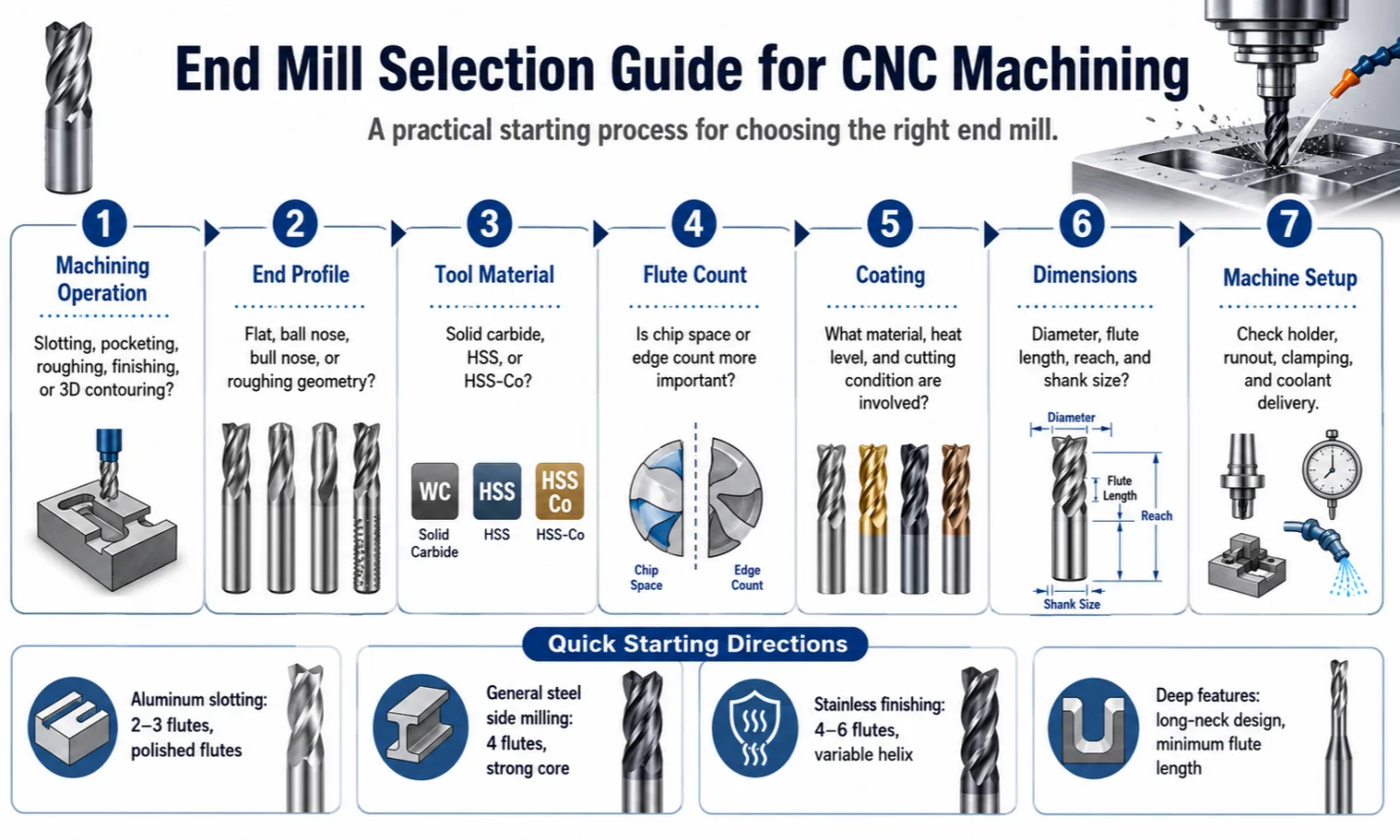
ก้าว 1: เลือกดอกเอ็นมิลล์โดยการทำงานของ CNC
การดำเนินการตัดเฉือนควรเป็นแนวทางในการตัดสินใจครั้งแรก เนื่องจากจะเป็นตัวกำหนดทิศทางการตัด, ปริมาณชิป, การว่าจ้าง, และพื้นผิวที่ต้องการ.
สล็อต
การกัดร่องเต็มความกว้างทำให้เกิดปริมาณเศษสูง เนื่องจากหัวกัดจะจับวัสดุตลอดเส้นผ่านศูนย์กลางเต็ม.
เมื่อตัดช่องเต็มความกว้าง, จัดลำดับความสำคัญของพื้นที่ชิปก่อนเพิ่มจำนวนขลุ่ย. เริ่มต้นด้วยร่องฟันน้อยลงเมื่อเศษมีขนาดใหญ่หรือการคายเศษทำได้ยาก.
A suitable slotting tool normally requires:
- มีพื้นที่ขลุ่ยเพียงพอ
- การคายเศษที่เชื่อถือได้
- การออกแบบให้ตัดตรงกลางเมื่อจำเป็นต้องเข้าโดยตรง
- ส่วนยื่นของเครื่องมือสั้นและมั่นคง
- ความแข็งแรงของขอบที่จับคู่กับวัสดุ
สำหรับอะลูมิเนียมหรือวัสดุอื่นๆ ที่ผลิตเศษขนาดใหญ่, 2–3 ฟันเป็นจุดเริ่มต้นที่ใช้งานได้จริง. สำหรับเหล็ก, การนับขลุ่ยสุดท้ายยังขึ้นอยู่กับความลึกของช่องด้วย, การสู้รบในแนวรัศมี, เส้นผ่านศูนย์กลางของเครื่องตัด, และระบบจ่ายน้ำหล่อเย็นหรืออากาศ.
หากชิปยังคงอยู่ในช่อง, อย่าเพิ่มอัตราป้อนทันทีหรือเปลี่ยนการเคลือบ. ขั้นแรกให้ตรวจสอบพื้นที่ขลุ่ย, ความลึกของการตัด, ทิศทางของอากาศหรือน้ำหล่อเย็น, และส่วนยื่นของเครื่องมือ.
การกัดกระเป๋า
การกัดหลุมอาจรวมการกัดไล่ระดับเข้าด้วยกัน, รายการลาน, ตัดด้านข้าง, การมีส่วนร่วมมุม, และการตกแต่งด้านล่าง.
ใช้ดอกเอ็นมิลล์ตัดตรงกลางเมื่อการเข้าโปรแกรมที่ต้องการตัดใกล้กับศูนย์กลางเครื่องมือ. อย่างไรก็ตาม, การตัดตรงกลางไม่ได้เปลี่ยนดอกเอ็นมิลล์ให้เป็นดอกสว่านมาตรฐาน. รูปทรงของเครื่องมือและกลยุทธ์การเข้า CAM จะต้องรองรับการเคลื่อนที่.
กระเป๋าลึกยังต้องมีการขจัดเศษที่เชื่อถือได้. เศษที่ติดอยู่สามารถตัดใหม่ได้, ซึ่งจะเพิ่มความร้อนและอาจสร้างความเสียหายให้กับคมตัดได้.
เมื่อหลุมลึกแต่ความลึกในการตัดจริงสั้น, เลือกเครื่องมือคอยาวแทนดอกเอ็นมิลล์ที่มีร่องฟันยาวโดยไม่จำเป็น.
การกัดข้างและการกลึงโปรไฟล์
การกัดข้างจะโหลดคมตัดด้านนอก. ส่งผลให้, การสู้รบในแนวรัศมี, ความแข็งแกร่งของเครื่องตัด, วิ่งหมด, และความแม่นยำของผนังด้านข้างก็มีความสำคัญ.
ใช้ดอกเอ็นมิลล์แบนกับผนังและบ่าตรง. เลือกเครื่องมือบูลโนสหรือรัศมีมุมเมื่อมุมด้านนอกต้องการความแข็งแกร่งมากขึ้น.
สำหรับการกัดข้างเหล็กทั่วไป, เครื่องมือ 4 ร่องช่วยให้เกิดความสมดุลในทางปฏิบัติระหว่างจำนวนคมตัด, ความแข็งแกร่งหลัก, และพื้นที่ชิป.
เพื่อการยึดแนวรัศมีที่เบากว่าและการเก็บผิวละเอียดที่มั่นคง, 5–6 ฟันสามารถเพิ่มจำนวนหน้าสัมผัสการตัดได้. อย่างไรก็ตาม, การคายเศษจะต้องคงที่.
การกัดหยาบ
การกัดหยาบทำให้เกิดภาระการตัดและปริมาณเศษสูง. ดังนั้น, หัวกัดต้องการพื้นที่ร่องฟันเพียงพอและโครงสร้างคมตัดที่สามารถรองรับการยึดแหวนได้.
สำหรับการกัดหยาบแบบดั้งเดิม, เลือกจำนวนร่องฟันที่ต่ำกว่าหรือปานกลางเมื่อการถอดเศษเป็นเรื่องยาก. รูปทรงการหยาบหรือร่องคายเศษจะแบ่งเศษออกเป็นส่วนเล็กๆ และอาจลดความต้านทานการตัดได้.
สำหรับเส้นทางเครื่องมือแบบไดนามิกหรือแบบโทรคอยด์ที่มีการหมั้นในแนวรัศมีที่เบากว่า, การนับขลุ่ยที่สูงขึ้นสามารถนำไปใช้ได้จริง เนื่องจากแต่ละขลุ่ยจะขจัดเศษที่มีขนาดเล็กลง ในขณะที่เครื่องมือเคลื่อนไปตามเส้นทางการมีส่วนร่วมที่มีการควบคุม.
กลยุทธ์ CAM, ความแข็งแกร่งของเครื่องจักร, สภาพผู้ถือ, และรูปทรงของเครื่องมือจะต้องทำงานร่วมกัน. เครื่องมือกัดหยาบประสิทธิภาพสูงไม่สามารถชดเชยการจับยึดที่อ่อนแอหรือระยะยื่นที่มากเกินไปได้.
ตกแต่ง
การตกแต่งขั้นสุดท้ายต้องใช้รูปทรงที่มั่นคง, ควบคุมการวิ่งหนี, คมตัดสม่ำเสมอ, และโปรไฟล์เครื่องมือที่ตรงกับพื้นผิวที่ต้องการ.
เมื่อหน้าสัมผัสในแนวรัศมีเบาและการคายเศษยังคงมีเสถียรภาพ, ร่องฟันที่มากขึ้นจะเพิ่มจำนวนหน้าสัมผัสการตัดและสามารถรองรับการตกแต่งที่เรียบเนียนยิ่งขึ้น.
ก่อนเปลี่ยนเครื่องตัด, ตรวจสอบ:
- การสึกหรอที่ล้ำสมัย
- ความแม่นยำของผู้ถือ
- ส่วนยื่นของเครื่องมือ
- การหนีบชิ้นงาน
- ความสม่ำเสมอของฟีด
- รูปร่างมุมที่ต้องการ
เครื่องมือที่สึกหรอหรือตัวจับยึดที่ไม่มั่นคงอาจทำให้ได้ผิวสำเร็จที่ไม่ดีแม้ว่าการนับร่องฟันถูกต้องก็ตาม.
3D การขึ้นรูปและการตัดเฉือนแม่พิมพ์
ดอกเอ็นมิลล์บอลโนสถูกนำมาใช้กันอย่างแพร่หลายสำหรับพื้นผิวโค้ง, โพรงแม่พิมพ์, ตาย, และการตกแต่งแบบ 3 มิติ. ปลายโค้งมนติดตามพื้นผิวที่ซับซ้อนได้อย่างมีประสิทธิภาพมากกว่าปลายตัดแบน.
เครื่องมือบูลโนสเหมาะกับการเก็บผิวกึ่งละเอียดและการกลึงขึ้นรูปเมื่อต้องใช้มุมด้านนอกที่แข็งแรงขึ้น. รัศมีมุมของพวกมันทำให้คมตัดแข็งแรงขึ้น ขณะเดียวกันก็รักษาพื้นที่ส่วนกลางที่เรียบกว่า.
สำหรับเหล็กแม่พิมพ์ชุบแข็ง, จับคู่ชุดเครื่องมือกับความแข็งของชิ้นงานจริง. เครื่องมือที่ออกแบบมาสำหรับวัสดุสูงถึง HRC45 อาจใช้เกรดคาร์ไบด์ที่แตกต่างกัน, การเตรียมขอบ, และการเคลือบจากที่ออกแบบมาสำหรับ HRC60 หรือ HRC65.
ก้าว 2: เลือกโปรไฟล์สิ้นสุด
| สิ้นสุดโปรไฟล์ | คุณสมบัติหลัก | แอปพลิเคชันทั่วไป |
|---|---|---|
| ดอกเอ็นมิลล์แบบแบน | ปลายตัดแบนพร้อมมุมด้านนอกที่แหลมคม | สล็อต, กระเป๋า, ไหล่, พื้นผิวเรียบ, และผนังด้านข้าง |
| ดอกเอ็นมิลล์บอลโนส | ปลายตัดโค้งมนเต็มที่ | 3รูปทรง D, พื้นผิวโค้ง, ตาย, และการตกแต่งโพรงแม่พิมพ์ |
| ดอกเอ็นมิลล์บูลโนส | ปลายแบนมีมุมด้านนอกโค้งมน | การทําโปรไฟล์, กึ่งสำเร็จ, เครื่องจักรกลแม่พิมพ์, และมุมที่แข็งแกร่งยิ่งขึ้น |
| ดอกกัดหยาบ | คมตัดแบบหยักหรือร่องคายเศษ | การขจัดวัสดุสูงและการตัดเฉือนหยาบ |
| ดอกเอ็นมิลล์ตัดตรงกลาง | ขอบตัดขยายข้ามหรือใกล้กับกึ่งกลาง | การลาดเอียงอย่างแน่นอน, รายการลาน, และการดำเนินการเข้ากระเป๋า |
Select the profile according to the feature being machined.
ดอกเอ็นมิลล์แบบแบนให้ลักษณะพื้นเรียบและผนังตรง. เครื่องตัดปลายมนตามพื้นผิวโค้ง. เครื่องมือจมูกวัวช่วยเสริมความแข็งแกร่งให้กับมุมด้านนอก และมักจะเหมาะกับการเก็บผิวกึ่งละเอียด.
ดอกเอ็นมิลล์ตัดตรงกลางสามารถรองรับการเคลื่อนที่ของทางเข้าที่เฉพาะเจาะจงได้, แต่ความสามารถในการดิ่งพรวดขึ้นอยู่กับรูปทรงของจุดศูนย์กลาง, เส้นผ่านศูนย์กลางของเครื่องตัด, วัสดุชิ้นงาน, และเส้นทางเครื่องมือที่ตั้งโปรแกรมไว้.
เพื่อการเปรียบเทียบที่ละเอียดยิ่งขึ้น, อ่านของเรา ประเภทคัตเตอร์ดอกเอ็นมิลล์และคำแนะนำการใช้งาน.
ก้าว 3: เลือกโซลิดคาร์ไบด์หรือไฮสปีด
วัสดุเครื่องมือส่งผลต่อความแข็งแกร่ง, ความเหนียว, ความต้านทานการสึกหรอ, ศักยภาพด้านความเร็วตัด, และค่าใช้จ่าย.
ดอกกัดโซลิดคาร์ไบด์
โซลิดคาร์ไบด์ให้ความแข็งแกร่งสูง, ทนต่อการสึกหรอได้ดี, และสมรรถนะของมิติที่มั่นคงภายใต้สภาวะการตัดเฉือนที่เหมาะสม.
เลือกโซลิดคาร์ไบด์เมื่อต้องการการใช้งาน:
- การตัดเฉือน CNC ด้วยความเร็วตัดที่สูงขึ้น
- ความแม่นยำของมิติที่มั่นคง
- เหล็กกล้า, สแตนเลส, เหล็กหล่อ, หรือการตัดเฉือนเหล็กแม่พิมพ์
- ดำเนินการผลิตนานขึ้น
- คุณภาพพื้นผิวที่สม่ำเสมอ
- เส้นผ่านศูนย์กลางหัวกัดขนาดเล็กหรือขนาดกลางที่มีความแข็งแกร่งของเครื่องจักรเพียงพอ
คาร์ไบด์ทนต่อแรงกระแทกได้น้อยกว่า, การวิ่งหนีมากเกินไป, การหนีบที่ไม่เสถียร, และแรงสั่นสะเทือนอย่างรุนแรง. ดังนั้น, เครื่องจักรและที่จับจะต้องรองรับเครื่องมือ.
สำหรับตัวเลือกโซลิดคาร์ไบด์, ดูของเรา หน้าผลิตภัณฑ์เครื่องตัดดอกเอ็นมิลล์คาร์ไบด์.
ดอกกัด HSS และ HSS-Co
HSS และ HSS โคบอลต์มีความเหนียวมากกว่า และสามารถทนต่อแรงสั่นสะเทือนหรือการตัดกระแทกได้ดีกว่าในบางการใช้งาน.
เลือก HSS หรือ HSS-Co เมื่อ:
- เครื่องทำงานด้วยความเร็วแกนหมุนที่ต่ำกว่า
- การตั้งค่ามีความแข็งแกร่งจำกัด
- การตัดถูกขัดจังหวะ
- จำเป็นต้องมีคัตเตอร์แบบกำหนดเองที่ใหญ่กว่า
- ปริมาณการสั่งซื้อมีขนาดเล็ก
- ความเหนียวมีความสำคัญมากกว่าความเร็วตัดสูงสุด
สำหรับเครื่องจักรที่มีความแข็งเกร็งต่ำ, HSS-Co อาจทนต่อแรงสั่นสะเทือนและการขัดจังหวะการตัดได้ดีกว่าโซลิดคาร์ไบด์. อย่างไรก็ตาม, คาร์ไบด์มักจะมีความแข็งแกร่งและความต้านทานการสึกหรอสูงกว่าเมื่อการตั้งค่ามีเสถียรภาพ.
ตัวเลือกสุดท้ายควรสะท้อนถึงตัวเครื่อง, ชิ้นงาน, ขนาดเครื่องตัด, การดำเนินการตัด, ปริมาณ, และเป้าหมายต้นทุน.
ก้าว 4: เลือกการนับขลุ่ย
จำนวนขลุ่ยจะเปลี่ยนพื้นที่ชิป, ความแข็งแกร่งหลัก, ความสามารถในการฟีด, และจำนวนคมตัด.
| จํานวนขลุ่ย | ทิศทางการคัดเลือกทั่วไป |
|---|---|
| 2 ฟัน | พื้นที่ชิปสูงสุด; มีประโยชน์เมื่อการคายเศษเป็นสิ่งสำคัญอันดับแรก |
| 3 ฟัน | สมดุลระหว่างพื้นที่ชิป, ความแข็งแกร่ง, และการนับที่ล้ำสมัย |
| 4 ฟัน | ทิศทางทั่วไปสำหรับการกัดเหล็กทั่วไปและการตัดด้านข้าง |
| 5–6 ขลุ่ย | คมตัดที่มากขึ้นเพื่อการกัดข้างที่มั่นคงหรือการเก็บผิวละเอียดด้วยการควบคุมการสัมผัส |
ใช้ 2–3 ฟันเมื่อพื้นที่ชิปเป็นสิ่งสำคัญหลัก. This often applies to aluminum slotting, กระเป๋าลึก, และการดำเนินงานที่ผลิตชิปขนาดใหญ่ขึ้น.
ใช้ 4 ร่องเป็นจุดเริ่มต้นในทางปฏิบัติสำหรับการใช้งานเหล็กทั่วไปและการกัดข้างหลายประเภท.
เลือก 5–6 ฟันเมื่อหน้าสัมผัสในแนวรัศมีเบากว่า, เครื่องมีความแข็ง, และการคายเศษได้รับการควบคุมแล้ว.
ร่องที่มากขึ้นไม่ได้ทำให้เครื่องมือเหมาะสมกับวัสดุที่แข็งกว่าโดยอัตโนมัติ. ในช่องเต็มความกว้าง, การใช้ร่องมากเกินไปอาจดักเศษและทำให้เกิดความร้อนได้, ขอบเสียหาย, หรือการแตกหักของเครื่องมือ.
เพื่อคำอธิบายที่ลึกซึ้งยิ่งขึ้น, อ่านของเรา คู่มือการเลือกขลุ่ยดอกเอ็นมิลล์.
For a direct comparison, อ่าน 2 ขลุ่ยกับ 4 ขลุ่ยกับ 6 ดอกเอ็นมิลล์ขลุ่ย.
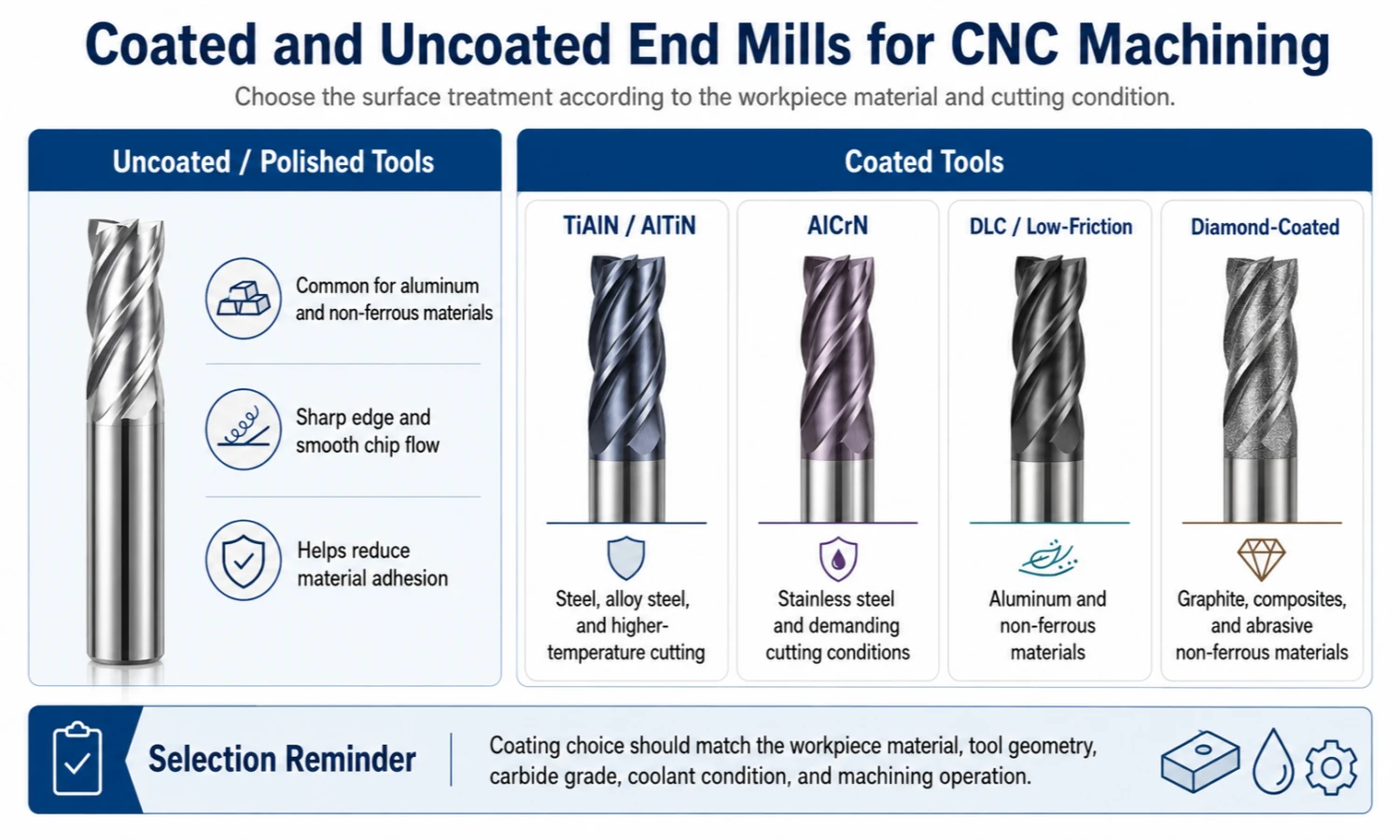
ก้าว 5: เลือกดอกกัดแบบเคลือบหรือไม่เคลือบ
การเคลือบส่งผลต่อการเสียดสี, ทนความร้อน, ความต้านทานการสึกหรอ, การยึดเกาะของวัสดุ, และการป้องกันที่ล้ำสมัย.
ใช้ตารางต่อไปนี้เป็นทิศทางการเลือกแทนที่จะเป็นกฎตายตัว.
| ทิศทางชิ้นงาน | การเคลือบหรือทิศทางพื้นผิว | ข้อพิจารณาหลัก |
|---|---|---|
| วัสดุอลูมิเนียมและอโลหะ | ไม่เคลือบผิว, ขัดเงา, เนื้อหาดาวน์โหลด, หรือการเคลือบแรงเสียดทานต่ำที่เหมาะสม | ลดการยึดเกาะและรองรับการไหลของเศษ |
| เหล็กกล้าคาร์บอนและโลหะผสม | TiAlN, อัลทิน, หรือการเคลือบทนความร้อนที่เหมาะสม | ทนความร้อนและป้องกันขอบ |
| สแตนเลส | อัลซีอาร์เอ็น, TiAlN, อัลทิน, หรือการเคลือบเฉพาะงาน | ความร้อน, สวมใส่, และความเสถียรในการตัด |
| คอมโพสิตกราไฟท์และสารกัดกร่อน | เครื่องมือเคลือบเพชร | ความต้านทานการสึกหรอจากการเสียดสี |
| การใช้งานความเร็วต่ำทั่วไป | ตัวเลือก TiN หรือแบบไม่เคลือบผิว | การหล่อลื่นและการป้องกันการสึกหรอโดยทั่วไป |
วัสดุอลูมิเนียมและอโลหะ
สำหรับอะลูมิเนียม, เริ่มต้นด้วยขอบคม, ขลุ่ยขัดเงา, และพื้นผิวที่ไม่เคลือบหรือมีแรงเสียดทานต่ำ.
สารเคลือบที่ทนความร้อนสูงไม่เหมาะกับอลูมิเนียมโดยอัตโนมัติ. หากพื้นผิวเพิ่มการยึดเกาะของวัสดุ, คมตัดที่สะสมและการไหลของเศษไม่ดีอาจเกิดขึ้นได้.
เหล็กกล้า
สำหรับเหล็กคาร์บอนและโลหะผสม, TiAlN, อัลทิน, TiSiN, หรือการเคลือบทนความร้อนชนิดอื่นที่เหมาะสมสามารถป้องกันคมตัดได้.
เนื่องจากความแข็งของชิ้นงานและอุณหภูมิในการตัดเพิ่มขึ้น, เกรดคาร์ไบด์, การเตรียมขอบ, และการเคลือบก็มีความสำคัญมากขึ้น.
สแตนเลส
สำหรับสแตนเลส, เลือกการเคลือบและรูปทรงที่รองรับการควบคุมความร้อนและความเสถียรในการตัด.
อัลซีอาร์เอ็น, TiAlN, หรือ AlTiN สามารถให้ทิศทางการเริ่มต้นที่เป็นประโยชน์ได้, แต่ตัวเลือกสุดท้ายควรตรงกับเกรดสแตนเลส, การดำเนินการ, การนับขลุ่ย, สภาพน้ำหล่อเย็น, และตัดภาระ.
เครื่องมือเคลือบเพชร
ดอกเอ็นมิลล์เคลือบเพชรเหมาะกับกราไฟท์, คอมโพสิต, วัสดุที่มีฤทธิ์กัดกร่อนที่ไม่ใช่เหล็ก, และการใช้งานเฉพาะอื่นๆ.
อย่าใช้การเคลือบเพชรเป็นทางเลือกสากลสำหรับโลหะทุกชนิด. เคมีของชิ้นงานและสภาวะการตัดจะต้องเข้ากันได้.
การเคลือบผิวทุกประการควรตรงกับเกรดคาร์ไบด์, เรขาคณิตของเครื่องมือ, เกรดชิ้นงาน, การดำเนินการตัด, และสภาพน้ำหล่อเย็น.
ก้าว 6: ยืนยันขนาดและเรขาคณิต
เส้นผ่านศูนย์กลางของหัวกัดเป็นเพียงส่วนหนึ่งของข้อมูลจำเพาะของเครื่องมือเท่านั้น.
ก่อนทำการสั่งซื้อ, ยืนยัน:
- เส้นผ่านศูนย์กลางคัตเตอร์
- ความยาวขลุ่ย
- ความยาวโดยรวม
- เส้นผ่านศูนย์กลางก้าน
- ความลึกของเครื่องจักรที่ต้องการ
- การเข้าถึงเครื่องมือ
- รัศมีมุม
- มุมเกลียว
- การนับขลุ่ย
- ข้อกำหนดการตัดตรงกลาง
- ความอดทนมิติ
ใช้เครื่องมือที่ใช้งานได้จริงที่สั้นที่สุดซึ่งเข้าถึงพื้นที่การตัดเฉือนได้.
หากระยะยื่นที่ต้องการยาวแต่ระยะกินลึกสั้น, เลือกเครื่องมือคอยาวแทนดอกเอ็นมิลล์ที่มีร่องฟันยาวโดยไม่จำเป็น. ส่วนการตัดที่สั้นลงสามารถให้ความแข็งแกร่งที่ดีขึ้น.
ความยาวขลุ่ยที่มากเกินไปหรือความยาวโดยรวมจะเพิ่มความเสี่ยง:
- พูดพล่อย
- การโก่งตัวของเครื่องมือ
- ข้อผิดพลาดมิติ
- การสึกหรอไม่สม่ำเสมอ
- การบิ่นมุม
- เครื่องมือแตกหัก
เลือกดอกเอ็นมิลล์แบบกำหนดเองเมื่อขนาดหรือรูปทรงมาตรฐานไม่สามารถเข้าถึงคุณลักษณะหรือตรงตามเส้นผ่านศูนย์กลางที่ต้องการได้, รัศมีมุม, ความอดทน, การเคลือบ, หรือเป้าหมายการใช้งาน.
ก้าว 7: เช็คเครื่อง, เจ้าของ, และเงื่อนไขการหนีบ
ดอกเอ็นมิลล์ที่ถูกต้องยังคงทำงานได้ไม่ดีในการตั้งค่าที่ไม่เสถียร.
ระยะยื่นของเครื่องมือ
ส่วนยื่นยาวจะช่วยลดความแข็งแกร่ง. วางเครื่องมือไว้ใกล้กับตัวจับยึดมากที่สุดตามความลึกของการตัดเฉือน.
ก่อนที่จะเปลี่ยนการเคลือบหรือนับฟลุต, ตรวจสอบว่าเครื่องตัดยืดออกไปเกินความจำเป็นหรือไม่.
การวิ่งหนีของผู้ถือ
การเบี่ยงเบนหนีศูนย์สามารถทำให้คมตัดด้านหนึ่งรับน้ำหนักได้มากกว่าคมตัดอื่นๆ. This causes uneven wear and may lead to poor surface finish, บิ่น, หรือความล้มเหลวก่อนวัยอันควร.
ตรวจสอบผู้ถือ, คอลเล็ต, ความสะอาดของก้าน, และตำแหน่งวางเครื่องมือเมื่อขลุ่ยตัวหนึ่งมีการสึกหรอมากกว่าขลุ่ยตัวอื่น.
ความแข็งแกร่งของเครื่องจักร
สภาพแกนหมุน, ความแม่นยำของผู้ถือ, โครงสร้างเครื่อง, และการยึดจับชิ้นงานล้วนส่งผลต่อผลลัพธ์.
เครื่องมือคาร์ไบด์แข็งไม่สามารถแก้ไขการเคลื่อนที่ในชิ้นงานหรือตัวจับยึดได้.
การจัดส่งชิปและน้ำหล่อเย็น
อากาศหรือสารหล่อเย็นจะต้องไปถึงบริเวณการตัด.
การจัดส่งที่ไม่ดีอาจทำให้เศษเหลืออยู่ในกระเป๋าและช่องลึกได้. จากนั้นเครื่องมือจะตัดชิปเหล่านั้นอีกครั้ง, ซึ่งเพิ่มความร้อนและทำให้ขอบเสียหาย.
การหนีบชิ้นงาน
Movement at the workpiece can look like a tool problem.
ก่อนเปลี่ยนเครื่องตัด, ยืนยันว่าฟิกซ์เจอร์ยึดชิ้นส่วนไว้อย่างแน่นหนา และทางเดินเครื่องมือไม่สร้างการสั่นสะเทือนที่ไม่จำเป็น.
วัสดุชิ้นงานส่งผลต่อการเลือกดอกเอ็นมิลล์อย่างไร
Workpiece material remains important, แต่ควรพิจารณาควบคู่กับการทำงานของเครื่องจักรด้วย.
- อะลูมิเนียมต้องมีขอบคมและพื้นที่เศษเพียงพอ.
- เหล็กกล้าคาร์บอนและโลหะผสมจำเป็นต้องมีคมตัดที่แข็งแกร่งและทนทานต่อการสึกหรอ.
- สแตนเลสต้องการการตัดที่มั่นคงเพื่อควบคุมความร้อนและการแข็งตัวของชิ้นงาน.
- เหล็กหล่อต้องมีความทนทานต่อการเสียดสีที่ดี.
- แม่พิมพ์และเหล็กกล้าเครื่องมือจำเป็นต้องใช้ชุดเครื่องมือที่ตรงกับความแข็งจริง.
- โลหะผสมไทเทเนียมจำเป็นต้องมีการควบคุมความร้อนอย่างระมัดระวังและการมีส่วนร่วมที่มั่นคง.
สำหรับการเลือกใช้วัสดุอย่างละเอียด, อ่าน วิธีการเลือกคัตเตอร์ดอกกัดคาร์ไบด์.
ปัญหาการเลือกและการตั้งค่าดอกเอ็นมิลล์
| อาการ | สาเหตุที่เป็นไปได้ | ทิศทางการปรับครั้งแรก |
|---|---|---|
| ชิปแพ็คอยู่ภายในช่อง | มีขลุ่ยมากเกินไป, พื้นที่ขลุ่ยไม่เพียงพอ, การอพยพของเศษไม่ดี | ลดจำนวนขลุ่ย, ปรับปรุงการส่งอากาศหรือน้ำหล่อเย็น, และตรวจสอบความยาวของขลุ่ย |
| การแตกหักของเครื่องมือ | การบรรจุชิป, ยื่นออกมามากเกินไป, ผู้ถือที่ไม่มั่นคง, การมีส่วนร่วมอย่างหนัก | ปรับปรุงการกำจัดชิป, ลดระยะการเข้าถึง, ตรวจสอบการหนีบ, และลดการมีส่วนร่วมที่ไม่มั่นคง |
| แชทเตอร์ มาร์ค | ยื่นยาว, การตั้งค่าที่อ่อนแอ, แรงตัดซ้ำๆ | ย่อเครื่องมือให้สั้นลง, ปรับปรุงการหนีบ, และพิจารณาเรขาคณิตแบบเกลียวแปรผัน |
| พื้นผิวไม่ดี | ขอบสึก, วิ่งหมด, unstable feed, โปรไฟล์สิ้นสุดที่ไม่เหมาะสม | ตรวจสอบเครื่องมือและที่จับ, ทำให้การตัดมีเสถียรภาพ, และเลือกโปรไฟล์ที่ถูกต้อง |
| การสึกหรอของขอบอย่างรวดเร็ว | เกรดคาร์ไบด์ผิด, การเคลือบ, หรือสภาพการตัด | จับคู่เกรดและการเคลือบผิวให้เข้ากับวัสดุ, ความแข็ง, ความร้อน, และการดำเนินงาน |
| Corner Chipping | มุมคมภายใต้ภาระหนัก, การสั่นสะเทือน, การตัดขัดจังหวะ | พิจารณารัศมีมุมและปรับปรุงความเสถียรของการตั้งค่า |
| ขอบอะลูมิเนียมแบบ Built-Up | แรงเสียดทานสูง, ขอบทื่อ, พื้นผิวขลุ่ยหยาบ, การไหลของเศษไม่ดี | ใช้รูปทรงขัดเงาที่คมชัดและปรับปรุงการคายเศษ |
ปัญหาเกี่ยวกับเครื่องจักรอาจมีสาเหตุหลายประการ. การเปลี่ยนเฉพาะการเคลือบหรือการนับฟลุตอาจไม่ช่วยแก้ปัญหาได้.
เริ่มต้นด้วยการตั้งค่า, การไหลของชิป, tool condition, และการมีส่วนร่วม. Then evaluate whether the tool geometry needs to change.
ข้อผิดพลาดทั่วไปในการเลือกดอกเอ็นมิลล์
เลือกตามเส้นผ่านศูนย์กลางเท่านั้น
ดอกเอ็นมิลล์สองตัวที่มีเส้นผ่านศูนย์กลางเท่ากันอาจมีความยาวร่องฟันต่างกัน, การนับขลุ่ย, สิ้นสุดโปรไฟล์, เกรดคาร์ไบด์, การเคลือบ, และแอปพลิเคชัน.
ตรวจสอบข้อกำหนดเฉพาะให้ครบถ้วนเสมอ.
ไม่สนใจการอพยพของชิป
การคายเศษไม่ดีทำให้เกิดความร้อน, การตัดชิปอีกครั้ง, ขอบที่สร้างขึ้น, พูดพล่อย, และการแตกหักของเครื่องมือ.
ปัญหานี้เกิดขึ้นบ่อยเป็นพิเศษระหว่างการ slotting แบบเต็มความกว้าง, deep pocketing, และการกลึงอะลูมิเนียม.
การใช้ระยะยื่นของเครื่องมือมากเกินไป
การเข้าถึงที่มากเกินไปจะช่วยลดความแข็งแกร่ง.
ใช้เครื่องมือที่สั้นที่สุดที่สามารถเข้าระยะกินลึกได้อย่างปลอดภัย. หากมีลักษณะที่ลึกซึ้ง, consider a long-neck design with the minimum necessary cutting length.
การเลือกฟลุตเพิ่มเติมโดยไม่ต้องตรวจสอบพื้นที่ชิป
คมตัดที่มากขึ้นช่วยปรับปรุงความสามารถในการป้อนและความสม่ำเสมอของพื้นผิวเมื่อมีการสัมผัสเพียงเล็กน้อยและการไหลของเศษยังคงมีเสถียรภาพ.
ในการเซาะร่องลึก, อย่างไรก็ตาม, จำนวนร่องที่มากเกินไปอาจดักเศษและทำให้เครื่องตัดเสียหายได้.
Choosing a Coating by Name Only
การเคลือบที่มีราคาแพงกว่าไม่ได้ดีกว่าโดยอัตโนมัติ.
จับคู่การเคลือบกับวัสดุ, เกรดคาร์ไบด์, เรขาคณิต, สารหล่อเย็น, อุณหภูมิการตัด, และการดำเนินงาน.
ใช้ดอกเอ็นมิลล์ตัวเดียวสำหรับทุกการทำงาน
เครื่องตัดหยาบ, เครื่องมือตกแต่ง, ดอกเอ็นมิลล์ slotting, และเครื่องตัดจมูกลูกทำหน้าที่ต่างกัน.
เลือกดอกเอ็นมิลล์ตามคุณลักษณะและขั้นตอนการตัดเฉือน แทนที่จะใช้เครื่องมือทั่วไปเพียงชิ้นเดียวในทุกการทำงาน.
คำถามที่ถามบ่อย
ดอกเอ็นมิลล์สามารถเจาะรูได้?
ดอกเอ็นมิลล์ตัดตรงกลางบางรุ่นรองรับการกัดไล่ระดับ, รายการลาน, หรือการพรวดพราดอย่างจำกัด. อย่างไรก็ตาม, พวกเขาไม่ควรเปลี่ยนสว่านโดยอัตโนมัติ.
ยืนยันรูปทรงกึ่งกลาง, เส้นผ่านศูนย์กลางของเครื่องตัด, วัสดุชิ้นงาน, และวิธีการป้อนที่ตั้งโปรแกรมไว้ก่อนที่จะใช้ดอกเอ็นมิลล์สำหรับการป้อนตามแนวแกน.
ฉันควรเลือกคาร์ไบด์หรือ HSS สำหรับเครื่องจักรที่มีความแข็งเกร็งต่ำ?
HSS หรือ HSS-Co อาจให้ความเหนียวและความทนทานต่อการสั่นสะเทือนมากขึ้นในเครื่องจักรที่มีความเร็วต่ำหรือมีความแข็งน้อยกว่า.
คาร์ไบด์มีความแข็งแกร่งและทนทานต่อการสึกหรอมากขึ้น, แต่ต้องการผู้ถือที่มั่นคง, ควบคุมการวิ่งหนี, และการหนีบที่เชื่อถือได้.
เหตุใดดอกเอ็นมิลล์จึงแตกหักระหว่างการกัดร่อง?
สาเหตุที่พบบ่อย ได้แก่ การห่อของชิป, จำนวนขลุ่ยมากเกินไป, ระยะยื่นของเครื่องมือมากเกินไป, การหนีบที่ไม่เสถียร, การมีส่วนร่วมอย่างหนัก, และน้ำหล่อเย็นหรือการจ่ายอากาศไม่ดี.
ตรวจสอบการคายเศษและความเสถียรในการติดตั้ง ก่อนที่จะพิจารณาว่าเกรดคาร์ไบด์คือปัญหาเดียวเท่านั้น.
เมื่อใดที่ฉันควรเลือกดอกเอ็นมิลแบบเกลียวแปรผัน?
เลือกรูปทรงเกลียวแปรผันหรือระยะพิทช์ไม่เท่ากัน เมื่อแรงตัดซ้ำๆ ทำให้เกิดการสะท้านระหว่างการกัดข้าง, การทําโปรไฟล์, หรือการตกแต่ง.
การออกแบบสามารถลดการสั่นสะเทือนได้, แต่ยังต้องใช้ตัวจับยึดที่แข็งแรงและการยึดจับชิ้นงานที่มั่นคง.
เมื่อใดที่ฉันควรใช้ดอกเอ็นมิลล์คอยาวแทนดอกเอ็นมิลล์ร่องฟันยาว?
ใช้เครื่องมือคอยาวเมื่อคุณสมบัติต้องการระยะยื่นเพิ่มเติมแต่ใช้เฉพาะส่วนการตัดสั้นเท่านั้น.
โดยปกติแล้ว ความยาวร่องฟันที่ลดลงจะให้การสนับสนุนมากกว่าคมตัดที่ยาวโดยไม่จำเป็น.
ข้อมูลใดที่ช่วยได้เมื่อขอดอกเอ็นมิลล์แบบกำหนดเอง?
ส่งขนาดเครื่องมือที่มีอยู่, การวาดภาพ, ภาพผลิตภัณฑ์, วัสดุชิ้นงาน, การทำงานของเครื่องจักร, required feature, รูปแบบเครื่องมือในปัจจุบัน, ปริมาณ, และปัญหาการตัดเฉือนที่มีอยู่.
คุณไม่จำเป็นต้องเตรียมรายละเอียดทุกอย่างก่อนติดต่อกับซัพพลายเออร์. ข้อมูลจำเพาะที่ขาดหายไปสามารถยืนยันได้ในระหว่างกระบวนการเสนอราคา.
ต้องการความช่วยเหลือในการเลือกดอกเอ็นมิลล์ที่เหมาะสม?
ดอกเอ็นมิลล์ด้านขวาขึ้นอยู่กับการทำงานของเครื่องจักร, วัสดุชิ้นงาน, feature shape, ขนาดที่ต้องการ, การตั้งค่าเครื่อง, และเป้าหมายการตกแต่งพื้นผิว.
ส่งรูปวาดของคุณมาให้เรา, แบบจำลองเครื่องมือ, ขนาดที่ต้องการ, ภาพผลิตภัณฑ์, ตัวอย่าง, or available machining information. กับ 16 ประสบการณ์หลายปีในการผลิตเครื่องมือตัด, เราสามารถตรวจสอบการใช้งานและช่วยยืนยันทิศทางเครื่องมือมาตรฐานหรือแบบกำหนดเองที่เหมาะสมได้.
ดูมาตรฐานและกำหนดเองของเรา หน้าผลิตภัณฑ์เครื่องตัดดอกเอ็นมิลล์.
เพื่อหารือเกี่ยวกับการสมัครของคุณ, ส่งอีเมลถึงเราที่ sales@cutterbest.com.