 หัวกัดที่มีความแม่นยํา,เครื่องมือตัดสําหรับเครื่องจักรกลซีเอ็นซีทุกวัสดุ

Knowing how to choose a carbide end mill cutter helps reduce the risk of chip packing, premature edge wear, พูดพล่อย, พื้นผิวไม่ดี, ข้อผิดพลาดมิติ, และการแตกหักของเครื่องมือ. ด้วยเหตุนี้, cutter diameter should never be the only selection factor.
A suitable tool should match the workpiece material, ความแข็ง, การทำงานของเครื่องจักร, การนับขลุ่ย, สิ้นสุดโปรไฟล์, การเคลือบ, ส่วนที่ยื่นออกมาของเครื่องมือ, and chip evacuation requirement. อลูมิเนียม, เหล็ก, สแตนเลส, เหล็กหล่อ, and mold steel create different chips, แรงตัด, ความร้อน, and wear conditions.
This guide provides practical recommendations for selecting a solid carbide end mill. It gives a starting direction rather than fixed cutting parameters because the final choice also depends on the cutter size, เครื่องจักร, เจ้าของ, การมีส่วนร่วมของเครื่องมือ, สารหล่อเย็น, และคุณภาพพื้นผิวที่ต้องการ.
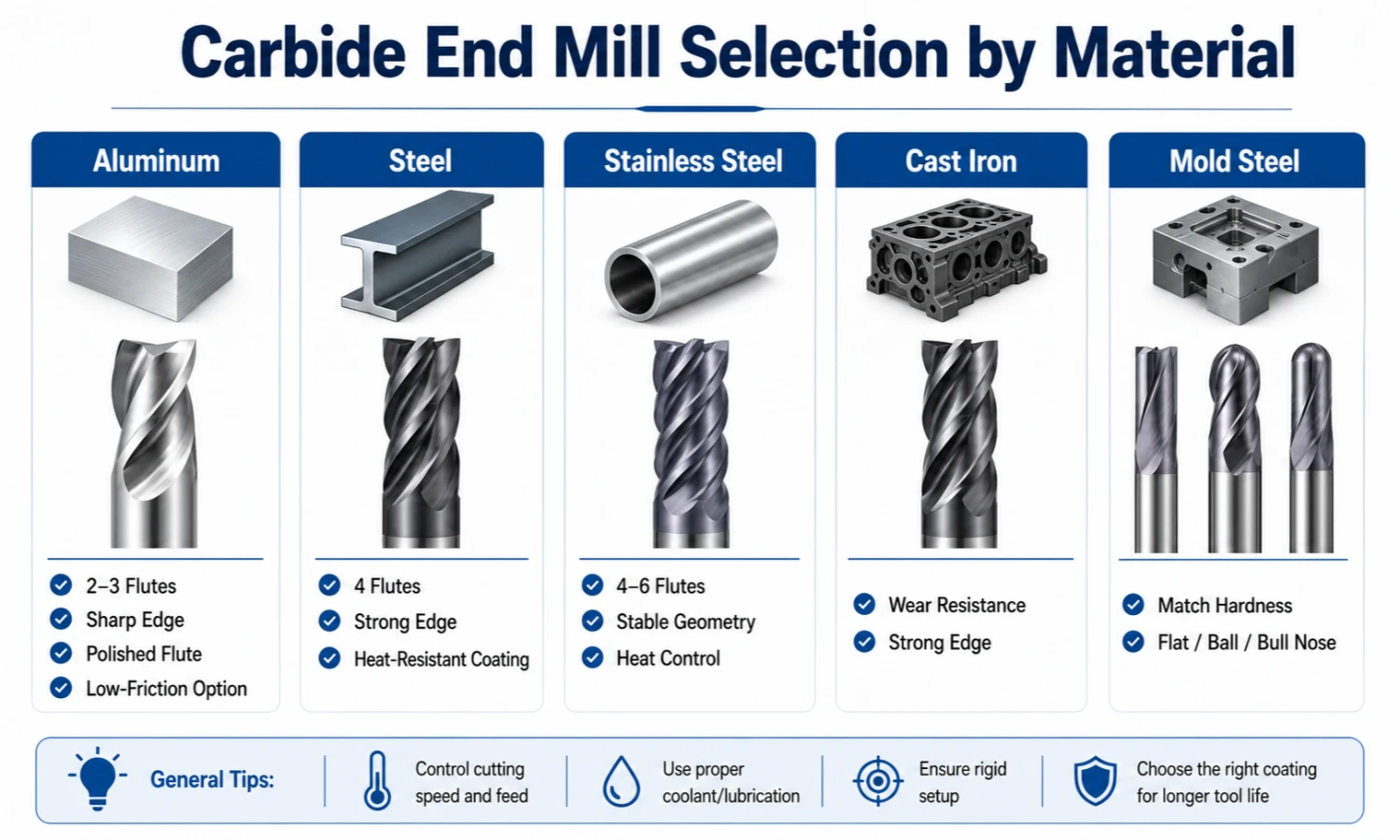
Quick Carbide End Mill Selection Table
| วัสดุชิ้นงาน | Typical Flute Direction | Geometry and Coating Direction | Main Selection Risk |
|---|---|---|---|
| วัสดุอลูมิเนียมและอโลหะ | 2 หรือ 3 ฟัน | ขอบคม, ขลุ่ยขัดเงา, ไม่เคลือบ, เนื้อหาดาวน์โหลด, or low-friction option | Chip packing and built-up edge |
| เหล็กกล้าคาร์บอนและโลหะผสมเหล็ก | 4 flutes as a common starting point | Strong core and edge; TiAlN, อัลทิน, TiSiN, or application-based coating | Edge wear and corner chipping |
| สแตนเลส | 4 ถึง 6 flutes according to the operation | Rigid or variable-helix geometry; TiAlN, อัลทิน, or AlCrN | ความร้อน, พูดพล่อย, and work hardening |
| เหล็กหล่อ | Application-based flute count | Strong, wear-resistant edge and suitable coating | Abrasive wear, dust, and unstable edge wear |
| Mold and Tool Steel | Based on hardness and feature geometry | แบน, จมูกวัว, or ball nose; coating selected by hardness and heat | บิ่น, การโก่งตัว, and poor surface finish |
Use this table as an initial filter. ต่อไป, ยืนยันการทำงานของเครื่องจักร, ความลึกของการตัด, ความยาวขลุ่ย, ส่วนที่ยื่นออกมาของเครื่องมือ, ความแม่นยำของผู้ถือ, และจำเป็นต้องทำให้เสร็จ.
Key Factors Before Choosing a Carbide End Mill
Workpiece Material and Hardness
Material type affects chip shape, แรงตัด, ความร้อน, การยึดเกาะ, and abrasive wear. Aluminum usually needs more chip space, while steel requires greater edge strength. สแตนเลสต้องการการตัดที่มั่นคงเพื่อควบคุมความร้อนและการแข็งตัวของชิ้นงาน.
Hardness also changes the selection. A tool designed for material up to HRC45 may use a different carbide grade, การเตรียมขอบ, and coating from a tool intended for HRC60 or HRC65 mold steel.
การทำงานของเครื่องจักร
สล็อต, การกัดข้าง, การหยาบ, ตกแต่ง, and 3D contouring place different loads on the cutter.
Full-width slotting needs enough flute space to remove chips. ในทางตรงกันข้าม, light side milling or finishing may benefit from more cutting edges. A mold cavity may also require a different end profile from a flat-bottom pocket.
การอพยพชิป
การคายเศษที่ไม่ดีอาจทำให้เกิดความร้อนได้, การตัดชิปอีกครั้ง, ขอบที่สร้างขึ้น, การสั่นสะเทือน, และการแตกหักของเครื่องมือ. This issue becomes especially important in aluminum, กระเป๋าลึก, and full-slot milling.
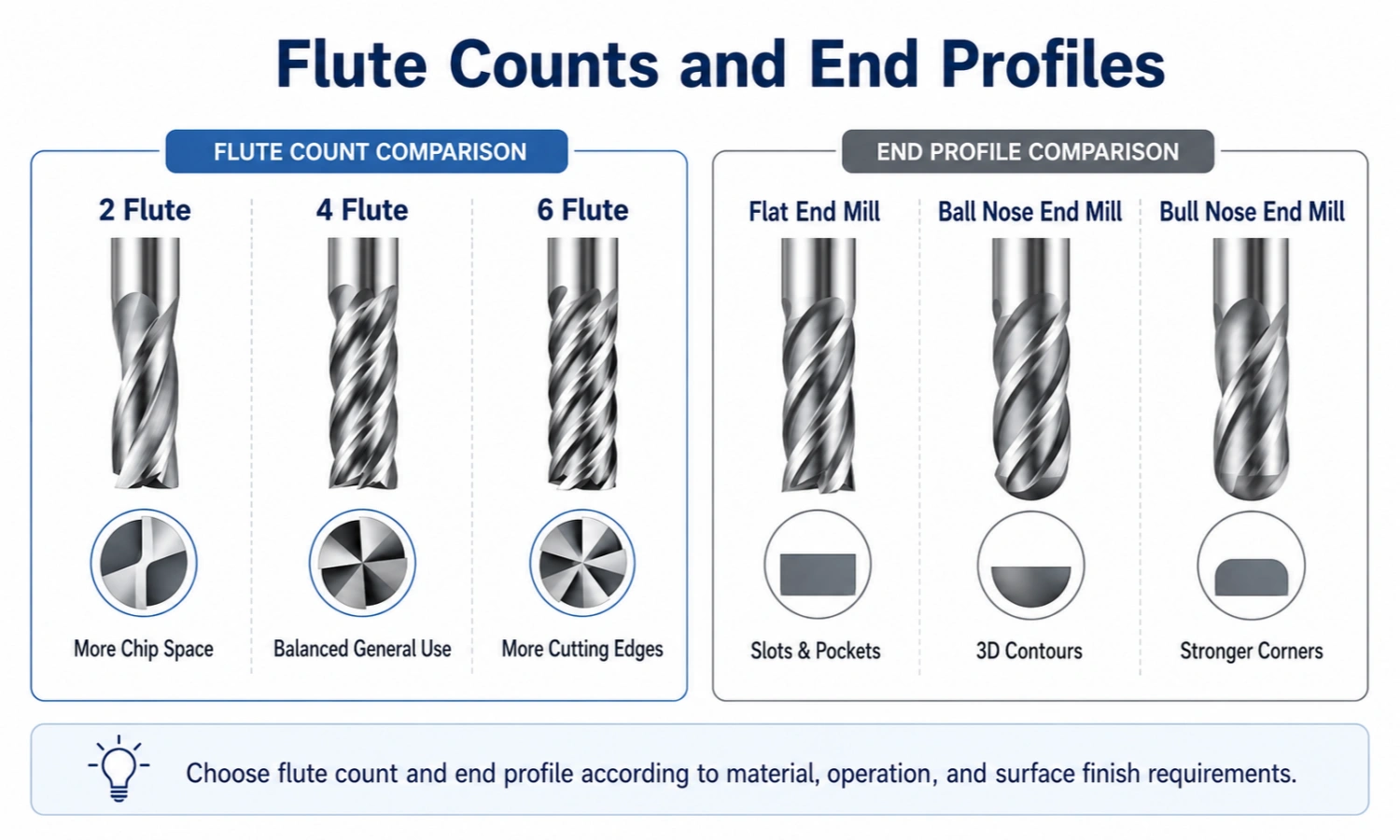
โดยทั่วไปร่องฟันที่น้อยลงจะทำให้มีเนื้อที่ชิปมากขึ้น. More flutes provide more cutting edges but leave less room for chips.
For a detailed explanation, อ่านของเรา คู่มือการเลือกขลุ่ยดอกเอ็นมิลล์.
Tool Rigidity and Overhang
Long tool overhang reduces rigidity and increases deflection. Before changing the coating or cutting parameters, check whether the cutter extends farther from the holder than necessary.
Use the shortest practical tool for the required machining depth. For deep features, a long-neck design with a controlled cutting length may provide better stability than an unnecessarily long flute length.
Surface Finish and Dimensional Accuracy
การตกแต่งขั้นสุดท้ายต้องใช้รูปทรงที่มั่นคง, controlled tool runout, a suitable end profile, and consistent cutting conditions. การสึกหรอของเครื่องมือ, ความแม่นยำของผู้ถือ, การสั่นสะเทือน, and excessive overhang can all reduce surface quality.
A higher flute count may support finishing under suitable conditions. อย่างไรก็ตาม, it should not reduce chip space so much that chips remain in the cutting area.
Choosing a Carbide End Mill for Aluminum
Aluminum is relatively soft, but it can adhere to the cutting edge. Friction and poor chip evacuation may create a built-up edge, which changes the effective cutting geometry and damages the surface finish.
Recommended Direction
For many aluminum applications, use:
- 2-flute or 3-flute geometry
- คมตัดที่คมชัด
- Large and smooth flute space
- พื้นผิวขลุ่ยขัดเงา
- ไม่เคลือบผิว, เนื้อหาดาวน์โหลด, or another low-friction option
- ส่วนยื่นของเครื่องมือสั้นและมั่นคง
Two-flute tools provide more chip space and often suit slotting, การแทง, and deeper cuts. Three-flute tools offer an additional cutting edge while retaining more chip space than many four-flute designs.
High-helix geometry may also improve chip flow and surface finish in suitable aluminum applications. อย่างไรก็ตาม, ความแข็งแรงของขอบ, ความเสถียรของเครื่องจักร, เส้นผ่านศูนย์กลางของเครื่องมือ, and cutting depth still need consideration.
Coating Considerations for Aluminum
ไม่เคลือบผิว, polished, เนื้อหาดาวน์โหลด, or other low-friction surfaces are usually preferred because they help reduce material adhesion.
Some titanium-containing coatings may increase adhesion in certain aluminum applications. ดังนั้น, do not select a coating only because it offers high heat resistance. The aluminum alloy, flute polish, ความเร็วในการตัด, สารหล่อเย็น, and operation also affect performance.
Common Aluminum Problems
Built-up edge often points to high friction, a dull edge, การอพยพของเศษไม่ดี, or unsuitable cutting conditions. Chip packing usually means the flute space or evacuation method cannot handle the chip volume.
ในทางปฏิบัติ, first check the cutting edge, flute condition, ส่วนที่ยื่นออกมาของเครื่องมือ, air or coolant delivery, and whether the flute count leaves enough chip space.
Choosing a Carbide End Mill for Steel
Steel creates higher cutting forces and greater edge wear than aluminum. ส่งผลให้, the tool needs a stronger core, stable cutting edges, เกรดคาร์ไบด์ที่เหมาะสม, และเคลือบสารทนความร้อน.
Why Four Flutes Are a Common Starting Point
Four-flute end mills provide more cutting edges and often have a stronger core than comparable two-flute designs. This makes them a practical starting point for general steel slotting, การกัดข้าง, การทําโปรไฟล์, และการตกแต่ง.
อย่างไรก็ตาม, four flutes are not the only option. Three-flute or variable-helix tools may suit roughing and high-efficiency machining, while five-flute or six-flute designs may suit controlled side milling and finishing.
Recommended Direction
For many carbon and alloy steel applications, พิจารณา:
- Four flutes as an initial selection
- Strong core and cutting edges
- Suitable corner preparation
- TiAlN, อัลทิน, TiSiN, or application-based coating
- Stable holder and controlled runout
- Tool series matched to workpiece hardness
Low-carbon steel, โลหะผสมเหล็ก, and hardened steel should not automatically use the same cutter. As hardness and cutting temperature increase, เกรดคาร์ไบด์, การเคลือบ, การเตรียมขอบ, and tool rigidity become more important.
Common Steel Problems
Rapid flank wear may indicate an unsuitable carbide grade, การเคลือบ, หรือสภาพการตัด. Corner chipping can result from excessive cutting load, weak corner geometry, การสั่นสะเทือน, or interrupted cutting.
Before replacing the tool design, check the holder, วิ่งหมด, ส่วนที่ยื่นออกมาของเครื่องมือ, workpiece clamping, ความลึกของการตัด, and whether the edge preparation matches the operation.
Choosing a Carbide End Mill for Stainless Steel
Stainless steel often combines toughness, การสร้างความร้อน, and work-hardening behavior. When the cutting edge rubs instead of forming a consistent chip, heat remains near the surface and the material may become harder to cut.
ด้วยเหตุนี้, stainless steel machining needs stable feed, rigid clamping, ควบคุมการวิ่งหนี, ความแข็งแรงของขอบที่เหมาะสม, and reliable chip removal.
Recommended Direction
Depending on the operation, พิจารณา:
- Four flutes for many general milling operations
- Five or six flutes for suitable side milling and finishing
- Strong and stable cutting edges
- TiAlN, อัลทิน, อัลซีอาร์เอ็น, or another suitable coating
- Short tool overhang
- Consistent feed and chip load
- Stable coolant or air delivery
A higher flute count provides more cutting edges but reduces chip space. Six flutes may work well in stable side milling or finishing, but they are not automatically the best choice for deep slotting or heavy full-width cutting.
Variable-Helix and Unequal-Pitch Designs
Variable-helix or unequal-pitch geometry can help reduce repetitive cutting forces. ส่งผลให้, these designs may reduce chatter in unstable stainless steel applications.
They do not replace a rigid setup. The machine, เจ้าของ, ส่วนที่ยื่นออกมาของเครื่องมือ, workpiece clamping, and cutting strategy still control overall stability.
Stainless Steel Types
Austenitic grades such as 304 และ 316 tend to generate heat and work-harden. Hardenable stainless grades may require stronger edges and a tool series matched to their hardness.
Duplex stainless steel combines strength and toughness, so it often needs careful control of chip load, ความร้อน, and tool engagement. The exact grade should therefore be confirmed before selecting the final tool.
Choosing a Carbide End Mill for Cast Iron
Cast iron is often abrasive, so wear resistance and edge stability are major selection factors. อย่างไรก็ตาม, different cast iron grades do not produce the same cutting behavior.
Gray Cast Iron
Gray cast iron usually produces short, brittle chips and may create fine dust. A wear-resistant carbide grade, strong edge, and suitable dust control can improve process stability.
Many gray cast iron operations use dry cutting or controlled air extraction. อย่างไรก็ตาม, the coolant strategy should match the machine, material grade, และกระบวนการผลิต.
Ductile Cast Iron
Ductile cast iron has greater toughness than gray cast iron. Its chips may be longer, so chip control can become more important.
The cutter may need a balance between wear resistance and edge toughness. A very weak edge can chip under heavier cutting loads, while an unsuitable coating may wear quickly in abrasive conditions.
Recommended Direction
สำหรับการกลึงเหล็กหล่อ, focus on:
- Wear-resistant carbide grade
- Strong cutting-edge geometry
- Suitable edge preparation
- Application-based coating
- Stable machine and holder setup
- Correct dust and chip control
Do not treat every cast iron grade as a dry, powder-producing material. Confirm whether the workpiece is gray, ductile, compacted graphite, or another type.
Choosing a Carbide End Mill for Mold and Tool Steel
Mold machining may include roughing, กึ่งสำเร็จ, การกลึงโพรง, การทําโปรไฟล์, and final finishing. ดังนั้น, tool selection should match both the workpiece hardness and the shape being machined.
Select the End Profile by Feature Geometry
Flat end mills suit flat-bottom slots, กระเป๋า, ขั้นตอน, ไหล่, and straight side walls.
Bull nose or corner radius end mills provide stronger outer corners than sharp square-end tools. They often suit profiling, กึ่งสำเร็จ, and mold machining where corner chipping is a concern.
Ball nose end mills follow curved surfaces and 3D contours. As the tool moves across a cavity, the rounded end maintains contact with complex geometry, making it useful for mold and die finishing.
เพื่อการเปรียบเทียบที่กว้างขึ้น, อ่าน types of end mill cutters and their uses.
Match the Tool Series to Workpiece Hardness
Tool series may target materials up to HRC45, เหล็กแผ่นรีดร้อน55, เหล็กแผ่นรีดร้อน 60, or HRC65. These values describe the intended workpiece hardness range, not the hardness of the carbide tool.
As hardness increases, the tool may need a finer carbide grade, stronger edge preparation, การเคลือบที่เหมาะสม, shorter overhang, and more stable holder setup.
Hard milling also requires careful control of runout, ตัดภาระ, การมีส่วนร่วมของเครื่องมือ, and heat. A high-hardness tool series cannot compensate for an unstable setup.
Choosing a Carbide End Mill by Machining Operation
การกัดหยาบ
Roughing creates high chip volume and cutting load. Use enough flute space to move chips away from the cutting zone, and select an edge structure that can handle the engagement.
Roughing or chipbreaker geometry divides chips into smaller sections and may reduce cutting resistance. Dynamic or trochoidal milling can also maintain a more consistent cutting load when the CAM strategy, เครื่องจักร, and setup support it.
ตกแต่ง
การตกแต่งขั้นสุดท้ายต้องใช้รูปทรงที่มั่นคง, controlled tool runout, sharp and consistent edges, and a suitable end profile.
More flutes may improve feed capability and surface quality when chip evacuation remains adequate. ก่อนเปลี่ยนเครื่องตัด, inspect the holder, tool condition, ยื่นออกมา, and workpiece clamping.
การกัดพ็อกเก็ตลึก
Deep pockets increase the risk of chip accumulation, การโก่งตัวของเครื่องมือ, พูดพล่อย, and poor coolant access.
Use the shortest practical overhang. When the feature requires additional reach, consider a long-neck design with only the necessary cutting length. This can improve rigidity compared with using an excessively long flute.
For a wider selection process that includes cutter type, ขนาด, การเคลือบ, และการดำเนินงาน, อ่านของเรา end mill tool selection guide.
Carbide End Mill Problem Diagnosis
| ปัญหาการตัดเฉือน | สาเหตุที่เป็นไปได้ | Adjustment Direction |
|---|---|---|
| Built-Up Edge | แรงเสียดทานสูง, ขอบทื่อ, การอพยพของเศษไม่ดี | Use sharper geometry, improve chip flow, and select a polished or low-friction surface |
| การแตกหักของเครื่องมือ | Excessive overhang, chip packing, unstable setup, heavy load | Reduce overhang, improve evacuation, ผู้ถือเช็คหมด, และลดการมีส่วนร่วมที่ไม่มั่นคง |
| พูดพล่อย | Low rigidity, เข้าถึงได้นาน, การหนีบที่อ่อนแอ, แรงตัดซ้ำๆ | Shorten overhang, ปรับปรุงการหนีบ, และพิจารณาเรขาคณิตแบบเกลียวแปรผัน |
| พื้นผิวไม่ดี | การสึกหรอของเครื่องมือ, วิ่งหมด, การสั่นสะเทือน, โปรไฟล์สิ้นสุดที่ไม่เหมาะสม | Inspect the cutting edge, ความแม่นยำของผู้ถือ, feed stability, and finishing geometry |
| การสึกหรอของขอบอย่างรวดเร็ว | เกรดคาร์ไบด์ผิด, การเคลือบ, หรือสภาพการตัด | จับคู่เกรดและการเคลือบผิวให้เข้ากับวัสดุ, ความแข็ง, ความร้อน, และการดำเนินงาน |
| Corner Chipping | Excessive load, การตัดขัดจังหวะ, weak corner design | Use stronger corner geometry, review engagement, and improve process stability |
This table helps identify the first points to check. A machining problem may have several causes, so changing only the coating or flute count may not solve it.
ข้อผิดพลาดในการเลือกทั่วไป
Using One Cutter for Every Material
One tool cannot perform equally well in aluminum, เหล็ก, สแตนเลส, เหล็กหล่อ, and hardened mold steel. Each material creates different chips, ความร้อน, forces, and wear.
ไม่สนใจการอพยพของชิป
Poor chip evacuation increases heat and causes chip re-cutting. In deep slots and pockets, it can also lead to sudden tool failure.
Choosing the Coating by Name Only
A more expensive or higher-temperature coating is not automatically better. The coating must match the workpiece material, เกรดคาร์ไบด์, เรขาคณิตของขอบ, สภาพน้ำหล่อเย็น, และการดำเนินการตัด.
การใช้ระยะยื่นของเครื่องมือมากเกินไป
ส่วนยื่นยาวจะช่วยลดความแข็งแกร่ง. Before changing speed, ให้อาหาร, or tool material, shorten the tool reach whenever the feature allows it.
Comparing Tool Price Only
A lower purchase price may not reduce the total machining cost. อายุการใช้งานของเครื่องมือ, คุณภาพพื้นผิว, machine downtime, part rejection, and tool-change frequency also affect the final result.
คำถามที่ถามบ่อย
How do I choose a carbide end mill cutter?
Start with the workpiece material, ความแข็ง, และการทำงานของเครื่องจักร. ต่อไป, confirm the flute count, สิ้นสุดโปรไฟล์, การเคลือบ, ขนาดเครื่องมือ, ยื่นออกมา, การอพยพของชิป, และพื้นผิวที่ต้องการ.
Which carbide end mill is best for aluminum?
Two-flute or three-flute tools are common starting points because they provide more chip space. ขอบคม, ขลุ่ยขัดเงา, and uncoated, เนื้อหาดาวน์โหลด, or another low-friction option can also help reduce material buildup.
ดอกเอ็นมิลล์คาร์ไบด์สามารถตัดสแตนเลสได้?
ใช่. The cutter should provide suitable rigidity, ความแข็งแรงของขอบ, พื้นที่ขลุ่ย, การเคลือบ, และความเสถียรในการตัด. Stable feed and controlled tool overhang also help reduce heat and work hardening.
What is the purpose of a variable-helix end mill?
A variable-helix or unequal-pitch design changes the timing of cutting forces. This can reduce repetitive vibration and chatter, especially during side milling and other unstable operations.
Should I use 2, 4, หรือ 6 ฟัน?
โดยทั่วไปร่องฟันที่น้อยลงจะทำให้มีเนื้อที่ชิปมากขึ้น. More flutes provide more cutting edges and may improve rigidity or finishing performance. ทางเลือกที่ถูกต้องขึ้นอยู่กับวัสดุ, การดำเนินการ, การว่าจ้าง, ปริมาณชิป, และความต้องการพื้นผิว.
เพื่อการเปรียบเทียบโดยละเอียด, อ่าน 2 ขลุ่ยกับ 4 ขลุ่ยกับ 6 ดอกเอ็นมิลล์ขลุ่ย.
When should a carbide end mill be replaced?
Inspect or replace the cutter when you notice edge chipping, abnormal noise, increased spindle load, dimensional drift, worsening surface finish, excessive burrs, or rapidly rising cutting heat.
Do not wait for complete tool failure. Replace the tool when wear begins to reduce process stability or part quality.
Need Help Selecting the Right Carbide End Mill?
The right tool depends on your workpiece material, ความแข็ง, การทำงานของเครื่องจักร, ขนาดที่ต้องการ, การตั้งค่าเครื่อง, และข้อกำหนดด้านการตกแต่งพื้นผิว.
ส่งรูปวาดของคุณมาให้เรา, แบบจำลองเครื่องมือ, ภาพผลิตภัณฑ์, ตัวอย่าง, or available machining information. We will review your application and recommend a suitable carbide end mill solution.
สำหรับตัวเลือกมาตรฐานและแบบกำหนดเอง, เยี่ยมชมของเรา หน้าผลิตภัณฑ์เครื่องตัดดอกเอ็นมิลล์คาร์ไบด์.
เพื่อหารือเกี่ยวกับการสมัครของคุณ, ส่งอีเมลถึงเราที่ sales@cutterbest.com.