 หัวกัดที่มีความแม่นยํา,เครื่องมือตัดสําหรับเครื่องจักรกลซีเอ็นซีทุกวัสดุ

การกัดข้างกับการกัดปาดหน้า ส่วนใหญ่เป็นคำถามว่าคุณต้องตัดเฉือนพื้นผิวหรือคุณสมบัติใด.
การกัดข้างใช้คมตัดด้านนอกของหัวกัดเป็นหลักกับคุณสมบัติของเครื่องจักร เช่น ผนังแนวตั้ง, ไหล่, ร่อง, และสล็อต. การกัดปาดหน้า, ในทางตรงกันข้าม, ส่วนใหญ่จะผลิตพื้นผิวเรียบกว้าง, โดยที่แกนคัตเตอร์โดยทั่วไปจะตั้งฉากกับหน้าตัดเฉือน.
การดำเนินการเหล่านี้ช่วยแก้ปัญหาการตัดเฉือนต่างๆ. การกัดข้างยังทับซ้อนกับแนวคิดที่กว้างขึ้นของการกัดขอบอีกด้วย, แม้ว่าคำศัพท์อาจแตกต่างกันไปตามประเภทของเครื่องตัด, การตั้งค่าเครื่อง, และการประยุกต์ใช้.
การกัดข้างและการกัดปาดหน้า: การเปรียบเทียบอย่างรวดเร็ว
ตารางด้านล่างแสดงข้อแตกต่างหลักโดยสรุป.
| ปัจจัย | การกัดข้าง | การกัดปาดหน้า |
|---|---|---|
| วัตถุประสงค์หลัก | คุณสมบัติด้านเครื่องจักรและรูปทรงเฉพาะจุด | พื้นผิวเรียบกว้างของเครื่อง |
| พื้นผิวหรือคุณสมบัติที่ผลิตขึ้น | ผนังด้านข้าง, ไหล่, ร่อง, สล็อต | หน้าแบน, พื้นผิวด้านบน, พื้นผิวข้อมูล |
| พื้นที่ตัดหลัก | คมตัดส่วนนอกเป็นหลัก | การตัดขอบเบื้องต้นบนหน้าเครื่องตัด |
| ความสัมพันธ์ของแกนคัตเตอร์ | โดยทั่วไปพื้นผิวด้านข้างที่สร้างขึ้นจะขนานกับแกนเครื่องตัด | โดยทั่วไปหน้าตัดจะตั้งฉากกับแกนของเครื่องตัด |
| การใช้งานทั่วไป | ผนังด้านข้าง, ไหล่, สล็อต, ร่อง, โปรไฟล์ภายนอก | เผชิญหน้า, การปรับระดับ, การกำจัดสต็อกระนาบ, การเตรียมพื้นผิว |
| ประเภทคัตเตอร์ทั่วไป | คัตเตอร์กัดข้างหรือคัตเตอร์ต่อพ่วงอื่นที่เหมาะสม | หัวกัดหน้า |
| ทางเลือกที่ดีที่สุดเมื่อ | รูปทรงด้านข้างเป็นข้อกำหนดหลัก | พื้นผิวระนาบกว้างเป็นข้อกำหนดหลัก |
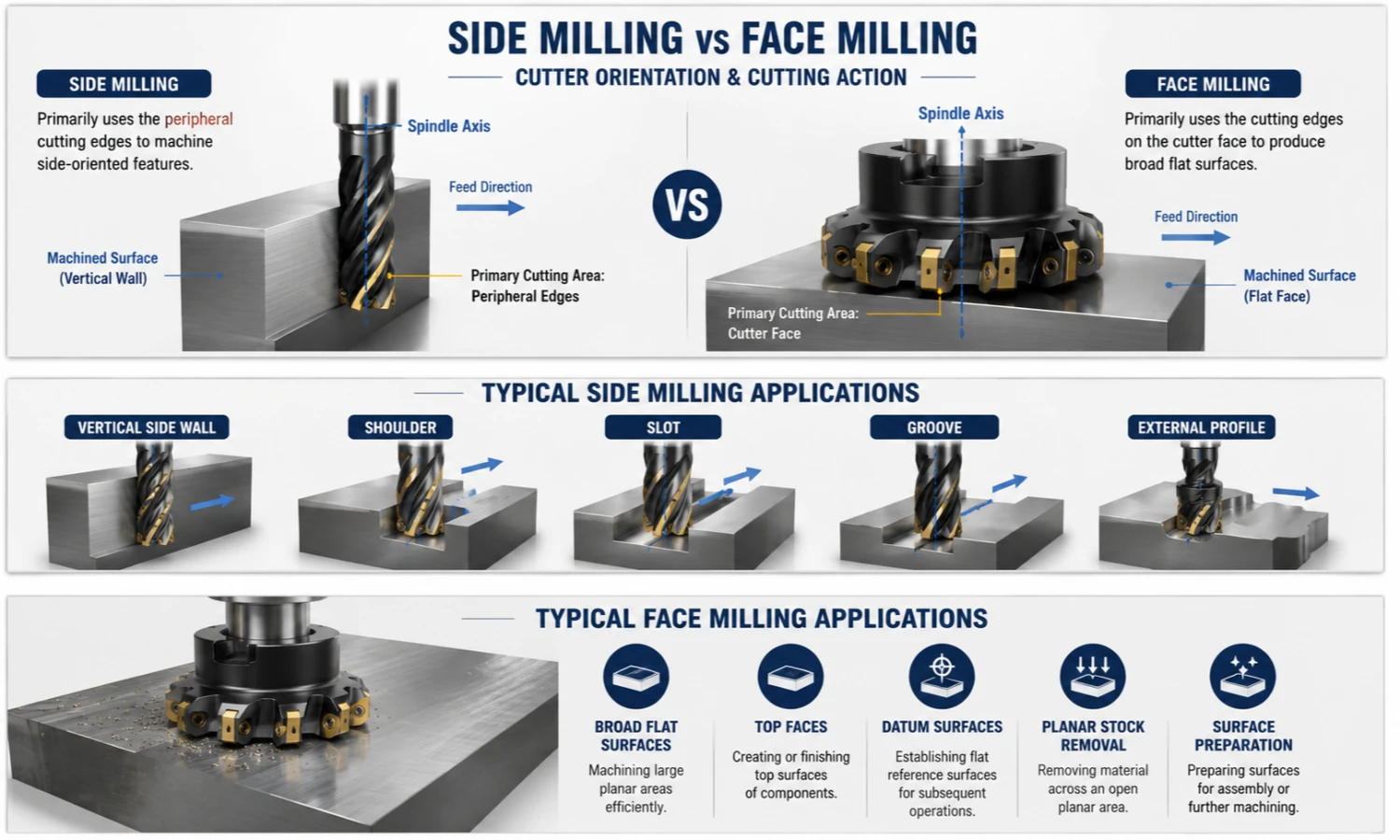
การเปรียบเทียบนี้เป็นจุดเริ่มต้นที่เป็นประโยชน์. อย่างไรก็ตาม, เรขาคณิตของชิ้นส่วน, การเข้าถึงเครื่องมือ, ความแข็งแกร่งของเครื่องจักร, การทำงาน, และความต้องการพื้นผิวอาจส่งผลต่อตัวเลือกสุดท้าย.
การกัดข้างคืออะไร?
การกัดข้างคือการกัดที่คมตัดด้านนอกของหัวกัดทำหน้าที่ส่วนใหญ่กับคุณสมบัติเป้าหมาย. ดังนั้น, โดยทั่วไปจะใช้เมื่อชิ้นส่วนต้องมีการตัดเฉือนตามพื้นผิวด้านข้าง แทนที่จะตัดผ่านหน้าเปิดขนาดใหญ่.
คำนี้มักซ้อนทับกับการกัดขอบข้าง, โดยการตัดจะเกิดขึ้นตามแนวเส้นรอบวงของเครื่องตัดเป็นหลัก. อย่างไรก็ตาม, คำทั้งสองนี้ไม่ควรถือเป็นคำพ้องความหมายที่ตรงกันทุกประการเสมอไป เนื่องจากการออกแบบเครื่องมือและการใช้งานอาจส่งผลต่อวิธีที่ผู้ผลิตอธิบายกระบวนการ.
ในทางปฏิบัติ, การกัดข้างใช้เพื่อสร้างหรือเก็บผิวขั้นสุดท้ายลักษณะเด่นด้าน.
การใช้งานกัดข้างทั่วไป
การใช้งานกัดข้างทั่วไปได้แก่:
- พื้นผิวด้านข้างในแนวตั้ง
- ไหล่
- สล็อต
- ร่อง
- โปรไฟล์ภายนอก
- ผนังกระเป๋าที่สามารถเข้าถึงได้
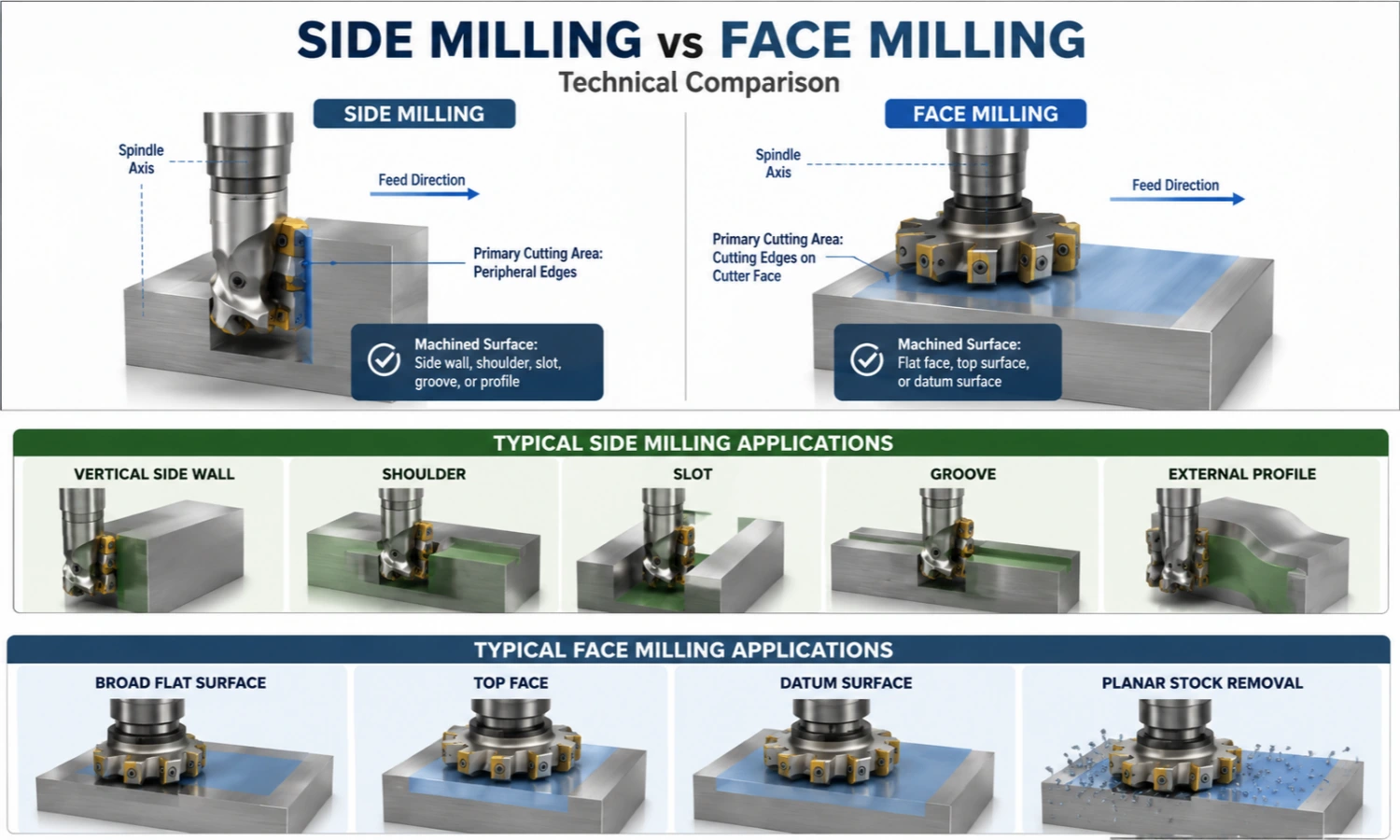
การกัดข้างมีประโยชน์อย่างยิ่งเมื่อคุณสมบัตินี้ต้องใช้รูปทรงด้านข้างแบบควบคุม.
สำหรับร่อง, ไหล่, และคุณสมบัติด้านข้างอื่นๆ, ทุ่มเท หัวกัดด้านข้าง อาจจัดให้มีการกำหนดค่าเครื่องมือที่เหมาะสมสำหรับการดำเนินงาน.
การกัดปาดหน้าคืออะไร?
การกัดปาดหน้าจะสร้างพื้นผิวเรียบทั่วทั้งหน้าชิ้นงานเป็นหลัก. ในระหว่างการผ่าตัด, โดยทั่วไปแกนของเครื่องตัดจะตั้งฉากกับพื้นผิวที่กำลังกลึง.
เพราะคัตเตอร์สามารถครอบคลุมพื้นที่ได้ค่อนข้างกว้าง, ช่างเครื่องมักใช้การกัดปาดหน้าเพื่อปรับระดับสต็อก, เตรียมใบหน้าส่วนบน, การนำวัสดุออกจากพื้นผิวระนาบแบบเปิด, หรือการสร้างพื้นผิว Datum สำหรับการดำเนินงานในภายหลัง.
อย่างไรก็ตาม, การกัดปาดหน้าไม่ควรตัดสินจากการเก็บผิวสำเร็จหรืออัตราการขจัดเศษวัสดุเท่านั้น. เส้นผ่านศูนย์กลางคัตเตอร์, เรขาคณิต, วัสดุชิ้นงาน, ความสามารถของเครื่องจักร, การทำงาน, วิ่งหมด, และสภาพการตัดล้วนส่งผลต่อผลลัพธ์.
การใช้งานกัดปาดหน้าทั่วไป
การใช้งานทั่วไปได้แก่:
- พื้นผิวเรียบกว้าง
- ใบหน้ายอดนิยม
- พื้นผิว Datum
- การกำจัดสต็อกระนาบ
- การเตรียมพื้นผิว
โดยทั่วไปการใช้งานเหล่านี้จะขึ้นอยู่กับพื้นผิวระนาบที่สามารถเข้าถึงได้.
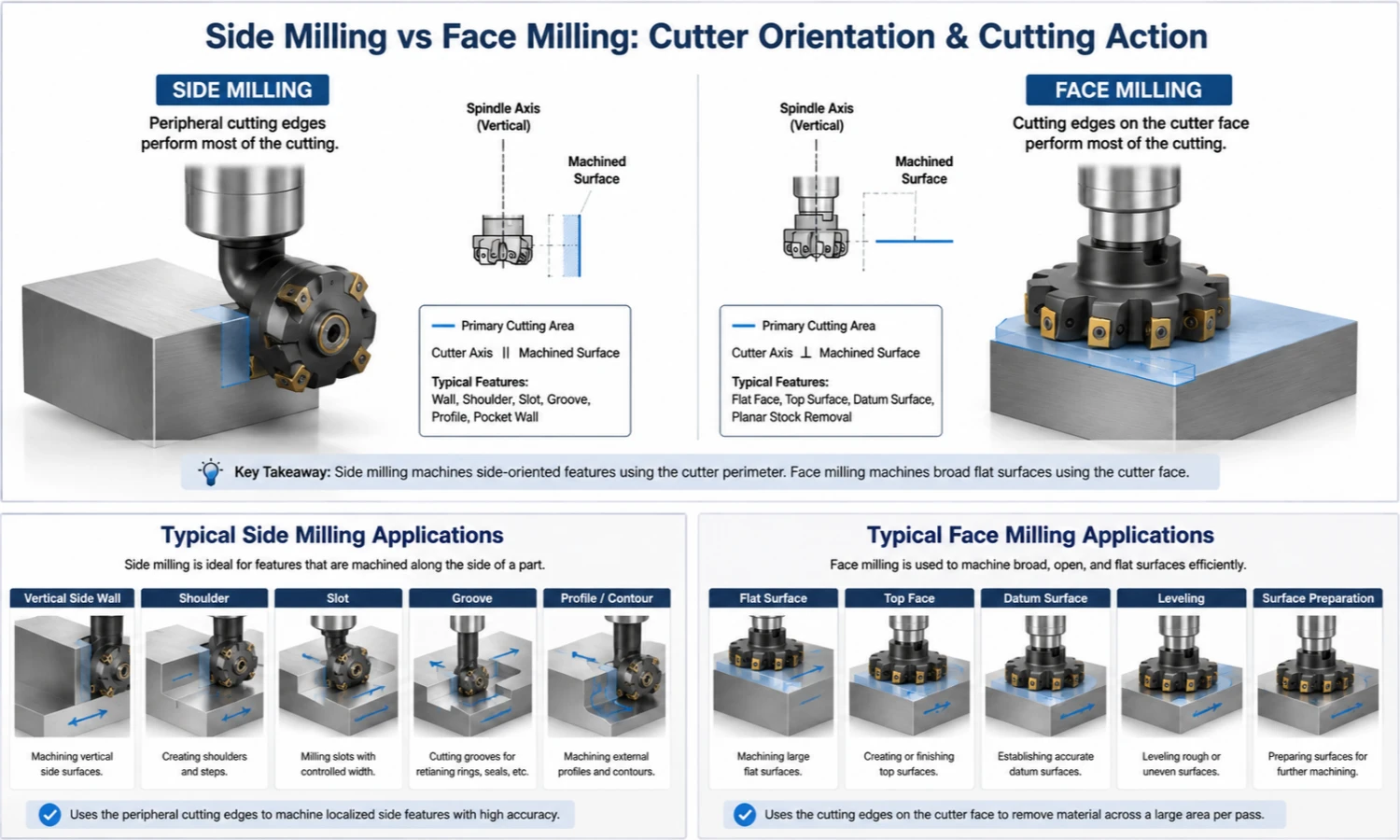
สำหรับการตัดเฉือนระนาบแบบเปิด, ใช้ เครื่องตัดปาดหน้า เลือกให้ครอบคลุมพื้นผิวที่ต้องการ, เข้าถึง, และสภาวะการตัดเฉือน.
ความแตกต่างที่สำคัญระหว่างการกัดข้างและการกัดปาดหน้า
การเปรียบเทียบอย่างรวดเร็วจะแสดงให้เห็นว่าแต่ละการดำเนินการทำอะไรได้บ้าง. ประเด็นต่อไปนี้จะอธิบายว่าทำไมพวกเขาถึงประพฤติแตกต่างออกไปในทางปฏิบัติ.
1. พื้นผิวกลึงและเรขาคณิตของชิ้นส่วน
โดยปกติรูปทรงของชิ้นส่วนจะเป็นปัจจัยแรกในการตรวจสอบ.
คุณลักษณะของชุดกัดข้างที่ขยายไปตามด้านข้างของชิ้นงาน. สิ่งเหล่านี้อาจรวมถึงผนังแนวตั้ง, ไหล่, ร่อง, สล็อต, และโปรไฟล์ภายนอก.
การกัดปาดหน้ามีจุดประสงค์ที่แตกต่างออกไป. โดยทั่วไปจะถูกเลือกเมื่อการวาดภาพเรียกร้องให้มีพื้นผิวระนาบเปิด, ใบหน้าด้านบน, หรือข้อมูล.
ส่งผลให้, กระบวนการที่ถูกต้องมักจะชัดเจนขึ้นเมื่อคุณระบุการวางแนวและรูปร่างของคุณลักษณะเป้าหมาย.
2. การหมั้นคมตัดหลัก
ในการกัดข้าง, คมตัดส่วนนอกทำหน้าที่ตัดส่วนใหญ่บนพื้นผิวชิ้นงาน.
ในการกัดปาดหน้า, ขอบตัดที่วางอยู่บนใบหน้าของหัวกัดจะสร้างพื้นผิวระนาบเป็นหลัก. ขึ้นอยู่กับรูปทรงของเครื่องตัด, ส่วนอื่นๆ ของความล้ำหน้าก็อาจมีส่วนร่วมได้เช่นกัน.
ด้วยเหตุนี้, อธิบายได้แม่นยำกว่า การดำเนินการตัดเบื้องต้น แทนที่จะคิดว่ามีเครื่องตัดเพียงส่วนเดียวเท่านั้นที่สัมผัสกับชิ้นงาน.
3. การวางแนวเครื่องตัดและการเข้าถึงเครื่องมือ
การเข้าถึงเครื่องมือสามารถเปลี่ยนกลยุทธ์การตัดเฉือนที่ดีที่สุดได้ แม้ว่ารูปทรงที่ต้องการจะดูเรียบง่ายบนแบบร่างก็ตาม.
ต่างประเทศ, หน้าเปิดมักจะทำให้หัวกัดปาดหน้ามีระยะห่างเพียงพอที่จะกวาดไปทั่วพื้นผิว. ในทางตรงกันข้าม, ไหล่ลึก, ร่องแคบ, ผนังกระเป๋า, หรือคุณสมบัติด้านข้างที่แปลเป็นภาษาท้องถิ่นอาจต้องใช้คัตเตอร์ที่สามารถเข้าใกล้คุณสมบัติจากทิศทางอื่นได้.
ดังนั้น, ถามคำถามสองข้อก่อนเลือกการดำเนินการ:
- เครื่องตัดสามารถเข้าถึงคุณลักษณะดังกล่าวได้หรือไม่?
- เครื่องจักรและฟิกซ์เจอร์สามารถรองรับทิศทางการตัดที่ต้องการได้หรือไม่?
นอกจากนี้, หากส่วนประกอบต้องการไหล่ 90 องศาจริง, รูปทรงของหัวกัดต้องรองรับคุณสมบัติดังกล่าว. หัวกัดปาดหน้าทั่วไปไม่ควรถือว่าสร้างโดยอัตโนมัติในทุกสภาพของบ่าฉาก.
4. ข้อควรพิจารณาเกี่ยวกับพื้นที่การกำจัดวัสดุและความสามารถในการผลิต
การกัดปาดหน้ามักจะทำงานได้ดีเมื่อต้องขจัดวัสดุออกให้ทั่ว, พื้นผิวเปิดเพราะคัตเตอร์ขนาดใหญ่สามารถครอบคลุมพื้นที่ต่อการผ่านได้มากขึ้น.
การกัดข้าง, ในทางกลับกัน, เน้นการตัดตามผนัง, ร่อง, สล็อต, ไหล่, และคุณสมบัติอื่น ๆ ที่แปลเป็นภาษาท้องถิ่น.
นั่นไม่ได้หมายความว่าการดำเนินการอย่างหนึ่งจะมีประสิทธิผลมากกว่าการดำเนินการอื่นๆ เสมอไป. ผลผลิตขึ้นอยู่กับขนาดเครื่องตัด, เส้นทางเครื่องมือ, ความสามารถของเครื่องจักร, ความแข็งแกร่งของชิ้นงาน, การทำงาน, วัสดุ, และจำนวนสต๊อกที่จะเอาออก.
ดังนั้น, เปรียบเทียบงานตัดเฉือนแทนที่จะมองหากระบวนการเดียวที่เร็วกว่าระดับสากล.
5. ข้อกำหนดพื้นผิวและมิติ
ลำดับความสำคัญของมิติก็แตกต่างกันเช่นกัน.
ด้วยการกัดข้าง, ข้อกำหนดหลักอาจรวมถึง:
- ตำแหน่งผนัง
- ขนาดด้านข้าง
- ความกว้างของช่อง
- รูปทรงไหล่
- ความถูกต้องของโปรไฟล์
ด้วยการกัดปาดหน้า, ลำดับความสำคัญอาจเปลี่ยนไป:
- ความเรียบ
- คุณภาพของข้อมูล
- ความสม่ำเสมอของพื้นผิว
- เสร็จสิ้นระนาบ
แต่ถึงอย่างไร, การกัดปาดหน้าไม่ได้รับประกันว่าจะได้ผิวสำเร็จที่ดีขึ้นในทุกกรณีโดยอัตโนมัติ. คุณภาพพื้นผิวยังขึ้นอยู่กับรูปทรงของหัวกัดด้วย, วิ่งหมด, สภาพล้ำสมัย, พารามิเตอร์การตัดเฉือน, สภาพเครื่อง, และความมั่นคงในการทำงาน.
วิธีเลือกระหว่างการกัดข้างและการกัดปาดหน้า
วิธีการเลือกที่ใช้งานได้จริงจะเริ่มต้นด้วยคุณสมบัติที่แสดงไว้ในภาพวาด แทนที่จะเริ่มต้นด้วยตัวคัตเตอร์.
เลือกการกัดข้างเมื่อใด…
พิจารณาการกัดข้างเมื่อชิ้นส่วนต้องการ:
- ผนังแนวตั้ง
- มีร่อง
- สล็อต
- ไหล่
- โปรไฟล์ด้านข้าง
- การตัดเฉือนเฉพาะที่ด้านข้างของคุณลักษณะ
วิธีการนี้มีประโยชน์อย่างยิ่งเมื่อไม่สามารถเข้าถึงรูปทรงที่ต้องการได้อย่างมีประสิทธิภาพโดยการกวาดหัวกัดขนาดใหญ่ให้ทั่วหน้าด้านบน.
เลือกการกัดปาดหน้าเมื่อใด…
โดยทั่วไปแล้ว การกัดปาดหน้าเป็นตัวเลือกที่ตรงประเด็นมากกว่าเมื่อต้องทำงานเกี่ยวข้อง:
- มีพื้นผิวเรียบกว้าง
- ปรับระดับใบหน้าด้านบนที่ไม่เรียบ
- การสร้างพื้นผิว Datum
- การถอดสต็อกข้ามพื้นที่ระนาบ
- การเตรียมพื้นผิวสำหรับการตัดเฉือนในภายหลัง
ในสถานการณ์เหล่านี้, การทำงานจะสอดคล้องกับรูปทรงของคุณสมบัติ และช่วยให้หัวกัดทำงานในพื้นที่เปิดได้.
ใช้การดำเนินการทั้งสองเมื่อชิ้นส่วนต้องการคุณสมบัติที่แตกต่างกัน
ส่วนประกอบหลายอย่างไม่จำเป็นต้องมีการตัดสินใจอย่างใดอย่างหนึ่งง่ายๆ.
ตัวอย่างเช่น, ส่วนหนึ่งอาจต้องมีพื้นผิวอ้างอิงเรียบร่วมกับไหล่, ผนังด้านข้าง, หรือร่อง. ในสถานการณ์เช่นนี้, การกัดปาดหน้าและการกัดข้างสามารถเสริมซึ่งกันและกันได้.
ลำดับการตัดเฉือนอาจสร้างพื้นผิวระนาบก่อนตัดเฉือนคุณลักษณะที่เน้นด้านข้าง. อย่างไรก็ตาม, ลำดับที่ต้องการจะขึ้นอยู่กับกลยุทธ์ข้อมูล, การตั้งค่า, การทำงาน, ข้อกำหนดด้านความอดทน, และความมั่นคงส่วนหนึ่ง.
ดังนั้น, การกัดข้างและการกัดปาดหน้ามักเกิดขึ้น การดำเนินงานเสริมมากกว่าการดำเนินงานที่แข่งขันกัน.
จับคู่การกัดกับประเภทคัตเตอร์ที่ถูกต้อง
เมื่อการดำเนินการที่จำเป็นชัดเจนแล้ว, การเลือกเครื่องตัดจะง่ายขึ้น.
| คุณสมบัติชิ้นส่วน | ทิศทางการกัด | ทิศทางของเครื่องตัดทั่วไป |
| กำแพง, สล็อต, ร่อง, ไหล่ | การกัดข้าง | คัตเตอร์ที่ออกแบบมาสำหรับการตัดด้านข้างหรือรอบนอก |
| หน้าเรียบกว้างหรือพื้นผิว Datum | การกัดปาดหน้า | หัวกัดที่ออกแบบมาสำหรับการกัดปาดหน้า |
| ลักษณะแบนและด้านข้างในส่วนหนึ่ง | การดำเนินงานแบบผสมผสาน | ใช้เครื่องตัดแต่ละอันตามคุณสมบัติที่ต้องการ |
สำหรับคุณสมบัติที่เน้นด้านข้าง, เลือก หัวกัดที่เหมาะสมสำหรับคุณสมบัติด้านด้านข้าง ตามความกว้างที่ต้องการ, เข้าถึง, มีรูปทรงเรขาคณิต, และสภาวะการตัดเฉือน.
สำหรับการตัดเฉือนระนาบกว้าง, หัวกัดแบบถอดเปลี่ยนได้สำหรับการตัดเฉือนระนาบแบบเปิด อาจเหมาะสมเมื่อชิ้นส่วนนั้นเข้าถึงการทำงานได้เพียงพอ.
ไม่ว่าในกรณีใด, ตัวเลือกเครื่องมือขั้นสุดท้ายควรคำนึงถึงวัสดุชิ้นงานด้วย, ความสามารถของเครื่องจักร, การทำงาน, พื้นที่ว่าง, และข้อกำหนดการวาดภาพ.
ปัจจัยการคัดเลือกที่สามารถเปลี่ยนตัวเลือกที่ดีที่สุดได้
รูปทรงของชิ้นส่วนเป็นจุดเริ่มต้น; เงื่อนไขการตั้งค่าจะกำหนดว่าตัวเลือกเริ่มต้นนั้นใช้งานได้จริงหรือไม่.
อย่าใช้คัตเตอร์ตัวเดียวสำหรับทุกคุณสมบัติ. เครื่องมือที่สามารถเข้าถึงได้หลายพื้นผิวในทางเทคนิคอาจไม่ใช่ตัวเลือกที่เหมาะสมที่สุดสำหรับแต่ละรายการ.
อย่าเลือกตามอัตราการกำจัดวัสดุเท่านั้น. อัตราการขจัดเศษที่สูงจะมีค่าจำกัด หากหัวกัดไม่สามารถเข้าถึงคุณลักษณะได้อย่างถูกต้องหรือควบคุมรูปทรงที่ต้องการ.
ตรวจสอบการเข้าถึงเครื่องมือ, การทำงาน, และความแข็งแกร่งของเครื่องจักร. การเข้าถึงที่จำกัด, เข้าถึงได้นาน, หรือการยึดจับที่อ่อนแออาจส่งผลต่อการทำงานและการเลือกเครื่องตัด.
อย่าคิดว่าการกัดปาดหน้าจะทำให้ได้ผิวสำเร็จที่ดีที่สุดเสมอไป. กระบวนการที่เลือกควรตรงกับพื้นผิวเป้าหมายก่อน. จากนั้นเรขาคณิตของคัตเตอร์, สภาพการตัด, ความเสถียรของเครื่องจักร, และการทำงานจะส่งผลต่อผลลัพธ์สุดท้าย.
การกัดข้างและการกัดปาดหน้า: คุณควรเลือกแบบไหน?
ใช้คุณลักษณะชิ้นส่วนเป็นแนวทางในการตัดสินใจขั้นสุดท้าย:
- พื้นผิวเรียบกว้างหรือหน้า Datum → การกัดปาดหน้า
- กำแพง, ไหล่, สล็อต, ร่อง, หรือโปรไฟล์ด้านข้าง → การกัดข้าง
- คุณสมบัติทั้งระนาบและแนวตั้ง → รวมการดำเนินการทั้งสองตามความเหมาะสม
เมื่อเปรียบเทียบ การกัดข้างกับการกัดปาดหน้า, ทางเลือกที่เหมาะสมจะขึ้นอยู่กับรูปทรงของชิ้นส่วนเป็นอันดับแรก จากนั้นจึงขึ้นอยู่กับการเข้าถึงเครื่องมือ, การทำงาน, ความสามารถของเครื่องจักร, และความต้องการพื้นผิว.
หากคุณต้องการความช่วยเหลือในการจับคู่คัตเตอร์กับรูปวาดของคุณ, วัสดุ, และข้อกำหนดด้านเครื่องจักร, ส่งรายละเอียดการสมัครมาที่ sales@cutterbest.com สำหรับคำแนะนำเครื่องมือ.
คำถามที่พบบ่อย
ข้อแตกต่างหลักระหว่างการกัดข้างและการกัดปาดหน้าคืออะไร?
ความแตกต่างที่สำคัญคือคุณลักษณะที่กำลังตัดเฉือนและการดำเนินการตัดหลัก. การกัดข้างส่วนใหญ่ใช้คมตัดด้านนอกเพื่อสร้างคุณสมบัติที่เน้นด้านข้าง เช่น ผนัง, ไหล่, สล็อต, และร่อง. การกัดปาดหน้าจะสร้างพื้นผิวเรียบกว้างเป็นหลัก, โดยที่แกนคัตเตอร์โดยทั่วไปจะตั้งฉากกับหน้าตัดเฉือน.
การกัดข้างมีความเกี่ยวข้องอย่างไรกับการกัดขอบข้าง?
การกัดข้างทับซ้อนกับแนวคิดที่กว้างขึ้นของการกัดขอบ เนื่องจากทั้งสองส่วนอาศัยคมตัดรอบๆ เส้นรอบวงของหัวกัดเป็นหลัก. อย่างไรก็ตาม, คำศัพท์เฉพาะทางอาจแตกต่างกันไปตามประเภทของเครื่องตัดและการใช้งาน. ในคู่มือนี้, การกัดข้างหมายถึงคุณลักษณะของชิ้นส่วนที่เน้นด้านการตัดเฉือนเป็นหลัก.
การกัดข้างเกี่ยวข้องกับการกัดดอกเอ็นอย่างไร?
ดอกเอ็นมิลล์สามารถทำการตัดด้านข้างได้โดยใช้ขอบด้านนอก, ดังนั้นการกัดดอกเอ็นจึงสามารถรวมถึงการกัดข้างได้. อย่างไรก็ตาม, ดอกเอ็นมิลล์ยังสามารถทำการแทงได้, การทําโปรไฟล์, ลาด, และกรีดหน้าเฉพาะที่. ดังนั้น, การกัดข้างไม่ควรได้รับการปฏิบัติเหมือนกับการกัดข้างทั้งหมด.
สามารถใช้การกัดข้างและการกัดปาดหน้าในชิ้นส่วนเดียวกันได้?
ใช่. หลายส่วนมีทั้งคุณลักษณะเชิงระนาบและเชิงด้านข้าง. การกัดปาดหน้าอาจสร้างการอ้างอิงที่เรียบหรือพื้นผิวด้านบน, ในขณะที่การกัดข้างสามารถกัดผนังได้, ไหล่, ร่อง, หรือสล็อต. ลำดับที่แน่นอนขึ้นอยู่กับการออกแบบชิ้นส่วน, กลยุทธ์ข้อมูล, การตั้งค่า, และข้อกำหนดความอดทน.
เมื่อใดจึงควรใช้การกัดปาดหน้าสำหรับการเก็บผิวสำเร็จ?
มักนิยมใช้การกัดปาดหน้าเมื่อชิ้นงานเปิด, พื้นผิวระนาบกว้างที่ต้องการความเรียบสม่ำเสมอหรือลักษณะพื้นผิว. อย่างไรก็ตาม, ผิวสำเร็จจริงยังขึ้นอยู่กับรูปทรงของหัวกัดด้วย, วิ่งหมด, สภาพล้ำสมัย, พารามิเตอร์การตัดเฉือน, วัสดุ, สภาพเครื่อง, และการทำงาน.