 قواطع الطحن الدقيقة,أدوات القطع لتصنيع كل مادة باستخدام الحاسب الآلي

مقدمة
ال أنف الثور مقابل مطحنة النهاية المسطحة تعود المقارنة بشكل أساسي إلى هندسة الزاوية المقطوعة. يمكن لكلا القواطع أن تقوم بتصنيع الميزات ذات القاع المسطح, لكن مطحنة نهاية الأنف الثور لها نصف قطر زاوية محدد, بينما تحتوي المطحنة المسطحة على زاوية قطع حادة.
يؤثر هذا الاختلاف على الشكل الهندسي المتبقي في الجزء النهائي. إذا كان الرسم يسمح أو يحدد انتقالًا نصف قطره, قد تكون مطحنة نهاية الأنف الثور هي الأفضل. إذا كانت الميزة تتطلب زاوية داخلية حادة بزاوية 90 درجة أو كتفًا مربعًا, عادةً ما تكون الطاحونة المسطحة هي الخيار الأكثر مباشرة.
وبالتالي فإن الاختيار الصحيح يعتمد على الرسم, هندسة الميزة, حالة الزاوية المطلوبة, الوصول إلى الأداة, والتسامح بدلاً من أن يكون قاطع واحد "أفضل" على مستوى العالم.
إجابة سريعة: الثور الأنف مقابل مطحنة النهاية المسطحة
اختر أ مطحنة نهاية الأنف الثور عندما تسمح الميزة أو تتطلب نصف قطر زاوية أو انتقال نصف قطري من الأسفل إلى الجدار.
اختر أ مطحنة نهاية مسطحة عندما يتطلب الرسم زاوية داخلية حادة بزاوية 90 درجة, كتف مربع, أو الزاوية السفلية الحادة.
قد يتطلب الجزء الذي يحتوي على كل من التحولات نصف القطرية والميزات المربعة الحادة كلاً من الأشكال الهندسية القاطعة في عمليات مختلفة.
الثور الأنف مقابل مطحنة النهاية المسطحة: الاختلافات الرئيسية
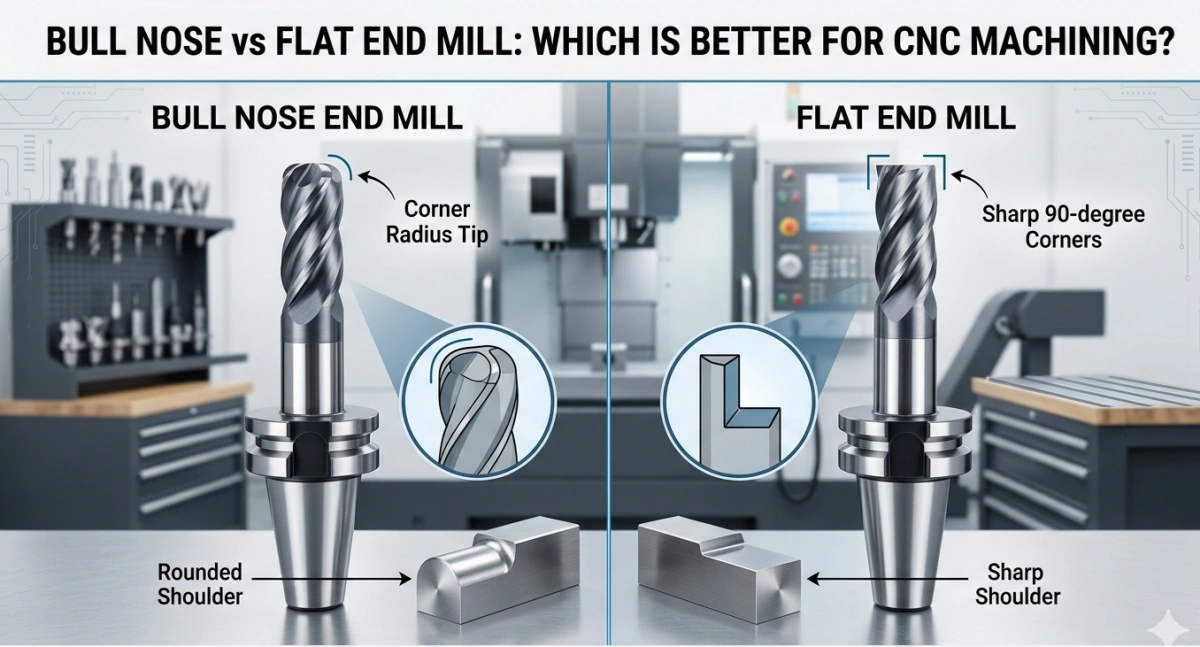
يقارن الجدول أدناه هندسة الميزات التي يهدف كل قاطع إلى إنتاجها. يعتمد اختيار القاطع الفعلي أيضًا على الرسم, قطر الأداة المتاحة, تسامح, إمكانية الوصول إلى الميزة, وإعداد الآلات.
| نقطة المقارنة | أنف الثور / مطحنة نهاية نصف القطر الزاوية | مستوي / مطحنة نهاية المربعة |
|---|---|---|
| ركن القطع | قاع مسطح مع نصف قطر الزاوية | قاع مسطح مع زاوية قطع حادة |
| الهندسة السفلية | قاع مسطح مع انتقال نصف قطري من الأسفل إلى الجدار | قاع مسطح مع انتقال حاد من الأسفل إلى الجدار |
| نتيجة الركن الداخلي | يترك أو يتبع انتقالًا داخليًا نصف قطره | يستخدم عند الحاجة إلى زاوية داخلية حادة بزاوية 90 درجة |
| كتف مربع | غير مناسب عندما يجب أن يظل الكتف حادًا | مناسبة عند الحاجة إلى كتف مربع حاد |
| فتحات / ميزات مربعة | يُستخدم عندما تسمح الميزة بنصف القطر في الزوايا السفلية | مناسبة عندما تتطلب الميزة زوايا سفلية حادة |
| حالة الزاوية على الرسم | يُستخدم عندما يكون نصف القطر مسموحًا به أو محددًا | يُستخدم عند الحاجة إلى زاوية حادة |
| مشغل الاختيار الرئيسي | مطلوب الانتقال الشعاعي | مطلوب زاوية حادة 90 درجة أو كتف مربع |
كيف تغير هندسة الزاوية الميزة المُشكَّلة

تتميز المطحنة ذات الأنف الثور بقاع قطع مسطح مع نصف قطر زاوية بين حافة القطع السفلية وحافة القطع الجانبية. نتيجة ل, تعكس الميزة المُشكَّلة انتقالًا نصف قطري بدلاً من زاوية سفلية حادة.
تحتوي المطحنة ذات النهاية المسطحة أيضًا على قاع قطع مسطح, لكن زاوية القطع حادة وليست مشعة. يتم استخدام هذه الهندسة عندما يتطلب رسم الجزء زاوية داخلية حادة, كتف مربع, أو ميزة أخرى لا تسمح بنصف قطر زاوية محدد.
يعد هذا التمييز أكثر أهمية من مجرد السؤال عن القاطع الأقوى أو الأكثر متانة. يجب أن يتطابق القاطع مع الشكل الهندسي المطلوب في الجزء النهائي.
كما أن المطحنة ذات النهاية المسطحة لا تضمن زاوية داخلية مثالية رياضيًا بنصف قطر صفر في كل موقف. قطر الأداة, حالة القاطع, مسار الأدوات, إمكانية الوصول, ويمكن أن يؤثر تسامح الرسم على الميزة النهائية.
ما هي مطحنة النهاية التي يجب أن تختارها؟?
اختر مطحنة نهاية أنف الثور متى
تعتبر طاحونة نهاية الأنف الثور بشكل عام هي الهندسة الأكثر ملاءمة عندما:
- يسمح الرسم أو يحدد نصف قطر الزاوية
- تتطلب الميزة انتقالًا نصف قطري من الأسفل إلى الجدار
- تتيح ميزة المتدرجة أو الكتف وجود نصف قطر في الزاوية السفلية
- تجمع الهندسة المطلوبة بين قاع مسطح وزوايا نصف قطرها
- ليست هناك حاجة إلى زاوية سفلية حادة بزاوية 90 درجة
قطر القاطع, نصف قطر الزاوية, يصل, ويجب أن تظل الأبعاد الأخرى متطابقة مع هندسة الجزء.
للأبعاد والتكوينات المتاحة, يرى مطحنة نهاية أنف الثور.
اختر مطحنة النهاية المسطحة عندما
طاحونة النهاية المسطحة هي الخيار الأكثر مباشرة بشكل عام:
- يتطلب الرسم زاوية داخلية حادة بزاوية 90 درجة
- يجب أن يظل الكتف المربع حادًا
- تتطلب ميزة الفتحة أو القاع المربع زوايا سفلية حادة
- الميزة لا تسمح بنصف قطر الزاوية
- تتطلب هندسة الجزء على وجه التحديد قاطعًا مسطحًا ذو زاوية حادة
لا تزال الزاوية القابلة للتحقيق تعتمد على قطر القاطع, الوصول إلى الأداة, مسار الأدوات, والتسامح.
للتكوينات المتاحة, يرى مطحنة النهاية المسطحة.
متى يمكن استخدام كلتا الأداتين
تحتوي بعض الأجزاء على انتقالات نصف قطرية وميزات مربعة حادة. في تلك الحالات, يمكن استخدام أشكال هندسية قطع مختلفة لميزات أو مراحل تصنيع مختلفة.
لا ينبغي التعامل مع هذا على أنه تسلسل تخشين أو تشطيب ثابت. العملية الفعلية تعتمد على الرسم, بدل الأسهم, تسامح, إمكانية الوصول, واستراتيجية CAM.
أنف الثور / نصف قطر الزاوية مقابل شقة / المصطلحات المربعة
يمكن أن تختلف أسماء الأدوات بين الكتالوجات, المناطق, والموردين.
على المدى مطحنة نهاية الأنف الثور يصف عادة طاحونة نهاية مسطحة مع نصف قطر الزاوية, بينما مطحنة نهاية نصف قطرها الزاوية هو مصطلح كتالوج آخر يستخدم على نطاق واسع لهذه الهندسة.
على نفس المنوال, مطحنة نهاية مسطحة and مطحنة نهاية مربعة تستخدم عادة للزاوية الحادة, ملامح مطحنة نهاية مسطحة.
لذلك, عمليات بحث مثل نصف قطر الزاوية مقابل مطحنة نهاية مربعة, مطحنة نهاية نصف قطرها الزاوية مقابل مطحنة نهاية مسطحة, and أنف الثور مقابل مطحنة نهاية مربعة غالبًا ما تشير إلى نفس المقارنة الأساسية المغطاة في هذه الصفحة: زاوية قطع نصف قطرها مقابل زاوية قطع حادة.
يمكن أن تختلف اصطلاحات التسمية هذه بين الشركات المصنعة, لذلك يجب دائمًا تأكيد الأداة النهائية من خلال هندستها وأبعادها الفعلية.
مقارنات الأدوات ذات الصلة
هذه الصفحة تقارن أ قاطعة مسطحة القاع بنصف قطر الزاوية مع قاطعة مسطحة القاع ذات زاوية حادة.
إذا كنت بحاجة إلى مقارنة أداة قطع الأنف الثور بنهاية قطع مستديرة بالكامل, يرى مطحنة نهاية الثور مقابل مطحنة نهاية الأنف الكرة.
للحصول على مواصفات المنتج والتكوينات المخصصة, انظر لدينا مطحنة نهاية أنف الثور and مطحنة النهاية المسطحة صفحات المنتج.
الأسئلة المتداولة
ما هو الفرق الرئيسي بين أنف الثور وطاحونة النهاية المسطحة?
يمكن أن يكون لكل من القواطع قاع قطع مسطح. والفرق الرئيسي هو زاوية القطع. مطحنة نهاية أنف الثور لها نصف قطر زاوية, بينما تحتوي المطحنة المسطحة على زاوية قطع حادة.
ما هي المطحنة النهائية التي يجب أن أستخدمها لزاوية داخلية حادة؟?
استخدم طاحونة نهاية مسطحة أو مربعة عندما يتطلب الرسم زاوية داخلية حادة بزاوية 90 درجة أو كتفًا مربعًا.
تعتمد الزاوية الفعلية القابلة للتحقيق أيضًا على قطر القاطع, الوصول إلى الأداة, مسار الأدوات, والتسامح.
ما هي المطحنة النهائية التي يجب أن أستخدمها عندما يكون نصف قطر الزاوية مسموحًا به أو مطلوبًا?
عادة ما تكون طاحونة نهاية نصف القطر أو الأنف الثور هي الخيار الأكثر مباشرة عندما يسمح الرسم أو يحدد انتقال نصف القطر في الجزء السفلي أو كتف الميزة.
يجب تأكيد قيمة R المطلوبة من متطلبات الرسم أو التصنيع.
هل يمكن لطاحونة نهاية الثور أن تحل محل مطحنة نهاية مسطحة?
ليس عندما تتطلب الميزة النهائية زاوية حادة لا تسمح بنصف القطر.
يمكن أن يتداخل القاطعان في بعض عمليات التشغيل الآلي, لكن زوايا القطع الخاصة بها تنتج هندسة مميزة مختلفة.
هو نصف قطر الزاوية مقابل مطحنة نهاية مربعة نفس المقارنة?
إنها مقارنة وثيقة الصلة. في العديد من كتالوجات الأدوات, يشير أنف الثور ونصف قطر الزاوية إلى قواطع مسطحة القاع بزوايا نصف قطرها, بينما تشير المطحنة المسطحة والمربعة إلى جوانب مسطحة ذات زاوية حادة.
تختلف التسمية بين الشركات المصنعة, لذلك لا يزال يتعين تأكيد هندسة القاطع الفعلية.
خاتمة
يتمثل الاختلاف الرئيسي بين طاحونة الأنف الثور والطاحونة ذات النهاية المسطحة في هندسة الزاوية المطلوبة في الجزء النهائي. اختر طاحونة نهاية نصف قطرها أنف الثور أو الزاوية عندما يسمح الرسم أو يحدد انتقالًا نصف قطره, واختر طاحونة نهاية مسطحة أو مربعة عند الحاجة إلى زاوية حادة بزاوية 90 درجة أو كتف مربع.
إذا لم تكن متأكدًا من الشكل الهندسي الذي يطابق الجزء الخاص بك, أرسل الرسم الخاص بك, أبعاد الميزة الحرجة, ومتطلبات التصنيع لنا email أو اتصل بنا مباشرة على واتساب للمراجعة.