 قواطع الطحن الدقيقة,أدوات القطع لتصنيع كل مادة باستخدام الحاسب الآلي

The corner radius vs corner rounding comparison often confuses buyers because the tool names sound similar. لكن, شعاع الزاوية, أنف الثور, and Corner Rounding End Mills can produce very different workpiece profiles.
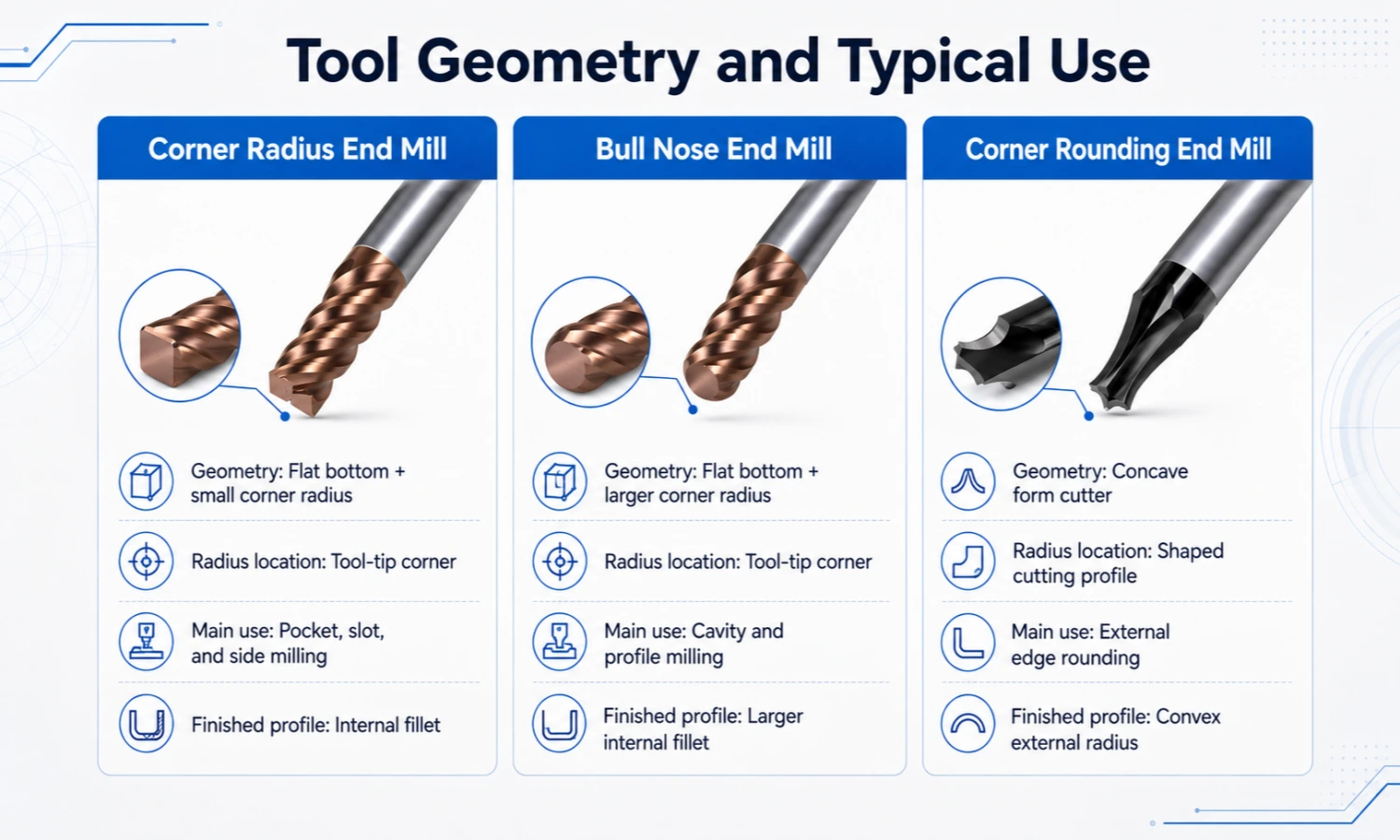
A Corner Radius End Mill and a Bull Nose End Mill normally have a flat or nearly flat bottom. Their radius sits between the bottom and side cutting edges. لذلك, both tools can perform general milling while producing an internal fillet or rounded transition.
A Corner Rounding End Mill is different. It has a concave form-cutting profile that removes a sharp external corner and creates a convex radius on the workpiece edge.
Because suppliers may use different naming systems, buyers should check the cutter geometry, dimensions, and required finished profile instead of relying only on the product name.
Corner Radius vs Corner Rounding: إجابة سريعة
في نصف قطر الزاوية مقابل مقارنة تقريب الزاوية, تحتوي مطحنة نهاية نصف القطر الزاوية على قاع مسطح أو شبه مسطح مع نصف قطر عند زاوية الأداة. عادة ما يكون لطاحونة Bull Nose End هندسة مماثلة, على الرغم من أن بعض الموردين يستخدمون اسم أداة القطع ذات نصف قطر زاوية أكثر وضوحًا.
تستخدم مطحنة نهاية التقريب الزاوية شكل قطع مقعر لتشكيل نصف قطر محدب على حافة قطعة عمل خارجية يمكن الوصول إليها.
لماذا غالبًا ما يتم الخلط بين أسماء القطع هذه؟?
لا تستخدم الشركات المصنعة المختلفة دائمًا نفس المصطلحات.
يستخدم بعض الموردين "Bull Nose End Mill" و"Corner Radius End Mill" كأسماء قابلة للتبديل. Others use “bull nose” for cutters with a larger or more visible tool-corner radius. لكن, there is no globally accepted radius value that separates the two terms.
Corner Rounding End Mills are easier to distinguish because they normally have a shaped concave profile and a different machining purpose.
لذلك, focus on three questions:
- Where is the radius located on the cutter?
- What profile will it produce on the workpiece?
- Is the operation general milling or external edge forming?
How to Identify Each Cutter from a Tool Photo or Catalog
Product names may be inconsistent, but cutter geometry usually provides a clearer answer.
Check the Bottom Geometry
A Corner Radius or Bull Nose End Mill normally keeps a flat or nearly flat central area at the tool tip. يظهر نصف القطر حيث تلتقي حافة القطع السفلية بحافة القطع الجانبية.
بسبب هذه الهندسة, لا يزال بإمكان القاطع أداء عملية الجيب, طحن الجانب, الشق, وغيرها من عمليات الطحن النهائية الشائعة.
ابحث عن ملف تعريف النموذج المقعر
تتميز مطحنة نهاية التقريب الزاوية بمظهر قطع مقعر بشكل واضح. تتضمن بعض التصميمات قسمًا أماميًا تجريبيًا أو مخفضًا, بينما يستخدم البعض الآخر بنية رأس مختلفة.
تنتج حافة القطع المشكلة نصف قطر محدبًا على الحافة الخارجية لقطعة العمل.
لا تخلط بين أنف الثور والأنف الكروي
عادةً ما تحتفظ مطحنة Bull Nose End بمنطقة مركزية مسطحة أو شبه مسطحة, مع نصف القطر الموجود في زاوية الأداة.
تحتوي المطحنة ذات الأنف الكروي على طرف مستدير بالكامل أو نصف كروي للأسطح المنحنية, ملامح العفن, والتشطيب ثلاثي الأبعاد.
للحصول على مقارنة مفصلة, اقرأ لدينا مطحنة نهاية الثور مقابل مطحنة نهاية الأنف الكرة مرشد.
ما هي مطحنة نهاية نصف قطر الزاوية?
عادةً ما تكون المطحنة ذات نصف القطر الزاوية عبارة عن مطحنة ذات قاع مسطح مع انتقال دائري بين حواف القطع السفلية والجانبية.
يزيل نصف القطر التقاطع الحاد بين حواف القطع هذه. نتيجة ل, يمكن أن تصبح الزاوية أقوى وأقل حساسية للتقطيع من المطحنة المربعة الحادة تمامًا.
الهندسة النموذجية
يتضمن التصميم المشترك:
- قاع مسطح أو شبه مسطح
- حواف قطع جانبية حلزونية أو مستقيمة
- نصف قطر في الزاوية السفلية
- اثنين أو أكثر من المزامير
- كربيد صلب, الأحرار, أو مادة أداة أخرى مناسبة
نصف القطر ينتمي إلى تلميح الأداة. إنه ليس شكلًا مقعرًا كاملاً حول رأس القاطع.
التطبيقات النموذجية
تُستخدم المطاحن النهائية لنصف القطر الزاوية بشكل شائع:
- جيب, فتحة, والطحن الجانبي
- تصنيع تجويف القالب
- طحن الملف الشخصي
- التخشين, نصف تشطيب, and finishing
- تجهيز الشرائح الداخلية
- طحن CNC عام مع زاوية أداة معززة
إنها مفيدة بشكل خاص عندما يتطلب الجزء مساحة مسطحة مُشكَّلة مع انتقال داخلي مستدير.
متى يجب عليك اختيار واحد?
اختر هذا القاطع عندما يتطلب الرسم قاعًا مسطحًا أو شبه مسطح, نصف قطر الزاوية الداخلية, وركن أدوات أقوى من المطحنة المربعة الحادة.
نصف القطر, قطر القاطع, طول القطع, ويجب أن يتطابق الخلوص مع هندسة قطعة العمل.
ما هي مطحنة نهاية أنف الثور?
تحتوي مطحنة Bull Nose End أيضًا على نصف قطر بين حواف القطع السفلية والجانبية. لذلك, يعاملها العديد من الموردين كنوع من مطحنة نهاية نصف القطر الزاوية.
في بعض نطاقات المنتجات, يصف "أنف الثور" أداة القطع ذات نصف قطر زاوية أكبر أو أكثر وضوحًا. مع ذلك, ممارسة التسمية هذه ليست عالمية.
الهندسة النموذجية
عادةً ما تحتوي مطحنة Bull Nose End على:
- منطقة مركزية مسطحة أو شبه مسطحة
- زاوية أداة مستديرة
- هندسة زاوية أقوى من المطحنة المربعة الحادة
- شكل مناسب لتصنيع التجويف والتشكيل الجانبي
على عكس مطحنة الكرة ذات الأنف, وعادةً ما تحافظ على منطقة مسطحة أو شبه مسطحة في المركز.
التطبيقات النموذجية
تُستخدم مطاحن Bull Nose End بشكل شائع في:
- تجويف القالب والطحن الشخصي
- التخشين وشبه التشطيب
- شرائح داخلية أكبر
- الآلات الكنتورية
- العمليات التي تتطلب زاوية أداة أقوى
يمكن للقاطع إزالة المواد من ميزات القاع المسطح أو شبه المسطح أثناء إنتاج انتقال داخلي مستدير.
متى يجب عليك اختيار واحد?
قد تكون مطحنة Bull Nose End مناسبة عندما يتطلب الجزء شريحة داخلية, نصف قطر زاوية ملحوظ, وزاوية أداة قوية للتخشين, نصف تشطيب, أو طحن الملف الشخصي.
للطحن ذو القاع المسطح باستخدام زاوية أداة معززة, عرض لدينا مطحنة نهاية أنف الثور.
ما هي مطحنة نهاية التقريب الزاوية?
إن مطحنة نهاية التقريب الزاوية هي عبارة عن أداة قطع الشكل مصممة لتصنيع مقطع جانبي مستدير على حافة قطعة عمل خارجية.
طليعتها لها نصف قطر مقعر. عندما يتحرك القاطع على طول حافة يمكن الوصول إليها, يزيل المظهر الجانبي المشكل الزاوية الحادة وينتج نصف قطر محدب.
شكل مقعر للقطع
يعتبر ملف القطع المقعر هو أوضح ميزة تعريفية.
على سبيل المثال, قد يتم تصميم قاطع R2.5 لإنتاج نصف قطر خارجي تقريبًا R2.5. لكن, يعتمد المظهر الجانبي النهائي أيضًا على هندسة القاطع, موقف الآلة, نفد, وظروف التصنيع.
تتضمن بعض التصميمات قسمًا أماميًا تجريبيًا أو مخفضًا. البعض الآخر لا. لذلك, يجب على المشترين تأكيد الأبعاد الكاملة قبل الطلب.
التطبيقات النموذجية
تستخدم مطاحن نهاية التقريب الزاوية بشكل رئيسي في:
- تقريب الحواف الخارجية الحادة
- إنتاج أنصاف أقطار حافة محدبة
- لوحة التشطيب وحواف المكونات
- إنشاء ملفات تعريف حافة زخرفية أو وظيفية
- عمليات تشكيل الحواف المخصصة
لا يتم اختيارها عادةً للطحن الجيبي, الشق, أو الآلات العامة ذات القاع المسطح.
متى يجب عليك اختيار واحد?
اختر هذا القاطع عندما يتطلب الرسم نصف قطر محدب على حافة خارجية بدلاً من شريحة داخلية.
لتصنيع ملف تعريف مستدير على حافة قطعة العمل الخارجية, عرض لدينا مطحنة نهاية التقريب الزاوية.
دليل اختيار القاطع السريع
يصبح الفرق بين نصف قطر الزاوية وتقريب الزاوية أسهل في الفهم عند مقارنة ملف تعريف قطعة العمل المطلوبة.
| ملف تعريف قطعة العمل المطلوبة أو التشغيل | القاطع الموصى به |
| جيب سفلي مسطح مع شريحة داخلية صغيرة | مطحنة نهاية نصف القطر الزاوية |
| تجويف أو ملف تعريف ذو زاوية أداة مستديرة أقوى | مطحنة نهاية أنف الثور |
| نصف قطر محدب على حافة خارجية يمكن الوصول إليها | مطحنة نهاية التقريب الزاوية |
| سطح منحني بالكامل أو تشطيب كفاف ثلاثي الأبعاد | مطحنة نهاية الكرة الأنف |
| جدار بزاوية, سطح مشروع, أو تجويف مدبب | مطحنة نهاية مدبب |
قد يكون للطاحونة ذات الأنف الثور والطاحونة ذات نصف القطر الزاوية هندسة مماثلة, اعتمادا على نظام تسمية المورد. لذلك, تأكيد رسم الأداة, نصف القطر, قطر القاطع, والملف الشخصي النهائي المطلوب قبل الطلب.
كيفية اختيار قاطع نصف القطر الصحيح
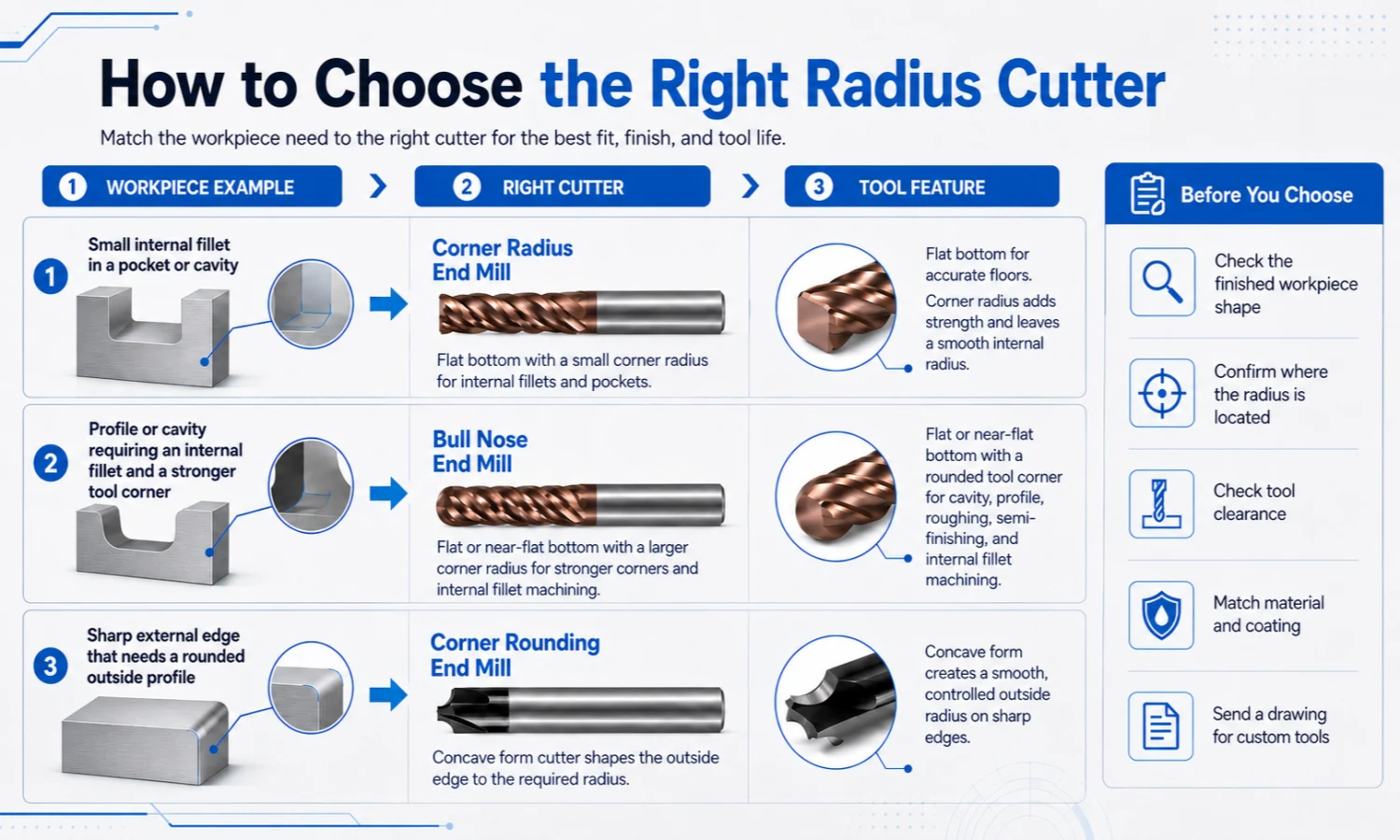
يعتمد القاطع الصحيح أولاً على شكل قطعة العمل النهائية. بعد تحديد الملف الشخصي, تحقق من نصف القطر, موقف بالقطع, تخليص الأداة, مادة, وعملية القطع.
التحقق من شكل قطعة العمل النهائية
استخدم ملف تعريف الجزء الأخير كدليل أول:
- شريحة داخلية في تجويف مسطح القاع: نصف قطر الزاوية أو مطحنة نهاية أنف الثور
- نصف قطر محدب على حافة خارجية: مطحنة نهاية التقريب الزاوية
- حافة بزاوية مستقيمة: قاطع الشطب
- جدار مدبب أو زاوية مسودة: القاطع مدبب
- سطح ثلاثي الأبعاد منحني بالكامل: مطحنة نهاية الكرة الأنف
يمنع هذا التمييز العديد من أخطاء اختيار القاطع.
قم بتأكيد نصف القطر المطلوب وأبعاد الأداة
يجب أن يتطابق نصف قطر القاطع مع رسم الجزء. لكن, نصف القطر وحده لا يكفي.
تأكيد أيضا:
- القاطع أو قطر الرأس
- قطر عرقوب
- القطع والطول الكلي
- عدد الناي
- وصول الأداة
- الجدران القريبة, أكتاف, والتركيبات
- مادة الشغل
قد يكون للقاطع نصف القطر الصحيح ولكنه لا يزال يتداخل مع ميزة أخرى.
النظر في عملية الطحن
تحديد ما إذا كانت العملية خشنة, نصف تشطيب, التشطيب, طحن الجيب, تصنيع التجويف, طحن الملف الشخصي, أو تشكيل الحافة.
يمكن لـ Corner Radius و Bull Nose End Mills إجراء العديد من عمليات الطحن العامة. تقوم مطحنة نهاية التقريب الزاوية بإجراء عملية تشكيل حافة أكثر تخصصًا.
قم بمطابقة الأداة مع مادة قطعة العمل
تؤثر المادة على درجة الكربيد, هندسة الناي, طلاء, سرعة القطع, معدل التغذية, واستراتيجية التبريد.
فولاذ, stainless steel, ألمنيوم, copper, الحديد الزهر, وقد يتطلب الفولاذ القالب المتصلب تصميمات قطع مختلفة. لذلك, تقديم المادة والصلابة الدقيقة عند طلب التوصية.
أرسل رسمًا للهندسة الخاصة
يعد الرسم ثنائي الأبعاد أو ثلاثي الأبعاد مفيدًا بشكل خاص للخطوات العميقة, أكتاف ضيقة, وصول مقيد, الجدران المجاورة, أنصاف أقطار متعددة, قطع متقطع, وملفات التعريف غير القياسية.
يساعد الرسم المورد في تقييم قطر القاطع, وصول الأداة, تخليص الرقبة, وتشكيل الملف الشخصي قبل الإنتاج.
أخطاء الاختيار الشائعة
الاختيار حسب اسم المنتج فقط
قد يتم إدراج مطحنة نهاية نصف قطر الثور من أحد الموردين على أنها مطحنة نهاية نصف قطر الزاوية من قبل مورد آخر.
لذلك, قارن رسم الأداة, قطر القاطع, نصف القطر, الهندسة السفلية, وتصميم الناي.
التعامل مع كل رأس قاطع ضيق باعتباره قاطعًا مدببًا
تخفيف الفلوت, تخليص الرقبة, أو قد تجعل الهندسة المشكلة جزءًا من القاطع يبدو أضيق. لكن, هذا لا يجعلها مطحنة نهاية مدببة.
يحتوي القاطع المستدق الحقيقي على قطر قطع يتغير تدريجيًا على طول قسم القطع.
للجدران الزاوية, أسطح مشروع, وتجاويف مدببة, عرض لدينا القاطع مدبب.
تجاهل إزالة الأداة
قد يكون لقاطع الشكل رأس عريض, انخفاض الرقبة, أو القسم التجريبي. لذلك, تحقق من الكتفين القريبة, الجدران, تركيبات, وميزات الجزء قبل التصنيع.
خيارات قطع نصف القطر القياسية والمخصصة
تغطي القواطع القياسية العديد من التطبيقات الشائعة. لكن, قد تكون الأداة المخصصة ضرورية عندما يكون للجزء مساحة محدودة, نصف قطر خاص, أو متطلبات مادية غير عادية.
قد تشمل الخيارات المتاحة:
- أحجام نصف قطرها متري وبوصة
- اثنين-, ثلاثة-, أربعة-, أو تصاميم متعددة المزمار
- حواف القطع المغلفة وغير المطلية
- أقطار عرقوب قياسية أو مخصصة
- تكوينات قصيرة وطويلة المدى
- قطع مخصصة أو أقطار الرأس
- أقطار الطيار حيثما ينطبق ذلك
- رقاب مخفضة وتخليص خاص
- درجات وطلاءات كربيد خاصة بالتطبيقات
يمكن استخدام صور المنتج والأبعاد المنشورة كمراجع. لكن, الهندسة النهائية, dimensions, tolerances, طلاء, ويجب أن تتبع تفاصيل الإنتاج الرسم والاقتباس المؤكدين.
للحصول على حلول طحن قياسية ومخصصة إضافية, عرض لدينا كربيد طحن القاطع يتراوح.
معلومات للتأكيد قبل الطلب
قبل طلب الاقتباس, تأكيد أكبر قدر ممكن من المعلومات التالية:
- مطلوب ملف تعريف الشغل النهائي
- شرائح داخلية أو نصف قطر الحافة الخارجية
- حجم نصف القطر المطلوب
- القاطع أو قطر الرأس
- قطر عرقوب
- القطع والطول الكلي
- قيود إزالة الأدوات
- مادة الشغل والصلابة
- نوع الآلة والحامل
- الكمية المطلوبة
- 2رسم ثلاثي الأبعاد أو ثلاثي الأبعاد
تساعد هذه التفاصيل في تحديد ما إذا كانت الأداة القياسية مناسبة أم أن أداة القطع المخصصة مطلوبة.
Frequently Asked Questions
هل مطحنة نهاية الثور هي نفس مطحنة نهاية نصف القطر الزاوية?
في العديد من أنظمة المنتجات, تتداخل المصطلحات. يصف كلاهما عادةً مطحنة نهاية مسطحة أو شبه مسطحة بنصف قطر عند زاوية الأداة.
تستخدم بعض الشركات المصنعة "أنف الثور" للحصول على نصف قطر أكثر وضوحًا. لكن, لا توجد قيمة تقسيم عالمية, لذا تحقق من الهندسة والأبعاد الفعلية.
ما هو الفرق بين نصف قطر الزاوية وطاحونة نهاية التقريب الزاوية?
تحتوي مطحنة نهاية نصف القطر الزاوية على نصف قطر بين حواف القطع السفلية والجانبية. يمكنها إجراء الطحن العام أثناء إنتاج شرائح داخلية.
تحتوي مطحنة نهاية التقريب الزاوية على ملف تعريف مقعر للقطع. إنها تنتج بشكل رئيسي نصف قطر محدب على حافة قطعة العمل الخارجية.
ما هو القاطع الذي يجب أن أستخدمه للحصول على حافة مستديرة خارجية؟?
عادةً ما تكون مطحنة نهاية التقريب الزاوية هي الاختيار الصحيح لحافة خارجية يمكن الوصول إليها. لكن, نصف القطر, قطر الرأس, الهيكل التجريبي, التخليص, ولا يزال يتعين تأكيد هندسة قطعة العمل.
ما هي القاطعة التي يجب أن أستخدمها لشرائح القالب المجوفة؟?
عادةً ما تكون مطحنة نصف القطر أو مطحنة نهاية الثور أكثر ملاءمة. يعتمد الاختيار النهائي على عمق التجويف, نصف القطر المطلوب, surface finish, بدل التخشين, واستراتيجية التصنيع.
هل يمكن تخصيص هذه القواطع?
نعم. قد تتضمن الخيارات المخصصة نصف القطر, قطر القاطع, قطر عرقوب, طول الأداة, تكوين الفلوت, درجة كربيد, طلاء, الهيكل التجريبي, والتخليص الخاص.
يوصى بالرسم للملفات غير القياسية أو مساحات التصنيع المقيدة.
أرسل رسم قطع نصف القطر الخاص بك
في الممارسة العملية, يعتمد قرار نصف قطر الزاوية مقابل تقريب الزاوية على الملف الشخصي النهائي, موقع نصف القطر, تخليص الأداة, مادة الشغل, وتشغيل الآلات. يجب أيضًا التحقق من هندسة Bull Nose نظرًا لأن مصطلحات المورد قد تختلف.