 Frese di precisione,Utensili da taglio per la lavorazione CNC di ogni materiale

Confrontando a 2 flauto contro 3 fresa per scanalatura per alluminio, iniziare con l'operazione di lavorazione.
Scegliere una fresa a 2 taglienti per eseguire scanalature profonde, sgrossatura pesante, o un volume elevato di trucioli rendono l’evacuazione dei trucioli la preoccupazione principale. Gli spazi più ampi della scanalatura offrono ai trucioli di alluminio più spazio per lasciare l'area di taglio.
Scegli una fresa a 3 taglienti quando la qualità della parete laterale, stabilità del profilo, semifinitura, o finire conta di più. Il tagliente aggiuntivo può fornire un impegno più coerente e una migliore rigidità in un design di fresa comparabile.
Nessuno dei due numeri di scanalature è adatto a tutti i lavori sull'alluminio. Profondità della fessura, impegno radiale, portata dell'utensile, condizione del titolare, refrigerante o getto d'aria, percorso utensile, e i requisiti della superficie possono cambiare la scelta finale.
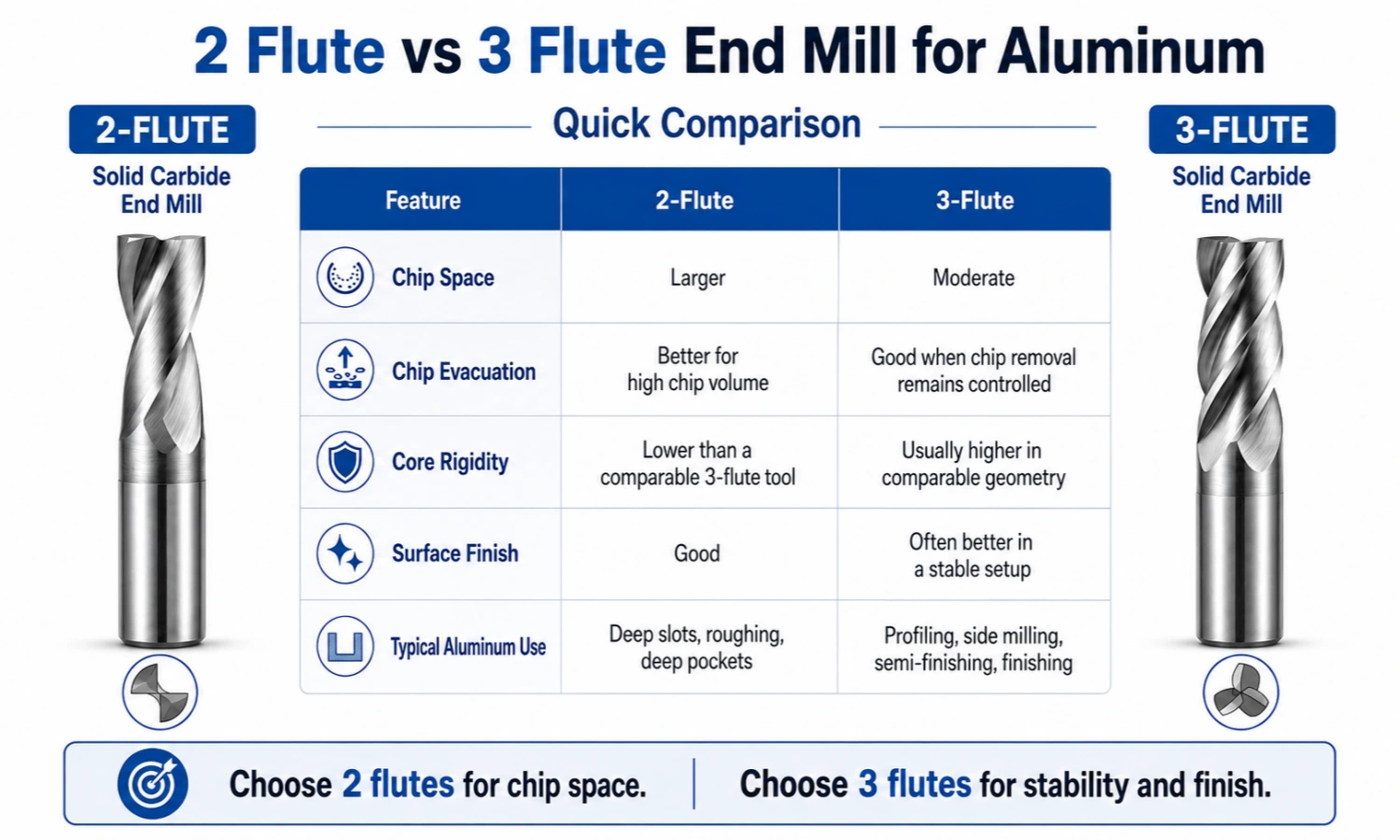
Confronto rapido: 2 Flauto contro 3 Fresa per flauto per alluminio
| Fattore di selezione | 2-Fresa per flauto | 3-Fresa per flauto |
|---|---|---|
| Spazio al chip | Più grande | Moderare |
| Evacuazione dei trucioli | Meglio per un elevato volume di trucioli | Buono quando l'asportazione del truciolo rimane controllata |
| Rigidità del nucleo | Inferiore a uno strumento comparabile a 3 taglienti | Di solito più alto in geometrie comparabili |
| Scanalatura profonda a tutta larghezza | Di solito preferito | Adatto in condizioni controllate |
| Sgrossatura pesante | Di solito preferito | Meglio per una rimozione moderata |
| Fresatura laterale | Adatto | Spesso preferito |
| Finitura superficiale | Bene | Spesso meglio in una configurazione stabile |
| Utilizzo tipico dell'alluminio | Fessure profonde, sgrossatura, tasche profonde | Profilazione, fresatura laterale, semifinitura, finitura |
Scegliere 2 scanalature quando lo spazio per il truciolo e la rimozione sicura dei trucioli sono le priorità. Scegliere 3 scanalature durante il taglio stabilità, qualità delle pareti laterali, e il potenziale di finitura conta di più.
Queste sono raccomandazioni iniziali, non regole fisse. L'impostazione completa della lavorazione influisce comunque sul risultato.
Perché il conteggio delle scanalature è importante nella lavorazione dell'alluminio
Spazio truciolo ed evacuazione truciolo
L'alluminio spesso produce grandi quantità, morbido, o trucioli continui. Quando questi chip rimangono all'interno di una fessura o di una tasca, la taglierina potrebbe tagliarli nuovamente. I trucioli potrebbero anche attaccarsi al tagliente o graffiare la superficie lavorata.
Una fresa a 2 eliche offre spazi più ampi. Normalmente gestisce un volume elevato di trucioli più facilmente di una fresa a 3 eliche comparabile.
Questo vantaggio diventa importante nelle fessure profonde a tutta larghezza e nelle tasche chiuse, dove i chip hanno uno spazio limitato per fuggire.
Un utensile a 3 eliche fornisce ancora spazio utile per il truciolo. Tuttavia, il percorso utensile, refrigerante, colpo d'aria, e l'impegno di taglio deve aiutare i trucioli a lasciare la zona di taglio.
Rigidità del nucleo e deflessione dell'utensile
In modelli comparabili, una fresa a 3 eliche spesso ha più materiale centrale rispetto a una fresa a 2 eliche. Il nucleo più robusto può ridurre la deflessione dell'utensile durante la fresatura laterale e la profilatura.
Una deflessione inferiore aiuta la taglierina a mantenere una posizione sulla parete più coerente. Può anche migliorare la precisione del profilo e ridurre la variazione visibile della parete.
Il conteggio dei flauti non può correggere un setup debole. Portata utensile eccessiva, eccentricità del supporto, scarso serraggio, o condizioni instabili della macchina possono comunque causare vibrazioni e cambiamenti dimensionali.
Utilizzare la lunghezza dell'utensile più breve possibile e un supporto stabile dell'utensile prima di fare affidamento sul conteggio delle scanalature per migliorare il risultato.
Impegno all'avanguardia e finitura superficiale
Una fresa a 3 taglienti crea tre impegni di taglio per giro invece di due.
In condizioni stabili, l'impegno aggiuntivo può supportare pareti laterali più lisce e una finitura più uniforme. Questo è uno dei motivi per cui le frese a tre taglienti vengono spesso selezionate per la profilatura, semifinitura, e rifinitura.
Anche la superficie finale dipende da:
- Alimentazione per dente
- Eccentricità dell'utensile
- Geometria del bordo
- Usura degli utensili
- Condizioni del supporto
- Rigidità della macchina
- Impegno radiale
- Mandata di refrigerante o aria
Un numero maggiore di scanalature può migliorare il potenziale di finitura, ma non garantisce un risultato superficiale specifico.
Quando scegliere una fresa a 2 taglienti per alluminio
Scanalatura profonda a tutta larghezza
Scegli una fresa a 2 taglienti quando la fessura è profonda, è richiesto l'impegno a tutta larghezza, e i chip hanno uno spazio limitato per scappare.
Durante l'esecuzione di scanalature a tutta larghezza, entrambi i lati della taglierina rimangono agganciati al materiale. I trucioli devono passare attraverso le scanalature prima di lasciare la fessura.
Il design a due eliche offre più spazio per il flusso dei trucioli. Di solito è la scelta iniziale più sicura quando l'imballaggio dei trucioli presenta un rischio maggiore.
Il refrigerante o il getto d'aria rimangono importanti. Una fresa a 2 taglienti non è in grado di compensare un impegno eccessivo o una scarsa rimozione del truciolo.
Sgrossatura pesante e volume di truciolo elevato
Scegliere 2 scanalature quando l’elevato volume di truciolo e la sicura evacuazione del truciolo contano più della finitura finale della parete.
La sgrossatura pesante rimuove più materiale e produce più trucioli. Spazi più ampi della scanalatura possono ridurre il rischio di ritaglio del truciolo e di blocco della scanalatura.
La taglierina deve comunque corrispondere alla macchina, titolare, lunghezza dell'utensile, e taglio del carico. Un impegno eccessivo può sovraccaricare qualsiasi taglierina.
Fresatura di tasche profonde
Le tasche profonde e chiuse possono intrappolare i trucioli attorno all'utensile. Una fresa a due taglienti è spesso una scelta pratica di partenza per queste condizioni.
Un ingresso dilagante, entrata elicoidale, oppure il percorso utensile adattivo può ridurre l'impegno di taglio. Anche un forte getto d'aria o di refrigerante può allontanare i trucioli dal fondo della tasca.
Per scanalature profonde, sgrossatura, e lavorazione dell'alluminio ad alto volume di trucioli, visualizza il nostro 2 Fresa per flauto.
Quando scegliere una fresa a 3 taglienti per alluminio
Fresatura laterale e profilatura
Scegli una fresa a 3 eliche quando il taglio laterale stabile e la qualità costante delle pareti contano più dello spazio massimo dell'elica.
Durante la fresatura laterale, solo una parte del diametro della fresa può entrare in contatto con il pezzo. L'evacuazione dei trucioli è spesso più semplice rispetto alla realizzazione di cave a tutta larghezza.
Il terzo tagliente può garantire un impegno più costante durante la fresatura a parete diritta, profilazione esterna, contornatura interna, e finitura dei bordi.
Semifinitura e Finitura
Scegliere 3 scanalature quando la consistenza della superficie e la finitura delle pareti laterali sono gli obiettivi principali.
Un utensile a tre eliche può garantire un impegno più fluido rispetto ad alcune frese a due eliche. Funziona meglio quando la configurazione della macchina rimane stabile e la sporgenza dell'utensile rimane sotto controllo.
Una taglierina a 3 scanalature non correggerà automaticamente:
- Runout eccessivo
- Taglienti usurati
- Scarso serraggio
- Alimentazione instabile
- Portata utensile eccessiva
- Innesto radiale errato
Controllare queste condizioni prima di modificare il conteggio delle scanalature.
Scanalatura e svuotamento controllate
Una fresa a 3 taglienti può gestire scanalature poco profonde o controllate quando il percorso utensile e l'evacuazione dei trucioli sono adatti.
Impegno più leggero, taglio in scena, un ingresso dilagante, un'entrata elicoidale, oppure un percorso utensile adattivo può ridurre la quantità di materiale impegnato in una sola volta.
Per scanalature più profonde a tutta larghezza o sgrossatura pesante, iniziare con uno strumento a 2 taglienti. Gli spazi più ampi della scanalatura forniscono un margine più ampio per la rimozione dei trucioli.
Per fresatura laterale, profilazione, semifinitura, e rifinitura, visualizza il nostro 3 Fresa a punta piatta in carburo di tungsteno per alluminio.
Per ulteriori dettagli sulle applicazioni a tre flauti, leggi il nostro Guida all'applicazione della fresa a tre taglienti.
Regole decisionali: 2 Flauto o 3 Flauto per alluminio?
Regola 1: Inizia con il volume del chip e l'accesso agli slot
Inizia con una taglierina a 2 scanalature quando:
- La fessura è profonda
- È richiesto l'impegno a tutta larghezza
- La tasca è chiusa
- I chip hanno uno spazio limitato per fuggire
- È previsto un volume elevato di chip
Una fresa a 3 eliche diventa più pratica quando l'area di taglio è aperta e il percorso utensile consente ai trucioli di uscire liberamente.
Regola 2: Definire l'obiettivo principale della lavorazione
Scegliere 2 scanalature quando la rimozione del materiale e l’evacuazione del truciolo sono la priorità.
Scegliere 3 flauti quando l'operazione si concentra:
- Qualità delle pareti laterali
- Coerenza del profilo
- Semifinitura
- Finissaggio
- Taglio laterale stabile
L'obiettivo primario della lavorazione dovrebbe guidare la scelta iniziale.
Regola 3: Esaminare la portata dello strumento e la rigidità dell'impostazione
La lunga portata dell'utensile aumenta il rischio di deflessione. Utilizzare lo strumento pratico più corto e migliorare il bloccaggio prima di modificare il numero di scanalature.
Non utilizzare scanalature aggiuntive in sostituzione del supporto stabile dell'utensile.
Se la configurazione rimane debole, una fresa a 3 scanalature potrebbe ancora vibrare o produrre dimensioni incoerenti. Esaurimento del supporto della recensione, portata dell'utensile, impegno radiale, e rigidità della macchina insieme.
Regola 4: Controllare il liquido refrigerante, Esplosione d'aria, e percorso utensile
Il conteggio delle scanalature è solo una parte del controllo del truciolo.
Forte getto d'aria, erogazione di liquido refrigerante adeguata, inoltre, un percorso utensile che eviti un impegno eccessivo può migliorare l'evacuazione del truciolo. Queste condizioni possono consentire a una fresa a 3 eliche di completare con successo l'esecuzione di scanalature controllate.
Se i chip continuano a raccogliere, ridurre il coinvolgimento, migliorare la rimozione dei trucioli, o passare a uno strumento a 2 taglienti.
Regola 5: Abbina la geometria del bordo e il trattamento della superficie
La lavorazione dell'alluminio generalmente trae vantaggio da taglienti affilati e da un flusso regolare dei trucioli.
La geometria della fresa e il trattamento superficiale devono corrispondere:
- Grado di alluminio
- Operazione di lavorazione
- Metodo del refrigerante
- Rischio di adesione dei trucioli
- Vita utensile richiesta
- Requisito di superficie
Non scegliere una taglierina solo in base al numero di scanalature o al nome del rivestimento. Il design completo dello strumento deve corrispondere all'applicazione.
Conteggio delle scanalature consigliato per il funzionamento in alluminio
| Operazione alluminio | Scelta iniziale consigliata | Motivo principale |
|---|---|---|
| Scanalatura profonda a tutta larghezza | 2 Flauti | Più spazio per i chip |
| Sgrossatura pesante | 2 Flauti | Migliore evacuazione del truciolo |
| Fresatura di tasche profonde | 2 Flauti | Rimozione più semplice dei trucioli |
| Scanalatura controllata poco profonda | 2 O 3 Flauti | Dipende dalla profondità e dal controllo del truciolo |
| Fresatura laterale | 3 Flauti | Migliore stabilità e qualità della parete |
| Fresatura di profili e contorni | 3 Flauti | Coinvolgimento più coerente |
| Semifinitura | 3 Flauti | Spazio truciolo e rigidità bilanciati |
| Finissaggio | 3 Flauti | Migliore potenziale di finitura |
Si tratta di scelte iniziali e non di regole assolute. Diametro dell'utensile, lunghezza del flauto, portata complessiva, rigidità della macchina, refrigerante, e la strategia di taglio può cambiare la decisione finale.

Segni che il conteggio o l'impostazione del flauto potrebbero essere errati
| Problema osservabile | Possibile causa | Risposta pratica |
|---|---|---|
| I chip si accumulano all'interno dello slot | Spazio insufficiente nella scanalatura o rimozione debole dei trucioli | Migliorare l'aria o il liquido di raffreddamento, ridurre il coinvolgimento, o considerare 2 flauti |
| I trucioli vengono ritagliati e graffiano la superficie | I trucioli rimangono nella zona di taglio | Regola il percorso utensile e migliora l'evacuazione dei trucioli |
| L'alluminio aderisce al tagliente | Scarsa rimozione dei trucioli, bordo usurato, o trattamento superficiale inadeguato | Controllare la lubrificazione, condizione del bordo, e superficie del flauto |
| Le pareti laterali presentano segni di battitura | Portata eccessiva, bloccaggio debole, o impegno instabile | Ridurre lo sbalzo e migliorare la rigidità |
| Le dimensioni variano durante la profilazione | Deflessione o eccentricità dell'utensile | Controllare il titolare, esaurire, carico di taglio, e la portata dell'utensile |
| La finitura rimane incoerente | La configurazione o i parametri sono instabili | Esaminare l'intero sistema di taglio prima di modificare il numero di scanalature |
Questi problemi non sempre significano che il conteggio dei flauti sia sbagliato.
Cambiare da 2 flauti a 3 le scanalature non correggeranno il runout eccessivo. Allo stesso modo, trasferirsi a 2 le scanalature non risolveranno la scarsa erogazione del refrigerante se i trucioli rimangono intrappolati all'interno di una tasca.
Inizia con il problema visibile. Controllare il flusso dei trucioli, portata dell'utensile, bloccaggio, carico di taglio, e le condizioni dell'utensile prima di selezionare un'altra taglierina.
Errori comuni nella scelta di una fresa in alluminio
Scelta in base al solo conteggio dei flauti
Il conteggio dei flauti non descrive completamente un cutter.
Due utensili con lo stesso numero di scanalature possono utilizzare nuclei di dimensioni diverse, profondità del flauto, geometrie dei bordi, lunghezze, e trattamenti superficiali.
Confronta la progettazione completa dell'utensile e le condizioni di lavorazione.
Usare più flauti per compensare un setup debole
Un numero maggiore di scanalature può migliorare la rigidità in modelli di frese comparabili. Tuttavia, non possono riparare un detentore debole, runout eccessivo, scarso serraggio, o eccessiva sporgenza dell'utensile.
Correggi prima la configurazione. Quindi selezionare il numero di scanalature in base al volume del truciolo e ai requisiti della superficie.
Trattare le raccomandazioni come regole assolute
Una fresa a 3 taglienti può eseguire la lavorazione di fessure, e una taglierina a 2 scanalature può rifinire l'alluminio.
Le raccomandazioni contenute in questa guida descrivono le scelte pratiche iniziali:
- 2 scanalature per più spazio per i trucioli
- 3 scanalature per un impegno più stabile e un migliore potenziale di finitura
Il risultato finale dipende dall'impostazione completa della lavorazione.
Domande frequenti
È 2 Flauto o 3 Flauto migliore per l'alluminio?
Una fresa a due taglienti è generalmente migliore per eseguire scanalature profonde, sgrossatura pesante, e operazioni in cui è richiesto il massimo spazio sul chip.
Una fresa a 3 taglienti è spesso migliore per la fresatura laterale, profilazione, semifinitura, e la finitura durante il taglio la stabilità e la qualità della parete contano di più.
La fresa a 3 taglienti è adatta per la scanalatura dell'alluminio?
Sì. Una fresa a 3 eliche può essere utilizzata per scanalature poco profonde o controllate dell'alluminio quando l'evacuazione del truciolo rimane efficace.
Per scanalature più profonde a tutta larghezza o sgrossatura pesante, una taglierina a 2 taglienti è solitamente la scelta iniziale più sicura.
Quale fresa offre una finitura migliore nell'alluminio?
Una fresa a 3 taglienti offre spesso un migliore potenziale di finitura perché crea più impegni di taglio per giro e può offrire una migliore rigidità.
Esaurire, foraggio, usura degli utensili, bloccaggio, stabilità della macchina, e l'impegno radiale influiscono anche sulla superficie finale.
È possibile utilizzare una fresa a 2 taglienti per la finitura dell'alluminio??
Sì. Un acuto, la taglierina stabile a 2 scanalature può rifinire l'alluminio.
Quando la consistenza delle pareti laterali e la finitura superficiale sono le priorità, una taglierina a 3 scanalature è spesso la scelta iniziale migliore.
Hai bisogno di aiuto per scegliere tra 2 E 3 Flauti?
Scegliere tra 2 E 3 le scanalature dipendono dal tipo di alluminio, operazione di lavorazione, profondità della fessura, portata dell'utensile, metodo di controllo del truciolo, e la finitura superficiale richiesta.
Inviaci il materiale del pezzo, dimensioni richieste, profondità della fessura o della tasca, quantità, e qualsiasi disegno disponibile o informazioni sulla taglierina corrente.
Non sono sicuro di quale conteggio di flauti scegliere? Invia le tue esigenze via e-mail a sales@cutterbest.com, ed esamineremo se un utensile a 2 o 3 scanalature si adatta meglio all'applicazione.