 Frese di precisione,Utensili da taglio per la lavorazione CNC di ogni materiale

Introduzione
IL fresa a punta toro vs fresa piana il confronto si riduce principalmente alla geometria degli angoli taglienti. Entrambe le frese possono lavorare elementi a fondo piatto, ma una fresa a toro ha un raggio angolare definito, mentre una fresa piatta ha un angolo di taglio affilato.
Questa differenza influisce sulla geometria lasciata sulla parte finita. Se il disegno consente o specifica una transizione raccordata, una fresa a testa tonda potrebbe essere la soluzione migliore. Se la caratteristica richiede un angolo interno acuto di 90 gradi o una spalla quadrata, una fresa a testa piatta è solitamente la scelta più diretta.
La scelta corretta dipende quindi dal disegno, geometria delle caratteristiche, condizione angolare richiesta, accesso allo strumento, e la tolleranza piuttosto che su un tagliente è universalmente “migliore”.
Risposta rapida: Fresa a punta tonda vs fresa a testa piatta
Scegli un fresa a candela a testa tonda quando l'elemento consente o richiede un raggio d'angolo o una transizione dal fondo alla parete raccordata.
Scegli un fresa a punta piatta quando il disegno richiede un angolo interno acuto di 90 gradi, spalla quadrata, o angolo inferiore acuto.
Una parte che contiene sia transizioni raccordate che elementi squadrati affilati può richiedere entrambe le geometrie della fresa in diverse operazioni.
Fresa a punta tonda vs fresa a testa piatta: Differenze chiave
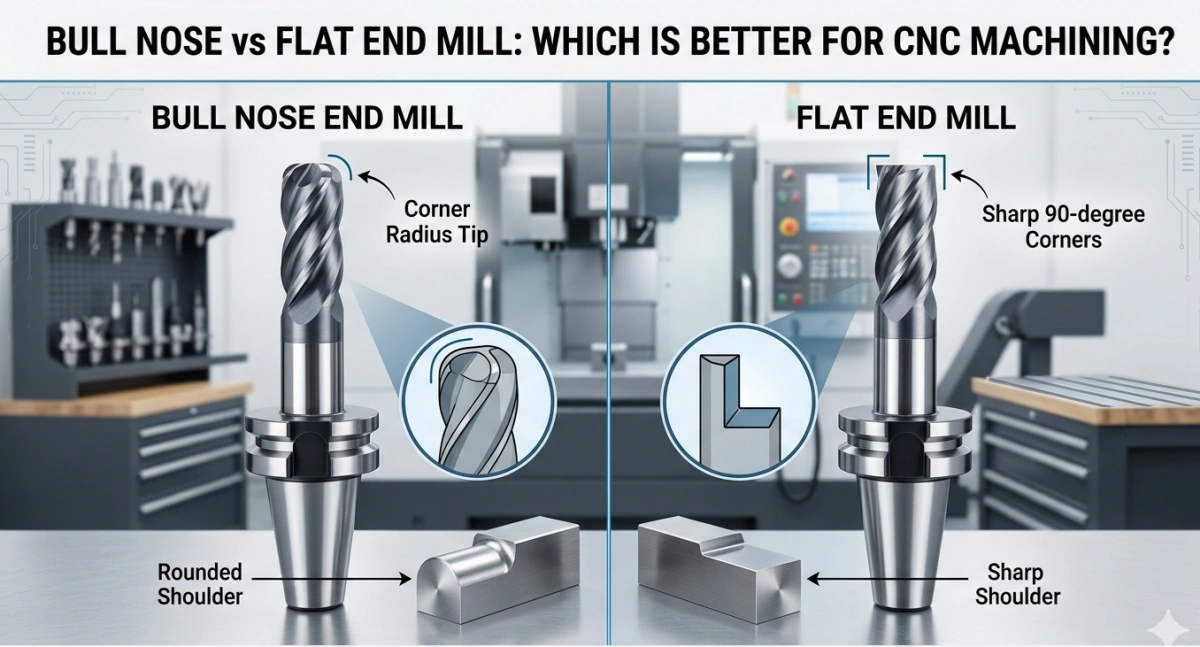
La tabella seguente confronta la geometria della caratteristica che ciascuna fresa è destinata a produrre. La scelta effettiva della taglierina dipende anche dal disegno, diametro utensile disponibile, tolleranza, accessibilità delle funzionalità, e impostazione della lavorazione.
| Punto di confronto | Naso di toro / Fresa per raggio angolare | Piatto / Fresa quadrata |
|---|---|---|
| Angolo di taglio | Fondo piatto con raggio d'angolo | Fondo piatto con angolo tagliente |
| Geometria del fondo | Fondo piatto con transizione dal fondo alla parete raggiata | Fondo piatto con transizione netta dal fondo alla parete |
| Risultato dell'angolo interno | Esce o segue una transizione interna raccordata | Utilizzato dove è richiesto un angolo interno affilato di 90 gradi |
| Spalla quadrata | Non adatto quando la spalla deve rimanere affilata | Adatto quando è richiesta una spalla squadrata e affilata |
| Slot / Caratteristiche quadrate | Da utilizzare quando la lavorazione consente un raggio agli angoli inferiori | Adatto dove la caratteristica richiede angoli inferiori acuti |
| Condizione dell'angolo nel disegno | Da utilizzare quando è consentito o specificato un raggio | Utilizzare quando è richiesto un angolo acuto |
| Trigger di selezione principale | Transizione raggiata richiesta | È richiesto un angolo acuto di 90 gradi o una spalla quadrata |
Come la geometria dell'angolo modifica la feature lavorata

Una fresa a punta toro ha un fondo tagliente piatto con un raggio d'angolo tra il tagliente inferiore e il tagliente laterale. Di conseguenza, la caratteristica lavorata riflette una transizione raccordata piuttosto che un angolo inferiore acuto.
Una fresa piatta ha anche un fondo tagliente piatto, ma il suo angolo tagliente è affilato anziché raggiato. Questa geometria viene utilizzata quando il disegno della parte richiede un angolo interno acuto, spalla quadrata, o altra caratteristica che non consente un raggio d'angolo specificato.
Questa distinzione è più importante che chiedersi semplicemente quale taglierina sia più forte o più durevole. La fresa deve corrispondere alla geometria richiesta sulla parte finita.
Inoltre, una fresa piana non garantisce un angolo interno a raggio zero matematicamente perfetto in ogni situazione. Diametro dell'utensile, condizioni della taglierina, percorso utensile, accessibilità, e la tolleranza del disegno possono influenzare la lavorazione finale.
Quale fresa dovresti scegliere?
Scegli una fresa a punta tonda quando
Una fresa a punta toro è generalmente la geometria più adatta quando:
- Il disegno consente o specifica un raggio dell'angolo
- La funzione richiede una transizione dal fondo alla parete arrotondata
- Una lavorazione a gradini o spalla consente un raggio nell'angolo inferiore
- La geometria richiesta combina un fondo piatto con angoli raggiati
- Non è necessario un angolo inferiore acuto di 90 gradi
Il diametro della fresa, raggio d'angolo, portata, e le altre quote devono comunque corrispondere alla geometria della parte.
Per dimensioni e configurazioni disponibili, Vedere Fresa a punta di toro.
Scegli una fresa a punta piatta quando
Una fresa a testa piatta è generalmente la scelta più diretta quando:
- Il disegno richiede un angolo interno acuto di 90 gradi
- Una spalla quadrata deve rimanere affilata
- Una fessura o un elemento a fondo quadrato richiede angoli inferiori acuti
- La funzione non consente un raggio d'angolo
- La geometria del pezzo richiede specificamente una fresa a fondo piatto con angoli affilati
L'angolo realizzabile dipende ancora dal diametro della fresa, accesso allo strumento, percorso utensile, e tolleranza.
Per le configurazioni disponibili, Vedere Fresa a testa piatta.
Quando è possibile utilizzare entrambi gli strumenti
Alcune parti contengono sia transizioni raggiate che elementi quadrati netti. In quei casi, è possibile utilizzare geometrie diverse della fresa per caratteristiche o fasi di lavorazione diverse.
Questa non deve essere trattata come una sequenza fissa di sgrossatura o finitura. Il processo effettivo dipende dal disegno, indennità di magazzino, tolleranza, accessibilità, e strategia CAM.
Naso di toro / Raggio dell'angolo e piatto / Terminologia quadrata
I nomi degli strumenti possono variare tra i cataloghi, regioni, e fornitori.
Il termine fresa a candela a testa tonda descrive comunemente una fresa a fondo piatto con un raggio angolare, Mentre fresa per raggio angolare è un altro termine di catalogo ampiamente utilizzato per questa geometria.
Allo stesso modo, fresa a punta piatta E fresa a punta quadrata sono comunemente usati per gli angoli acuti, profili di frese a fondo piatto.
Therefore, ricerche come raggio angolare rispetto alla fresa quadrata, fresa a raggio angolare vs fresa piana, E fresa a punta toro vs fresa quadrata spesso fanno riferimento allo stesso confronto di base trattato in questa pagina: un angolo di taglio raggiato rispetto ad un angolo di taglio affilato.
Queste convenzioni di denominazione possono variare tra i produttori, quindi l'utensile finale dovrebbe sempre essere confermato dalla sua geometria e dimensioni effettive.
Confronti degli strumenti correlati
Questa pagina confronta a taglierina a fondo piatto con raggio angolare con una taglierina a fondo piatto ad angolo affilato.
Se è necessario confrontare una fresa a punta tonda con un'estremità tagliente completamente arrotondata, Vedere Fresa a punta toro vs Fresa a punta sferica.
Per specifiche di prodotto e configurazioni personalizzate, vedi il nostro Fresa a punta di toro E Fresa a testa piatta pagine dei prodotti.
Domande frequenti
Qual è la differenza principale tra una fresa a punta toro e una a punta piatta??
Entrambe le frese possono avere il fondo di taglio piatto. La differenza principale è l'angolo di taglio. Una fresa a punta toro ha un raggio angolare, mentre una fresa piatta ha un angolo di taglio affilato.
Quale fresa dovrei usare per un angolo interno affilato?
Utilizzare una fresa piatta o quadrata quando il disegno richiede un angolo interno affilato di 90 gradi o una spalla quadrata.
L'angolo effettivamente realizzabile dipende anche dal diametro della fresa, accesso allo strumento, percorso utensile, e tolleranza.
Quale fresa devo utilizzare quando è consentito o richiesto un raggio d'angolo?
Una fresa a candela con punta tonda o con raggio d'angolo è solitamente la scelta più diretta quando il disegno consente o specifica una transizione raggiata sul fondo o sulla spalla dell'elemento.
Il valore R richiesto deve essere confermato dal disegno o dai requisiti di lavorazione.
Una fresa a punta toro può sostituire una fresa a punta piatta??
Non quando la lavorazione finita richiede uno spigolo vivo che non consente un raggio.
In alcune lavorazioni le due frese possono sovrapporsi, ma i loro angoli taglienti producono geometrie di caratteristiche diverse.
Il raggio angolare e la fresa quadrata sono lo stesso confronto?
È un confronto strettamente correlato. In molti cataloghi di utensili, Il toro e il raggio d'angolo si riferiscono a frese a fondo piatto con angoli raggiati, mentre le frese piatte e quadrate si riferiscono a profili a fondo piatto con spigoli vivi.
La denominazione varia a seconda dei produttori, quindi la geometria effettiva della fresa dovrebbe essere ancora confermata.
Conclusione
La differenza principale tra una fresa a punta tonda e una fresa a candela piatta è la geometria dell'angolo richiesta sulla parte finita. Scegliere una fresa a punta tonda o con raggio d'angolo quando il disegno consente o specifica una transizione raggio, e scegli una fresa piatta o quadrata quando è necessario un angolo affilato di 90 gradi o una spalla quadrata.
Se non sei sicuro di quale geometria corrisponda alla tua parte, invia il tuo disegno, dimensioni delle caratteristiche critiche, e requisiti di lavorazione per noi da E-mail oppure contattaci direttamente al Contatti per la revisione.