 Frese di precisione,Utensili da taglio per la lavorazione CNC di ogni materiale

La migliore fresa per grafite non è sempre un unico utensile. Sgrossatura della grafite, finitura grafite, Lavorazione di elettrodi per elettroerosione, la fresatura di cavità dello stampo e il taglio di dettagli fini richiedono tutte priorità di utensili diverse.
La grafite è morbida rispetto all'acciaio, ma è abrasivo e polveroso. Una fresa in metallo duro per uso generale può inizialmente tagliare la grafite, ma il tagliente può usurarsi rapidamente. Una volta che il bordo diventa opaco, l'utensile potrebbe perdere la consistenza del diametro effettivo, danneggiare piccole caratteristiche, ridurre la qualità della superficie o aumentare i cambi utensile.
Per questo motivo, Gli utensili in metallo duro con rivestimento diamantato sono comunemente presi in considerazione per le applicazioni con grafite in cui la resistenza all'usura e la ripetibilità sono importanti. Tuttavia, il rivestimento da solo non decide il risultato. Geometria dell'utensile, tipo finale, portata dell'utensile, anche la stabilità di bloccaggio e il controllo della polvere sono importanti.
In questa guida, La “lavorazione per stampi in grafite” si riferisce alla fresatura di componenti in grafite utilizzati per applicazioni legate allo stampo, comprese le cavità, contorni e caratteristiche di precisione della grafite.
For standard and custom options, esplora il nostro frese diamantate per grafite.
Perché la grafite ha bisogno di una fresa diversa
La grafite crea problemi di taglio diversi dall'acciaio, acciaio inossidabile o alluminio. Non è principalmente un problema di resistenza al calore. Invece, la lavorazione della grafite è solitamente un'usura, problema di polvere e stabilità.
La grafite è morbida ma abrasiva
La grafite può sembrare facile da tagliare, ma la sua struttura abrasiva può usurare rapidamente il tagliente. Quando il bordo diventa arrotondato, lo strumento potrebbe comunque rimuovere materiale, ma la precisione e la qualità della superficie possono diminuire.
Questo è il motivo per cui una fresa per la lavorazione della grafite dovrebbe concentrarsi sulla resistenza all'usura, consistenza del diametro efficace e prestazioni di taglio stabili.
L'usura dei bordi influisce sulla precisione dell'elettrodo
Gli elettrodi di grafite spesso includono nervature, pareti sottili, piccole cavità, angoli acuti e dettagli raffinati. Se l'usura dell'utensile modifica il diametro di taglio effettivo, la forma dell'elettrodo potrebbe non corrispondere più al profilo richiesto.
Nella lavorazione degli elettrodi per elettroerosione, ciò può influenzare il risultato finale dello stampo. Perciò, la ripetibilità è importante tanto quanto la capacità di taglio.
La polvere di grafite può influire sulla stabilità della lavorazione
La lavorazione della grafite crea polvere fine. Se la polvere non viene rimossa in modo efficace, può influenzare la visibilità, tenuta del lavoro, pulizia della macchina e stabilità di taglio.
Perché la polvere di grafite può essere conduttiva, l’estrazione della polvere e la protezione della macchina dovrebbero essere pianificate secondo le indicazioni del produttore dell’attrezzatura e le procedure di sicurezza della struttura.
Guida rapida: La migliore fresa per applicazioni con grafite
Utilizzare questa tabella come punto di partenza prima di selezionare una specifica fresa in grafite. Non sostituisce il taglio di prova, ma aiuta a restringere la direzione dell'utensile.
| Applicazione della grafite | Focus sugli strumenti consigliati | Perché è importante |
|---|---|---|
| Sgrossatura della grafite | Corpo utensile rigido e spazio libero attorno alla zona di taglio | Aiuta a supportare un taglio stabile e la rimozione della polvere |
| Finitura grafite | Condizioni costanti dell'utensile e diametro di taglio effettivo | Supporta la finitura superficiale e la precisione dimensionale |
| Fresatura di elettrodi di grafite | Resistenza all'usura e ripetibilità | Aiuta a proteggere le costole, angoli e dettagli dell'elettrodo EDM |
| Lavorazione su stampi in grafite | Opzioni con punta sferica o raggio angolare | Supporta il contouring 3D e le cavità complesse |
| Scanalatura della grafite | Estremità quadrata o utensile personalizzato adatto | Aiuta a mantenere la larghezza della fessura e la qualità delle pareti laterali |
| Cavità profonde | Portata pratica più breve e design del collo adatto | Aiuta a ridurre le vibrazioni e la deflessione dell'utensile |
| Parti in grafite dai dettagli fini | Condizioni dei bordi stabili e sporgenza controllata | Aiuta a proteggere le piccole caratteristiche e la consistenza della superficie |
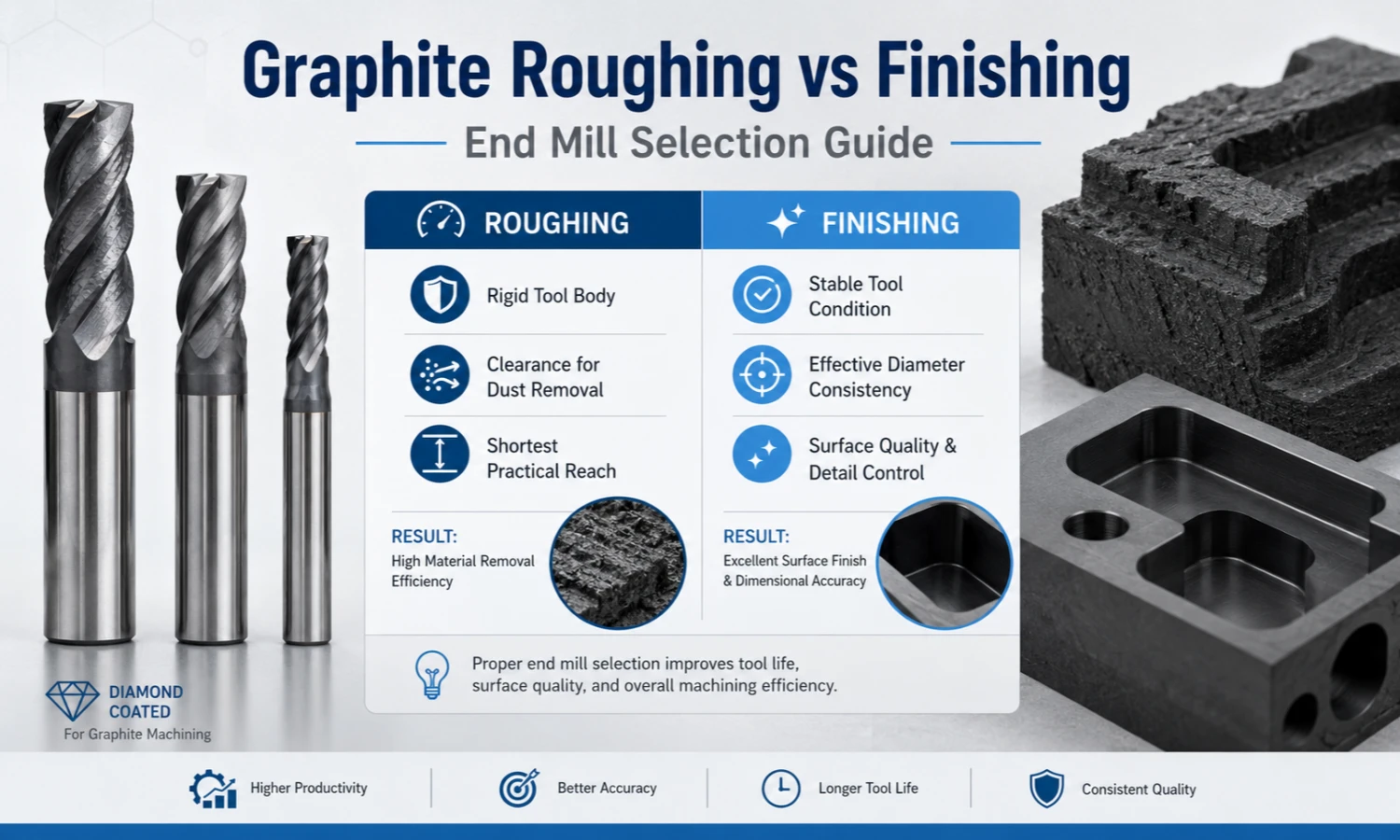
La migliore fresa per la sgrossatura della grafite
La sgrossatura della grafite si concentra sulla rimozione del materiale. La taglierina dovrebbe rimuovere il materiale in modo efficiente mantenendo un comportamento di taglio stabile.
Questioni di rigidità e rimozione della polvere
Un utensile per sgrossatura in grafite deve fornire rigidità e spazio adeguati attorno alla zona di taglio per contribuire a mantenere un taglio stabile e la rimozione della polvere.
Se la polvere si accumula intorno alla zona di taglio, può ridurre la visibilità e interferire con la stabilità della lavorazione. L’obiettivo non è solo la rimozione rapida. L'obiettivo è una rimozione stabile senza vibrazioni eccessive, Usura precoce del tagliente o sostituzioni inutili dell'utensile.
Estremità quadrata o raggio dell'angolo per la sgrossatura
Gli strumenti con estremità quadrate sono utili per le scanalature, tasche, superfici piane e pareti laterali. Funzionano bene quando la parte necessita di elementi a fondo piatto o pareti diritte.
Gli utensili per raggio angolare possono essere utili quando il tagliente necessita di maggiore resistenza. Il raggio ridotto può contribuire a migliorare la stabilità del bordo rispetto ad uno spigolo acuto, soprattutto nei lavori di sgrossatura o semifinitura.
Utilizzare la portata pratica più breve
Nella lavorazione della grafite, una portata non necessaria può ridurre la rigidità e rendere più difficili da controllare le caratteristiche fini. Selezionare una lunghezza dell'utensile e un design del collo che liberino il pezzo in modo sicuro mantenendo la sporgenza quanto più corta possibile.
Per dimensioni dettagliate, configurazione della scanalatura e selezione della geometria personalizzata, vedi il nostro guida alla scelta delle frese con rivestimento diamantato.
La migliore fresa per la finitura della grafite
La finitura della grafite ha uno scopo diverso dalla sgrossatura. L’attenzione si sposta dalla rimozione del materiale alla qualità della superficie, precisione dimensionale e controllo dei dettagli.
Condizioni costanti dell'utensile e diametro effettivo
Per rifinire, le condizioni dell'utensile e il diametro di taglio effettivo devono rimanere sufficientemente costanti per proteggere l'accuratezza dimensionale e le caratteristiche fini.
Un tagliente adeguatamente mantenuto può aiutare a supportare superfici più pulite e una riproduzione dei dettagli più coerente. Ciò è particolarmente importante per gli elettrodi di grafite, piccole cavità e nervature fini.
Naso sferico per il contouring 3D
Le frese a testa sferica vengono spesso selezionate per la contornatura 3D, superfici curve, stampi in grafite e profili di elettrodi. L'estremità arrotondata aiuta a creare percorsi utensile più uniformi su forme complesse.
Se la parte in grafite comprende cavità curve, superfici di stampi o dettagli 3D, una fresa a punta sferica in grafite può essere più adatta di uno strumento a punta quadrata.
Raggio dell'angolo per un migliore supporto del bordo
Gli strumenti per il raggio dell'angolo possono essere utili quando l'applicazione richiede sia la qualità della superficie che il supporto dei bordi. Possono aiutare a ridurre i danni agli angoli e supportare un taglio più stabile.
Per alcune operazioni di finitura e semifinitura della grafite, gli strumenti per il raggio dell'angolo possono fornire un equilibrio pratico tra controllo dei dettagli e durata.
La migliore fresa per la lavorazione di elettrodi di grafite e stampi
Gli elettrodi di grafite e i componenti relativi agli stampi di grafite spesso necessitano di una maggiore ripetibilità rispetto ai semplici blocchi di grafite. Una piccola usura dell'utensile può influenzare la geometria finale.
Gli elettrodi per elettroerosione necessitano di ripetibilità
Gli elettrodi per elettroerosione possono includere nervature sottili, fessure strette, spigoli vivi e cavità complesse. Durante cicli di taglio lunghi, l'utensile deve mantenere prestazioni di taglio stabili.
Per questo motivo, uno strumento per la fresatura di elettrodi di grafite dovrebbe concentrarsi sulla resistenza all'usura, consistenza del diametro efficace e bassa concentricità.
Costolette fini, Cavità e spigoli vivi necessitano di strumenti stabili
Le parti fini della grafite sono più facili da danneggiare quando l'utensile è usurato, instabile o troppo lungo. Un bordo smussato può estrarre particelle dalla superficie di grafite e ridurre la qualità del bordo.
Quando si lavorano le nervature, cavità profonde o piccoli dettagli angolari, la portata e la rigidità dell'utensile devono essere controllate attentamente. In molti casi, una lunghezza del collo personalizzata o una geometria speciale dell'utensile possono essere più pratiche di un utensile standard.
Per cavità profonde, profili speciali o strumenti basati su disegno, rivedi il nostro frese in grafite personalizzate.
Lavorazione di stampi in grafite: Focus su superfici 3D e accesso alle cavità
La lavorazione con stampi in grafite spesso comporta contorni 3D, cavità curve, superfici a gradini e aree con accesso limitato agli utensili.
Gli strumenti a punta sferica e a raggio angolare possono essere presi in considerazione quando la geometria della parte richiede un contorno più uniforme o un supporto del bordo più forte. Lo strumento più adatto dipende dalla caratteristica più piccola, profondità della cavità, condizioni superficiali richieste e spazio libero attorno al portautensile.
Fine quadrata, Punta sferica o raggio d'angolo per la grafite?
Diversi tipi di estremità risolvono diversi problemi di lavorazione della grafite. La tabella seguente fornisce una semplice guida alla selezione.
| Tipo di fine | Ideale per | Nota sulla selezione |
| Fine quadrata | Slot, superfici piane, pareti laterali e spalle | Ottimo per elementi in grafite a fondo piatto e fresatura standard |
| Naso a palla | 3Contornatura D, superfici curve e profili di stampi | Utile per stampi in grafite, elettrodi e superfici complesse |
| Raggio d'angolo | Supporto del bordo più forte e taglio stabile | Utile quando sono importanti la resistenza del tagliente e la qualità della superficie |
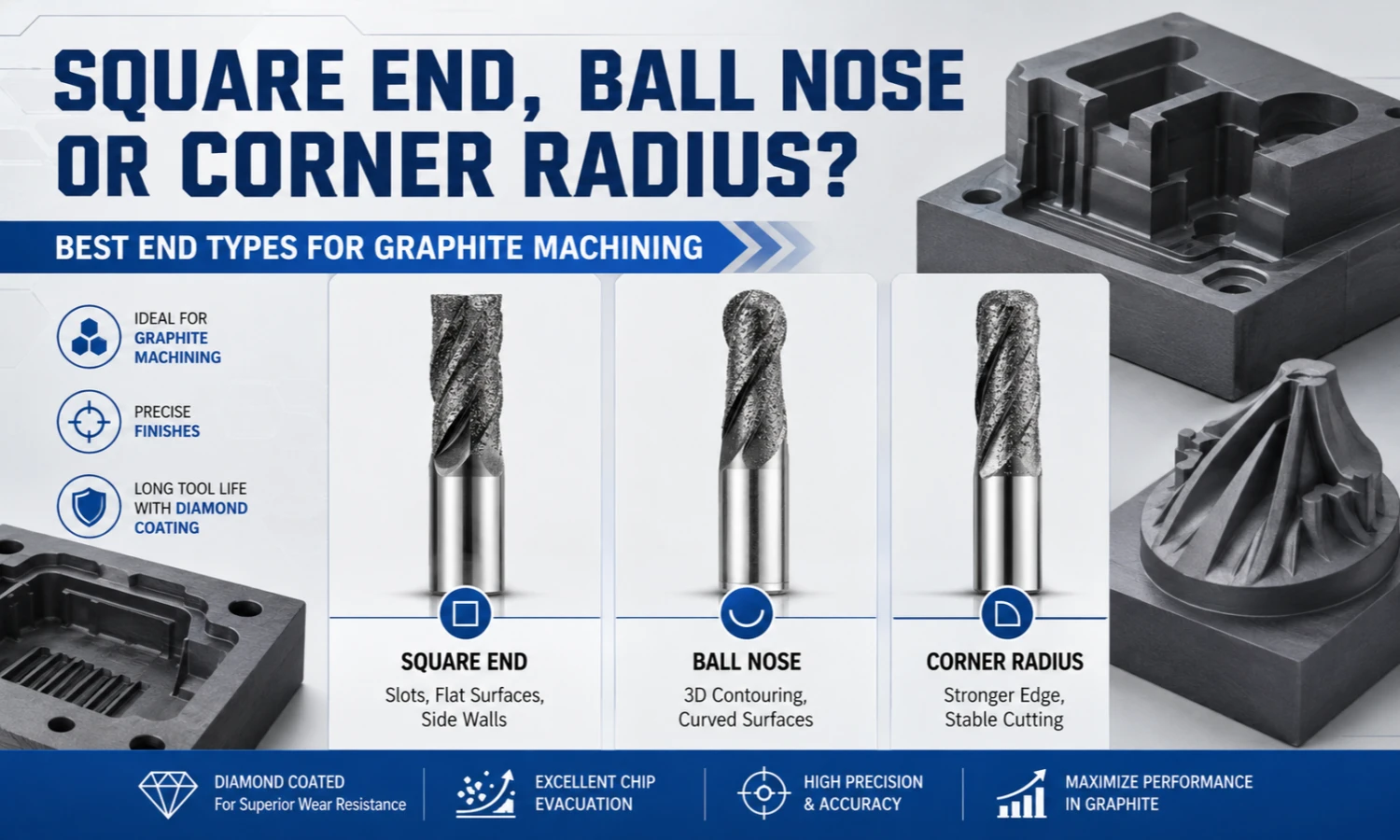
Scegli gli utensili con estremità quadrate per elementi a fondo piatto e pareti laterali. Per contorni 3D e superfici curve in grafite, gli utensili con testa sferica sono generalmente più adatti. Quando il supporto dei bordi e la qualità della superficie sono entrambi importanti, gli strumenti per il raggio dell'angolo possono essere un'opzione migliore.
Perché la resistenza all'usura è importante nella lavorazione della grafite
La grafite è abrasiva, pertanto l'usura del tagliente può influire sul diametro dell'utensile, consistenza superficiale e precisione delle caratteristiche fini nel tempo.
Gli utensili in metallo duro con rivestimento diamantato sono comunemente presi in considerazione per le applicazioni con grafite in cui la resistenza all'usura e la ripetibilità sono importanti. Possono contribuire a migliorare la consistenza del taglio nella lavorazione della grafite abrasiva, ma il risultato finale dipende ancora dal grado di grafite, geometria dell'utensile, rigidità della macchina, condizioni di serraggio e di processo.
Per una spiegazione più ampia delle applicazioni degli utensili diamantati, consulta la nostra guida su a cosa servono le frese con rivestimento diamantato.
Lavorazione a secco, Considerazioni sul controllo della polvere e sul refrigerante
La lavorazione della grafite viene spesso gestita diversamente dalla lavorazione dei metalli. Il controllo delle polveri è una parte fondamentale del processo.
Perché la grafite viene spesso lavorata a secco
Molte applicazioni di lavorazione della grafite utilizzano il taglio a secco con un'efficace aspirazione della polvere. Questo approccio aiuta a rimuovere la polvere di grafite dall'area di taglio e riduce il rischio che la polvere si mescoli con il liquido.
La lavorazione a secco aiuta inoltre a mantenere più facile la raccolta della polvere di grafite quando la macchina e il sistema di estrazione sono adeguatamente preparati.
Perché l'estrazione della polvere è importante
La polvere di grafite può diffondersi attorno alla macchina e all'area di lavoro. Una buona estrazione della polvere aiuta a supportare la stabilità della lavorazione, pulizia delle parti e condizioni dell'attrezzatura.
Per la lavorazione di precisione degli elettrodi di grafite, il controllo della polvere aiuta anche a mantenere la visibilità e riduce la possibilità di accumulo di polvere intorno alle parti più fini.
Il liquido di raffreddamento deve essere valutato attentamente
La lavorazione a secco con un'efficace aspirazione della polvere è comune per la grafite, ma l’approccio finale alla gestione del refrigerante e delle polveri dovrebbe seguire le indicazioni del produttore della macchina, procedure di sicurezza del sito e requisiti del materiale e del processo di grafite.
Se la polvere di grafite si mescola con il liquido, potrebbe creare un impasto abrasivo. Per questo motivo, l'uso del refrigerante deve essere valutato attentamente in base alla configurazione della macchina, grado di grafite e sistema di controllo della polvere.
Come ridurre l'usura degli utensili, Scheggiatura dei bordi e deriva dimensionale
I problemi di lavorazione della grafite spesso derivano dall'usura degli utensili, setup debole o strategia di taglio inadeguata. Il taglierino è importante, ma l’intero processo deve rimanere stabile.
Mantenere il tagliente in buone condizioni
Un bordo usurato può ridurre la finitura superficiale e aumentare la scheggiatura del bordo. Nella finitura grafite, potrebbe anche influenzare i dettagli più fini e la precisione dell'elettrodo.
Ispezionare regolarmente le condizioni dell'utensile, soprattutto durante cicli di produzione lunghi o durante la lavorazione di elementi fini.
Utilizzare un bloccaggio stabile e un runout ridotto
L'eccentricità dell'utensile può causare un'usura irregolare del tagliente. Potrebbe anche ridurre la qualità della superficie e accorciare la durata dell'utensile.
Utilizzare un supporto stabile, ridurre le sporgenze inutili e mantenere il pezzo saldamente bloccato. Questi dettagli contano di più quando si lavorano nervature sottili, cavità profonde ed elettrodi di grafite precisi.
Sgrossatura e finitura separate quando la precisione conta
La sgrossatura e la finitura spesso richiedono priorità degli utensili diverse. La sgrossatura richiede rigidità e asportazione stabile del materiale. La finitura richiede condizioni dei bordi, consistenza e ripetibilità del diametro efficace.
Potrebbe essere conveniente utilizzare uno strumento per entrambe le operazioni, ma può ridurre la precisione quando la parte richiede dettagli stretti o superfici pulite.
Errori comuni nella lavorazione della grafite che influiscono sulle prestazioni dell'utensile
Utilizzo dello stesso utensile per sgrossatura e finitura
Un utensile di sgrossatura e uno di finitura non necessitano sempre della stessa progettazione o condizione dell'utensile. Se la superficie di finitura è importante, l'utilizzo di un utensile di sgrossatura usurato per la finitura può causare scarsa precisione o qualità della superficie.
Quando la precisione degli elettrodi o i dettagli più fini sono importanti, utensili separati per sgrossatura e finitura sono spesso più pratici.
Scegliere una lunghezza utensile eccessiva
Per le cavità profonde può essere necessaria una lunga portata, ma una lunghezza non necessaria può aumentare le vibrazioni. Nella lavorazione della grafite, le vibrazioni possono influire sulla qualità dei bordi, durata dell'utensile e stabilità dimensionale.
Prima di scegliere uno strumento lungo, confermare la profondità di taglio effettiva, spazio del supporto e portata richiesta.
Ignorare il controllo della polvere di grafite
Il controllo della polvere non è solo una questione di pulizia dell’officina. Può anche influenzare la stabilità della lavorazione, prestazioni dell'utensile e condizioni dell'attrezzatura.
Pianificare l'estrazione della polvere, protezione della macchina e pulizia dell'area di lavoro prima della produzione in batch.
Domande frequenti
Qual è la migliore fresa per grafite?
La migliore fresa per grafite dipende dall'operazione. La sgrossatura richiede rigidità e rimozione stabile della polvere. La finitura richiede condizioni costanti dell'utensile, diametro di taglio effettivo e buona qualità della superficie. Per elettrodi di grafite e parti relative allo stampo, gli utensili in metallo duro con rivestimento diamantato vengono spesso presi in considerazione perché la grafite è abrasiva.
Quale fresa è la migliore per la sgrossatura della grafite?
Per la sgrossatura della grafite, scegliere un utensile rigido con spazio adeguato attorno alla zona di taglio e bloccaggio stabile. Evitare lunghezze o sporgenze inutili della scanalatura perché uno sbraccio eccessivo può aumentare le vibrazioni e ridurre la durata dell'utensile.
Quale fresa è la migliore per la finitura della grafite?
Per finitura grafite, scegliere uno strumento in grado di mantenere la qualità della superficie, consistenza del diametro efficace e precisione dei dettagli. Gli strumenti a punta sferica sono utili per il contouring 3D, mentre gli strumenti per il raggio dell'angolo possono aiutare quando il supporto del bordo e la qualità della superficie sono entrambi importanti.
Le frese con rivestimento diamantato sono adatte alla grafite?
Sì. Le frese con rivestimento diamantato sono adatte per molte applicazioni con grafite perché aiutano a migliorare la resistenza all'usura nella lavorazione abrasiva. La scelta finale dell'utensile dipende ancora dal grado di grafite, geometria dell'utensile, rigidità della macchina, operazioni di bloccaggio e lavorazione.
La grafite deve essere lavorata a secco?
In molte applicazioni di lavorazione della grafite, è comune la lavorazione a secco con un'efficace aspirazione della polvere. Ciò aiuta a rimuovere la polvere di grafite e riduce il rischio che la polvere si mescoli con il liquido. La configurazione finale dovrebbe seguire la guida della macchina, procedure di sicurezza sul lavoro e requisiti di processo.
Posso usare il refrigerante durante la lavorazione della grafite?
Il liquido di raffreddamento deve essere valutato attentamente. La polvere di grafite può mescolarsi con il liquido e creare un impasto abrasivo. Molte operazioni di lavorazione della grafite utilizzano invece il taglio a secco e l'estrazione della polvere, ma la scelta migliore dipende dalla configurazione della macchina, requisiti di materiale e processo di grafite.
Come posso ridurre la polvere di grafite durante la fresatura CNC?
Utilizzare un sistema di estrazione efficace progettato per la macchina e il processo, mantenere pulita l'area di lavoro, e seguire le linee guida del produttore della macchina e della sicurezza sul lavoro. Il controllo della polvere dovrebbe essere considerato insieme alla portata dell'utensile, bloccaggio del pezzo e accesso attorno alla zona di taglio.
È possibile utilizzare una fresa per la sgrossatura e la finitura della grafite?
Potrebbe essere possibile per un lavoro semplice, ma per la precisione delle lavorazioni vengono spesso presi in considerazione strumenti separati di sgrossatura e finitura, la consistenza della superficie o i dettagli fini dell'elettrodo sono importanti. Ciò consente a ciascuna operazione di dare priorità alla condizione e alla geometria dell'utensile più adatte.
Posso usare normali frese in metallo duro per la grafite?
Le normali frese in metallo duro possono essere utilizzate per prove semplici o lavori non critici. Tuttavia, la grafite è abrasiva, quindi l'usura degli utensili può diventare un problema. Per elettrodi di precisione in grafite, componenti relativi allo stampo e produzione in lotti, gli utensili diamantati sono generalmente più pratici.
Conclusione
La migliore fresa per grafite dipende dall'operazione di lavorazione, grado di grafite, geometria della parte, portata dell'utensile e requisiti di superficie. La sgrossatura richiede rigidità e rimozione stabile della polvere, mentre la finitura richiede condizioni costanti dell'utensile, controllo efficace del diametro e ripetibilità.
Per elettrodi di grafite e componenti in grafite legati allo stampo, l'usura dell'utensile può influenzare i dettagli più fini, costolette, cavità e qualità della superficie. Perciò, molti clienti valutano gli utensili in metallo duro con rivestimento diamantato per la grafite perché possono offrire una migliore resistenza all'usura rispetto agli utensili per uso generale nella lavorazione abrasiva.
Per una raccomandazione sullo strumento per la grafite, per favore invia il tuo grado di grafite, operazione di lavorazione, dimensione delle caratteristiche chiave, portata richiesta, disegno o foto campione, e la quantità prevista. Questo ci aiuta a confermare se il design di uno strumento standard o personalizzato è più adatto.
Il nostro team può rivedere la tua sgrossatura della grafite, finitura, requisiti di fresatura di elettrodi o lavorazione di stampi e consigliarne uno adatto fresa diamantata per grafite.
Contattaci per la selezione e il preventivo degli strumenti.