 Frese di precisione,Utensili da taglio per la lavorazione CNC di ogni materiale

A alesatore a spirale o a scanalatura diritta il confronto dovrebbe concentrarsi sull'applicazione piuttosto che limitarsi a chiedersi quale sia il design migliore. Entrambe le configurazioni possono essere utilizzate per la finitura di fori di precisione, ma la geometria della loro scanalatura influenza il movimento del truciolo e il modo in cui si comportano nelle diverse condizioni del foro.
Una scelta pratica dell'alesatore dovrebbe considerare se il foro è cieco o passante, se contiene una sede per chiavetta o un foro trasversale, dove le chips devono spostarsi, e quali condizioni di lavorazione si applicano. Quando è selezionata una scanalatura a spirale, anche la direzione della spirale è importante perché i design a destra e a sinistra guidano i chip in direzioni diverse.
Risposta rapida
- Gli alesatori a scanalatura diritta utilizzano scanalature assiali diritte e non creano lo stesso movimento del truciolo diretto a spirale dei modelli elicoidali.
- Gli alesatori con scanalatura elicoidale possono essere realizzati con geometria della spirale destra o sinistra.
- Gli alesatori con scanalatura elicoidale destra sono generalmente preferiti per i fori ciechi perché i trucioli si spostano verso l'ingresso del foro.
- Gli alesatori con scanalatura elicoidale sinistra sono generalmente preferiti per i fori passanti perché i trucioli si muovono in avanti attraverso il foro.
- In genere è opportuno prendere in considerazione i modelli con scanalatura a spirale per i fori interrotti, scanalature per chiavette, e fori trasversali.
- Il solo materiale del pezzo non determina la scelta della scanalatura.
- La selezione finale dovrebbe considerare la geometria del foro, direzione del truciolo, pezzo, profondità del foro, requisiti di precisione, e condizioni di lavorazione.
Alesatore a spirale o a scanalatura diritta: Differenze chiave
Quando si valuta a alesatore a spirale o a scanalatura diritta, la distinzione principale risiede nella geometria della scanalatura e nel modo in cui tale geometria influisce sul movimento del truciolo durante l'alesatura.
Entrambi i modelli eseguono il dimensionamento finale e la finitura di un foro prelavorato. Tuttavia, le diverse configurazioni delle scanalature le rendono ciascuna più adatta a determinate condizioni di lavorazione.
Geometria del flauto dritto
Un alesatore a scanalatura diritta ha scanalature che corrono assialmente lungo la sezione di taglio dell'utensile. Perché le scanalature non formano un'elica, non creano lo stesso movimento direzionale del truciolo di una scanalatura a spirale.
Gli utensili a scanalatura diritta rimangono una pratica configurazione di alesatura della macchina quando la geometria del foro, condizioni del chip, e i requisiti di lavorazione si adattano a questo design.
Per le specifiche del prodotto e le opzioni disponibili, vedi il nostro alesatori a scanalatura dritta.
Geometria del flauto a spirale
Un alesatore con scanalatura a spirale utilizza una scanalatura elicoidale attorno alla sezione di taglio. Questa geometria crea un movimento direzionale del truciolo, quindi la direzione della spirale diventa una parte importante della selezione dell'utensile.
Le scanalature a spirale destra e sinistra non guidano i trucioli nella stessa direzione. Therefore, Specificare semplicemente un alesatore con scanalatura elicoidale potrebbe non essere sufficiente quando l'applicazione prevede fori ciechi, fori passanti, o requisiti specifici di direzione del truciolo.
Il termine alesatore a scanalatura elicoidale può essere utilizzato anche per questa configurazione generale della scanalatura. OMIST può realizzare sia destri che mancini alesatori con scanalatura a spirale secondo l'applicazione.
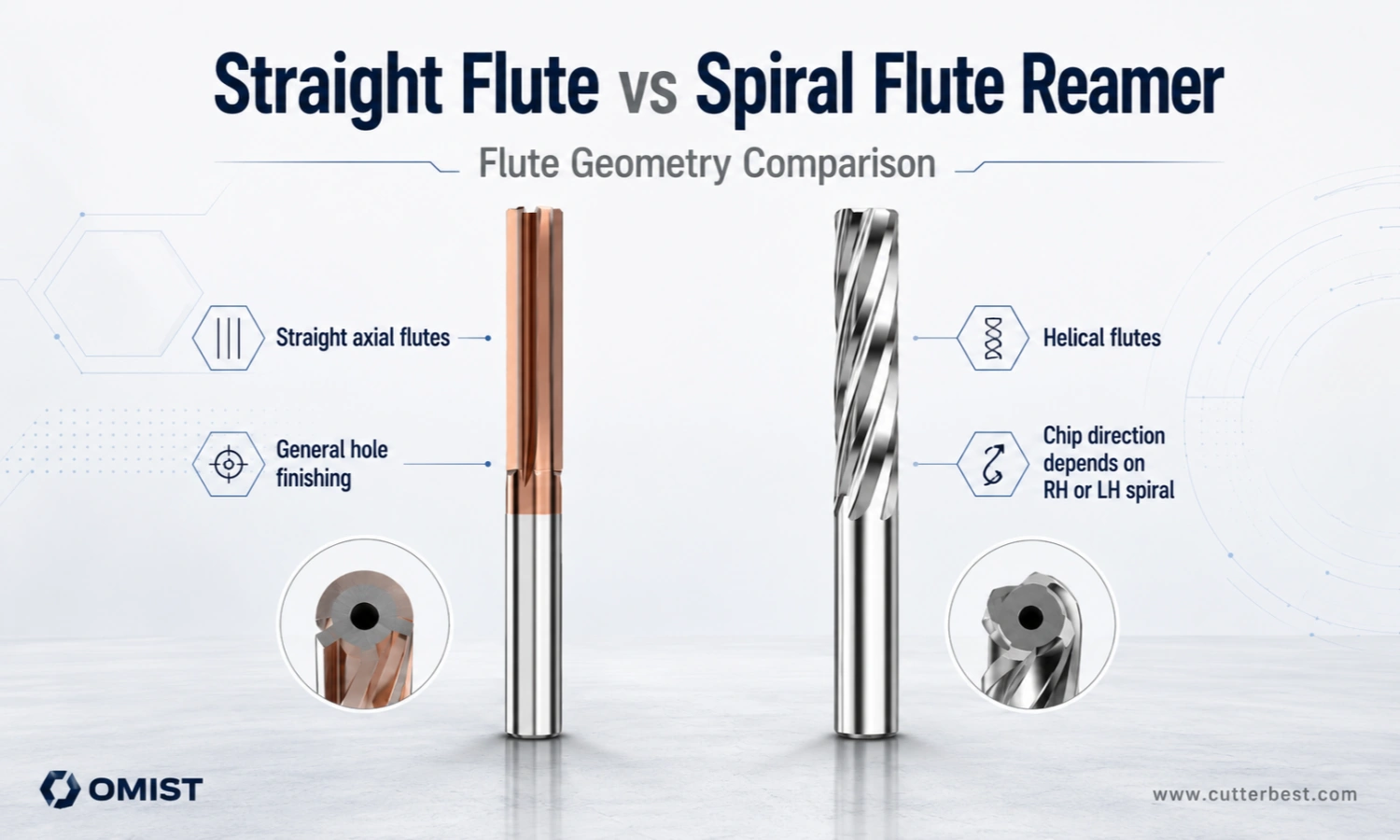
| Fattore di selezione | Flauto dritto | Spirale di destra | Spirale sinistra |
|---|---|---|---|
| Geometria del flauto | Scanalatura assiale diritta | Spirale destra / scanalatura elicoidale | Spirale sinistra / scanalatura elicoidale |
| Direzione del chip | Nessun movimento del truciolo diretto a spirale | Verso l'ingresso del buco | Avanti attraverso il buco |
| Foro cieco | Dipendente dall'applicazione | Tipicamente preferito | Di solito non è la prima scelta per la direzione del truciolo |
| Foro passante | Dipendente dall'applicazione | Può essere considerato a seconda delle condizioni | Tipicamente preferito |
| Foro interrotto / Chiavetta | La selezione dipende dalle condizioni di interruzione e di lavorazione | Flauto a spirale generalmente preferito | Flauto a spirale generalmente preferito |
| Considerazione principale sulla selezione | Condizioni del foro e della lavorazione | Direzione del truciolo con foro cieco | Direzione del truciolo a foro passante |
Questo alesatore a spirale o a scanalatura diritta la tabella comparativa è una guida alla selezione piuttosto che una regola assoluta. La scelta finale dell'utensile dovrebbe comunque essere confermata rispetto al design effettivo del foro e alle condizioni di lavorazione.
Tipo di foro e direzione del truciolo: Alesatori a spirale destri e sinistri
Il tipo di foro è uno dei fattori più importanti nella selezione dell'alesatore dritto o a spirale. Una volta viene preso in considerazione un flauto a spirale, la direzione richiesta del truciolo diventa un'altra decisione chiave.
Fori ciechi – Spirale destra
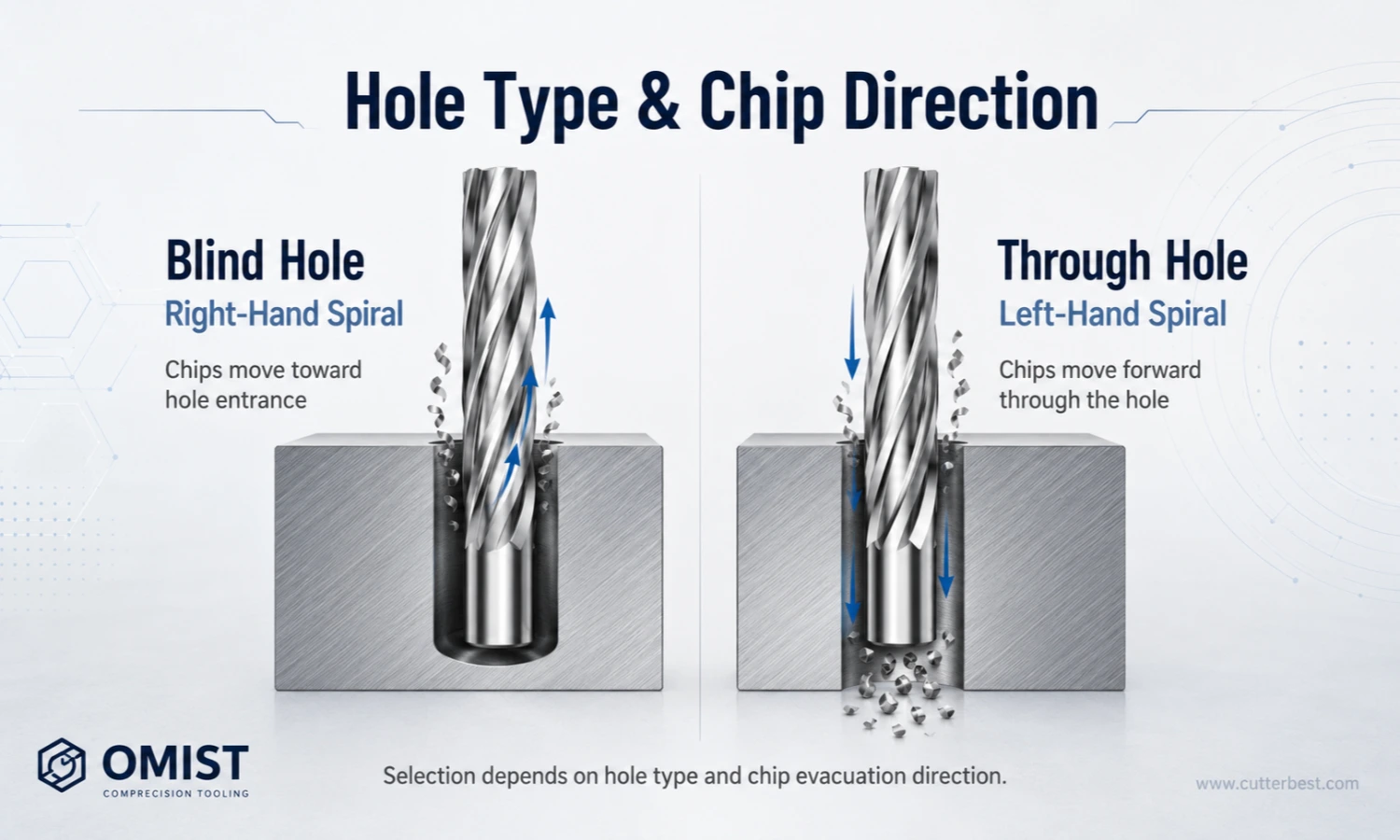
Un foro cieco ha il fondo chiuso, pertanto i trucioli non possono continuare attraverso il pezzo.
Per questo tipo di applicazione, UN alesatore a spirale destro è tipicamente preferito. La sua direzione a spirale sposta i trucioli all'indietro verso l'ingresso del foro, contribuendo a ridurre l'accumulo di trucioli sul fondo del foro cieco.
Tuttavia, ciò non significa che ogni applicazione blind-hole utilizzi esattamente la stessa configurazione. Profondità del foro, materiale del pezzo, precisione richiesta, e le condizioni di lavorazione devono ancora essere considerate.
Per questo motivo, una spirale destrorsa è un utile punto di partenza quando si seleziona un alesatore per fori ciechi, piuttosto che una regola assoluta.
Fori passanti – Spirale sinistra
Un foro passante fornisce un'uscita sul lato opposto del pezzo.
In questo tipo di applicazione, UN alesatore a spirale sinistro è generalmente preferito perché i trucioli avanzano attraverso il foro. Questa direzione è adatta alle applicazioni in cui i trucioli possono continuare verso l'estremità aperta del foro.
Una spirale sinistrorsa è quindi un'opzione importante quando la geometria del foro passante e la configurazione della lavorazione consentono il movimento in avanti del truciolo.
Come nel caso dei fori ciechi, la selezione finale dovrebbe comunque riflettere le condizioni di lavorazione complete.
Dove si adattano gli alesatori a scanalatura dritta
La discussione sui fori ciechi e passanti non dovrebbe suggerire che gli alesatori a scanalatura diritta non abbiano alcun ruolo nell'alesatura CNC.
I design con scanalatura diritta rimangono una configurazione di alesatura macchina valida quando la geometria del foro, condizioni del chip, e i requisiti di lavorazione corrispondono al design dell'utensile. A differenza dei flauti a spirale, however, le scanalature diritte non creano lo stesso movimento del truciolo diretto a spirale.
Therefore, la selezione della scanalatura dovrebbe iniziare con l'applicazione effettiva anziché dare per scontato che ogni foro cieco o passante richieda un design specifico.
Scanalature a spirale per fori interrotti, Sedi per chiavetta e fori trasversali
Non tutti i fori hanno una superficie interna continua. Alcuni fori contengono una sede per chiavetta, intersecare con un altro foro, o includere un'altra interruzione lungo la superficie alesata.
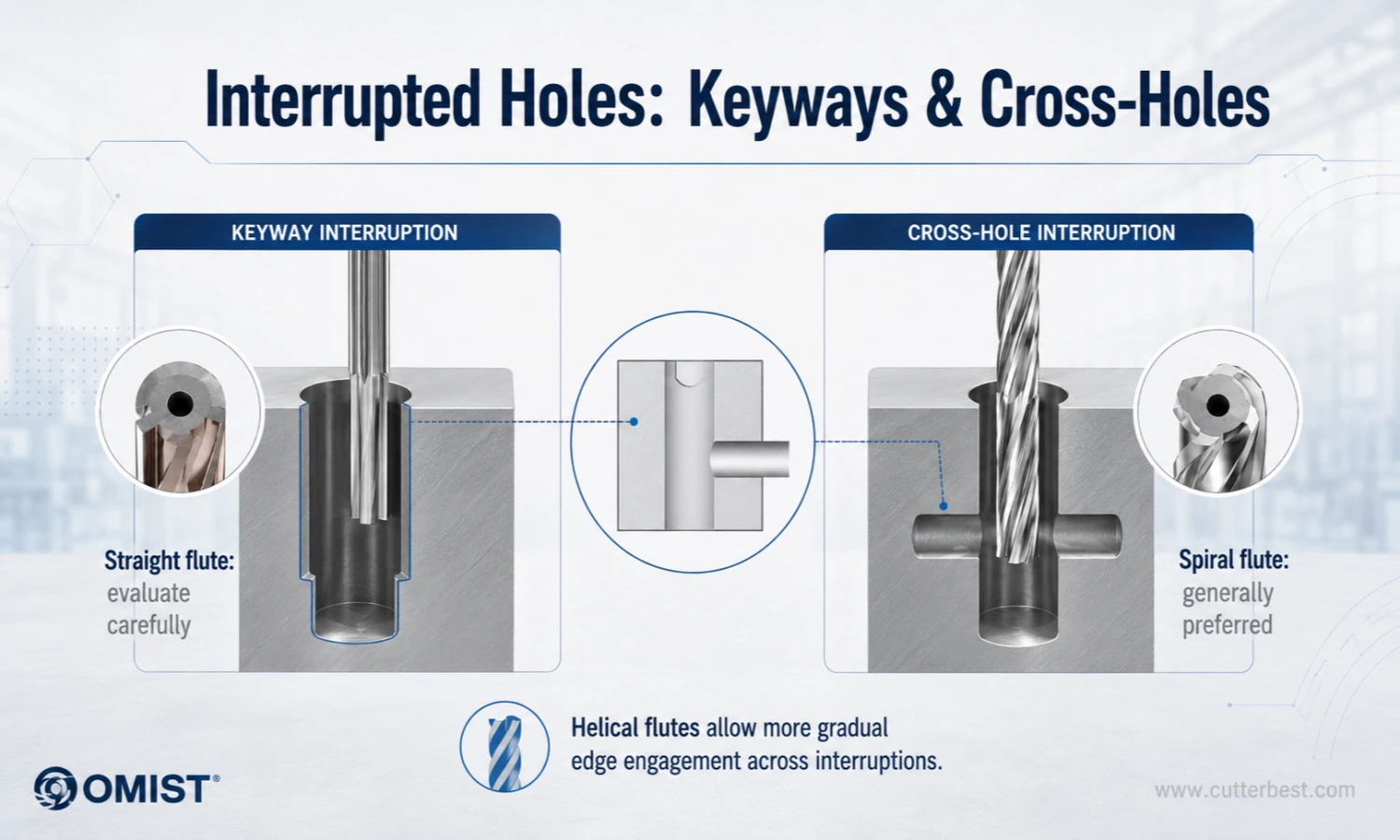
In queste applicazioni, il tagliente si muove ripetutamente tra il materiale e le sezioni aperte.
In genere vale la pena dare la priorità a un flauto a spirale alesatura del foro interrotta, comprese le applicazioni con sede per chiavetta e foro incrociato. La geometria a spirale consente al tagliente di entrare in un'area interrotta più gradualmente rispetto ad una configurazione con scanalatura diritta.
Per questo motivo, La geometria della scanalatura a spirale è un'importante considerazione di selezione quando l'alesatore deve passare attraverso le discontinuità all'interno del foro.
Tuttavia, l'interruzione in sé non definisce la specifica completa dello strumento. Dimensioni del foro, geometria di interruzione, materiale del pezzo, e le condizioni di lavorazione dovrebbero comunque essere riviste prima di selezionare l'alesatore finale.
OMIST può valutare configurazioni di eliche elicoidali per queste applicazioni in base alle reali esigenze del pezzo e della lavorazione.
Il materiale del pezzo da lavorare determina la selezione della canna?
Non da solo.
Il materiale del pezzo è importante nella scelta dell'alesatore, ma non deve essere usata come semplice regola per la scelta tra scanalature diritte e a spirale.
OMIST fornisce alesatori in metallo duro integrale per applicazioni che coinvolgono:
- Acciaio per stampi
- Acciaio temprato
- Alluminio
- Rame
- Plastica
Tuttavia, questo non significa che l'acciaio richieda sempre una scanalatura diritta o che l'alluminio richieda sempre una scanalatura elicoidale.
Invece, il materiale va considerato insieme alla tipologia del foro, profondità del foro, direzione del truciolo, requisiti di precisione, e condizioni di lavorazione.
Due applicazioni che utilizzano lo stesso materiale del pezzo possono comunque richiedere configurazioni diverse dell'alesatore se le geometrie dei fori e le condizioni del truciolo sono diverse.
Il materiale del pezzo aiuta a definire l'applicazione. Non è così, da solo, determinare il design del flauto.
Selezione dell'alesatore dritto o a spirale: Una rapida lista di controllo in 3 passaggi
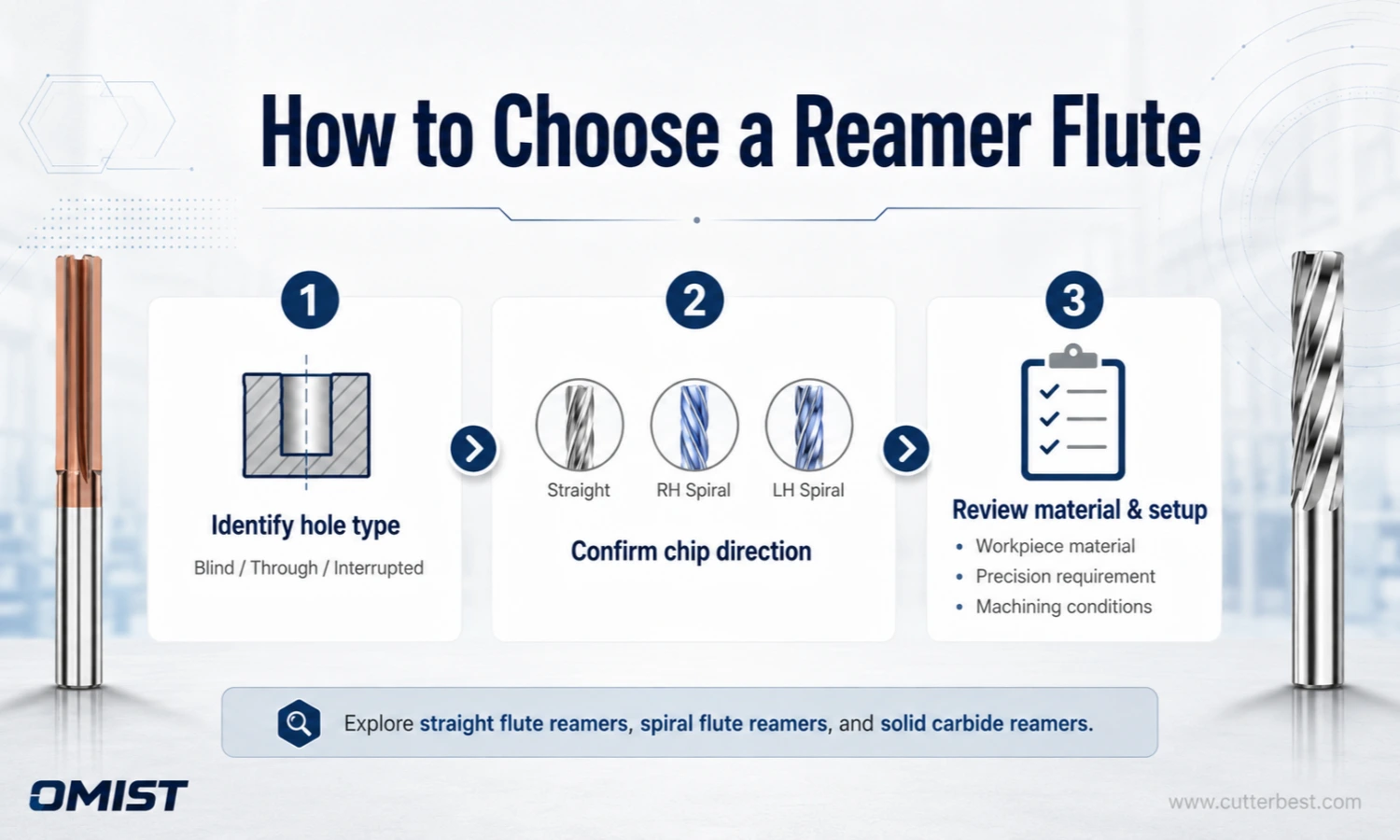
Utilizzare i tre passaggi seguenti come punto di partenza pratico per alesatore a spirale o a scanalatura diritta selezione.
Fare un passo 1: Identificare la geometria del foro
Determina se il buco è:
- Cieco
- Attraverso
- Interrotto
- Interrotto da una sede per chiavetta o da un foro trasversale
Ciò stabilisce i requisiti base relativi alla direzione del truciolo e alle condizioni di taglio.
Fare un passo 2: Determinare la direzione del chip richiesta
Se è appropriata una scanalatura a spirale, considerare dove dovrebbero spostarsi i chip.
Per fori ciechi, il movimento del truciolo verso l'ingresso del foro generalmente favorisce una spirale destrorsa. Per fori passanti, il movimento in avanti del truciolo generalmente favorisce una spirale verso sinistra.
Fare un passo 3: Confermare il pezzo e le condizioni di lavorazione
Finalmente, revisione:
- Materiale del pezzo
- Profondità del foro
- Precisione richiesta
- Configurazione della macchina
- Altri requisiti di lavorazione
Se la corretta configurazione del flauto è ancora incerta, OMIST può esaminare la domanda e aiutare a selezionare un'opzione adatta dal ns alesatori in metallo duro integrale allineare.
Domande frequenti
Qual è la differenza tra alesatori a spirale destri e sinistri??
La differenza principale nella scelta dell'alesatore è la direzione risultante del truciolo. Una spirale destra sposta i trucioli verso l'ingresso del foro, mentre una spirale sinistra fa avanzare i trucioli attraverso il foro.
Questo è il motivo per cui le configurazioni a spirale destra sono comunemente considerate per i fori ciechi e le configurazioni a spirale sinistra per i fori passanti.
Quale alesatore è migliore per un foro cieco?
Un alesatore con scanalatura elicoidale destra è generalmente preferito per le applicazioni con fori ciechi perché la direzione del truciolo sposta i trucioli verso l'ingresso del foro anziché verso il fondo chiuso.
La scelta finale dovrebbe comunque considerare la profondità del foro, materiale del pezzo, precisione richiesta, e condizioni di lavorazione.
Perché gli alesatori con scanalatura elicoidale sono preferiti per le sedi di chiavetta o i fori trasversali?
Le sedi per chiavetta e i fori trasversali creano condizioni di taglio interrotte. Una scanalatura elicoidale consente al tagliente di entrare in queste interruzioni in modo più graduale, quindi vale generalmente la pena considerare la geometria a spirale quando un alesatore deve passare attraverso superfici interrotte.
La configurazione finale dell'utensile dipende ancora dal foro effettivo e dalle condizioni di lavorazione.
Il solo materiale del pezzo determina la scelta della scanalatura diritta o elicoidale?
No. Il materiale è solo una parte del processo di selezione.
Tipo di foro, direzione del truciolo, interruzioni, profondità del foro, requisiti di precisione, Inoltre, prima di scegliere un alesatore con scanalatura diritta o a spirale, è necessario considerare anche le condizioni di lavorazione.
Trova l'alesatore giusto per la tua applicazione CNC
Se la tua applicazione è adatta ad una configurazione con scanalatura diritta, esplora il nostro alesatori a scanalatura dritta.
Se la tua applicazione richiede un movimento direzionale del truciolo, selezione del foro cieco o del foro passante, o una configurazione a spirale per elementi interrotti, rivedi il nostro alesatori con scanalatura a spirale. OMIST è in grado di realizzare versioni a spirale sia destre che sinistre a seconda dell'applicazione.
Se non sei sicuro di quale configurazione scegliere, inviaci il tipo di foro, disegno o schizzo quotato, dimensioni del foro, materiale del pezzo, e informazioni sulla lavorazione disponibili. Possiamo esaminare i requisiti e contribuire a confermare la configurazione appropriata della scanalatura prima del preventivo.
Puoi anche sfogliare il nostro alesatori per finitura fori CNC oppure contattaci tramite E-mail O Contatti per la revisione della domanda e il preventivo.