 Frese di precisione,Utensili da taglio per la lavorazione CNC di ogni materiale

Qual è la migliore fresa per acciaio inossidabile?
Scegliere il la migliore fresa per acciaio inossidabile non è semplice come selezionare un conteggio di flauto, rivestimento, o forma di taglierina. Lo strumento giusto dipende dal tipo di acciaio inossidabile, operazione di lavorazione, geometria del pezzo, rigidità della macchina, evacuazione truciolo, sporgenza dell'utensile, e la finitura superficiale richiesta.
Molti acciai inossidabili, gradi austenitici particolarmente comuni, hanno una conduttività termica relativamente bassa e una tendenza ad indurirsi durante la lavorazione. Il calore e il taglio instabile possono quindi sottoporre il tagliente a ulteriori sollecitazioni, rivestimento, geometria dell'utensile, e configurazione della macchina.
Non esiste un'unica fresa che sia la migliore per ogni applicazione di acciaio inossidabile.
Per molte operazioni di fresatura CNC, UN fresa in metallo duro integrale è un punto di partenza comune perché il metallo duro offre un'elevata rigidità, resistenza all'usura, e stabilità all'avanguardia in condizioni di lavorazione adeguate. Tuttavia, la taglierina finale deve ancora corrispondere al pezzo e all'operazione effettivi.
Guida rapida alla scelta delle frese per acciaio inossidabile
| Requisito di lavorazione | Tipo di strumento da considerare | Preoccupazione principale per la selezione |
|---|---|---|
| Superfici piane e fresatura laterale | Fresa a testa piatta | Stabilità, controllo del truciolo, e resistenza del bordo |
| Superfici curve o 3D | Fresa a candela a testa sferica | Precisione del contorno e finitura superficiale |
| Angoli a R interni o esterni | Fresa per raggio angolare | Robustezza degli angoli e riduzione dei danni ai bordi |
| Rimozione di materiale pesante | Fresa per sgrossatura | Evacuazione truciolo, rigidità, e taglio del carico |
| Profilazione generale | Fresa in metallo duro integrale | Conteggio del flauto, rivestimento, geometria, e stabilità |
| Fresatura ad alte prestazioni | Si possono prendere in considerazione disegni con elica/passo variabili | Controllo delle vibrazioni e stabilità della lavorazione |
Utilizzare questa tabella come punto di partenza piuttosto che come regola fissa. La taglierina preferita può cambiare in base al tipo di acciaio inossidabile, profondità di taglio, fidanzamento, condizione della macchina, o modifiche alla geometria del pezzo.
Se conosci già le tue esigenze di lavorazione e desideri esaminare le opzioni standard e personalizzate disponibili, vedi il nostro Frese per acciaio inossidabile.
Scegliere il tipo di fresa in base all'operazione di lavorazione
La nostra fabbrica non tratta la lavorazione dell'acciaio inossidabile come un'applicazione con taglierina fissa. Frese a estremità piana, Frese a candela a testa sferica, frese a raggio angolare, e le frese per sgrossatura servono a diversi scopi di lavorazione.
Therefore, la caratteristica di lavorazione dovrebbe solitamente essere identificata prima di selezionare il numero di scanalature o il rivestimento.
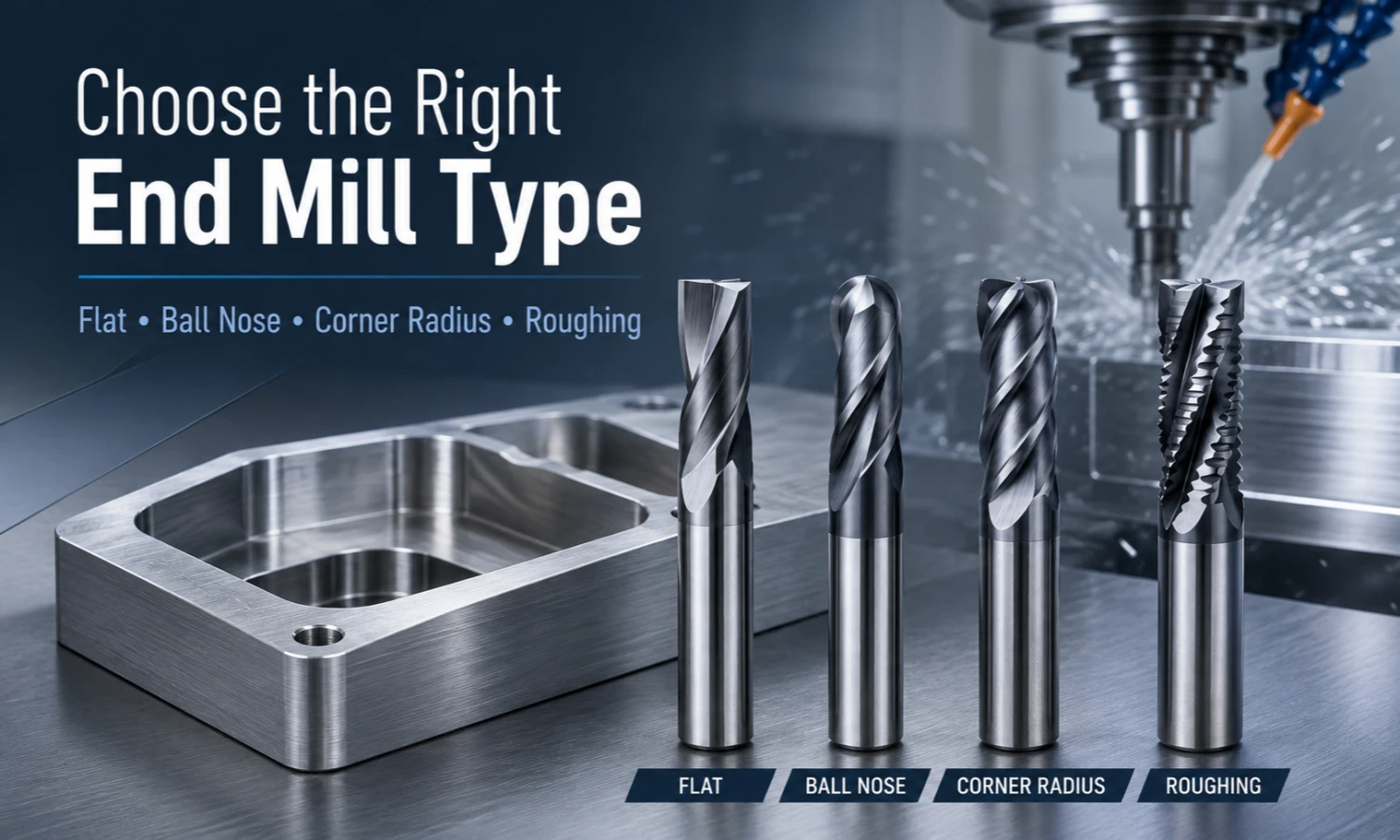
Frese piane per superfici piane e fresatura laterale
Viene comunemente considerata una fresa a punta piatta:
- Fresatura laterale
- Fresatura di spallamenti
- Lavorazione a fondo piatto
- Profilazione
- Operazioni di stozzatura adatte
Se il pezzo richiede pareti diritte, fondi piatti, o spalle quadrate, un'estremità tagliente piatta è generalmente più appropriata di una geometria a testa sferica.
Per specifiche e opzioni disponibili, vedi il nostro Fresa a testa piatta.
Frese a testa sferica per superfici curve e 3D
Le frese a testa sferica vengono utilizzate principalmente quando la fresa deve seguire una geometria curva o tridimensionale.
Le applicazioni tipiche includono gli stampi, cavità curve, 3Profilazione D, finitura del contorno, e superfici complesse.
L'estremità di taglio arrotondata segue i cambiamenti degli angoli della superficie in modo più naturale rispetto a una fresa a estremità piatta. Tuttavia, durante la lavorazione dell'acciaio inossidabile, la forma finale è solo una parte della selezione. Rigidità dell'utensile, rivestimento, disegno del flauto, lunghezza di taglio, e la finitura richiesta devono ancora essere considerate.
Per opzioni di lavorazione di superfici curve, vedi il nostro Frese a candela a testa sferica.
Frese con raggio angolare per angoli R e taglienti più resistenti
Una fresa per raggio angolare, comunemente chiamata anche fresa a punta toro, combina un'estremità tagliente piatta con un raggio nell'angolo esterno.
Il raggio può rafforzare l'angolo di taglio rispetto a un angolo acuto di 90 gradi. È opportuno anche quando il disegno del pezzo specifica un raggio R interno.
Per applicazioni impegnative in acciaio inossidabile, il raggio effettivo, diametro della fresa, carico di taglio, e la strategia di lavorazione dovrebbero essere valutate insieme.
Per opzioni di raggio e geometria personalizzata, vedi il nostro Fresa a punta di toro.
Frese per sgrossatura per la rimozione di materiale pesante
Quando l'obiettivo principale è rimuovere grandi quantità di materiale piuttosto che produrre la finitura superficiale finale, si può prendere in considerazione una fresa per sgrossatura.
Le frese per sgrossatura si concentrano sulla rimozione del materiale, formazione di trucioli, gestione del carico di taglio, e stabilità del processo. Il design appropriato dipende ancora dal tipo di acciaio inossidabile, sovrametallo di lavorazione, diametro della fresa, profondità di taglio, evacuazione truciolo, e rigidità della macchina. Per applicazioni di rimozione di materiale pesante, vedi il nostro Frese per sgrossatura.
Perché il metallo duro è comunemente utilizzato per l'acciaio inossidabile
A fresa in metallo duro per acciaio inossidabile è comune nella moderna lavorazione CNC perché il metallo duro integrale fornisce proprietà utili in condizioni di taglio impegnative.
Il metallo duro solido può offrire:
- Elevata rigidità
- Buona resistenza all'usura
- Stabilità all'avanguardia
- Resistenza alle temperature di taglio elevate
- Compatibilità con diverse geometrie di taglio e sistemi di rivestimento
Queste caratteristiche sono utili perché l'acciaio inossidabile può generare calore considerevole e può indurirsi quando il taglio diventa instabile o il bordo inizia a sfregare invece di tagliare in modo efficace.
Tuttavia, la selezione del metallo duro integrale non completa il processo di selezione dell'utensile. Diametro taglierina, lunghezza di taglio, conteggio dei flauti, rivestimento, geometria, sporgenza dell'utensile, condizione della macchina, e l'operazione di lavorazione devono ancora essere valutate insieme.
Per le opzioni di utensili in metallo duro disponibili, vedi il nostro Fresa in metallo duro.
Per un processo di selezione degli utensili in metallo duro più ampio, Leggere Come scegliere una fresa a candela in metallo duro.
Come scegliere il conteggio dei flauti: Evacuazione truciolo vs rigidità
Una domanda di ricerca comune è: Quante scanalature dovrebbe avere una fresa per acciaio inossidabile?
Non esiste una risposta universale.
Il conteggio delle scanalature modifica sia il numero di taglienti che lo spazio disponibile per i trucioli. Un numero inferiore di scanalature generalmente fornisce più spazio per il truciolo, mentre un numero maggiore di scanalature fornisce più contatti taglienti e spesso utilizza un nucleo relativamente più forte.
Il corretto equilibrio dipende dall'operazione, diametro della fresa, fidanzamento, volume del chip, rigidità della macchina, e finitura richiesta.
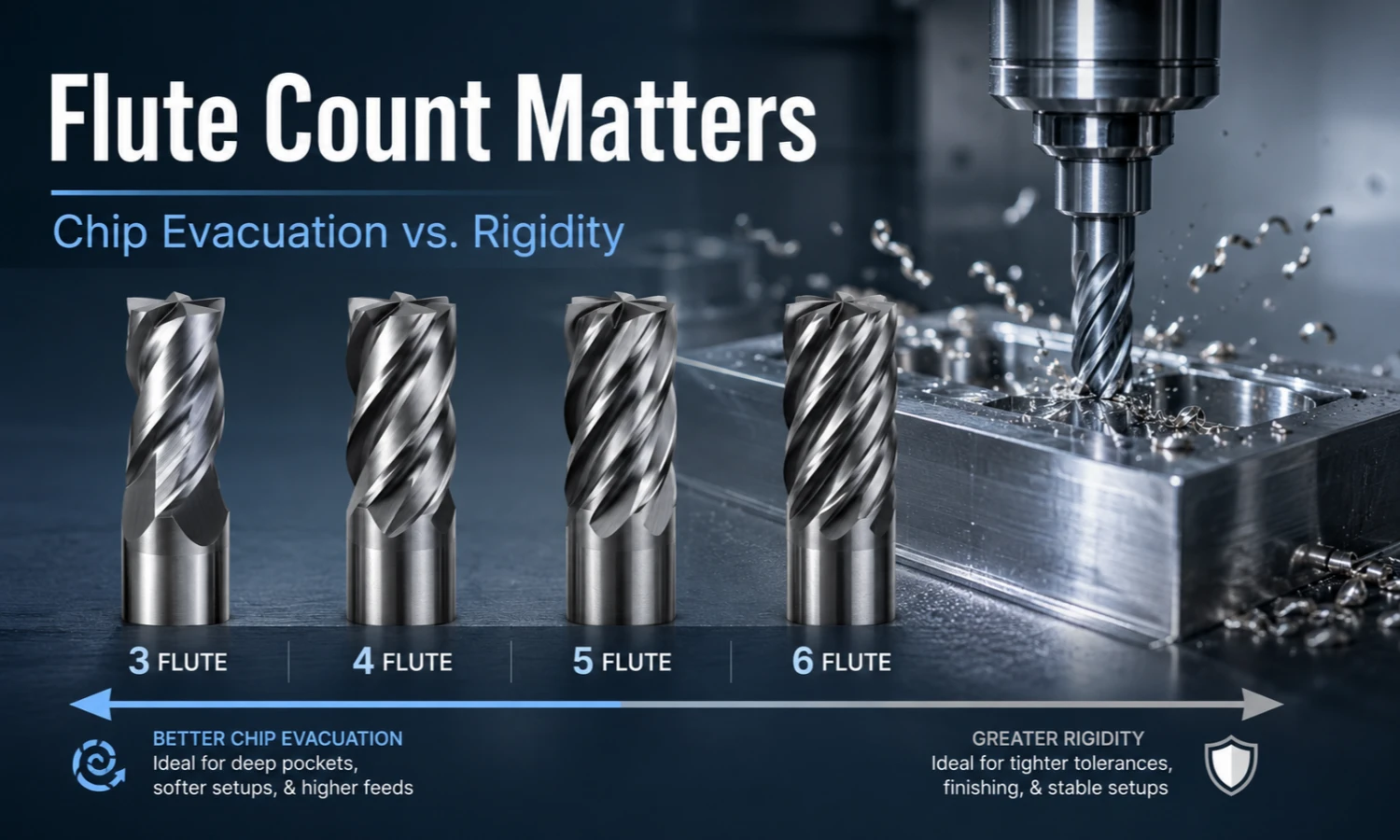
3-Frese per flauto
I design a tre eliche forniscono uno spazio relativamente generoso e possono essere presi in considerazione quando l'evacuazione del truciolo è una parte importante dell'applicazione.
Tuttavia, il solo conteggio dei flauti non determina la performance. Geometria dell'elica, progettazione centrale, impegno radiale, profondità di taglio, e bisogna considerare anche il diametro della fresa.
4-Frese per flauto
equilibrio tra conteggio all'avanguardia, forza fondamentale, spazio per i chip, e versatilità generale di lavorazione.
Possono essere presi in considerazione per la fresatura laterale, profilazione, fresatura di spallamenti, e altre operazioni CNC quando la geometria e la configurazione dell'utensile sono adatte.
Vedi il nostro 4 Fresa per flauto per le specifiche disponibili e le opzioni di applicazione.
5-Frese per flauto
Le frese a cinque taglienti compaiono spesso nelle applicazioni in acciaio inossidabile ad alte prestazioni perché il tagliente aggiuntivo può essere utile quando l'innesto è controllato e l'evacuazione del truciolo rimane adeguata.
Tuttavia, aumentando il numero delle scanalature si riduce anche lo spazio disponibile per i trucioli.
Therefore, non è opportuno scegliere un design a 5 eliche solo perché il pezzo è in acciaio inossidabile. Scanalatura profonda, elevato volume di trucioli, evacuazione limitata, diametro della fresa, e la rigidità della macchina può modificare il numero di scanalature preferite.
6-Frese per flauto
Le frese a sei taglienti possono essere prese in considerazione per la fresatura laterale stabile, profilazione, semifinitura, e applicazioni di finitura in cui l'evacuazione del truciolo è gestibile e sono vantaggiosi maggiori contatti di taglio.
Non devono essere trattate come frese destinate alla sola finitura o come la scelta automatica per materiali più duri. La progettazione completa della fresa e la strategia di lavorazione rimangono importanti.
Per un confronto più ampio del conteggio dei flauti, Leggere 2 Flauto contro 4 Flauto contro 6 Fresa per flauto.
Quale rivestimento è adatto per le frese in acciaio inossidabile?
Il rivestimento è un'altra parte importante della selezione frese per acciaio inossidabile.
Gli utensili industriali per l'acciaio inossidabile utilizzano comunemente sistemi di rivestimento resistenti al calore e all'usura come:
- Altin
- AlCrN
- TiAlN
- TiSiN o TiAlSiN in alcune applicazioni ad alte prestazioni
A seconda del sistema di rivestimento e dell'applicazione, questi rivestimenti possono fornire vantaggi legati alla resistenza al calore, resistenza all'ossidazione, resistenza all'usura, controllo dell'attrito, e protezione all'avanguardia.
Tuttavia, nessun rivestimento dovrebbe essere automaticamente descritto come il migliore per ogni applicazione dell'acciaio inossidabile.
La scelta del rivestimento dipende anche da:
- Grado di acciaio inossidabile
- Temperatura di taglio
- Lavorazione ad umido o a secco
- Substrato di carburo
- Geometria all'avanguardia
- Innesto della taglierina
- Strategia di lavorazione
Per questo motivo, il rivestimento dovrebbe essere selezionato come parte del sistema di taglio completo piuttosto che solo in base al nome del rivestimento.
Un confronto più approfondito tra AlTiN, AlCrN, TiAlN, e altre opzioni di rivestimento è meglio riservarle a un addetto dedicato Il miglior rivestimento per frese per acciaio inossidabile guida.
Elica variabile, Angolo dell'elica, Passo variabile, Rigidità e chiacchiere
IL angolo dell'elica della fresa per acciaio inossidabile influisce sull’impegno all’avanguardia, direzione della forza di taglio, flusso di trucioli, e comportamento alla lavorazione. Tuttavia, non esiste un singolo angolo dell'elica che debba essere considerato universalmente migliore per ogni applicazione dell'acciaio inossidabile.
Anche le geometrie ad elica variabile e a passo variabile vengono spesso utilizzate nelle frese ad alte prestazioni.
Invece di consentire a ogni tagliente di impegnarsi nel pezzo esattamente allo stesso intervallo ripetuto, I design ad elica variabile o a passo diverso modificano la tempistica delle forze di taglio. Nelle applicazioni adatte, questo può aiutare a ridurre le vibrazioni e le chiacchiere ripetitive.
Tuttavia, la geometria non può correggere ogni impostazione di lavorazione instabile.
Quando si verificano chiacchiere, bisognerebbe valutare il sistema completo, compreso:
- Sporgenza dell'utensile
- Condizioni del portautensili
- Rigidità del mandrino
- Tenuta del lavoro
- Diametro taglierina
- Impegno assiale
- Impegno radiale
- Geometria all'avanguardia
Therefore, considerare l'elica variabile o il passo variabile come una parte del sistema di lavorazione completo piuttosto che come una soluzione autonoma.
Abbina la fresa ai comuni gradi di acciaio inossidabile
L'“acciaio inossidabile” comprende materiali con diverso comportamento di lavorazione.
Un concetto di fresa simile può funzionare su diversi gradi, ma la geometria appropriata, rivestimento, conteggio dei flauti, e la strategia di lavorazione può ancora cambiare.
| Grado di acciaio inossidabile | Caratteristica di lavorazione tipica | Considerazioni sulla scelta della fresa |
|---|---|---|
| 303 | Generalmente più facile da lavorare rispetto a molti gradi austenitici | Bilanciamento della geometria della fresa, fine, e produttività |
| 304 | Grado comune con tendenza ad indurirsi | Taglio stabile, taglienti efficaci, e una formazione uniforme dei trucioli |
| 316 | Materiale resistente che può generare calore considerevole | Stabilità dell'utensile, controllo del calore, e la resistenza all'usura diventano importanti |
| 17-4 PH | Il comportamento della lavorazione cambia con le condizioni di trattamento termico | Considera la durezza effettiva, rigidità dell'utensile, e taglio del carico |
Queste sono considerazioni generali sulla selezione piuttosto che parametri di taglio fissi.
Per esempio, due componenti realizzati da 304 l'acciaio inossidabile può richiedere frese diverse se una richiede una scanalatura profonda mentre l'altra richiede solo una finitura laterale leggera.
Allo stesso modo, UN 17-4 Il componente PH non deve essere valutato solo in base al nome del materiale. Anche le condizioni del trattamento termico e la durezza effettiva possono influenzare la scelta della fresa.
Lista di controllo pratica per la selezione delle frese per acciaio inossidabile
Prima di selezionare una fresa o richiedere un preventivo, confermare le seguenti informazioni.

1. Grado di acciaio inossidabile
Fornisci il voto esatto quando possibile, ad esempio 303, 304, 316, 17-4 PH, o un'altra lega inossidabile specificata.
Descrivere il pezzo solo come “acciaio inossidabile” potrebbe non fornire informazioni sufficienti per una valutazione accurata dell'utensile.
2. Operazione di lavorazione
Confermare se la taglierina verrà utilizzata per l'esecuzione di scanalature, fresatura laterale, profilazione, sgrossatura, finitura, intascare, o contornatura 3D.
3. Geometria del pezzo
Identificare se la feature è piatta, curvo, una spalla, un angolo R, una cavità profonda, o un altro contorno interno o esterno.
Questo aiuta a determinare se Flat, Naso a palla, Raggio d'angolo, o si dovrebbe prendere in considerazione un'altra geometria della fresa.
4. Dimensioni dello strumento richieste
Le dimensioni utili includono:
- Diametro di taglio
- Lunghezza del flauto
- Lunghezza
- Diametro del gambo
- Raggio dell'angolo, se richiesto
Per applicazioni non standard, un disegno spesso è più utile di una lunga descrizione scritta.
5. Sgrossatura o Finitura
Uno strumento selezionato per un'efficiente rimozione del materiale potrebbe non essere la stessa fresa utilizzata per produrre la finitura superficiale finale.
6. Rigidità della macchina e dell'impianto
Condizioni della macchina, mandrino, portautensili, sporgenza dell'utensile, tenuta del lavoro, e la stabilità del pezzo possono influenzare le prestazioni della taglierina.
Una fresa rigida in metallo duro non è in grado di compensare il movimento del portautensile o del pezzo da lavorare.
7. Evacuazione dei trucioli
L'evacuazione del truciolo diventa particolarmente importante nelle scanalature profonde, tasche, aree di lavorazione chiuse, e operazioni con maggiore impegno.
Il numero delle scanalature dovrebbe quindi essere selezionato insieme ai requisiti di rimozione del truciolo.
8. Requisiti di finitura superficiale
Un'operazione di sgrossatura e una passata di finitura finale possono richiedere diversi design delle frese anche quando si lavora lo stesso tipo di acciaio inossidabile.
Domande frequenti
Qual è la migliore fresa per acciaio inossidabile?
Non esiste un’unica fresa migliore per ogni applicazione dell’acciaio inossidabile. Il metallo duro integrale è una scelta comune, ma la taglierina finale dovrebbe essere selezionata in base al tipo di acciaio inossidabile, operazione di lavorazione, geometria del pezzo, conteggio dei flauti, rivestimento, rigidità della macchina, evacuazione truciolo, e finitura richiesta.
Una fresa in metallo duro integrale taglierà l'acciaio inossidabile?
Sì. Le frese integrali in metallo duro sono ampiamente utilizzate per la lavorazione dell'acciaio inossidabile perché il metallo duro fornisce un'elevata rigidità, resistenza all'usura, e stabilità all'avanguardia. La geometria della fresa, rivestimento, disegno del flauto, e le condizioni di lavorazione dovrebbero comunque corrispondere all'applicazione.
Quante scanalature dovrei usare per l'acciaio inossidabile??
Dipende dall'operazione. Un numero inferiore di scanalature generalmente fornisce più spazio per il truciolo, mentre un numero maggiore di scanalature fornisce taglienti aggiuntivi e può migliorare la rigidità o le prestazioni di finitura in condizioni adeguate. Diametro taglierina, fidanzamento, volume del chip, operazione di lavorazione, e la rigidità della macchina dovrebbero essere tutti considerati.
Quale rivestimento è migliore per le frese in acciaio inossidabile?
Non esiste un rivestimento universale migliore. Altin, AlCrN, TiAlN, e altri sistemi di rivestimento resistenti al calore sono comunemente presi in considerazione per le applicazioni su acciaio inossidabile. Il rivestimento appropriato dipende dal tipo di acciaio inossidabile, temperatura di taglio, geometria della fresa, substrato, strategia di lavorazione, e le condizioni del liquido di raffreddamento.
Per l'acciaio inossidabile è preferibile una fresa a 4 o 5 tagli?
Nessuno dei due è automaticamente migliore.
Per operazioni che creano più volume di trucioli, lo spazio aggiuntivo disponibile in una fresa a 4 eliche rispetto a un design simile a 5 eliche può essere utile. Quando l'impegno radiale è controllato e l'evacuazione del truciolo è affidabile, un design a 5 eliche può fornire più contatti taglienti.
La scelta finale dipende ancora dal diametro della fresa, geometria del flauto, fidanzamento, rigidità della macchina, e l'operazione specifica.
La stessa fresa può lavorare entrambi 304 E 316 stainless steel?
Una taglierina può essere adatta per entrambi i materiali, ma ciò non significa che le stesse condizioni di lavorazione o la stessa configurazione della fresa saranno sempre ottimali. L'applicazione completa, compreso il comportamento materiale, geometria, impegno dello strumento, generazione di calore, e configurazione della macchina, dovrebbe essere valutato.
Hai bisogno di aiuto per scegliere una fresa per acciaio inossidabile?
Per la valutazione degli strumenti, per favore fornisci:
- Grado di acciaio inossidabile
- Disegno del pezzo
- Operazione di lavorazione
- Diametro di taglio richiesto
- Lunghezza del flauto
- Lunghezza
- Diametro del gambo se specificato
- Requisito di sgrossatura o finitura
- Raggio angolare o geometria speciale
- Qualsiasi problema di lavorazione attuale o requisito speciale
La nostra fabbrica può esaminare i requisiti del pezzo e della lavorazione e aiutare a valutare se a fresa a punta piatta, fresa a punta sferica, fresa per raggio angolare, fresa per sgrossatura, fresa in metallo duro, o strumento di taglio personalizzato è più appropriato per l'applicazione.
Per requisiti non standard, le dimensioni e la geometria finali della fresa possono essere confermate in base al disegno, materiale del pezzo, e condizioni di lavorazione.