 精密フライスカッター,あらゆる材料を加工するCNC用の切削工具

で 2 フルート対 4 刃エンドミルの比較, 主な決定は、切りくず排出のバランスをどう取るかです。, 最先端のカウント, ツールサポート, そして必要な加工結果.
切りくずの除去が主な課題である場合には、2 枚刃カッターが好まれることがよくあります。. 典型的な例には、全幅のスロッティングが含まれます。, 密閉ポケット, アルミニウムまたはその他の非鉄材料の大量の切りくず量の加工.
4 枚刃カッタは、切りくずが確実に切削ゾーンから排出され、より多くの切削接触によって操作にメリットが得られる場合によく選択されます。, より優れたコアサポート, または安定した側面フライス加工と仕上げ加工.
しかし, フルートの数だけが選択要素ではありません. カッター径, フルートの深さ, ツールリーチ, ワーク材質, コーティング, 婚約, 機械剛性, 冷却剤の供給も結果に影響します.
簡単な回答
を使用してください 2-フルートエンドミル 加工により大量の切りくずが生成される場合、または切りくず排出が制限される場合. 全幅スロッティングの一般的な開始方向です。, 深いポケット, アルミ加工, その他の切りくずの多いカット.
を使用してください 4-フルートエンドミル チップスペースが十分で、より多くの刃先を使用することでプロセスにメリットが得られる場合. 一般的に側面フライス加工に使用されると考えられています, プロファイリング, 中仕上げ, 仕上げ, および多くの鉄鋼用途.
どちらのデザインもすべてのジョブに自動的に適しているわけではありません. 正しい選択はカッターがどこに作用するかによって決まります, 切りくずが切り口から残る仕組み, そしてチップスペースかどうか, 剛性, 生産性, またはフィニッシュが最優先事項です.
2 フルートvs 4 フルートエンドミルの概要
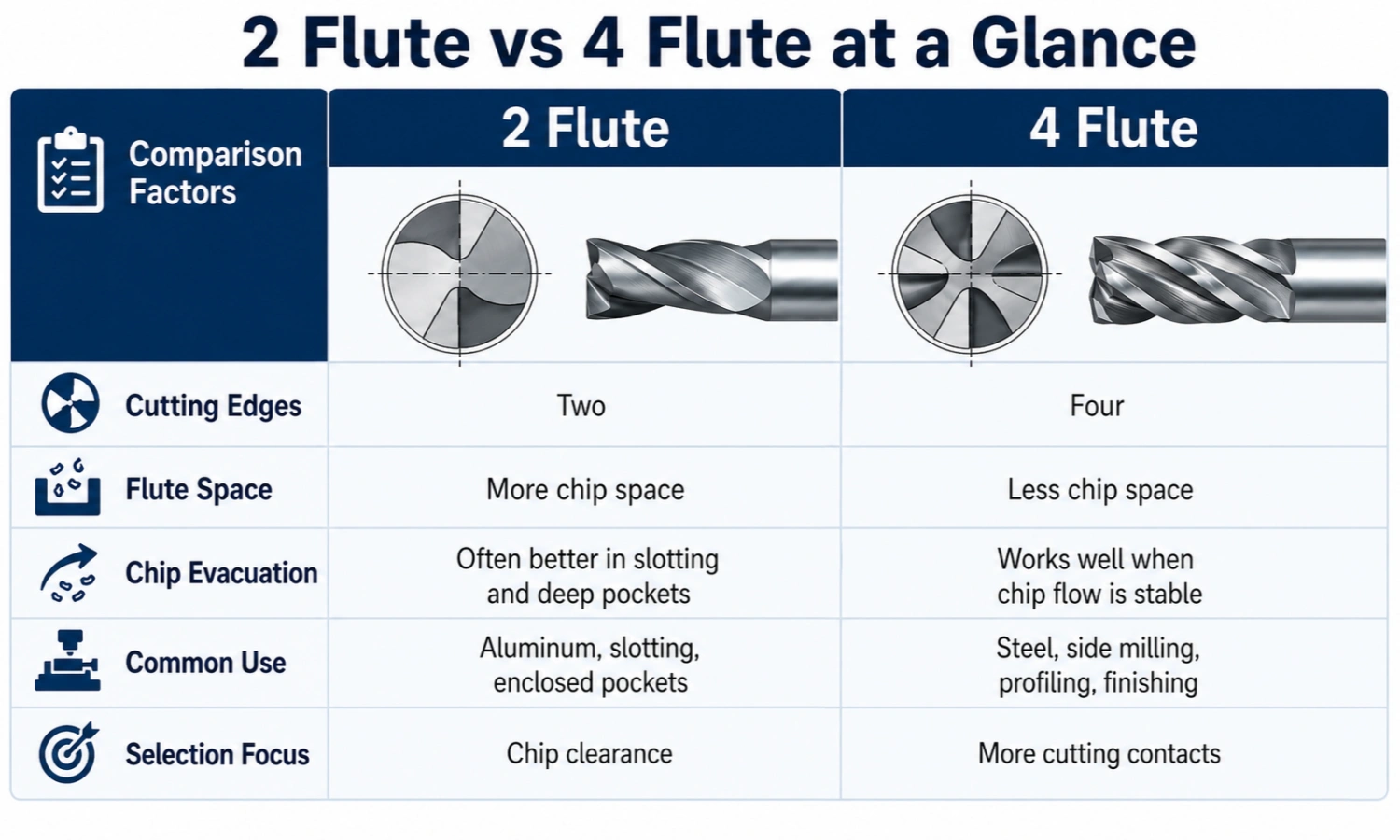
| 要素 | 2-フルートの方向 | 4-フルートの方向 |
|---|---|---|
| 刃先 | 2つの切れ刃 | 4つの切れ刃 |
| フルートスペース | チップのためのより多くのスペース | 切れ刃間のスペースが減少 |
| 切りくずの排出 | 閉じた切削や切りくずの多い切削によく役立ちます | 切りくずが確実に切り口から離れる場合に適しています |
| コアサポート | フルートの深さと形状に依存します | 多くの場合、より多くのコアサポートが可能になります |
| 全幅のスロット加工 | チップ量が多い場合によくあること | 適切なチップクリアランスが必要 |
| 側面フライス加工 | 切りくず排出が依然として重要な場合に最適 | ラジアルエンゲージメントが軽い場合に便利な場合が多い |
| 表面仕上げ | 安定した条件で良好な仕上がりが得られます | より多くの切削コンタクトが仕上げをサポートする可能性があります |
| 素材の方向性 | アルミニウムおよび非鉄の切断に一般的 | 多くの鋼および仕上げ用途で一般的 |
| 主な選択の焦点 | チップスペースと退避 | 最先端のカウントとツールのサポート |
 刃数による切削性能の変化
フルートスペースと切りくず排出
カッターの刃先とコアの間のスペースは限られています.
フルート2本付き, 通常は、より多くのカッター直径をフルート溝に割り当てることができます。. したがって, 切りくずが形成され、切削ゾーンから離れるためのより多くのスペースが確保されます。.
これは次のようなときに役立ちます。:
- 全幅スロッティング
- 深いポケットまたは密閉されたポケットフライス加工
- アルミ加工
- プラスチック加工
- その他の大量チップ処理
4 枚刃カッターは、同じ直径内でより多くの切れ刃を備えています. 結果として, 個々のフルートの溝はより小さいことが多い.
これは、4 枚刃工具では切りくずを排出できないという意味ではありません. その代わり, これは、アプリケーションが十分なスペースを提供する必要があることを意味します, 冷却剤, 空気, または切りくずがカットから離れるためのツールパスの移動.
刃先と送り能力
2 枚刃カッターには 1 回転あたり 2 つの切削コンタクトがあります, 4枚刃カッターには4枚の刃がありますが、.
同じ主軸速度と刃当りの切りくず負荷において, 4 枚刃工具では、回転ごとにより多くの刃先が材料に入るために、より高いプログラムされた送りが必要になります。.
しかし, このより高い送りは、次の場合にのみ実用的です。:
- 切りくず排出量は安定
- マシンパワーは十分
- 工具の噛み合いが適切である
- 切削熱をコントロール
- ワークとホルダーは剛性が高い
- カッターの形状は素材に適合します
したがって, 4 つのフルートがあるからといって自動的に加工が高速になるわけではありません. 同じく, 2 つのフルートが自動的に生産性の低下を意味するわけではありません.
使用可能な送りは全体の加工条件によって異なります.
コアサポートとツールの剛性
4 枚刃の設計では、多くの場合、より多くの材料が工具コア近くに残ることができます。. これにより、一部のカッター設計でより優れたコアサポートを提供できます。.
しかし, 実際の剛性も依存します:
- カッター径
- 溝の深さ
- 刃長さ
- 工具全長
- 工具オーバーハング
- ねじれ角
- 超硬グレード
- ホルダーの状態
短い 2 枚刃カッターは、同じ直径の長い 4 枚刃カッターよりも安定する可能性があります。. このため, 刃数を工具の剛性の唯一の尺度として使用しないでください。.
表面仕上げと切削安定性
刃先の数が増えると、より頻繁な切削接触が可能になります. したがって, 4 枚刃カッターは、適切な側面フライス加工および仕上げ作業中に一貫した仕上げをサポートします。.
それにもかかわらず, 表面仕上げも依存します:
- 工具振れ
- 最先端の品質
- 歯当たりの送り
- ラジアルエンゲージメント
- 工具のたわみ
- 機械の安定性
- ワーククランプ
- ツールパス戦略
厳選された2枚刃カッターでも良好な仕上げ面を実現, 特にアルミニウムやその他の非鉄材料の場合.
フルートの空間についてさらに詳しく説明するには, コア径, ねじれ角, とフルート番手の選択, 私たちのを読んでください エンドミル刃の設計と選択ガイド.
2枚刃エンドミルを使用する場合
全幅のスロット加工
全幅の溝加工により、全直径にわたってカッターと噛み合います。. その結果, この操作では大量の切りくずが生成されますが、スロットの壁により利用可能な切りくず排出経路が制限されます。.
2 枚刃エンドミルは、より広い刃溝によりより多くの切りくずスペースが得られるため、よく検討されます。.
安定したスロッティングも依存します:
- スロットの深さ
- カッター径
- 刃長さ
- 工具オーバーハング
- 空気または冷却剤の供給
- 機械剛性
- 切断パラメータ
浅い溝と深い溝では同じ切削条件が得られません. したがって, ツールと切断方法は実際のフィーチャと一致する必要があります.
深いポケットまたは密閉されたポケット
切りくずは切断ゾーンから出ずに、深いポケットまたは密閉されたポケット内に残る場合があります.
切りくずを再カットする場合, 切削熱と工具負荷が増加する可能性があります. 表面マーク, 構築されたエッジ, 初期のエッジ損傷も発生する可能性があります.
2 枚刃カッターは、これらの用途で有効な切りくず除去を提供します。. しかし, ポケットの深さ, 入力方法, サイドエンゲージメント, ツールリーチ, 冷却剤のアクセスも引き続き検討する必要があります.
アルミニウムおよび非鉄の機械加工
多くのアルミニウム合金は、比較的大きな切りくずや連続した切りくずを生成します。. 銅, 真鍮, 選択されたプラスチックには信頼性の高い切りくずクリアランスが必要な場合もあります.
これらの材料については、, 2 枚刃工具は使用できます:
- 鋭い刃先
- 滑らかまたは研磨されたフルート表面
- 適切なフルートスペース
- アプリケーション固有のエッジ処理
- 信頼できるエア, ミスト, またはクーラントの配送
2 枚刃設計がアルミニウムの唯一の選択肢ではありません. 3 枚刃および用途固有の 4 枚刃カッターも、特定の側面フライス加工または仕上げ加工条件で適切に機能する場合があります。.
選択は材料名だけではなく、操作に基づいて行う必要があります。.
その他のチップを大量に使用する操作
2 枚刃工具は、切りくず排出が難しい場合の軽荒加工や特定の鋼の溝加工用途にも対応できます。.
重要な質問は:
この操作により、利用可能なフルートのスペースで確実に除去できるよりも多くの切りくずが生成されますか??
答えが「はい」の場合, フルート数を少なくすると、開始方向に役立つ可能性があります。.
2枚刃の詳しい使用例はこちら, 読む なんと 2 フルートエンドミルは以下の用途に使用されます。.
当社の標準とカスタムをご覧ください 超硬ソリッド 2 フルートエンドミル オプション.
4 枚刃エンドミルを使用する場合
側面フライス加工とプロファイリング
側面フライス加工時, カッター直径の一部のみがワークピースと噛み合う可能性があります. 通常、チップには全幅スロットの場合よりも多くの空きスペースが残されます。.
この状況では, 4 枚刃工具を使用すると、:
- さらなる切断コンタクト
- 多くの設計におけるコアサポートの強化
- 安定したラジアル切削
- 一貫したプロファイリング
- 適切な条件下での生産性の向上
しかし, ラジアルかみ合いは適切なままでなければなりません. 側面の接触が激しいと依然として熱が発生する可能性があります, 偏向, 切りくず処理の問題.
中仕上げと仕上げ
4 枚刃カッタは、全幅荒加工よりも切りくず量が少ないため、中仕上げ加工および仕上げ加工によく使用されます。.
より多くの切断コンタクトがサポートされる可能性があります:
- 一貫した壁仕上げ
- 安定した輪郭加工
- よりスムーズなプロファイリング
- 適切な条件下でより高度にプログラムされた送り
まだ, 4 枚刃工具はより良い表面を保証するものではありません.
なくなる, 歯当たりの送り, エッジ品質, ツールパス, ラジアルかみ合い, 機械の剛性は引き続き重要です.
鋼およびステンレス鋼の用途
4 枚刃エンドミルは、多くの鋼およびステンレス鋼の加工作業に広く使用されています。.
これらの資料では, このツールは次のような恩恵を受ける可能性があります:
- より優れたコアサポート
- さらなる最先端
- 適切なコーティング
- 制御されたラジアルかみ合い
- 安定した機械と治具の状態
しかし, 材質カテゴリーだけではフルート数は決まりません.
例えば, 鋼の全幅溝加工では、切りくず排出が制限されている場合でも 2 つまたは 3 つのフルートが必要になる場合があります. ステンレス鋼も切削熱の慎重な管理が必要です, 加工硬化, コーティング, そしてエッジの強度.
安定した切りくず排出動作
4 枚刃カッターは、切りくずが工具の周りに詰まらずに切削ゾーンから離れることができるため、より実用的になります。.
これは次のような場合に発生する可能性があります。:
- 側面フライス加工
- 浅いプロファイリング
- オープンポケット仕上げ
- 中仕上げ
- 軽い放射状のカット
- 効果的な冷却剤または空気供給による操作
チップスペースが主な制限ではなくなったとき, 最先端の数とツールのサポートがより優先される可能性があります.
2 フルートvs 4 被削材別溝
次の表は、固定ルールではなく一般的な開始方向を示しています。.
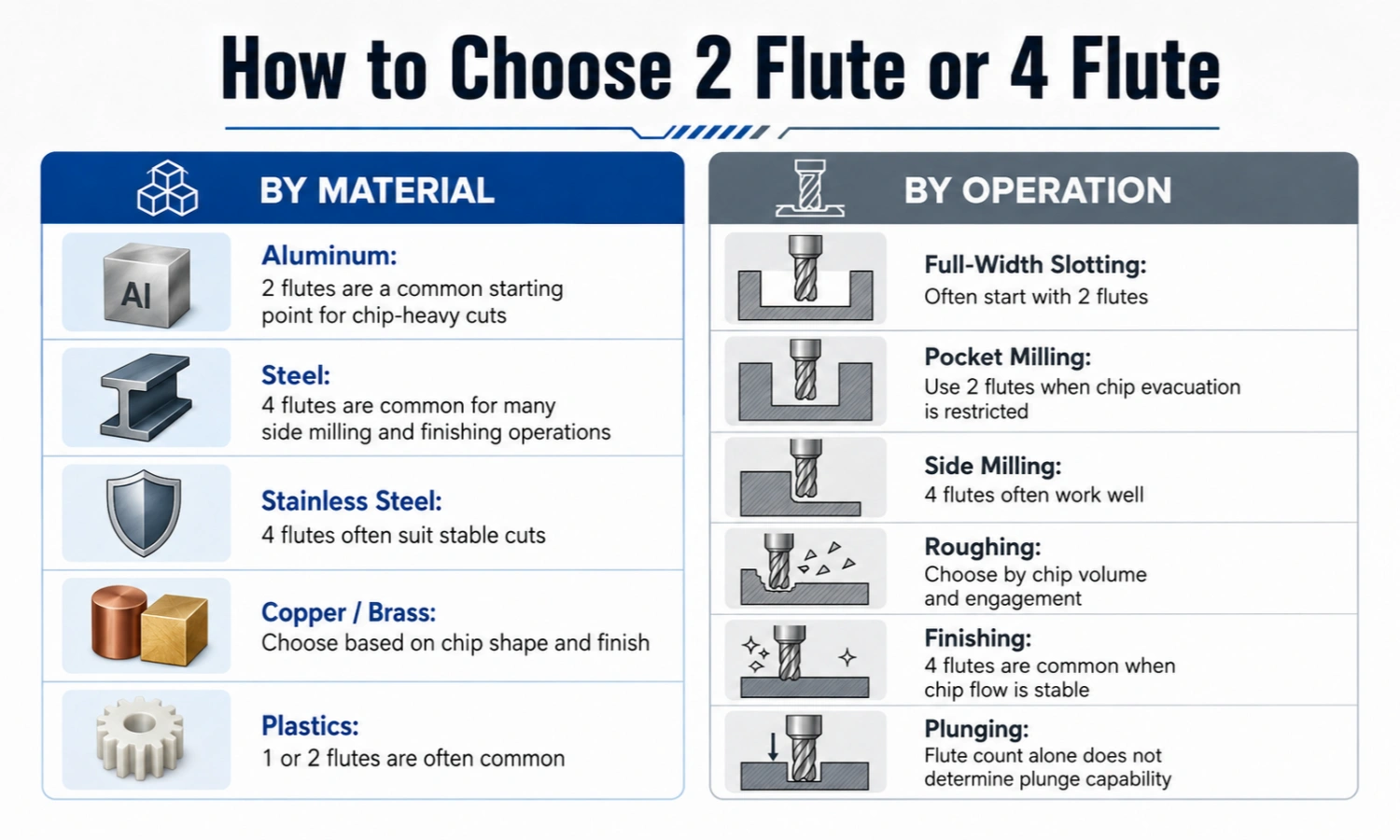
| 材料 | 共通の開始方向 | 選択を変える可能性があるもの |
|---|---|---|
| アルミニウム | 切りくずの多い切削用の 2 つまたは 3 つの刃 | 側面フライス加工, 仕上げ, 合金グレードとクーラント |
| 銅 | 切りくず除去のための 2 つの溝 | 銅グレード, バリコントロールと仕上げ |
| 真鍮 | 2 つ以上のフルートが機能する場合もあります | 黄銅グレード, 切りくず形状と加工動作 |
| プラスチック | フルートは 1 つまたは 2 つが一般的です | プラスチックタイプ, 切削熱と刃先の要件 |
| 鋼鉄 | フルートは4本が一般的 | フルスロッティング, 工具径, 塗装と深さ |
| ステンレス鋼 | 4 本のフルートは多くの作業に適しています | 加工硬化, 婚約, クーラントと刃先強度 |
| 鋳鉄 | 複数のフルート番手が機能する場合があります | 摩耗性, ドライカット, 埃と動作 |
| 選択された複合材料 | 用途に応じたカッターが必要 | 材料構造, 摩耗性と刃先品質 |
この表は最初のガイドとして使用してください。. 最終的な決定には工具の直径も反映する必要があります, 切込み深さ, 機械の状態, そして必要な仕上げ.
2 フルートvs 4 CNC加工によるフルート
溝 加工
全幅スロッティング用, 2 つのフルートは、多くの場合、切りくず量が多くなり、切りくずの移動が制限されるため、実用的な開始点になります。.
4 枚刃カッターは、次の場合でも浅い溝加工または制御された溝加工を実行する可能性があります。:
- スロットが深くない
- 切りくず排出が確実
- この材料は扱いやすい切りくずを生成します
- 切断パラメータが正しく調整されている
スロットが深くなり、密閉度が高くなります。, 通常、フルートのスペースがより重要になる.
ポケットミーリング
ポケットフライス加工には、入口移動とその後の材料除去パスの両方が含まれます.
2 枚刃カッターは、切りくずの詰まりが懸念される深いポケットや密閉されたポケットに適しています。. 4 枚刃カッターは、メインポケットを開いた後のサイドエンゲージメントまたは仕上げに適しています。.
したがって, 1 つのポケットには、操作のさまざまな段階で異なる溝数要件が含まれる可能性があります。.
側面フライス加工とプロファイリング
側面フライス加工用, 多くの場合、切りくずの排出は全幅スロッティングよりも制限が緩和されます。.
4 つのフルートにより、より多くの切削接触と安定した倣い加工がサポートされます。. しかし, アルミニウムを加工する場合は、2 つのフルートでも問題なく機能します。, プラスチック, または追加のチップスペースから恩恵を受けるその他の材料.
選択は半径方向のかみ合いを反映する必要があります, 必要な仕上げ, とツールの剛性.
荒加工
荒加工を行っても、自動的に 2 つのフルートが必要になるわけではありません.
全幅荒加工や切りくず量の多い荒加工では、フルートが少ない方が有利になる可能性があります. 対照的に, ラジアルかみ合いを制御した側面荒加工では、3 つの方法を使用できます。, 4, またはそれ以上の刃先.
専用のラフィングエンドミルでは、チップブレーカーや鋸歯状形状も使用できます。. したがって, フルートの本数だけで選んではいけません.
仕上げ
仕上げ加工では 4 枚刃カッターが一般的です。これは、切りくず量が少なく、切削接触が多いと加工の連続性が向上するためです。.
しかし, フルート数を補うことはできません:
- 過度の振れ
- クランプが不安定
- 刃当りの送りが正しくない
- 長い工具オーバーハング
- 不十分なツールパス
- 磨耗した刃先
材質や切削条件に合わせて2枚刃カッターでも良好な仕上げ面が得られます。.
プランジングとランピング
刃数はエンドミルが突き刺せるかどうかを決定するものではありません.
2 枚刃と 4 枚刃のカッターはどちらも、センターカットまたは非センターカット形状で製造できます。. ストレートプランジプログラミング前, ランピング, またはヘリカルエントリー, 端切れ刃と工具の設計が必要な動きをサポートしていることを確認します。.
詳しいご案内については, 読む エンドミルで突っ込んでもいいですか?.
クイック選択チェックリスト
フルートを 2 本または 4 本にする前に, 確認する:
- どのような材質を加工していますか?
- 操作は全幅溝加工または側面フライス加工ですか?
- どれくらいのチップ量が生産されるか?
- 切りくずの排出は制限されていますか?
- ポケットは深いですか、それとも密閉されていますか?
- フルートのスペースよりも表面仕上げの方が重要ですか?
- 工具の突き出し量はどれくらいですか?
- 機械と治具のセットアップは厳格ですか?
- クーラントまたは空気は切断ゾーンに到達しますか??
- 操作にはセンターカット形状が必要ですか??
- カッターは荒加工用ですか, 中仕上げ, または仕上げ?
チップスペースが主な制限である場合は、2 つのフルートを選択してください.
切りくず排出が安定しており、より多くの切削接触またはより大きなコアサポートがプロセスに利益をもたらす場合は、4 つのフルートを選択してください。.
より広範なフルート数の比較については, 読む 比較する 2, 4, そして 6 フルートエンドミル.
よくある質問について 2 フルートvs 4 フルートエンドミル
の主な違いは何ですか 2 そして 4 フルートエンドミル?
主な違いはフルートのスペースと刃数のバランスです。.
通常、2 枚刃カッターは切りくずのためのより多くのスペースを提供します. 4 枚刃カッターはより多くの切れ刃を提供し、多くの場合、より優れたコアサポートを可能にします.
実際の性能は完全な工具形状と加工条件に依存します。.
は 2 フルートとか 4 アルミニウムに適したフルート?
アルミニウムの溝加工では 2 つのフルートが一般的に選択されます, ポケット, およびその他のチップ量の多いカット.
しかし, 4 枚刃のアルミニウム カッターは、その形状が適切な切りくずクリアランスを提供する場合、側面フライス加工または仕上げ加工中にうまく機能する可能性があります。.
操作は素材と同じくらい重要です.
鋼に適した4枚刃エンドミルです?
はい. 4枚刃エンドミルは側面フライス加工によく使用されます。, 中仕上げ, スチール仕上げ.
しかし, 全幅の溝加工や深い切り込みでは、切りくずの排出が困難になる場合に必要なフルートの数が少なくなる場合があります。.
コーティング, カッターの形状, 剛性, 切断条件も鋼種に一致する必要があります.
4枚刃エンドミルはアルミニウムを切断できますか?
はい. 4 枚刃カッターは、溝の形状に合わせてアルミニウムを加工できます。, エッジの準備, 材質に合わせた切断条件.
軽い側面フライス加工や仕上げ加工に便利です。. 深い溝加工や重たい切りくずの除去に, 多くの場合、フルートの数が少ないほど管理が容易になります.
全幅溝加工に適した刃数はどれですか?
全幅スロッティングでは切りくずの体積が多くなり、切りくずの排出経路が制限されるため、多くの場合 2 つのフルートが好まれます。.
それにもかかわらず, 切りくず排出が安定しており、切削パラメータが適切であれば、4 枚刃カッターは浅いスロットでも機能する可能性があります。.
側面フライス加工にはどちらが適していますか?
4 つのフルートは、切りくずを残すための空きスペースが多いため、側面フライス加工に適していることがよくあります。, 追加の刃先が生産性と仕上げをサポートします。.
しかし, アルミニウムでは依然として 2 つのフルートが好まれる可能性があります, プラスチック, またはチップクリアランスが依然として重要なその他の用途.
4枚刃エンドミルは常に優れた仕上げを提供しますか??
いいえ. より多くの刃先があれば、一部の仕上げ作業に役立つ場合があります, ただし、表面の改善を保証するものではありません.
なくなる, エッジ品質, 歯当たりの送り, ラジアルかみ合い, 工具のたわみ, 機械の安定性, ツールパスも結果に影響します.
2枚刃エンドミルはステンレス鋼も加工できます?
一部の 2 枚刃カッターはステンレス鋼を加工できます, 特に溝加工や切りくず排出が制限されている作業時.
しかし, ステンレス鋼にも適切な超硬グレードが必要です, コーティング, エッジ強度, クーラント戦略, 加工硬化の制御.
正確なアプリケーションをレビューする必要があります.
フルート数はプランジ能力を決定しますか?
いいえ. プランジ能力は端部の形状に依存します, 特にカッターにセンター刃があるかどうか.
2 枚刃または 4 枚刃の工具は、中心切削または非中心切削のいずれかになります。.
軸方向に挿入する前に必ず工具の仕様を確認してください。.
関連ガイド
詳細については, 読む:
選択に助けが必要 2 又は 4 フルート?
あなたのワーク材料を私たちに送ってください, 機械加工作業, カッターサイズ, 切込み深さ, ツールリーチ, 描画, リファレンスモデル, 入手可能な場合は必要な数量.
私たちは情報を検討し、チップスペースがあるかどうかを特定するのに役立ちます。, 最先端のカウント, ツールサポート, または表面要件をより優先する必要があります.
電子メール: sales@cutterbest.com