 精密フライスカッター,あらゆる材料を加工するCNC用の切削工具

紹介
エンドミルカッターの種類は切りくず排出に影響します, 切削安定性, surface finish, 材料の除去, CNC加工における工具寿命と. 適切なタイプの選択は、サイズやコーティングだけではありません.
さまざまな加工タスクに対してさまざまなツールがより適切に機能します. フラットエンドミルは溝加工や側面フライス加工によく使用されます。. ボールノーズツールは3D輪郭や曲面に適しています. Corner radius, 荒削り, テーパー付きツールは、部品に強力なエッジが必要な場合に役立ちます, 素早い在庫除去, または特別なリーチ.
このガイドの内容, 最も一般的なエンドミルカッターのタイプを比較します, それらの用途, 基本的なサイズ要素, 先端形状, アルミニウムの選択のヒント, 鋼鉄, ステンレス鋼, およびカスタム CNC 加工アプリケーション.
このツールを初めて使用する場合, まずは私たちの記事を読んでください 基本的なフライス工具ガイド.
エンドミルカッターの種類とは?
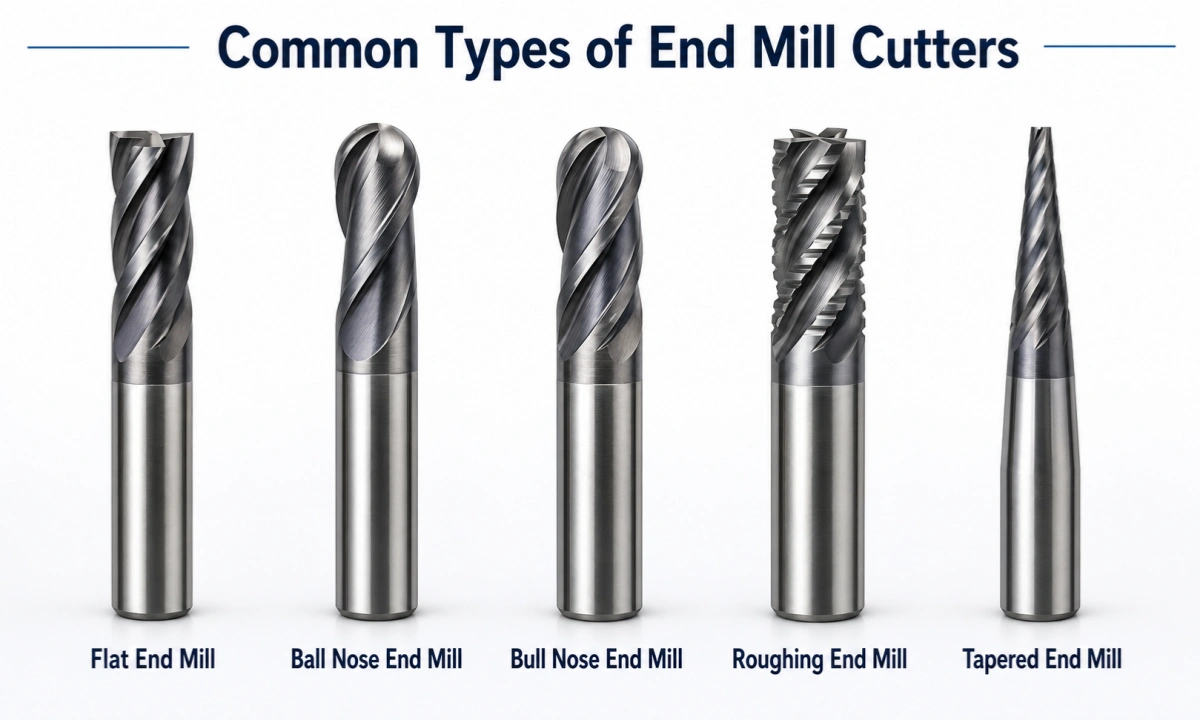
機械工場では通常、先端の形状によってエンドミルカッターのタイプを分類しています。, 切断目的, および機械加工アプリケーション. 市場には多くのフライスカッターが販売されていますが、, CNC加工ではフラットエンドミルが一般的です, ボールノーズエンドミル, コーナーラジアスエンドミル, ラフィングエンドミル, およびテーパーエンドミル.
それぞれのタイプに独自の利点があります. 例えば, 一般的なフライス加工にはフラットエンドミルがよく使われます。, 一方、ボールエンドミルは 3D 輪郭や曲面に適しています。.
そのため、注文または加工の前に、カッターの種類を理解することが工具選択の重要な部分となります。.
最も一般的なエンドミルカッターのタイプ
1. フラットエンドミル
フラットエンドミルは、CNC 加工で最も一般的な工具タイプの 1 つです。. 平らな刃先を持っています, そのため、機械工はスロット加工にそれを選択することがよくあります, 側面フライス加工, 肩削り加工, および汎用加工.
平らな底面が作れるので, このツールは、真っ直ぐなスロットが必要な部品に適しています。, ポケット, または鋭いエッジの特徴.
典型的な用途には以下が含まれます::
- スロッティング
- 側面フライス加工
- ポケットフライス加工
- 一般的な機械加工作業
機械工場ではアルミニウム用のフラットエンドミルを使用しています, 鋼鉄, および多くの標準的な加工材料.
2. ボールエンドミル
ボールエンドミルは刃先が丸くなっています。. このデザインは輪郭形成に特に適しています, プロファイリング, 曲面または 3D 表面の加工.
機械工は通常、このツールを次の目的で使用します。:
- 金型作業
- 3Dマシニング
- 湾曲した部品表面
- 仕上げ作業
先端が丸いので, ボールノーズエンドミルを使用すると、曲面形状の移行をよりスムーズに行うことができます。. しかし, 通常、底が鋭いスロットの最初の選択肢としては機能しません。.
基本的な使い方と定義について, 私たちの記事も読むことができます 基本的なフライス工具ガイド.
3. コーナラジアスエンドミル
平らな底部と丸みを帯びたコーナー刃を組み合わせたコーナーラジアスエンドミル. この設計により、刃先強度が向上し、加工中のコーナー欠けが軽減されます。.
標準フラットエンドミルとの比較, コーナラジアスエンドミルは多くの場合、:
- エッジ強度が向上
- よりスムーズなコーナートランジション
- 一部のアプリケーションでの安定性の向上
機械工場では通常、このタイプを次の用途に使用します。:
- 鋼加工
- ステンレス鋼の機械加工
- 中仕上げ
- より強いコーナーが必要な仕上げ作業
ユーザーは、平らな切削動作と工具寿命の向上の両方が必要な場合に、この設計を選択することがよくあります。.
4. ラフィングエンドミル
ラフィングエンドミルは材料を積極的に除去します. 通常、鋸歯状または特殊な切削形状を備えており、切りくずをより小さな断片に分割し、切削負荷を軽減します。.
機械工場では通常、このタイプを次の用途に使用します。:
- 重度の在庫除去
- 仕上げ前の荒加工
- 材料除去効率の向上
- 安定した切削条件でより強靱な材料を加工する
荒加工後, 機械工は、部品のより良い表面仕上げが必要な場合、仕上げツールを使用することがよくあります。.
5. テーパーエンドミル
テーパーエンドミルは本体が徐々にテーパーになっています。. 機械工は、直線壁カッターが最良の選択肢ではない場合にこのツールを使用します。.
典型的な用途には以下が含まれます::
- 斜めの壁
- 深い空洞
- 金型作業
- 特殊な形状の加工
テーパー形状なので, このカッターは、狭いまたは深い加工領域でのアクセスを向上させます。.
エンドミルカッタータイプ早見表
| エンドミルカッタータイプ | 最適な用途 | サーフェスの結果 | 代表的な材質 |
|---|---|---|---|
| フラットエンドミル | 溝 加工, 側面フライス加工, ポケット | 平底面 | アルミニウム, 鋼鉄, 汎用加工 |
| ボールエンドミル | 3Dコンタリング, 曲面 | 滑らかな曲面仕上げ | 金型鋼, アルミニウム, 3Dパーツ |
| コーナラジアスエンドミル | より強力なエッジ, smoother transitions | 底が平らで角が丸い | 鋼鉄, ステンレス鋼 |
| ラフィングエンドミル | 素早い在庫除去 | 表面が粗い | 鋼鉄, 鋳鉄, 重切削加工 |
| テーパーエンドミル | 斜めの壁, 深い空洞 | 制御されたリーチと形状 | 金型工事, 特殊パーツ |
この比較表は、購入者が特定の加工タスクにどのタイプがより適しているかをすぐに理解するのに役立ちます。.
エンドミルカッターのサイズ表と基本仕様
カッタータイプ以外にも, 購入者は注文する前に主なサイズ仕様も確認する必要があります. 同じ工具形状であっても、直径が異なると動作が異なる場合があります。, 刃の長さ, 全長, またはシャンクサイズの変更.
| 仕様 | それが意味するもの | なぜそれが重要なのか |
| カッター径 | 工具の切断幅 | スロット幅に影響します, 切削抵抗, および部品の特徴サイズ |
| フルートの長さ | 工具の切断長さ | 切り込み深さと工具の剛性を決定します |
| 全長 | カッター全長 | リーチに影響する, 振動, 加工安定性 |
| シャンク径 | クランプ径 | ツールホルダーと正しく一致する必要があります |
| フルートカウント | 切削刃数 | 切りくず排出に影響, 剛性, そして表面仕上げ |
| コーナー半径 | ツールチップの角丸サイズ | エッジ強度と表面遷移を改善します。 |
| コーティング | 刃先の表面処理 | 耐摩耗性と工具寿命の向上に役立ちます |
標準サイズは多くの一般的な加工ニーズに対応できます. しかし, 深い空洞の場合はカスタムツールが必要になる場合があります, 特別なプロファイル, ロングリーチ加工, 規格外の材料, または厳しい公差要件.
標準およびカスタムツールの供給用, 訪問することもできます CNCフライス工具の製品ページ.
CNC 加工におけるエンドミルカッターの種類と用途
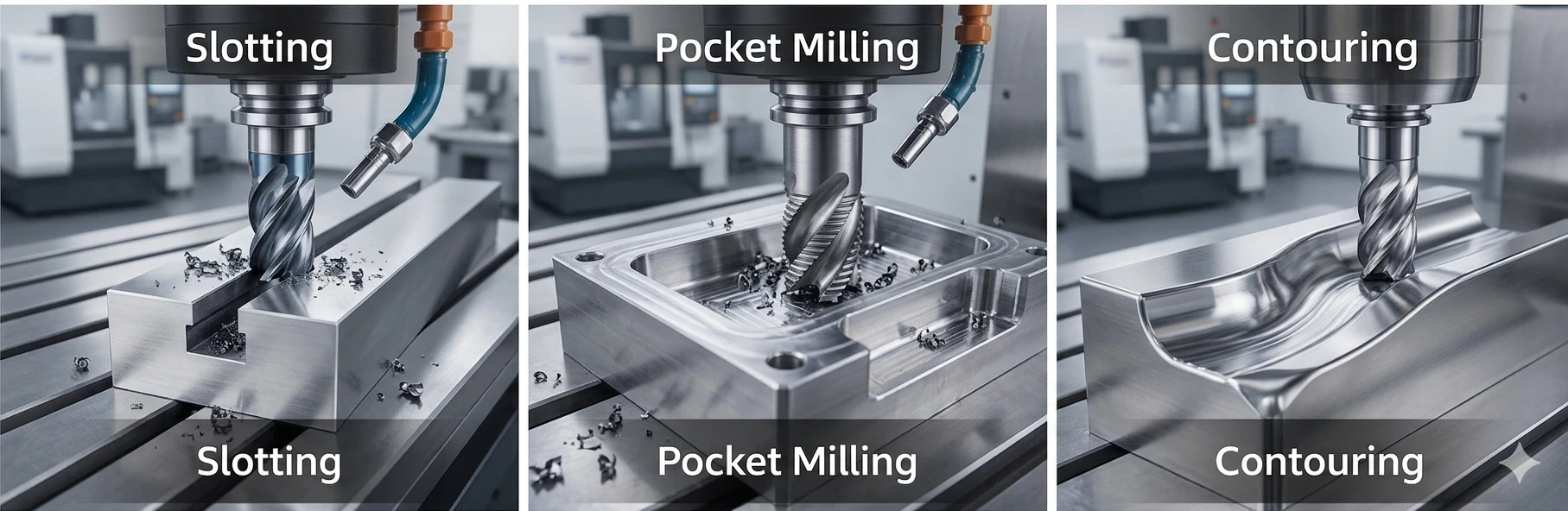
溝加工およびポケットミーリング用
機械工は通常、フラットエンドミルを溝加工やポケットフライス加工に使用します。これらのツールは、平らな底部の形状を作成し、側壁をきれいにすることができるためです。.
等高線および 3D サーフェス用
ボールエンドミルは通常、曲面にスムーズに追従できるため、輪郭加工や 3D 加工に適しています。.
より強いコーナーとより良い工具寿命を実現
機械工場では、部品に強力な刃先とより安定した性能が必要な場合、コーナーラジアスエンドミルを選択することがよくあります。.
素早い材料除去のために
ラフィングエンドミルは、仕上げ前に大量の材料を除去するのに役立ちます.
深いフィーチャーまたは角度のあるフィーチャーの場合
テーパーエンドミルは深いキャビティに適しています, 斜めの壁, 金型関連の機械加工タスク.
機械加工中に実際にどのように切削が行われるかを知りたい場合, 私たちの記事も読むことができます CNCフライス加工ガイド.
異なる材質に適したエンドミルカッターの種類?
アルミ用エンドミルの種類
アルミ加工用, 切りくずの排出は特に重要です. したがって, バイヤーは多くの場合、適切なフルート設計を備えたフラットエンドミルまたはボールノーズツールを選択します。.
多くの場合, バイヤーはフルートの本数にも細心の注意を払っています. さらに詳しく比較するには, 私たちのを読んでください フルート数の比較ガイド.
鋼用エンドミルの種類
鋼加工用, 通常は剛性と耐摩耗性の方が重要です. 機械工場ではフラットエンドミルを選択することが多い, コーナーラジアスエンドミル, 荒加工または仕上げ要件に応じた荒加工ツール.
ステンレス鋼用エンドミルの種類
ステンレス鋼用, 切断熱と安定性が重要です. より強力な刃先と優れた耐摩耗性により性能が向上するため、多くのユーザーはコーナーラジアス工具と適切な超硬工具を選択しています。.
超硬専用工具用, 訪問することもできます 超硬ソリッドフライス工具 ページ.
適切なエンドミルカッタータイプの選択方法
1. 加工動作の確認
最初の質問は、カッターが何をする必要があるかです. 溝 加工, 輪郭を描く, 荒削り, 仕上げ, ポケットフライス加工では、さまざまな種類の工具が必要になることがよくあります.
2. ワーク材質の確認
アルミニウム, 鋼鉄, ステンレス鋼とステンレス鋼は異なる加工特性を持っています. したがって, 購入者はカッターの種類を素材に合わせるべきです.
3. 表面仕上げ要件を確認する
表面品質が特に重要な場合, ボールノーズまたはコーナー半径ツールは、アプリケーションによってはより適切に機能する場合があります.
4. 工具の強度と剛性をチェックする
より重切削条件用, 荒削りツールやより強力な刃先ツールを使用すると、より優れたパフォーマンスが得られる場合があります.
5. 標準要件またはカスタム要件を確認する
一部のユーザーには標準ツールが必要です, カスタマイズされたジオメトリが必要な場合もあります, コーティング, または図面またはサンプルに基づく寸法.
標準または OEM ソリューションをお探しの場合, 訪問することもできます CNCフライス工具の製品ページ.
エンドミルカッターの形状と主要部品
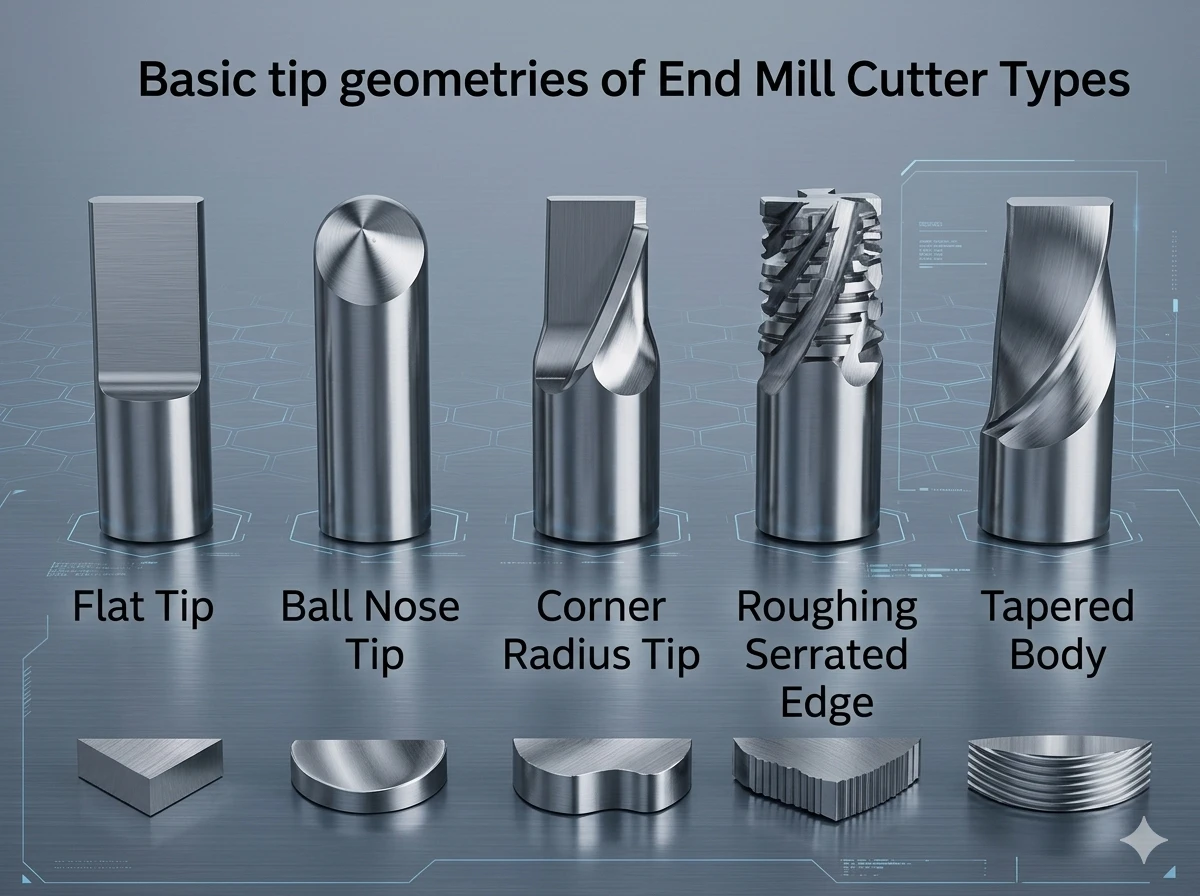
異なるツールは一見同じように見えますが、, 購入者は、先端の形状によってほとんどのカッターの種類を識別できます。, flute design, および加工目的.
例えば:
- フラットエンドミルは、スロットの切り込み先端部が平らになっています。, ポケット, フラットボトム機能.
- ボールノーズエンドミルは、3D 曲面や曲面形状に対応する丸い先端を備えています。.
- コーナーラジアスエンドミルは、平坦な底部と丸みを帯びたコーナーを組み合わせて、より強力な刃先性能を実現します。.
- ラフィングエンドミルは、鋸歯状または特殊な切削形状を使用して、素早い切り代除去を実現します。.
- テーパーエンドミルは、深いキャビティ用に角度の付いたボディを備えています。, 金型作業, そしてスペシャルリーチ.
これらの形状の違いを理解することは、購入者が注文する前に適切なツールを選択するのに役立ちます. また、材料や加工操作ごとに 1 つのカッター タイプを使用することを避けるのにも役立ちます。.
エンドミルカッターのタイプを選択する際のよくある間違い
見た目だけで選ぶ
購入者の中には、材質を無視して形状のみでカッターを選択する人もいます。, 手術, そして仕上げの要件.
素材ごとに1種類を使用
アルミニウムに最適なエンドミルのタイプは、鋼やステンレス鋼には最適な選択肢ではない可能性があります.
仕上げ要件を無視する
荒加工に適した工具では、仕上げ加工に必要な表面品質が得られない場合があります。.
刃数を無視してカッターの種類のみに注目
カッターの種類が重要, でもフルートの数は, コーティング, 工具の材質も合わせて考慮する必要があります.
FAQ
エンドミルカッターの主な種類は何ですか?
最も一般的なタイプはフラットエンドミルです。, ボールノーズエンドミル, コーナーラジアスエンドミル, ラフィングエンドミル, およびテーパーエンドミル.
フラットエンドミルとボールエンドミルの違いは何ですか?
フラットエンドミルは主に平底溝や一般加工に使用されます。, ボールエンドミルは輪郭や曲面の加工に適しています。.
アルミニウムに最適なエンドミルのタイプはどれですか?
多くの場合, フラットエンドミルはアルミニウムによく使用されます。, 特に良好な切りくず排出と汎用加工が必要な場合.
3Dコンタリングに使用するエンドミルの種類?
ボールエンドミルは先端が丸く曲面に適しているため、3D輪郭加工によく使用されます。.
ラフィングエンドミルと仕上げエンドミルは同じですか?
いいえ. ラフィングエンドミルは材料を迅速に除去できるように設計されています, 仕上げ工具はより良い表面品質と最終精度を達成するために選択されます。.
適切なエンドミルカッターのタイプを選択するにはどうすればよいですか?
機械加工作業を考慮する必要があります, ワーク材質, 表面仕上げ要件, 工具の強度, 標準ツールとカスタムツールのどちらが必要か.
結論
エンドミルカッターのタイプは CNC 加工のパフォーマンスに重要な役割を果たします. さまざまなカッタータイプがさまざまな作業に合わせて設計されています, 適切なものを選択することで加工効率を向上させることができます, 安定性, surface finish, と工具寿命.
フラットエンドミルは一般加工に広く使用されています。. 曲面や輪郭加工に適したボールエンドミル. コーナラジアスエンドミルによる刃先強度の向上, 一方、ラフィングエンドミルは重度の切り代除去に適しています。. テーパーエンドミルは、角度のあるフィーチャーや深いフィーチャーに便利です.
エンドミルカッターの種類を選択する場合, 常に機械加工オペレーションを考慮することをお勧めします, ワーク材質, 仕上げ要件, 1 つの要素だけに焦点を当てるのではなく、ツールの強度を組み合わせる.
CTA
CNC 加工用の標準またはカスタム ツールを探しています?
訪問してください CNCフライス工具の製品ページ またはあなたの図面を私たちに送ってください, サイズ表, 材料, およびコーティング要件. OMISTはアルミニウムに適した工具を推奨します, 鋼鉄, ステンレス鋼, およびカスタム加工アプリケーション.