Tel: 0086-15907552669    E-mail: sales@cutterbest.com

About   Contact    |   

APMT1135 Carbide Milling Inserts Supplier | OMST

Carbide Inserts/Milling Inserts/

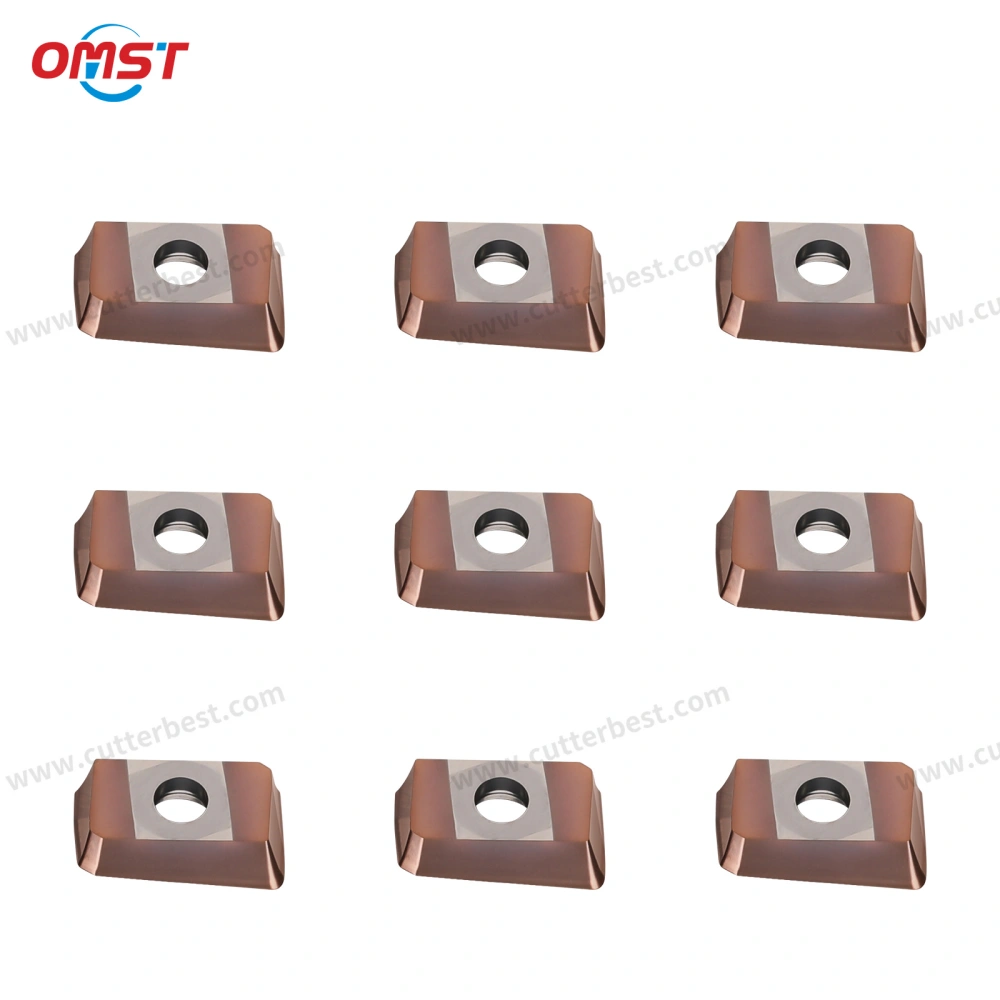
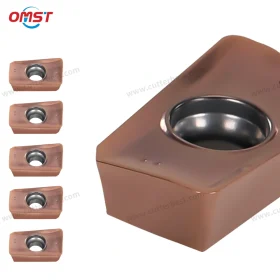
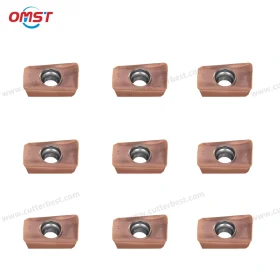
APMT1135PDFR-M2L Carbide Milling Inserts

Brand: OMST
Model: APMT1135PDFR-M2L
Product Name: APMT1135PDFR-M2L Carbide Milling Inserts
Insert Type: Indexable Milling Insert
Material: Tungsten Carbide
Surface: Wear-Resistant Coated Finish
Main Application: Face Milling, Shoulder Milling, Step Milling, and CNC Milling
Workpiece Material: Steel, Stainless Steel, and Cast Iron
Package: 10 pcs / box
MOQ: 1 Box for Stock Items
Delivery Time: 3–7 Working Days for Stock Items
OEM / ODM: Available
Compatibility: For Cutter Bodies Designed for APMT1135 Inserts

  • Product Details
  • FAQ
  • Support
  • Payment & Delivery

APMT1135 carbide milling inserts are designed for face milling, shoulder milling, step machining, and other general CNC milling operations. The APMT1135PDFR-M2L model combines a tungsten carbide substrate with a coated surface to support stable machining of steel, stainless steel, and cast iron.

Its cutting geometry helps guide chips away from the cutting zone while maintaining consistent contact with the workpiece. Therefore, this insert is suitable for machining workshops, industrial manufacturers, tool distributors, and buyers who need replacement inserts for compatible APMT1135 cutter bodies.

OMST supplies stock products in boxes of 10 pieces. In addition, OEM services can be discussed for distributors and industrial buyers who require private labels, customized packaging, or repeat bulk supply.

APMT1135 Carbide Milling Inserts Overview

What Is APMT1135PDFR-M2L?

APMT1135PDFR-M2L is an indexable carbide insert for compatible CNC milling cutter bodies. CNC operators can use it for flat surface machining, shoulder cutting, step milling, side-wall machining, and general metal removal.

Once the cutting edge reaches its service limit, the insert can be replaced without changing the complete cutter body. As a result, users can control tooling costs and simplify tool maintenance during regular production.

Although many inserts look similar, their dimensions, insert seats, screw positions, and cutting geometries may differ. For this reason, the cutter body model should be checked before an order is confirmed.

Coated Carbide Insert Design

The coated surface helps reduce wear during steel, stainless steel, and cast iron machining. It can also support better heat resistance when suitable cutting parameters are applied.

However, coating alone does not determine insert life. Machine rigidity, workpiece hardness, cutter condition, feed rate, cutting speed, and coolant use also affect the final machining result.

Key Features of APMT1135 Carbide Milling Inserts

Tungsten Carbide Substrate

The insert uses tungsten carbide as its base material. This material provides a practical balance between hardness, toughness, and wear resistance for general CNC milling.

Therefore, the insert can support regular production in mechanical processing, automotive components, mold parts, and other metalworking applications.

Sharp Cutting Geometry

The cutting geometry helps the edge enter the material efficiently. As a result, cutting resistance may be reduced when the insert is installed correctly and the machining parameters match the application.

A stable cutting edge can also support more consistent machining during repeated production cycles.

Smooth Chip Evacuation

The chip-forming surface helps direct chips away from the cutting zone. Smooth chip flow is important during shoulder milling, step milling, and profile machining because accumulated chips may increase heat and affect surface quality.

However, chip evacuation also depends on cutter engagement, coolant conditions, feed rate, and the available chip space.

Wear and Chipping Resistance

The coated surface helps reduce normal abrasive wear. Meanwhile, the carbide substrate provides support against cutting pressure and intermittent contact.

Nevertheless, excessive feed, poor insert seating, cutter vibration, or repeated impact may cause premature edge damage. Therefore, stable installation remains important.

Consistent Surface Quality

A clean insert seat, accurate cutter runout, and suitable cutting parameters can help produce a more consistent machined surface.

For this reason, APMT1135PDFR-M2L can support both general roughing and semi-finishing operations. For applications with strict surface requirements, please provide your material, machining allowance, and finish target before ordering.

Applications of APMT1135 Carbide Milling Inserts

Face Milling

CNC operators can use APMT1135 inserts to machine flat surfaces on CNC milling machines and machining centers.

The final surface condition depends on cutter runout, insert installation, feed per tooth, workpiece clamping, and machine stability. Therefore, all inserts in the cutter body should be installed correctly before machining begins.

Shoulder Milling

With a compatible cutter body, APMT1135PDFR-M2L can machine shoulders, steps, side walls, and near-right-angle features.

Many APMT cutter bodies support square-shoulder milling. However, the final shoulder profile depends on the cutter body design, insert position, and insert seat geometry.

Step and Profile Milling

CNC operators can also use this model for step machining, edge machining, profile milling, and general contour work.

In addition, it can support the regular production of mechanical parts, mold components, automotive components, and industrial hardware.

Roughing and Semi-Finishing

The carbide substrate and coated surface make the insert suitable for general roughing and semi-finishing.

However, very heavy cutting, hardened materials, unstable machining conditions, or severe interrupted cuts may require another insert grade or edge design.

Application and Selection Guide

Machining RequirementRecommended UseSelection Notes
Face MillingFlat surface machiningCheck cutter diameter, runout, and feed per tooth
Shoulder MillingSteps, shoulders, and side wallsConfirm cutter geometry and insert seat
Step MillingMulti-level surfaces and edge machiningUse stable clamping and controlled cutter engagement
General RoughingMedium material removalSelect a suitable cutting depth and avoid excessive impact
Semi-FinishingImproved surface consistencyReduce cutting load and inspect the cutting edge regularly
Steel MachiningCarbon steel and alloy steelAdjust parameters according to material hardness
Stainless SteelGeneral stainless steel millingControl heat, chip flow, feed rate, and coolant conditions
Cast IronGeneral cast iron machiningAvoid unstable cutter engagement and excessive impact
AluminumNot the main application of this coated versionContact OMST to confirm a more suitable grade

Workpiece Material Guidance

Steel and Alloy Steel

The coated insert can support general carbon steel and alloy steel machining. For better tool life, users should select the cutting speed, feed rate, and cutting depth according to material hardness and machine rigidity.

In addition, a clean insert seat and stable workpiece fixture can help reduce vibration.

Stainless Steel

CNC operators can use APMT1135PDFR-M2L for general stainless steel machining.

Since stainless steel often generates more heat and may work-harden, stable clamping and controlled cutting parameters are important. Sufficient chip evacuation can also help reduce heat concentration around the cutting edge.

Cast Iron

The coated surface can support cast iron milling under suitable machining conditions.

However, users should avoid excessive impact and confirm that the cutter body provides stable insert support. The insert seat should also be inspected before installation.

Aluminum and Non-Ferrous Materials

OMST mainly recommends this coated version for steel, stainless steel, and cast iron.

For aluminum, copper, brass, or other non-ferrous materials, please contact OMST to confirm whether another carbide grade, coating, or cutting-edge design would provide better performance.

Cutting Performance Considerations

Machine and Fixture Rigidity

A rigid machine and stable fixture help reduce vibration. As a result, the cutting edge can maintain more consistent contact with the workpiece.

If vibration occurs, users should check the tool overhang, cutter body, fixture, cutting load, and spindle condition.

Cutter Body Condition

The insert seat, screw, and cutter body should remain clean and free from damage.

Poor seating can affect cutter runout, cutting stability, surface quality, and insert life. Therefore, chips and dirt should be removed before a new insert is installed.

Cutting Parameters

Cutting speed, feed rate, axial depth, and radial engagement should match the workpiece material and cutter body.

Buyers should not copy cutting parameters from another machine without checking the actual machining conditions. Instead, initial parameters should be tested and adjusted gradually.

Coolant and Chip Control

Coolant selection depends on the material and machining process. In some applications, compressed air or dry cutting may be used.

However, stainless steel machining often requires better heat and chip control. Consistent coolant delivery may also help prevent repeated thermal shock.

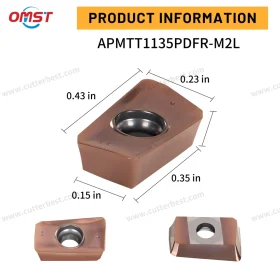
Please refer to the APMT1135PDFR-M2L dimension image for the product size and structural reference.

Because different manufacturers may use different suffixes, chipbreaker designs, or small dimensional variations, the image should be treated as a reference. Before bulk orders, please confirm the cutter body model, insert seat, and required dimensions.

What Is the Corner Radius of an APMT1135 Insert?

The corner radius of an APMT1135 insert may vary according to the complete model designation, manufacturer, chipbreaker design, and cutting-edge geometry.

Therefore, buyers should not select an insert by the APMT1135 size code alone. Different suffixes may represent different cutting structures or application requirements.

Before ordering, please provide:

Current insert marking
Required corner radius
Cutter body model
Insert seat photo
Product drawing, if available

OMST will use this information to help confirm the correct insert dimensions and cutter body compatibility.

APMT1135PDFR-M2L insert dimension reference

Compatible Cutter Bodies

APMT1135PDFR-M2L inserts are intended for cutter bodies designed for APMT1135-size inserts. These may include compatible indexable end mills, shoulder milling cutters, face milling cutters, and other APMT-style cutter bodies.

However, similar-looking inserts are not always interchangeable. Different cutter brands may use different insert seats, screw positions, clearance angles, or chipbreaker requirements.

Therefore, please send the following information before ordering:

Cutter body model
Existing insert marking
Insert seat photo
Product drawing, if available
Required order quantity

OMST will help check compatibility before production or shipment.

APMT1135 vs APMT1604 Inserts

APMT1135 and APMT1604 belong to the same general APMT insert family, but they have different sizes and may fit different cutter bodies.

APMT1604 is larger and may support different cutter diameters or cutting loads. However, buyers should select the insert according to the cutter body model and insert seat rather than choosing only by insert size.

For the larger model, view our APMT1604 carbide milling inserts.

APMT1135 vs APKT1135 Inserts

APMT1135 and APKT1135 are both indexable milling inserts, but they belong to different insert series.

Their insert geometry, cutting-edge design, seat structure, and compatible cutter bodies may differ. Therefore, they should not be treated as interchangeable models without technical confirmation.

For another 1135-size insert option, view our APKT1135 carbide milling inserts.

OEM and Supply Support

OMST supports trial orders, regular stock orders, and bulk purchasing for industrial users, resellers, and cutting tool distributors.

Available OEM options may include:

Laser marking
Private label packaging
Customized product labels
Edge preparation
Coating selection for qualified bulk orders

The final MOQ and delivery time depend on quantity, coating, packaging, and technical requirements.

Why Choose OMST?

Milling Insert Supply Experience

OMST supplies milling inserts, turning inserts, CNC cutting tools, and customized tooling solutions for industrial machining applications.

Our team can review the workpiece material, cutter body model, machining method, and purchase quantity before quotation.

Technical Selection Support

Insert selection should consider more than the basic size code.

Therefore, OMST can help buyers check the current insert marking, application, cutter body, material, and required edge geometry before the order is placed.

Trial Orders and Bulk Supply

Stock products are packed in boxes of 10 pieces, and the standard MOQ for available items is one box.

In addition, stable repeat supply and OEM packaging can be discussed for distributors and regular industrial buyers.

Related Milling Tool Options

For additional CNC milling solutions, view our CNC milling cutters.

You can also review our carbide milling cutter product range.

For other milling insert models, compare this product with our APMT1604 carbide milling inserts.

Another available 1135-size option is our APKT1135 carbide milling inserts.

Request a Quote for APMT1135 Carbide Milling Inserts

Please send us your workpiece material, cutter body model, current insert marking, required corner radius, machining application, order quantity, and packaging requirements.

OMST will help confirm whether APMT1135PDFR-M2L carbide milling inserts match your cutter body and machining conditions. After the technical details are confirmed, we will provide a quotation based on your order requirements.

FAQ

What is APMT1135PDFR-M2L used for?

APMT1135PDFR-M2L is used for face milling, shoulder milling, step milling, side-wall machining, roughing, semi-finishing, and other general CNC milling operations.

Which materials can APMT1135 inserts machine?

This coated insert is mainly intended for steel, stainless steel, and cast iron. However, the final application depends on the carbide grade, coating, material hardness, cutter body, and cutting parameters.

Can APMT1135 inserts machine stainless steel?

Yes. CNC operators can use them for general stainless steel machining. Stable clamping, controlled cutting parameters, and suitable chip evacuation are important because stainless steel can generate heat and work hardening.

Is APMT1135 suitable for aluminum?

This coated version is not mainly positioned for aluminum. Please contact OMST to confirm a suitable carbide grade and cutting-edge design for aluminum or other non-ferrous materials.

What is the corner radius of an APMT1135 insert?

The corner radius may vary according to the complete insert model, manufacturer, chipbreaker, and cutting-edge design. Please provide the current insert marking or required radius before ordering.

What are the dimensions of an APMT1135 insert?

The basic dimensions are shown in the product reference image. However, buyers should confirm the complete model and cutter body before ordering because small differences may exist between suppliers and suffixes.

Which cutter body fits APMT1135 inserts?

These inserts fit cutter bodies designed for APMT1135-size inserts. Please provide the cutter body model, existing insert marking, or insert seat photo so that compatibility can be checked.

What is the difference between APMT1135 and APMT1604?

Both belong to the APMT family, but they have different sizes and may fit different cutter bodies. APMT1604 is larger, while APMT1135 is used with cutter bodies designed for the smaller insert size.

Are APMT1135 and APKT1135 interchangeable?

Not necessarily. They belong to different insert series, and their geometry, insert seats, and compatible cutter bodies may differ.

How many inserts are packed in one box?

OMST packs 10 pieces in one standard box.

Can I order one box for testing?

For available stock items, the standard MOQ is one box. Please confirm stock availability before placing an order.

Does OMST support OEM orders?

Yes. Laser marking, private label packaging, customized labels, edge preparation, and coating options can be discussed for qualified bulk orders.

Technical Support

OMST can help confirm whether APMT1135PDFR-M2L matches your cutter body and machining application.

For a more accurate recommendation, please provide your workpiece material, material hardness, cutter body model, current insert marking, machining method, and required quantity.

Insert Selection Support

This coated carbide insert is mainly intended for steel, stainless steel, and cast iron machining.

However, the final selection should consider material hardness, cutting speed, feed rate, cutting depth, coolant condition, machine rigidity, and required surface quality.

For aluminum or other non-ferrous materials, please contact OMST to confirm a more suitable carbide grade or edge design.

Cutter Body Compatibility

APMT1135PDFR-M2L inserts are intended for cutter bodies designed for APMT1135-size inserts.

Similar-looking inserts are not always interchangeable because insert seats, screw positions, clearance angles, and chipbreaker designs may differ.

Before ordering, please provide one or more of the following:

Cutter body model
Current insert marking
Insert seat photo
Product drawing
Required corner radius

OMST will help check compatibility before production or shipment.

OEM Support

For qualified bulk orders, OMST can discuss:

Laser marking
Private label packaging
Customized product labels
Edge preparation
Coating options

The final MOQ and delivery time depend on the required quantity, specifications, coating, and packaging.

Payment Terms

Payment terms can be confirmed according to the order value, quantity, destination, and customization requirements.

For stock orders, shipment will be arranged after payment has been confirmed.

Minimum Order Quantity

The standard MOQ for available stock items is 1 box.

Standard package: 10 pcs / box

For OEM or customized orders, the MOQ will depend on the marking, coating, packaging, and technical requirements.

Delivery Time

Stock items usually ship within 3–7 working days after payment confirmation.

OEM or customized orders usually require 7–15 working days. However, the final lead time depends on quantity, coating, packaging, and production requirements.

Packaging

OMST packs standard APMT1135 inserts in boxes of 10 pieces.

The inserts are protected for storage, handling, and international shipment. Private label packaging can also be discussed for qualified bulk orders.

Shipping

OMST can arrange shipment by international express, air freight, or another agreed shipping method.

The final freight cost depends on the destination, order quantity, package weight, delivery method, and required delivery time.

Order Confirmation

Before shipment, OMST will confirm the product model, quantity, packaging, shipping address, and other order details with the buyer.

A formal quotation or proforma invoice can be provided after the product specifications and order requirements have been confirmed.

Prev:

Inquiry

    PersonalBusinessDistributor

    Leave a Reply

    Leave a message