 Precision Milling Cutters,Cutting Tools for CNC Machining Every Material

Common Machining Problems That Lead to Custom Tooling
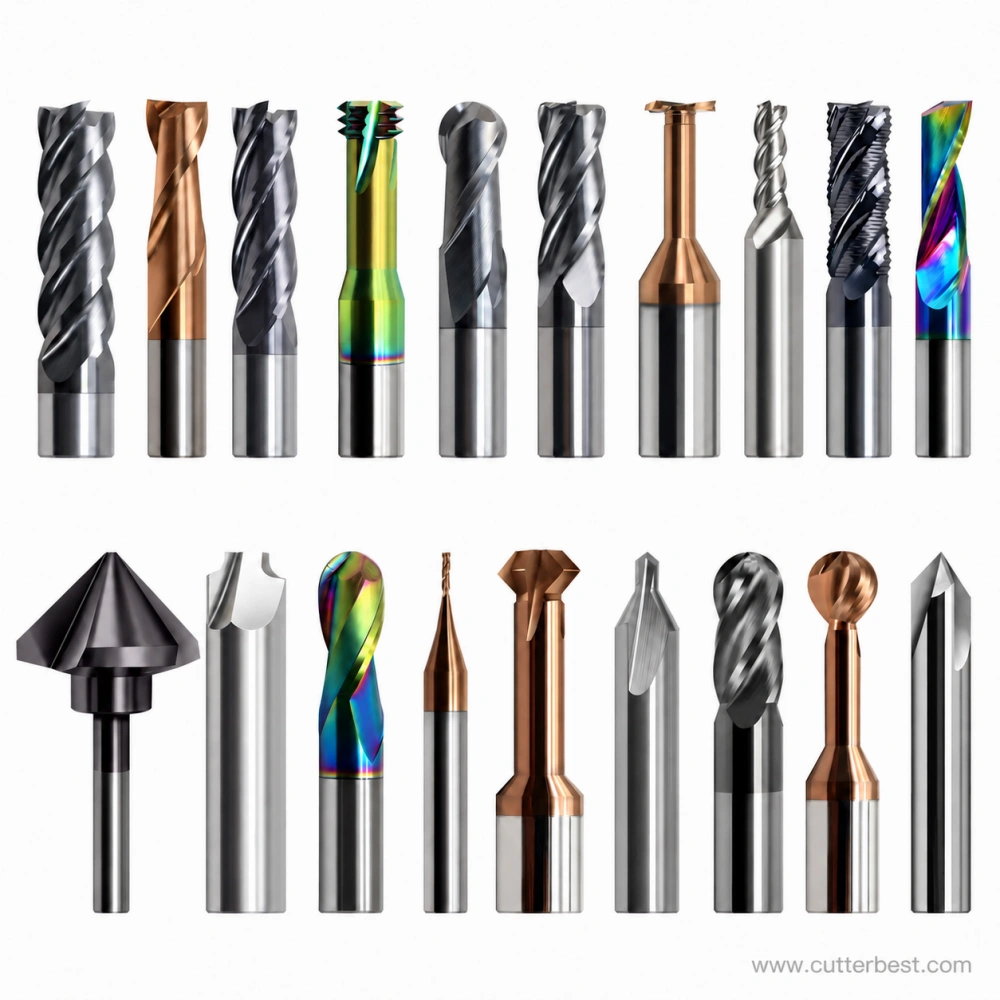
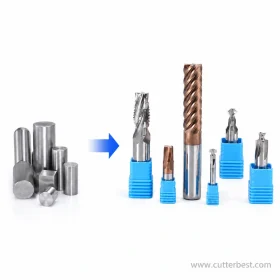
Standard cutting tools suit many general machining operations, but catalog dimensions or standard geometries may not work efficiently for some parts.
A custom cutting tool may be worth evaluating when the application involves:
- Non-standard dimensions or part features
- Special profiles, contours or grooves
- Limited clearance or difficult tool access
- Deep cavities or long-reach machining
- Multiple operations or frequent tool changes
- Difficult workpiece materials
- Excessive tool wear
- Chatter, deflection or unstable cutting
- Surface finish or tolerance problems
- Part features that standard catalog tools cannot machine efficiently
Therefore, the correct solution depends on the complete machining condition. The goal is not simply to change one tool dimension, but to evaluate the tool together with the part feature and cutting operation.
For requirements specifically related to non-standard end mills, see our Custom End Mills.
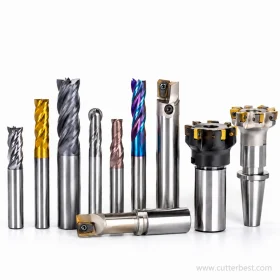
For broader milling applications, we can evaluate non-standard cutter structures or cutting features based on the actual machining requirement. You can also explore our Milling Cutters for existing milling tool options.
Custom Cutting Tool Types We Can Evaluate
Different machining processes require different tool structures. For this reason, OMIST evaluates both standard-based modifications and special cutting tool requirements according to the actual project.
Custom End Mills
When standard end mill dimensions, geometry, reach, profile, or cutting performance do not suit the application, we can evaluate a custom end mill solution.
Custom Milling Cutters
For broader milling applications, see our Custom Milling Cutters for non-standard cutter structures, cutter bodies, mounting requirements, and other application-specific milling needs.
Custom Form Tools
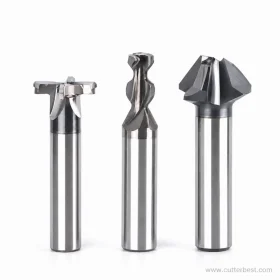
Workpiece features involving a specific profile, contour, step, or combination of cutting features may require a purpose-designed form tool. For these requirements, see our Custom Form Tools.
Custom Drills and Reamers
We can evaluate customized drilling or reaming solutions for non-standard hole dimensions, profiles, lengths, or special machining requirements.
Custom Boring and Threading Tools
Special boring and threading applications may require different dimensions, reach, geometry, or other application-specific features. For existing boring solutions, see our CNC Boring Tools.For thread milling applications, you can also view our Thread Milling Cutter.
Custom Inserts and Other Special Tools
Some machining applications may require a special insert, cutter body, or other application-specific tooling arrangement.
Custom Tool Materials and Construction
In addition, tool material and construction should match the cutting operation, workpiece material, geometry, and required cutting conditions.
Solid Carbide
Solid carbide is widely used for custom carbide tools requiring hardness, wear resistance and stable performance in CNC machining.
It can be applied across different custom cutting tool families depending on the application.
High-Speed Steel
HSS is another option for custom tooling where its toughness, tool size, geometry or machining application makes it suitable.
For existing products, see our HSS End Mills
Carbide-Tipped and Brazed Tools
We can evaluate carbide-tipped or brazed construction when it is more suitable for the application than a solid tool design.
Indexable Tooling
Some custom cutting applications can use an indexable tool body with replaceable inserts.
We determine the cutter structure and insert arrangement according to the required machining operation.
PCD and Diamond Tooling
PCD or diamond-related tooling can also be evaluated for suitable applications and workpiece materials.
For graphite and other abrasive applications requiring a coated carbide end mill, see our Diamond Coated End Mills.
The final material and construction are confirmed together with the actual cutting requirement.
Information Needed for Custom Tool Evaluation
Every custom cutting tool project is different, so the information required depends on the actual tool and machining application.
To get started, please send any available tool drawing, part drawing or profile, main dimensions, workpiece material, machining requirement, and quantity.
If you do not have a complete tool drawing, you can send us the part drawing or explain the machining requirement first. Then, we will confirm what additional information is needed after reviewing the project.
From Drawing to Custom Tool
Custom cutting tool manufacturing starts with understanding what the tool needs to accomplish.
Step 1 — Requirement Review
We review the available drawing, part feature and machining requirement to understand the application.
Step 2 — Tool Specification and Manufacturability Confirmation
The appropriate tool type, dimensions, material, geometry and construction are confirmed according to the project.
Step 3 — Quotation and Production Confirmation
Once the requirement is sufficiently clear, the quotation and production details can be confirmed based on the actual tool design and quantity.
Step 4 — Manufacturing and Delivery
The custom tool is manufactured according to the confirmed specification and prepared for delivery.
This process allows each project to be handled according to its actual requirements instead of forcing a non-standard application into a fixed catalog specification.
Why Work With OMIST for Custom Cutting Tools?
Custom tooling requires more than selecting a catalog size. The supplier needs to understand the requested tool, the part feature and the machining requirement before production is confirmed.
OMIST is a cutting tool manufacturer in China supporting B2B custom tooling projects for CNC machining companies, tool distributors and industrial buyers.
Our custom tooling support includes:
- Drawing-based custom tool evaluation
- Multiple cutting tool families for different machining operations
- Solid carbide, HSS and other tool construction options according to application
- Custom dimensions, profiles and cutting geometry based on actual requirements
- OEM and ODM support
- Support for international B2B cutting tool requirements
Specific tool capability is confirmed project by project according to the drawing and machining conditions.
Frequently Asked Questions
Can you evaluate a custom cutting tool if I only have a part drawing or machining problem?
Yes. A complete tool drawing is not required for the initial evaluation.
You can provide the part drawing, profile, key dimensions or machining problem first. We will review the requirement and confirm what additional information is needed before the tool specification is finalized.
What types of custom cutting tools can you evaluate?
Projects may include end mills, milling cutters, form tools, drills, reamers, boring tools, threading tools, inserts and other special CNC cutting tools.
Because non-standard designs vary greatly, the final manufacturability is confirmed according to the actual project.
What materials can be used for custom cutting tools?
Depending on the application, possible materials and constructions include solid carbide, HSS, carbide-tipped or brazed designs, indexable tooling, and PCD or diamond-related tooling.
Material selection depends on the tool design, workpiece and machining requirement.
How do you confirm whether a custom cutting tool can be manufactured?
We evaluate manufacturability by reviewing the available drawing, required dimensions, tool structure, and machining application.
A general product name alone is not enough to confirm a specific custom tool.
Send Your Drawing or Machining Requirement
If a standard cutting tool does not fit your part or machining process, send us the information you already have.
You can email us your drawing, part profile, workpiece material, quantity, or machining requirement for review. We will evaluate the project first and confirm the custom tool specification and manufacturability before production.
You can also contact us via WhatsApp if you would like to discuss the requirement directly.