 Cortadores de fresagem de precisão,Ferramentas de corte para usinagem CNC de todos os materiais

Introdução
Choosing the right end mill matters in aluminum machining because flute count affects chip evacuation, estabilidade de corte, e acabamento superficial. Many machinists and buyers ask whether 4 flute end mills are good for aluminum, especially when they need a cleaner finish or more stable side milling.
The answer is yes, but mainly for the right operation. Na maioria dos casos, um 4 flute end mill can work well for aluminum finishing, light profiling, fresamento de contorno, and side milling. No entanto, it is usually not the best choice for deep slotting, desbaste pesado, or aggressive chip removal because aluminum needs enough flute space for chip evacuation.
For a general guide to 4 ferramentas de flauta, você também pode ler nosso what is a 4 flute end mill used for guia。
What Makes Aluminum Different in CNC Machining?
Aluminum is softer than steel, but it can still be challenging to machine. One reason is that aluminum often produces long chips. If the cutter cannot remove these chips smoothly, they may pack into the flute space and cause built-up edge, unstable cutting, or poor surface finish.
Além disso, some aluminum alloys can be more abrasive than expected. Portanto, desenho de flauta, ângulo de hélice, revestimento, refrigerante, and cutting parameters all matter when choosing the right end mill for aluminum machining.
Pode um 4 Flute End Mill Cut Aluminum?
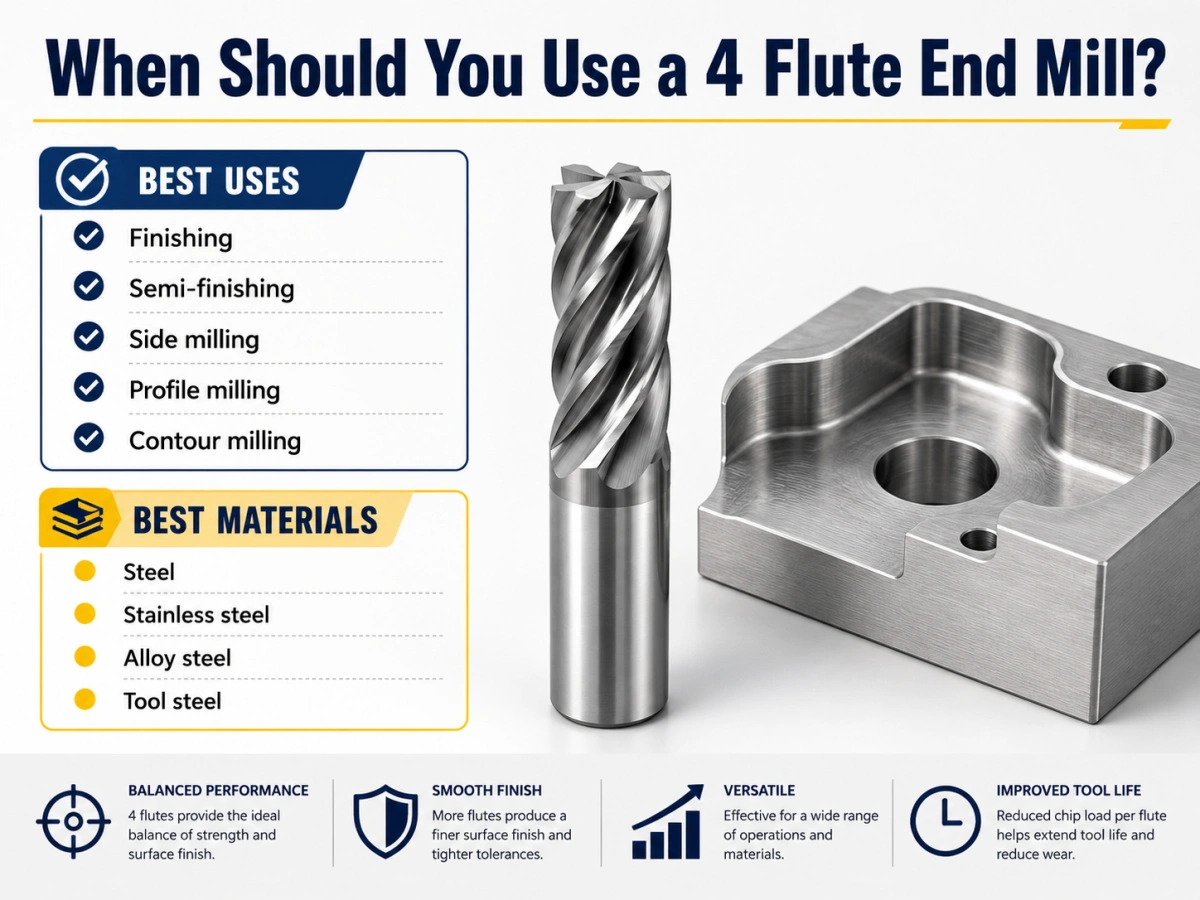
Sim, um 4 flute end mill can cut aluminum. No entanto, it works best when the operation is light, stable, and focused on surface finish rather than heavy chip removal.
UM 4 flute end mill is generally more suitable for:
- light finishing
- semi-acabamento
- fresagem lateral
- fresamento de contorno
- shallow profiling
- applications where smoother surface quality is required
Em contraste, it is usually less suitable for:
- deep slotting
- desbaste pesado
- aggressive chip removal
- unstable setups with limited chip evacuation
- aluminum jobs where chips cannot clear smoothly
Em outras palavras, um 4 flute end mill can be a good choice for aluminum, but mainly in controlled finishing applications rather than heavy material removal.
Advantages of 4 Fresas de topo de flauta para alumínio
When used in the right conditions, 4 flute end mills can offer several practical advantages in aluminum machining.
Melhor acabamento superficial
Because a 4 flute end mill has more cutting edges, it can produce a smoother finish in light finishing, fresamento de contorno, and shallow profiling operations.
Maior Rigidez
The stronger core structure of a 4 flute tool can improve stability, especially when accuracy, edge quality, and part finish are important.
Good for Light Finishing and Side Milling
In many finishing applications, um 4 flute end mill can help deliver cleaner edges and more stable cutting performance.
These benefits are most useful when chip load is controlled, cutting depth is light, and flute space is not the main limitation.
Limitations of 4 Fresas de topo de flauta para alumínio
Although 4 flute end mills have advantages, they also have clear limits in aluminum machining.
Less Chip Space
UM 4 flute design has narrower flute channels than a 2 desenho de flauta. Portanto, chip evacuation becomes more limited, especially when the tool removes a larger amount of material.
Not Ideal for Deep Slots
Deep slotting in aluminum usually requires more flute space for chip removal. Por esta razão, um 4 flute tool is often not the first choice for deep slotting or aggressive roughing.
Higher Risk of Built-Up Edge
If chips do not clear smoothly, aluminum may stick to the cutting edge. Como resultado, tool performance, estabilidade de corte, and surface finish may decline.
For these reasons, machinists often choose 2 flute tools for roughing, deeper slotting, and heavy chip removal in aluminum.
2 Flauta vs. 4 Fresas de topo de flauta para alumínio
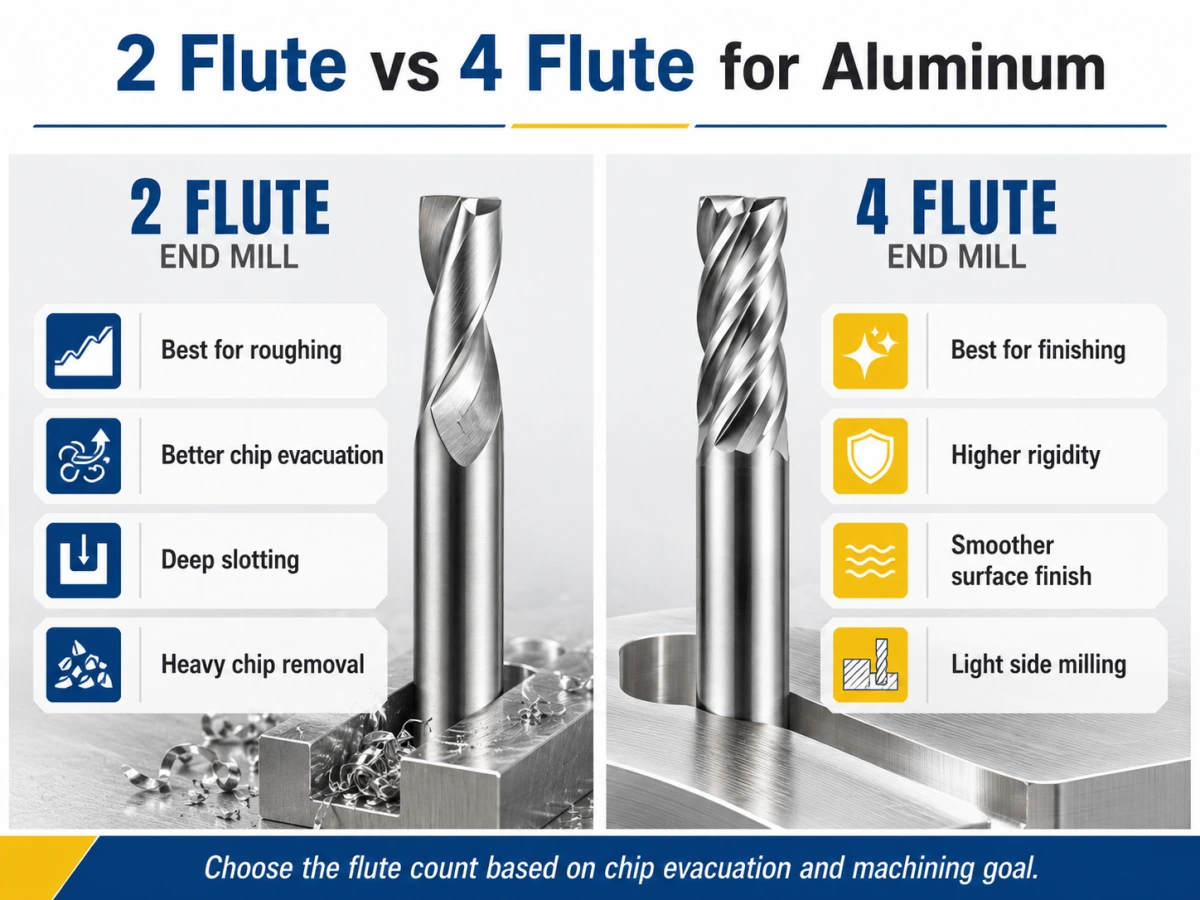
Para usinagem de alumínio, um 2 flute end mill is often the safer choice for roughing, deep slotting, and heavier chip removal because it provides more flute space and better chip evacuation. That is why many machinists choose 2 flute tools when aluminum chips need to clear quickly.
No entanto, um 4 flute end mill can still work well when the goal is finishing quality, light profiling, fresagem lateral, or stable contour cutting. Nestes casos, the operation usually removes less material, so chip evacuation becomes easier to control.
For a detailed comparison, leia nosso 2 flauta vs. 4 moinho de extremidade de flauta guia.
If your main work also includes steel, aço inoxidável, or alloy materials, you can check our 4 moinho de extremidade de flauta product page here.
Quick Selection Guide for Aluminum Machining
| Machining Condition | Better Choice | Reason |
| Aluminum finishing | 4 moinho de extremidade de flauta | Smoother surface finish |
| Light side milling | 4 moinho de extremidade de flauta | Better stability |
| Shallow profiling | 4 moinho de extremidade de flauta | Cleaner cutting edge |
| Deep slotting | 2 moinho de extremidade de flauta | Mais espaço para chips |
| Heavy roughing | 2 moinho de extremidade de flauta | Better chip evacuation |
| Aggressive material removal | 2 moinho de extremidade de flauta | Lower risk of chip packing |
Perguntas frequentes
São 4 flute end mills good for aluminum?
Sim, 4 flute end mills can be good for aluminum finishing, light profiling, fresagem lateral, and contour milling. No entanto, they are usually not the best choice for deep slotting or heavy roughing.
Pode um 4 fresa de topo de flauta cortada em alumínio?
Sim, um 4 flute end mill can cut aluminum. The key is to use it in the right operation, control chip evacuation, and avoid aggressive material removal when flute space is limited.
Is 2 flauta ou 4 flute better for aluminum?
UM 2 flute end mill is usually better for aluminum roughing, deep slotting, and heavy chip removal. UM 4 flute end mill can work better for light finishing and stable side milling.
Why do many machinists choose 2 flute tools for aluminum?
Many machinists choose 2 flute tools for aluminum because they provide larger flute space. This helps chips leave the cutting zone more easily and reduces the risk of chip packing.
Conclusão
Então, are 4 flute end mills good for aluminum?
Sim, but mainly for finishing, semi-acabamento, light profiling, fresamento de contorno, and side milling. For heavy roughing, deep slotting, or aggressive chip removal, um 2 flute end mill usually works better because it provides more flute space for aluminum chips.
Portanto, the right choice depends on the cutting operation. If your goal is smoother surface finish and stable light cutting, um 4 flute end mill can work well in aluminum. No entanto, if chip evacuation is the top concern, um 2 flute tool is usually the safer option.
Need a 4 Flute End Mill for Aluminum Finishing or Steel Machining?
Se você precisar de um 4 flute end mill for aluminum finishing, light profiling, fresagem lateral, steel machining, or stainless steel machining, we can help you choose a suitable carbide tool design.
Envie-nos seu material, diâmetro de corte, comprimento da flauta, exigência de revestimento, desenho, ou aplicação de usinagem. Our team can recommend standard or custom carbide end mills for your CNC machining project.
Check our 4 moinho de extremidade de flauta product page here.
Guias relacionados:
O que é um 4 flute end mill used for?