 Cortadores de fresagem de precisão,Ferramentas de corte para usinagem CNC de todos os materiais

Introdução
Como funciona uma fresa de topo no fresamento CNC? Ele remove material com arestas de corte rotativas enquanto o movimento de avanço move a ferramenta através da peça de trabalho. Canais afastam os cavacos da zona de corte, então estabilidade de corte, acabamento superficial, e a vida útil da ferramenta dependem da velocidade de rotação, taxa de alimentação, geometria do cortador, e evacuação de cavacos.
Este guia explica como funciona o processo de fresamento final, como o cortador remove material, como os cavacos saem da zona de corte, e o que afeta a estabilidade de corte, acabamento superficial, e vida útil da ferramenta.
Se você é novo nesta ferramenta, você pode primeiro ler nosso guia básico de ferramentas de fresamento.
O que é uma fresa de topo em fresamento CNC?
Uma fresa de topo é uma ferramenta de corte rotativa usada em máquinas CNC e fresadoras. Ao contrário de uma broca padrão, pode cortar verticalmente e lateralmente. Portanto, pode criar slots, bolsos, contornos, paredes laterais, e superfícies acabadas.
A maioria das ferramentas possui arestas de corte na extremidade e nas laterais. Como resultado, eles podem remover material em diferentes direções dependendo do percurso da ferramenta e da operação de usinagem.
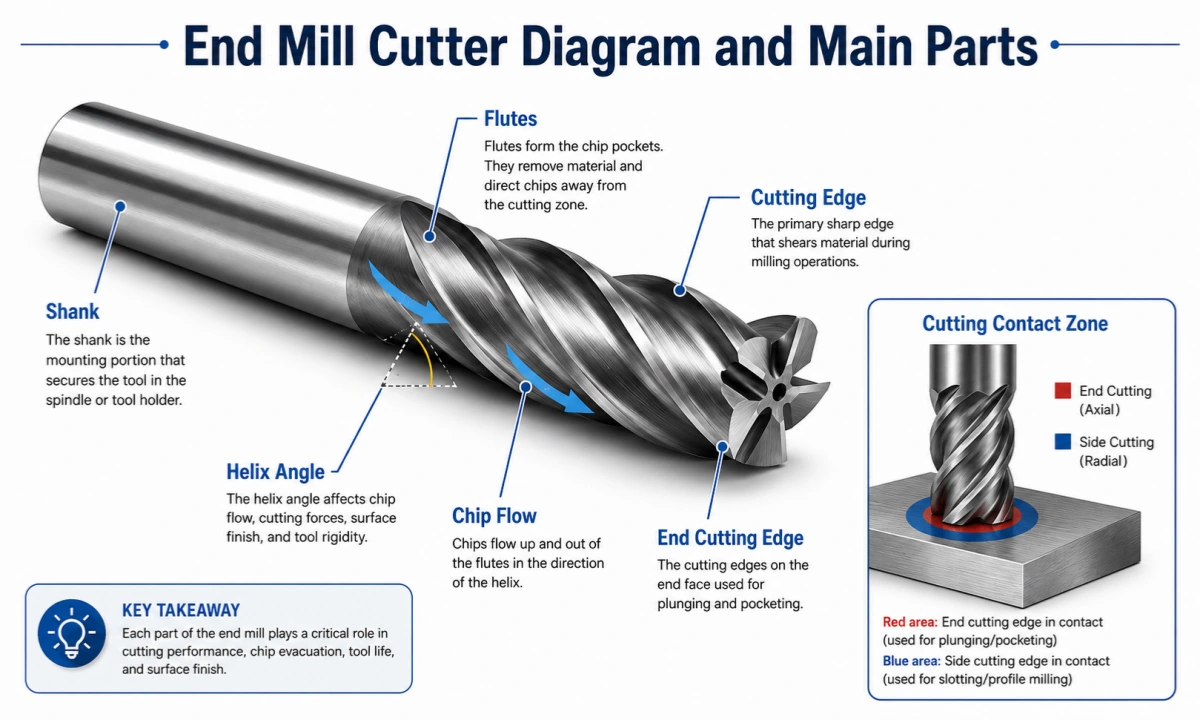
Diagrama da fresa de topo e peças principais
| Papel | Função | Por que é importante |
| Haste | Mantém a fresa no fuso ou porta-ferramentas | Afeta a estabilidade de fixação e o controle de desvio |
| Flautas | Guie os cavacos para longe da zona de corte | Afeta a evacuação de cavacos, controle de calor, e estabilidade de corte |
| Arestas de corte | Cortar material da peça de trabalho | Afetar a eficiência de corte, acabamento superficial, e vida útil da ferramenta |
| Ponta final | Cortes da ponta da ferramenta | Ajuda no encaixe, entrada de bolso, e corte inferior |
| Borda de corte lateral | Cortes ao longo da lateral da ferramenta | Ajuda com o perfil, fresagem lateral, e usinagem de ombro |
| Ângulo de hélice | Controla o ângulo espiral da flauta | Afeta o fluxo de cavacos, suavidade de corte, e vibração |
| Revestimento | Protege a ponta | Melhora a resistência ao desgaste e a resistência ao calor |
Flautas
Canais são as ranhuras ao longo do corpo da fresa. Eles ajudam a remover cavacos durante o corte e afetam diretamente o escoamento de cavacos, rigidez, e desempenho de corte.
Arestas de corte
As arestas de corte cortam o material da peça de trabalho. Sua nitidez e geometria afetam a eficiência do corte, acabamento superficial, e vida útil da ferramenta.
Haste
A haste é a peça fixada no fuso ou suporte. Uma configuração estável da haste é importante para a precisão da usinagem e controle de vibração.
Ângulo de hélice
O ângulo da hélice influencia o fluxo dos cavacos e a suavidade do corte. Em muitos casos, também afeta o controle do calor e a estabilidade da usinagem.
Geometria da dica de ferramenta
Diferentes formatos de pontas suportam diferentes tarefas de usinagem. As fresas de topo plano funcionam bem para abertura de canais e fresamento lateral, enquanto as ferramentas de ponta esférica são adequadas para contorno e superfícies 3D.
Se você quiser comparar diferentes formatos de ferramentas, leia nosso guia de comparação de tipos de ferramentas.
Como funciona uma fresa de topo em fresamento CNC?
1. A rotação cria a ação de corte
Primeiro, o cortador gira em alta velocidade no fuso. Esta rotação coloca as arestas de corte em contato com a peça de trabalho e cria a ação de corte.
2. Feed Motion move a ferramenta através do material
Ao mesmo tempo, a ferramenta ou a peça se move em uma direção controlada. Este movimento é chamado de movimento de alimentação. Determina como a fresa percorre o material e quanto material é removido em cada passagem.
3. Bordas de corte cortam material
À medida que a fresa rotativa entra no material, as arestas de corte cortam pequenas seções da peça de trabalho. Essas seções removidas tornam-se chips.
4. Flautas levam as lascas embora
Próximo, os canais ajudam a afastar os cavacos da zona de corte. Um bom escoamento de cavacos é importante porque cavacos presos podem aumentar o calor, danificar o cortador, e reduzir a qualidade da superfície.
5. Passagens repetidas criam a forma final
Finalmente, a máquina CNC cria a forma final controlando o percurso da ferramenta, profundidade de corte, taxa de alimentação, e velocidade do fuso. Com passes repetidos, o cortador pode produzir ranhuras, bolsos, contornos, paredes laterais, e superfícies acabadas.
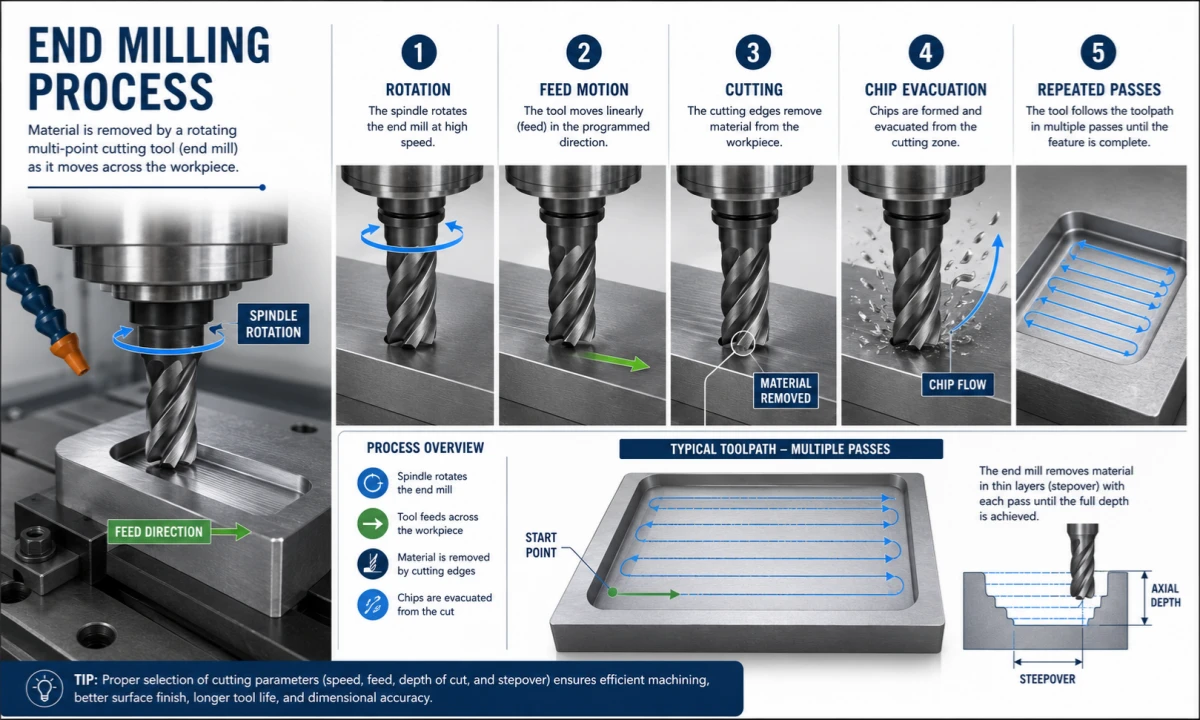
Para leitores que perguntam “como funciona uma fresa de topo,” a tabela abaixo explica as etapas básicas de corte em uma operação simples de fresamento CNC.
Tabela de processo de fresamento final
| Etapa do processo | O que acontece | Por que é importante |
|---|---|---|
| Rotação | O cortador gira em alta velocidade | Cria ação de corte |
| Movimento de alimentação | A ferramenta ou peça se move em um caminho controlado | Determina a remoção de material |
| Corte | As bordas cortam o material em lascas | Forma o recurso usinado |
| Evacuação de chips | Flautas guiam os cavacos para longe | Reduz o calor e melhora a estabilidade |
| Passes repetidos | A máquina segue percursos programados | Produz a forma final |
Esta tabela explica a lógica básica por trás do processo de fresamento de topo de uma forma simples.
Corte final vs corte lateral
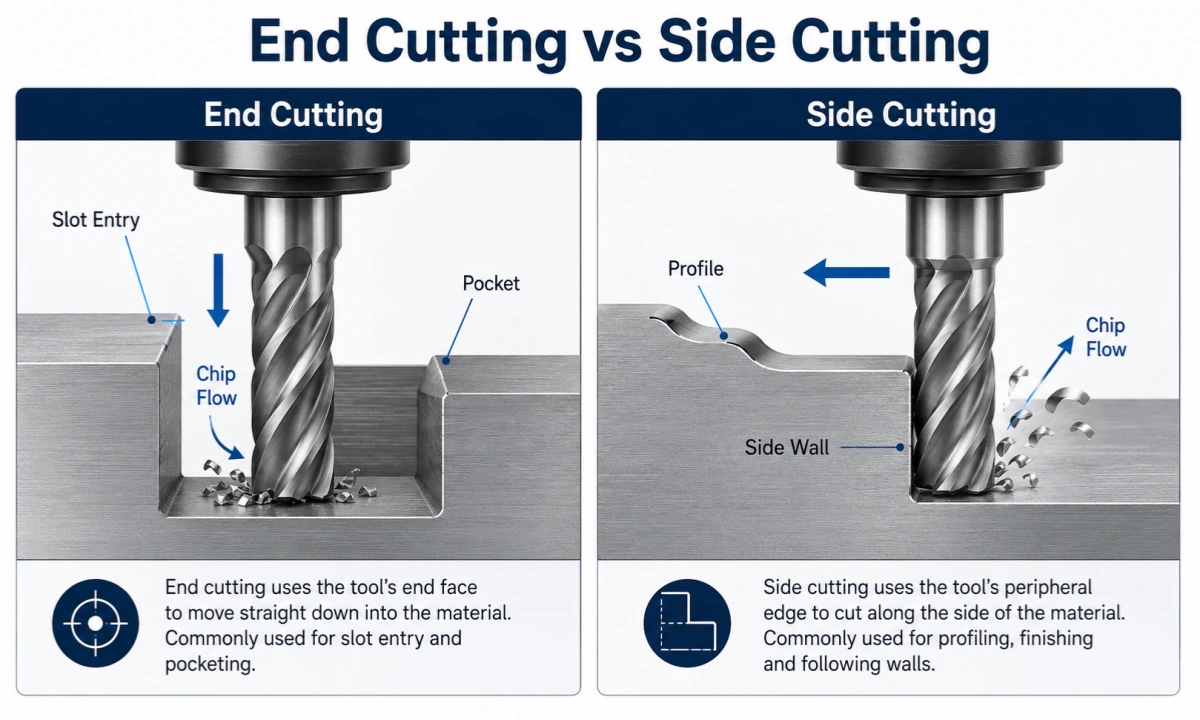
Uma fresa de topo pode remover material da extremidade e da lateral da ferramenta. Esta é uma das razões pelas quais é mais flexível do que uma broca padrão.
Corte final
O corte final acontece quando a ponta da ferramenta remove material da parte inferior de uma ranhura, bolso, ou área de entrada rasa. As fresas de topo com corte central podem lidar com algumas operações de mergulho ou entrada de bolsão, mas eles ainda são diferentes das brocas.
Corte lateral
O corte lateral acontece quando as arestas de corte laterais removem material da parede ou perfil de uma peça de trabalho. Esta ação de corte é comum em fresamento lateral, fresamento de cantos a 90 graus, perfil, e fresamento de contorno.
Por esta razão, geometria da ferramenta, contagem de flauta, taxa de alimentação, e a estabilidade de fixação afetam o desempenho da fresa em diferentes operações.
Operações comuns de fresamento final
Entalhamento
A fresa remove o material em um caminho reto para criar ranhuras ou ranhuras estreitas.
Fresamento lateral
As arestas de corte laterais usinam paredes verticais ou superfícies laterais.
Fresamento de Bolso
A fresa remove material de uma área interna fechada dentro da peça de trabalho.
Contorno
A ferramenta segue caminhos curvos ou moldados para criar perfis e superfícies complexas.
Acabamento de Superfície
Uma passagem de acabamento melhora a qualidade da superfície e a precisão dimensional.
Estas operações explicam porque as oficinas mecânicas utilizam estas ferramentas na fabricação de moldes, peças de máquinas, componentes automotivos, peças aeroespaciais, e metalurgia em geral.
O que afeta o funcionamento de uma fresa de topo?
Material da ferramenta
Ferramentas inteiriças de metal duro geralmente proporcionam melhor rigidez, resistência ao desgaste, e desempenho de corte mais estável na usinagem CNC.
Para ferramentas de metal duro dedicadas, você também pode visitar nosso ferramentas de fresagem de metal duro página.
Contagem de Flauta
Flute count affects chip evacuation and rigidity. Em muitos casos, machinists choose fewer flutes for aluminum and more flutes for steel or harder materials.
Para uma comparação mais profunda, leia nosso guia de comparação de contagem de flauta.
Revestimento
The right coating can improve wear resistance, resistência ao calor, e vida útil da ferramenta, especially in demanding cutting conditions.
Feed Rate and Speed
Feed rate and spindle speed must match the workpiece material and tool design. De outra forma, the cutter may overheat, wear too quickly, or leave a poor surface finish.
Material da peça
Alumínio, aço, and stainless steel behave differently during machining. Portanto, machinists should adjust cutter geometry, revestimento, taxa de alimentação, and spindle speed according to the material.
How to Use an End Mill Cutter More Effectively
Match the Tool to the Material
Choose the tool geometry, contagem de flauta, and coating according to the workpiece material.
Use Stable Clamping
A stable holder and proper setup help reduce vibration and improve cutting accuracy.
Keep Chip Evacuation Clear
Um bom escoamento de cavacos ajuda a evitar o acúmulo de calor e cortes instáveis.
Use parâmetros de corte adequados
Velocidade, alimentar, profundidade axial, e o engate radial deve corresponder à fresa e à tarefa de usinagem.
Monitore o desgaste da ferramenta
Um cortador desgastado pode reduzir a precisão, qualidade da superfície, e eficiência de usinagem. Portanto, a inspeção regular da ferramenta é importante.
Se você precisar de soluções de ferramentas padrão ou OEM, você também pode visitar nosso página de produto para ferramentas de fresamento CNC.
Diagrama de operação de fresamento final e fluxo de cavacos
Um diagrama claro da operação de fresamento de topo deve mostrar a rotação do fuso, direção de alimentação, arestas de corte, fluxo de cavacos, e a área de contato da peça. Esses pontos ajudam os leitores a entender como a fresa remove material e por que a estabilidade do corte depende tanto do movimento da ferramenta quanto do escoamento de cavacos.
Em uma operação típica, o fuso gira a ferramenta, o movimento de avanço move a fresa através do material, e os canais afastam os cavacos da zona de corte. Se os cavacos permanecerem perto da aresta de corte, calor e vibração podem aumentar, o que pode reduzir a qualidade da superfície e a vida útil da ferramenta.
Esta explicação visual é útil para leitores que procuram diagramas de fresas de topo, diagramas de operação de fresamento final, ou exemplos de processos de fresamento final.
Erros comuns ao usar uma fresa de topo
Usando a contagem errada de flautas
A má seleção do canal pode reduzir o escoamento de cavacos ou a estabilidade do corte.
Ignorando configurações de alimentação e velocidade
Parâmetros de corte incorretos podem causar superaquecimento, dano de borda, e vida útil curta da ferramenta.
Escolhendo o tipo de ferramenta errado
Uma fresa de topo plano, moinho de ponta de nariz de bola, e desbaste em fresas de topo para diferentes operações, portanto, uma ferramenta não deve substituir todos os tipos de cortador.
Má evacuação de chips
Quando os cavacos permanecem na zona de corte, o acabamento superficial e a vida útil da ferramenta podem ser prejudicados.
Usando uma configuração para cada material
As mesmas condições de corte não funcionam igualmente bem para o alumínio, aço, e aço inoxidável.
Perguntas frequentes
Como funciona uma fresa de topo?
Uma fresa de topo funciona combinando a rotação do fuso e o movimento de avanço. As arestas de corte cortam o material da peça de trabalho, e os canais removem cavacos da zona de corte.
O que é fresamento final?
O fresamento de topo é um processo de usinagem no qual uma fresa de topo rotativa remove material para criar ranhuras, bolsos, paredes laterais, contornos, e superfícies acabadas.
Qual é a diferença entre uma fresa de topo e uma broca?
Uma broca faz principalmente furos, enquanto uma fresa de topo pode cortar vertical e lateralmente para uma ampla gama de operações de fresamento.
Para que servem as fresas de topo?
Fresas de topo são usadas para ranhurar, fresagem lateral, perfil, fresagem de bolso, contorno, e acabamento superficial.
Uma fresa de topo pode ser usada para alumínio e aço?
Nem sempre. Geometria da ferramenta, contagem de flauta, revestimento, e os parâmetros de corte geralmente precisam mudar dependendo do material.
Por que o escoamento de cavacos é importante no fresamento de topo?
A evacuação de cavacos ajuda a controlar o calor, reduzir danos à ferramenta, e melhorar a estabilidade de corte e a qualidade da superfície.
Conclusão
Compreender como funciona uma fresa de topo ajuda a melhorar a eficiência da usinagem e o desempenho da ferramenta. O processo de fresamento final depende da rotação do fuso, movimento de alimentação, geometria de ponta, e evacuação de cavacos.
Quando os maquinistas combinam o tipo de cortador, contagem de flauta, revestimento, e parâmetros de corte corretamente, fresamento final pode produzir peças precisas, melhor acabamento superficial, e resultados de usinagem mais estáveis. É por isso que a seleção adequada da ferramenta e a configuração da usinagem são essenciais.
CTA
Procurando ferramentas padrão ou personalizadas para alumínio, aço, ou usinagem de aço inoxidável?
Visite nosso página de produto para ferramentas de fresamento CNC ou envie-nos seu desenho, lista de tamanhos, material, e requisitos de revestimento. A OMIST pode recomendar ferramentas adequadas para aplicações de fresamento CNC.