 Freze de precizie,Scule de tăiere pentru prelucrarea CNC a fiecărui material

Introducere
Tipurile de freze cu capat afectează evacuarea așchiilor, stabilitate de tăiere, finisarea suprafeței, îndepărtarea materialului, și durata de viață a sculei în prelucrarea CNC. Alegerea tipului potrivit nu se referă doar la dimensiune sau la acoperire.
Diferite scule funcționează mai bine pentru diferite sarcini de prelucrare. Frezele cu capăt plat sunt adesea folosite pentru crestare și frezare laterală. Uneltele cu vârf sferic sunt potrivite pentru conturarea 3D și suprafețele curbate. Raza colțului, degrosare, iar sculele conice ajută atunci când piesa necesită margini mai puternice, îndepărtare mai rapidă a stocurilor, sau acoperire specială.
În acest ghid, comparăm cele mai comune tipuri de freze pentru freze, utilizările lor, factori de dimensiune de bază, geometria vârfului, și sfaturi de selecție pentru aluminiu, oţel, oțel inoxidabil, și aplicații personalizate de prelucrare CNC.
Dacă sunteți nou în acest instrument, poti citi mai intai noastre ghid de bază pentru scule de frezat.
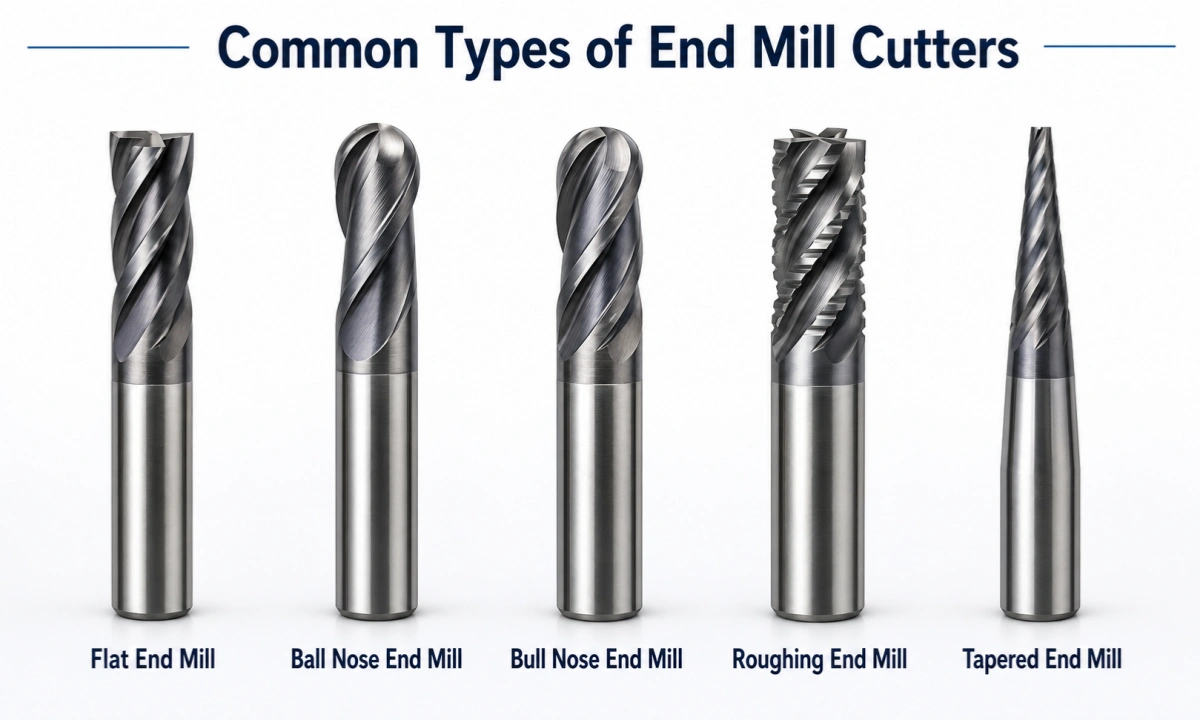
Care sunt tipurile de freze de freza?
Atelierele de mașini clasifică de obicei tipurile de freze în funcție de geometria vârfului, scop de tăiere, și aplicație de prelucrare. Deși piața oferă multe freze, Prelucrarea CNC utilizează de obicei freze plate, freze cu cap bilă, freze cu raza de colt, freze de degroșare, și freze conice.
Fiecare tip are propriile sale avantaje. De exemplu, o freză cu capăt plat este folosită în mod obișnuit pentru frezarea generală, în timp ce o freză cu cap bilă este mai potrivită pentru conturarea 3D și suprafețele curbate.
De aceea, înțelegerea tipului de tăietor este o parte importantă a selecției sculei înainte de a comanda sau prelucra.
Cele mai comune tipuri de freze de freza
1. Moara plată
O freză cu capăt plat este unul dintre cele mai comune tipuri de scule în prelucrarea CNC. Are un vârf de tăiere plat, așa că mașiniștii o aleg adesea pentru sloting, frezare laterală, frezarea umărului, și prelucrare de uz general.
Pentru că poate crea o suprafață cu fundul plat, acest instrument funcționează bine pentru piesele care necesită fante drepte, buzunare, sau caracteristici cu muchii ascuțite.
Utilizările tipice includ:
- sloting
- frezare laterală
- frezarea buzunarului
- lucrări de prelucrare generală
Atelierele de mașini folosesc freze plate pentru aluminiu, oţel, și multe materiale standard de prelucrare.
2. Moara de capăt cu nas bilă
O freză cu cap bilă are un vârf de tăiere rotunjit. Acest design îl face deosebit de potrivit pentru conturare, profilare, și prelucrarea suprafețelor curbe sau 3D.
Mașiniștii folosesc în mod obișnuit acest instrument pentru:
- mucegai și matriță
- 3D prelucrare
- suprafețe curbe ale părților
- operatii de finisare
Din cauza vârfului său rotunjit, o freză cu cap bilă poate produce tranziții mai fine pe forme curbe. Cu toate acestea, de obicei, nu funcționează ca primă alegere pentru sloturile cu fundul ascuțit.
Pentru utilizări și definiții de bază, poti citi si noi ghid de bază pentru scule de frezat.
3. Freză de capăt cu rază de colț
O freză cu rază de colț combină un fund plat cu marginile colțurilor rotunjite. Acest design ajută la îmbunătățirea rezistenței marginilor și la reducerea așchierii colțurilor în timpul prelucrării.
În comparație cu o freză standard plată, o freză cu rază de colț oferă adesea:
- rezistență mai bună a muchiei
- tranziții de colț mai fine
- stabilitate îmbunătățită în unele aplicații
Atelierele de mașini folosesc de obicei acest tip pentru:
- prelucrarea oțelului
- prelucrarea oțelului inoxidabil
- semifinisare
- lucrări de finisare care necesită colțuri mai puternice
Utilizatorii aleg adesea acest design atunci când au nevoie atât de acțiune de tăiere plană, cât și de o durată de viață îmbunătățită a sculei.
4. Moara de degroșare
O freză cu cap de degroșare îndepărtează materialul în mod agresiv. Are de obicei o geometrie de tăiere zimțată sau specializată care ajută la spargerea așchiilor în bucăți mai mici și la reducerea sarcinii de tăiere.
Atelierele de mașini folosesc de obicei acest tip pentru:
- îndepărtare grea de stoc
- prelucrare brută înainte de finisare
- eficiență îmbunătățită de îndepărtare a materialului
- prelucrarea materialelor mai dure în condiții stabile de tăiere
După degrosare, mașiniștii folosesc adesea instrumente de finisare atunci când piesa necesită o finisare mai bună a suprafeței.
5. Freză conică
O freză conică are un corp conic treptat. Mașiniștii folosesc această unealtă atunci când frezele cu pereți drepti nu sunt cea mai bună opțiune.
Utilizările tipice includ:
- pereți înclinați
- cavități profunde
- lucru cu mucegai
- prelucrare cu geometrie specială
Din cauza formei conice, această freză poate oferi un acces mai bun în zonele de prelucrare înguste sau adânci.
Tabel de comparație rapidă a tipurilor de freze
| Tip freză de freza | Cel mai bun pentru | Rezultat de suprafață | Materiale tipice |
|---|---|---|---|
| Moara plată | Slotting, frezare laterală, buzunare | Suprafață cu fund plat | Aluminiu, oţel, prelucrare de uz general |
| Moara de capăt cu nas bilă | 3D conturare, suprafete curbate | Finisaj curbat neted | Oțel turnat, aluminiu, 3piese D |
| Freză de capăt cu rază de colț | Marginea mai puternică, tranziții mai lin | Fund plat cu colțuri rotunjite | Oțel, oțel inoxidabil |
| Moara de degroșare | Îndepărtare rapidă de stoc | Suprafață mai aspră | Oțel, fontă, prelucrare grea |
| Freză conică | Pereți înclinați, cavități profunde | Atinge și geometrie controlate | Lucrări de mucegai, piese speciale |
Acest tabel de comparație poate ajuta cumpărătorii să înțeleagă rapid ce tip este mai potrivit pentru o anumită sarcină de prelucrare.
Tabel cu dimensiunile frezei și specificațiile de bază
Pe lângă tipul de tăietor, Cumpărătorii ar trebui să verifice, de asemenea, specificațiile principale de dimensiune înainte de a comanda. Aceeași geometrie a sculei poate funcționa diferit când diametrul, lungimea flautului, lungime totală, sau se modifică dimensiunea tijei.
| Specificaţie | Ce înseamnă | De ce contează |
| Diametrul tăietorului | Lățimea de tăiere a sculei | Afectează lățimea slotului, forța de tăiere, și dimensiunea caracteristicii părții |
| Lungimea flautului | Lungimea de tăiere a sculei | Determină adâncimea de tăiere și rigiditatea sculei |
| Lungimea totală | Lungimea completă a tăietorului | Afectează atingerea, vibratie, si stabilitatea prelucrarii |
| Diametrul tijei | Diametrul de prindere | Trebuie să se potrivească corect cu suportul de scule |
| Numărul de flaute | Numărul de fluturi de tăiere | Afectează evacuarea așchiilor, rigiditate, și finisarea suprafeței |
| Raza de colț | Dimensiunea colțului rotunjit pe vârful sculei | Îmbunătățește rezistența marginilor și tranziția suprafeței |
| Înveliș | Tratarea suprafeței pe muchia de tăiere | Ajută la îmbunătățirea rezistenței la uzură și a duratei de viață a sculei |
Dimensiunile standard pot satisface multe nevoi generale de prelucrare. Cu toate acestea, pot fi necesare instrumente personalizate pentru cavitățile adânci, profile speciale, prelucrare cu rază lungă, materiale nestandardizate, sau cerințe stricte de toleranță.
Pentru furnizarea de scule standard și personalizate, ne puteti vizita si pagina de produs pentru scule de frezat CNC.
Tipuri de freze și utilizări în prelucrarea CNC
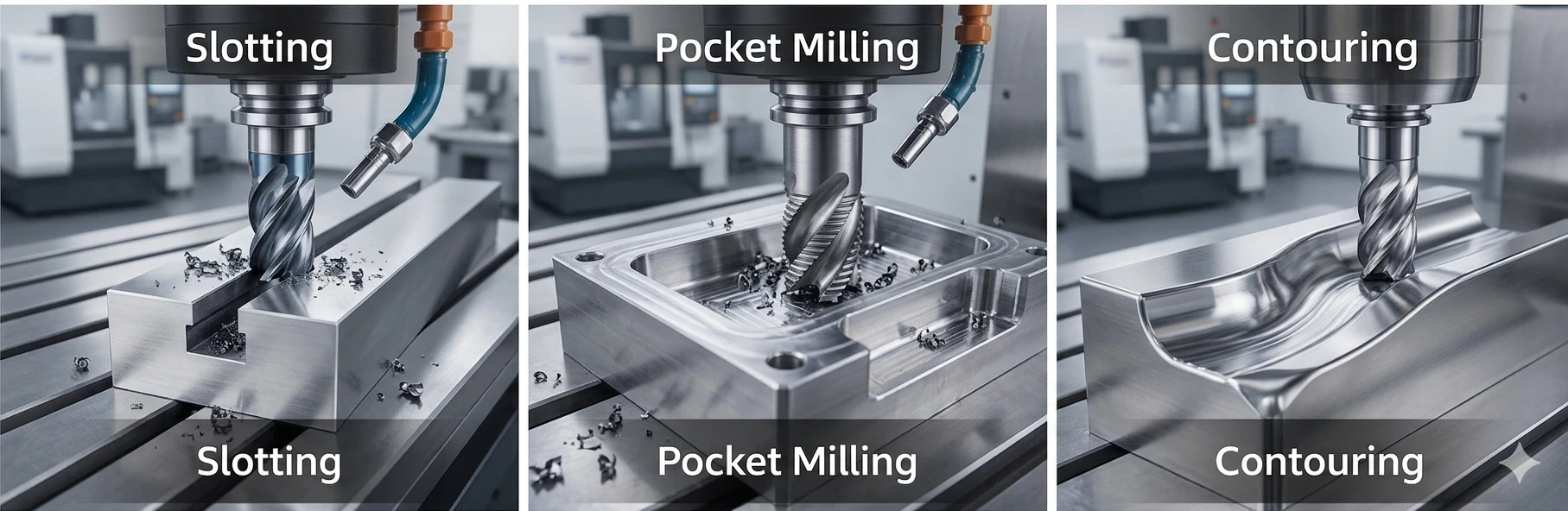
Pentru scanare și frezare de buzunar
Mașiniștii folosesc în mod obișnuit freze plate pentru crestare și frezare în buzunar, deoarece aceste unelte pot crea caracteristici cu fundul plat și pot curăța pereții laterali..
Pentru conturare și suprafețe 3D
Frezele cu vârf sferic funcționează de obicei mai bine pentru conturare și prelucrare 3D, deoarece pot urmări suprafețele curbate mai ușor.
Pentru colțuri mai puternice și o viață mai bună a sculei
Atelierele de mașini aleg adesea freze cu raza de colț atunci când piesa necesită o tăietură mai puternică și o performanță mai stabilă.
Pentru îndepărtarea rapidă a materialului
Frezele de degroșare ajută la îndepărtarea unei cantități mari de material înainte de finisare.
Pentru caracteristici adânci sau unghiulare
Frezele conice funcționează bine pentru cavitățile adânci, pereți înclinați, și sarcinile de prelucrare legate de matrițe.
Dacă doriți să înțelegeți cum se întâmplă de fapt tăierea în timpul prelucrării, poti citi si noi Ghid de lucru pentru frezare CNC.
Ce tip de freză este mai bun pentru diferite materiale?
Tipuri de freze pentru aluminiu
Pentru prelucrarea aluminiului, evacuarea așchiilor este deosebit de importantă. Prin urmare, cumpărătorii aleg adesea freze plate sau unelte cu vârf sferic cu modele adecvate de caneluri.
În multe cazuri, cumpărătorii acordă o atenție deosebită numărului de flaut. Pentru o comparație mai profundă, citeste-ne ghid de comparare a numărului de flaut.
Tipuri de freze pentru oțel
Pentru prelucrarea oțelului, rigiditatea și rezistența la uzură sunt de obicei mai importante. Atelierele de mașini aleg adesea freze plate, freze cu raza de colt, și scule de degroșare conform cerințelor de degroșare sau finisare.
Tipuri de freze pentru oțel inoxidabil
Pentru oțel inoxidabil, căldura de tăiere și stabilitatea sunt critice. Mulți utilizatori aleg scule cu rază de colț și scule din carbură potrivite, deoarece marginile mai puternice și o rezistență mai bună la uzură pot îmbunătăți performanța.
Pentru sculele din carbură dedicate, ne puteti vizita si scule de frezat din carbură solidă pagină.
Cum să alegeți tipul corect de freză de freza
1. Verificați operațiunea de prelucrare
Prima întrebare este ce trebuie să facă tăietorul. Slotting, conturarea, degrosare, finisare, iar frezarea buzunarului necesită adesea diferite tipuri de scule.
2. Verificați materialul piesei de prelucrat
Aluminiu, oţel, și oțelul inoxidabil au caracteristici de prelucrare diferite. Prin urmare, cumpărătorii ar trebui să potrivească tipul de tăietor cu materialul.
3. Verificați cerințele de finisare a suprafeței
Dacă calitatea suprafeței este deosebit de importantă, Uneltele cu nasul sferic sau cu raza colțului pot funcționa mai bine în unele aplicații.
4. Verificați rezistența și rigiditatea sculei
Pentru condiții de tăiere mai grele, sculele de degroșare sau sculele cu muchii mai puternice pot oferi performanțe mai bune.
5. Verificați cerințele standard sau personalizate
Unii utilizatori au nevoie de instrumente standard, în timp ce altele au nevoie de geometrie personalizată, acoperire, sau dimensiuni bazate pe desene sau mostre.
Dacă sunteți în căutarea unor soluții standard sau OEM, ne puteti vizita si pagina de produs pentru scule de frezat CNC.
Geometria frezei și părțile principale
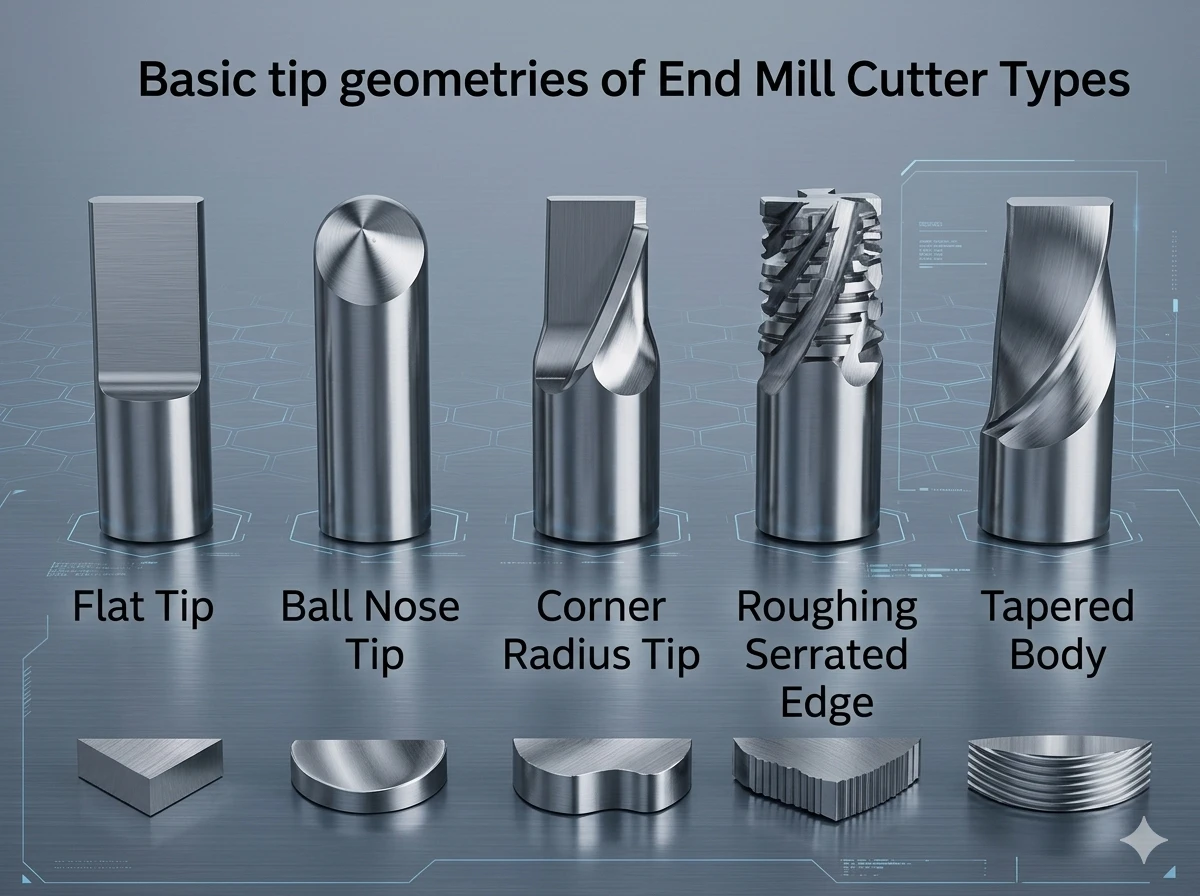
Deși diferite instrumente pot arăta similare la prima vedere, cumpărătorii pot identifica majoritatea tipurilor de tăietoare după geometria vârfului, design flaut, și scopul de prelucrare.
De exemplu:
- O freză cu capăt plat are un vârf de tăiere plat pentru fante, buzunare, și caracteristici cu fundul plat.
- O freză cu cap bilă are un vârf rotunjit pentru suprafețe 3D și profile curbe.
- O freză cu rază de colț combină un fund plat cu colțuri rotunjite pentru o performanță mai puternică a muchiei.
- O freză de degroșare folosește o geometrie de tăiere zimțată sau specială pentru o îndepărtare mai rapidă a materialului.
- O freză conică are un corp înclinat pentru cavități adânci, lucru cu mucegai, și o acoperire specială.
Înțelegerea acestor diferențe de geometrie îi ajută pe cumpărători să aleagă instrumentul potrivit înainte de a comanda. De asemenea, ajută la evitarea utilizării unui tip de tăietor pentru fiecare material sau operație de prelucrare.
Greșeli frecvente la alegerea tipurilor de freze
Alegerea numai după aspect
Unii cumpărători selectează un tăietor numai după formă, dar ignoră materialul, operare, și cerințele de finisare.
Folosind un tip pentru fiecare material
Cel mai bun tip de freză pentru aluminiu poate să nu fie cea mai bună opțiune pentru oțel sau oțel inoxidabil.
Ignorarea cerințelor de finisare
Un instrument adecvat pentru degroșare poate să nu ofere calitatea suprafeței necesară pentru finisare.
Concentrarea numai pe tipul de tăietor și ignorarea numărului de flaut
Tipul de tăietor este important, dar număr de flaut, acoperire, și materialul pentru scule ar trebui, de asemenea, luate în considerare împreună.
FAQ
Care sunt principalele tipuri de freze pentru freze?
Cele mai comune tipuri sunt freze plate, freze cu cap bilă, freze cu raza de colt, freze de degroșare, și freze conice.
Care este diferența dintre o freză cu cap plat și o freză cu cap bilă?
O freză cu capăt plat este utilizată în principal pentru fante cu fund plat și prelucrare generală, în timp ce o freză cu cap bilă este mai potrivită pentru conturarea și suprafețele curbate.
Ce tip de freză este cel mai bun pentru aluminiu?
În multe cazuri, Frezele plate sunt utilizate în mod obișnuit pentru aluminiu, mai ales atunci când sunt necesare o bună evacuare a așchiilor și prelucrare de uz general.
Ce tip de freză este utilizat pentru conturarea 3D?
Frezele cu vârf sferic sunt utilizate în mod obișnuit pentru conturarea 3D, deoarece vârful lor rotunjit este potrivit pentru suprafețe curbate.
Sunt frezele de degroșare și frezele de finisare la fel?
Nu. Frezele pentru degrosare sunt proiectate pentru îndepărtarea rapidă a materialului, în timp ce instrumentele de finisare sunt selectate pentru a obține o calitate mai bună a suprafeței și o precizie finală.
Cum aleg tipul potrivit de freza de freza?
Ar trebui să luați în considerare operația de prelucrare, materialul piesei de prelucrat, cerințele de finisare a suprafeței, puterea sculei, și dacă este nevoie de unelte standard sau personalizate.
Concluzie
Tipurile de freze de freza cu capat joacă un rol important în performanța prelucrării CNC. Diferite tipuri de tăietori sunt proiectate pentru diferite sarcini, iar alegerea celui potrivit poate îmbunătăți eficiența prelucrarii, stabilitate, finisarea suprafeței, și durata de viață a sculei.
Frezele plate sunt utilizate pe scară largă pentru prelucrarea generală. Frezele cu vârf sferic sunt potrivite pentru suprafețe curbate și conturare. Frezele cu raza de colț ajută la îmbunătățirea rezistenței muchiei, în timp ce frezele de degroșare sunt mai bune pentru îndepărtarea materialului greu. Frezele conice sunt utile pentru caracteristici unghiulare sau adânci.
La selectarea unui tip de freză de freză, este întotdeauna mai bine să luați în considerare operațiunea de prelucrare, materialul piesei de prelucrat, cerințele de finisare, și puterea sculei împreună, mai degrabă decât să ne concentrăm asupra unui singur factor.
CTA
Caut scule standard sau personalizate pentru prelucrarea CNC?
Vizitează-ne pagina de produs pentru scule de frezat CNC sau trimite-ne desenul tău, lista de marimi, material, și cerințele de acoperire. OMIST poate recomanda scule potrivite pentru aluminiu, oţel, oțel inoxidabil, și aplicații de prelucrare personalizată.