 หัวกัดที่มีความแม่นยํา,เครื่องมือตัดสําหรับเครื่องจักรกลซีเอ็นซีทุกวัสดุ

การแนะนำ
A carbide end mill cutter is one of the most widely used tools in modern CNC machining. It is valued for its rigidity, ความต้านทานการสึกหรอ, and stable cutting performance in demanding applications.
Compared with many general-purpose cutting tools, carbide end mills are often selected when higher cutting efficiency, better dimensional accuracy, and more consistent tool life are required. ส่งผลให้, they are widely used in aluminum machining, เครื่องจักรกลเหล็ก, เครื่องจักรกลสแตนเลส, การทำแม่พิมพ์, and many other precision manufacturing applications.
ในคู่มือนี้, we explain what carbide end mills are used for, which materials they can machine, how they compare with HSS tools, and how to choose the right cutter for different CNC milling applications.
หากคุณยังใหม่กับเครื่องมือนี้, you can first read คัตเตอร์ดอกเอ็นมิลล์คืออะไร.
What Is a Carbide End Mill Cutter?
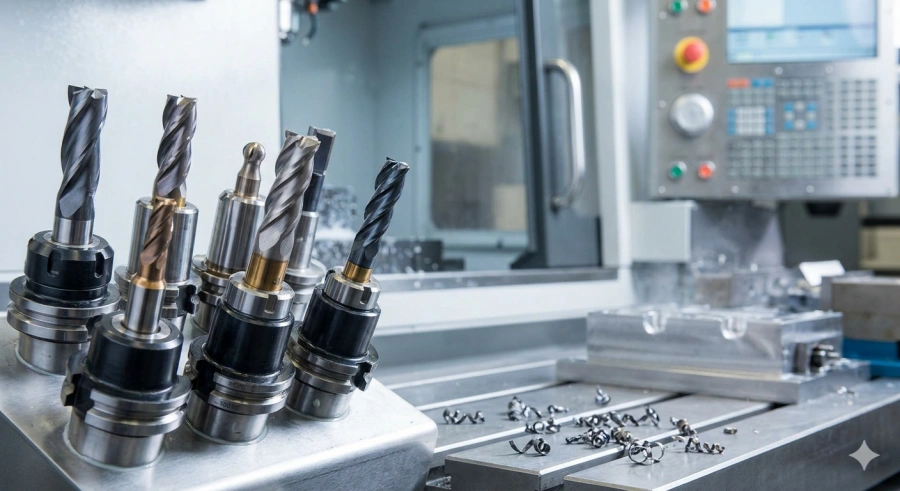
A carbide end mill cutter is a rotary cutting tool made mainly from carbide material, usually tungsten carbide. It is designed for CNC milling operations such as slotting, การกัดข้าง, การกัดกระเป๋า, รูปร่าง, และการตกแต่งพื้นผิว.
Unlike simpler cutting tools, a carbide end mill cutter usually has cutting edges on the tip and along the sides. This allows it to remove material in different directions and handle a wide range of machining tasks.
Because carbide offers higher rigidity and better wear resistance than many traditional tool materials, carbide end mills are often preferred for higher-speed machining and more demanding cutting conditions.
For more practical applications, you can also read คัตเตอร์ดอกเอ็นมิลล์ใช้ทำอะไร.
Why Choose a Carbide End Mill Cutter?
Better Rigidity
Carbide tools are generally more rigid than HSS tools. This helps improve cutting stability, especially in applications that require accuracy and repeatability.
Better Wear Resistance
Carbide end mills usually offer better wear resistance in demanding cutting conditions. ดังนั้น, they are often selected for longer production runs and harder materials.
Higher Cutting Efficiency
ในการใช้งานมากมาย, carbide tools support higher cutting speeds and more stable machining performance, which can improve production efficiency.
Better Performance on Harder Materials
Carbide end mills are commonly used for steel, สแตนเลส, เหล็กหล่อ, and other materials that place higher demands on the tool.
More Stable Surface Quality
Because of their rigidity and cutting consistency, carbide tools are often better suited for applications where dimensional accuracy and surface finish are important.
Carbide End Mill vs HSS End Mill
| คุณสมบัติ | ดอกกัดเอ็นมิลคาร์ไบด์ | HSS End Mill |
|---|---|---|
| ความแข็งแกร่ง | สูงกว่า | ต่ำกว่า |
| ความต้านทานการสึกหรอ | ดีกว่า | มีข้อจำกัดมากขึ้น |
| ความเร็วในการตัด | Usually higher | Usually lower |
| Heat Resistance | Better in demanding conditions | มีข้อจำกัดมากขึ้น |
| การใช้งานทั่วไป | CNC machining, เหล็ก, สแตนเลส, higher-speed work | General-purpose and lighter-duty machining |
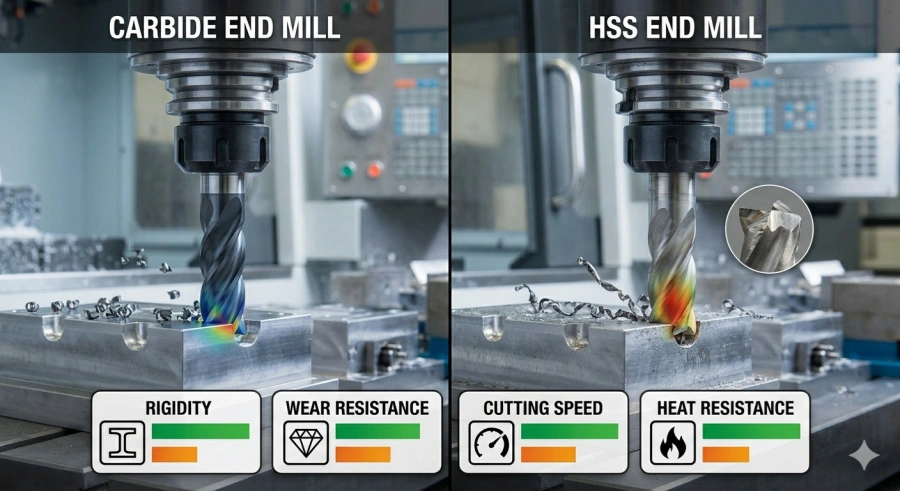
This comparison does not mean carbide is always the only option. อย่างไรก็ตาม, in many CNC machining applications, carbide is preferred when users need higher performance and more stable cutting results.
Common Applications of Carbide End Mill Cutters
เครื่องจักรกลอลูมิเนียม
Carbide end mill cutters are widely used in aluminum machining because they can provide efficient cutting and clean chip evacuation when the correct geometry is selected.
เครื่องจักรกลเหล็ก
สำหรับเหล็กกล้าคาร์บอนและโลหะผสม, carbide end mills are often preferred because they offer better rigidity and wear resistance under stable cutting conditions.
Stainless Steel Machining
Stainless steel is more demanding because of heat generation and work hardening. ดังนั้น, carbide tools are often selected for more stable and reliable cutting performance.
Mold and Die Work
Carbide end mills are commonly used in mold making and die production for contouring, การกลึงโพรง, และการดำเนินการขั้นสุดท้าย.
Precision CNC Parts
They are also used in automotive components, ชิ้นส่วนการบินและอวกาศ, electronics housings, and other precision machining applications where accuracy is important.
หากคุณต้องการทำความเข้าใจว่าการตัดเฉือนเกิดขึ้นจริงอย่างไรในระหว่างการตัดเฉือน, you can also read how does an end mill cutter work.
Which Materials Can Carbide End Mill Cutters Machine?
| วัสดุชิ้นงาน | Why Carbide Is Commonly Used |
|---|---|
| อลูมิเนียม | Good cutting efficiency and clean chip evacuation with the right geometry |
| เหล็กกล้าคาร์บอน | ความแข็งแกร่งและความทนทานต่อการสึกหรอดีขึ้น |
| สแตนเลส | More stable cutting performance and better heat resistance |
| เหล็กหล่อ | Good wear resistance in abrasive cutting conditions |
| Alloy Materials | Suitable for demanding machining tasks with the correct geometry and coating |
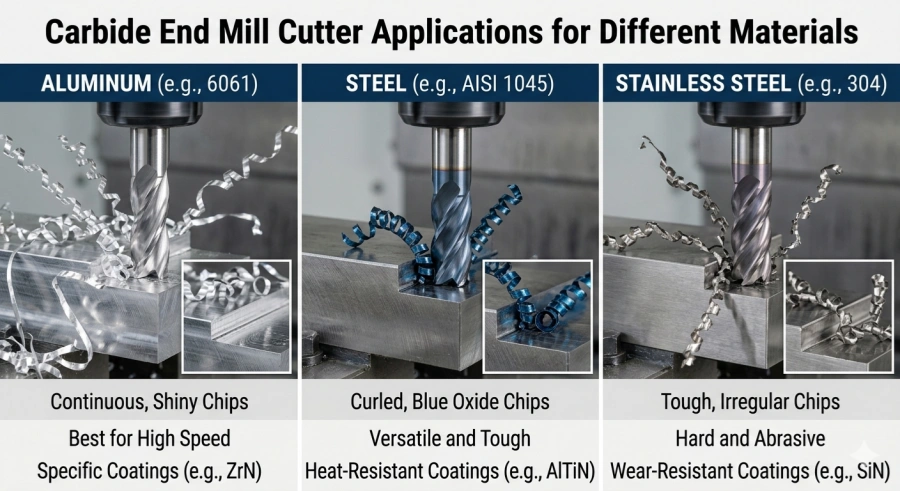
Although carbide tools are highly versatile, the best results still depend on matching flute count, เรขาคณิต, การเคลือบ, and cutting parameters to the actual material.
How to Choose the Right Carbide End Mill Cutter
1. ตรวจสอบวัสดุชิ้นงาน
The first step is to confirm whether you are machining aluminum, เหล็ก, สแตนเลส, เหล็กหล่อ, หรือวัสดุอื่น. Different materials require different cutter geometries and coatings.
2. ตรวจสอบการทำงานของเครื่องจักร
สล็อต, การกัดข้าง, การกัดกระเป๋า, รูปร่าง, การหยาบ, and finishing often require different tool designs.
3. Check Flute Count
จำนวนร่องฟันส่งผลต่อการคายเศษและความแข็งแกร่ง. ในหลายกรณี, fewer flutes are preferred for aluminum, while more flutes are often used for steel and harder materials.
If you want a deeper comparison, อ่าน 2 ขลุ่ยกับ 4 ดอกเอ็นมิลล์ขลุ่ย.
4. Check Coating and Geometry
The right coating and tip geometry can improve wear resistance, การควบคุมความร้อน, and machining quality.
5. ตรวจสอบข้อกำหนดมาตรฐานหรือข้อกำหนดแบบกำหนดเอง
Some projects can use standard carbide end mills, while others require custom diameter, ความยาวขลุ่ย, ความยาวโดยรวม, การเคลือบ, or special geometry.
If you want to compare different geometries, you can also read ประเภทของหัวกัดดอกเอ็นมิลล์.
For a detailed material-based selection guide, อ่านของเรา how to choose a carbide end mill cutter guide.
Practical Buying Considerations for Carbide End Mill Cutters
ก่อนทำการสั่งซื้อ, it is helpful to confirm these points:
- วัสดุชิ้นงาน
- เส้นผ่านศูนย์กลางของเครื่องตัด
- การนับขลุ่ย
- ความยาวขลุ่ย
- ความยาวโดยรวม
- coating type
- tolerance requirement
- roughing or finishing purpose
- OEM or custom tooling requirement
These details help ensure the selected carbide end mill cutter is suitable for the actual machining task.
If you need standard or OEM carbide tooling solutions, คุณยังสามารถเยี่ยมชมของเรา custom carbide end mill cutter product page.
Common Mistakes When Choosing a Carbide End Mill Cutter
Choosing by Material Name Only
Some buyers only check whether the tool is “carbide,” but ignore flute count, เรขาคณิต, การเคลือบ, and actual application.
Using One Tool for Every Material
A carbide end mill suitable for aluminum may not be the best option for stainless steel or harder materials.
Ignoring Cutting Parameters
Even a high-quality carbide tool may not perform well if speed, ให้อาหาร, and cutting depth are not matched correctly.
Focusing Only on Tool Life
Tool life is important, but machining quality, ความมั่นคง, and application fit are equally important.
Overlooking Custom Requirements
In some machining projects, a standard tool is enough. In others, custom tooling is the better choice.
คำถามที่ถามบ่อย
What is a carbide end mill cutter?
A carbide end mill cutter is a rotary cutting tool made mainly from carbide material. It is used for CNC milling operations such as slotting, การกัดข้าง, รูปร่าง, การกัดกระเป๋า, และการตกแต่งพื้นผิว.
ดอกเอ็นมิลล์คาร์ไบด์ใช้ทำอะไร?
Carbide end mills are used for machining aluminum, เหล็ก, สแตนเลส, เหล็กหล่อ, and other materials in CNC milling applications that require stability, ความแม่นยำ, และทนต่อการสึกหรอ.
What is the difference between carbide and HSS end mills?
โดยทั่วไปแล้ว, carbide end mills offer higher rigidity, ทนต่อการสึกหรอได้ดีขึ้น, and higher cutting speed potential, while HSS tools are more commonly used for lighter-duty or general-purpose work.
Which materials can carbide end mill cutters machine?
They are commonly used for aluminum, เหล็กกล้าคาร์บอน, โลหะผสมเหล็ก, สแตนเลส, เหล็กหล่อ, and other demanding machining materials.
ฉันจะเลือกหัวกัดดอกกัดคาร์ไบด์ที่ถูกต้องได้อย่างไร?
You should consider the workpiece material, การทำงานของเครื่องจักร, การนับขลุ่ย, การเคลือบ, เรขาคณิตของเครื่องตัด, และไม่ว่าจะต้องใช้เครื่องมือมาตรฐานหรือแบบกำหนดเองก็ตาม.
บทสรุป
A carbide end mill cutter is one of the most important tools in modern CNC machining because it combines rigidity, ความต้านทานการสึกหรอ, และประสิทธิภาพการตัดที่มั่นคง. It is widely used in aluminum machining, เครื่องจักรกลเหล็ก, เครื่องจักรกลสแตนเลส, การทำแม่พิมพ์, and many other precision applications.
To choose the right carbide end mill cutter, buyers should look beyond the material name alone. รูปทรงของคัตเตอร์, การนับขลุ่ย, การเคลือบ, การทำงานของเครื่องจักร, and actual workpiece material all need to be considered together.
When the right tool is selected for the right application, carbide end mills can help improve machining stability, คุณภาพพื้นผิว, and overall production efficiency.
ซีทีเอ
Looking for a reliable เครื่องตัดดอกเอ็นมิลคาร์ไบด์ manufacturer for aluminum, เหล็ก, หรืองานสแตนเลส? สำรวจหน้าผลิตภัณฑ์หัวกัดดอกกัดคาร์ไบด์ของเราสำหรับขนาดมาตรฐาน, ภาพวาดที่กำหนดเอง, การสนับสนุนเครื่องมือ OEM, และการผลิตจำนวนมาก.