 หัวกัดที่มีความแม่นยํา,เครื่องมือตัดสําหรับเครื่องจักรกลซีเอ็นซีทุกวัสดุ

การเปรียบเทียบรัศมีมุมเทียบกับการปัดเศษของมุมมักจะทำให้ผู้ซื้อสับสนเนื่องจากชื่อเครื่องมือฟังดูคล้ายกัน. อย่างไรก็ตาม, รัศมีมุม, จมูกวัว, และดอกกัดโค้งมนสามารถสร้างโปรไฟล์ชิ้นงานที่แตกต่างกันมาก.
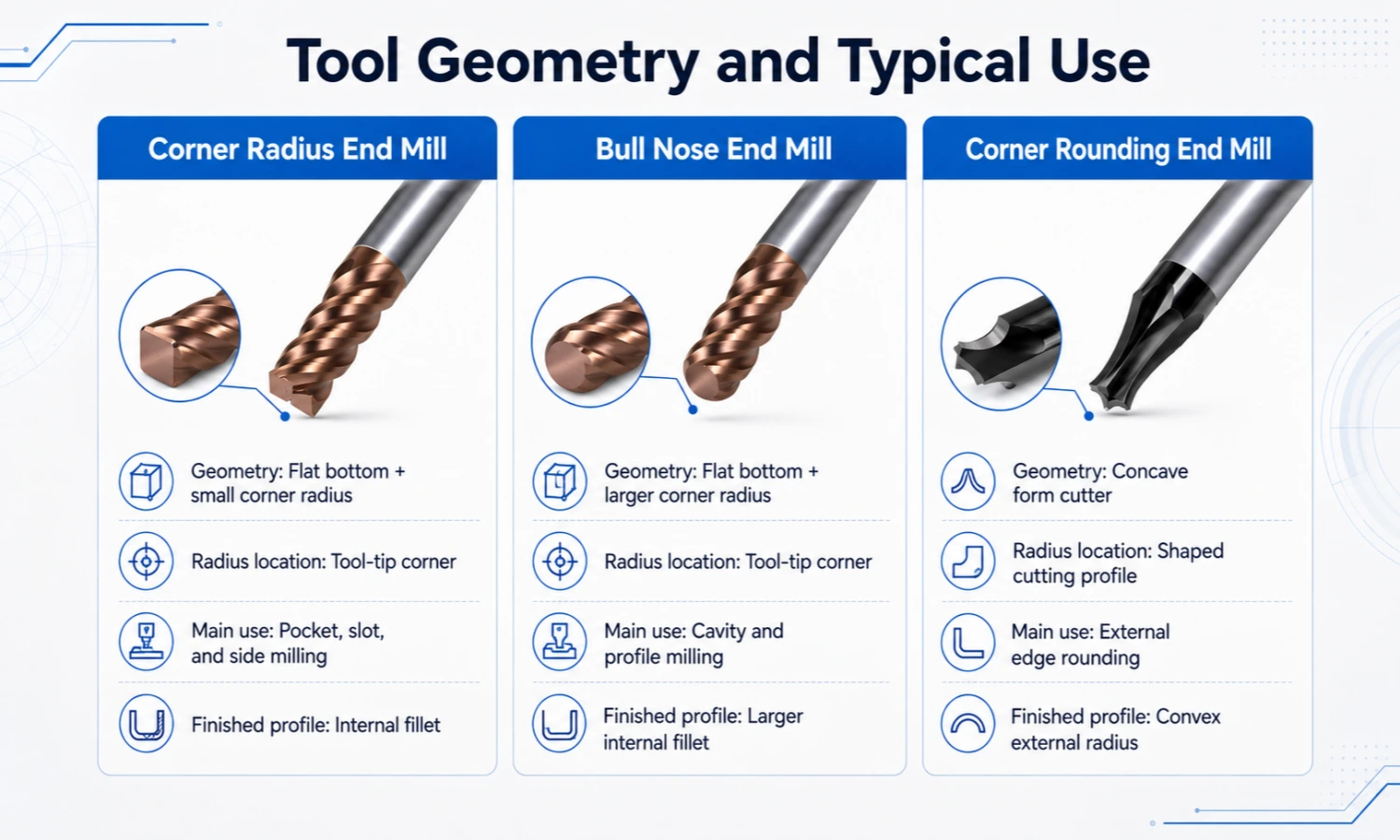
ดอกเอ็นมิลล์รัศมีมุมและดอกเอ็นมิลล์บูลโนสปกติจะมีก้นแบนหรือเกือบแบน. รัศมีอยู่ระหว่างคมตัดด้านล่างและด้านข้าง. ดังนั้น, เครื่องมือทั้งสองสามารถทำการกัดทั่วไปในขณะที่สร้างเนื้อภายในหรือการเปลี่ยนแบบกลมได้.
ดอกเอ็นมิลล์ปัดมุมนั้นแตกต่างออกไป. มีโปรไฟล์การตัดรูปทรงเว้าซึ่งลบมุมภายนอกที่คมและสร้างรัศมีนูนบนขอบชิ้นงาน.
เนื่องจากซัพพลายเออร์อาจใช้ระบบการตั้งชื่อที่แตกต่างกัน, ผู้ซื้อควรตรวจสอบรูปทรงของเครื่องตัด, ขนาด, และจำเป็นต้องมีโปรไฟล์สำเร็จรูปแทนที่จะอาศัยเพียงชื่อผลิตภัณฑ์.
รัศมีมุมเทียบกับการปัดเศษมุม: ตอบด่วน
ในรัศมีมุมเทียบกับการเปรียบเทียบการปัดเศษมุม, ดอกเอ็นมิลล์รัศมีมุมมีก้นแบนหรือเกือบแบนและมีรัศมีอยู่ที่มุมเครื่องมือ. ดอกเอ็นมิลล์บูลโนสมักจะมีรูปทรงคล้ายกัน, แม้ว่าซัพพลายเออร์บางรายจะใช้ชื่อคัตเตอร์ที่มีรัศมีมุมที่เห็นได้ชัดเจนกว่าก็ตาม.
ดอกกัดโค้งมนเข้ามุมใช้โปรไฟล์การตัดแบบเว้าเพื่อสร้างรัศมีนูนบนคมชิ้นงานภายนอกที่สามารถเข้าถึงได้.
เหตุใดชื่อเครื่องตัดเหล่านี้จึงมักสับสน?
ผู้ผลิตที่แตกต่างกันไม่ได้ใช้คำศัพท์เดียวกันเสมอไป.
ซัพพลายเออร์บางรายใช้ "ดอกเอ็นมิลหัววัว" และ "ดอกเอ็นมิลล์รัศมีมุม" เป็นชื่อที่ใช้แทนกันได้. บางรายใช้ "หัวกัด" สำหรับหัวกัดที่มีรัศมีมุมเครื่องมือใหญ่กว่าหรือมองเห็นได้ชัดเจนกว่า. อย่างไรก็ตาม, ไม่มีค่ารัศมีที่ยอมรับกันทั่วโลกที่แยกคำทั้งสองนี้ออกจากกัน.
ดอกกัดโค้งมนเข้ามุมแยกแยะได้ง่ายกว่า เนื่องจากปกติแล้วจะมีโปรไฟล์เว้าและมีจุดประสงค์ในการตัดเฉือนที่แตกต่างกัน.
ดังนั้น, มุ่งเน้นไปที่คำถามสามข้อ:
- รัศมีอยู่ที่ไหนบนเครื่องตัด?
- จะสร้างโปรไฟล์อะไรบนชิ้นงาน?
- เป็นการกัดทั่วไปหรือการขึ้นรูปขอบภายนอก?
วิธีระบุเครื่องตัดแต่ละชิ้นจากรูปถ่ายเครื่องมือหรือแค็ตตาล็อก
ชื่อผลิตภัณฑ์อาจไม่สอดคล้องกัน, แต่รูปทรงของหัวกัดมักจะให้คำตอบที่ชัดเจนกว่า.
ตรวจสอบรูปทรงด้านล่าง
โดยปกติแล้ว รัศมีมุมหรือดอกเอ็นมิลหัวกระทิงจะรักษาพื้นที่ตรงกลางที่เรียบหรือเกือบแบนไว้ที่ปลายเครื่องมือ. รัศมีจะปรากฏขึ้นเมื่อคมตัดด้านล่างบรรจบกับคมตัดด้านข้าง.
เพราะเรขาคณิตนี้, เครื่องตัดยังสามารถทำการแทงได้, การกัดข้าง, ช่อง, และการกัดดอกเอ็นมิลทั่วไปอื่นๆ.
มองหาโปรไฟล์แบบฟอร์มเว้า
ดอกเอ็นมิลล์ปัดมุมมีโปรไฟล์การตัดเว้าอย่างเห็นได้ชัด. การออกแบบบางแบบมีนักบินหรือส่วนหน้าแบบย่อ, ในขณะที่บางคนใช้โครงสร้างศีรษะที่แตกต่างกัน.
คมตัดที่ขึ้นรูปจะสร้างรัศมีนูนที่ขอบด้านนอกของชิ้นงาน.
อย่าสับสนระหว่างจมูกบูลกับจมูกบอล
โดยปกติ ดอกเอ็นมิลล์บูลโนสจะรักษาพื้นที่ส่วนกลางให้เรียบหรือเกือบแบน, โดยมีรัศมีอยู่ที่มุมเครื่องมือ.
ดอกเอ็นมิลหัวมนมีปลายโค้งมนหรือครึ่งทรงกลมทั้งหมดสำหรับพื้นผิวโค้ง, รูปทรงของแม่พิมพ์, และการตกแต่งสามมิติ.
เพื่อการเปรียบเทียบโดยละเอียด, อ่านของเรา เอ็นมิลล์บูลโนส vs เอ็นมิลล์บอลโนส แนะนำ.
ดอกเอ็นมิลล์รัศมีมุมคืออะไร?
ดอกเอ็นมิลล์รัศมีมุมมักจะเป็นดอกเอ็นมิลล์ก้นแบนซึ่งมีการเปลี่ยนโค้งมนระหว่างคมตัดด้านล่างและด้านข้าง.
รัศมีจะลบจุดตัดคมระหว่างคมตัดเหล่านี้. ส่งผลให้, มุมจะแข็งแรงขึ้นและไวต่อการบิ่นน้อยกว่าดอกเอ็นมิลล์เหลี่ยมที่คมสนิท.
เรขาคณิตทั่วไป
การออกแบบทั่วไปประกอบด้วย:
- ก้นแบนหรือเกือบแบน
- คมตัดด้านที่เป็นเกลียวหรือตรง
- รัศมีที่มุมด้านล่าง
- สองขลุ่ยขึ้นไป
- คาร์ไบด์ที่เป็นของแข็ง, ไฮสปีด, หรือวัสดุเครื่องมืออื่นที่เหมาะสม
รัศมีเป็นของปลายเครื่องมือ. มันไม่ได้มีลักษณะเว้าสมบูรณ์รอบหัวคัตเตอร์.
การใช้งานทั่วไป
ดอกกัดเอ็นมิลรัศมีมุมมักใช้สำหรับ:
- กระเป๋า, สล็อต, และการกัดข้าง
- การตัดเฉือนโพรงแม่พิมพ์
- การกัดโปรไฟล์
- การกัดหยาบ, กึ่งสำเร็จ, และการตกแต่ง
- การตัดเฉือนเนื้อภายใน
- การกัด CNC ทั่วไปพร้อมมุมเครื่องมือเสริมแรง
มีประโยชน์อย่างยิ่งเมื่อชิ้นส่วนต้องการพื้นที่ตัดเฉือนแบบเรียบร่วมกับการเปลี่ยนภายในแบบโค้งมน.
เมื่อใดที่คุณควรเลือกอย่างใดอย่างหนึ่ง?
เลือกคัตเตอร์นี้เมื่อการวาดภาพต้องใช้ก้นแบนหรือเกือบแบน, รัศมีมุมภายใน, และมุมเครื่องมือที่แข็งแรงกว่าดอกเอ็นมิลล์เหลี่ยมที่คม.
รัศมี, เส้นผ่านศูนย์กลางของเครื่องตัด, ความยาวตัด, และระยะหลบจะต้องตรงกับรูปทรงของชิ้นงาน.
เอ็นมิลล์บูลโนสคืออะไร?
ดอกกัดเอ็นมิลหัวกระทิงยังมีรัศมีระหว่างคมตัดด้านล่างและด้านข้างด้วย. ดังนั้น, ซัพพลายเออร์หลายรายถือว่ามันเป็นประเภทของดอกเอ็นมิลล์รัศมีมุม.
ในบางกลุ่มผลิตภัณฑ์, “บูลโนส” หมายถึงหัวกัดที่มีรัศมีมุมกว้างกว่าหรือสังเกตเห็นได้ชัดเจนกว่า. แต่ถึงอย่างไร, แนวทางปฏิบัติในการตั้งชื่อนี้ไม่เป็นสากล.
เรขาคณิตทั่วไป
เอ็นด์มิลล์บูลโนสมักจะมี:
- พื้นที่ส่วนกลางแบนหรือเกือบแบน
- มุมเครื่องมือโค้งมน
- รูปทรงมุมที่แข็งแรงกว่าดอกเอ็นมิลล์เหลี่ยมคม
- รูปทรงที่เหมาะสำหรับการตัดเฉือนช่องและโปรไฟล์
ไม่เหมือนดอกเอ็นมิลล์บอลโนส, โดยปกติแล้วจะจัดพื้นที่ราบหรือเกือบราบไว้ตรงกลาง.
การใช้งานทั่วไป
ดอกเอ็นมิลล์ Bull Nose มักใช้สำหรับ:
- โพรงแม่พิมพ์และการกัดโปรไฟล์
- การกัดหยาบและการเก็บผิวกึ่งละเอียด
- เนื้อภายในที่ใหญ่ขึ้น
- การตัดเฉือนรูปร่าง
- การดำเนินการที่ต้องใช้มุมเครื่องมือที่แข็งแกร่งขึ้น
หัวกัดสามารถดึงวัสดุออกจากลักษณะด้านล่างแบนหรือใกล้ด้านล่างแบนในขณะที่สร้างการเปลี่ยนภายในแบบโค้งมน.
เมื่อใดที่คุณควรเลือกอย่างใดอย่างหนึ่ง?
ดอกเอ็นมิลล์บูลโนสอาจเหมาะสมเมื่อชิ้นส่วนนั้นต้องการเนื้อภายใน, รัศมีมุมที่เห็นได้ชัดเจน, และมุมเครื่องมือที่แข็งแรงสำหรับการกัดหยาบ, กึ่งสำเร็จ, หรือการกัดโปรไฟล์.
สำหรับการกัดก้นแบนด้วยมุมเครื่องมือเสริมแรง, ดูของเรา ดอกเอ็นมิลล์บูลโนส.
ดอกเอ็นมิลล์ปัดมุมคืออะไร?
ดอกกัดโค้งมนเข้ามุมเป็นหัวกัดรูปทรงที่ออกแบบมาเพื่อตัดเฉือนโปรไฟล์โค้งมนบนคมชิ้นงานภายนอก.
คมตัดมีรัศมีเว้า. เมื่อเครื่องตัดเคลื่อนไปตามขอบที่เข้าถึงได้, โปรไฟล์ที่ขึ้นรูปจะลบมุมที่คมและสร้างรัศมีนูน.
โปรไฟล์การตัดแบบฟอร์มเว้า
โปรไฟล์การตัดแบบเว้าเป็นคุณลักษณะในการระบุที่ชัดเจนที่สุด.
ตัวอย่างเช่น, หัวกัด R2.5 อาจได้รับการออกแบบให้สร้างรัศมีภายนอกประมาณ R2.5. อย่างไรก็ตาม, โปรไฟล์สุดท้ายยังขึ้นอยู่กับรูปทรงของเครื่องตัดด้วย, ตำแหน่งเครื่อง, วิ่งหมด, และสภาวะการตัดเฉือน.
การออกแบบบางแบบมีนักบินหรือส่วนหน้าแบบย่อ. คนอื่นทำไม่ได้. ดังนั้น, ผู้ซื้อควรยืนยันขนาดที่สมบูรณ์ก่อนสั่งซื้อ.
การใช้งานทั่วไป
ดอกเอ็นมิลล์ปัดมุมส่วนใหญ่จะใช้สำหรับ:
- การปัดเศษขอบภายนอกที่แหลมคม
- การสร้างรัศมีขอบนูน
- แผ่นปิดผิวและขอบส่วนประกอบ
- การสร้างโปรไฟล์ขอบตกแต่งหรือใช้งานได้
- การดำเนินการขึ้นรูปขอบแบบกำหนดเอง
โดยปกติแล้วจะไม่ถูกเลือกสำหรับการกัดกระเป๋า, ช่อง, หรือการตัดเฉือนก้นแบนทั่วไป.
เมื่อใดที่คุณควรเลือกอย่างใดอย่างหนึ่ง?
เลือกคัตเตอร์นี้เมื่อการวาดต้องใช้รัศมีนูนบนขอบด้านนอก แทนที่จะเป็นฟิลเล็ตภายใน.
สำหรับการตัดเฉือนโปรไฟล์โค้งมนบนขอบชิ้นงานภายนอก, ดูของเรา ดอกเอ็นมิลล์ปัดเศษมุม.
คู่มือการเลือกเครื่องตัดด่วน
ความแตกต่างระหว่างรัศมีมุมกับมุมจะเข้าใจได้ง่ายขึ้นเมื่อคุณเปรียบเทียบโปรไฟล์ชิ้นงานที่ต้องการ.
| โปรไฟล์ชิ้นงานหรือการทำงานที่ต้องการ | เครื่องตัดที่แนะนำ |
| กระเป๋าด้านล่างแบนพร้อมเนื้อด้านในขนาดเล็ก | ดอกกัดเอ็นมิลรัศมีมุม |
| ช่องหรือโปรไฟล์ที่มีมุมเครื่องมือโค้งมนที่แข็งแรงกว่า | ดอกเอ็นมิลล์บูลโนส |
| รัศมีนูนบนขอบภายนอกที่เข้าถึงได้ | ดอกเอ็นมิลล์ปัดเศษมุม |
| พื้นผิวโค้งเต็มที่หรือการตกแต่งเส้นขอบ 3 มิติ | ดอกเอ็นมิลล์บอลโนส |
| ผนังมุม, พื้นผิวร่าง, หรือช่องแคบ | ดอกเอ็นมิลล์เรียว |
ดอกเอ็นมิลหัวกระทิงและดอกเอ็นมิลล์รัศมีมุมอาจมีรูปทรงคล้ายกัน, ขึ้นอยู่กับระบบการตั้งชื่อของซัพพลายเออร์. ดังนั้น, ยืนยันการวาดเครื่องมือ, รัศมี, เส้นผ่านศูนย์กลางของเครื่องตัด, และต้องมีโปรไฟล์ที่เสร็จสมบูรณ์ก่อนสั่งซื้อ.
วิธีการเลือกเครื่องตัดรัศมีที่ถูกต้อง
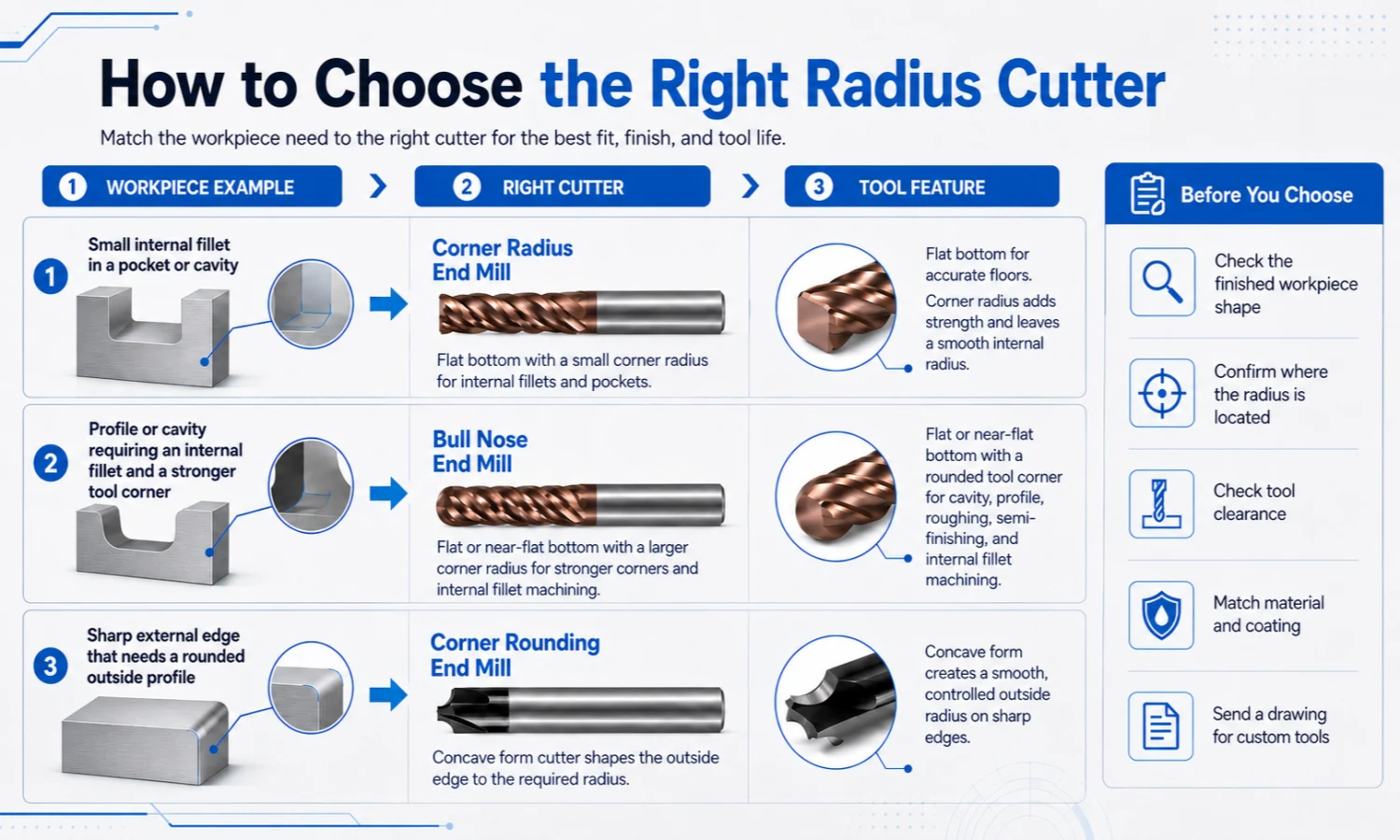
หัวกัดที่ถูกต้องจะขึ้นอยู่กับรูปร่างของชิ้นงานที่ทำเสร็จแล้วเป็นอันดับแรก. หลังจากระบุโปรไฟล์ได้แล้ว, ตรวจสอบรัศมี, ตำแหน่งเครื่องจักร, การกวาดล้างเครื่องมือ, วัสดุ, และการดำเนินการตัด.
ตรวจสอบรูปทรงชิ้นงานที่เสร็จแล้ว
ใช้โปรไฟล์ชิ้นส่วนสุดท้ายเป็นแนวทางแรก:
- เนื้อภายในอยู่ในช่องก้นแบน: รัศมีมุมหรือดอกเอ็นมิลล์บูลโนส
- รัศมีนูนบนขอบภายนอก: ดอกเอ็นมิลล์ปัดเศษมุม
- ขอบมุมตรง: เครื่องตัดมุม
- ผนังเรียวหรือมุมร่าง: เครื่องตัดเรียว
- พื้นผิว 3 มิติโค้งเต็มที่: ดอกเอ็นมิลล์บอลโนส
ความแตกต่างนี้ช่วยป้องกันข้อผิดพลาดในการเลือกหัวกัดมากมาย.
ยืนยันรัศมีและขนาดเครื่องมือที่ต้องการ
รัศมีของคัตเตอร์ควรตรงกับการวาดชิ้นส่วน. อย่างไรก็ตาม, รัศมีเพียงอย่างเดียวไม่เพียงพอ.
ยืนยันด้วย:
- คัตเตอร์หรือเส้นผ่านศูนย์กลางของหัว
- เส้นผ่านศูนย์กลางก้าน
- การตัดและความยาวโดยรวม
- การนับขลุ่ย
- การเข้าถึงเครื่องมือ
- ผนังใกล้เคียง, ไหล่, และอุปกรณ์ติดตั้ง
- วัสดุชิ้นงาน
หัวกัดอาจมีรัศมีที่ถูกต้องแต่ยังคงรบกวนคุณสมบัติอื่นอยู่.
พิจารณาการดำเนินการกัด
ระบุว่าการทำงานเป็นแบบกัดหยาบหรือไม่, กึ่งสำเร็จ, ตกแต่ง, การกัดกระเป๋า, การกลึงโพรง, การกัดโปรไฟล์, หรือการขึ้นรูปขอบ.
รัศมีมุมและดอกเอ็นมิลหัวกระทิงสามารถทำการกัดทั่วไปได้หลายอย่าง. ดอกกัดปลายมนเข้ามุมดำเนินการขึ้นรูปขอบแบบพิเศษมากขึ้น.
จับคู่เครื่องมือกับวัสดุชิ้นงาน
วัสดุส่งผลต่อเกรดคาร์ไบด์, เรขาคณิตของขลุ่ย, การเคลือบ, ความเร็วในการตัด, อัตราการป้อน, และกลยุทธ์การจ่ายน้ำหล่อเย็น.
เหล็กกล้า, สแตนเลส, อลูมิเนียม, ทองแดง, เหล็กหล่อ, และเหล็กแม่พิมพ์ที่แข็งแล้วอาจต้องใช้การออกแบบเครื่องตัดที่แตกต่างกัน. ดังนั้น, ระบุวัสดุและความแข็งที่แน่นอนเมื่อขอคำแนะนำ.
ส่งแบบร่างสำหรับเรขาคณิตพิเศษ
การวาดภาพ 2 มิติหรือ 3 มิติมีประโยชน์อย่างยิ่งสำหรับขั้นตอนที่ลึก, ไหล่แคบ, การเข้าถึงแบบจำกัด, ผนังที่อยู่ติดกัน, หลายรัศมี, การตัดขัดจังหวะ, และโปรไฟล์ที่ไม่ได้มาตรฐาน.
ภาพวาดช่วยให้ซัพพลายเออร์ประเมินเส้นผ่านศูนย์กลางของคัตเตอร์, การเข้าถึงเครื่องมือ, การกวาดล้างคอ, และขึ้นรูปโปรไฟล์ก่อนการผลิต.
ข้อผิดพลาดในการเลือกทั่วไป
การเลือกตามชื่อผลิตภัณฑ์เท่านั้น
ดอกเอ็นมิลหัวกระทิงจากซัพพลายเออร์รายหนึ่งอาจถูกระบุว่าเป็นดอกเอ็นมิลล์รัศมีมุมโดยอีกรายหนึ่ง.
ดังนั้น, เปรียบเทียบการวาดเครื่องมือ, เส้นผ่านศูนย์กลางของเครื่องตัด, รัศมี, เรขาคณิตด้านล่าง, และการออกแบบขลุ่ย.
ปฏิบัติต่อหัวคัตเตอร์แคบทุกอันเสมือนเป็นคัตเตอร์เรียว
บรรเทาขลุ่ย, การกวาดล้างคอ, หรือรูปทรงเรขาคณิตที่ขึ้นรูปอาจทำให้ส่วนหนึ่งของคัตเตอร์ดูแคบลง. อย่างไรก็ตาม, นี่ไม่ได้ทำให้เป็นดอกเอ็นมิลล์แบบเรียว.
หัวกัดเทเปอร์ที่แท้จริงจะมีเส้นผ่านศูนย์กลางการตัดที่เปลี่ยนแปลงไปเรื่อย ๆ ตามแนวการตัด.
สำหรับผนังที่เป็นมุม, พื้นผิวร่าง, และฟันผุเรียว, ดูของเรา เครื่องตัดเรียว.
ละเว้นระยะห่างของเครื่องมือ
เครื่องตัดแบบฟอร์มอาจมีหัวกว้าง, คอลดลง, หรือส่วนนำร่อง. ดังนั้น, ตรวจสอบไหล่ใกล้เคียง, ผนัง, ติดตั้ง, และคุณสมบัติของชิ้นส่วนก่อนการตัดเฉือน.
ตัวเลือกเครื่องตัดรัศมีแบบมาตรฐานและแบบกำหนดเอง
หัวกัดมาตรฐานครอบคลุมการใช้งานทั่วไปหลายประเภท. อย่างไรก็ตาม, อาจจำเป็นต้องใช้เครื่องมือแบบกำหนดเองเมื่อชิ้นส่วนมีระยะห่างจำกัด, รัศมีพิเศษ, หรือความต้องการวัสดุที่ผิดปกติ.
ตัวเลือกที่ใช้ได้อาจรวมถึง:
- ขนาดรัศมีเมตริกและนิ้ว
- สอง-, สาม-, สี่-, หรือการออกแบบหลายขลุ่ย
- ขอบตัดแบบเคลือบและไม่เคลือบ
- เส้นผ่านศูนย์กลางก้านมาตรฐานหรือแบบกำหนดเอง
- การกำหนดค่าระยะสั้นและระยะยาว
- คัตเตอร์หรือเส้นผ่านศูนย์กลางหัวแบบกำหนดเอง
- เส้นผ่านศูนย์กลางไพล็อตถ้ามี
- คอลดลงและระยะห่างพิเศษ
- เกรดและการเคลือบคาร์ไบด์เฉพาะการใช้งาน
รูปภาพผลิตภัณฑ์และขนาดที่เผยแพร่อาจใช้เป็นข้อมูลอ้างอิงได้. อย่างไรก็ตาม, เรขาคณิตสุดท้าย, ขนาด, ความคลาดเคลื่อน, การเคลือบ, และรายละเอียดการผลิตควรเป็นไปตามรูปวาดและใบเสนอราคาที่ยืนยันแล้ว.
สำหรับโซลูชันการกัดมาตรฐานและแบบกำหนดเองเพิ่มเติม, ดูของเรา หัวกัดคาร์ไบด์ พิสัย.
ข้อมูลที่ต้องยืนยันก่อนสั่งซื้อ
ก่อนที่จะขอใบเสนอราคา, โปรดยืนยันข้อมูลต่อไปนี้ให้มากที่สุด:
- โปรไฟล์ชิ้นงานสำเร็จรูปที่ต้องการ
- เนื้อภายในหรือรัศมีขอบภายนอก
- ขนาดรัศมีที่ต้องการ
- คัตเตอร์หรือเส้นผ่านศูนย์กลางของหัว
- เส้นผ่านศูนย์กลางก้าน
- การตัดและความยาวโดยรวม
- ข้อจำกัดในการเว้นระยะเครื่องมือ
- วัสดุชิ้นงานและความแข็ง
- ประเภทเครื่องจักรและด้ามจับ
- ปริมาณที่ต้องการ
- 2D หรือการวาดภาพ 3 มิติ
รายละเอียดเหล่านี้ช่วยพิจารณาว่าเครื่องมือมาตรฐานเหมาะสมหรือจำเป็นต้องใช้หัวกัดแบบกำหนดเอง.
คำถามที่พบบ่อย
เป็นดอกเอ็นมิลล์บูลโนสเหมือนกับดอกเอ็นมิลล์รัศมีมุม?
ในระบบผลิตภัณฑ์มากมาย, ข้อกำหนดทับซ้อนกัน. โดยปกติแล้ว ทั้งสองประเภทจะอธิบายถึงดอกเอ็นมิลล์แบนหรือเกือบแบนซึ่งมีรัศมีอยู่ที่มุมเครื่องมือ.
ผู้ผลิตบางรายใช้ "จมูกวัว" เพื่อให้มีรัศมีที่เห็นได้ชัดเจนยิ่งขึ้น. อย่างไรก็ตาม, ไม่มีค่าหารสากล, ดังนั้นให้ตรวจสอบรูปทรงและขนาดจริง.
อะไรคือความแตกต่างระหว่างรัศมีมุมและดอกเอ็นมิลล์ปัดเศษมุม?
ดอกเอ็นมิลล์รัศมีมุมมีรัศมีระหว่างคมตัดด้านล่างและด้านข้าง. สามารถทำการกัดทั่วไปในขณะที่สร้างเนื้อภายในได้.
ดอกเอ็นมิลล์ปัดมุมมีโปรไฟล์การตัดแบบเว้า. โดยส่วนใหญ่จะสร้างรัศมีนูนบนขอบชิ้นงานภายนอก.
ฉันควรใช้คัตเตอร์ชนิดใดสำหรับขอบโค้งมนภายนอก?
โดยปกติแล้ว ดอกเอ็นมิลล์ปัดมุมจะเป็นตัวเลือกที่ถูกต้องสำหรับคมตัดภายนอกที่สามารถเข้าถึงได้. อย่างไรก็ตาม, รัศมี, เส้นผ่านศูนย์กลางหัว, โครงสร้างนำร่อง, การกวาดล้าง, และรูปทรงของชิ้นงานยังคงต้องได้รับการยืนยัน.
ฉันควรใช้เครื่องตัดแบบใดสำหรับเนื้อโพรงแม่พิมพ์?
รัศมีมุมหรือดอกเอ็นมิลล์บูลโนสมักจะเหมาะสมกว่า. ทางเลือกสุดท้ายขึ้นอยู่กับความลึกของโพรง, รัศมีที่ต้องการ, การตกแต่งพื้นผิว, ค่าเผื่อการหยาบ, และกลยุทธ์การตัดเฉือน.
เครื่องตัดเหล่านี้สามารถปรับแต่งได้?
ใช่. ตัวเลือกแบบกำหนดเองอาจมีรัศมีด้วย, เส้นผ่านศูนย์กลางของเครื่องตัด, เส้นผ่านศูนย์กลางก้าน, ความยาวเครื่องมือ, การกำหนดค่าขลุ่ย, เกรดคาร์ไบด์, การเคลือบ, โครงสร้างนำร่อง, และการกวาดล้างพิเศษ.
แนะนำให้ใช้การเขียนแบบสำหรับโปรไฟล์ที่ไม่ได้มาตรฐานหรือพื้นที่การตัดเฉือนที่จำกัด.
ส่งรูปวาดเครื่องตัดรัศมีของคุณ
ในทางปฏิบัติ, การตัดสินใจปัดเศษรัศมีมุมเทียบกับมุมจะขึ้นอยู่กับโปรไฟล์ที่เสร็จสมบูรณ์, ตำแหน่งรัศมี, การกวาดล้างเครื่องมือ, วัสดุชิ้นงาน, และการทำงานของเครื่องจักร. ควรตรวจสอบรูปทรงของบูลโนสด้วย เนื่องจากคำศัพท์ของซัพพลายเออร์อาจแตกต่างกันไป.