 قواطع الطحن الدقيقة,أدوات القطع لتصنيع كل مادة باستخدام الحاسب الآلي

If you want to know how to choose carbide drill bits for different materials, ابدأ بمواد الشغل, not only the drill diameter. A suitable drill also depends on hardness, عمق الحفرة, صلابة الآلة, حالة المبرد, and production quantity.
على سبيل المثال, فُولاَذ, ستانلس ستيل, ألمنيوم, الحديد الزهر, and graphite all create different drilling problems. لذلك, one drill design cannot fit every material. If buyers choose only by size or coating color, the drill may wear quickly, break easily, or produce unstable hole quality.
يشرح هذا الدليل how to choose carbide drill bits for different materials and CNC drilling conditions. It also shows what information buyers should provide before asking for a quotation.
For standard and custom CNC drilling tools, عرض لدينا لقم الثقب كربيد.
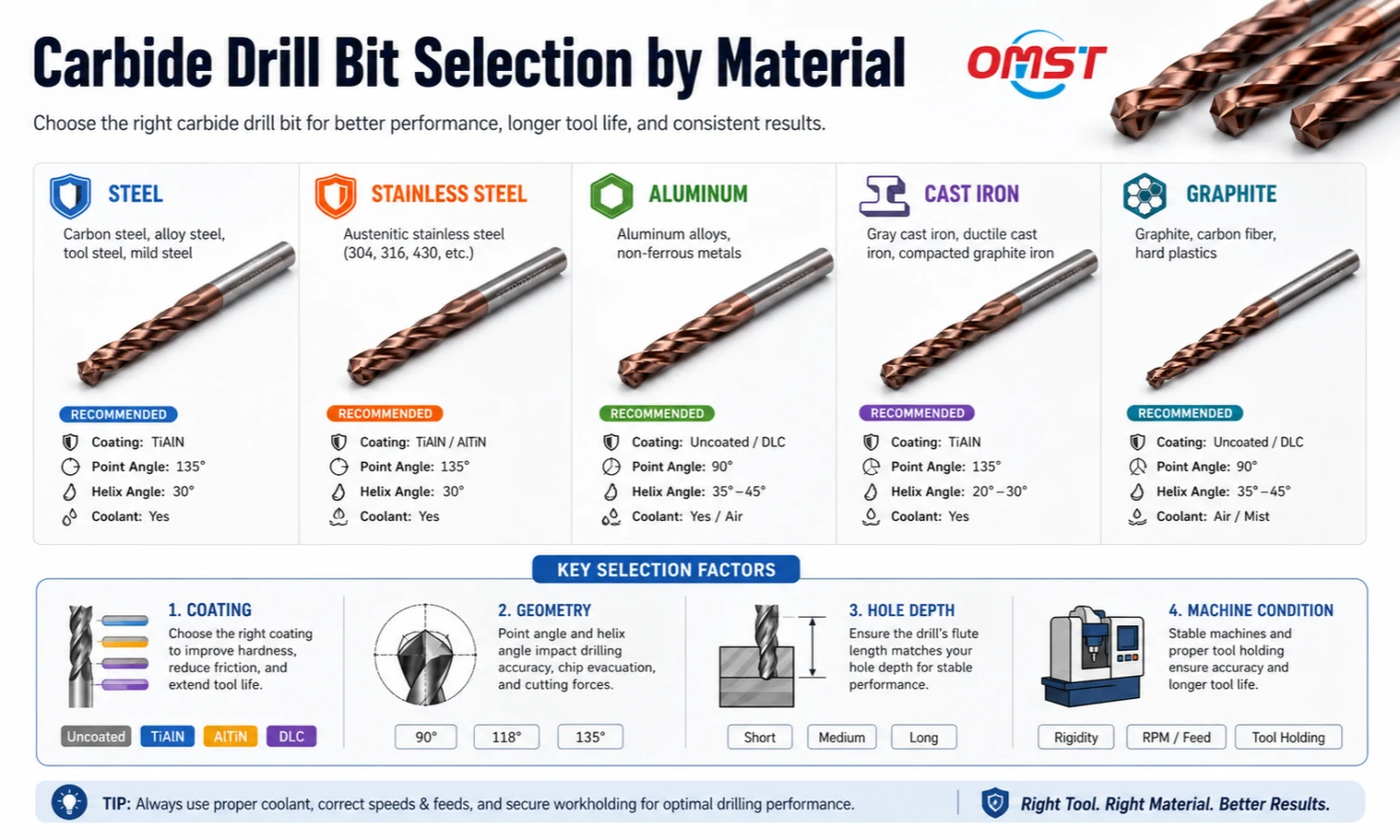
How to Choose Carbide Drill Bits by Workpiece Material
Different materials do not cut in the same way. Some materials create high heat. Some materials stick to the cutting edge. Others are abrasive and wear the drill quickly.
لهذا السبب, buyers should not choose carbide drill bits only by drill diameter. The drill point, تصميم الفلوت, طلاء, درجة كربيد, shank rigidity, and chip evacuation must also match the real machining application.
Different Materials Create Different Drilling Problems
Steel and alloy steel usually require good wear resistance and stable cutting edges. Stainless steel may create heat and work hardening during drilling. Aluminum and copper may create built-up edge or chip adhesion. يمكن أن يكون الحديد الزهر كاشطًا. Graphite is also abrasive and may require a special coating.
لذلك, a drill that works well on aluminum may not be the best choice for stainless steel. على نفس المنوال, a general coated carbide drill may not be suitable for graphite drilling.
Do Not Choose a Drill Only by Diameter
القطر مهم, but it is only one part of drill selection. Buyers should also confirm:
- مادة الشغل والصف
- صلابة المواد
- قطر الثقب
- عمق الثقب
- من خلال ثقب أو ثقب أعمى
- نوع الآلة
- المبرد, air blow, or dust removal condition
- الكمية المطلوبة
- الرسم أو العينة, إذا كان متاحا
When this information is clear, the drill geometry and coating can be selected more accurately.
Standard Size vs Custom Carbide Drill Bits
Standard carbide drill bits are suitable for many common hole sizes. لكن, custom carbide drill bits may be needed for special hole depth, small-diameter drilling, non-standard shank size, طلاء خاص, or OEM marking.
If the required hole is not a common size, or if the current drill wears too fast, a custom drill may be a better solution.
لقم الثقب كربيد للصلب وسبائك الصلب
يعد الفولاذ وسبائك الفولاذ من المواد الشائعة في الحفر باستخدام الحاسب الآلي. لكن, their hardness and alloy content can vary a lot. لهذا السبب, buyers should provide the material grade and hardness before choosing the drill.
Recommended Drill Features for Steel
Carbide drill bits for steel should have good rigidity, stable cutting edges, and a suitable coating. The drill should also match the machine condition and hole depth.
For general steel drilling, buyers often consider:
- Solid carbide substrate
- Stable drill point geometry
- طلاء مقاوم للاهتراء
- Suitable flute design
- Good chip evacuation
- Proper coolant supply
If the steel has been heat treated, the hardness must be confirmed before tool selection.
Coating Selection for Steel
For steel and alloy steel, coating selection depends on hardness, درجة حرارة القطع, and production quantity. TiAlN, ألتين, or other suitable coatings may be considered according to the application.
لكن, coating should not be selected only by color. A black, gold, blue, or copper-colored drill does not automatically mean it is suitable for the workpiece. بدلاً من, the coating should match the material, آلة, and drilling condition.
ما هي المعلومات التي يجب على المشترين تقديمها؟?
Before requesting carbide drill bits for steel, buyers should provide the steel grade, صلابة, hole diameter, عمق الحفرة, نوع الآلة, حالة المبرد, وكمية الطلب.
This helps the supplier recommend a suitable drill instead of only offering a standard size.
لقم الثقب كربيد للفولاذ المقاوم للصدأ
Stainless steel is more difficult to drill than many general steels. It may generate heat, create work hardening, and cause chip evacuation problems. لذلك, carbide drill bits for stainless steel need stable geometry and good heat control.
Why Stainless Steel Is Difficult to Drill
During drilling, stainless steel can become harder at the cutting area if the tool rubs instead of cutting properly. فضلاً عن ذلك, poor chip evacuation can damage the cutting edge or reduce hole quality.
بسبب هذا, the drill should have enough edge strength, a suitable coating, and a flute design that supports chip removal.
How to Choose the Drill Geometry
When choosing carbide drill bits for stainless steel, buyers should consider the stainless steel grade, عمق الحفرة, توريد سائل التبريد, وصلابة الآلة.
A suitable drill design may include:
- Strong cutting edge
- Stable point geometry
- Suitable flute design
- Coating for heat and wear resistance
- Proper cutting parameters
في كثير من الحالات, the drill should be selected after the material grade and hole requirement are reviewed.
Common Buyer Mistakes
A common mistake is choosing a drill only by size. Another mistake is choosing only by coating color.
للفولاذ المقاوم للصدأ, buyers should first confirm the material grade, صلابة, عمق الحفرة, وحالة المبرد. Then the supplier can recommend a more suitable carbide drill bit.
لقم الثقب كربيد للحديد الزهر
Cast iron drilling requires good wear resistance and stable cutting edges. لكن, الحديد الزهر الرمادي, حديد الدكتايل, وغيرها من مواد الصب قد تحتاج إلى تصميمات حفر مختلفة.
What Makes Cast Iron Different?
يمكن أن يكون الحديد الزهر كاشطًا. It may also create powder-like chips instead of long chips. لذلك, the drill should be selected according to the cast iron type and hole requirement.
The drill geometry should support stable cutting and reduce unnecessary edge wear.
Drill Design Considerations
For cast iron, يجب على المشترين النظر:
- Cast iron type
- صلابة المواد
- قطر الثقب
- عمق الثقب
- Dry or wet machining condition
- Batch production quantity
A suitable carbide drill bit can help improve drilling stability and reduce tool wear when the cutting condition is properly controlled.
When Custom Carbide Drills May Be Needed
Custom carbide drills may be needed when cast iron parts have special hole depth, التسامح الصارم, non-standard diameter, or high production volume.
في هذه الحالات, a drawing or sample can help confirm the correct drill size and geometry.
Carbide Drill Bits for Aluminum and Copper
ألمنيوم, نحاس, and other non-ferrous materials need a different selection method. These materials may stick to the cutting edge and create built-up edge during drilling.
Why Non-Ferrous Materials Need Different Drill Selection
Aluminum and copper are softer than steel, but they are not always easier to drill. If chip evacuation is poor, the drill may clog. If the edge geometry is not suitable, the hole finish may be unstable.
لذلك, buyers should pay attention to flute design, الانتهاء من السطح, طلاء, and cutting condition.
Coating and Surface Treatment Options
للألمنيوم والنحاس, low-friction coating, المزامير المصقولة, or uncoated carbide may be considered according to the application. في بعض الحالات, a coating that works for steel may not be the best choice for aluminum.
لذلك, the final coating should be selected according to the alloy grade, عمق الحفرة, حالة المبرد, and required hole finish.
Chip Evacuation and Hole Finish
Chip evacuation is very important for non-ferrous drilling. A suitable flute design can help remove chips and reduce built-up edge. نتيجة ل, the drill may produce cleaner holes and more stable machining results.
Carbide Drill Bits for Graphite and Abrasive Materials
Graphite is very different from steel, ستانلس ستيل, or aluminum. It is abrasive, and it can wear ordinary cutting edges quickly. فضلاً عن ذلك, graphite dust may affect chip control and machine cleanliness.
Why Graphite Wears Tools Quickly
Graphite can cause abrasive wear during drilling. If the drill coating and geometry are not suitable, the cutting edge may wear quickly. This can reduce hole accuracy and shorten tool life.
لذلك, graphite drilling often requires a tool with good wear resistance and stable cutting geometry.
When to Use a Diamond Coated Drill Bit
For graphite drilling, a CVD diamond coated drill bit may be a suitable option. The diamond coating helps protect the cutting edge during abrasive graphite machining.
لكن, the final tool design should still depend on graphite grade, hole diameter, عمق الحفرة, حالة الآلة, ومتطلبات النظام.
For graphite drilling and abrasive non-ferrous applications, عرض لدينا Diamond Coated Drill Bit.
What Information Is Needed for Graphite Drilling?
When requesting a graphite drill, buyers should provide graphite grade, hole diameter, عمق الحفرة, through-hole or blind-hole requirement, حالة الآلة, dust removal method, رسم, والكمية.
This information helps the supplier confirm whether a diamond coated drill bit, custom carbide drill, or another drilling solution is more suitable.
How to Choose Carbide Drill Bits with the Right Coating
Coating selection is one of the most important steps when choosing carbide drill bits. لكن, coating should always match the workpiece material and cutting condition.
Coating Should Match the Material
Different coatings have different purposes. Some coatings support heat resistance. Some coatings reduce friction. Others improve wear resistance for abrasive materials.
لهذا السبب, coating selection should be based on the material, صلابة, درجة حرارة القطع, chip behavior, حالة المبرد, ومتطلبات الإنتاج.
Coated vs Uncoated Carbide Drill Bits
Coated carbide drill bits may help improve wear resistance and heat resistance. They are often used for steel, ستانلس ستيل, الحديد الزهر, and other demanding applications.
Uncoated carbide drills or polished-flute designs may be considered for some aluminum, نحاس, or special non-ferrous applications. لذلك, buyers should not assume that coated tools are always better for every material.
Why Coating Color Is Not Enough
Coating color is only an appearance. It does not fully explain coating type, أداء الطلاء, or suitable application.
A buyer may see black, gold, blue, نحاس, or dark coatings in a catalog. لكن, the correct choice still depends on the actual workpiece material and machining condition.
How to Choose Carbide Drill Bits by Hole Depth and Drill Length
Hole depth also affects carbide drill bit selection. A shallow hole and a deep hole may require different flute length, صلابة, and chip evacuation design.
Short Holes and Standard Drills
For shallow through holes or common hole sizes, a standard carbide drill may be enough. لكن, the material and tolerance should still be confirmed.
If the hole is short and the machine is stable, tool selection is usually easier.
Deep Holes and Long-Flute Drills
Deep hole drilling requires better chip evacuation and stronger process control. If chips cannot leave the hole smoothly, the drill may wear faster or break.
For deep holes, buyers should confirm:
- عمق الثقب
- طول الناي
- Coolant or air blow condition
- صلابة الآلة
- نفاذ حامل الأداة
- التسامح ثقب المطلوبة
Small Diameter and Micro Carbide Drills
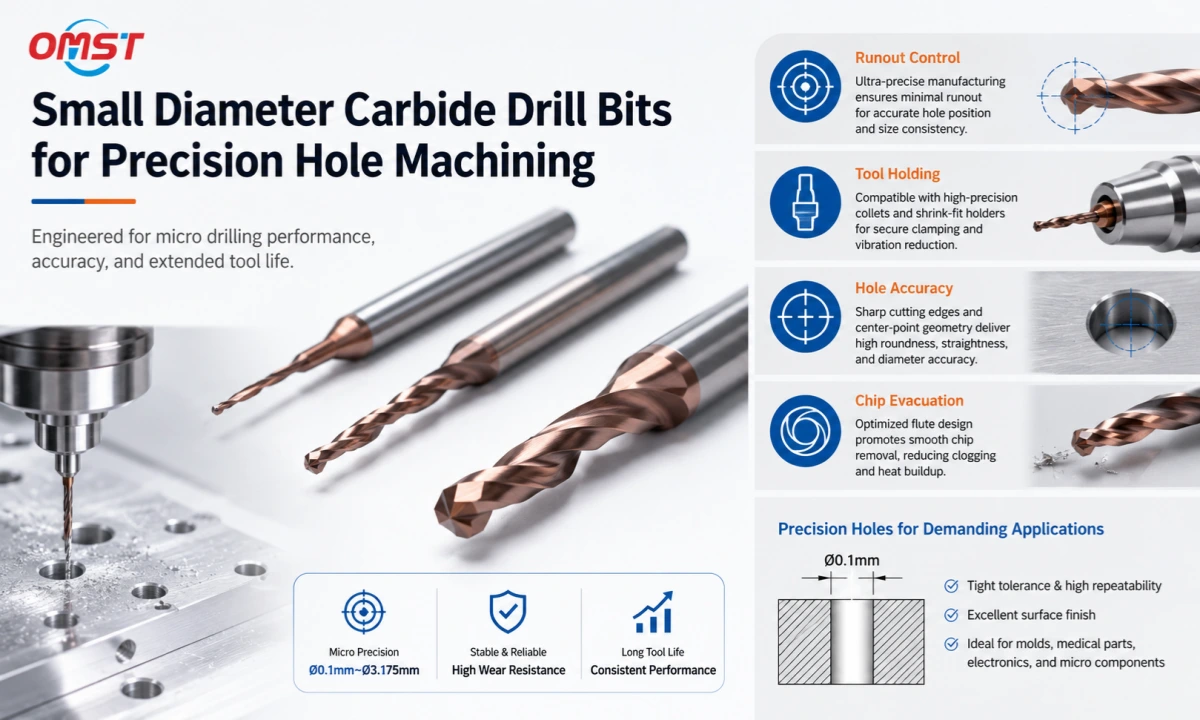
Small diameter carbide drill bits require careful tool holding and machine stability. Even a small runout problem may affect hole quality or cause drill breakage.
For micro drilling, buyers should provide detailed hole information and current machining problems. This helps the supplier evaluate whether a standard drill or custom micro carbide drill is needed.
CNC Machine Condition and Cutting Stability
Even a good drill may not perform well if the machine condition is unstable. لذلك, drill selection should also consider CNC machine rigidity, عقد الأداة, المبرد, والتحكم في الشريحة.
Machine Rigidity and Tool Holding
Machine rigidity affects drilling stability. Tool holder runout also affects hole accuracy and drill life. This is especially important for small-diameter carbide drill bits.
Before selecting a drill, buyers should check machine condition, tool holder accuracy, and fixture stability.
المبرد, Air Blow, or Dust Removal
Coolant and chip control are important for metal drilling. For graphite drilling, dust removal may be more important than coolant.
لذلك, buyers should explain whether the process uses coolant, air blow, القطع الجاف, or dust collection. This information helps confirm drill geometry and coating selection.
Existing Tool Problems
If the current drill breaks, wears quickly, or produces poor hole quality, buyers should describe the problem. Photos of the worn tool, الشغل, and hole condition can also help.
Common problems include:
- Fast edge wear
- Drill breakage
- Poor hole accuracy
- Bad surface finish
- Chip blockage
- Burrs or unstable hole exit
- Short tool life
Custom Carbide Drill Bits for Special Applications
Standard carbide drill bits are useful for common applications. لكن, custom carbide drill bits may be better for special machining requirements.
When Standard Drills Are Not Enough
Custom carbide drills may be needed for:
- Non-standard diameter
- Special hole depth
- Long flute design
- Small hole machining
- Special shank size
- Custom point geometry
- Special coating
- علامات تصنيع المعدات الأصلية
- Custom packaging
في هذه الحالات, a custom tool can be designed according to the actual workpiece and machine condition.
Drawing-Based or Sample-Based Production
A drawing is helpful for non-standard carbide drill bits. If a drawing is not available, buyers can provide a sample, current tool photo, or detailed machining requirement.
The supplier can then evaluate the drill diameter, طول الناي, حجم عرقوب, الطول الكلي, طلاء, والهندسة.
OEM and Private Label Support
For distributors, شركات الأدوات, and industrial suppliers, OEM service may be needed. This can include laser marking, شعار العميل, model marking, التسميات, plastic boxes, and custom packaging.
If these requirements are needed, they should be confirmed before mass production.
Information Needed Before Quotation
To recommend the right carbide drill bits, the supplier needs enough application information. The more complete the details are, the more accurate the quotation and tool recommendation will be.
| المعلومات المطلوبة | لماذا يهم؟ |
| مادة الشغل | Helps confirm carbide grade, طلاء, والهندسة |
| صلابة المواد | Affects edge strength and coating selection |
| قطر الثقب | Determines drill diameter and tool rigidity |
| عمق الثقب | Affects flute length and chip evacuation |
| من خلال ثقب أو ثقب أعمى | Affects point design and drilling strategy |
| نوع الآلة | Helps evaluate rigidity and tool holding condition |
| Coolant or dust removal condition | Affects chip control and tool performance |
| الرسم أو العينة | Helps confirm non-standard tool dimensions |
| كمية | Affects production planning, سعر, and lead time |
| Marking and packaging request | Helps confirm OEM or private-label requirements |
Recommended Carbide Drill Bit Selection Summary
The table below gives a simple selection reference. It is only a general guide. The final carbide drill bit should still be selected according to the actual material, حجم الثقب, عمق الحفرة, وحالة الآلات.
| مادة الشغل | التركيز على الاختيار |
| فولاذ / سبائك الصلب | ارتداء المقاومة, مقاومة الحرارة, and stable cutting edge |
| الفولاذ المقاوم للصدأ | التحكم في الحرارة, قوة الحافة, وإخلاء الشريحة |
| الحديد الزهر | Abrasive wear resistance and stable geometry |
| ألمنيوم / نحاس | Low friction, تدفق الرقاقة, and reduced built-up edge |
| الجرافيت | CVD diamond coating and abrasive wear resistance |
| Custom parts | Drawing-based design and application review |
أدوات قطع كربيد ذات الصلة
For general CNC drilling applications, عرض لدينا لقم الثقب كربيد.
If you need graphite drilling tools, عرض لدينا Diamond Coated Drill Bit.
For graphite milling and abrasive non-ferrous machining, عرض لدينا المطاحن النهائية المطلية بالماس.
FAQ About Choosing Carbide Drill Bits
What is the best carbide drill bit for steel?
The best carbide drill bit for steel depends on the steel grade, صلابة, hole diameter, عمق الحفرة, حالة المبرد, and production quantity. A wear-resistant coating and stable cutting geometry are often important for steel drilling.
Which carbide drill bit is better for stainless steel?
للفولاذ المقاوم للصدأ, the drill should support heat control, قوة الحافة, وإخلاء الشريحة. Buyers should provide the stainless steel grade, عمق الحفرة, and coolant condition before selecting the drill.
Can carbide drill bits drill aluminum?
نعم, carbide drill bits can drill aluminum. لكن, aluminum may create built-up edge or chip adhesion. A suitable flute design, polished surface, low-friction coating, or uncoated carbide option may be considered according to the application.
When should I choose a diamond coated drill bit?
A diamond coated drill bit may be considered when drilling graphite or abrasive non-ferrous materials. For graphite drilling, CVD diamond coating can help improve wear resistance. The final choice should depend on graphite grade, حجم الثقب, حالة الآلة, and order requirement.
Can carbide drill bits be customized?
نعم. Carbide drill bits can be customized by drill diameter, طول الناي, قطر عرقوب, الطول الكلي, هندسة النقطة, طلاء, وضع العلامات, والتعبئة والتغليف. رسم, عينة, or detailed machining requirement is helpful.
What information is needed for a carbide drill bit quotation?
يرجى تقديم المواد الشغل, صلابة, hole diameter, عمق الحفرة, through-hole or blind-hole requirement, نوع الآلة, حالة المبرد, رسم, كمية, and packaging requirement if available.
خاتمة
To understand how to choose carbide drill bits correctly, ابدأ بمواد الشغل, not only the drill diameter. فولاذ, ستانلس ستيل, الحديد الزهر, ألمنيوم, نحاس, الجرافيت, and custom parts all require different tool selection methods.
فضلاً عن ذلك, طلاء, هندسة النقطة, تصميم الفلوت, عمق الحفرة, حالة المبرد, صلابة الآلة, and order quantity should be reviewed before the final drill is selected.
Send your workpiece material, hole diameter, عمق الحفرة, رسم, والكمية. OMIST will help recommend suitable carbide drill bits, خيارات الطلاء, and custom drilling tool solutions.