 قواطع الطحن الدقيقة,أدوات القطع لتصنيع كل مادة باستخدام الحاسب الآلي

Knowing how to choose a carbide end mill cutter helps reduce the risk of chip packing, premature edge wear, الثرثرة, poor surface finish, أخطاء الأبعاد, وكسر الأداة. لهذا السبب, cutter diameter should never be the only selection factor.
A suitable tool should match the workpiece material, صلابة, عملية التصنيع, عدد الناي, ملف تعريف النهاية, طلاء, أداة المتراكمة, and chip evacuation requirement. ألمنيوم, فُولاَذ, stainless steel, الحديد الزهر, and mold steel create different chips, قوى القطع, حرارة, and wear conditions.
This guide provides practical recommendations for selecting a solid carbide end mill. It gives a starting direction rather than fixed cutting parameters because the final choice also depends on the cutter size, آلة, حامل, مشاركة الأداة, المبرد, ونوعية السطح المطلوبة.
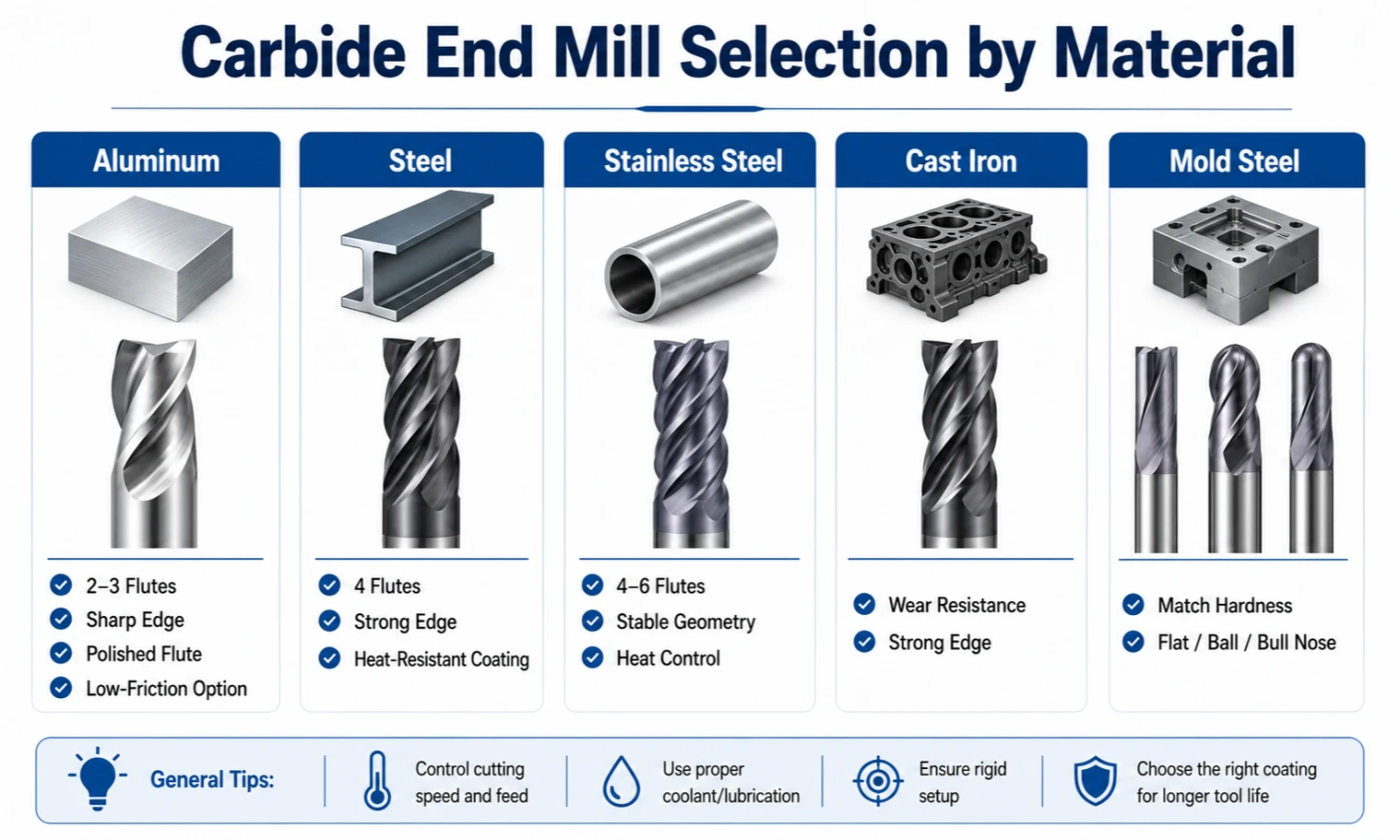
Quick Carbide End Mill Selection Table
| مادة الشغل | Typical Flute Direction | Geometry and Coating Direction | Main Selection Risk |
|---|---|---|---|
| الألومنيوم والمواد غير الحديدية | 2 أو 3 المزامير | حافة حادة, الفلوت المصقول, غير مصقول, المحتوى القابل للتنزيل, or low-friction option | Chip packing and built-up edge |
| الكربون الصلب وسبائك الصلب | 4 flutes as a common starting point | Strong core and edge; TiAlN, ألتين, تيسين, or application-based coating | Edge wear and corner chipping |
| Stainless Steel | 4 ل 6 flutes according to the operation | Rigid or variable-helix geometry; TiAlN, ألتين, or AlCrN | حرارة, الثرثرة, وتصلب العمل |
| الحديد الزهر | Application-based flute count | Strong, wear-resistant edge and suitable coating | ارتداء جلخ, dust, and unstable edge wear |
| Mold and Tool Steel | Based on hardness and feature geometry | مستوي, أنف الثور, or ball nose; coating selected by hardness and heat | التقطيع, انحراف, and poor surface finish |
Use this table as an initial filter. Next, confirm the machining operation, عمق القطع, طول الناي, أداة المتراكمة, دقة الحامل, والتشطيب المطلوب.
Key Factors Before Choosing a Carbide End Mill
مادة الشغل والصلابة
Material type affects chip shape, قوة القطع, حرارة, adhesion, and abrasive wear. Aluminum usually needs more chip space, while steel requires greater edge strength. يحتاج الفولاذ المقاوم للصدأ إلى قطع ثابت للتحكم في الحرارة وتصلب العمل.
Hardness also changes the selection. A tool designed for material up to HRC45 may use a different carbide grade, إعداد الحافة, and coating from a tool intended for HRC60 or HRC65 mold steel.
تشغيل الآلات
الشق, طحن الجانب, التخشين, التشطيب, and 3D contouring place different loads on the cutter.
Full-width slotting needs enough flute space to remove chips. في المقابل, light side milling or finishing may benefit from more cutting edges. A mold cavity may also require a different end profile from a flat-bottom pocket.
إخلاء الشريحة
Poor chip evacuation can cause heat, إعادة قطع الرقاقة, الحافة المبنية, اهتزاز, وكسر الأداة. This issue becomes especially important in aluminum, جيوب عميقة, and full-slot milling.
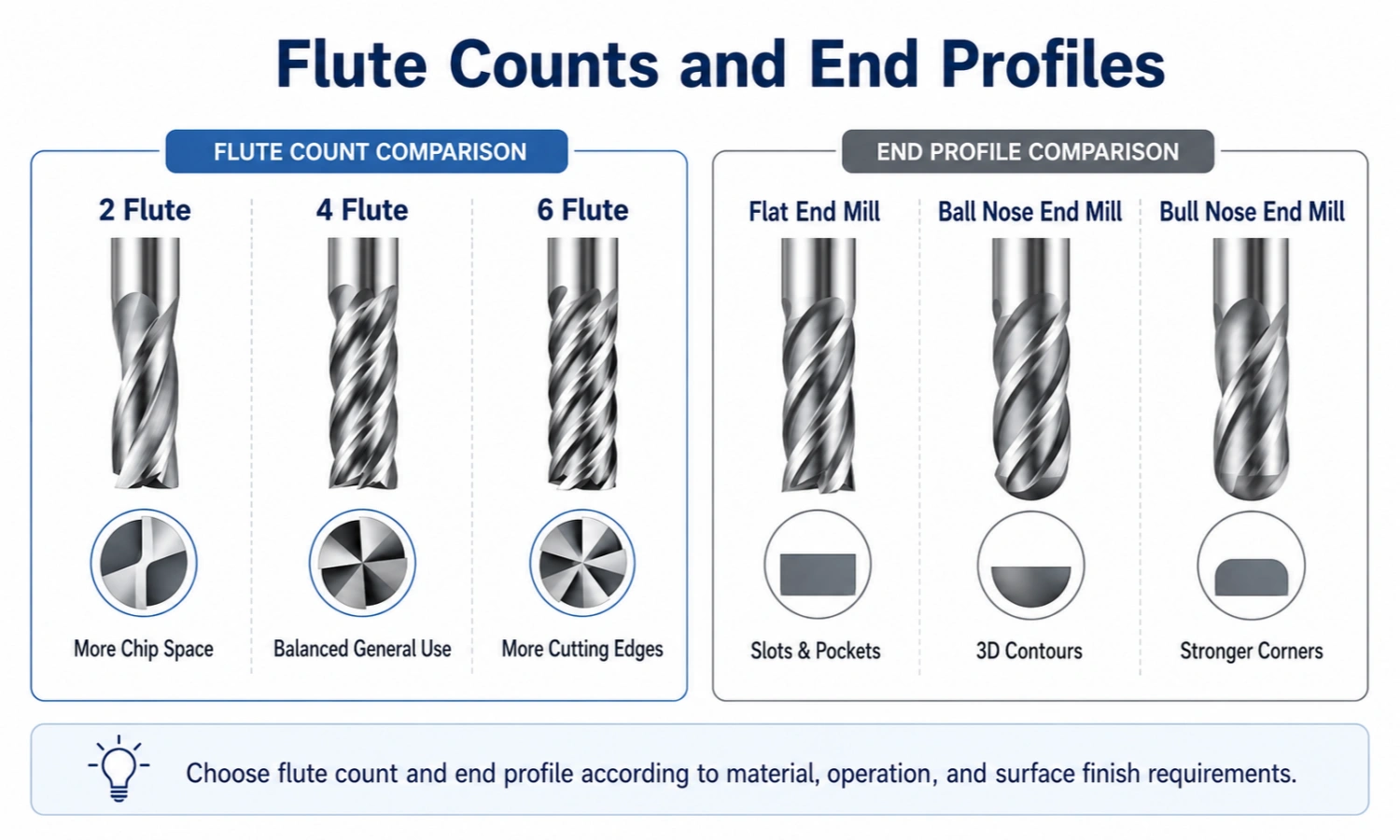
يوفر عدد أقل من المزامير عمومًا مساحة أكبر للرقاقة. More flutes provide more cutting edges but leave less room for chips.
For a detailed explanation, اقرأ لدينا دليل اختيار الناي مطحنة نهاية.
Tool Rigidity and Overhang
Long tool overhang reduces rigidity and increases deflection. Before changing the coating or cutting parameters, check whether the cutter extends farther from the holder than necessary.
Use the shortest practical tool for the required machining depth. For deep features, a long-neck design with a controlled cutting length may provide better stability than an unnecessarily long flute length.
Surface Finish and Dimensional Accuracy
يتطلب التشطيب هندسة مستقرة, controlled tool runout, a suitable end profile, and consistent cutting conditions. ارتداء الأداة, دقة الحامل, اهتزاز, and excessive overhang can all reduce surface quality.
A higher flute count may support finishing under suitable conditions. لكن, it should not reduce chip space so much that chips remain in the cutting area.
Choosing a Carbide End Mill for Aluminum
Aluminum is relatively soft, but it can adhere to the cutting edge. Friction and poor chip evacuation may create a built-up edge, which changes the effective cutting geometry and damages the surface finish.
Recommended Direction
For many aluminum applications, use:
- 2-flute or 3-flute geometry
- حواف القطع الحادة
- Large and smooth flute space
- Polished flute surfaces
- غير مطلي, المحتوى القابل للتنزيل, or another low-friction option
- أداة قصيرة ومستقرة
Two-flute tools provide more chip space and often suit slotting, جيب, and deeper cuts. Three-flute tools offer an additional cutting edge while retaining more chip space than many four-flute designs.
High-helix geometry may also improve chip flow and surface finish in suitable aluminum applications. لكن, قوة الحافة, استقرار الآلة, قطر الأداة, and cutting depth still need consideration.
Coating Considerations for Aluminum
غير مطلي, مصقول, المحتوى القابل للتنزيل, or other low-friction surfaces are usually preferred because they help reduce material adhesion.
Some titanium-containing coatings may increase adhesion in certain aluminum applications. لذلك, do not select a coating only because it offers high heat resistance. The aluminum alloy, طلاء الفلوت, سرعة القطع, المبرد, and operation also affect performance.
Common Aluminum Problems
Built-up edge often points to high friction, a dull edge, إخلاء رقاقة سيئة, or unsuitable cutting conditions. Chip packing usually means the flute space or evacuation method cannot handle the chip volume.
في الممارسة العملية, first check the cutting edge, flute condition, أداة المتراكمة, air or coolant delivery, and whether the flute count leaves enough chip space.
Choosing a Carbide End Mill for Steel
Steel creates higher cutting forces and greater edge wear than aluminum. نتيجة ل, the tool needs a stronger core, stable cutting edges, درجة كربيد مناسبة, وطلاء مقاوم للحرارة.
Why Four Flutes Are a Common Starting Point
Four-flute end mills provide more cutting edges and often have a stronger core than comparable two-flute designs. This makes them a practical starting point for general steel slotting, طحن الجانب, التنميط, and finishing.
لكن, four flutes are not the only option. Three-flute or variable-helix tools may suit roughing and high-efficiency machining, while five-flute or six-flute designs may suit controlled side milling and finishing.
Recommended Direction
For many carbon and alloy steel applications, consider:
- Four flutes as an initial selection
- Strong core and cutting edges
- Suitable corner preparation
- TiAlN, ألتين, تيسين, or application-based coating
- Stable holder and controlled runout
- Tool series matched to workpiece hardness
Low-carbon steel, سبائك الصلب, and hardened steel should not automatically use the same cutter. As hardness and cutting temperature increase, درجة كربيد, طلاء, إعداد الحافة, and tool rigidity become more important.
Common Steel Problems
Rapid flank wear may indicate an unsuitable carbide grade, طلاء, أو حالة القطع. Corner chipping can result from excessive cutting load, weak corner geometry, اهتزاز, أو قطع متقطع.
Before replacing the tool design, check the holder, نفد, أداة المتراكمة, لقط الشغل, عمق القطع, and whether the edge preparation matches the operation.
Choosing a Carbide End Mill for Stainless Steel
Stainless steel often combines toughness, توليد الحرارة, and work-hardening behavior. When the cutting edge rubs instead of forming a consistent chip, heat remains near the surface and the material may become harder to cut.
لهذا السبب, stainless steel machining needs stable feed, rigid clamping, نفاذ متحكم فيه, قوة الحافة المناسبة, and reliable chip removal.
Recommended Direction
Depending on the operation, consider:
- Four flutes for many general milling operations
- Five or six flutes for suitable side milling and finishing
- Strong and stable cutting edges
- TiAlN, ألتين, ألكرن, or another suitable coating
- أداة قصيرة المتراكمة
- Consistent feed and chip load
- Stable coolant or air delivery
A higher flute count provides more cutting edges but reduces chip space. Six flutes may work well in stable side milling or finishing, but they are not automatically the best choice for deep slotting or heavy full-width cutting.
Variable-Helix and Unequal-Pitch Designs
Variable-helix or unequal-pitch geometry can help reduce repetitive cutting forces. نتيجة ل, these designs may reduce chatter in unstable stainless steel applications.
They do not replace a rigid setup. The machine, حامل, أداة المتراكمة, لقط الشغل, and cutting strategy still control overall stability.
Stainless Steel Types
Austenitic grades such as 304 and 316 tend to generate heat and work-harden. Hardenable stainless grades may require stronger edges and a tool series matched to their hardness.
Duplex stainless steel combines strength and toughness, so it often needs careful control of chip load, حرارة, and tool engagement. The exact grade should therefore be confirmed before selecting the final tool.
Choosing a Carbide End Mill for Cast Iron
Cast iron is often abrasive, so wear resistance and edge stability are major selection factors. لكن, different cast iron grades do not produce the same cutting behavior.
Gray Cast Iron
Gray cast iron usually produces short, brittle chips and may create fine dust. درجة كربيد مقاومة للاهتراء, strong edge, and suitable dust control can improve process stability.
Many gray cast iron operations use dry cutting or controlled air extraction. لكن, the coolant strategy should match the machine, الصف المادي, وعملية الإنتاج.
Ductile Cast Iron
Ductile cast iron has greater toughness than gray cast iron. Its chips may be longer, so chip control can become more important.
The cutter may need a balance between wear resistance and edge toughness. A very weak edge can chip under heavier cutting loads, while an unsuitable coating may wear quickly in abrasive conditions.
Recommended Direction
For cast iron machining, focus on:
- Wear-resistant carbide grade
- Strong cutting-edge geometry
- Suitable edge preparation
- Application-based coating
- Stable machine and holder setup
- Correct dust and chip control
Do not treat every cast iron grade as a dry, powder-producing material. Confirm whether the workpiece is gray, ductile, compacted graphite, or another type.
Choosing a Carbide End Mill for Mold and Tool Steel
Mold machining may include roughing, نصف تشطيب, تصنيع التجويف, التنميط, and final finishing. لذلك, tool selection should match both the workpiece hardness and the shape being machined.
Select the End Profile by Feature Geometry
Flat end mills suit flat-bottom slots, جيوب, خطوات, أكتاف, and straight side walls.
Bull nose or corner radius end mills provide stronger outer corners than sharp square-end tools. They often suit profiling, نصف تشطيب, and mold machining where corner chipping is a concern.
Ball nose end mills follow curved surfaces and 3D contours. As the tool moves across a cavity, the rounded end maintains contact with complex geometry, making it useful for mold and die finishing.
لمقارنة أوسع, يقرأ types of end mill cutters and their uses.
Match the Tool Series to Workpiece Hardness
Tool series may target materials up to HRC45, HRC55, HRC60, أو HRC65. These values describe the intended workpiece hardness range, not the hardness of the carbide tool.
As hardness increases, the tool may need a finer carbide grade, stronger edge preparation, suitable coating, shorter overhang, and more stable holder setup.
Hard milling also requires careful control of runout, تحميل القطع, مشاركة الأداة, and heat. A high-hardness tool series cannot compensate for an unstable setup.
Choosing a Carbide End Mill by Machining Operation
التخشين
Roughing creates high chip volume and cutting load. Use enough flute space to move chips away from the cutting zone, and select an edge structure that can handle the engagement.
Roughing or chipbreaker geometry divides chips into smaller sections and may reduce cutting resistance. Dynamic or trochoidal milling can also maintain a more consistent cutting load when the CAM strategy, آلة, and setup support it.
الانتهاء
يتطلب التشطيب هندسة مستقرة, controlled tool runout, sharp and consistent edges, and a suitable end profile.
More flutes may improve feed capability and surface quality when chip evacuation remains adequate. قبل تغيير القاطع, inspect the holder, حالة الأداة, المتراكمة, and workpiece clamping.
طحن الجيب العميق
الجيوب العميقة تزيد من خطر تراكم الرقائق, tool deflection, الثرثرة, and poor coolant access.
Use the shortest practical overhang. When the feature requires additional reach, consider a long-neck design with only the necessary cutting length. This can improve rigidity compared with using an excessively long flute.
For a wider selection process that includes cutter type, مقاس, طلاء, والتشغيل, اقرأ لدينا end mill tool selection guide.
Carbide End Mill Problem Diagnosis
| مشكلة بالقطع | السبب المحتمل | اتجاه التعديل |
|---|---|---|
| Built-Up Edge | احتكاك عالي, حافة مملة, إخلاء رقاقة سيئة | Use sharper geometry, improve chip flow, and select a polished or low-friction surface |
| كسر الأداة | Excessive overhang, التعبئة رقاقة, unstable setup, heavy load | Reduce overhang, improve evacuation, التحقق من نفاد حامل, والحد من المشاركة غير المستقرة |
| الثرثرة | Low rigidity, long reach, لقط ضعيف, قوى القطع المتكررة | Shorten overhang, تحسين لقط, والنظر في الهندسة الحلزونية المتغيرة |
| سوء الانتهاء من السطح | ارتداء الأداة, نفد, اهتزاز, ملف تعريف نهائي غير مناسب | Inspect the cutting edge, دقة الحامل, استقرار التغذية, and finishing geometry |
| ارتداء الحافة السريعة | درجة كربيد خاطئة, طلاء, أو حالة القطع | قم بمطابقة الدرجة والطلاء مع المادة, صلابة, حرارة, والتشغيل |
| تقطيع الزاوية | Excessive load, قطع متقطع, weak corner design | Use stronger corner geometry, review engagement, and improve process stability |
This table helps identify the first points to check. A machining problem may have several causes, so changing only the coating or flute count may not solve it.
أخطاء الاختيار الشائعة
Using One Cutter for Every Material
One tool cannot perform equally well in aluminum, فُولاَذ, stainless steel, الحديد الزهر, and hardened mold steel. Each material creates different chips, حرارة, forces, and wear.
تجاهل إخلاء الشريحة
Poor chip evacuation increases heat and causes chip re-cutting. In deep slots and pockets, it can also lead to sudden tool failure.
Choosing the Coating by Name Only
A more expensive or higher-temperature coating is not automatically better. The coating must match the workpiece material, درجة كربيد, هندسة الحافة, حالة المبرد, وعملية القطع.
استخدام أداة زائدة عن الحاجة
البروز الطويل يقلل من الصلابة. Before changing speed, يٌطعم, or tool material, shorten the tool reach whenever the feature allows it.
Comparing Tool Price Only
A lower purchase price may not reduce the total machining cost. حياة الأداة, جودة السطح, توقف الآلة, part rejection, and tool-change frequency also affect the final result.
الأسئلة المتداولة
How do I choose a carbide end mill cutter?
Start with the workpiece material, صلابة, وتشغيل الآلات. Next, confirm the flute count, ملف تعريف النهاية, طلاء, أبعاد الأداة, المتراكمة, إخلاء الشريحة, والانتهاء من السطح المطلوب.
Which carbide end mill is best for aluminum?
Two-flute or three-flute tools are common starting points because they provide more chip space. حواف حادة, المزامير المصقولة, وغير المطلية, المحتوى القابل للتنزيل, or another low-friction option can also help reduce material buildup.
Can carbide end mills cut stainless steel?
نعم. The cutter should provide suitable rigidity, قوة الحافة, مساحة الفلوت, طلاء, وقطع الاستقرار. Stable feed and controlled tool overhang also help reduce heat and work hardening.
What is the purpose of a variable-helix end mill?
A variable-helix or unequal-pitch design changes the timing of cutting forces. This can reduce repetitive vibration and chatter, especially during side milling and other unstable operations.
Should I use 2, 4, أو 6 المزامير?
يوفر عدد أقل من المزامير عمومًا مساحة أكبر للرقاقة. More flutes provide more cutting edges and may improve rigidity or finishing performance. الاختيار الصحيح يعتمد على المادة, عملية, ارتباط, حجم الرقاقة, ومتطلبات السطح.
للحصول على مقارنة مفصلة, يقرأ 2 الناي مقابل 4 الناي مقابل 6 مطحنة نهاية الفلوت.
When should a carbide end mill be replaced?
Inspect or replace the cutter when you notice edge chipping, abnormal noise, increased spindle load, dimensional drift, worsening surface finish, excessive burrs, or rapidly rising cutting heat.
Do not wait for complete tool failure. Replace the tool when wear begins to reduce process stability or part quality.
Need Help Selecting the Right Carbide End Mill?
The right tool depends on your workpiece material, صلابة, عملية التصنيع, الأبعاد المطلوبة, إعداد الآلة, ومتطلبات الانتهاء من السطح.
أرسل لنا الرسم الخاص بك, نموذج الأداة, صورة المنتج, عينة, أو معلومات الآلات المتاحة. We will review your application and recommend a suitable carbide end mill solution.
For standard and custom options, قم بزيارة موقعنا صفحة المنتج قطع مطحنة نهاية كربيد.
لمناقشة طلبك, راسلنا عبر البريد الإلكتروني على sales@cutterbest.com.