 قواطع الطحن الدقيقة,أدوات القطع لتصنيع كل مادة باستخدام الحاسب الآلي

مقدمة
ما هي مطحنة نهاية أنف الثور? إنها مطحنة ذات قاع مسطح مع نصف قطر محدد عند زوايا القطع. يتم أيضًا وصف هذه الهندسة بشكل شائع في كتالوجات الأدوات على أنها مطحنة نهاية نصف قطرها الزاوية, على الرغم من أن التسمية يمكن أن تختلف بين الشركات المصنعة.
يسمح الجزء السفلي المسطح للقاطع بمعالجة الأسطح السفلية, بينما تخلق الزوايا نصف القطرية انتقالًا دائريًا من الأسفل إلى الجدار بدلاً من نتيجة القطع الحادة.
تُستخدم المطاحن الطرفية ذات الأنف الثور بشكل شائع في تحديد الخطوط, طحن الملف الشخصي, تصنيع التجويف, نصف تشطيب, وعمليات CNC الأخرى حيث تسمح هندسة الجزء أو تتطلب نصف قطر زاوية.
ما هي مطحنة نهاية أنف الثور?
مطحنة نهاية أنف الثور لديها قاع قطع مسطح بزوايا نصف قطرها بين حافة القطع السفلية وحافة القطع الجانبية.
هذه الهندسة تميزها عن اثنين من التشكيلات الجانبية المشتركة الأخرى للطاحونة النهائية. تحتوي المطحنة المربعة أو المسطحة على زاوية قطع حادة, في حين أن مطحنة نهاية الأنف الكروية لها نهاية قطع مستديرة بالكامل. تحافظ أداة قطع الأنف على القاع المسطح مع إضافة نصف قطر زاوية محدد.
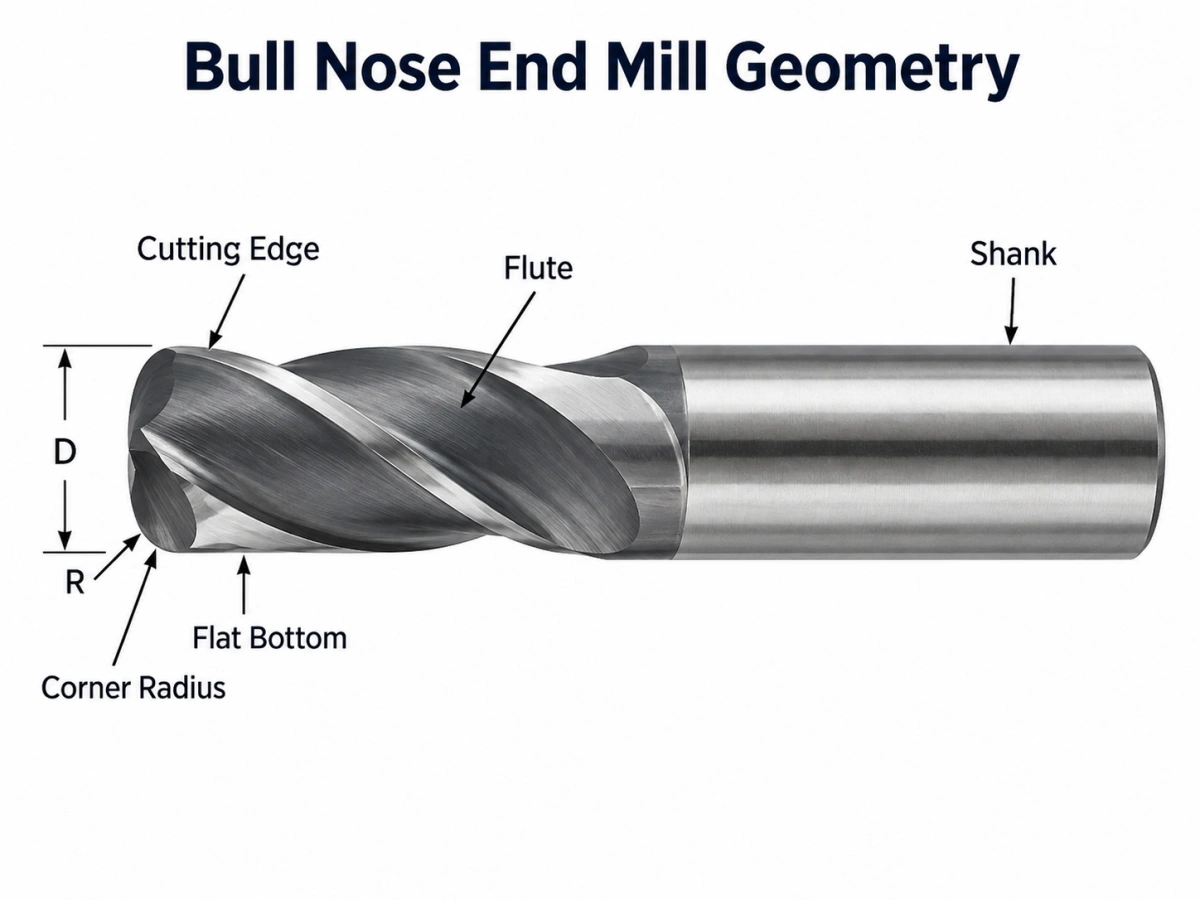 نتيجة ل, تكون الأداة مفيدة عندما يتطلب الجزء ميزة مسطحة أو متدرجة مع انتقال نصف قطري من الأسفل إلى الجدار.
لا يزال القاطع الدقيق بحاجة إلى مطابقة أبعاد الجزء المطلوبة, هندسة الزاوية, يصل, وظروف التصنيع.
مطحنة نهاية أنف الثور ومصطلحات مطحنة نهاية نصف القطر الزاوية
الشروط مطحنة نهاية الأنف الثور and مطحنة نهاية نصف قطرها الزاوية غالبًا ما يصف هندسة القطع المسطحة ذات الصلة الوثيقة بزوايا القطع نصف القطر.
يعد "المطحنة النهائية لنصف قطر الزاوية" مصطلحًا شائعًا في الكتالوج لأنه يصف بشكل مباشر هندسة الأداة. كما يتم استخدام "مطحنة نهاية الثور" على نطاق واسع من قبل المشترين, الميكانيكيين, والموردين.
لكن, يمكن أن تختلف اصطلاحات التسمية بين الشركات المصنعة. قد تستخدم بعض الكتالوجات المصطلحات بشكل مختلف أو تفصل عائلات المنتجات وفقًا لحجم نصف القطر, مسلسل, أو التطبيق.
لهذا السبب, لا تعتمد على اسم المنتج وحده. تأكد من قطر القاطع الفعلي, نصف قطر الزاوية, هندسة الناي, وغيرها من الأبعاد المطلوبة قبل الطلب.
لتكوينات المنتج المتاحة, انظر لدينا مطحنة نهاية أنف الثور.
لماذا يهم نصف قطر الزاوية
يقع نصف قطر الزاوية حيث ينتقل الجزء السفلي المسطح من القاطع إلى حافة القطع الجانبية.
يغير نصف القطر هذا الشكل الهندسي الناتج عند الانتقال من الأسفل إلى الجدار للميزة المُشكَّلة. بدلاً من ترك هندسة الزاوية الحادة المرتبطة بقاطع الشكل المربع, تخلق هندسة الأنف الثور أو تتبع انتقالًا نصف قطري.
لذلك يجب أن يتطابق نصف القطر المطلوب مع الرسم وهندسة الجزء النهائي.
لا ينبغي تحديد نصف قطر أكبر أو أصغر من القاعدة العامة وحدها. تعتمد قيمة R الدقيقة على الميزة المطلوبة, أبعاد القاطع, متطلبات التصنيع, وتصميم جزء.
ما هو استخدام مطحنة نهاية الأنف الثور?
تُستخدم المطاحن الطرفية ذات الأنف الثور في تطبيقات الطحن باستخدام الحاسب الآلي حيث تستفيد هندسة الجزء من قاع مسطح مدمج مع نصف قطر زاوية.
وتشمل التطبيقات النموذجية:
- طحن كفاف
- طحن الملف الشخصي
- نصف تشطيب
- تصنيع التجويف
- تصنيع القوالب والقالب
- ميزات متدرجة مع زوايا سفلية نصف قطرها
- التحولات من الأسفل إلى الجدار حيث يلزم وجود نصف قطر زاوية
يمكن استخدام نفس نوع القاطع لمواد الشغل المختلفة, ولكن التكوين النهائي للأداة يجب أن يتطابق مع ظروف المواد والتصنيع.
على سبيل المثال, درجة كربيد, هندسة الناي, طلاء أو المعالجة السطحية, أبعاد الأداة, وقد يختلف تصميم القطع وفقًا للتطبيق الفعلي.
لذلك, لا يحدد اسم الأداة وحده إعداد المعالجة الكامل.
اختيار مطحنة نهاية أنف الثور الأساسية
يبدأ اختيار مطحنة نهاية الأنف الثور بهندسة الجزء بدلاً من قاعدة الأداء العامة.
هندسة الجزء والزاوية
أولاً, تحقق من الرسم.
تأكيد ما إذا كانت الميزة:
- يتطلب نصف قطر الزاوية
- يسمح بالانتقال المشع
- يتطلب قاع مسطح
- لديه وصول كافٍ لقطر القاطع المحدد
- يتطلب زاوية داخلية حادة بدلاً من ذلك
إذا كان الرسم يتطلب نتيجة زاوية قطع حادة تبلغ 90 درجة بدون نصف قطر محدد, قد لا تكون هندسة الأنف الثور هي الاختيار الصحيح لهذه الميزة.
أبعاد الأداة
يجب أن يتطابق قطر القاطع ونصف قطر الزاوية مع الميزة التي يتم تشكيلها.
طول القطع, وصول الأداة, حجم عرقوب, وتحتاج هندسة الأداة الشاملة أيضًا إلى أن تتناسب مع الجزء وإعداد الماكينة.
لا تسرد هذه الصفحة كل مجموعة أحجام ممكنة نظرًا لاختلاف التكوينات القياسية والمخصصة. للأبعاد الفعلية وخيارات المنتج المتاحة, انظر مطحنة نهاية أنف الثور product page.
متطلبات الشغل والتصنيع
بعد التأكد من الهندسة الأساسية, يعتمد تكوين القاطع النهائي على قطعة العمل ومتطلبات التشغيل الآلي.
قد تتطلب التطبيقات المختلفة هندسة فلوت مختلفة, طلاء أو المعالجة السطحية, طول الأداة, تصميم القطع المركزي, أو متطلبات التسامح.
للتطبيقات غير القياسية, توفر معلومات الرسم والتصنيع أفضل أساس لتأكيد الأداة النهائية.
مقارنات مطحنة النهاية ذات الصلة
أحيانًا تتم مقارنة مطحنة نهاية الأنف الثور مع ملفات تعريف القطع الأخرى, لكن كل مقارنة لها سؤال اختيار مختلف.
إذا كنت بحاجة إلى مقارنة حادة, يرى الثور الأنف مقابل مطحنة النهاية المسطحة.
للفرق بين القاطع نصف القطر المسطح ونهاية القطع المستديرة بالكامل, يرى مطحنة نهاية الثور مقابل مطحنة نهاية الأنف الكرة.
أنف الثور / تختلف قواطع نصف قطر الزاوية أيضًا عن قواطع شكل تقريب الزاوية. يرى نصف قطر الزاوية مقابل مطحنة نهاية التقريب الزاوية.
الأسئلة المتداولة
ما هي مطحنة نهاية أنف الثور?
إن الطاحونة الطرفية ذات الأنف الثور عبارة عن قاطعة طحن ذات قاع مسطح مع نصف قطر محدد عند زوايا القطع. يُنشئ نصف قطر الزاوية انتقالًا نصف قطري بين الجدار السفلي والجانبي المُشكل آليًا.
ما هو استخدام مطحنة نهاية الأنف الثور?
الاستخدامات النموذجية تشمل الطحن الكفاف, طحن الملف الشخصي, نصف تشطيب, تصنيع التجويف, تصنيع القوالب والقالب, والميزات التي تتطلب انتقالًا نصف قطري من الأسفل إلى الجدار.
يعتمد التطبيق الفعلي على هندسة الجزء وتكوين الأداة.
هي مطحنة نهاية أنف الثور مثل مطحنة نهاية نصف قطر الزاوية?
غالبًا ما يتم استخدام المصطلحات للقواطع ذات القاعدة المسطحة ذات الصلة الوثيقة بزوايا القطع نصف القطر, و"طاحونة نصف قطر الزاوية" هي وصف كتالوج شائع لهذه الهندسة.
لكن, يمكن أن تختلف المصطلحات بين الشركات المصنعة, لذلك يجب دائمًا تأكيد نصف القطر الفعلي وهندسة القطع.
كيف أختار مطحنة نهاية أنف الثور?
ابدأ بالرسم الجزئي وهندسة الزاوية المطلوبة.
تأكيد قطر القاطع, نصف قطر الزاوية, الوصول المطلوب, وأبعاد أخرى. ثم ضع في اعتبارك مادة قطعة العمل ومتطلبات التشغيل الآلي عند التأكد من هندسة الفلوت النهائية, طلاء أو المعالجة السطحية, وتصميم الأداة.
للأبعاد القياسية أو التكوينات المخصصة, الرجوع إلى مطحنة نهاية أنف الثور product page.
هي مطحنة نهاية الأنف الثور نفس مطحنة نهاية التقريب الزاوية?
No.
تحتوي المطحنة النهائية ذات الأنف الثور أو نصف قطر الزاوية على نصف قطر على زوايا القطع للأداة نفسها. إن الطاحونة الطرفية الدائرية الزاوية عبارة عن قاطعة ذات أشكال مختلفة تستخدم لإنتاج شكل دائري على حافة قطعة العمل.
للتمييز التفصيلي, يرى نصف قطر الزاوية مقابل مطحنة نهاية التقريب الزاوية.
خاتمة
تجمع مطحنة نهاية الأنف الثور بين قاع القطع المسطح وزوايا القطع المشعة. يتم استخدامه بشكل شائع عندما يتطلب الجزء ميزة مسطحة أو متدرجة مع انتقال نصف قطري من الأسفل إلى الجدار.
القاطع الصحيح يعتمد على الرسم, نصف قطر الزاوية, أبعاد الأداة, الشغل, ومتطلبات التصنيع بدلاً من تكوين واحد ثابت.
إذا كنت بحاجة إلى مساعدة في تأكيد مطحنة نهاية الأنف الثور من جانبك, أرسل متطلبات الرسم أو التصنيع الخاصة بك عن طريق email أو اتصل بنا مباشرة على واتساب.