 Fresas de precisión,Herramientas de corte para el mecanizado CNC de todos los materiales

Introducción
En mecanizado CNC, nariz de toro vs nariz de bola Es una comparación común porque la fresa de mango adecuada afecta el acabado de la superficie., vida útil de la herramienta, estabilidad de mecanizado, y eficiencia general. Muchos maquinistas quieren entender la diferencia entre una fresa de punta redondeada y una fresa de punta esférica..
Aunque estas dos fresas se utilizan en mecanizado relacionado con contornos, no están diseñados para exactamente el mismo propósito. Una fresa de punta redondeada tiene un fondo plano con un radio de esquina, mientras que una fresa de punta esférica tiene una punta completamente redondeada. Debido a esta diferencia, Cada herramienta funciona mejor en situaciones de mecanizado específicas..
En términos simples, A menudo se prefiere una fresa de punta redondeada cuando las esquinas son más fuertes., transiciones más suaves, y se necesita un mejor control en las características escalonadas o semiplanas. Por el contrario, Una fresa de punta esférica suele ser la mejor opción para superficies 3D continuas y formas curvas complejas..
Si necesita un soporte de esquina más fuerte, semiacabado, o mecanizado de perfiles escalonados, ver nuestro opciones personalizadas de cortador de esquinas R.
Si su proyecto se centra en el acabado de contornos 3D o el mecanizado de superficies curvas, también puedes consultar nuestro Fresas de punta esférica.
Respuesta rápida
Este nariz de toro vs nariz de bola La comparación le ayuda a elegir el cortador adecuado según la geometría de la punta., fuerza de esquina, 3mecanizado de superficies D, y requisitos de acabado.
Elige un fresa de punta de toro cuando necesitas una mejor resistencia en las esquinas, contorno más estable, y transiciones más suaves en perfiles o superficies escalonadas.
Elija una fresa de punta esférica cuando necesite un contacto continuo en superficies 3D, formas esculpidas, o piezas curvas complejas.
En muchos trabajos de mecanizado reales, La pregunta clave no es qué herramienta es universalmente mejor.. En cambio, la mejor elección depende de la geometría de la pieza, objetivo de mecanizado, y requisito de acabado.
¿Qué es una fresa de punta de toro??
Una fresa de punta redondeada es una fresa con un fondo plano y un radio de esquina redondeado.. Se sitúa entre una fresa de extremo plano y una fresa de punta esférica en términos de geometría y aplicación..
Porque la esquina afilada se reemplaza por un radio., El filo se vuelve más fuerte y es menos probable que se astille.. Al mismo tiempo, el fondo plano aún permite un mecanizado práctico en muchos perfiles, pasos, y superficies semiplanas. Como resultado, Una fresa de punta redondeada se usa ampliamente para fresar contornos., semiacabado, mecanizado de cavidades, y trabajo de moldes.
Si desea una explicación más completa de la geometría de la herramienta y sus usos comunes, lee nuestro geometría de herramienta y guía de aplicación.
¿Qué es una fresa de punta esférica??
Una fresa de punta esférica tiene una punta completamente redondeada. A diferencia de una fresa de punta redondeada, no tiene fondo plano. Esta geometría permite que la herramienta permanezca en contacto más suave con superficies curvas y tridimensionales..
Por esta razón, Una fresa de punta esférica se utiliza habitualmente en el mecanizado de contornos 3D., superficies esculpidas, acabado de moldes, y geometría de forma libre. Sin embargo, porque la punta está completamente redondeada, Por lo general, es menos eficiente en superficies planas o escalonadas que una fresa de punta redondeada..
En la práctica, A menudo se selecciona una fresa de punta esférica cuando la trayectoria de mecanizado implica curvas continuas en lugar de características de fondo plano o semiplano..
Para acabado de contornos 3D, mecanizado de superficies curvas, y acabado de moldes, puedes ver nuestro Fresas de punta esférica.
La principal diferencia entre una fresa de punta redondeada y una fresa de punta esférica
La principal diferencia es la geometría de la punta., y esa diferencia afecta directamente el comportamiento de corte, calidad de acabado, y rango de aplicación.
Geometría del molino de punta de toro
Una fresa de punta redondeada tiene:
- un fondo plano
- un radio de esquina
- soporte de borde más fuerte
- mejor control en características escalonadas o semiplanas
Geometría del molino de extremo de punta esférica
Una fresa de punta esférica tiene:
- una punta completamente redondeada
- contacto curvo continuo
- mejor rendimiento en superficies 3D
- menos soporte para mecanizado de fondo plano
Por qué es importante la geometría
Una fresa de punta redondeada suele ofrecer una mejor durabilidad de las esquinas y un corte más práctico en formas escalonadas o semiplanas.. Una fresa de punta esférica, sin embargo, es mejor cuando la herramienta debe moverse suavemente a través de superficies curvas complejas. En breve, una herramienta de punta redondeada está más equilibrada para brindar resistencia y estabilidad del contorno, mientras que una herramienta de punta esférica está más especializada para el acabado de superficies curvas..
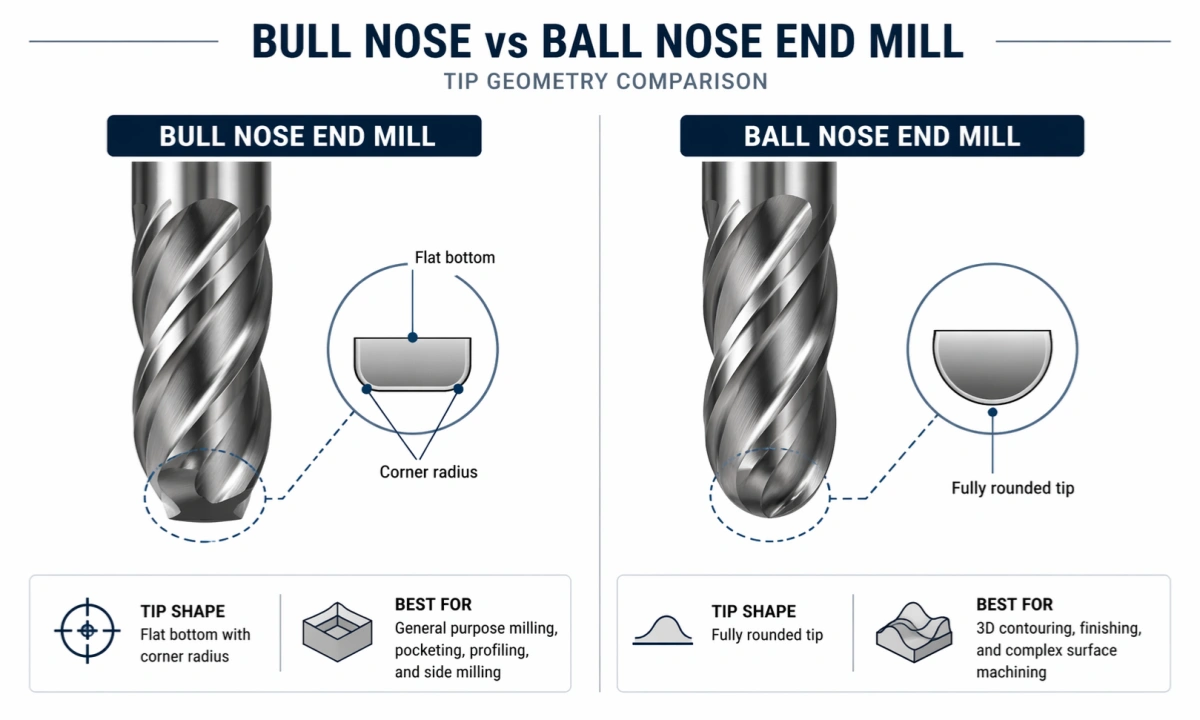
Tabla de comparación rápida
| Necesidad de mecanizado | Mejor elección |
|---|---|
| Esquinas de corte más fuertes | Fresa de punta de toro |
| Superficies 3D continuas | Fresa de punta esférica |
| Semiacabado y contorneado | Fresa de punta de toro |
| Acabado de superficie suave y de forma libre | Fresa de punta esférica |
| Mejor control de superficies planas | Fresa de punta de toro |
| Detalles del molde esculpido | Fresa de punta esférica |
Esta tabla es intencionalmente simple para que sea fácil de leer en dispositivos móviles..
Acabado superficial y rendimiento de corte
Aunque ambas herramientas se pueden utilizar en trabajos relacionados con contornos, su comportamiento de corte es diferente.
Acabado superficial en superficies curvas
Una fresa de punta esférica suele ser la mejor opción para superficies curvas continuas porque la punta redondeada se mueve más suavemente a través de contornos 3D.. Por lo tanto, Es ampliamente utilizado en operaciones de acabado de moldes., muere, y piezas esculpidas.
Acabado superficial en áreas escalonadas o semiplanas
Una fresa de punta redondeada suele ser más práctica cuando la pieza de trabajo incluye transiciones entre secciones planas y curvas.. Porque tiene un fondo plano y un radio de esquina., Puede ofrecer un mejor equilibrio entre la calidad del acabado y la estabilidad del corte..
Estabilidad de la herramienta
Una fresa de punta redondeada suele tener esquinas más fuertes.. Como resultado, A menudo funciona mejor en condiciones exigentes donde la durabilidad de los bordes es importante.. Una fresa de punta esférica aún puede funcionar muy bien, pero su punta completamente redondeada no siempre es la opción más eficiente para cada geometría.
Vida útil de la herramienta
En muchas aplicaciones prácticas, una fresa de punta redondeada puede proporcionar un mejor soporte de los bordes y un menor riesgo de astillado local. Una fresa de punta esférica, sin embargo, A menudo funciona mejor cuando la prioridad es un acabado suave en curvas continuas en lugar de una mayor durabilidad en las esquinas..
¿Qué herramienta es mejor para diferentes aplicaciones??
La respuesta depende de la aplicación.. Cada herramienta tiene puntos fuertes claros en tareas de mecanizado específicas..
La fresa de punta de toro es mejor para
- fresado de contorno
- operaciones de semiacabado
- mecanizado de cavidades
- Mecanizado de moldes con soporte de borde más fuerte.
- superficies escalonadas o parcialmente planas
- Trabajos donde el desconchado de las esquinas es una preocupación.
La fresa de punta esférica es mejor para
- mecanizado de superficies 3D continuo
- formas esculpidas
- caminos de acabado curvos
- acabado de moldes en superficies de forma libre
- piezas con geometría fluida compleja
Para acabado de contornos 3D y mecanizado de superficies curvas, también puedes ver nuestro Fresas de punta esférica.
La mejor opción práctica
Si el trabajo incluye transiciones semiplanas y características curvas, una fresa de punta redondeada suele ser más versátil. Si el trabajo es principalmente un acabado 3D con curvatura continua, una fresa de punta esférica suele ser la mejor opción.
Cómo elegir la herramienta adecuada
La elección entre una fresa de punta redondeada y una fresa de punta esférica depende de la forma de la pieza., objetivo de mecanizado, y requisito de acabado.
Elija una fresa de punta redondeada cuando
- necesitas una mejor resistencia en las esquinas
- está mecanizando perfiles escalonados o transiciones semiplanas
- desea un semiacabado o un fresado de contornos más estable
- desea reducir el desconchado local de los bordes
Elija una fresa de punta esférica cuando
- estás mecanizando superficies 3D continuas
- necesita un contacto más suave en geometría curva
- estás terminando moldes esculpidos o piezas de forma libre
- desea una trayectoria más natural en contornos complejos
Elija según la característica más crítica
Si la pieza incluye características curvas y escalonadas, Elija la herramienta en función de la superficie más crítica.. En muchas aplicaciones reales, Los maquinistas pueden utilizar una fresa de punta redondeada para el semiacabado y una fresa de punta esférica para el acabado final 3D.. Este enfoque a menudo ofrece un mejor equilibrio entre eficiencia y calidad de la superficie..
Si también necesita comparar la punta de toro con una herramienta de fondo plano con esquinas afiladas, lee nuestro guía comparativa de fresas de extremo plano.
Confusión de búsqueda común
Muchos usuarios comparan la nariz de toro, nariz de bola, y fresas de extremo plano al mismo tiempo. Sin embargo, cada comparación tiene una intención de búsqueda diferente.
- Fresa de punta toro frente a fresa de punta esférica se centra en la parte inferior plana con radio de esquina versus punta completamente redondeada
- Molino de punta toro versus extremo plano se centra en esquinas redondeadas versus esquinas afiladas
- ¿Qué es una fresa de punta de toro? se centra en la definición de herramientas, usos, y geometría
Para mantener el tema claro, Este artículo se centra en la diferencia entre una fresa de punta redondeada y una fresa de punta esférica.. Si necesitas otras comparaciones, Puede leer las guías relacionadas para fresas de extremo plano o geometría general de herramientas de punta redondeada..
Preguntas más frecuentes
¿Cuál es la diferencia entre una fresa de punta redondeada y una fresa de punta esférica??
Una fresa de punta redondeada tiene un fondo plano con un radio de esquina, mientras que una fresa de punta esférica tiene una punta completamente redondeada. Por lo tanto, La herramienta de punta redondeada suele ser mejor para esquinas más fuertes y perfiles semiplanos., mientras que la herramienta de punta esférica es mejor para superficies 3D continuas.
¿Qué herramienta es mejor para el mecanizado de superficies 3D??
Una fresa de punta esférica suele ser la mejor opción para superficies 3D continuas porque su punta redondeada sigue la geometría curva más suavemente..
¿Qué herramienta es mejor para fresar contornos??
En muchas aplicaciones de fresado de contornos, una fresa de punta redondeada es más práctica porque ofrece un soporte de borde más fuerte y un mejor control en perfiles escalonados o semiplanos.
¿Es una fresa de punta redondeada más fuerte que una fresa de punta esférica??
En muchas aplicaciones, Sí. Una fresa de punta redondeada a menudo proporciona un soporte de borde más fuerte debido a su fondo plano y diseño de radio de esquina..
¿Puede una herramienta reemplazar a la otra??
No completamente. Estas herramientas pueden superponerse en algunas aplicaciones., pero están diseñados para diferentes tipos de superficies y objetivos de acabado..
¿Dónde puedo consultar las especificaciones de la fresa de punta redondeada??
Puedes ver nuestro opciones personalizadas de cortador de esquinas R para dimensiones, opciones de radio, y detalles de mecanizado.
¿Dónde puedo consultar las especificaciones de la fresa de punta esférica??
Puedes ver nuestro Fresas de punta esférica para contorno 3D, mecanizado de superficies curvas, acabado de moldes, y especificaciones relacionadas.
Conclusión
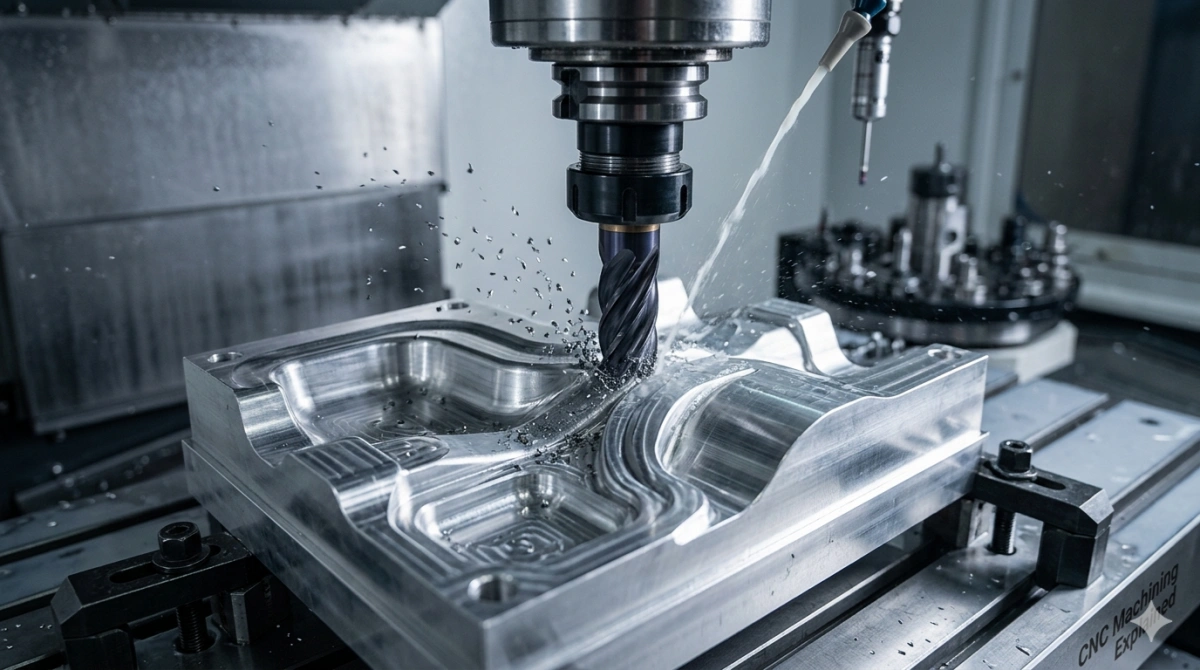
en esto nariz de toro vs nariz de bola comparación, Los dos cortadores pueden parecer similares., pero están diseñados para diferentes necesidades de mecanizado. Una fresa de punta redondeada suele ser mejor para esquinas más fuertes, semiacabado, estabilidad del contorno, y perfiles escalonados. Una fresa de punta esférica suele ser mejor para superficies 3D lisas, formas esculpidas, y acabado de forma libre.
Por lo tanto, la elección correcta depende de la geometría de la pieza, estrategia de corte, y requisito de acabado. Para un soporte de borde más fuerte, semiacabado, o mecanizado de perfiles escalonados, una fresa de punta redondeada suele ser la mejor opción. Para acabado continuo de contornos 3D, mecanizado de superficies curvas, o acabado de moldes, una fresa de punta esférica suele ser la herramienta adecuada.
Para opciones de radio personalizadas y mecanizado de perfiles escalonados, ver nuestro opciones personalizadas de cortador de esquinas R.
Para acabado de contornos 3D y mecanizado de superficies curvas, revisa nuestro Fresas de punta esférica.
Necesita ayuda para elegir el cortador adecuado? Envíanos el material de tu pieza, superficie de mecanizado, diámetro de la herramienta, radio o tamaño de bola, requisito de recubrimiento, y cantidad del pedido.
Envíenos un correo electrónico para obtener una recomendación de cortador personalizado