 精密フライスカッター,あらゆる材料を加工するCNC用の切削工具

APMT と APKT インサートはどちらも、互換性のある CNC フライス本体で使用される刃先交換式フライスインサートファミリーです。. 同様の操作をサポートする可能性があります, 正面フライス加工を含む, 肩削り加工, ステップミリング, および一般的な金属除去. しかし, 彼らの幾何学模様, インサートシート, 最先端のデザイン, モデルの接尾辞, 適合するカッター本体が異なる場合があります.
したがって, APMT インサートは APKT インサートを自動的に置き換えるべきではありません, 両方の製品に同じサイズ コードがある場合でも, のような 1135 又は 1604. 購入者は常に完全なインサートのマーキングを確認する必要があります, カッターボディモデル, インサートポケット, ネジの位置, 交換品を注文する前に必要なコーナー半径を指定してください.
このガイドでは、APMT と APKT フライスインサートの主な違いについて説明します. また、カッター本体と加工用途に適したオプションを選択する方法も示します。.
全体, APMT と APKT インサートは完全なモデルで比較する必要があります, カッター本体の互換性, 外観だけではなく、加工要件も考慮してください.
APMTインサートとは?
APMT インサートは、互換性のある APMT スタイルのカッターボディ用に設計された刃先交換式超硬フライスインサートです。. 完成モデルとメーカーによって異なります, 刃先交換式エンドミルと組み合わせて使用できます。, 肩削りカッター, フェイスミル, およびその他の CNC フライスツール.
一般的な APMT インサートには中心穴が含まれています, 最先端, 切りくず生成面, 逃げ面, とコーナーの形状. しかし, 正確な構造はインサートのサイズによって異なる場合があります, ブレーカ, コーティング, 学年, およびモデルの接尾辞.
結果として, 購入者は、一般的な APMT ファミリ名だけでインサートを識別しないでください。.
家族全員のために, see our APMTインサート.
一般的な APMT インサート アプリケーション
CNC オペレータは通常、次の用途に APMT インサートを選択します。:
- 正面フライス加工
- 肩削り加工
- ステップミリング
- 側壁加工
- プロファイルフライス加工
- 一般荒加工
- 中仕上げ
最終的な加工結果は、インサートファミリー以外にも依存します。. カッター本体の設計, 機械剛性, インサートグレード, ワーク材質, 切断速度, 送り速度, 冷却液の状態もパフォーマンスに影響します.
一般的な APMT インサート サイズ
APMT1135 と APMT1604 はよく検索される 2 つのサイズ グループです. しかし, 数値だけでは、交換用インサートを選択するための十分な情報が得られません。.
例えば, 2 つの APMT1135 製品は異なるコーナー半径を使用する場合があります, ブレーカ, コーティング, またはエッジの準備. したがって, 完全なモデル指定を確認する必要があります.
より小さい APMT オプションの場合, 私たちのものを見る APMT1135 超硬フライスインサート.
より大きなモデルの場合, 私たちのものを見る APMT1604 超硬フライスインサート.
APKT インサートとは?
APKT インサートは、CNC フライス加工に使用される刃先交換式超硬インサートでもあります。. これらは、APKT インサートファミリー用に設計されたカッターボディに取り付けられています。.
APMT製品と同様, APKT インサートはさまざまなサイズで提供可能, コーティング, 超硬グレード, ブレーカ, およびコーナー構成. したがって, ある APKT インサートは、同様の基本サイズ コードを持つ別の製品とはパフォーマンスが異なる場合があります。.
接尾辞によって特定のエッジのデザインや用途が識別される可能性があるため、完全なマーキングは引き続き重要です。.
家族全員のために, see our APKTインサート.
一般的な APKT 挿入アプリケーション
カッタ本体とインサートの設計による, APKT インサートはサポートする場合があります:
- 正面フライス加工
- 肩削り加工
- 段付き加工
- 側面フライス加工
- プロファイル加工
- 一般的な金属除去
- 荒加工と中仕上げ加工
これらのアプリケーションは APMT 製品と重複しますが、, 2 つのインサート ファミリは、自動的に交換可能であるとして扱われるべきではありません。.
一般的な APKT 挿入サイズ
APKT1135 と APKT1604 は共通の製品グループです. しかし, カッター本体は、選択したインサートのサイズと形状と一致する必要があります.
より小さいオプションの場合,私たちのものを見る APKT1135 超硬フライスインサート.
より大きなオプションの場合, 私たちのものを見る APKT1604 超硬フライスインサート.
APMT と APKT のインサート: 主な違い
以下の表は実際の比較を示しています。. メーカーによって仕様が異なるため, 購入者は、これを普遍的な技術標準ではなく、選択ガイドとして扱う必要があります。.
APMT と APKT の挿入を比較する場合, 通常、カッター本体の互換性は、サイズコードの類似性よりも重要です。.
| 比較ポイント | APMTインサート | APKTインサート |
| ファミリを挿入 | APMTモデルシリーズ | APKTモデルシリーズ |
| 一般的な使用方法 | 一般的な刃先交換式フライス加工用途 | 一般的な刃先交換式フライス加工用途 |
| 共通操作 | 顔, ショルダー, ステップ, およびプロファイルフライス加工 | 顔, ショルダー, ステップ, およびプロファイルフライス加工 |
| カッター本体 | APMT 互換のインサートポケットが必要です | APKT 互換のインサートポケットが必要です |
| 一般的なサイズグループ | 1135 and 1604 | 1135 and 1604 |
| 切断形状 | 完成モデルとメーカーによって異なります | 完成モデルとメーカーによって異なります |
| モデルの接尾辞 | ブレーカを示す可能性があります, 角, 学年, またはサプライヤーの設計 | ブレーカを示す可能性があります, 角, 学年, またはサプライヤーの設計 |
| 交換方法 | フルマーキングとカッター本体の確認 | フルマーキングとカッター本体の確認 |
| 互換性 | APKT と自動的に置き換えることはできません | APMT と自動的に置き換えることはできません |
最も重要な違いは互換性です. 2 つのインサートが似ているように見える場合でも, インサートポケットの小さな違い, 中心穴, 逃げ面, クランプ位置が正しい取り付けを妨げる可能性があります.
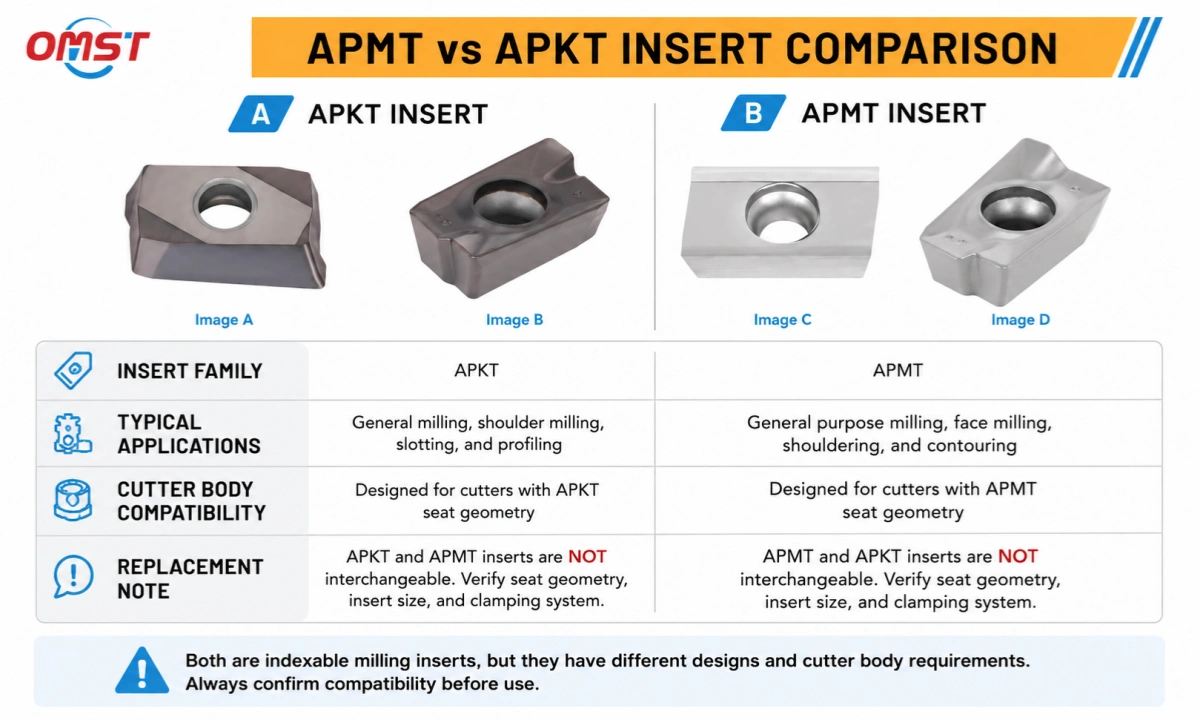
インサート形状と最先端のデザイン
切削抵抗に影響を与えるチップ形状, 切りくずの流れ, エッジ強度, 表面品質, と工具寿命. したがって, カッター本体や加工条件に合わせてご使用ください。.
APMT インサート形状
APMT インサートには以下が含まれる場合があります:
- 1 つ以上の使用可能な刃先
- 切りくず生成面
- クランプ用の中心穴
- クリアランス面
- 定義されたコーナージオメトリ
- コーティングされた切断面またはコーティングされていない切断面
しかし, APMT 名だけでは完全なジオメトリを確認できません. サイズコードとサフィックスも確認する必要があります.
APKT ジオメトリの挿入
APKT インサートは独自のファミリー形状を使用し、APKT カッター ポケットに適合するように設計されています. チップブレーカー, エッジの準備, 逃げ角, コーナー形状はモデルにより異なる場合があります.
したがって, 購入者は製品の写真だけに頼るのではなく、既存のインサートと交換仕様を直接比較する必要があります。.
モデルの接尾辞が重要な理由
APMT または APKT の後のサフィックスにより、次の違いが識別される場合があります。:
- ブレーカ設計
- 最先端の準備
- 対象ワーク材質
- コーティングまたは超硬グレード
- 切断方向
- メーカー固有の形状
例えば, PDFR, PDER, マ, M2L は、すべてのサプライヤーで同じ意味を持つと想定すべきではありません。. 加えて, あるメーカーが使用するサフィックスは、別のメーカーの命名システムと一致しない場合があります.
このため, 交換品を注文する前に、完全なインサートマーキングを記録する必要があります.
カッター本体とインサートシートの互換性
カッターボディによりどのインサートファミリーが決まりますか, サイズ, クランプ構造も使用可能. したがって, 通常、これは挿入選択の最適な開始点です.
APMT と APKT のどちらかを選択する前に, チェック:
- カッターボディ型式
- インサートポケット形状
- 中心ネジの位置
- 既存のインサートマーキング
- 長さと幅を挿入します
- インサートの厚さ
- Corner radius
- メーカー図面
大きすぎるインサート, 小さすぎる, または、正しく取り付けられていないと、しっかりとクランプされない可能性があります. さらに, インサートとポケット間の接触不良は振れに影響を与える可能性があります, 振動, surface finish, そして最先端の暮らし.
インサートシートは取り付ける前に清掃する必要があります. ネジとポケットにも損傷がないか検査する必要があります.
APMT インサートと APKT インサートは交換できますか?
実際に, APMT と APKT インサートは、カッター本体メーカーによって互換性が確認されていない限り、自動的には交換できません。, 技術的な図面, または身体検査.
代替インサートを次の理由だけで選択しないでください。:
- 製品は似ているように見えます
- どちらのモデルにも含まれています 1135
- どちらのモデルにも含まれています 1604
- 全長は同じように見えます
- 真ん中の穴が似てる
寸法や幾何学的な小さな違いにより、正しく装着できない場合があります. 加えて, 取り付け後、刃先が意図した位置に到達しない可能性があります.
したがって, 購入者は、可能な限りカッター本体のモデルと既存のインサートの完全なマーキングを提供する必要があります。.
APMT1135 対 APKT1135
APMT1135 と APKT1135 には両方とも、 1135 サイズコード. しかし, それらは異なるインサートファミリーに属しています.
それらの違いには次のようなものがあります。:
- インサートシートのデザイン
- 逃げ面
- 最先端のジオメトリ
- センターホール構造
- ブレーカ
- Corner radius
- 適合カッター本体
共有された 1135 コードは互換性を確認していません. したがって, カッターポケットと完全なサフィックスを確認する必要があります.
APMT1604 対 APKT1604
APMT1604 および APKT1604 は、それぞれの挿入グループよりも大きい挿入グループです。 1135 バージョン. それにもかかわらず, 彼らは依然として異なるモデルファミリーに属しています.
購入者は比較する必要があります:
- 全体の寸法
- インサートの厚さ
- センターホール
- ネジの位置
- カッターボディ型式
- エッジ形状
- 必要なコーナー半径
- 既存のモデルのサフィックス
どちらのモデルにも含まれていますが、 1604, 異なるカッター本体に適合し、異なるインサートポケット設計をサポートする場合があります。.
APMT1135 対 APMT1604
APMT1135 と APMT1604 は同じ一般インサートファミリーに属します, しかし、彼らは異なるサイズを使用しています.
正しい選択は通常、すでに使用されているカッター本体によって決まります。. より大きな切削負荷または異なるカッター直径用に設計されたカッター本体に、より大きなインサートを取り付けることができます。. しかし, これを普遍的なルールとして扱うべきではありません.
カッター本体のモデルは、チップのサイズだけよりも依然として重要です.
APKT1135 対 APKT1604
同じ原則が APKT1135 と APKT1604 にも適用されます.
購入者は考慮すべきです:
- カッター径
- インサートポケットサイズ
- 加工可能スペース
- 切削負荷
- ワーク材質
- 要求される表面品質
- 既存カッター本体
両方の製品が APKT ファミリに属しているため、APKT1604 インサートを APKT1135 ポケットに取り付けることはできません。.
正面フライス加工に適したインサートはどれですか?
どちらのチップ ファミリもすべての正面フライス加工用途に自動的に適しているわけではありません.
より適切なオプションは次によって異なります。:
- カッター本体の設計
- ワーク材質
- 超硬グレード
- コーティング
- カッター刃数
- 切断速度
- 歯当たりの送り
- 機械剛性
- 表面仕上げ要件
例えば, 適切なインサートシートを備えた安定したカッターボディは、より高度なコーティングを備えた不正確に適合したインサートよりも優れた結果をもたらす可能性があります。.
したがって, 購入者はまずカッター本体を確認し、次にインサートのグレードと形状を選択する必要があります.
肩削り加工に適したチップはどれですか?
APMT と APKT インサートは、互換性のあるカッターボディに取り付けられている場合、肩削り加工に使用できます。.
しかし, ショルダーの精度は完全なツールアセンブリに依存します. 影響を受ける可能性があります:
- カッター本体の形状
- 挿入位置
- カッター振れ
- インサートシートの状態
- 機械剛性
- 切削負荷
- エッジデザイン
加えて, すべてのカッターボディが正確な 90 度のショルダーを生成するわけではありません. 実際の壁面角度や底面形状はカッター仕様書よりご確認ください。.
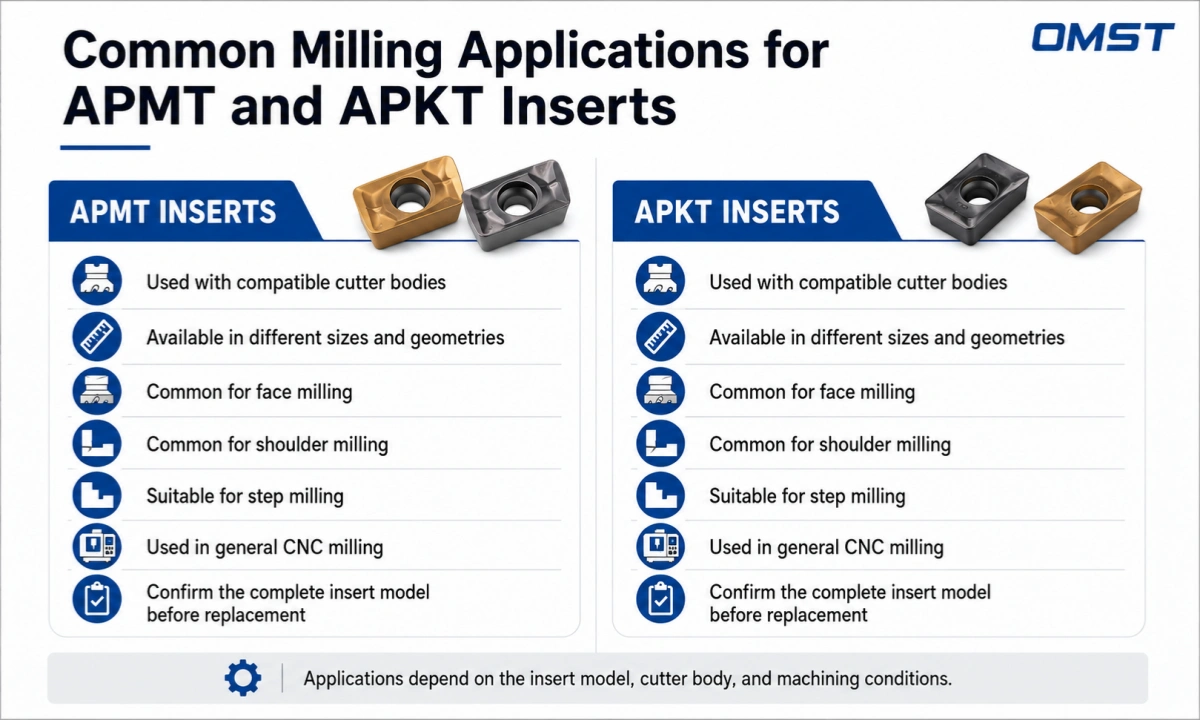
APMT と APKT のインサート: 正しいタイプの選び方
実用的な選択プロセスにより、間違った製品を注文するリスクを軽減できます.
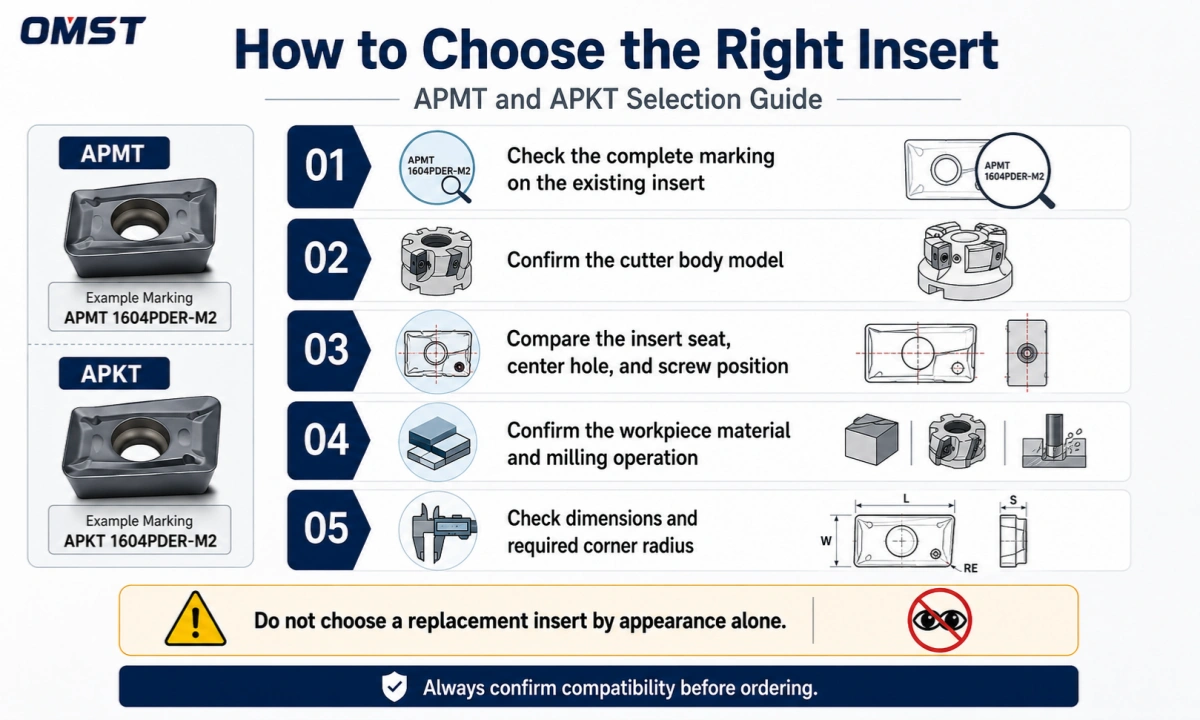
完全なインサートマーキングを確認する
既存のインサートに表示されているすべての文字と数字を記録します.
録音だけはしないでください:
- APMT1135
- APMT1604
- APKT1135
- APKT1604
正しいチップブレーカを識別するためにサフィックスが必要になる場合があります, エッジデザイン, またはアプリケーション.
カッターボディ型式の確認
カッター本体の刻印を確認する, ツールホルダー, カッターヘッド, またはオリジナルのパッケージ.
多くの場合、カッター本体のモデルは、挿入画像よりも強力な互換性情報を提供します。.
インサートシートとネジの位置を確認してください
インサートポケット形状の比較, 中心穴, クランプネジ, そして座面.
もし可能なら, ~の鮮明な写真を提供する:
- 既存のインサート
- 空のインサートポケット
- カッター本体のマーキング
- クランプネジ
ワーク材質の確認
材質が異なれば、最先端に対する要求も異なります.
一般的なワークグループには次のものがあります。:
- 炭素鋼
- 合金鋼
- ステンレス鋼
- 鋳鉄
- アルミニウム
- 銅と真鍮
- 高硬度材
超硬グレード, コーティング, ブレーカとブレーカは材料と加工条件に適合する必要があります.
フライス加工操作の識別
操作が含まれるかどうかを確認する:
- 正面フライス加工
- 肩削り加工
- ステップミリング
- 側面フライス加工
- プロファイルフライス加工
- 荒加工
- 中仕上げ
- 断続切削
この情報は、より強力なエッジまたはより鋭いジオメトリが必要かどうかを判断するのに役立ちます。.
コーナー半径の確認
コーナ半径は同じ基本チップサイズ内でも異なる場合があります。.
したがって, 購入者は必要な半径または完全な既存モデルを提供する必要があります。. 半径が正しくないと部品の形状に影響を与える可能性があります, surface finish, コーナーに残っている在庫.
切削条件の見直し
次の情報により、インサートの選択が改善されます。:
| 情報 | なぜそれが重要なのか |
| 機械剛性 | 振動とエッジの安定性に影響を与える |
| 切断速度 | 熱と摩耗に影響を与える |
| 送り速度 | 切りくず厚さと切削負荷に影響 |
| 軸方向の切り込み深さ | エッジエンゲージメントに影響を与える |
| ラジアルエンゲージメント | 切削抵抗と切りくず生成に影響を与える |
| クーラントの状態 | 熱と切りくず排出に影響を与える |
| 断続切削 | より頑丈な刃先が必要になる場合があります |
| 表面要件 | 荒加工または仕上げ加工のニーズを決定するのに役立ちます |
初期の切断パラメータは慎重にテストする必要があります. それから, 工具の摩耗に応じて調整できます, 主軸負荷, チップ形状, 振動, そして表面品質.
APMT および APKT の選択におけるよくある間違い
外観だけでインサートを選択する
多くの刃先交換式フライスインサートは同様の長方形または平行四辺形の形状をしています. しかし, ジオメトリの小さな違い, 穴の位置, または座面がクランプとカッターの互換性に影響を与える可能性があります.
だけで選ぶ 1135 又は 1604 コード
サイズコードは完全なインサート指定の一部にすぎません。. インサートファミリーを確認するものではありません, コーナー半径, ブレーカ, 超硬グレード, または互換性のあるカッター本体.
モデルの接尾辞を無視する
接尾辞は、ジオメトリの重要な違いを識別する可能性があります, 最先端の準備, ブレーカの設計, またはアプリケーション. したがって, 購入者は問い合わせを送信する際に完全なサフィックスを含める必要があります.
間違ったカッターボディの使用
互換性のないインサートポケットは、取り付けまたは加工中にインサートを損傷する可能性があります. 加えて, 正しく取り付けられていないと、カッター本体が損傷する可能性があります, クランプネジ, またはシートを挿入します.
カットパラメータを直接コピーする
別の機械またはサプライヤーからの切断パラメータは実際のワークピースと一致しない可能性があります, カッター径, 工具オーバーハング, 冷却水の状態, または機械の剛性.
このため, CNC オペレータは実際の加工条件に応じてパラメータを調整し、工具の摩耗を評価する必要があります。, 振動, チップ形状, そして表面品質.
ご注文前にお送りいただく情報
正しく挿入されていることを確認するには, 以下の情報をできるだけ多く提供してください:
- 現在のインサートのマーキングを完了する
- カッターボディ型式
- 座席の写真を挿入
- ワーク材質
- 材質の硬さ
- 機械加工作業
- 必要なコーナー半径
- 切削条件
- 注文数量
- 梱包要件
この情報は、サプライヤーが見積または出荷前に互換性を確認するのに役立ちます。.
FAQ
APMT インサートと APKT インサートの主な違いは何ですか?
これらは異なるフライスインサートファミリーに属しており、異なる形状を使用する場合があります。, インサートシート, 刃先, および互換性のあるカッターボディ. 選定前に完全なモデルとカッター本体を確認する必要があります.
APMT と APKT インサートは交換可能ですか?
自動的ではありません. カッター本体のメーカーが決定した後でのみ交換する必要があります。, 製品図, または技術検査により互換性が確認されます.
どういうことですか 1135 フライスインサートモデルにおける平均値?
インサートのサイズ指定の一部です. しかし, 完全なジオメトリを識別するものではありません, コーナー半径, ブレーカ, 学年, または互換性のあるカッター本体.
どういうことですか 1604 フライスインサートモデルにおける平均値?
これはインサートのサイズ指定の一部でもあります. バイヤーは依然としてインサートファミリーを必要としています, 完全な接尾辞, カッターボディモデル, および寸法情報.
モデルの接尾辞はインサートの互換性に影響しますか?
かもしれない. サフィックスによりチップブレーカを識別できます, 最先端, 応用, 学年, またはメーカー固有の構造.
肩削り加工に適したチップはどれですか?
どちらのファミリーも、適切なカッターボディと組み合わせることで肩削り加工をサポートできます。. 正しい選択はカッターの設計によって異なります, 材料, 切削条件, 必要な肩の形状.
APMT および APKT インサートはステンレス鋼を加工できますか?
適切なコーティングされたバージョンと超硬グレードはステンレス鋼に使用できます。. しかし, インサートグレード, ブレーカ, 切断パラメータ, 機械剛性, 冷却水の状態を確認する必要があります.
インサートコーナー半径を確認するにはどうすればよいですか?
完全な製品マーキングを確認してください, サプライヤーの図面, オリジナルのパッケージ, または測定された仕様. 基本的なファミリとサイズ コードだけでは半径を確認できない場合があります.
正しいフライスインサートを特定するにはどうすればよいですか?
完全なインサートマーキングとカッターボディモデルから始めます. 次に寸法を確認します, インサートシート, 中心穴, ネジの位置, コーナー半径, 材料, および機械加工作業.
注文する前にどのような情報を提供する必要がありますか?
現在のインサートマーキングを提供します, カッターボディモデル, インサートシートの写真, ワーク材質, machining application, 必要なコーナー半径, そして注文数量.
APMT と APKT インサートを注意深く比較すると、互換性の問題が軽減され、購入者が間違った交換モデルを注文することを避けることができます。.
APMT または APKT 挿入の選択に関するヘルプのリクエスト
正しいインサートを選択するには、一般的なモデル名や製品の外観を比較するだけでは不十分です。.
現在のインサートマーキングをOMISTに送信してください, カッターボディモデル, インサートシートの写真, ワーク材質, machining application, 必要なコーナー半径, そして注文数量.
私たちのチームがインサートファミリーのチェックをお手伝いします, サイズ, カッター本体の互換性, および利用可能な製品オプション. 技術情報を確認後, あなたの要件に基づいて見積もりを提供します.