 精密フライスカッター,あらゆる材料を加工するCNC用の切削工具

知りたい場合は 超硬ドリルの選び方 さまざまな素材に対応, ワーク材料から始める, ドリル径だけでなく. 適切なドリルは硬さによっても異なります, 穴の深さ, 機械剛性, 冷却水の状態, そして生産量.
例えば, 鋼鉄, ステンレス鋼, アルミニウム, 鋳鉄, とグラファイトはすべて異なる掘削問題を引き起こします. したがって, 1 つのドリル設計ですべての材料に適合できるわけではありません. バイヤーがサイズまたはコーティングの色のみで選択した場合, ドリルはすぐに摩耗する可能性があります, 簡単に壊れる, または不安定な穴品質を生成する.
このガイドでは説明します 超硬ドリルの選び方 さまざまな材質とCNC穴あけ条件に対応. また、購入者が見積もりを依頼する前に提供すべき情報も示しています。.
標準およびカスタム CNC 穴あけツール用, 私たちのものを見る 超硬ドリルビット.
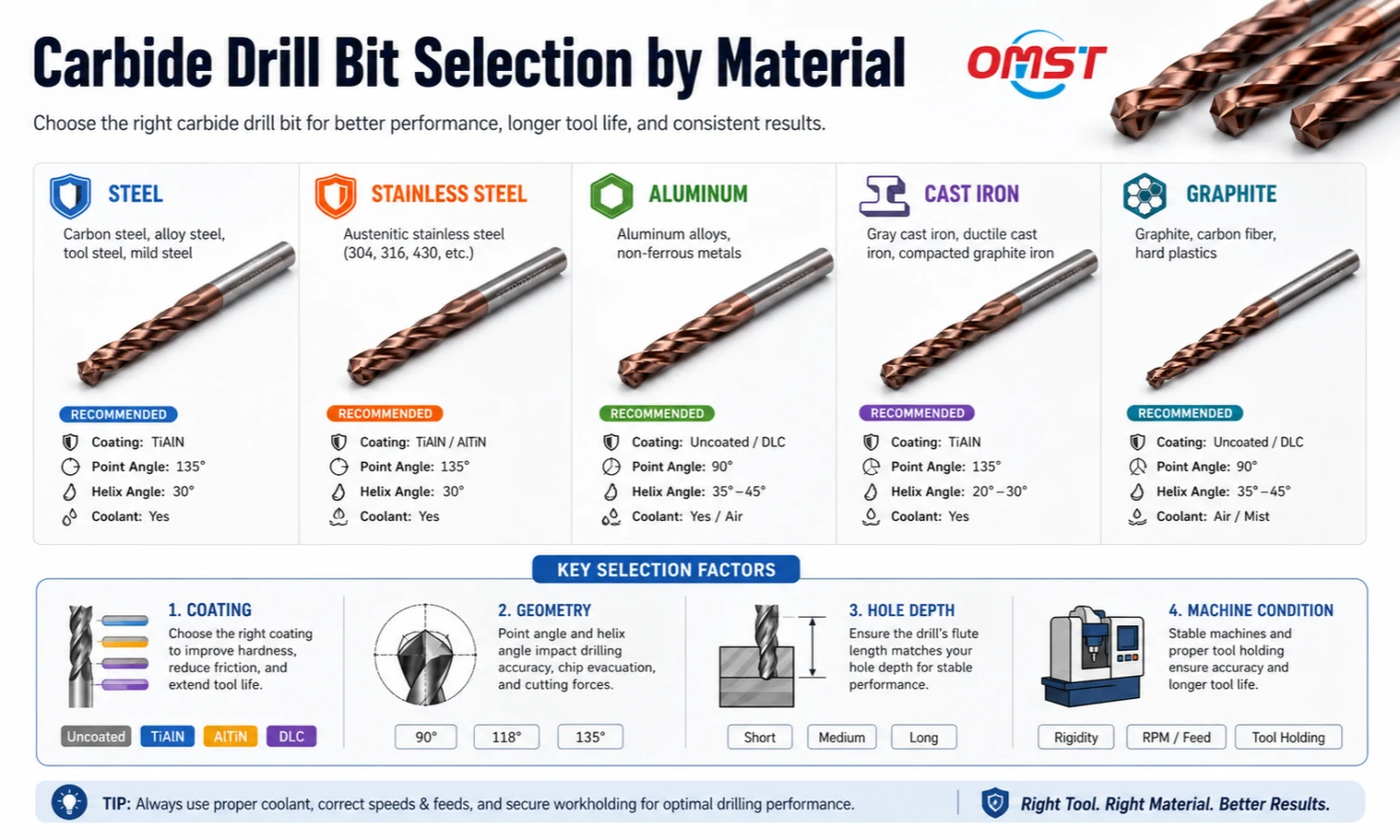
被削材別超硬ドリルの選び方
異なる素材は同じように切れません. 一部の素材は高熱を発生します. 材質によっては刃先に付着する場合があります. 他のものは研磨性があり、ドリルをすぐに摩耗させます.
このため, バイヤーはドリルの直径だけで超硬ドリルビットを選択すべきではありません. ドリルポイント, flute design, コーティング, 超硬グレード, シャンク剛性, 切りくずの排出も実際の加工用途に適合する必要があります.
材質が異なれば、穴あけ加工の問題も異なります
鋼および合金鋼には通常、優れた耐摩耗性と安定した刃先が必要です。. ステンレス鋼は穴あけ中に熱を発生し、加工硬化する可能性があります. アルミニウムと銅は、エッジや切りくずの付着を引き起こす可能性があります. 鋳鉄は研磨剤になる可能性があります. グラファイトは研磨性があるため、特別なコーティングが必要な場合があります.
したがって, アルミニウムに適したドリルは、ステンレス鋼には最適な選択ではない可能性があります. 同じく, 一般的なコーティングされた超硬ドリルはグラファイトの穴あけには適さない場合があります.
直径だけでドリルを選ばないでください
直径は重要です, しかし、それはドリルの選択の一部にすぎません. 購入者も確認する必要があります:
- ワーク材質と材種
- 材質の硬さ
- 穴径
- 穴の深さ
- 貫通穴または止まり穴
- マシンタイプ
- クーラント, エアブロー, またはゴミの除去状態
- 必要数量
- 図面またはサンプル, 利用可能な場合
この情報が明確になると, the drill geometry and coating can be selected more accurately.
標準サイズとカスタム超硬ドリルビットの比較
Standard carbide drill bits are suitable for many common hole sizes. しかし, custom carbide drill bits may be needed for special hole depth, 小径穴あけ加工, 規格外のシャンクサイズ, 特殊コーティング, またはOEMマーキング.
必要な穴が一般的なサイズではない場合, または、現在のドリルの摩耗が早すぎる場合, カスタムドリルの方が良い解決策になる可能性があります.
鋼・合金鋼用超硬ドリル
鋼と合金鋼は CNC 穴あけ加工で一般的な材料です. しかし, 硬度と合金含有量は大きく異なる場合があります. このため, バイヤーはドリルを選択する前に材料のグレードと硬度を提供する必要があります.
鋼用の推奨ドリル機能
鋼用超硬ドリルビットは優れた剛性を備えている必要があります, 安定した刃先, そして適切なコーティング. ドリルは機械の状態と穴の深さにも適合する必要があります.
一般鋼穴あけ用, 購入者がよく考慮するのは:
- 超硬基板
- 安定したドリル先端形状
- 耐摩耗性コーティング
- 適切なフルート設計
- 良好な切りくず排出
- 適切なクーラント供給
鋼材が熱処理されている場合, 工具を選択する前に硬度を確認する必要があります.
鋼用コーティングの選択
鋼・合金鋼用, コーティングの選択は硬度に依存します, 切断温度, そして生産量. TiAlNの, アルティン, 用途に応じて、または他の適切なコーティングを考慮することもできます.
しかし, 塗装は色だけで選ばないでください. 黒, 金, 青, or copper-colored drill does not automatically mean it is suitable for the workpiece. その代わり, コーティングは素材と一致する必要があります, 機械, そして穴あけの状態.
購入者が提供すべき情報?
鋼用超硬ドリルをお求めになる前に, バイヤーは鋼グレードを提供する必要があります, 硬度, 穴径, 穴の深さ, マシンタイプ, 冷却水の状態, そして注文数量.
これにより、サプライヤーは標準サイズのみを提供するのではなく、適切なドリルを推奨することができます。.
ステンレス鋼用超硬ドリルビット
ステンレス鋼は多くの一般鋼に比べて穴あけが困難です。. 熱が発生する可能性があります, 加工硬化を作成する, 切りくず排出の問題を引き起こす. したがって, carbide drill bits for stainless steel need stable geometry and good heat control.
ステンレス鋼の穴あけが難しい理由
穴あけ中, ステンレス鋼は、工具が適切に切断せずに擦れると、切断領域で硬くなる可能性があります。. 加えて, 切りくず排出が不十分だと刃先が損傷したり、穴の品質が低下したりする可能性があります.
このため, ドリルには十分な刃先強度が必要です, 適切なコーティング, 切りくず排出をサポートする溝設計.
ドリル形状の選択方法
ステンレス鋼用超硬ドリルビットを選択する場合, 購入者はステンレス鋼グレードを検討する必要があります, 穴の深さ, クーラント供給, と機械剛性.
適切なドリル設計には以下が含まれます。:
- 強力な刃先
- 安定した点の形状
- 適切なフルート設計
- 耐熱性と耐摩耗性を高めるコーティング
- 適切な切断パラメータ
多くの場合, ドリルは材料グレードと穴要件を検討した後に選択する必要があります.
購入者のよくある間違い
よくある間違いは、サイズだけでドリルを選ぶことです. 塗装色だけで選んでしまうのも間違いです.
ステンレス鋼用, 購入者はまず材料グレードを確認する必要があります, 硬度, 穴の深さ, そして冷却水の状態. そうすれば、サプライヤーはより適切な超硬ドリルビットを推奨できます.
鋳鉄用超硬ドリルビット
鋳鉄の穴あけには、優れた耐摩耗性と安定した刃先が必要です. しかし, ねずみ鋳鉄, ダクタイル鋳鉄, 他の鋳造材料には異なるドリル設計が必要な場合があります.
鋳鉄の違い?
鋳鉄は研磨剤になる可能性があります. また、長い切りくずではなく、粉末状の切りくずが生成される場合もあります。. したがって, ドリルは鋳鉄の種類と穴の要件に応じて選択する必要があります.
ドリルの形状は安定した切断をサポートし、不必要な刃先の摩耗を軽減する必要があります。.
ドリル設計の考慮事項
鋳鉄用, 購入者は検討する必要があります:
- 鋳鉄タイプ
- 材質の硬さ
- 穴径
- 穴の深さ
- 乾式または湿式の加工条件
- バッチ生産数量
適切な超硬ドリルビットは、切削条件が適切に制御されている場合、穴あけの安定性を向上させ、工具の摩耗を軽減します。.
カスタム超硬ドリルが必要な場合
鋳鉄部品の穴の深さが特殊な場合は、カスタム超硬ドリルが必要になる場合があります, 厳格な許容範囲, 規格外の直径, または生産量が多い.
In these cases, 図面またはサンプルは、正しいドリルのサイズと形状を確認するのに役立ちます。.
アルミニウムおよび銅用超硬ドリルビット
アルミニウム, 銅, 他の非鉄材料には別の選択方法が必要です. これらの材料は、穴あけ中に刃先に付着し、構成刃先を形成する可能性があります。.
非鉄材料に異なるドリルの選択が必要な理由
アルミニウムや銅は鋼よりも柔らかい, しかし、必ずしも穴あけが簡単であるとは限りません. 切りくず排出が悪い場合, ドリルが詰まる可能性があります. エッジ形状が適切でない場合, 穴の仕上げが不安定になる可能性があります.
したがって, 購入者はフルートのデザインに注意を払う必要があります, surface finish, コーティング, そしてカット状態.
コーティングと表面処理のオプション
アルミ・銅用, 低摩擦コーティング, 磨かれたフルート, 用途に応じてコーティングなしの超硬も検討可能. 場合によっては, スチールに有効なコーティングがアルミニウムには最良の選択ではない可能性があります.
したがって, 最終コーティングは合金グレードに応じて選択する必要があります, 穴の深さ, 冷却水の状態, および必要な穴仕上げ.
切りくず排出と穴仕上げ
非鉄穴あけ加工では切りくず排出が非常に重要です. 適切なフルート設計により、切りくずを除去し、エッジの蓄積を軽減できます。. 結果として, ドリルはよりきれいな穴とより安定した加工結果を生み出す可能性があります.
グラファイトおよび研磨材用の超硬ドリルビット
グラファイトはスチールとは大きく異なります, ステンレス鋼, またはアルミニウム. 研磨性があります, 通常の刃先はすぐに磨耗します. 加えて, グラファイトダストは切りくず処理と機械の清浄度に影響を与える可能性があります.
グラファイトが工具をすぐに摩耗させる理由
グラファイトは穴あけ中に摩耗を引き起こす可能性があります. ドリルのコーティングや形状が適切でない場合, 刃先がすぐに摩耗する可能性があります. これにより、穴の精度が低下し、工具寿命が短くなる可能性があります.
したがって, グラファイトの穴あけには、多くの場合、優れた耐摩耗性と安定した切削形状を備えた工具が必要です。.
ダイヤモンドコーティングされたドリルビットを使用する場合
グラファイト穴あけ用, CVD ダイヤモンドコーティングされたドリルビットが適切なオプションになる可能性があります. ダイヤモンド コーティングは、研磨グラファイト加工中に刃先を保護します。.
しかし, 最終的な工具設計は依然としてグラファイトのグレードに依存する必要があります, 穴径, 穴の深さ, 機械の状態, そして注文要件.
グラファイト穴あけおよび研磨非鉄用途向け, 私たちのものを見る ダイヤモンドコーティングされたドリルビット.
グラファイトの穴あけに必要な情報?
グラファイトドリルをご依頼の場合, バイヤーはグラファイトグレードを提供する必要があります, 穴径, 穴の深さ, スルーホールまたはブラインドホールの要件, 機械の状態, ゴミの除去方法, 描画, そして量.
この情報は、サプライヤーがダイヤモンドコーティングされたドリルビットかどうかを確認するのに役立ちます。, カスタム超硬ドリル, または別の掘削ソリューションがより適しています.
適切なコーティングを施した超硬ドリルビットの選び方
コーティングの選択は、超硬ドリルビットを選択する際の最も重要なステップの 1 つです. しかし, コーティングは常にワークの材質と切削条件に適合する必要があります.
コーティングは素材に合わせて行う必要があります
コーティングが異なれば目的も異なります. 一部のコーティングは耐熱性をサポートします. 一部のコーティングは摩擦を軽減します. その他、研磨材の耐摩耗性を向上させます.
このため, コーティングの選択は素材に基づいて行う必要があります, 硬度, 切断温度, チップの動作, 冷却水の状態, および生産要件.
コーティングされた超硬ドリルビットとコーティングされていない超硬ドリルビット
コーティングされた超硬ドリルビットは、耐摩耗性と耐熱性の向上に役立ちます. 鋼材によく使われます, ステンレス鋼, 鋳鉄, およびその他の要求の厳しいアプリケーション.
一部のアルミニウムでは、コーティングされていない超硬ドリルまたは研磨されたフルートのデザインが考慮される場合があります, 銅, または特殊な非鉄用途. したがって, 購入者は、コーティングされた工具が常にあらゆる材質に適していると考えるべきではありません。.
コーティングカラーだけでは不十分な理由
塗装色はあくまで見た目です. コーティングの種類については十分に説明されていません, コーティング性能, または適切なアプリケーション.
購入者は黒に見えるかもしれません, 金, 青, 銅, またはカタログの暗いコーティング. しかし, 正しい選択は、実際のワークの材質と加工条件によって異なります。.
穴の深さとドリルの長さによる超硬ドリルビットの選び方
穴の深さも超硬ドリルビットの選択に影響します. 浅い穴と深い穴では異なる刃長が必要になる場合があります, 剛性, 切りくず排出設計.
ショートホールと標準ドリル
浅い貫通穴または一般的な穴サイズの場合, 標準的な超硬ドリルで十分かもしれません. しかし, 材質と公差を確認する必要があります.
穴が短く機械が安定している場合, 通常、ツールの選択が簡単になります.
深穴・長刃ドリル
深穴ドリル加工には、より優れた切りくず排出と強力なプロセス制御が必要です. 切りくずが穴からスムーズに抜けられない場合, ドリルの磨耗が早くなったり、壊れたりする可能性があります.
深穴用, 購入者は確認する必要があります:
- 穴の深さ
- 刃長さ
- クーラントまたはエアブローの状態
- 機械剛性
- ツールホルダーの振れ
- 必要な穴公差
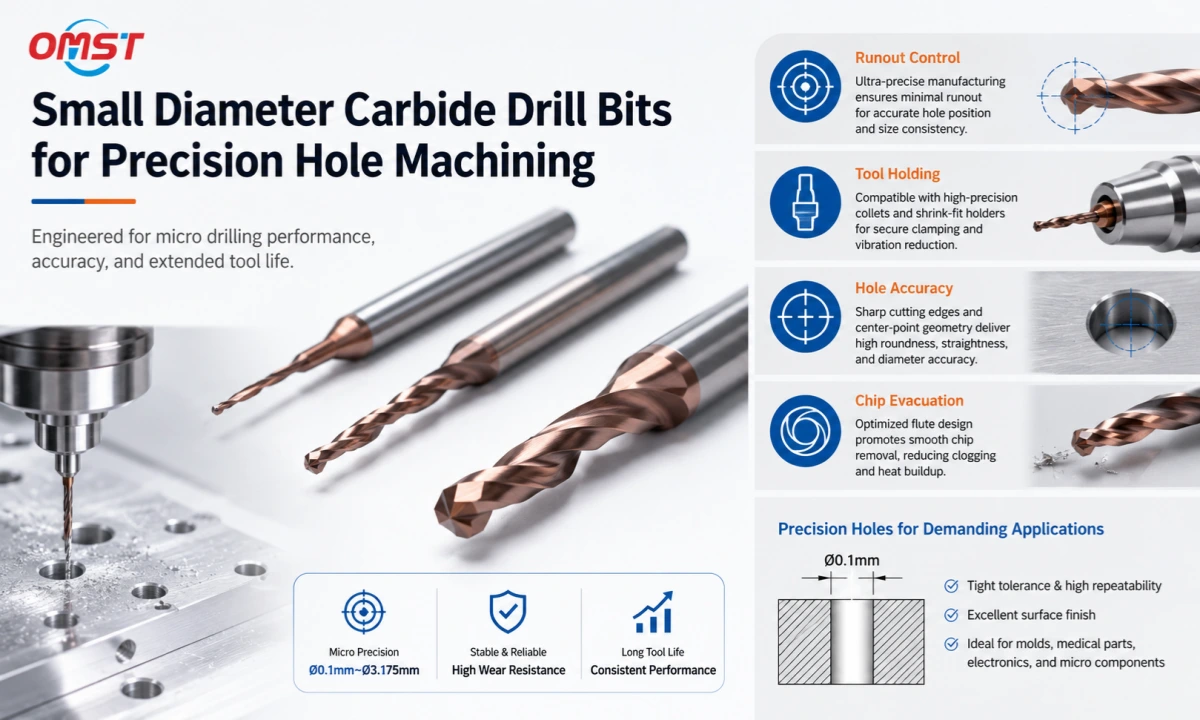
小径・超硬ドリル
小径の超硬ドリルビットには慎重な工具の保持と機械の安定性が必要です. 小さな振れの問題でも、穴の品質に影響を与えたり、ドリルの破損を引き起こす可能性があります。.
マイクロドリリング用, 購入者は詳細な穴情報と現在の加工問題を提供する必要があります. これは、サプライヤーが標準ドリルが必要かカスタム超硬ドリルが必要かを評価するのに役立ちます。.
CNC機械の状態と切削安定性
良いドリルでも機械の状態が不安定だと性能が落ちてしまいます。. したがって, ドリルの選択では、CNC マシンの剛性も考慮する必要があります, 工具保持, 冷却剤, そして切りくず管理.
機械剛性と工具保持力
機械の剛性は穴あけの安定性に影響します. ツールホルダーの振れも穴の精度とドリルの寿命に影響します. これは小径の超硬ドリルビットにとって特に重要です.
ドリルを選ぶ前に, 購入者は機械の状態を確認する必要があります, ツールホルダーの精度, 治具の安定性.
クーラント, エアブロー, または粉塵除去
金属の穴あけにはクーラントと切りくず管理が重要です. グラファイト穴あけ用, ほこりの除去はクーラントよりも重要である可能性があります.
したがって, 購入者は、プロセスでクーラントが使用されるかどうかを説明する必要があります, エアブロー, ドライカット, または集塵. この情報は、ドリルの形状とコーティングの選択を確認するのに役立ちます.
既存のツールの問題
今使っているドリルが壊れたら, すぐに摩耗する, または穴の品質が悪くなる, 買い手は問題を説明する必要があります. 磨耗した工具の写真, ワークピース, 穴の状態も役立ちます.
よくある問題には次のようなものがあります。:
- エッジの摩耗が早い
- ドリル折損
- 穴精度が悪い
- 表面仕上げが悪い
- 切りくず詰まり
- バリや不安定な穴の出口
- 短い工具寿命
特殊用途向けのカスタム超硬ドリルビット
標準の超硬ドリルビットは一般的な用途に便利です. しかし, 特殊な加工要件にはカスタム超硬ドリルビットの方が適している場合があります.
標準ドリルでは不十分な場合
カスタム超硬ドリルが必要になる場合があります:
- 規格外の直径
- 特殊穴深さ
- ロングフルートデザイン
- 小穴加工
- 特殊シャンクサイズ
- カスタムポイントジオメトリ
- 特殊コーティング
- OEMマーキング
- カスタムパッケージ
In these cases, 実際のワークや機械の状態に応じてカスタムツールを設計できます.
図面ベースまたはサンプルベースの制作
規格外の超硬ドリルビットの場合は図面が役立ちます. 図面が入手できない場合, バイヤーはサンプルを提供できます, 現在のツールの写真, または詳細な加工要件.
サプライヤーはドリルの直径を評価できます。, 刃の長さ, シャンクサイズ, 全長, コーティング, と幾何学.
OEM およびプライベート ラベルのサポート
販売代理店様向け, 工具会社, および産業用サプライヤー, OEM サービスが必要な場合があります. これにはレーザーマーキングが含まれる場合があります, 顧客のロゴ, モデルマーキング, ラベル, プラスチックの箱, およびカスタムパッケージ.
これらの要件が必要な場合, 量産前に確認する必要があります.
見積前に必要な情報
適切な超硬ドリルビットを推奨するには, サプライヤーは十分なアプリケーション情報を必要としています. 詳細が完全であればあるほど、, 見積もりとツールの推奨がより正確になります.
| 必要な情報 | なぜそれが重要なのか |
| ワーク材質 | 超硬グレードの確認に役立ちます, コーティング, と幾何学 |
| 材質の硬さ | エッジの強度とコーティングの選択に影響します |
| 穴径 | ドリルの直径と工具の剛性を決定します |
| 穴の深さ | 溝長と切りくず排出に影響します |
| 貫通穴または止まり穴 | ポイント設計と掘削戦略に影響を与える |
| マシンタイプ | 剛性や工具の保持状態の評価に役立ちます |
| クーラントやゴミの除去状況 | 切りくず処理と工具のパフォーマンスに影響を与える |
| 図面またはサンプル | 標準外の工具寸法の確認に役立ちます |
| 量 | 生産計画に影響を与える, 価格, そしてリードタイム |
| マーキングと梱包のリクエスト | OEM またはプライベート ラベルの要件の確認に役立ちます |
推奨超硬ドリルビットの選定まとめ
以下の表は、簡単な選択のリファレンスを示しています。. あくまで一般的なガイドです. 最終的な超硬ドリルビットは実際の材質に応じて選択する必要があります。, 穴のサイズ, 穴の深さ, 及び加工条件.
| ワーク材質 | 選択フォーカス |
| 鋼鉄 / 合金鋼 | 耐摩耗性, heat resistance, 安定した切れ味 |
| ステンレス鋼 | 熱制御, エッジ強度, および切りくず排出 |
| 鋳鉄 | 耐摩耗性と安定した形状 |
| アルミニウム / 銅 | 低摩擦, 切りくずの流れ, 構築エッジの低減 |
| 黒鉛 | CVDダイヤモンドコーティングと耐摩耗性 |
| カスタムパーツ | 図面ベースの設計とアプリケーションのレビュー |
関連超硬切削工具
一般的な CNC 穴あけ用途向け, 私たちのものを見る 超硬ドリルビット.
グラファイト穴あけ工具が必要な場合, 私たちのものを見る ダイヤモンドコーティングされたドリルビット.
グラファイトフライス加工および非鉄研磨加工用, 私たちのものを見る ダイヤモンドコーティングエンドミル.
超硬ドリルビットの選択に関するよくある質問
鋼に最適な超硬ドリルビットは何ですか??
鋼に最適な超硬ドリルビットは鋼のグレードによって異なります, 硬度, 穴径, 穴の深さ, 冷却水の状態, そして生産量. 鋼の穴あけには、耐摩耗性コーティングと安定した切削形状が重要です。.
どの超硬ドリルビットがステンレス鋼に適していますか?
ステンレス鋼用, ドリルは熱制御をサポートする必要があります, エッジ強度, および切りくず排出. バイヤーはステンレス鋼グレードを提供する必要があります, 穴の深さ, ドリルを選択する前にクーラントの状態を確認してください.
超硬ドリルビットでアルミニウムを穴あけできます?
はい, 超硬ドリルビットはアルミニウムを穴あけできます. しかし, アルミニウムはエッジや切りくずの付着を引き起こす可能性があります. 適切なフルート設計, 磨かれた表面, 低摩擦コーティング, 用途に応じて、コーティングなしの超硬オプションを検討することもできます.
ダイヤモンドコーティングされたドリルビットをいつ選択すべきか?
グラファイトまたは研磨性のある非鉄材料を穴あけする場合は、ダイヤモンドコーティングされたドリルビットを検討してください。. グラファイト穴あけ用, CVDダイヤモンドコーティングは耐摩耗性の向上に役立ちます. 最終的な選択はグラファイトのグレードによって異なります, 穴のサイズ, 機械の状態, そして注文要件.
超硬ドリルビットはカスタマイズできますか?
はい. 超硬ドリルビットはドリル径に合わせてカスタマイズ可能, 刃の長さ, シャンク径, 全長, 点ジオメトリ, コーティング, マーキング, と包装. 図面, サンプル, または詳細な加工要件が役立つ.
超硬ドリルの見積もりに必要な情報は何ですか?
ワーク材質をご用意ください, 硬度, 穴径, 穴の深さ, スルーホールまたはブラインドホールの要件, マシンタイプ, 冷却水の状態, 描画, 量, 可能な場合は梱包要件も.
結論
超硬ドリルの正しい選び方を理解するには, ワーク材料から始める, ドリル径だけでなく. 鋼鉄, ステンレス鋼, 鋳鉄, アルミニウム, 銅, 黒鉛, カスタムパーツはすべて異なるツール選択方法を必要とします.
加えて, コーティング, 点ジオメトリ, flute design, 穴の深さ, 冷却水の状態, 機械剛性, 最終的なドリルを選択する前に、注文数量を確認する必要があります。.
ワーク素材をお送りください, 穴径, 穴の深さ, 描画, そして量. OMIST は適切な超硬ドリルビットの推奨をお手伝いします, コーティングオプション, およびカスタム穴あけ工具ソリューション.