 精密フライスカッター,あらゆる材料を加工するCNC用の切削工具

側面フライスと正面フライス 主に、どの表面またはフィーチャーを加工する必要があるかという問題です。.
サイドミーリングでは、主にカッターの外周刃を使用して垂直壁などのフィーチャーを加工します。, 肩, 溝, とスロット. 正面フライス加工, 対照的に, 主に広い平面を生成します, カッター軸が加工面に対してほぼ垂直である.
これらの操作により、さまざまな加工問題が解決されます. 側面フライス加工は、外周フライス加工のより広範な概念とも重複します。, 用語はカッターの種類によって異なる場合がありますが、, マシンのセットアップ, そしてアプリケーション.
側面フライス加工と正面フライス加工: 簡単な比較
以下の表は、主な違いを一目で示しています.
| 要素 | 側面フライス加工 | 正面フライス加工 |
|---|---|---|
| 主な目的 | マシン側の機能と局所的なジオメトリ | 広い平面を機械加工する |
| 生成される表面またはフィーチャ | 側壁, 肩, 溝, スロット | 平面, 上面, データム面 |
| 主な切削エリア | 主に外周刃 | 主にカッター面の切れ刃 |
| カッター軸関係 | 生成された側面はカッター軸とほぼ平行です | 加工面はカッター軸に対してほぼ垂直です |
| 代表的な用途 | 側壁, 肩, スロット, 溝, 外部プロファイル | 対面, レベリング, 平面ストック除去, 表面処理 |
| 代表的なカッタータイプ | サイドフライスカッターまたは別の適切な外周カッター | フェイスミーリングカッター |
| という場合に最適な選択 | サイドの形状が主な要件です | 広い平面が主な要件です |
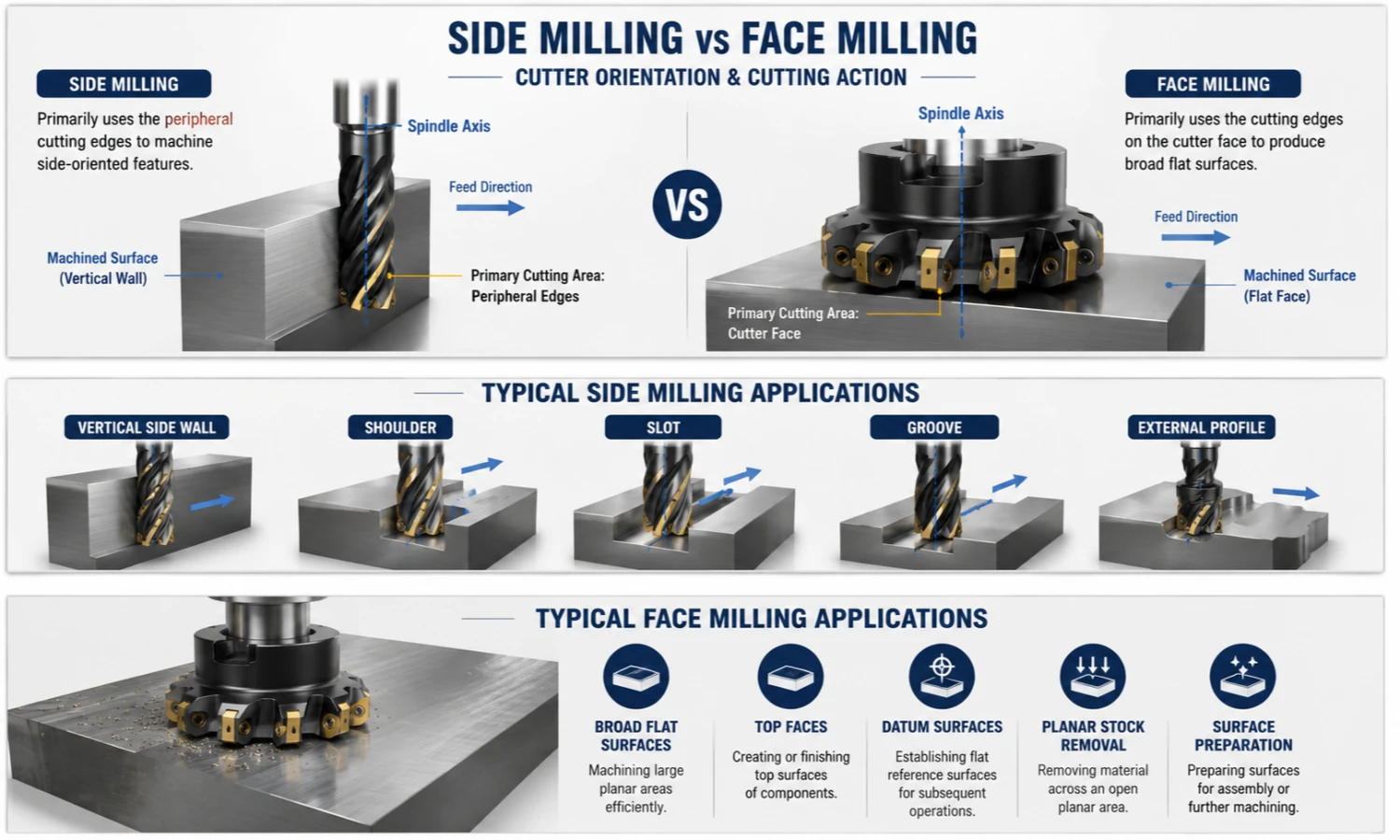
この比較は有用な出発点となります. しかし, 部品の形状, ツールアクセス, 機械剛性, ワークホールディング, 表面要件は最終的な選択に影響を与える可能性があります.
サイドミーリングとは?
サイドフライス加工は、カッターの外周刃先がターゲットフィーチャーに対する加工の大部分を実行するフライス加工操作です。. したがって, 部品を大きな開いた面全体ではなく側面に沿って加工する必要がある場合に一般的に使用されます。.
この用語は外周フライス加工と重複することがよくあります, 主にカッターの円周に沿って切断が行われる場合. しかし, ツールの設計とアプリケーションはメーカーがプロセスを説明する方法に影響を与える可能性があるため、この 2 つの用語は常に正確な同義語として扱うべきではありません。.
実際に, 側面フライス加工は、側面方向のフィーチャーの作成または仕上げに使用されます。.
一般的な側面フライス加工の用途
一般的な側面フライス加工の用途には次のものがあります。:
- 垂直側面
- 肩
- スロット
- 溝
- 外部プロファイル
- アクセス可能なポケットウォール
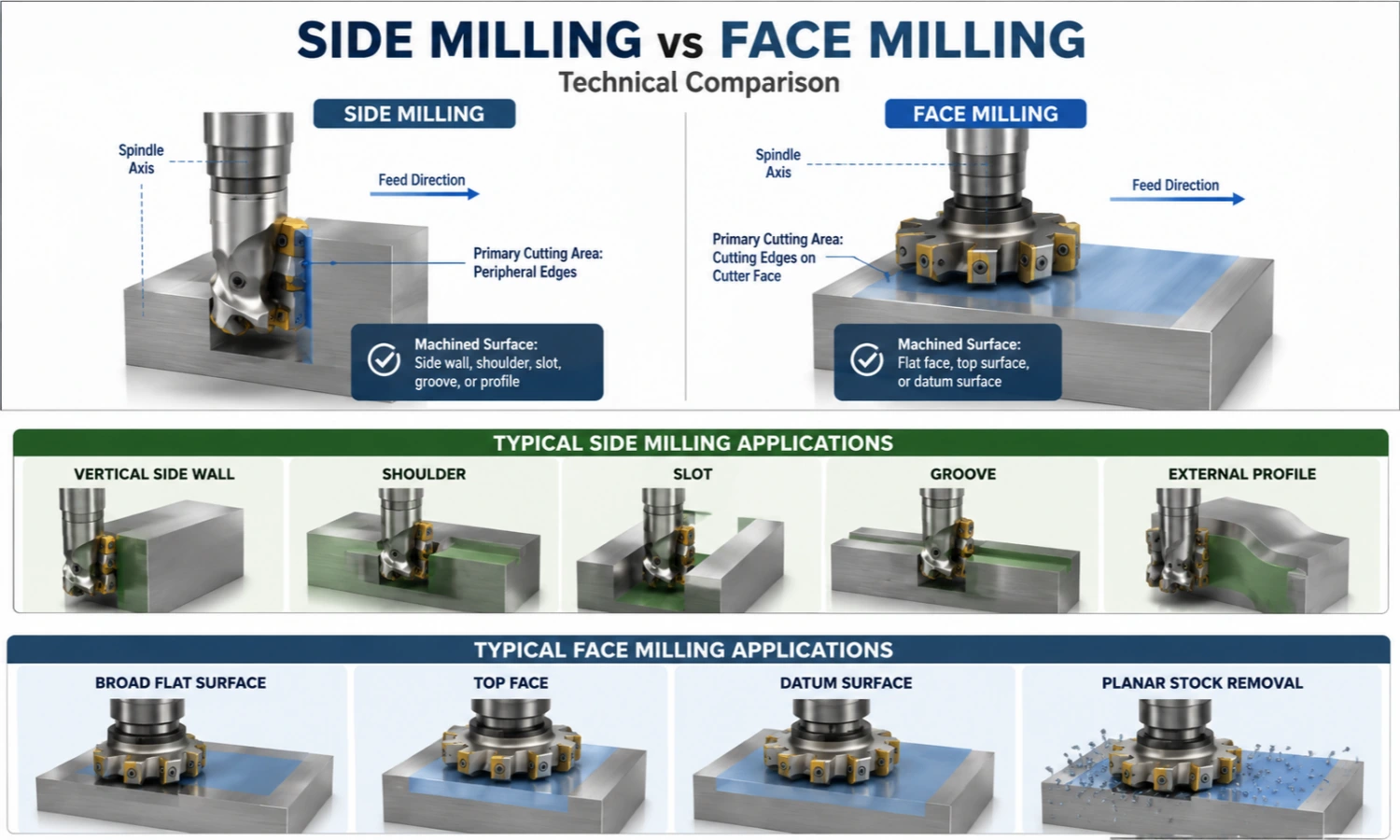
側面フライス加工は、フィーチャーに制御された側面形状が必要な場合に特に役立ちます。.
溝用, 肩, およびその他のサイド指向の機能, 専用の サイドミーリングカッター 操作に適したツール構成を提供する可能性があります.
正面フライスとは?
正面フライス加工では、主にワークピースの表面全体に平坦な表面が生成されます。. 手術中, カッターの軸は通常、加工される表面に対して垂直です.
カッターは比較的広い範囲をカバーできるため、, 機械工はストックを平らにするために正面フライスを使用することがよくあります, 上面の準備, 開いた平面から材料を除去する, または、後の操作のためにデータム面を確立する.
しかし, 正面フライス加工は、表面仕上げや材料除去率だけで判断すべきではありません. カッター径, 幾何学, ワーク材質, マシンの能力, ワークホールディング, なくなる, 切断条件はすべて結果に影響を与える可能性があります.
一般的な正面フライス加工の用途
代表的なアプリケーションには次のものがあります。:
- 広い平面
- 上面
- データム面
- 平面的な削り取り
- 表面処理
これらのアプリケーションは通常、アクセス可能な平面に基づいています.
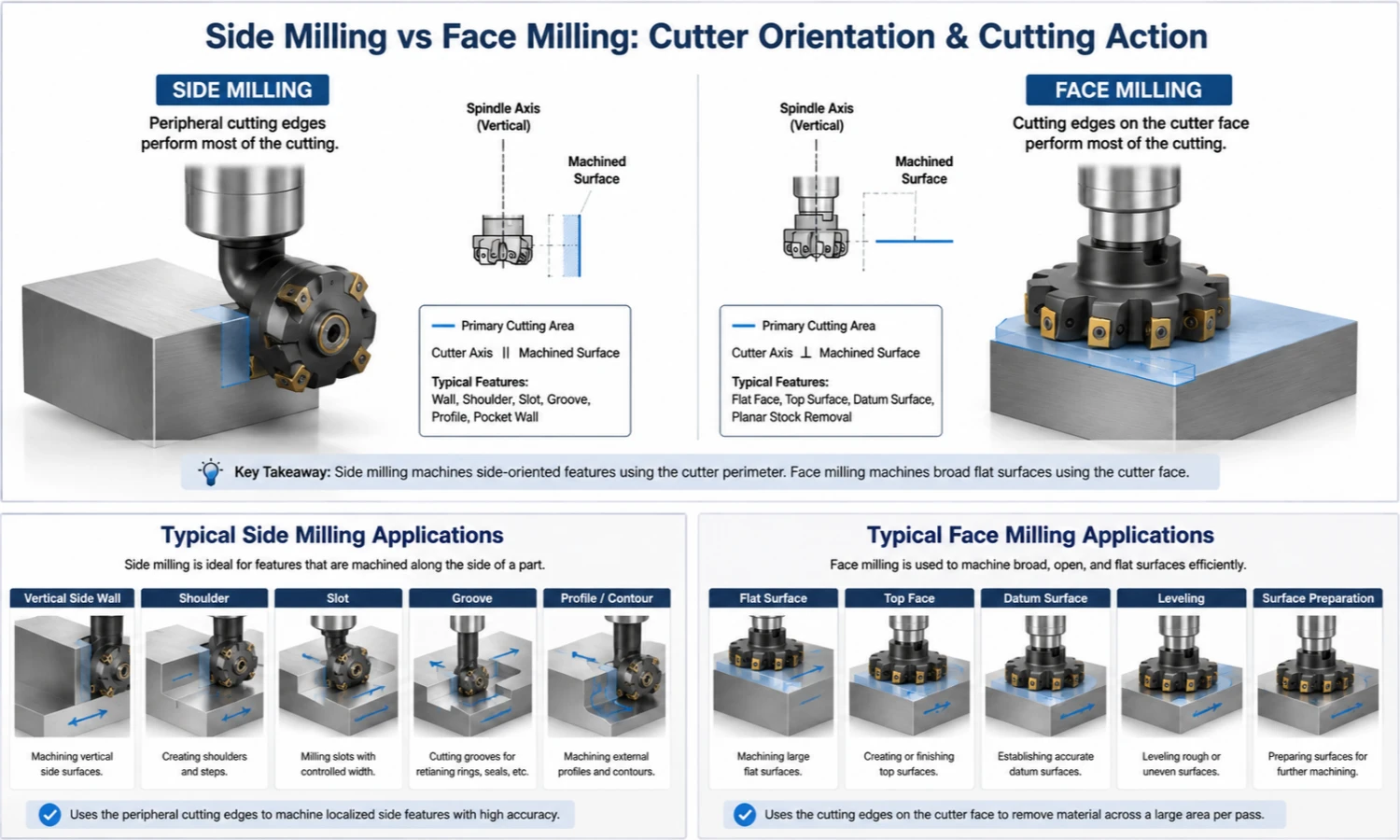
For open planar machining, use a 正面フライスカッター selected for the required surface coverage, アクセス, および加工条件.
Key Differences Between Side Milling and Face Milling
The quick comparison shows what each operation does. The following points explain why they behave differently in practice.
1. Machined Surface and Part Geometry
Part geometry is usually the first factor to check.
Side milling suits features that extend along the side of a component. These may include vertical walls, 肩, 溝, スロット, and external profiles.
Face milling serves a different purpose. It is generally selected when the drawing calls for an open planar surface, top face, or datum.
結果として, the correct process often becomes clearer once you identify the orientation and shape of the target feature.
2. Primary Cutting Edge Engagement
In side milling, 外周刃先がターゲット表面の切削の大部分を実行します。.
正面フライス加工では, カッターの面に配置された切れ刃は主に平面を生成します. カッターの形状に応じて, 最先端の他の部分も参加する可能性があります.
このため, を説明する方が正確です。 主な切断動作 カッターの一部だけがワークピースに接触すると考えるのではなく、.
3. カッターの方向とツールへのアクセス
目的のジオメトリが図面上では単純に見える場合でも、工具へのアクセスによって最適な加工戦略が変更される可能性があります。.
海外, オープンフェースは通常、フェースミルに表面をスイープするのに十分なクリアランスを与えます。. 対照的に, 深い肩, 狭い溝, ポケットウォール, または、局所的な側面フィーチャーには、別の方向からフィーチャーにアプローチできるカッターが必要になる場合があります。.
したがって, 手術を選択する前に 2 つの質問をしてください:
- カッターは物理的にフィーチャに到達できますか?
- 機械と治具は必要な切断方向をサポートできますか?
加えて, コンポーネントに真の 90 度の肩が必要な場合, カッターの形状はその機能をサポートする必要があります. 一般的な正面フライスカッターは、すべての直角肩状態を生成すると自動的に想定されるべきではありません。.
4. 材料除去領域と生産性に関する考慮事項
正面フライス加工は、材料を広範囲にわたって除去する必要がある場合によく機能します。, より大きなカッターはパスごとにより多くの領域をカバーできるため、開いた表面.
側面フライス加工, 一方で, 壁に沿って集中的に切断します, 溝, スロット, 肩, およびその他のローカライズされた機能.
これは、ある操作が他の操作よりも常に生産性が高いという意味ではありません. 生産性はカッターのサイズに依存します, ツールパス, マシンの能力, ワーク剛性, ワークホールディング, 材料, 削除する在庫の量.
したがって, 普遍的に高速な 1 つのプロセスを探すのではなく、機械加工タスクを比較します。.
5. 表面と寸法の要件
次元の優先順位も異なります.
サイドミーリングあり, 主な要件には以下が含まれる場合があります:
- 壁の位置
- 側面寸法
- スロット幅
- ショルダーの形状
- プロファイル精度
正面フライス加工あり, 優先順位は次の方向にシフトする可能性があります:
- 平面度
- データムの品質
- 表面の一貫性
- 平面仕上げ
それにもかかわらず, 正面フライス加工は、あらゆる場合においてより良い仕上げを自動的に保証するわけではありません. 表面品質はカッターの形状にも依存します, なくなる, 最先端の状態, 加工パラメータ, 機械の状態, ワーク保持の安定性.
側面フライス加工と正面フライス加工のどちらを選択するか
実際の選択方法は、カッター自体ではなく、図面に示されているフィーチャから始まります。.
側面フライス加工を選択する場合…
部品に側面フライス加工が必要な場合は、側面フライス加工を検討してください。:
- 垂直の壁
- 溝
- スロット
- 肩
- 横顔
- フィーチャーの側面に沿った局所的な加工
この方法は、大きなカッターで上面をスイープしても必要な形状に効率的に到達できない場合に特に役立ちます。.
正面フライス加工を選択する場合…
一般に、タスクに関連する場合は、正面フライス加工がより直接的な選択肢となります。:
- 広い平面
- 凹凸のある上面を平らにする
- データム面の確立
- 平面領域全体のストックの削除
- 後の加工のために表面を準備する
このような状況では, 操作はフィーチャーの形状に一致し、カッターが開いた領域全体で作業できるようになります。.
部品に異なる機能が必要な場合は両方の操作を使用する
多くのコンポーネントでは、単純な二者択一の決定は必要ありません。.
例えば, 一部の部品には肩部とともに平らな基準面が必要な場合があります, 側壁, または溝. この状況では, 正面フライスと側面フライスは相互に補完することができます.
加工シーケンスでは、側面方向のフィーチャーを加工する前に平面を確立する場合があります。. しかし, 優先順序はデータム戦略によって異なります, 設定, ワークホールディング, 公差要件, そして部品の安定性.
したがって, 側面フライスや正面フライス加工がよく行われます。 競合する業務ではなく補完的な業務.
適切なカッタータイプに合わせたフライス加工操作
必要な操作が明確になったら, カッターの選択が容易になります.
| 部品の特徴 | フライス加工方向 | 一般的なカッター方向 |
| 壁, スロット, 溝, ショルダー | 側面フライス加工 | 側面または外周切断用に設計されたカッター |
| 広い平面または基準面 | 正面フライス加工 | 正面フライス用に設計されたカッター |
| 1 つのパーツにフラットとサイドのフィーチャー | 複合操作 | それぞれのカッターを目的の機能に合わせて使用する |
側面指向の機能の場合, 選択する 側面方向のフィーチャーに適したカッター 必要な幅に応じて, アクセス, フィーチャのジオメトリ, および加工条件.
広い平面加工用, オープン平面加工用の刃先交換式カッター 部品が操作に十分なアクセスを提供する場合に適している可能性があります.
いずれの場合も, 最終的な工具の選択では、ワークの材質も考慮する必要があります。, マシンの能力, ワークホールディング, 利用可能なスペース, および図面要件.
最良の選択を変える可能性のある選択要因
パーツのジオメトリが開始点を提供します; セットアップ条件は、最初の選択が現実的かどうかを決定します.
すべての機能に 1 つのカッターを使用しないでください. 技術的に複数の表面に到達できるツールが、それぞれの表面に最適なオプションであるとは限りません.
材料除去率だけで選ばないでください. カッターがフィーチャーに適切に到達できない場合、または必要な形状を制御できない場合、高い除去率の価値は限られます。.
ツールへのアクセスを確認する, ワークホールディング, と機械剛性. アクセス制限あり, 長いリーチ, またはクランプが弱いと、操作とカッターの選択の両方に影響を与える可能性があります.
正面フライス加工が常に最良の仕上げをもたらすとは考えないでください. 選択したプロセスはまずターゲット サーフェスと一致する必要があります. 次にカッター形状, 切削条件, 機械の安定性, ワークホールディングは最終結果に影響します.
側面フライス加工と正面フライス加工: どれを選ぶべきか?
パーツの特徴を最終的な決定ガイドとして使用する:
- 広い平面または基準面 → 正面フライス加工
- 壁, ショルダー, スロット, 溝, または側面プロファイル → 側面フライス加工
- 平面フィーチャと垂直フィーチャの両方 → 必要に応じて 2 つの操作を組み合わせます
比較する場合 側面フライスと正面フライス, 正しい選択は、まず部品の形状、次に工具のアクセスに依存します。, ワークホールディング, マシンの能力, および表面要件.
図面にカッターを合わせるのにサポートが必要な場合, 材料, および加工要件, アプリケーションの詳細をに送信します sales@cutterbest.com 推奨ツールについては.
よくあるご質問(FAQ)
側面フライス加工と正面フライス加工の主な違いは何ですか?
主な違いは、加工されるフィーチャーと主な切削アクションです。. サイドミーリングでは、主に外周刃を使用して壁などの側面方向のフィーチャーを作成します。, 肩, スロット, そして溝. 正面フライス加工では主に広い平面を作成します, カッター軸が加工面に対してほぼ垂直である.
側面フライス加工と外周フライス加工との関係?
側面フライス加工は、どちらも主にカッターの周囲の刃先に依存するため、外周フライス加工のより広範な概念と重複します。. しかし, 用語はカッターの種類や用途によって異なる場合があります. このガイドの内容, 側面フライス加工は、主に側面方向の部品フィーチャの加工を指します。.
サイドミーリングとエンドミーリングの関係?
外周刃を利用して側面切削が可能なエンドミル, そのため、エンドミル加工にはサイドミーリング加工を含めることができます。. しかし, エンドミルはポケット加工も可能, プロファイリング, ランピング, そして局所的な顔のカット. したがって, サイドミーリングは、すべてのエンドミーリング操作と同一のものとして扱うべきではありません。.
側面フライスと正面フライスを同じ部品に使用できますか?
はい. 多くの部品には平面フィーチャーと側面フィーチャーの両方が含まれています. 正面フライス加工により、平らな基準面または上面が作成される場合があります, 側面フライス加工は壁を加工することができます, 肩, 溝, またはスロット. 正確な順序は部品の設計によって異なります, データム戦略, 設定, および公差要件.
表面仕上げに正面フライス加工が推奨される場合?
ターゲットがオープンな場合は、正面フライス加工が好まれることがよくあります。, 一貫した平坦性または表面の外観が必要な広い平面. しかし, 実際の仕上がりはカッターの形状にも依存します, なくなる, 最先端の状態, 加工パラメータ, 材料, 機械の状態, そしてワークホールディング.