 精密フライスカッター,あらゆる材料を加工するCNC用の切削工具

テーパーエンドミルは、抜き勾配の加工に使用される CNC フライス工具です。, テーパー側壁, 金型キャビティ, 深いプロファイル, 狭い溝, 細かい機械加工が施されています. 一般的なストレートエンドミルとは異なります。, 刃径は先端からシャンクに向かって徐々に大きくなります。.
結果として, 工具は小さな切削チップの後ろでより多くのサポートを提供しながら、角度のある表面に追従できます。. しかし, 正しいカッターは依然としてテーパー角度によって異なります, 先端径, エンドジオメトリ, ワーク材質, 切込み深さ, そして機械の状態.
このガイドでは、テーパーエンドミルの用途について説明します。, さまざまなタイプがどのように機能するか, 金型製作に適した工具の選び方と選び方, 彫刻, プロファイルフライス加工, およびその他の CNC アプリケーション.
テーパーエンドミルとは?
テーパーエンドミルは、先端からシャンクに向かって徐々に切削断面が大きくなるフライスです。. 工具の端が平らになっている場合があります, ボールノーズ, コーナー半径, またはカスタムの切断プロファイル.
メーカーは、部品に傾斜した壁が含まれる場合にこれらのツールをよく使用します。, 抜き勾配角度, テーパー溝, 深い空洞, ストレートカッターでは効率よく加工できない細かい部分など.
通常、主な寸法には次のものが含まれます。:
| ツールの機能 | 説明 |
| テーパー角 | テーパ状の切削部がなす角度 |
| 先端径 | 工具先端付近の最小切削径 |
| 最大カッター径 | 切断部の最大径 |
| 刃長さ | 刃先の長さ |
| 全長 | 先端からシャンク端までの工具全長 |
| シャンク径 | ツールホルダーが保持する直径 |
| エンドジオメトリ | フラットエンド, ボールノーズ, 半径端, またはカスタムフォーム |
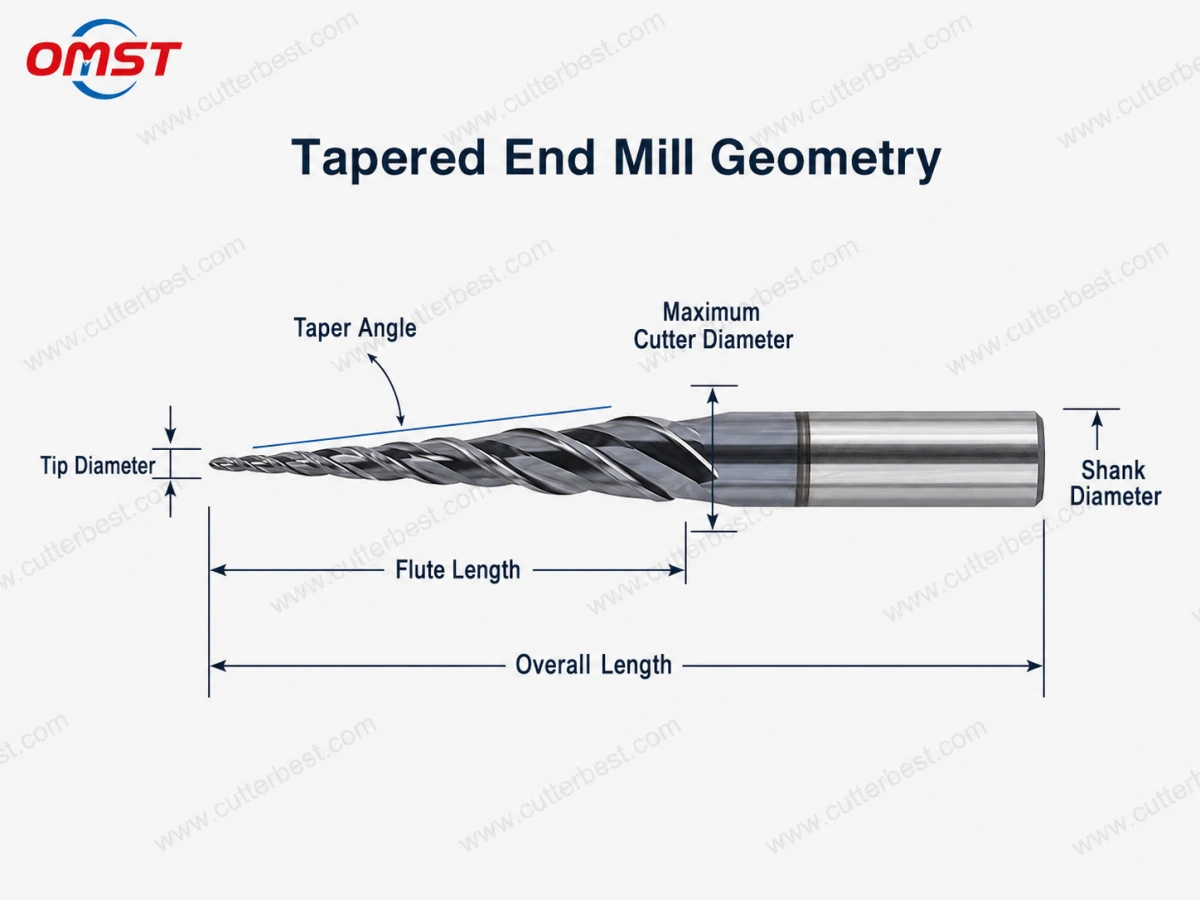
カッターをご注文の前に, 図面に片側テーパ角が示されているか、または総開先角が示されているかを確認してください. さもないと, 完成したプロファイルは部品の設計と一致しない可能性があります.
テーパーエンドミルの用途?
テーパーエンドミルは、角度のある表面が必要な CNC 加工に使用されます。, 徐々に変化する壁のプロファイル, 小さな切断のヒント, または長距離加工時のサポートの向上.
最も一般的な用途には、金型の製造が含まれます。, 抜き勾配フライス加工, テーパー溝加工, 深溝加工, 3Dコンタリング, 彫刻, およびカスタムプロファイルの作成.
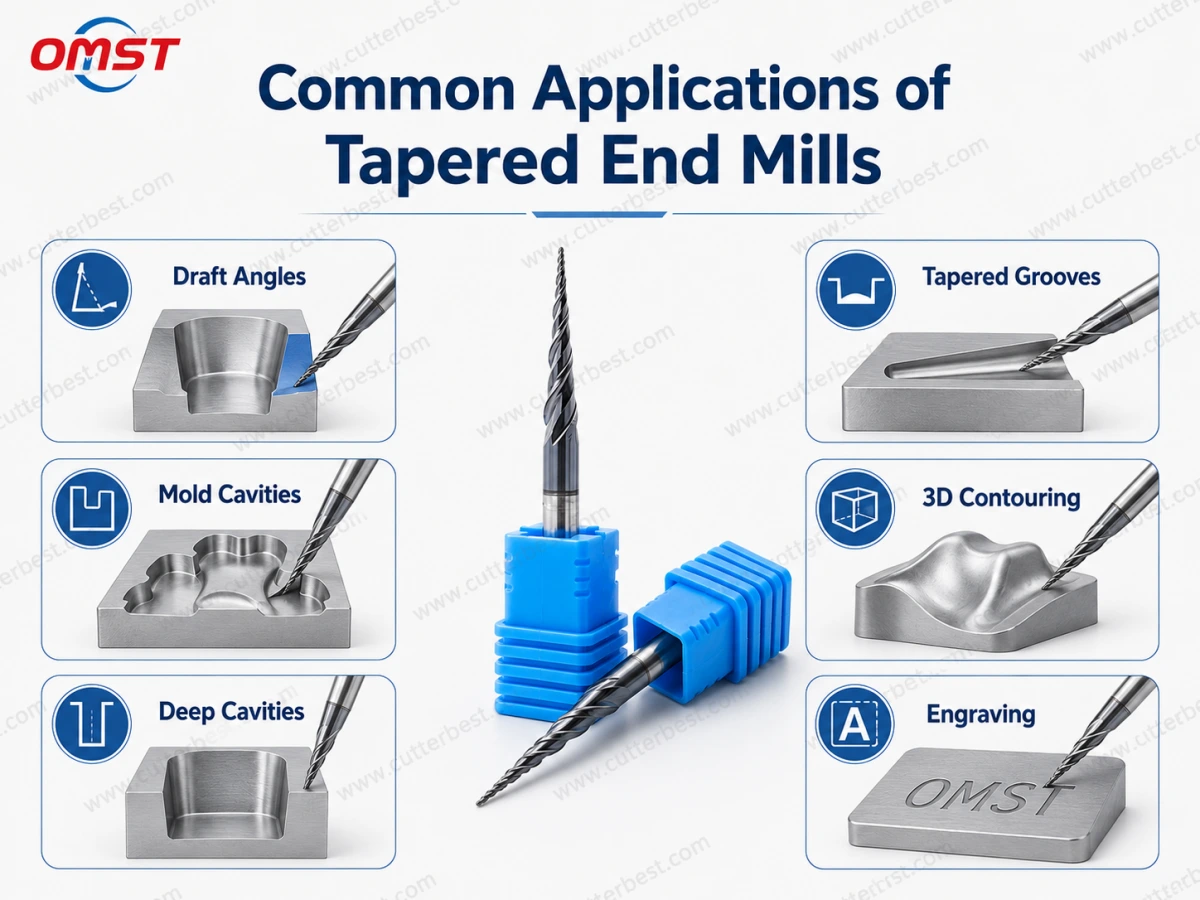
抜き勾配とテーパー側壁の加工
多くの金型, 死ぬ, 機械加工されたコンポーネントには抜き勾配が含まれます. これらの角度により、成形部品の取り外しが容易になり、設計者が非垂直の壁を作成できるようになります。.
テーパーエンドミルは、カッターの形状が図面と一致する場合、必要な角度を直接加工できます。. したがって, このツールはよく使用されます:
- 金型ドラフト壁
- テーパードポケット
- 角度のついたサイドウォール
- 傾斜プロファイル
- 非平行な面
しかし, カッターの角度をよく確認する必要があります. ツールの角度と図面のわずかな違いでも、最終的な壁の形状に影響を与える可能性があります。.
金型と金型のキャビティ加工
金型のキャビティには深い領域が含まれることがよくあります, 斜めの壁, 曲面, そして詳細な推移. 標準のエンドミルではこれらの形状に効率的に到達できない可能性があります, 特にキャビティが底部近くで狭くなっている場合.
テーパーカッターは、シャンクに近い大きな断面を維持しながら、小さな切削チップを提供できます。. その結果, 同様の先端直径とリーチを持つストレートツールよりも優れた剛性を提供する可能性があります。.
一般的な金型およびダイの用途には次のものがあります。:
- 射出成形金型キャビティ
- ダイカスト金型
- 成形金型
- 電極加工
- ドラフトウォール仕上げ
- 詳細なキャビティプロファイル
曲面キャビティおよび 3D 表面用, テーパードボールノーズデザインがよく選ばれます.
深キャビティおよび長距離加工
深いキャビティには追加のツールリーチが必要です. それにもかかわらず, 工具の長さを長くすると、振動やたわみも大きくなる可能性があります.
テーパー工具はシャンクに向かって厚くなるため, 切断領域の後ろでより多くのサポートを提供できます. この形状により、ライトプロファイリングおよび仕上げ作業中の安定性が向上する可能性があります。.
実際のパフォーマンスは依然として依存します:
- 先端径
- テーパー角
- 刃長さ
- 工具オーバーハング
- ツールホルダーの振れ
- 機械剛性
- ワーク材質
- 切断パラメータ
テーパー設計は適切な加工設定に代わるものではありません. したがって, 可能な限り実用的な最短の工具長を使用してください.
テーパー溝と特殊プロファイル
テーパー状の溝の壁は平行ではありません, そのため、標準のストレートエンドミルを使用して 1 回の操作で常に製造できるわけではありません。.
テーパーフライスカッターは次の目的で使用できます。:
- テーパースロット
- 斜めの溝
- V 字型プロファイル
- 特殊なフォーム機能
- カスタム CNC コンポーネント
- 非標準の機械部品
溝の角度や形状が特殊な場合, カスタムツールを使用すると、加工ステップの数が削減される場合があります.
3D 輪郭と曲面
テーパー刃部と丸みを帯びた先端を組み合わせたテーパーボールエンドミル. このツールは曲面に適しています, 3D輪郭, そして金型の仕上げ.
代表的なアプリケーションには次のものがあります。:
- 金型キャビティの仕上げ
- コンポーネントの曲面
- 3Dプロファイルフライス加工
- 複雑な金型形状
- 遷移面
- 彫刻パーツ
ボールの半径, テーパー角, とツールパスが連動する必要があります. 加えて, より細かい表面仕上げが必要な場合は、通常、小さなステップオーバーが必要です.
テーパー形状を必要とする曲面および 3D プロファイル用, see our テーパーボールエンドミル.
彫刻と微細加工
マイクロテーパーエンドミルは細部の加工によく使用されます, 狭い特徴, 細かい彫刻, ミニチュア金型部品.
小さな先端で狭い場所にも入り込むことができる. Meanwhile, テーパー状のボディが刃先の後ろで工具をサポートします.
これらのツールは次の目的で使用できます。:
- 細かいレタリング
- 細かい金型の詳細
- 狭いチャンネル
- 装飾的なプロファイル
- 精密彫刻
- 小型部品
しかし, マイクロカッターは振れや過度の切削負荷に敏感です. したがって, 工具保持, スピンドルの状態, 切断パラメータを注意深く確認する必要があります.
一般的なテーパーエンドミルの用途
次の表は、いくつかの一般的な用途をまとめたものです:
| 応用 | 適切なカッターの種類 | 主な選定ポイント |
| 抜き勾配加工 | テーパーフラットエンドミル | テーパ角度を図面に合わせる |
| 金型キャビティの仕上げ | テーパーボールエンドミル | 半径を確認する, 到着, および表面要件 |
| テーパ溝加工 | フラットエンドまたはカスタムテーパーカッター | 溝の幅と壁の角度を確認してください |
| ディープキャビティプロファイリング | 硬質超硬テーパーエンドミル | 突出しを最小限に抑え、切削負荷を抑制 |
| 細かい彫刻 | マイクロテーパーエンドミル | 振れと先端径の制御 |
| 3D曲面 | テーパーボールノーズカッター | 適切な半径とステップオーバーを選択してください |
| カスタムプロファイル | カスタム形状テーパーカッター | 完全な図面と材料情報を提供する |
テーパーエンドミルを使用する理由?
すべてのフライス加工にテーパーエンドミルは必要ありません. しかし, ワークピースに角度のあるフィーチャや到達しにくいフィーチャが含まれている場合、いくつかの実用的な利点が得られます。.
ロングリーチ用途における剛性の向上
切削長が長い小型ストレートエンドミルは、切削圧力によりたわむ場合があります。. 比較すると, テーパー付きツールには、小さな先端の後ろに多くの材料があります.
結果として, 断面の増加により、適切な仕上げ加工やプロファイルフライス加工の際の剛性の向上に役立ちます。.
まだ, 剛性は完全なセットアップに依存します. 工具径, 超硬グレード, ホルダーの状態, 切込み深さ, 機械の安定性も考慮する必要があります.
角度のついた狭いエリアへのアクセスが向上
先端が小さいので狭い場所にも入り込むことができます, テーパー状の切れ刃が角度のある壁に沿って動きます。. したがって, 1 つのカッターで、複数の操作や特別なツール パスが必要となるフィーチャーに到達できる可能性があります。.
これは金型キャビティで特に役立ちます, 細かい部分, テーパー状の溝と.
必要な壁角度を直接加工
カッターの角度が部品の設計と一致する場合, テーパー状の切れ刃により壁全体の角度を直接加工できます.
これにより、ツールパスが簡素化され、プロファイルの一貫性が向上する可能性があります。. しかし, 図面では異なる角度定義が使用されている場合があるため、製造前に角度を確認する必要があります。.
テーパー形状の安定仕上げ
適切なテーパー工具を使用すると、角度のあるプロファイルに沿って安定した接触を実現できます。. 加えて, 正しい溝の設計とコーティングにより、切りくず排出性と耐摩耗性が向上します。.
最良の結果を得るために, 完全な生産の前に、制御されたテストカットを通じて切断パラメータを検証する必要があります。.
Common Types of Tapered End Mills
Different end geometries are selected for different workpiece features.
Tapered Flat End Mills
A tapered flat end mill has a flat cutting tip. It is commonly used for:
- Flat-bottom tapered grooves
- 角度のついたサイドウォール
- Draft profiles
- Mold features
- テーパースロット
This design is suitable when the bottom surface must remain relatively flat.
For this flat-end tapered geometry, see our テーパースクエアエンドミル.
Tapered Ball Nose End Mills
A tapered ball nose end mill has a rounded cutting tip. It is mainly used for:
- 曲面
- 3D輪郭
- 金型キャビティ
- Complex profiles
- Surface finishing
Because the tip is rounded, the tool can follow curved tool paths more smoothly than a flat-end cutter.
Tapered Radius End Mills
A tapered radius end mill includes a corner radius between the tool bottom and side cutting edges.
アールはカッティングコーナーを強化し、底部と側壁の間の滑らかな移行を生み出すことができます。. したがって, このタイプは中仕上げに使用できます。, 金型プロファイル, およびフィレットされたフィーチャー.
平坦な端部と R 移行部を備えたテーパー切断形状用, see our テーパーコーナーラジアスエンドミル.
マイクロテーパーエンドミル
マイクロテーパーカッターは先端径が非常に小さい. 詳細なプロファイルに使用されます, 狭い特徴, 彫刻, そしてミニチュアの空洞.
先端が小さいので, 振れ制御は重要です. 振れが限られている場合でも、不均一な切削負荷が増加し、工具寿命が短くなる可能性があります。.
カスタムフォームテーパーカッター
一部のコンポーネントには非標準のテーパー角度が必要です, 先端径, 刃の長さ, または切断プロファイル. In these cases, メーカーは図面に従ってカスタムカッターを製造できます.
Cutterbest は標準および非標準のテーパー カッター要件をレビューできます. 私たちのものを見る カスタムテーパーカッター 利用可能な形状の製品ページ, コーティング, およびOEMオプション.
テーパーエンドミル vs ストレートエンドミル
テーパーエンドミルとストレートエンドミルはさまざまな加工要件に使用されます. ストレートエンドミルで一定の刃径を維持, テーパーカッターはシャンクに向かって徐々に直径が大きくなります.
| 選択ポイント | テーパーエンドミル | ストレートエンドミル |
| 切断形状 | テーパー状の切断部 | 一定の切断径 |
| 主な用途 | 抜き勾配角度, テーパー壁, と特別なプロファイル | まっすぐな壁, ポケット, とスロット |
| ディープリーチ | セクションを増やすと剛性が向上する可能性があります | 剛性は直径とリーチに大きく依存します |
| 金型加工 | ドラフトウォールや特殊なキャビティに最適 | 一般的なポケットや垂直の壁に適しています |
| 終了オプション | フラットエンド, ボールノーズ, 半径, またはカスタム | フラットエンド, ボールノーズ, 半径, その他の標準タイプ |
| 主な寸法 | テーパー角, 先端径, そして到達する | カッター径と切断長さ |
| カスタマイズ | 多くの場合、角度とプロファイルに合わせてカスタマイズされます | 標準的な直径と長さから選択されることが多い |
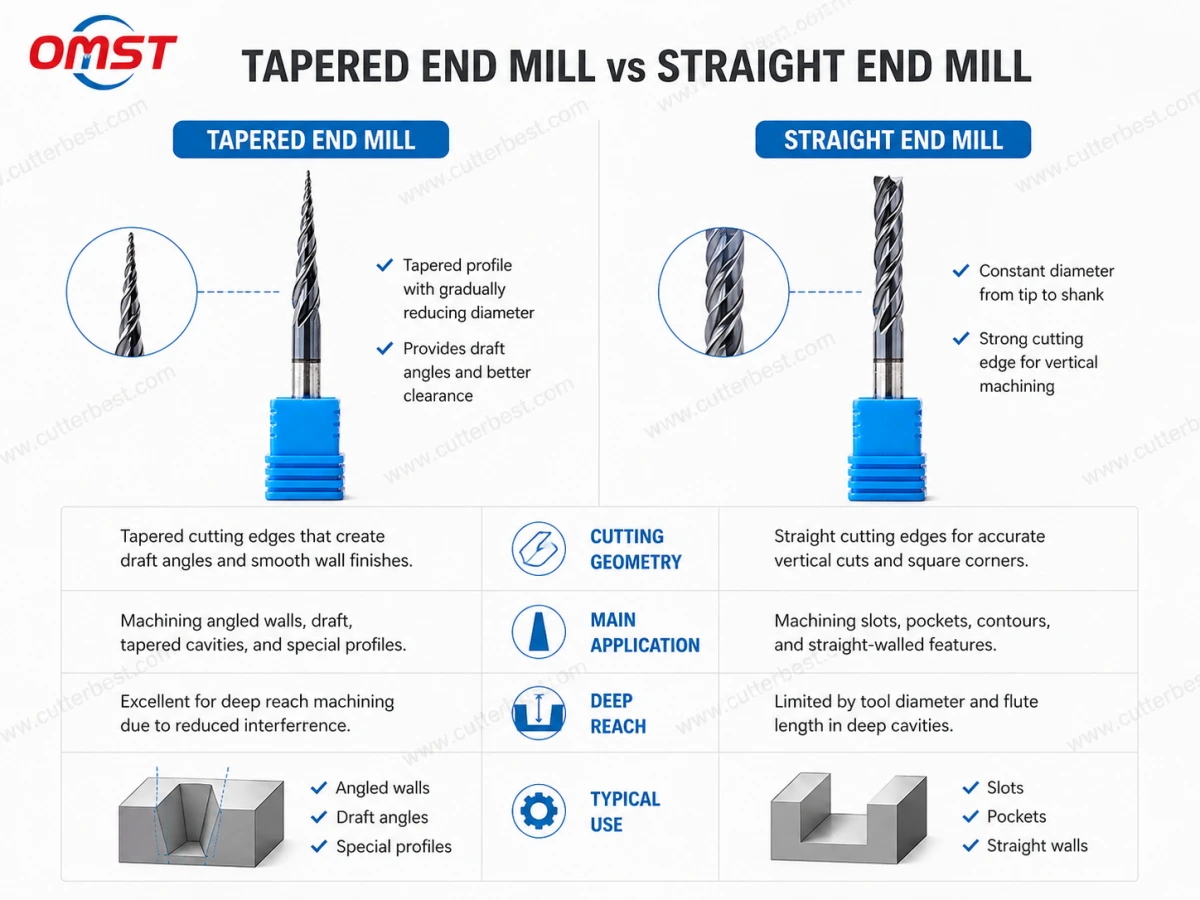
壁の角度がコンポーネント設計の一部である場合は、通常、テーパー付きツールが推奨されます。. 対照的に, 一般的な溝にはストレートエンドミルを選択するのが一般的です, ポケット, 垂直側壁, 標準プロファイルフライス加工.
テーパーエンドミルの選び方
刃先径だけでカッターを選ぶのでは不十分. 完全な形状と加工条件を見直す必要があります.
必要なテーパー角の確認
初め, 図面を確認し、角度の指定方法を確認してください。.
一部の図ではツールの片側の角度が示されています. その他は完全な開先角を示します. したがって, この詳細は生産前に確認する必要があります.
最終壁に必要かどうかも確認してください:
- 一定のテーパー
- 抜き勾配角度
- 曲線的なトランジション
- 特別なプロフィール
- 壁角度の公差
刃先と最大カッター径を選択してください
先端の直径は、工具が加工できる最小のフィーチャーに影響します。.
小さめのチップで細かい部分まで入力可能. しかし, 振動にも敏感です, なくなる, 過大な切削負荷.
カッターの最大直径は、キャビティの開口部と部品の形状にも適合する必要があります。.
正しい終了ジオメトリを選択してください
フラットエンドかどうかはワークの形状によって決まります, ボールノーズ, 半径端, または特別なプロファイルが必要です.
| ワークの特徴 | 推奨される端部形状 |
| 平底テーパースロット | テーパー付きフラットエンド |
| 湾曲した金型キャビティ | テーパードボールノーズ |
| フィレットトランジション | テーパー半径端 |
| 細かい彫刻 | マイクロテーパーカッター |
| 規格外の形式 | カスタムプロファイルカッター |
刃長とツールリーチの確認
加工領域に安全に到達できる最短の刃長と全長を使用してください。.
ツールが長いほどアクセスが増加する. しかし, 振動やたわみが大きくなる可能性もあります. したがって, 不必要なツールの拡張は避けるべきです.
ホルダーはまた、ワークピースに接触することなく、可能な限りシャンクをグリップする必要があります。.
ワーク材質に合わせた刃形状を選択
材質が異なれば、異なる刃先と溝の設計が必要になります.
例えば, アルミニウムには通常、鋭いエッジと十分なチップスペースが必要です. 対照的に、, 鋼の加工では、多くの場合、より強力な刃先と適切な耐摩耗性が必要です。.
| ワーク材質 | 選択に関する一般的な考慮事項 |
| アルミニウムおよび非鉄材料 | 鋭いエッジ, 磨かれたフルート, 良好な切りくず排出 |
| 炭素鋼 | 適切な超硬グレードと耐摩耗性コーティング |
| ステンレス鋼 | シャープな形状, 安定した保持, そして耐熱コーティング |
| 金型鋼 | 剛性が良い, 制御されたリーチ, そして適切なコーティング |
| 鋳鉄 | 耐摩耗形状と安定した切削条件 |
| 焼入鋼 | 高剛性セットアップ, 適切な超硬グレード, および制御されたパラメータ |
これらの推奨事項は一般的なものです. 材料の硬さに応じて正確な工具を選択する必要があります, 機械の状態, 冷却剤, そして切断作業.
超硬グレードとコーティングを選択してください
コーティングはワークと切削条件に適合する必要があります.
一般的なオプションには以下が含まれます:
- 鋭い切断および一部の非鉄用途向けのコーティングされていない超硬
- TiAlN または AlTiN は鋼および高温での作業に適しています
- 選択された硬質材料用途向けの TiSiN
- アルミニウムおよびその他の非鉄材料用のDLC
- 研磨されたフルートにより切りくずの流れが改善
しかし, コーティングなしはあらゆる作業に最適です. どれかを選択する前に, 切断速度を考慮する, 冷却剤, ワーク硬度, 工具径, と加工時間.
機械の剛性と工具保持力を見直す
機械やホルダーが不安定な場合は、正しいカッターでもパフォーマンスが低下する可能性があります。.
チェック:
- スピンドルの状態
- ツールホルダー振れ
- ツール拡張
- ワーククランプ
- クーラントまたはエア供給
- 送り速度
- 主軸速度
- アキシャルおよびラジアル切削深さ
マイクロツール用, 振れは装置が許す限り厳密に制御する必要があります.
テーパーエンドミルをより効果的に使用するには
カッターの先端が小さい場合やリーチが長い場合は、正しい操作が特に重要です。.
工具振れを最小限に抑える
振れにより、一方の刃先が他方よりも多くの材料を除去します。. その結果, 荷重が不均一になり、小さなチップが摩耗したり、早期に破損する可能性があります.
清潔なものを使用する, 正確なホルダーを使用し、定期的にスピンドルとコレットを検査してください.
実用的な最短のツール拡張機能を使用する
過剰なオーバーハングは剛性を低下させます. したがって, ワークピースに安全にアクセスできる最短の延長部でツールを取り付けます。.
しかし, ホルダーが部品や治具に接触しないようにしてください.
過度の切削負荷を避ける
シャンク径のみに基づいて切削パラメータを適用しないでください。. 小さなチップと局所的な切削直径も考慮する必要があります.
新しい材料またはプロファイルを加工する場合は、控えめなパラメータから開始します. それから, 切断音を確認して工程を調整, 切りくず形成, 工具の摩耗, そして表面品質.
効果的な切りくず排出を維持
深いキャビティ内に切りくずが溜まる可能性がある. 再カットされた場合, 表面品質が低下し、切削熱が増加する可能性があります.
空気, 冷却剤, 実際には、別の適切な切りくず除去方法を切削ゾーンに向けて使用する必要があります。.
工具と仕上げ面の検査
定期的な検査により、ツールの故障が発生する前に問題を特定できます.
探す:
- エッジ摩耗
- チッピング
- ビルドアップ材
- フルートの偏摩耗
- 振動痕
- 表面仕上げが悪い
- プロファイルまたは寸法の変化
このような兆候が現れたら, 振れを確認する, ツールエクステンション, 切削負荷, コーティング, および切りくず排出.
カスタムテーパーエンドミルに必要な情報?
カスタムツールをリクエストする前に、主な加工の詳細を提供してください:
- ワーク材質と硬さ
- テーパー角と角度の定義
- 刃先径と最大カッター径
- 刃長さ, 全長, とシャンク径
- 端部の形状とコーティングの要件
- ドローイング, quantity, および機械加工アプリケーション
標準以外のカッター形状の場合, 私たちのものを見る カスタムテーパーカッター 商品ページ:
その他のカスタム切削工具について, 私たちのものを見る カスタムエンドミル.
よくある質問
テーパーエンドミルの用途?
テーパーエンドミルを使用して抜き勾配を加工します。, テーパー壁, 深い金型キャビティ, 狭い溝, 3D輪郭, 彫刻の詳細, および非標準プロファイル.
正確な用途はテーパー角度によって異なります, 先端径, エンドジオメトリ, 切断長さ, およびワーク材質.
テーパーエンドミルはストレートエンドミルより強いですか?
テーパー状の切断セクションには、小さな先端の後ろにより多くの材料があります. したがって, 同様の先端直径とリーチを持つストレートツールよりも優れた剛性を提供する可能性があります。.
しかし, 実際の強度は依然として超硬グレードに依存します, 工具の長さ, 先端サイズ, ホルダー振れ, 切断パラメータ, およびワーク材質.
テーパーフラットエンドとテーパーボールエンドミルの違いは何ですか?
機械工は平底フィーチャーにテーパー付きフラット エンド ミルを使用します, テーパー溝, そして斜めのサイドウォール.
テーパーボールエンドミルは先端が丸く曲面加工に適しています。, 金型キャビティ, 3D輪郭, and finishing operations.
テーパーエンドミルは焼き入れ鋼を加工できます?
テーパーエンドミルは超硬材種の場合、高硬度鋼の加工が可能です。, コーティング, 工具形状, 機械剛性, 切断パラメータが適切である.
生産前, 材料の硬さを確認し、制御されたテストカットを実行します.
テーパー角の指定方法?
図面では、テーパを片側角度または合計開先角度として指定できます。. 図面規格と顧客の説明が異なる場合があるため, 工具を製造する前に角度の定義を確認してください.
テーパーエンドミルをカスタマイズできますか?
はい. テーパー角をカスタマイズできます, 先端径, 最大切断径, エンドジオメトリ, 刃の長さ, 全長, シャンク径, 超硬グレード, コーティング, レーザーマーキング, 用途に応じたパッケージングと.
生産前にサンプルを注文できますか?
通常、サンプルの注文はカッターの形状に基づいて評価できます。, ワーク材質, コーティング, 製造難易度, そして必要な量.
ツールの設計と見積もりを確認する前に、完全な図面を提供してください。.
結論
抜き勾配にはテーパーエンドミルを使用, テーパー側壁, 金型キャビティ, 深いプロファイル, テーパー溝, 3D輪郭, 彫刻, およびその他の詳細な CNC アプリケーション.
フラットエンドツールは平底および傾斜壁のフィーチャーに適しています. ボールノーズデザインは曲面や金型の仕上げに適しています. Meanwhile, マイクロテーパーカッターは狭い領域や細かい部分に便利です.
正しいツールを選択するには, テーパー角を確認する, 先端径, 最大カッター径, エンドジオメトリ, 切断長さ, ワーク材質, 機械の状態, および必要な表面仕上げ.
のために カスタムテーパーカッター 必要条件, 図面を送ることができます, ワーク材質, 必要な寸法, machining application, レビューのために Cutterbest に数量を注文します. サンプルテストや生産機械加工に適した超硬テーパーカッターを推奨またはカスタマイズできます。.