 정밀 밀링 커터,모든 재료를 가공하는 CNC용 절삭 공구

알고 싶다면 초경 드릴 비트를 선택하는 방법 다양한 재료에 대해, 공작물 재료부터 시작, 드릴 직경뿐만 아니라. 적합한 드릴은 경도에 따라 달라집니다., 구멍 깊이, 기계 강성, 냉각수 상태, 및 생산 수량.
예를 들어, 강철, 스테인레스 스틸, 알류미늄, 주철, 흑연은 모두 서로 다른 드릴링 문제를 야기합니다.. 그러므로, 하나의 드릴 디자인이 모든 재료에 적합할 수는 없습니다.. 구매자가 사이즈나 코팅색상만으로 선택하는 경우, 드릴이 빨리 마모될 수 있습니다., 쉽게 부서지다, 또는 불안정한 홀 품질 생성.
이 가이드에서는 설명합니다. 초경 드릴 비트를 선택하는 방법 다양한 재료 및 CNC 드릴링 조건에 적합. 또한 구매자가 견적을 요청하기 전에 제공해야 할 정보가 무엇인지도 보여줍니다..
표준 및 맞춤형 CNC 드릴링 도구용, 우리의 보기 초경 드릴 비트.
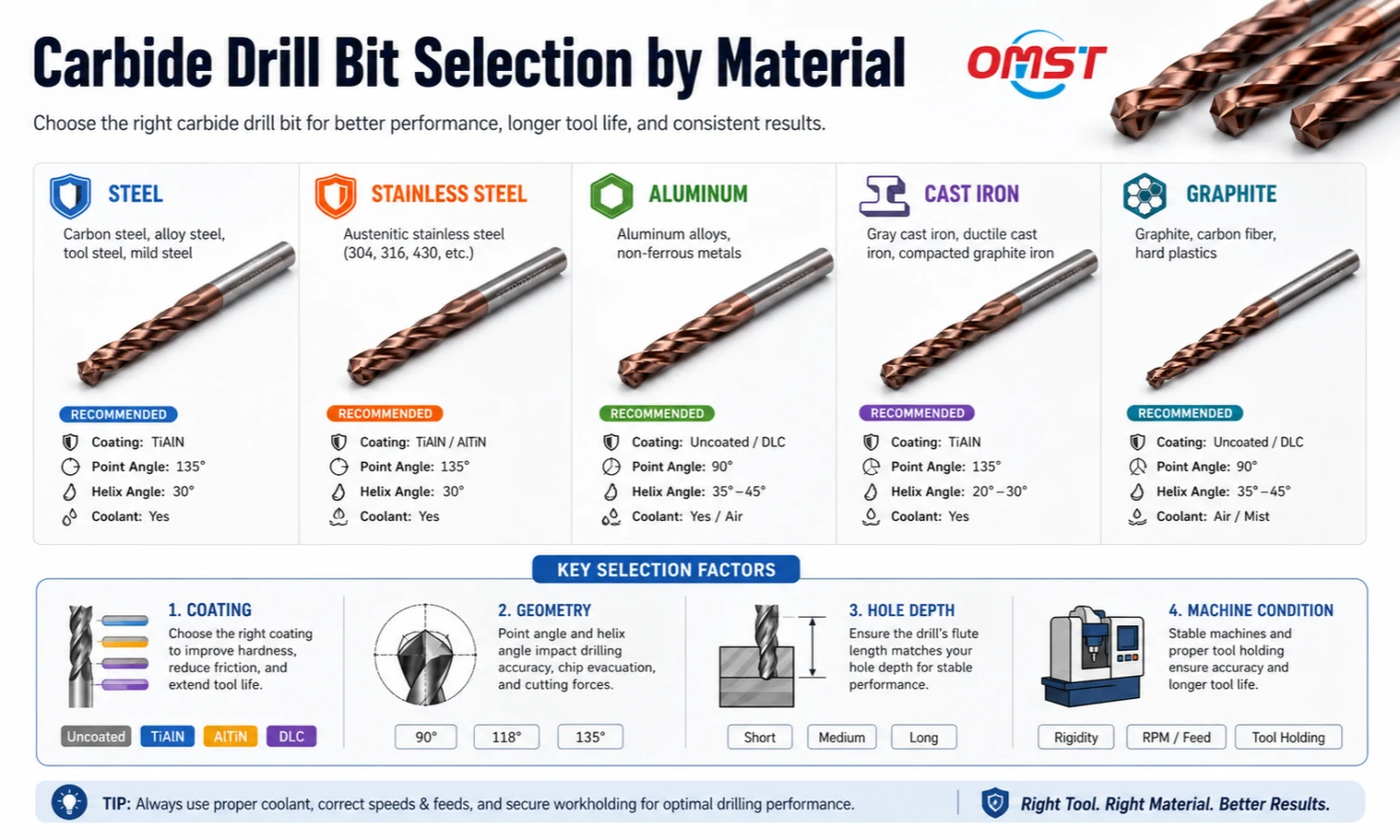
피삭재 재질에 따른 초경 드릴 비트 선택 방법
다른 재료는 같은 방식으로 절단되지 않습니다. 일부 재료는 높은 열을 발생시킵니다.. 일부 재료는 절단면에 달라붙습니다.. 다른 것들은 연마성이 있어서 드릴을 빨리 마모시킵니다..
이러한 이유로, 구매자는 드릴 직경만으로 초경 드릴 비트를 선택해서는 안됩니다. 드릴 포인트, 플루트 디자인, 코팅, 초경 등급, 생크 강성, 칩 배출도 실제 가공 애플리케이션과 일치해야 합니다..
다양한 재료로 인해 다양한 드릴링 문제 발생
강철 및 합금강은 일반적으로 우수한 내마모성과 안정적인 절삭날을 요구합니다.. 스테인리스강은 드릴링 중에 열을 발생시키고 가공 경화를 일으킬 수 있습니다.. 알루미늄과 구리는 구성인선이나 칩 접착을 생성할 수 있습니다.. 주철은 마모성이 있을 수 있습니다.. 흑연은 또한 마모성이 있으므로 특수 코팅이 필요할 수 있습니다..
그러므로, 알루미늄에 잘 작동하는 드릴은 스테인리스강에는 최선의 선택이 아닐 수도 있습니다.. 비슷하게, 일반 코팅 초경 드릴은 흑연 드릴링에 적합하지 않을 수 있습니다..
직경만으로 드릴을 선택하지 마십시오
직경이 중요해요, but it is only one part of drill selection. Buyers should also confirm:
- 피삭재 재질 및 재종
- 재료 경도
- 구멍 직경
- 구멍 깊이
- 관통 구멍 또는 막힌 구멍
- 기계 유형
- 냉각수, air blow, or dust removal condition
- 필요 수량
- 도면 또는 샘플, 가능하다면
When this information is clear, the drill geometry and coating can be selected more accurately.
Standard Size vs Custom Carbide Drill Bits
Standard carbide drill bits are suitable for many common hole sizes. 하지만, custom carbide drill bits may be needed for special hole depth, small-diameter drilling, non-standard shank size, special coating, or OEM marking.
If the required hole is not a common size, or if the current drill wears too fast, a custom drill may be a better solution.
강철 및 합금강용 초경 드릴 비트
강철 및 합금강은 CNC 드릴링의 일반적인 재료입니다.. 하지만, 경도와 합금 함량은 많이 다를 수 있습니다.. 이러한 이유로, 구매자는 드릴을 선택하기 전에 재료 등급과 경도를 제공해야 합니다..
강철에 권장되는 드릴 기능
강철용 초경 드릴 비트는 강성이 좋아야 합니다., 안정적인 절삭날, 그리고 적당한 코팅. 드릴은 기계 상태 및 구멍 깊이와도 일치해야 합니다..
일반강 드릴링용, 구매자는 종종 고려:
- 고체 초경 기판
- 안정적인 드릴 포인트 형상
- 내마모성 코팅
- 적합한 플루트 디자인
- 칩 배출이 양호함
- 적절한 절삭유 공급
강철을 열처리한 경우, 공구 선택 전에 경도를 확인해야 합니다..
강철 코팅 선택
강철 및 합금강용, 코팅 선택은 경도에 따라 달라집니다., 절단 온도, 및 생산 수량. TiAlN, 금, 또는 용도에 따라 다른 적합한 코팅을 고려할 수 있습니다..
하지만, 코팅은 색상만으로 선택하면 안 됩니다. 검정색, 금, 파란색, 또는 구리색 드릴이 자동으로 공작물에 적합하다는 것을 의미하지는 않습니다.. 대신에, 코팅은 재료와 일치해야 합니다, 기계, 그리고 드릴링 조건.
구매자가 제공해야 하는 정보?
강철용 초경 드릴 비트를 요청하기 전에, 구매자는 강철 등급을 제공해야 합니다, 경도, 구멍 직경, 구멍 깊이, 기계 유형, 냉각수 상태, 및 주문 수량.
이는 공급업체가 표준 크기만 제공하는 대신 적합한 드릴을 추천하는 데 도움이 됩니다..
스테인레스강용 초경 드릴 비트
스테인레스강은 일반강보다 드릴링이 더 어렵습니다.. 열이 발생할 수 있습니다., 작업 강화를 생성, 칩 배출 문제가 발생합니다.. 그러므로, 스테인레스 스틸용 초경 드릴 비트는 안정적인 형상과 우수한 열 제어가 필요합니다..
스테인레스 스틸이 드릴하기 어려운 이유
드릴링 중, 도구가 적절하게 절단되지 않고 문지르면 스테인레스 스틸이 절단 영역에서 더 단단해질 수 있습니다.. 게다가, 칩 배출이 불량하면 절삭날이 손상되거나 홀 품질이 저하될 수 있습니다..
이 때문에, 드릴의 날 강도가 충분해야 합니다., 적합한 코팅, 칩 제거를 지원하는 플루트 디자인.
드릴 형상을 선택하는 방법
스테인레스강용 초경 드릴 비트를 선택할 때, 구매자는 스테인레스 스틸 등급을 고려해야 합니다, 구멍 깊이, 냉각수 공급, 및 기계 강성.
적합한 드릴 설계에는 다음이 포함될 수 있습니다.:
- 강력한 절삭날
- 안정적인 포인트 기하학
- 적합한 플루트 디자인
- 내열성 및 내마모성을 위한 코팅
- 적절한 절단 매개변수
많은 경우, 재료 등급과 홀 요구 사항을 검토한 후 드릴을 선택해야 합니다..
일반적인 구매자 실수
흔히 저지르는 실수는 크기별로만 드릴을 선택하는 것입니다.. 또 다른 실수는 코팅색만 보고 선택하는 것.
스테인레스강용, 구매자는 먼저 재료 등급을 확인해야 합니다., 경도, 구멍 깊이, 그리고 냉각수 상태. 그러면 공급업체는 더 적합한 초경 드릴 비트를 추천할 수 있습니다..
주철용 초경 드릴 비트
주철 드릴링에는 우수한 내마모성과 안정적인 절삭날이 필요합니다.. 하지만, 회색 주철, 연성이 있는 철, 기타 주조 재료에는 다른 드릴 디자인이 필요할 수 있습니다..
주철이 다른 이유?
주철은 마모성이 있을 수 있습니다.. 긴 칩 대신 가루 같은 칩이 생성될 수도 있습니다.. 그러므로, 드릴은 주철 유형 및 구멍 요구 사항에 따라 선택되어야 합니다..
드릴 형상은 안정적인 절단을 지원하고 불필요한 모서리 마모를 줄여야 합니다..
드릴 설계 고려 사항
주철용, 구매자는 고려해야합니다:
- 주철 종류
- 재료 경도
- 구멍 직경
- 구멍 깊이
- 건식 또는 습식 가공 조건
- 배치 생산 수량
적합한 초경 드릴 비트는 절단 조건이 적절하게 제어될 때 드릴링 안정성을 향상시키고 공구 마모를 줄이는 데 도움이 될 수 있습니다..
맞춤형 초경 드릴이 필요한 경우
주철 부품에 특별한 구멍 깊이가 있는 경우 맞춤형 초경 드릴이 필요할 수 있습니다., 엄격한 관용, 비표준 직경, 아니면 생산량이 많거나.
이러한 경우, 도면이나 샘플은 올바른 드릴 크기와 형상을 확인하는 데 도움이 될 수 있습니다..
알루미늄 및 구리용 초경 드릴 비트
알류미늄, 구리, 기타 비철 재료에는 다른 선택 방법이 필요합니다.. 이러한 재료는 절삭날에 들러붙어 드릴링 중에 구성인선을 생성할 수 있습니다..
비철 재료에 다른 드릴 선택이 필요한 이유
알루미늄과 구리는 강철보다 부드럽습니다., 하지만 드릴링이 항상 쉬운 것은 아닙니다.. 칩 배출이 불량한 경우, 드릴이 막힐 수 있습니다. 모서리 형상이 적합하지 않은 경우, 홀 마감이 불안정할 수 있습니다..
그러므로, 구매자는 플루트 디자인에 주의를 기울여야 합니다, 표면 마무리, 코팅, 그리고 절단상태.
코팅 및 표면 처리 옵션
알루미늄 및 구리용, 저마찰 코팅, 광택이 나는 플루트, 또는 응용 분야에 따라 코팅되지 않은 초경을 고려할 수 있습니다.. 어떤 경우에는, 강철에 적합한 코팅이 알루미늄에는 최선의 선택이 아닐 수도 있습니다..
그러므로, 최종 코팅은 합금 등급에 따라 선택되어야 합니다., 구멍 깊이, 냉각수 상태, 그리고 필요한 구멍 마무리.
칩 배출 및 홀 마무리
비철 드릴링에서는 칩 배출이 매우 중요합니다.. 적합한 플루트 디자인은 칩을 제거하고 구성인선을 줄이는 데 도움이 될 수 있습니다.. 결과적으로, 드릴을 사용하면 더 깨끗한 구멍을 생성하고 보다 안정적인 가공 결과를 얻을 수 있습니다..
흑연 및 연마재용 초경 드릴 비트
흑연은 강철과 매우 다릅니다, 스테인레스 스틸, 또는 알루미늄. 연마성이 있다, 일반 절삭날을 빠르게 마모시킬 수 있습니다.. 게다가, 흑연 먼지는 칩 제어 및 기계 청결도에 영향을 미칠 수 있습니다..
흑연이 도구를 빨리 마모시키는 이유
흑연은 드릴링 중에 마모를 일으킬 수 있습니다.. 드릴 코팅 및 형상이 적합하지 않은 경우, 절단면이 빨리 마모될 수 있습니다.. 이는 홀 정확도를 감소시키고 공구 수명을 단축시킬 수 있습니다..
그러므로, 흑연 드릴링에는 내마모성이 우수하고 절단 형상이 안정적인 공구가 필요한 경우가 많습니다..
다이아몬드 코팅 드릴 비트를 사용해야 하는 경우
흑연 드릴링용, CVD 다이아몬드 코팅 드릴 비트가 적합한 옵션일 수 있습니다.. 다이아몬드 코팅은 연마성 흑연 가공 중에 절삭날을 보호하는 데 도움이 됩니다..
하지만, 최종 공구 설계는 여전히 흑연 등급에 따라 달라집니다., 구멍 직경, 구멍 깊이, 기계 상태, 및 주문 요구 사항.
흑연 드릴링 및 연마성 비철 분야용, 우리의 보기 다이아몬드 코팅 드릴 비트.
흑연 드릴링에 필요한 정보?
그라파이트 드릴 의뢰 시, 구매자는 흑연 등급을 제공해야 합니다., 구멍 직경, 구멍 깊이, 관통 구멍 또는 막힌 구멍 요구 사항, 기계 상태, 먼지 제거 방법, 그림, 수량.
이 정보는 공급업체가 다이아몬드 코팅 드릴 비트인지 여부를 확인하는 데 도움이 됩니다., 맞춤형 초경 드릴, 또는 다른 드릴링 솔루션이 더 적합합니다..
How to Choose Carbide Drill Bits with the Right Coating
Coating selection is one of the most important steps when choosing carbide drill bits. 하지만, coating should always match the workpiece material and cutting condition.
Coating Should Match the Material
Different coatings have different purposes. Some coatings support heat resistance. Some coatings reduce friction. Others improve wear resistance for abrasive materials.
이러한 이유로, coating selection should be based on the material, 경도, 절단 온도, 칩 동작, 냉각수 상태, 및 생산 요구 사항.
Coated vs Uncoated Carbide Drill Bits
Coated carbide drill bits may help improve wear resistance and heat resistance. They are often used for steel, 스테인레스 스틸, 주철, and other demanding applications.
Uncoated carbide drills or polished-flute designs may be considered for some aluminum, 구리, or special non-ferrous applications. 그러므로, 구매자는 코팅된 도구가 모든 재료에 항상 더 좋다고 가정해서는 안 됩니다..
코팅 색상이 충분하지 않은 이유
코팅 색상은 단지 외관일 뿐입니다.. 코팅 유형을 완전히 설명하지 않습니다., 코팅 성능, 또는 적합한 응용 프로그램.
구매자에게 검은색이 보일 수 있음, 금, 파란색, 구리, 또는 카탈로그의 어두운 코팅. 하지만, 올바른 선택은 실제 공작물 재료 및 가공 조건에 따라 달라집니다..
구멍 깊이와 드릴 길이에 따라 초경 드릴 비트를 선택하는 방법
구멍 깊이는 초경 드릴 비트 선택에도 영향을 미칩니다. 얕은 홀과 깊은 홀에는 서로 다른 플루트 길이가 필요할 수 있습니다., 엄격, 칩 배출 설계.
짧은 홀 및 표준 드릴
얕은 관통 구멍 또는 일반적인 구멍 크기용, 표준 초경 드릴이면 충분할 수 있습니다. 하지만, 재료와 공차는 여전히 확인되어야 합니다..
구멍이 짧고 기계가 안정된 경우, 일반적으로 도구 선택이 더 쉽습니다..
깊은 홀 및 긴 플루트 드릴
심공 드릴링에는 더 나은 칩 배출과 더 강력한 공정 제어가 필요합니다.. 칩이 홀에서 원활하게 배출되지 않는 경우, 드릴이 더 빨리 마모되거나 파손될 수 있습니다..
깊은 구멍용, 구매자는 확인해야 합니다:
- 구멍 깊이
- 플루트 길이
- 냉각수 또는 에어 블로우 조건
- 기계 강성
- 공구 홀더 런아웃
- 필요한 구멍 공차
소직경 및 마이크로 초경 드릴
작은 직경의 초경 드릴 비트에는 주의 깊은 공구 고정과 기계 안정성이 필요합니다.. 작은 런아웃 문제라도 홀 품질에 영향을 미치거나 드릴이 파손될 수 있습니다..
마이크로 드릴링용, 구매자는 자세한 구멍 정보와 현재 가공 문제를 제공해야 합니다.. 이는 공급업체가 표준 드릴 또는 맞춤형 초경 드릴이 필요한지 여부를 평가하는 데 도움이 됩니다..
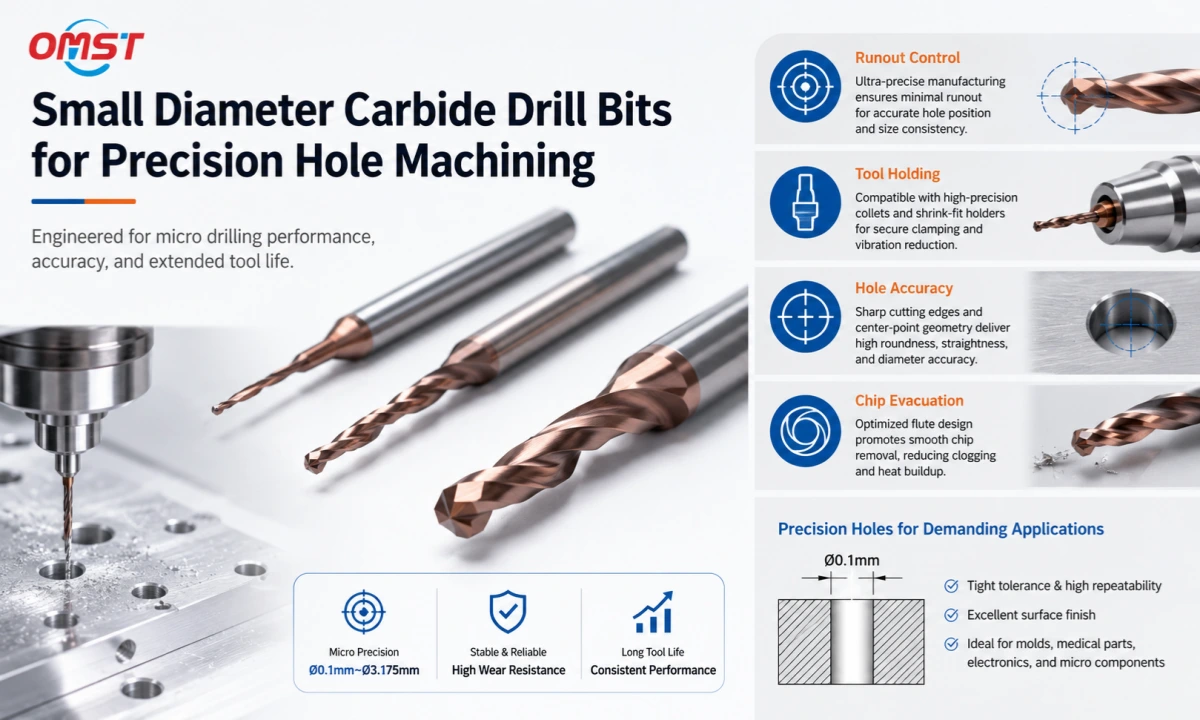
CNC 기계상태 및 절삭 안정성
좋은 드릴이라도 기계 상태가 불안정하면 제대로 작동하지 않을 수 있습니다.. 그러므로, 드릴 선택은 CNC 기계 강성도 고려해야 합니다., 도구 보유, 냉각수, 그리고 칩 컨트롤.
기계 강성 및 공구 고정
기계 강성은 드릴링 안정성에 영향을 미칩니다. 공구 홀더 런아웃도 홀 정확도와 드릴 수명에 영향을 미칩니다.. 이는 작은 직경의 초경 드릴 비트에 특히 중요합니다..
드릴을 선택하기 전에, 구매자는 기계 상태를 확인해야 합니다, 공구 홀더 정확도, 고정물 안정성.
냉각수, 에어 블로우, 또는 먼지 제거
금속 드릴링에는 절삭유와 칩 제어가 중요합니다.. 흑연 드릴링용, 냉각수보다 먼지 제거가 더 중요할 수 있음.
그러므로, 구매자는 공정에서 냉각수를 사용하는지 여부를 설명해야 합니다., air blow, 건식 절단, 아니면 먼지 수집. 이 정보는 드릴 형상 및 코팅 선택을 확인하는 데 도움이 됩니다..
기존 도구 문제
현재 드릴이 파손된 경우, 빨리 닳는다, 또는 홀 품질이 좋지 않음, 구매자는 문제를 설명해야 합니다. 마모된 도구의 사진, 공작물, 구멍 상태도 도움이 될 수 있습니다.
일반적인 문제는 다음과 같습니다.:
- 빠른 가장자리 마모
- 드릴 파손
- 홀 정확도가 낮음
- 표면 조도 불량
- 칩 막힘
- 버 또는 불안정한 구멍 출구
- 짧은 공구 수명
특수 용도를 위한 맞춤형 초경 드릴 비트
표준 초경 드릴 비트는 일반적인 응용 분야에 유용합니다.. 하지만, 맞춤형 카바이드 드릴 비트는 특수 가공 요구 사항에 더 적합할 수 있습니다..
표준 훈련만으로는 충분하지 않은 경우
맞춤형 초경 드릴이 필요할 수 있습니다.:
- 비표준 직경
- 특수 구멍 깊이
- 긴 플루트 디자인
- 작은 구멍 가공
- 특수 생크 크기
- 맞춤형 포인트 지오메트리
- 특수코팅
- OEM 마킹
- 맞춤 포장
이러한 경우, 실제 공작물 및 기계 상태에 따라 맞춤형 공구를 설계할 수 있습니다..
도면 기반 또는 샘플 기반 생산
비표준 초경 드릴 비트에는 도면이 도움이 됩니다.. 도면을 사용할 수 없는 경우, 구매자는 샘플을 제공할 수 있습니다., 현재 도구 사진, 또는 상세한 가공 요구 사항.
그런 다음 공급업체는 드릴 직경을 평가할 수 있습니다., 플루트 길이, 생크 크기, 전체 길이, 코팅, 기하학과.
OEM 및 개인 상표 지원
대리점용, 공구 회사, 및 산업 공급업체, OEM 서비스가 필요할 수 있습니다.. 여기에는 레이저 마킹이 포함될 수 있습니다., 고객 로고, 모델 마킹, 라벨, 플라스틱 상자, 그리고 맞춤 포장.
이러한 요구 사항이 필요한 경우, 대량 생산 전에 확인되어야 합니다..
견적 전 필요한 정보
적합한 초경 드릴 비트를 추천하려면, 공급자는 충분한 신청 정보가 필요합니다. 세부사항이 완전할수록, 견적과 도구 추천이 더 정확해질수록.
| 필요한 정보 | 중요한 이유 |
| 공작물 재료 | 초경 등급 확인에 도움, 코팅, 기하학과 |
| 재료 경도 | 가장자리 강도 및 코팅 선택에 영향을 미칩니다. |
| 구멍 직경 | 드릴 직경과 공구 강성을 결정합니다. |
| 구멍 깊이 | 플루트 길이와 칩 배출에 영향을 미칩니다. |
| 관통 구멍 또는 막힌 구멍 | 포인트 설계 및 드릴링 전략에 영향을 미칩니다. |
| 기계 유형 | 강성과 공구 유지 상태를 평가하는 데 도움이 됩니다. |
| 냉각수 또는 먼지 제거 상태 | 칩 제어 및 공구 성능에 영향을 미칩니다. |
| 도면 또는 샘플 | 비표준 도구 치수를 확인하는 데 도움이 됩니다. |
| 수량 | 생산 계획에 영향을 미침, 가격, 그리고 리드타임 |
| 마킹 및 포장 요청 | OEM 또는 자체 라벨 요구 사항을 확인하는 데 도움이 됩니다. |
권장 초경 드릴 비트 선택 요약
아래 표는 간단한 선택 참고 사항입니다.. 일반적인 안내일 뿐입니다. 최종 초경 드릴 비트는 실제 재료에 따라 선택되어야 합니다., 구멍 크기, 구멍 깊이, 및 가공조건.
| 공작물 재료 | 선택 초점 |
| 강철 / 합금강 | 내마모성, 내열성, 안정적인 절삭날 |
| 스테인레스 스틸 | 열 제어, 가장자리 강도, 칩 배출 |
| 주철 | 마모 방지 및 안정적인 형상 |
| 알류미늄 / 구리 | 낮은 마찰, 칩 흐름, 구성인선 감소 |
| 석묵 | CVD 다이아몬드 코팅 및 내마모성 |
| 맞춤형 부품 | 도면 기반 설계 및 적용 검토 |
관련 초경 절삭 공구
일반 CNC 드릴링 용도, 우리의 보기 초경 드릴 비트.
흑연 드릴링 도구가 필요한 경우, 우리의 보기 다이아몬드 코팅 드릴 비트.
흑연 밀링 및 연마성 비철 가공용, 우리의 보기 다이아몬드 코팅 엔드밀.
초경 드릴 비트 선택에 관한 FAQ
강철에 가장 적합한 초경 드릴 비트는 무엇입니까?
강철에 가장 적합한 초경 드릴 비트는 강철 등급에 따라 다릅니다., 경도, 구멍 직경, 구멍 깊이, 냉각수 상태, 및 생산 수량. 내마모성 코팅과 안정적인 절단 형상은 강철 드릴링에 중요한 경우가 많습니다..
스테인레스 스틸에 더 적합한 초경 드릴 비트?
스테인레스강용, 드릴은 열 제어를 지원해야 합니다, 가장자리 강도, 칩 배출. 구매자는 스테인레스 스틸 등급을 제공해야 합니다, 구멍 깊이, 드릴을 선택하기 전 절삭유 상태 및.
초경 드릴 비트 드릴 알루미늄 가능?
예, 초경 드릴 비트는 알루미늄을 드릴 수 있습니다. 하지만, 알루미늄은 구성인선이나 칩 접착을 유발할 수 있습니다.. 적합한 플루트 디자인, 광택 표면, 저마찰 코팅, 또는 응용 분야에 따라 비코팅 초경 옵션을 고려할 수 있습니다..
다이아몬드 코팅 드릴 비트는 언제 선택해야 합니까??
흑연 또는 연마성 비철 재료를 드릴링할 때 다이아몬드 코팅 드릴 비트를 고려할 수 있습니다.. 흑연 드릴링용, CVD 다이아몬드 코팅은 내마모성 향상에 도움이 될 수 있습니다.. 최종 선택은 흑연 등급에 따라 달라집니다., 구멍 크기, 기계 상태, 및 주문 요구 사항.
초경 드릴 비트를 사용자 정의할 수 있습니까??
예. 초경 드릴 비트는 드릴 직경에 따라 맞춤 설정할 수 있습니다., 플루트 길이, 생크 직경, 전체 길이, 포인트 기하학, 코팅, 마킹, 그리고 포장. 그림, 견본, 또는 상세한 가공 요구 사항이 도움이 됩니다..
초경 드릴 비트 견적에 필요한 정보는 무엇입니까??
공작물 재료를 제공하십시오, 경도, 구멍 직경, 구멍 깊이, 관통 구멍 또는 막힌 구멍 요구 사항, 기계 유형, 냉각수 상태, 그림, 수량, 가능한 경우 포장 요구 사항.
결론
초경 드릴 비트를 올바르게 선택하는 방법을 이해하려면, 공작물 재료부터 시작, 드릴 직경뿐만 아니라. 강철, 스테인레스 스틸, 주철, 알류미늄, 구리, 석묵, 맞춤형 부품에는 모두 다른 도구 선택 방법이 필요합니다..
게다가, 코팅, 포인트 기하학, 플루트 디자인, 구멍 깊이, 냉각수 상태, 기계 강성, 최종 드릴을 선택하기 전에 주문 수량을 검토해야 합니다..
공작물 재료 보내기, 구멍 직경, 구멍 깊이, 그림, 수량. OMIST는 적합한 초경 드릴 비트를 추천하는 데 도움을 드립니다., 코팅 옵션, 및 맞춤형 드릴링 도구 솔루션.