 정밀 밀링 커터,모든 재료를 가공하는 CNC용 절삭 공구

엔드밀 커터는 공작물의 끝과 측면에서 재료를 제거하기 위해 CNC 밀링에 사용되는 회전 절단 도구입니다.. 슬롯을 가공할 수 있습니다., 주머니, 프로필, 측벽, 곡면, 알루미늄과 같은 소재의 마감 특성, 강철, 스테인레스 스틸, 구리, 그리고 플라스틱.
이 가이드에서는, 엔드밀 커터가 무엇인지 배우게 됩니다., 드릴 비트와 어떻게 다른지, CNC 밀링에서 하는 일, 일반적인 커터 유형, 기본사양, 다양한 가공 응용 분야에 적합한 도구를 선택하는 방법.
엔드밀 커터란??
엔드밀 커터는 CNC 기계 및 밀링 머신에 사용되는 회전식 절삭 공구입니다.. 재료를 제거하기 위해 도구나 공작물이 제어된 경로를 따라 이동하는 동안 고속으로 회전합니다..
엔드밀 커터와 다른 많은 도구의 주요 차이점은 절삭 형상입니다.. 대부분의 엔드밀은 끝부분과 측면을 따라 절삭날이 있습니다.. 그러므로, 수직 및 측면으로 절단할 수 있습니다.. 이로 인해 슬롯에 적합합니다., 사이드 밀링, 프로파일링, 포켓 밀링, 컨투어링, 그리고 마무리.
제조업체는 일반적으로 고속도강이나 솔리드 초경을 사용해 엔드밀 커터를 만듭니다.. 하지만, 많은 CNC 기계 공장에서는 더 나은 강성을 제공하기 때문에 솔리드 초경 공구를 선택합니다., 더 높은 내마모성, 보다 안정적인 절단 성능.
생산 가공을 위해 표준 또는 맞춤형 도구가 필요한 경우, 당신은 또한 우리를 방문할 수 있습니다 엔드밀 커터 제품 페이지.
엔드밀 커터의 주요 부품
엔드밀 커터는 모양과 디자인이 다양하지만, 대부분의 도구에는 몇 가지 기본 부품이 포함되어 있습니다.. 이러한 부품을 이해하면 구매자가 재료에 적합한 절단기를 선택할 수 있습니다., 기계, 및 가공 목표.
| 부분 | 기능 | 중요한 이유 |
| 커팅 엣지 | 공작물에서 재료 제거 | 절단 효율 및 표면 조도에 영향을 미침 |
| 플루트 | 가공 중 칩 배출에 도움 | 영향 칩 제거, 엄격, 절단 안정성 |
| 도구 설명 | 커터의 끝 형상을 정의합니다. | 슬롯에 영향을 미침, 컨투어링, 마무리 손질, 그리고 코너 강도 |
| 정강이 | 공구 홀더 또는 스핀들에 의해 고정됨 | 안정적인 클램핑을 위해서는 홀더와 일치해야 합니다. |
| 코팅 | 가공 중 절삭날을 보호합니다. | 내마모성 향상, 내열성, 및 공구 수명 |
최첨단
절삭날은 공구의 작동 부분입니다.. 밀링 중에 재료를 제거하고 절단 성능에 직접적인 영향을 미칩니다., 정확성, 및 표면 마무리.
플루트
홈은 커터 몸체에 있는 홈입니다.. 절삭 영역에서 칩을 제거하는 데 도움이 됩니다.. 게다가, 플루트 디자인은 강성에 영향을 미칩니다, 열 제어, 절단 안정성.
도구 설명
공구 팁 디자인은 커터 유형에 따라 다릅니다.. 일부 엔드밀은 끝이 편평합니다., 다른 사람들은 볼코를 가지고 있는 반면, 코너 반경, 또는 테이퍼 형상. 결과적으로, 다양한 가공 작업에 다양한 팁 디자인이 사용됩니다..
정강이
섕크는 공구 홀더나 스핀들이 고정하는 부분입니다.. 직경이 홀더와 정확하게 일치해야 합니다.. 그렇지 않으면, 진동, 정확도가 낮음, 또는 공구 런아웃이 발생할 수 있습니다..
코팅
많은 엔드밀 커터는 TiAlN과 같은 코팅을 사용합니다., 금, 티신, 주석, DLC, 또는 나노 블루 코팅. 올바른 코팅으로 내열성을 향상시킬 수 있습니다., 마모를 줄이다, 공구 수명 연장.
엔드 밀 커터와 드릴 비트
많은 초보자들이 엔드밀 커터와 드릴 비트를 혼동합니다.. 하지만, 그들은 다양한 가공 목적으로 설계되었습니다.
드릴 비트는 주로 축 방향으로 절단하여 둥근 구멍을 만듭니다.. 대조적으로, 엔드밀 커터는 축 방향과 측면 방향 모두 절단이 가능합니다.. 그러므로, 슬롯을 가공할 수 있습니다, 주머니, 윤곽, 프로필, 측벽, 그리고 완성된 표면.
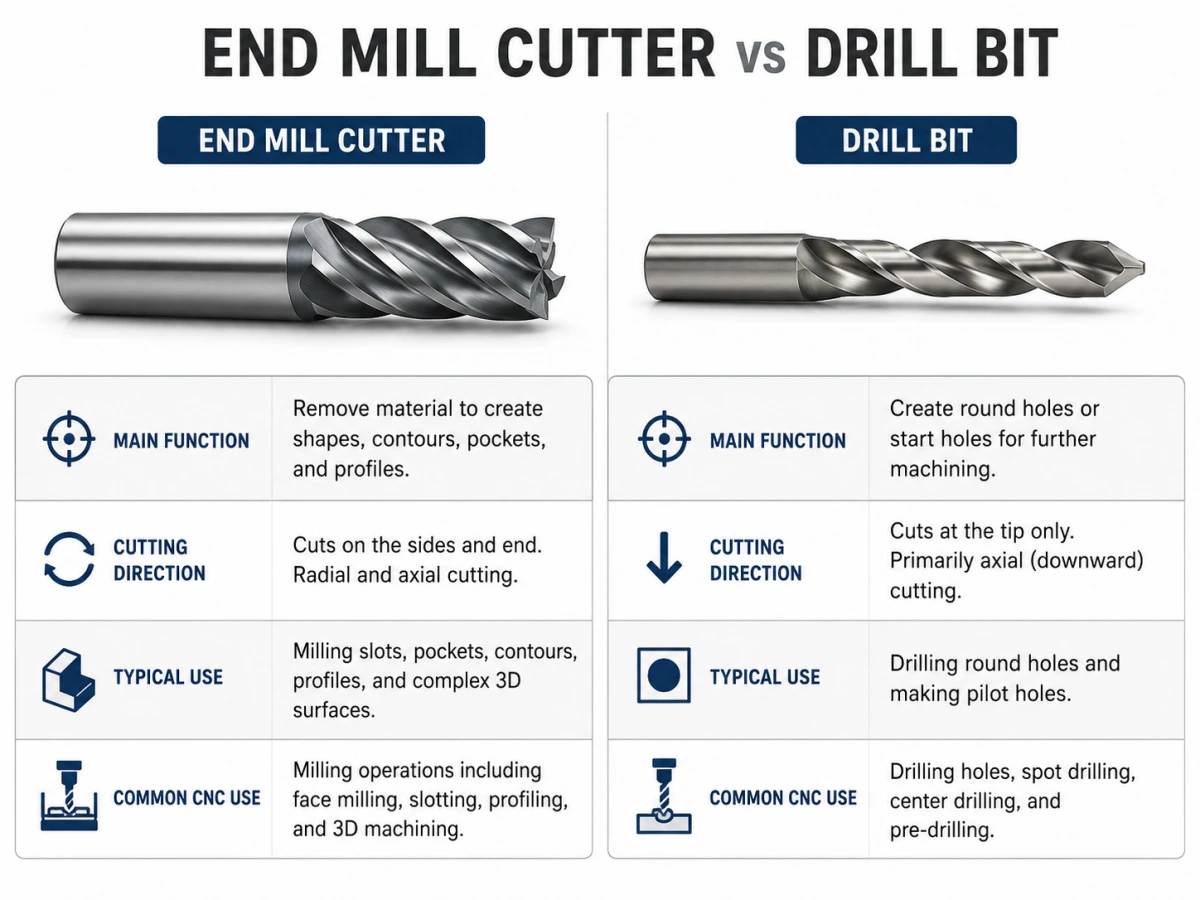
| 특징 | 엔드밀 커터 | 드릴 비트 |
| 주요 기능 | 갈기, 슬로팅, 프로파일링, 측면 절단 | 드릴링 구멍 |
| 절단 방향 | 축 및 측면 | 주로 축방향 |
| 일반적인 사용 | 슬롯, 주머니, 윤곽, 측벽 | 둥근 구멍 |
| 도구 유연성 | 더 높은 | 낮추다 |
| 일반적인 CNC 사용 | 일반 밀링 작업 | 구멍 만들기 작업 |
요컨대, 두 도구 모두 재료를 제거합니다, 그러나 대부분의 가공 상황에서는 상호 교환이 불가능합니다.. 일부 응용 분야에서는 센터 커팅 엔드밀이 급락할 수 있습니다., 하지만 여전히 표준 드릴 비트와 동일하지 않습니다..
엔드밀 커터의 일반적인 유형
엔드밀 커터에는 다양한 종류가 있습니다., 각 디자인에는 특정 목적이 있습니다.. 올바른 유형을 선택하면 절단 효율성이 향상됩니다., 표면 품질, 및 공구 수명.
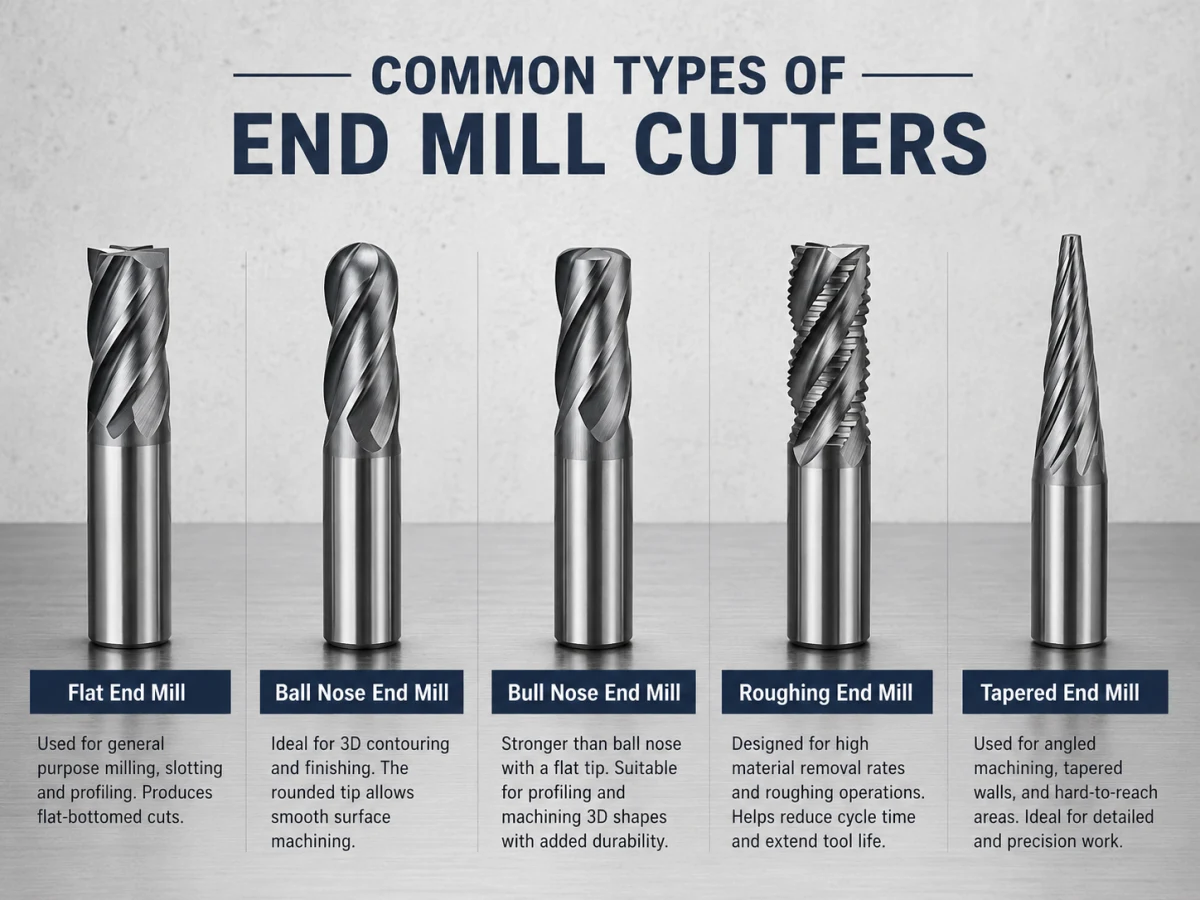
플랫엔드밀
플랫 엔드밀은 절삭 끝이 평평한 것입니다.. 슬롯팅용으로 널리 사용됩니다., 사이드 밀링, 숄더 밀링, 범용 가공.
볼 노즈 엔드밀
볼 노즈 엔드밀은 절단 끝이 둥글게 되어 있습니다.. 3D 컨투어링에 주로 사용됩니다., 금형 가공, 곡면, 그리고 마무리 작업.
곡면가공 및 금형작업용, 당신은 또한 우리를 볼 수 있습니다 볼 노즈 엔드밀.
불 노즈 엔드밀
불 노즈 엔드밀, 코너 반경 엔드밀이라고도 함, 둥근 모서리와 평평한 바닥을 결합합니다.. 가장자리 강도를 향상시키고 더 부드러운 전환을 만드는 데 도움이 됩니다..
더 강한 코너 형상을 위해, 우리를 보아라 불 노즈 엔드밀.
러핑엔드밀
러핑 엔드밀은 공격적인 소재 제거를 위해 설계되었습니다.. 대량의 재고를 신속하게 제거하기 위해 마무리 전에 자주 사용됩니다..
무거운 절삭용, 당신은 우리를 확인할 수 있습니다 황삭 엔드밀.
테이퍼 엔드밀
테이퍼 엔드밀은 직경이 점차 변합니다.. 각진 벽에 사용됩니다., 깊은 충치, 금형 가공, 그리고 특별한 프로필.
금형 캐비티 및 경사 가공용, 우리를 방문 테이퍼 커터.
공구 형상을 더 자세히 비교하려면, 우리의 글을 읽어보세요 엔드밀 커터 유형 가이드.
엔드밀 커터의 용도?
엔드밀 커터는 많은 CNC 밀링 작업에 사용됩니다.. Because they can cut from the end and the side, they are suitable for both simple and complex machining tasks.
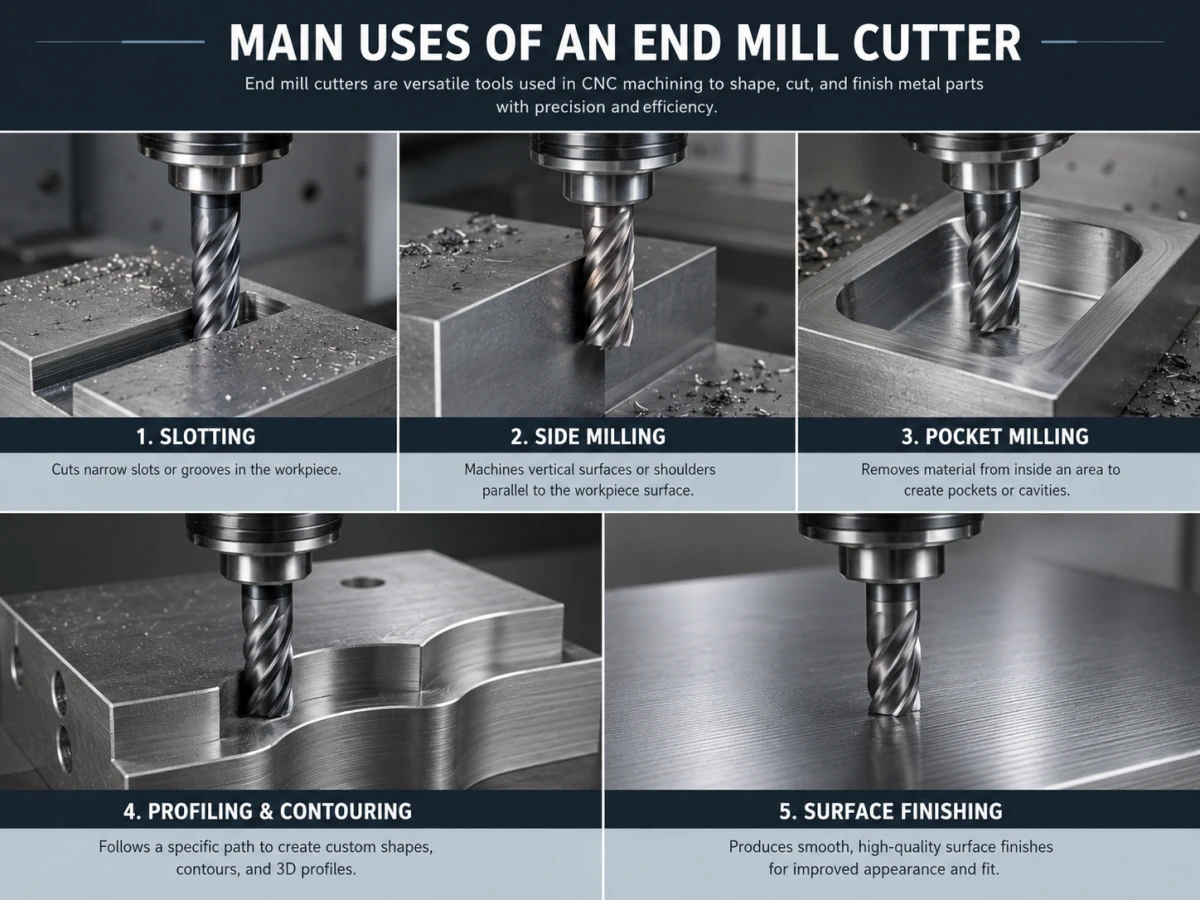
슬로팅
Slotting is one of the most common applications. An end mill cutter can cut straight or curved slots into a workpiece with good accuracy. These slots can create keyways, 그루브, 가이드 트랙, and assembly features.
For softer materials such as aluminum, chip evacuation is important. 그러므로, machinists often select 2 flute tools when the workpiece needs better chip removal.
사이드 밀링
Side milling uses the side cutting edges of the tool to remove material from the vertical surface of a workpiece. This operation is useful for machining shoulders, 단계, 그리고 측벽.
Machine shops commonly use side milling for precision parts, 금형 부품, tooling parts, and general CNC production.
프로파일링 및 컨투어링
기계 기술자는 프로파일링 및 윤곽 가공에도 엔드밀 커터를 사용합니다.. 이러한 작업은 복잡한 모양을 만듭니다., 곡선 경로, 및 외부 또는 내부 프로필.
기계공은 이러한 종류의 작업을 위해 볼 노즈 및 코너 반경 도구를 선택하는 경우가 많습니다. 이러한 도구는 표면 전환 및 마무리 품질을 향상시킬 수 있기 때문입니다..
포켓밀링
포켓 밀링은 공작물 내부의 폐쇄된 영역이나 오목한 영역에서 재료를 제거합니다.. 이 작업은 내부 공동이 필요한 부품에서 일반적입니다., 체중 감소, 또는 제한된 영역 내에서 정확한 재료 제거.
칩 컨트롤이 좋다, 안정적인 공구 경로, 이 프로세스에서는 올바른 커터 형상이 중요합니다..
표면 마무리
거친 가공 후, 엔드밀 커터를 마무리 작업에도 사용할 수 있습니다.. 목표는 치수 정확도와 표면 매끄러움을 향상시키는 것입니다..
공차에 따라 마무리 도구가 선택됩니다., 공작물 재료, 기계 안정성, 그리고 요구되는 표면 품질.
스텝 밀링 및 직각 가공
엔드밀 커터는 계단형 표면을 가공할 수 있습니다., 어깨, 및 다단계 기능. 이러한 기능에는 날카로운 전환이 필요한 경우가 많습니다., 안정적인 절단, 정확한 치수.
결과적으로, 공구 강성, 플루트 디자인, 코팅 선택이 중요합니다.
알루미늄용 엔드밀 커터 용도, 강철, 및 스테인레스 스틸
다양한 공작물 재료에는 다양한 커터 설계가 필요합니다.. 그러므로, 구매자는 엔드밀 커터를 재료 및 가공 조건에 맞춰야 합니다..
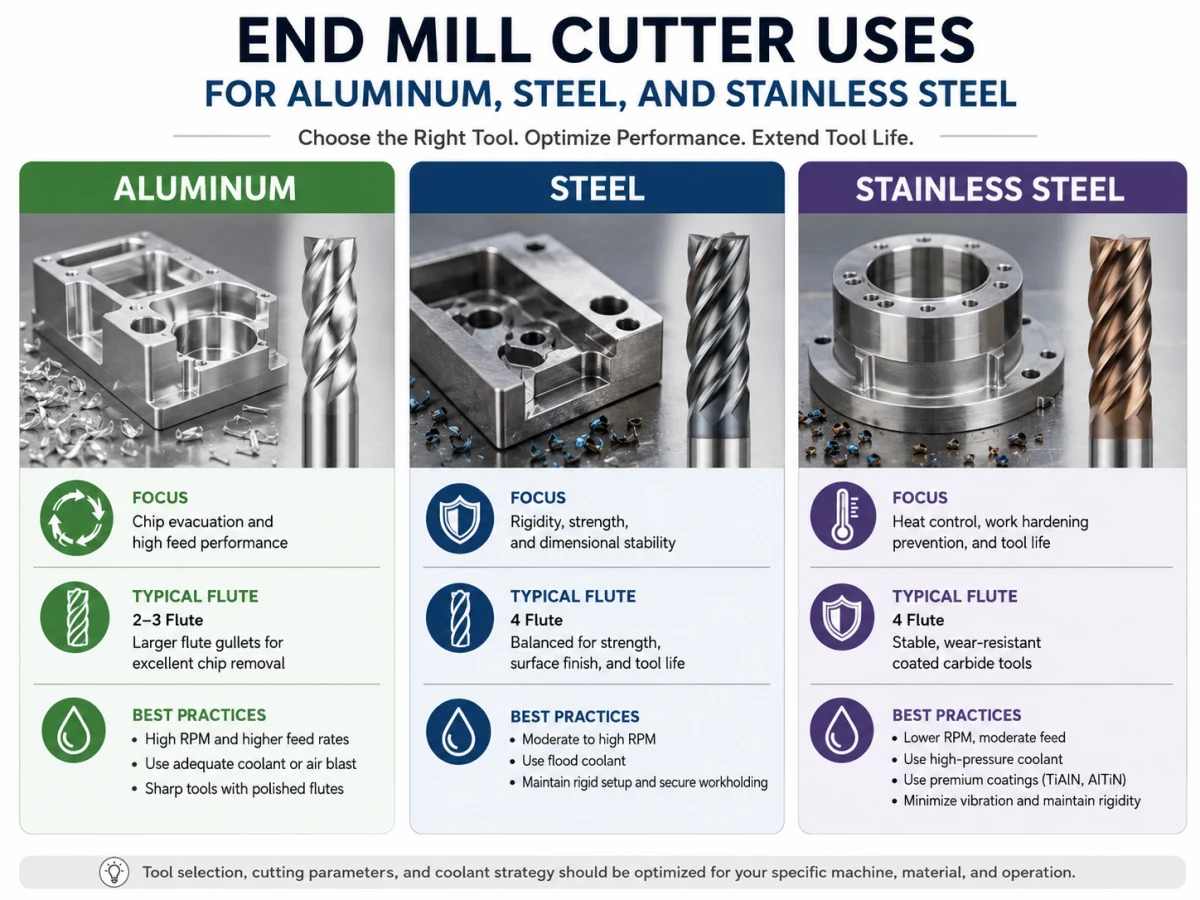
| 공작물 재료 | 일반적인 커터 선택 | 주요 이유 |
| 알류미늄 | 2 플루트 또는 3 플루트 초경 엔드밀 | 향상된 칩 배출 및 부드러운 절삭 |
| 강철 | 4 적합한 코팅을 갖춘 플루트 초경 엔드밀 | 더 나은 강성과 내마모성 |
| 스테인레스 스틸 | 안정된 형상을 갖춘 코팅 초경 엔드밀 | 더 나은 열 제어 및 가장자리 보호 |
| 구리 및 황동 | 샤프 엣지 초경 엔드밀 | 깔끔한 절단 및 버 감소 |
| 플라스틱 | 날카로운, 광택이 나는 플루트 커터 | 원활한 칩 제거 및 용융 위험 감소 |
알루미늄용 엔드밀 커터
알루미늄 가공시, 엔드밀 커터는 슬로팅에 사용됩니다., 포켓 밀링, 사이드 밀링, 그리고 마무리. 알루미늄은 더 큰 칩을 생산합니다., 따라서 플루트 수가 적고 칩 배출이 좋은 공구가 선호되는 경우가 많습니다..
고나선 초경 엔드밀은 절삭 부드러움을 개선하고 칩 축적을 줄이는 데 도움이 되므로 알루미늄에도 흔히 사용됩니다..
알루미늄 및 비철 재료용, 우리 사이트에서 플루트 옵션을 비교할 수 있습니다. 2 플루트 엔드밀 그리고 3 플루트 엔드밀 페이지.
강용 엔드밀 커터
탄소강 및 합금강용, 엔드밀 커터는 사이드 밀링에 자주 사용됩니다., 컨투어링, 숄더 가공, 그리고 반 마무리. 강철은 일반적으로 더 나은 강성과 더 강한 내마모성을 요구합니다..
많은 경우, 4 강 및 범용 금속 가공에 적합한 플루트 초경 엔드밀.
철강 가공용, 당신은 우리를 볼 수 있습니다 4 플루트 엔드밀.
스테인레스강용 엔드밀 커터
스테인레스강은 열을 발생시키고 공구 마모를 유발하는 경향이 있기 때문에 가공하기가 더 어렵습니다.. 스테인레스 스틸 응용 분야, 엔드밀 커터는 일반적으로 프로파일링에 사용됩니다., 마무리 손질, 제어된 사이드 밀링.
올바른 코팅, 플루트 기하학, 절삭 매개변수는 절삭 안정성을 유지하고 모서리 마모를 줄이는 데 도움이 됩니다..
기본 엔드밀 커터 선택 방법
엔드밀 커터를 선택하는 것은 복잡할 필요가 없습니다.. 하지만, 구매자는 주문하기 전에 여러 가지 요소를 확인해야 합니다..
공작물 재료
공작물 재료는 가장 중요한 요소 중 하나입니다.. 알류미늄, 강철, 스테인레스 스틸, 구리, 놋쇠, 플라스틱, 주철에는 다른 플루트 디자인이 필요할 수 있습니다., 코팅, 그리고 절단 전략.
플루트 카운트
플루트 수가 칩 배출에 영향을 미칩니다, 엄격, 및 절단 효율성. 예를 들어, 기계공이 자주 사용하는 2 알루미늄 플루트 도구, 일반적으로 선택하는 동안 4 강철 및 범용 가공용 플루트 공구.
더 깊은 비교를 위해, 우리의 글을 읽어보세요 2 플루트 대 4 플루트 엔드밀 가이드.
도구 재료
많은 CNC 기계 공장에서는 더 높은 강성을 제공하는 솔리드 초경 엔드밀 커터를 선택합니다., 더 나은 내마모성, 안정적인 성능. 일부 작업장에서는 여전히 저속 또는 일반 가공 응용 분야에 HSS 도구를 사용합니다..
코팅
코팅은 재료 및 가공 조건과 일치해야 합니다.. 예를 들어, 기계 기술자는 강철에 TiAlN 및 AlTiN 코팅을 선택하는 경우가 많습니다., DLC 코팅은 알루미늄 및 비철 재료에 적합할 수 있습니다..
필수 마무리
황삭 작업용, 주요 목표는 더 높은 재료 제거입니다.. 하지만, 마무리 작업을 위해, 표면 품질과 치수 정확도가 더욱 중요해졌습니다..
구매 전 확인해야 할 기본 사양
주문하기 전에, 구매자는 몇 가지 주요 사양을 확인해야 합니다.. 이는 공구 불일치를 방지하고 가공 안정성을 향상시키는 데 도움이 됩니다..
커터 직경
커터 직경은 커팅 폭에 영향을 미칩니다., 엄격, 가공된 형상의 크기.
플루트 길이
플루트 길이는 커터가 가공할 수 있는 깊이를 결정합니다.. 하지만, 플루트가 길면 강성이 감소할 수 있습니다., 실제 절단 깊이와 일치해야 합니다..
전체 길이
전체 길이는 공구 도달 거리 및 진동 제어에 영향을 미칩니다.. 깊은 공동에는 더 긴 도구가 필요할 수 있습니다., 하지만 잡담을 줄이려면 신중하게 사용해야 합니다..
생크 직경
생크 직경은 홀더와 정확하게 일치해야 합니다.. 안정적인 클램핑으로 정확도와 공구 수명 향상.
코너 기하학
평평한, 공 코, 코너 반경, 테이퍼 형상은 다양한 가공 목적에 사용됩니다.. 그러므로, 모서리 형상은 부품 모양 및 필요한 마감과 일치해야 합니다..
코팅 유형
피삭재 재질에 따라 코팅을 선택해야 합니다., 절단 속도, 냉각수 상태, 및 공구 수명 요구 사항.
CNC 밀링에 솔리드 초경 엔드밀 커터가 널리 사용되는 이유
솔리드 초경 엔드밀 커터는 강성이 뛰어나 인기가 높습니다., 높은 경도, 그리고 좋은 내마모성. 많은 표준 공구 재료보다 더 높은 절삭 속도를 지원하고 더 안정적인 성능을 제공할 수 있습니다..
생산 가공 중, 많은 상점에서 강철용 초경 공구를 사용합니다., 스테인레스 스틸, 주철, 알류미늄, 기타 까다로운 재료. 게다가, 올바른 형상과 코팅은 가공 일관성을 향상시킬 수 있습니다..
산업 바이어, 유통업체, 기계 공장에서는 공구 교체를 줄이고 보다 안정적인 생산을 지원하기 때문에 초경 공구를 선호하는 경우가 많습니다..
표준 및 맞춤형 초경 공구용, 당신은 우리를 방문할 수 있습니다 초경 엔드밀 커터 파페.
맞춤형 엔드밀 커터가 필요한 경우는 언제입니까??
표준 커터는 많은 일반적인 가공 작업을 해결할 수 있습니다..
하지만, 부품에 특별한 프로파일이 있는 경우 맞춤형 툴링이 필요할 수 있습니다., 깊은 구멍, 특이한 소재, 엄격한 관용, 또는 비표준 크기 요구 사항.
제조업체는 특수 직경의 맞춤형 엔드밀 커터를 설계할 수 있습니다., 플루트 길이, 전체 길이, 코너 반경, 코팅, 생크 크기, 및 도구 기하학.
도면 기반 또는 OEM 툴링용, 우리를 방문 맞춤형 엔드밀 종이.
FAQ
엔드밀 커터란??
엔드밀 커터는 슬로팅과 같은 CNC 밀링 작업에 사용되는 회전식 절삭 공구입니다., 사이드 밀링, 프로파일링, 컨투어링, 포켓 밀링, 그리고 마무리.
엔드밀 커터는 어떤 용도로 사용되나요??
공작물의 끝과 측면에서 재료를 제거하는 데 사용됩니다.. 일반적인 애플리케이션에는 슬롯이 포함됩니다., 주머니, 측벽, 프로필, 어깨, 곡면, 그리고 완성된 표면.
엔드밀 커터와 드릴 비트의 차이점은 무엇입니까?
드릴 비트는 주로 축 방향으로 구멍을 뚫습니다.. 엔드밀 커터는 축 방향 및 측면 절단이 가능합니다., 따라서 슬롯팅과 같은 더 많은 밀링 작업을 수행할 수 있습니다., 프로파일링, 그리고 사이드 밀링.
엔드밀 커터의 일반적인 유형은 무엇입니까??
일반적인 유형에는 플랫 엔드밀이 포함됩니다., 볼 노즈 엔드밀, 불 노즈 엔드밀, 황삭 엔드밀, 테이퍼 엔드밀, 2 플루트 엔드 밀, 3 플루트 엔드 밀, 4 플루트 엔드 밀, 그리고 6 플루트 엔드 밀.
기본 엔드밀 커터를 선택하는 방법?
공작물 재질을 확인해야 합니다., 플루트 수, 커터 직경, 플루트 길이, 전체 길이, 생크 직경, 도구 재료, 코팅, 그리고 필요한 표면 마감.
초경 엔드밀 커터가 HSS 엔드밀보다 우수합니까??
초경 엔드밀 커터는 일반적으로 더 나은 강성을 제공합니다., 내마모성, 절단 안정성. 하지만, 최선의 선택은 기계에 달려 있습니다, 공작물 재료, 절단 속도, 그리고 예산.
결론
엔드밀 커터는 슬롯 가공에 사용되는 다목적 CNC 밀링 공구입니다., 사이드 밀링, 포켓 밀링, 프로파일링, 컨투어링, 숄더 가공, 그리고 마무리. 끝부분과 옆부분 모두 자를 수 있기 때문에, 많은 기본 절단 도구보다 더 유연합니다..
올바른 커터를 선택하려면, 구매자는 도구 구조를 이해해야 합니다, 커터 유형, 플루트 수, 재료, 코팅, 지름, 플루트 길이, 및 가공 응용. 이러한 요소가 올바르게 일치하면, 커터는 더 나은 절단 효율을 제공할 수 있습니다., 공구 수명 연장, 보다 안정적인 가공 결과.
믿을 수 있는 알루미늄 엔드밀 커터 제조업체를 찾고 있습니다., 강철, 스테인레스 스틸, 또는 맞춤형 CNC 가공?
우리를 탐험해보세요 엔드밀 커터 제품 페이지 표준 및 OEM 솔루션용, 또는 도면 및 응용 요구 사항을 문의해 주세요..